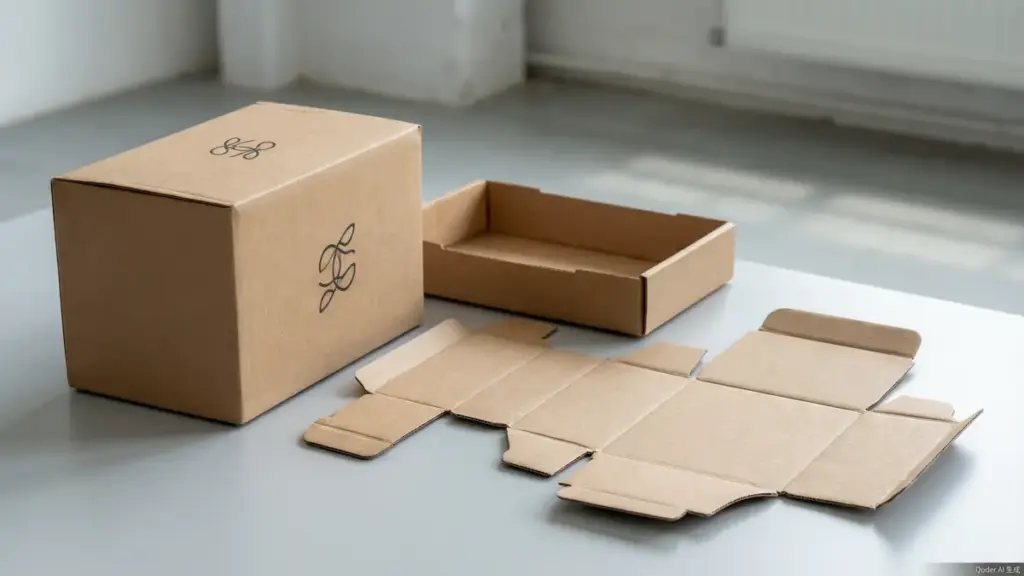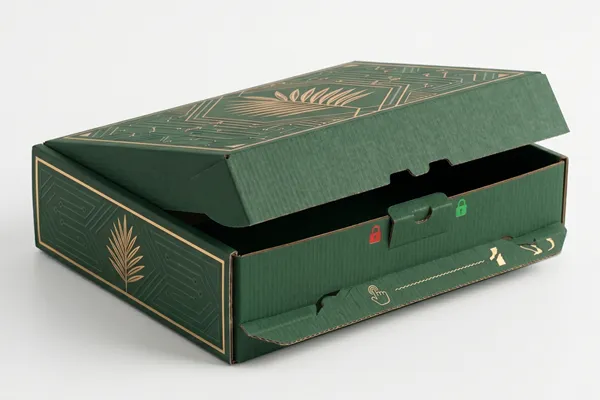
A book that arrives with a dinged corner or a creased spine is remembered as a packaging failure, even when the box survived the trip. For publishers, self-publishing authors, book-club stores and used-book platforms, book mailer boxes sit in an awkward spot on the spec sheet. The contents are flat, dense and easily marked, and every shipment is a small drop test performed by someone else.
This guide covers the decisions a buyer makes. It starts with inside dimensions from the book and hardcover versus paperback protection. It then covers corner and spine damage, void control, board strength for mail drops, and single versus multi-book packs. Each section closes with what belongs in your RFQ.
How Do You Size a Book Mailer Box?
A book mailer specification starts from the bound book on three axes: trim height, trim width and caliper (the thickness of the finished copy). Mailer styles such as the book-format designs in our corrugated boxes catalog are built inward from those numbers, not from a nearby standard carton size.
Caliper deserves the most attention because it moves with the paper. Two titles at the same trim size and page count can differ in thickness once stock bulk changes. A reprint on a different paper may no longer fit a box sized around the first run. Measure production samples, not manuscript estimates, and record a tolerance range rather than one figure.
The derivation is short. Inside length equals book height plus wrap allowance. Inside width equals book width plus side clearance, and inside depth equals the packed stack thickness plus a cushion margin. That “book plus buffer” logic, drawn to scale with the orientation marked, gives every millimetre a reason. If your catalogue spans more than two or three trim formats, plan size tiers rather than one universal box, and state which combinations each tier must accept.
For the RFQ: send measured trim dimensions and caliper per format, with maximum and minimum values across the editions each mailer size must serve.
Do Hardcover and Paperback Need Different Mailers?
Hardcovers and trade paperbacks of similar footprint fail differently in transit, and one mailer spec covering both pools usually under-protects each.
| Binding format | How it fails and what to specify |
|---|---|
| Hardcover books | A rigid case with square-cut corners fails locally: a blunt corner from an edge-first drop, a scuffed dust jacket, and hinge stress when squeezed out of flat. Specify close, immobilising fit and wall stiff enough that impacts die in the board, not the case corners. |
| Paperback books | A flexible paperback fails distributed: the cover takes a set and curls, the glued spine cracks past its hinge, and pages dog-ear. The job is flat support: minimal vertical free space, a snug pack, and board stiff enough for the carried weight. |
In practice, specify separate mailers per binding format, or at least separate pack configurations within one size, stating which format sits against which wall in mixed shipments. For the RFQ: list binding types, weight ranges, and the formats that may share one box.
Where Does Book Damage Start?
Most mail-arrival complaints describe one of four modes:
| Damage mode | What causes it |
|---|---|
| Dinged corners | An edge-first drop concentrates impact through a few square centimetres into the board behind it. |
| Spine creases and ridges | Bending pressure across the stack, or a parcel folded in a sort gap, marks glued spines first. |
| Scuffed spine edges | Books sliding against each other or the box wall abrade the printed spine. |
| Front and back page bends | Loose pages catch an edge during movement and stay dog-eared. |
Two levers address all four:
- Fit. A book that cannot move cannot strike a wall repeatedly, which is why void control is corner protection in disguise.
- The drawing. Ask your supplier for a dimensioned drawing showing the book orientation inside the box, marking where corners land relative to the walls, score lines and flap overlap. The flap overlap and tuck-in end are where board build changes and impact energy is least evenly supported; they tell you where extra padding belongs.
Should You Fill Voids or Right-Size the Box?
Empty space in a book mailer is not neutral. Over a route the contents shift and re-strike. Given enough play, a book meets the same wall many times before delivery. Each contact is a corner dent or scuffed spine waiting to be reported. Void control is part of the protective specification, not a packing afterthought.
Buyers normally trade off two options:
| Void strategy | Trade-off |
|---|---|
| Right-size the box | Cut to the largest intended combination. Protection comes from fit and shipping cost improves, but smaller orders then need an insert, a fold or a second mailer tier. |
| One larger box, fill the void | Fill with wrap, folded kraft or pads. Inventory is simpler, but the approach adds material, adds seconds per unit on the line, and makes protection depend on how consistently packers fill the gap. |
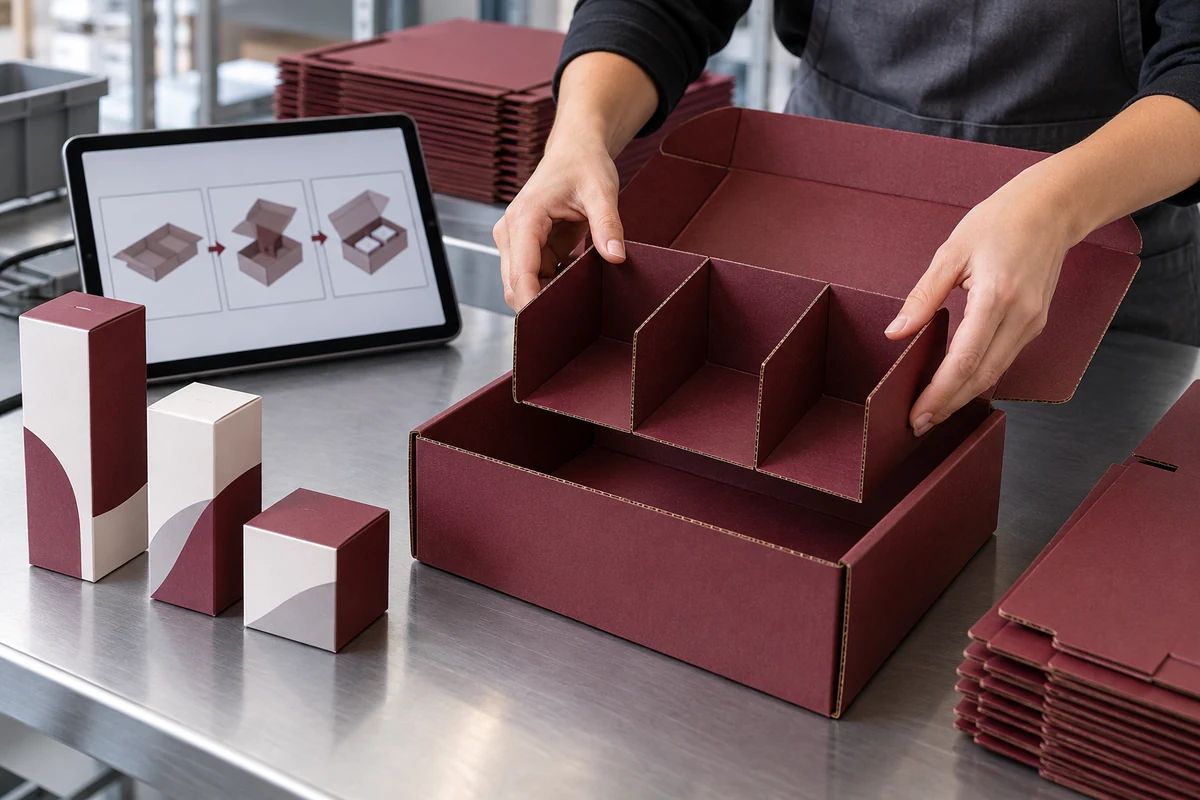
Overcorrecting has its own failure: a box cut too close arrives overfilled, and an overfilled mailer pushes the lid, strains the closure and presses board against the cover through transit. The balanced move is to define the maximum and minimum packed combinations for each mailer size, design against the maximum, and state what the packing station does below it.
How Do You Read Board Strength for Book Mailers?
Books are denser than most mail-order contents at the same footprint, so read board selection against packed weight rather than box size. Two numbers carry the conversation. The edge crush test (ECT) rating indicates how much compressive load the board takes before failing. The ply count indicates construction depth and cushioning. A single lightweight paperback travels in most standard mailer constructions; a multi-hardcover pack behaves like a small freight item, where column strength against stacking matters more than any single drop.
We are not restating the calculation here. How ECT, stack height and humidity interact is covered in our corrugated box strength guide. You can hand that guide to your supplier with your pack weights. Where you want measured evidence rather than a datasheet rating, the ISTA small-parcel performance test protocols simulate drops, vibration and compression on the packed order. Any supplier test claim should identify the protocol, pack weight and construction actually tested.
For the RFQ: state the packed weight class per mailer size, your expected stacking pattern in distribution, and whether transit validation is required. Let the supplier propose ECT and ply against those inputs rather than fixing a rating yourself.
How Do Scuffing and Moisture Affect the Cover?
Scuffing rarely shows on a factory sample, because the sample does not experience transit. In transit the parcel slides, vibrates and rotates, and printed covers rub against the box interior. Matte and uncoated inks, dark covers and foil or spot-UV details mark most visibly, and a book’s own edges can abrade the copy facing it. Approve a scuff evaluation on the finished surface of your actual cover treatment, packed in the proposed mailer, with movement in the trial. Our scuff resistance approval guide explains how buyers set up that comparison.
Moisture damages both sides of the system. Damp corrugated loses stiffness, and book paper is hygroscopic. Humidity inside a parcel can leave covers wavy, pages cockled and glued spines softened. Coastal routes, humid-season destinations and long dwells in unconditioned facilities are where it surfaces. Our corrugated moisture resistance guide covers what to ask about construction and treatment for a given route. For the RFQ: describe the cover finishes, the destination climate range and expected transit duration.
Should You Ship Single Books or Multi-Book Packs?
A single-book mailer is the simplest spec. One format controls the size, weight stays low, and the fit can be cut close. The smallest compliant parcel typically carries a better shipping rate. There is also no second copy inside to transfer damage.
Multi-book packs change several inputs at once. Layout has two directions: stacking upward increases caliper demand and compresses the bottom copy; side-by-side increases footprint and leaves spine edges against the walls. State which layout the drawing assumes, and specify pack count as a maximum, not an average. Total weight rises with every copy, lifting the board requirement and usually moving the parcel into a different dimensional-weight band. A heavier parcel also concentrates risk: one bad drop now affects every copy in the pack. A used-book platform shipping uneven conditions should expect the weakest copy to set the complaint rate.
For book-club and recurring programmes, pack size is a standing decision; treat the multi-book configuration as its own spec with its own approval. Sizing a monthly-changing product mix belongs to subscription-box planning; this guide stays with book-specific protection.
What Belongs in a Book Mailer Box RFQ?
A book mailer RFQ that can be quoted in one round typically carries these fields:
- Book formats: trim size, page count, binding type, measured caliper with min/max tolerance per edition group.
- Pack configuration: single or multi-copy, maximum count, layout, and any inner wrap or separator.
- Packed weight class per mailer size.
- Orientation drawing requested from the supplier, with corner and spine positions marked.
- Void policy: the minimum combination each size must handle and what fills it.
- Cover finishes and their scuff sensitivity.
- Route profile: destination climates, transit duration, stacking pattern in distribution.
- Protection expectations: whether documented drop or transit validation is required, and at what protocol.
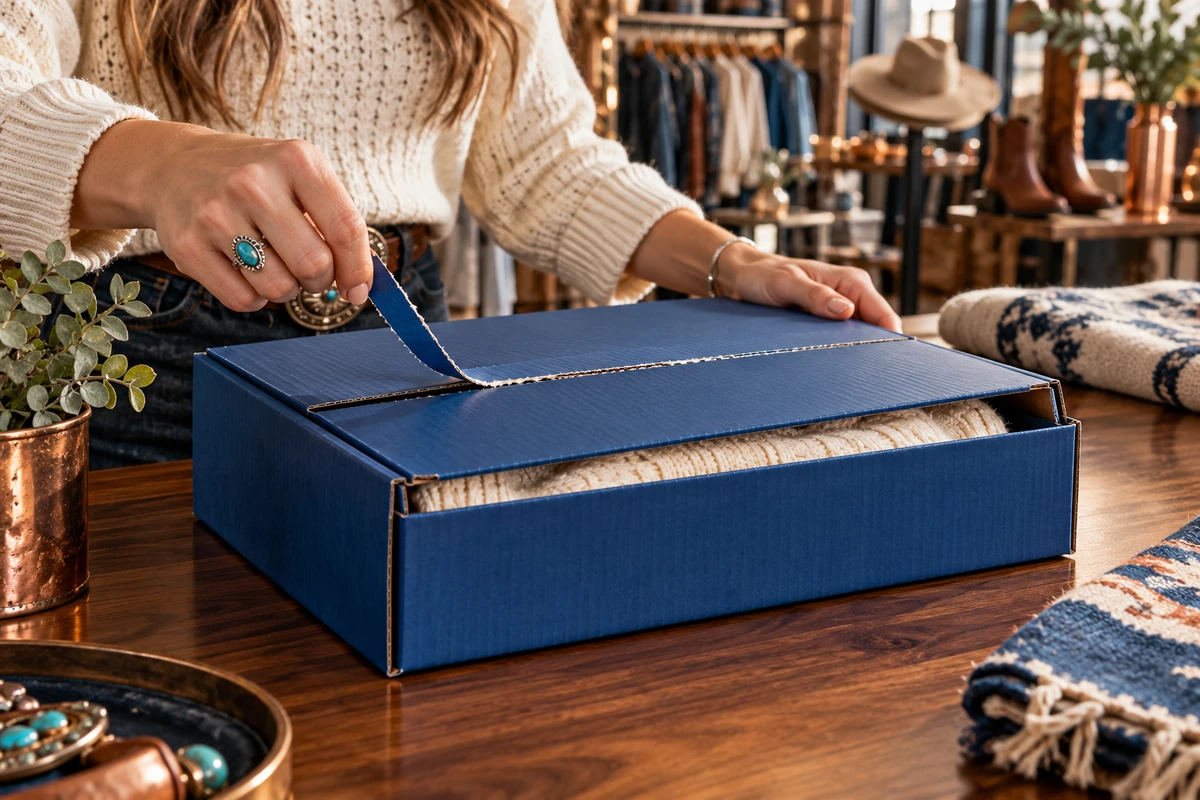
- Branding, print and opening experience; our tear strip mailer guide covers how opening features affect structure decisions before you lock one in.
- Quantities, reorder cadence and target lead time.
The configurations in this guide map to the builds on our custom book mailer boxes page, which we treat as a quoting baseline rather than a fixed catalogue.
Frequently Asked Questions
What size box do I need for a 6×9 paperback?
There is no single answer across a catalogue, and we avoid publishing one. Size it from the book: trim height and width plus wrap allowance, and caliper multiplied by pack count plus a cushion margin. Same trim and page count can still differ in thickness once paper bulk changes, so measure production copies per edition group and specify to the maximum.
Do hardcover books need different mailers than paperbacks?
Usually yes, because the damage modes differ. Hardcover cases take corner dents and jacket scuff and want close, immobilising fit; paperbacks bend and crease at the spine and want flat support with minimal vertical play. Packed weight also runs higher for the same footprint, which lifts the board requirement. Specifying them together tends to compromise both.
How do I stop books shifting inside the box?
Control the void. Either cut the mailer to the largest intended combination and give smaller orders a defined filler or a second size tier, or pack with wrap and pads sized so the stack is held without pressing the lid. Play in even one axis is enough for repeated wall contact over a route.
Which board grade is enough for a book mailer?
It depends on packed weight, the stack parcels face in distribution and the route, so treat board grade as an output of the RFQ, not an input. Read ECT as the compression a construction should take and ply as construction depth, and let your supplier propose a grade against the weights you provide.
Do book mailer boxes need moisture protection?
That depends on your routes. Corrugated softens when damp and paper absorbs humidity readily, so coastal or humid-season destinations and long transits justify a closer look at board treatments and inner wraps. For mostly dry, short legs, a well-fitted mailer is typically sufficient.
Should we ship single books or multi-book packs?
Weigh per-unit shipping cost against protection and operations. Single-copy mailers cut to the format ship efficiently and isolate damage risk. Multi-book packs reduce parcel count but raise weight, lift the board requirement and concentrate damage risk in one drop. Many publishers run both tiers.
What samples should I approve before committing?
Request packed samples of the worst-case combination: the thickest edition, the most scuff-prone cover finish, and the maximum pack count. After a realistic handling trial, check corners, spine edges and cover surfaces, and keep the signed sample with the oriented drawing as the acceptance reference for reorders.
Final Thoughts
Specifying book mailer boxes well means reversing the usual order of work. Measure the bound book first and derive the box from it. Then assign each protection job to the part of the system that can carry it. Inside dimensions come from trim and caliper with stated tolerances, and each binding format gets its own spec. Corners and spines are addressed through fit plus an oriented drawing, and voids are closed deliberately. Board is read against packed weight, and covers are approved through scuff and moisture checks.
Treat every one of those decisions as RFQ content. When format data, pack configurations, weight classes, route profile and protection expectations are on the table, a supplier can propose size, board and structure against evidence. Your sample review then gets concrete pass/fail criteria.
Share the book formats (trim size, page count, binding), units per shipment, and drop-test expectations.
PK Paper Box will suggest the mailer size and board that protect covers and corners.