Packaging a bottle, jar or delicate gift product can be surprisingly difficult. Buyers need the package to hold the product securely, protect it during transport, present the brand professionally and remain practical for filling and delivery. A well-designed tubo de papel com inserção brings these requirements together by combining a rigid cylindrical outer package with an internal support made specifically for the product.
No entanto, the insert cannot be treated as a decorative accessory. Its material, grossura, cutout, depth and position determine whether the product stays centered or moves inside the tube. Portanto, the best solution begins with the real bottle, jar or product sample—not only a photograph or estimated dimensions.
O que é este tipo de embalagem?
UM tubo de papel com inserção is a rigid cylindrical package containing an internal component that holds, cushions, separates or displays the packed item. The outer tube usually consists of a spiral-wound paperboard core wrapped with kraft paper, papel de arte impresso ou papel especial. Inside, a fitted insert creates a dedicated position for the product.
The insert may sit at the bottom, at the top or at several levels inside the tube. Por exemplo, a perfume bottle may use a lower insert to hold the base and an upper insert to stabilize the neck. A candle jar may need a circular base recess. A skincare set may use several die-cut openings so every bottle remains upright and clearly presented.
Em termos práticos, the insert performs four jobs:
- It reduces movement inside the package.
- It protects fragile edges, caps and glass surfaces.
- It improves the opening and display experience.
- It helps the product look centered and intentionally positioned.
Ainda, not every insert offers the same level of protection. Cardboard, polpa moldada, EVA, EPE foam and flocked materials behave differently. The correct choice depends on the packed product, mercado-alvo, orçamento, sustainability goals and shipping conditions.
Why Does the Insert Matter?
À primeira vista, buyers often focus on the outer graphics. That is understandable because color, logo and finishing create the first visual impression. Yet the customer’s opinion can change immediately after opening the lid.
If a bottle leans to one side, a jar rattles inside the package or the insert looks roughly cut, the packaging may feel cheaper than expected. Em contraste, a precise tubo de papel com inserção makes the product feel stable, considered and ready for gifting.
The insert also influences transportation performance. A rigid tube can resist external pressure, but it cannot stop the product from moving internally unless the fit is correct. Too much empty space may allow repeated impact. Too little space may make packing difficult or place pressure on the label, pump or cap.
Por esse motivo, insert development should consider:
- Maximum product diameter
- Product height
- Bottle shoulder and neck shape
- Cap, pump or dropper dimensions
- Glass thickness and fragile areas
- Label position
- Peso do produto
- Required finger space for removal
- Tolerance between the item and cutout
- Drop-test and shipping requirements
A good insert holds the product securely while still allowing the customer to remove it naturally. That balance sounds simple, but honestly, it is where many packaging projects either succeed or fail.
Aplicativos comuns
The flexible cylindrical structure makes this packaging suitable for beauty, fragrância, home, food and gift products. No entanto, the insert should always be engineered around the real item.
Frascos de perfume
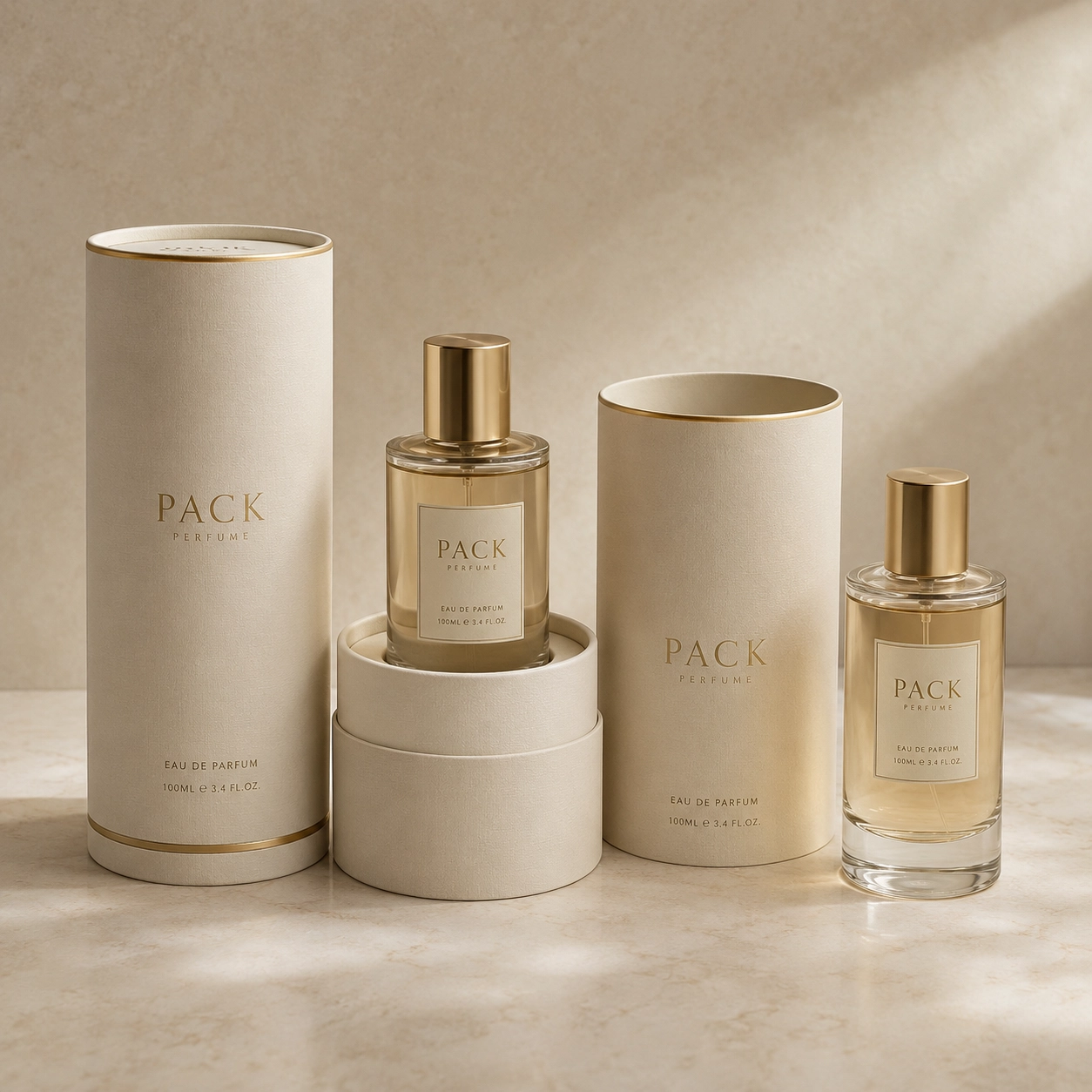
Perfume packaging often needs to combine protection with a luxurious unboxing experience. Glass bottles may have irregular shoulders, heavy bases, delicate pumps or decorative caps.
UM tubo de papel com inserção for perfume can use a lower EVA or cardboard support and, when necessary, an upper neck stabilizer. The tube may also use a telescopic lid, shoulder-neck structure or long sleeve to create a slow, experiência de abertura premium.
Common perfume insert options include:
- Die-cut EVA foam
- Flocked EVA
- Cardboard platform inserts
- Molded pulp supports
- Upper and lower positioning rings
- Fabric-covered supports
Dark green, preto, burgundy, cream and textured specialty papers work well for luxury fragrance packaging. Estampagem a quente, embossing and soft-touch lamination can then emphasize the brand without overwhelming the product.
Skincare Bottles and Jars
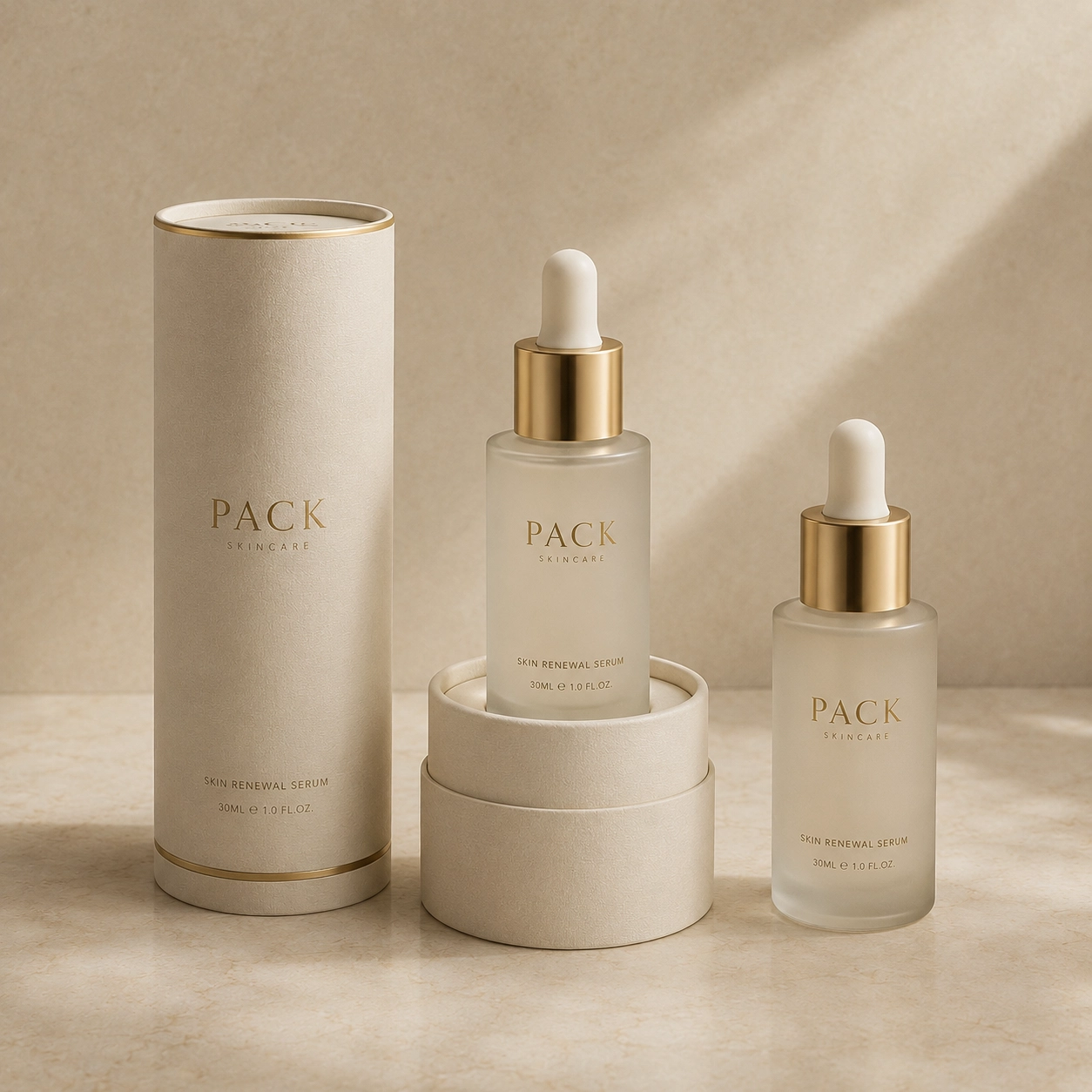
Frascos de soro, potes de creme, óleos faciais, masks and skincare sets frequently use packaging with internal positioning.
A single-product tube may hold one jar or dropper bottle. Enquanto isso, a wider tube can contain a complete set, such as a serum, cream and applicator.
Because skincare containers vary widely, buyers should send accurate samples. A small difference in pump diameter or cap height can affect the fit. Além disso, the insert should avoid pressing against printed labels or delicate surface coatings.
Suitable insert materials include cardboard, polpa moldada, EVA and EPE foam. For natural or clean-beauty positioning, a paperboard or molded-pulp insert often creates a more consistent visual story.
Candle Jars and Home Fragrance
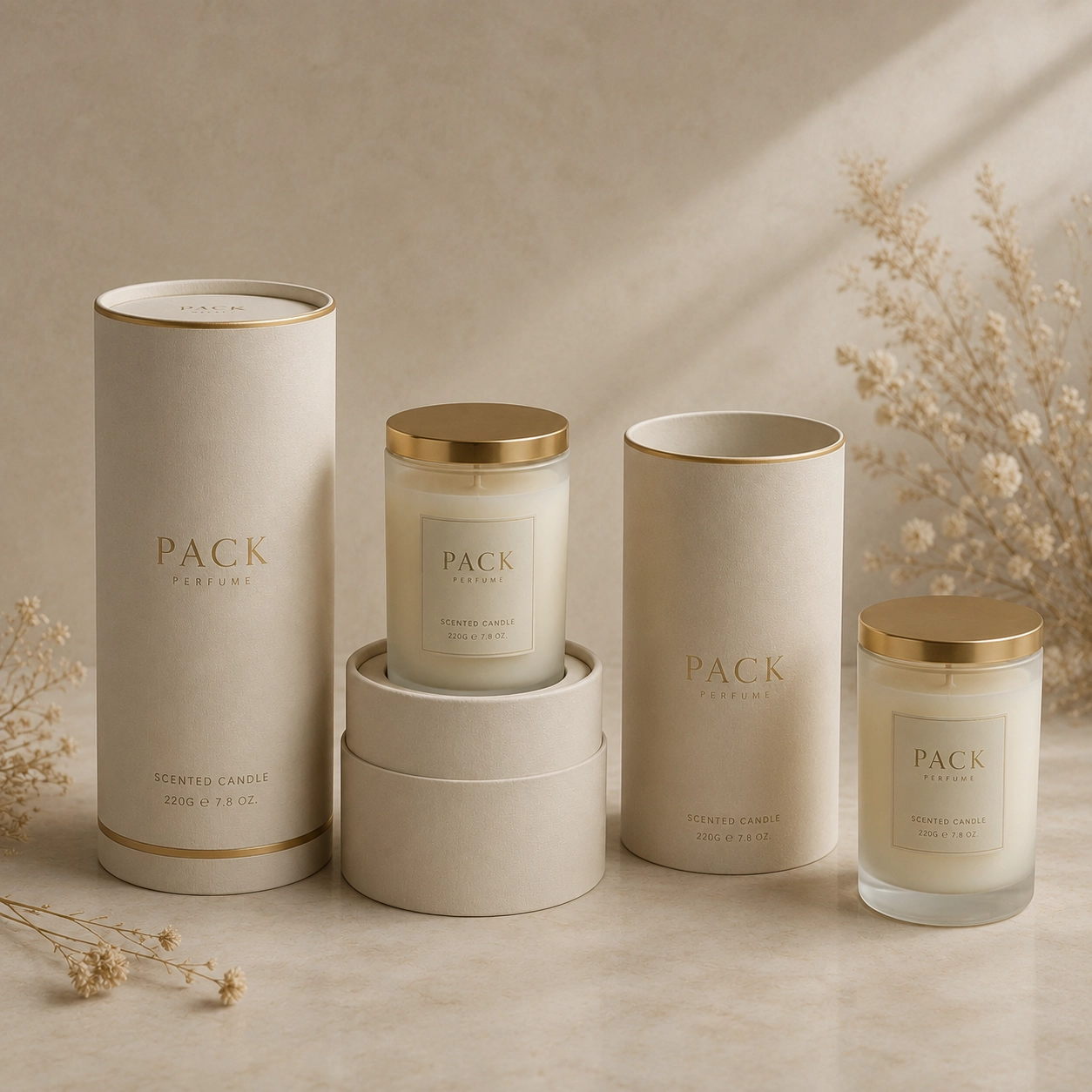
Glass candle jars are heavy and fragile. Portanto, the insert needs to support the base while reducing side movement.
UM tubo de papel com inserção for candles can use a thick circular base recess, a raised platform or a two-piece support system. The opening should leave enough space for the customer to lift the jar without pulling against the label.
The same structure can package:
- Scented candles
- Reed diffusers
- Room sprays
- Incense holders
- Wax melts
- Ceramic fragrance vessels
For premium home fragrance, brands often select matte specialty paper, natural kraft, soft-touch lamination or subtle foil details.
Essential Oils and Dropper Bottles
Small glass bottles may look simple to pack, but they can move easily inside an oversized tube. A narrow cutout or multi-bottle divider can keep each item upright.
For sets, the insert can include several identical openings or a combination of openings for bottles, droppers and accessories. Clear labeling inside the lid may also guide the customer through the product routine.
Chá, Coffee and Food Jars
Some tea, café, spice and specialty-food brands place a sealed jar or bottle inside a decorative paper tube. Nesse caso, the outer tube acts as protective secondary packaging and a gift presentation layer.
UM tubo de papel com inserção can stabilize glass honey jars, sauce bottles, tea jars, coffee canisters or condiment containers. When food is packed directly inside the tube rather than inside a separate container, the project requires a suitable food-grade liner and food-contact assessment.
Possible food applications include:
- Honey jars
- Jam jars
- Tea canisters
- Coffee jars
- Spice bottles
- Olive oil bottles
- Chocolate spread jars
- Premium sauce bottles
Vinho, Spirits and Beverage Bottles
Bottle tubes are widely used for wine, whisky, gin, rum, craft beverages and non-alcoholic gift drinks. The insert may protect the bottle base and prevent movement around the neck.
Because full bottles are heavy, the bottom construction, wall thickness and insert compression strength are especially important. The supplier should also evaluate carton packing, stacking and long-distance transport.
Joia, Toys and Gift Products
Not every product is a bottle or jar. Cylindrical gift packaging can also hold jewelry, medals, small toys, collectibles, papelaria, electronics accessories and promotional products.
For these applications, the insert may focus more on presentation than impact protection. Flocked EVA, velvet-covered platforms and precision-cut cardboard can create a high-value display, while molded pulp offers a more natural appearance.
Opções de materiais
Um sucesso tubo de papel com inserção depends on both the outer tube materials and the internal support. These components should be selected together because they influence cost, aparência, protection and recyclability.
Papel kraft
Natural kraft paper creates an organic, aparência discreta. It works especially well for candles, food jars, cuidados naturais com a pele, chá, coffee and handmade gift products.
As opções disponíveis podem incluir:
- Kraft marrom natural
- Kraft branco
- Kraft preto
- Kraft reciclado
- Textured kraft
- Colored kraft
Kraft paper can support simple printing, foil stamping and embossed details. No entanto, colors may appear less saturated than on coated art paper, so a printed sample is recommended.
Papel artístico
Coated art paper supports detailed CMYK printing, product photography, illustrations and bright colors. It is a practical choice when the design includes gradients, small regulatory text or complex artwork.
The printed paper can receive matte, lustro, anti-scratch or soft-touch lamination. Each option changes the color depth, tactile feel and surface durability.
Papel Especial
Specialty paper can introduce texture, dyed-through color, pearl effects, metallic finishes or a handmade look. It is commonly used for fragrance, cuidados com a pele, jewelry and premium gifting.
No entanto, highly textured paper may affect fine printing and foil registration. Portanto, the actual decorative process should be tested on the selected paper.
Spiral-Wound Paperboard
The core tube normally consists of multiple layers of spiral-wound paperboard. Its thickness should match the diameter, altura, peso do produto, closure style and shipping requirements.
A heavier bottle may need a stronger wall and reinforced bottom. A lightweight cosmetic jar may use a thinner structure. Simply increasing the wall thickness is not always the best answer because it also increases weight, material use and shipping cost.
Cardboard Inserts
Cardboard inserts are versatile, printable and often easy to coordinate with the outer package. They can be folded, layered or die-cut to form platforms, rings, dividers and compartments.
They are suitable for:
- Skincare bottles
- Candle jars
- Food jars
- Conjuntos de presentes
- Lightweight perfume bottles
- Acessórios
No entanto, thin cardboard may not provide enough cushioning for heavy or fragile glass. In those cases, a layered structure or another material may be more suitable.
Molded Pulp Inserts
Molded pulp uses formed fiber to create a shaped support. It offers a natural appearance and can suit brands seeking a lower-plastic presentation.
It works well for jars, garrafas, candles and gift sets. No entanto, ferramentas, textura de superfície, dimensional tolerance and minimum order quantity should be discussed early.
EVA Foam Inserts
EVA provides precise cutting, good shape retention and strong product positioning. It is commonly used for perfume, cuidados com a pele, jewelry and high-value gift products.
Available options include black, white and colored EVA, as well as flocked or fabric-covered finishes. Although EVA creates a premium fit, brands should consider whether it aligns with their material and sustainability goals.
EPE Foam Inserts
EPE foam offers cushioning and can protect fragile or heavier products during transport. It is usually more functional than decorative, although it can be covered with paper or fabric.
Food-Grade and Foil Liners
When food, chá, coffee or snacks touch the tube directly, the inner wall may use a food-grade liner, PE-coated paper or foil-based barrier layer. No entanto, a decorative tube holding a sealed jar or bottle does not always require direct-food-contact lining.
The final choice should reflect the actual contact condition, target market and requested documentation.
Opções de estrutura
The outer structure and insert design work as one system. A beautifully printed tube may still perform poorly if the lid depth, insert level or removal space is incorrect.
Paper Lid
A press-fit paper lid creates a clean and coordinated appearance. It can use the same paper as the body or a contrasting color.
The lid depth influences both appearance and stability. A deeper lid generally provides more overlap, while a short lid creates a lighter visual proportion.
Shoulder-Neck Structure
A shoulder-neck tube includes an inner neck that extends above the main body and fits inside the lid. This creates a more controlled opening and better alignment.
For a premium tubo de papel com inserção, the inner neck can use a contrasting color or printed message. It can also help hide the upper edge of the insert.
Telescopic Structure
A telescopic lid covers a larger part of the body. This structure often feels substantial and luxurious, making it suitable for perfume, velas, wine and gift products.
The longer lid also creates additional space for branding. No entanto, designers need to consider artwork alignment and friction during opening.
Estrutura da manga
A sleeve can slide over an inner tube or presentation tray. This design creates a layered opening experience and can work well for product sets.
Estrutura da janela
A clear or open window lets customers see part of the product. It can improve shelf communication, although it may reduce the protective surface and introduce a plastic component when clear film is used.
Estruturas push-up e twist-up
Push-up and twist-up tubes are mainly used for solid cosmetics, protetor labial, Desodorante, small gifts and special dispensing products. Their internal mechanisms function as both the product holder and the dispensing system.
These structures require more precise tolerances than a standard gift tube.
One-Level Insert
A single base insert holds the bottom of a bottle or jar. It is simple and suitable when the container has a stable shape and does not need neck support.
Two-Level Insert
A two-level system supports both the base and upper section. It works well for tall perfume bottles, dropper bottles and products with narrow necks.
Multi-Product Insert
One tube can contain several products when the diameter allows enough space. The insert may include multiple openings, stepped platforms or separate compartments.
No entanto, the products should not collide during transport. The designer must also leave enough space for customers to remove each item comfortably.
Impressão & Opções de acabamento
The cylindrical surface provides a generous branding area. No entanto, artwork must account for the vertical seam, lid overlap, viewing angle and exact position of the product name.
Impressão CMYK
CMYK printing suits photography, ilustrações detalhadas, gradients and multi-color graphics. It is widely used for skincare, comida, candles and retail gift products.
Pantone Color Matching
Pantone colors help brands maintain a consistent signature color across tubes, caixas, labels and bags. No entanto, the paper, lamination and lighting can influence the final appearance.
Estampagem a Quente
Ouro, prata, cobre, holographic and colored foil stamping can highlight logos, product names and borders. A restrained foil area often looks more sophisticated than covering a large part of the tube.
Gravação e Debossing
A gravação em relevo eleva os elementos selecionados, while debossing presses them inward. Both techniques add tactile value and work well for logos, symbols and simple patterns.
UV localizado
Spot UV cria contraste brilhante em uma superfície fosca. It can emphasize a logo, ingredient illustration or subtle background pattern.
Laminação fosca
Matte lamination creates a calm, modern finish. It is popular for fragrance, cuidados com a pele, velas, coffee and luxury gifting.
Laminação Brilhante
Gloss lamination increases shine and color saturation. It works well for bright promotional packaging, toys and some food products.
Soft-Touch and Anti-Scratch Finishes
Soft-touch lamination creates a velvety feel, while anti-scratch film helps protect dark colors during handling and shipping.
For most premium projects, one tactile finish and one decorative process are enough. Too many finishes can increase cost and make the design feel less focused.
Conformidade & Sustentabilidade
Compliance depends on the packed product, material combination, contact condition and destination market. Portanto, buyers should request documentation for the exact final specification rather than rely on a general certification list.
For food and food-related projects, relevant considerations may include:
- Segurança em contato com alimentos
- Declarações materiais
- Migration test reports
- Informações sobre tinta e adesivo
- Traceability
- Production hygiene
- Documentação de embalagem relacionada ao BRC
- Documentação IFS Food ou sistema de fornecedor relacionado
FSC-certified paper can support responsible fiber sourcing when the selected material and chain-of-custody conditions apply.
Para projetos europeus, buyers may also need to evaluate EUDR due-diligence requirements, packaging EPR obligations and local packaging rules according to their role and sales market.
Sustainability is also influenced by insert selection. A fiber-based tubo de papel com inserção may be easier to explain as a coordinated material system than a paper tube combined with several permanent plastic components. No entanto, even fiber-based structures need honest evaluation because adhesives, revestimentos, laminations and local recycling infrastructure affect the final disposal route.
Practical improvement options include:
- Using paperboard or molded pulp where performance allows
- Reduzindo a espessura desnecessária da parede
- Projetando inserções removíveis
- Evitando tubos grandes
- Using fewer decorative components
- Selecting responsibly sourced paper
- Providing accurate recycling guidance
- Testing product protection to reduce damage and waste
The most sustainable-looking option is not always the most protective. The goal should be to use materials efficiently while keeping the product safe.
Como personalizar
Custom development becomes much easier when the buyer provides complete and accurate information from the start.
Etapa 1: Send the Real Product Sample
A physical product sample is the best starting point. It allows the packaging team to measure the widest diameter, altura total, cap, pump, ombro, base and fragile areas.
When samples cannot be sent immediately, provide a technical drawing with tolerances and several photographs. Ainda, a final fit test should use the actual production item.
Etapa 2: Define the Packaging Goal
Explain whether the package is intended for:
- Retail display
- Ecommerce shipping
- Apresentação de presente
- Product sets
- Campanhas promocionais
- Subscription boxes
- Distributor packaging
A retail gift package may prioritize visual presentation, while ecommerce packaging may require stronger impact protection.
Etapa 3: Confirm Tube Dimensions
The team will calculate the tube’s inner diameter and height based on the product and insert. The tube should not be unnecessarily large because extra space increases material use, carton size and shipping cost.
Ao mesmo tempo, the package needs enough clearance for insertion, removal and production tolerance.
Etapa 4: Select the Insert
Para cada tubo de papel com inserção, confirmar:
- Inserir material
- Espessura da inserção
- Cutout shape
- Cutout depth
- Product tolerance
- Number of support levels
- Finger space
- Surface covering
- Cor
- Adhesive method
- Removal method
The supplier should explain how the insert protects the product and how the packing team will place it during production.
Etapa 5: Choose the Outer Materials and Structure
Select the paper, paperboard wall, lid type, bottom and inner neck. Then choose the printing and surface finishing.
A simple kraft tube with a molded-pulp insert may suit a natural skincare line. Em contraste, a perfume brand may select specialty paper, a shoulder-neck structure and flocked EVA.
Etapa 6: Preparar arte
Fornece IA editável, Arquivos PDF ou EPS. Convert fonts to outlines and include linked images.
The artwork should account for:
- Vertical seam
- Lid overlap
- Tube curvature
- Código de barras
- Ingredientes
- Warnings
- Product information
- Recycling symbols
- Country-of-origin text
Pantone references should be included when brand color accuracy matters.
Etapa 7: Approve the Sample
A structural sample should confirm fit, removal, balance and protection. A printed sample should confirm color, textura de papel, foil registration, lid friction and overall presentation.
During review, place the real product inside the package and turn the tube in different directions. Gently shake it. Open and close the lid several times. Ask someone unfamiliar with the project to remove the product.
These simple checks often reveal practical problems that drawings do not show.
Etapa 8: Confirmar quantidade mínima, Lead Time and Packing
MOQ depende do tamanho do tubo, inserir material, impressão, acabamento, molds and special components.
O prazo de entrega pode incluir a preparação do material, impressão, laminação, formação de tubo, insert cutting or molding, conjunto, inspection and export packing.
Share the launch date and delivery deadline early. Seasonal or promotional projects should leave enough time for sampling, corrections, production and transport.
Informações necessárias para uma cotação
Por favor, forneça:
- Product name and application
- Product sample or technical drawing
- Maximum diameter and height
- Peso do produto
- Quantidade necessária
- Preferred insert material
- Preferred tube structure
- Requisitos de impressão e acabamento
- Mercado-alvo
- Documentos de conformidade necessários
- Prazo de entrega
- Destino de envio
- Editable logo or artwork file
Produtos Relacionados: Tubos de papel personalizados / Embalagem de alimentos / Embalagens Cosméticas
Por que escolher a embalagem Pack?
Pack Packaging supports custom paper tubes, inserts and rigid paper packaging from structural development to mass production.
Nossa instalação de fabricação cobre 20,000㎡, incluindo um 2,000㎡ oficina de qualidade alimentar. Monthly paper tube capacity exceeds 10,000,000 pedaços, allowing us to support both growing brands and large purchasing programs.
Nosso 20+ equipe de design membro can assist with:
- Dimensões do tubo
- Insert development
- Bottle and jar positioning
- Recomendações de materiais
- Lid and inner-neck structure
- Layout da arte
- Acabamento de superfície
- Desenvolvimento de amostra
- Carton packing
- Production optimization
When a buyer requests a tubo de papel com inserção, our team evaluates the actual product rather than simply choosing a standard tube from a size chart.
Os recursos OEM e ODM incluem:
- Diâmetros e alturas personalizados
- Kraft, papéis artísticos e especiais
- Cardboard, molded-pulp, EVA and EPE inserts
- Single-level and multi-level supports
- Paper lids and telescopic lids
- Shoulder-neck structures
- Impressão CMYK e Pantone
- Estampagem a quente
- Gravação e gravação em relevo
- UV localizado
- Fosco, gloss and soft-touch lamination
- Amostras simples e impressas
- Quality inspection and export packing
Depending on the selected materials and application, supporting documents may include FSC, relatórios de contato com alimentos, Documentação relacionada ao BRC, IFS-related documentation, RoHS 2.0, Informações de suporte REACH-SVHC e EPR.
The exact documentation should be confirmed against the final specification and destination market.
Perguntas frequentes
1. Which insert material is best for a glass bottle?
The best material depends on bottle weight, forma, fragilidade, budget and brand positioning. EVA provides precise positioning, molded pulp offers a fiber-based appearance, and layered cardboard can work well for lighter or regularly shaped bottles.
2. Do you need the actual product sample for a paper tube with insert?
Sim, a real sample is strongly recommended. It allows the packaging team to check the cap, ombro, label, base and true production tolerance. A technical drawing can start the design process, but the final fit should be tested with the actual product.
3. Can one tube hold several products?
Sim. A multi-product insert can hold several bottles, jars or accessories. O diâmetro, product spacing, weight distribution and removal sequence should all be considered.
4. How tight should the insert fit?
The product should remain stable without being difficult to insert or remove. The required tolerance depends on the material, product surface and production variation. A physical sample is the safest way to approve the fit.
5. Can the insert be made without plastic?
Sim. Cardboard and molded pulp are common fiber-based options. No entanto, the final choice should still meet the project’s protection, appearance and transport requirements.
6. Qual é a quantidade mínima de pedido?
MOQ varies according to tube dimensions, inserir material, impressão, finishing and tooling. Molded components or special sizes may require a higher quantity than standard cardboard or EVA solutions.
7. Quanto tempo leva a amostragem?
Sampling time depends on the structure and materials. A plain tube with a die-cut insert is usually faster than a fully printed package with a molded insert, foil stamping and special finishing. The current schedule should be confirmed before the project begins.
8. Can you perform packaging tests?
Testing options depend on the project and agreed specification. Buyers should discuss fit checks, shake tests, drop tests, compression requirements and transport simulation before mass production.
Explore mais soluções de embalagens personalizadas
Procurando mais opções de embalagens? Descubra nossa linha completa de produtos de embalagens personalizadas projetados para diferentes indústrias e aplicações.
Caixas dobráveis – Caixas leves e totalmente personalizáveis para embalagens de varejo.
Caixas Rígidas – Caixas de presente rígidas premium para marcas de luxo.
Corrugated Boxes – Durable shipping and e-commerce packaging solutions.
Caixas resistentes a crianças – Embalagem segura para produtos regulamentados.
Acessórios – Inserções personalizadas, papel de seda, fitas, rótulos, e mais.
Tubos de papel - Explore nossa coleção dedicada de embalagens personalizadas em tubos de papel para chá, café, cosméticos, velas, espíritos, e outros produtos premium em nosso site especializado.
Precisa de embalagem personalizada? Contate nossa equipe hoje para um orçamento gratuito e consulta especializada.