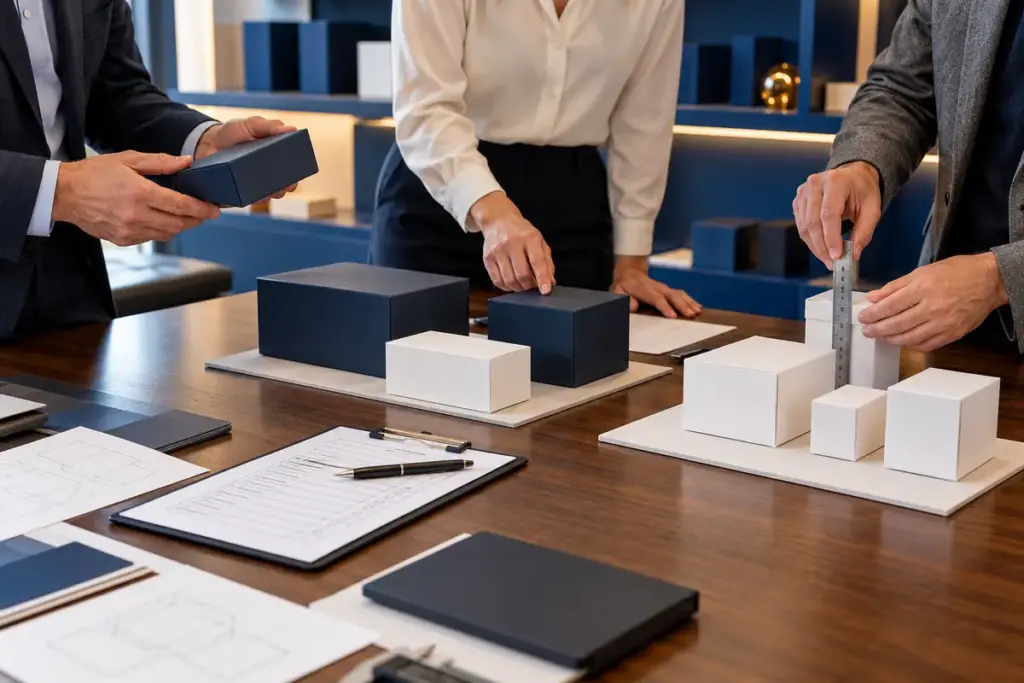
This luxury paper tubes case study follows a skincare brand whose serum range kept getting overlooked on shelf. Their formula was excellent, their pricing sat firmly in the premium tier, yet the packaging read as mid-market — and buyers walked past it. So the brief wasn’t really about materials at all. It was about making a 30ml bottle feel worth what they were charging.
Below, we walk through what actually changed: the structural decisions, the finish trade-offs, the sample the buyer rejected, and the fix that finally landed the listing.
🔘 [Get Custom Packaging Quote →]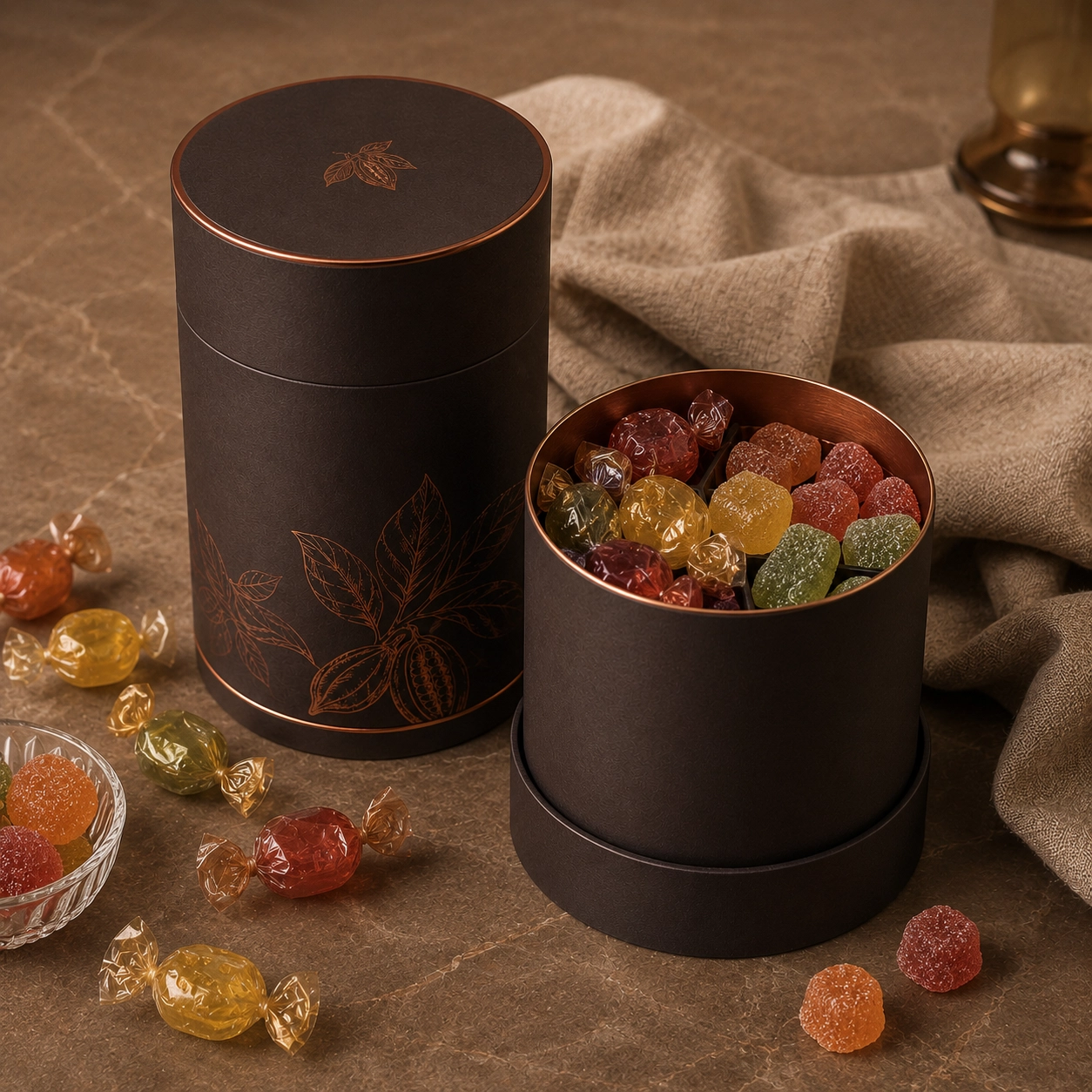
The Brief and Its Constraints
What the Brand Wanted
A 30ml glass serum bottle presented in a cylindrical format. Premium shelf presence in a crowded skincare aisle. A sustainability story their retail buyer would accept. And no plastic tray inside.
The Real Problem Underneath
Here’s the thing though. Their existing carton wasn’t badly made — it was just forgettable. Rectangular, glossy, and visually identical to everything beside it. Consequently, shoppers had no reason to pick it up, and picking it up is where premium skincare actually sells.
Why They Chose Tubes
Cylindrical formats break the rectangular rhythm of a shelf. Furthermore, luxury paper tubes hold a bottle upright and steady, which matters when a shopper handles the product and puts it back repeatedly. Our related food grade paper tube case study covers the same construction applied to edible products.
What Makes Luxury Paper Tubes Different
Construction Fundamentals
The body is wound or seamed paperboard, wrapped in printed paper, with a base disc and lid. However, what separates premium from ordinary sits in the details: wall thickness, lid tolerance, and how cleanly the wrap seam disappears.
Wall Weight Changes Everything
A thin-walled tube flexes when gripped, and shoppers read that flex as cheap instantly. Therefore, luxury paper tubes typically run a noticeably heavier greyboard than standard promotional tubes. It costs more, though it’s the single most noticeable upgrade.
Lid Tolerance and the Sound It Makes
This surprises most brands. A well-toleranced lid draws off with slight resistance and a soft pneumatic sigh. Meanwhile, a loose lid rattles and falls off. That half-second of resistance genuinely shapes perceived value.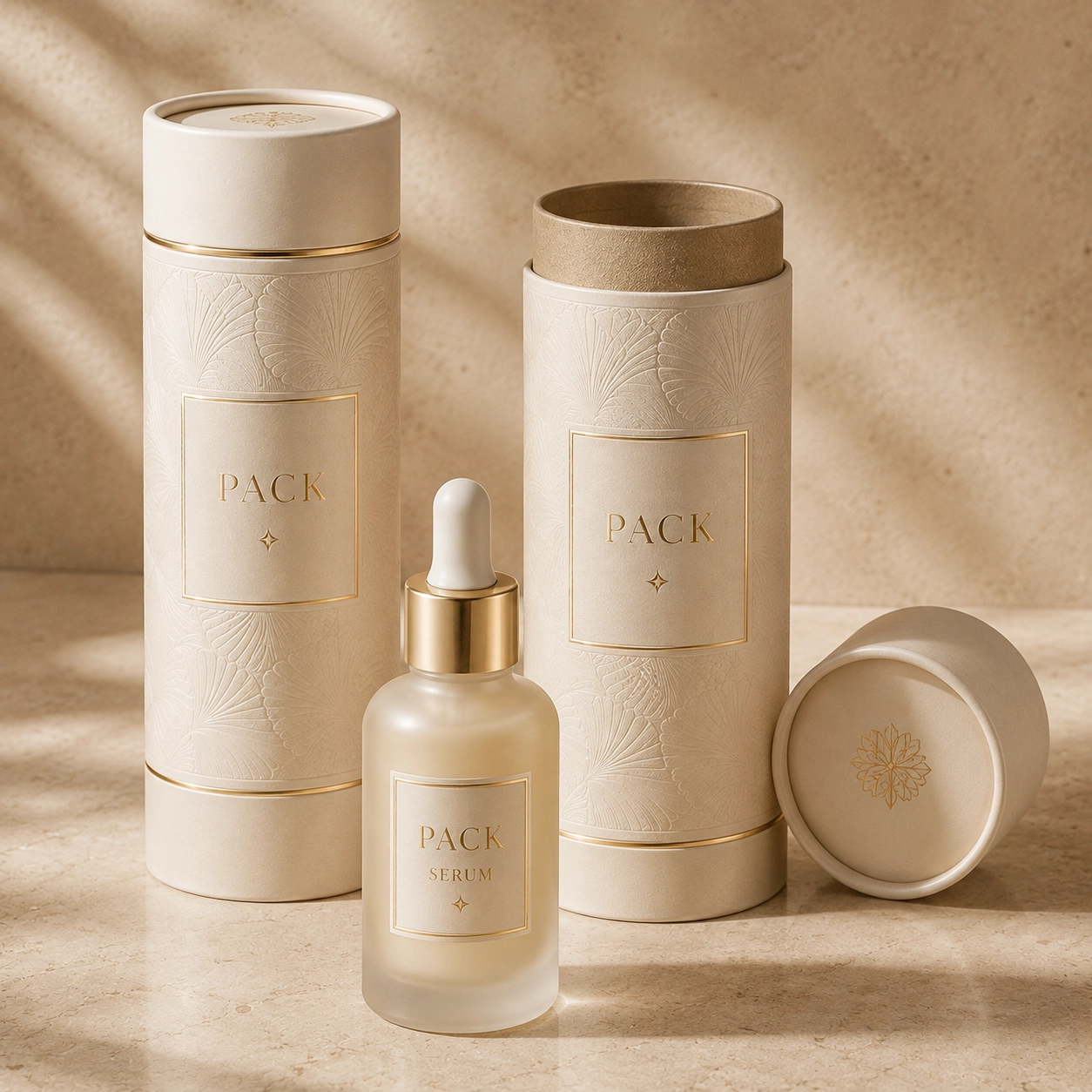
Where Luxury Paper Tubes Work Beyond Skincare
Tubes suit many premium categories, so it’s worth seeing where else the format earns its place:
- Fragrance — Glass bottles in telescopic tubes with pulp cradles. See our perfume paper tube packaging case study.
- Solid cosmetics and balms — All-paper push-up mechanisms. Read Plastic-Free Packaging Ideas for Cosmetics and Skincare.
- Candles and home fragrance — Glass vessels in kraft or wrapped tubes, doubling as gift presentation.
- Premium tea and coffee — Speciality ranges around a sealed liner. See Sustainable Food Packaging for Tea, Coffee and Snacks.
- Spirits and gifting — Bottle tubes with substantially heavier wall specifications.
Material Decisions Behind These Luxury Paper Tubes
The Wrap Paper Question
The brand arrived wanting soft-touch lamination, which is the default premium reflex in skincare. Nevertheless, we suggested testing an uncoated textured stock alongside it, partly for their sustainability story and partly because textured paper photographs beautifully in flat-lay content.
What the Handling Test Revealed
We sent both. Honestly, the result surprised them — their team preferred the uncoated linen-textured stock in the hand, even though the laminated sample looked richer on screen. So the textured option won, and the plastic film came out of the specification entirely.
The Insert
Moulded pulp cradles the 30ml bottle, replacing the vac-form tray. Its rough organic texture contrasts against smooth glass, and that contrast reads as considered rather than cost-cut.
Certified Fibre
Their retailer required FSC-certified material. Our guide on FSC Certified Paper Packaging explains chain of custody, while Biodegradable Paper Tube Packaging covers fibre options in more depth.
Luxury Paper Tubes Structures We Tested
Telescopic Lid and Base
A deep lid over a deep base. Strong protection, controlled reveal, and the most cost-efficient premium structure. This became the final choice.
📦 Related Products: Custom Paper Tubes / Food Packaging / Cosmetic Packaging
Shoulder-Neck Construction
An inner neck creates a stepped, two-stage reveal that feels distinctly upmarket. It tested best of all on perceived value. However, tooling cost and tighter tolerances pushed it beyond their launch budget, so they shelved it for a future range.
Magnetic and Ribbon-Pull Options
A ribbon pull tab helps with deep tubes where the bottle sits low. Meanwhile, we advised against fabric ribbon here, since it complicated the fibre story for no real functional gain.
Alternatives Considered
They also priced rigid boxes and folding cartons. A rigid box would have felt equally premium, although it wouldn’t have solved the shelf-differentiation problem that started the project.
Printing and Finishing on Luxury Paper Tubes
The Print Approach
Two Pantone spot colours rather than a full CMYK build. Restraint reads as confidence in skincare, and spot colour holds consistency across every production run.
Hot Stamping and Embossing
Matte gold foil on the logo, kept deliberately small. Additionally, a blind deboss ran around the lower body — invisible in photographs, obvious the moment someone holds it. Frankly, these unphotographable details are what separate genuine luxury paper tubes from packaging that only performs online.
What We Removed
Gloss lamination came out. So did spot UV, which the brand had specified out of habit rather than intent. Removing both simplified the recycling story and, interestingly, reduced cost slightly.
The Trade-Off
Dropping lamination reduced scuff resistance on a mid-tone colour. Therefore, we specified a matte aqueous coating and adjusted the transit packing to prevent rub marks in the master carton.
Testing: Where the Luxury Paper Tubes Nearly Failed
The Buyer Rejected the First Sample
Their retail buyer handled the first pre-production sample and called the lid “loose.” Technically it fell within our standard tolerance band. Nevertheless, perception is the product here, and a lid that slides off too easily undermines everything else.
The Diagnosis
The lid-to-base clearance sat at the generous end of tolerance. Combined with a lightweight lid disc, it drew off with no resistance at all — no sigh, no weight, no moment.
The Fix
We tightened the clearance, added a slightly heavier lid disc, and increased the internal lid depth. Consequently, the lid drew off with gentle resistance and a soft audible release.
Second Round
The buyer approved it on the spot. We also ran drop and compression testing with the filled bottle, since these ship in stacked master cartons and travel through e-commerce as well as retail.
The Transit Layer
For direct-to-consumer orders, tubes travel inside a corrugated mailer with paper void fill, keeping the whole unboxing free of plastic.
Compliance Behind the Luxury Paper Tubes
Retail buyers audit premium packaging as rigorously as any other component, so we assembled documentation before production:
- FSC — Certified board and wrap paper, with chain of custody documentation for the retailer audit.
- BRCGS Packaging Materials — Currently Issue 7, requested by their retail partner before listing.
- Cosmetic contact safety — Relevant here only for the secondary layer, since the formula sits in sealed glass. Products touching fibre directly need a fuller specification, as our food grade paper tube case study explains.
- EPR — The brand registers and pays fees per EU market. We supplied component weights split by material. See EPR Packaging Compliance.
- PPWR and EUDR — PPWR applies from 12 August 2026 across the EU. Meanwhile, EUDR obligations fall on 30 December 2026 for large and medium operators, and 30 June 2027 for micro and small operators.
- Claims wording — We advised “plastic-free secondary packaging with FSC-certified fibre” rather than a blanket eco claim. Our Recyclable Paper Packaging guide covers wording properly.
How to Customize Luxury Paper Tubes: Steps 1–3
Step 1: Send Dimensions and Positioning
First, we need bottle dimensions, weight, and — just as importantly — where you sit on shelf and who you sit beside. For luxury paper tubes, competitive context shapes the specification as much as the product does.
Step 2: Structure and Wall Specification
Next, we recommend diameter, wall thickness, lid type, and insert approach. Honestly, wall weight is where we’d spend your budget first if it’s tight.
Step 3: Dieline and Artwork
Then we supply a dieline. You return artwork in AI, EPS, or high-res PDF with Pantone references and separate layers marked clearly for foil and emboss.
Sampling and Production: Steps 4–6
Step 4: White Sample
Every project starts with an unprinted structural sample to validate fit, rigidity, and lid feel. As this project showed, lid tolerance is easy to get technically right and commercially wrong.
Step 5: Pre-Production Sample
Then a fully finished sample with real print, foil, and emboss. Put it in your buyer’s hands before committing to tooling, because handling reveals what photographs never will.
Step 6: MOQ, Lead Time and Production
MOQ for luxury paper tubes typically starts at 500–1,000 units depending on diameter and finish. Lead time usually runs 25–35 days after sample approval. Moulded pulp inserts need tooling, so factor that into your launch timeline early.
Why Choose Pack Packaging for Luxury Paper Tubes
Manufacturing Capability
- 20,000㎡ factory — Tube winding, wrapping, die-cutting, foiling, and assembly all in house, so we control tolerance at every stage. For luxury paper tubes, tolerance control is the whole game.
- 2,000㎡ food-grade workshop — A separate food-safe environment for edible and contact-sensitive products.
- 10,000,000+ monthly capacity — We scale from a 5,000-unit launch to millions without changing supplier.
Design and Engineering
- 20+ in-house designers — Never outsourced. Structural development, insert engineering, dieline creation, and print-ready artwork.
- Handling samples — We’ll send you competing finish options to hold, because screen previews mislead on tactile decisions.
- Documentation — FSC chain of custody, material specifications, and component weights for EPR filings.
- 60+ export markets — Incoterms and customs handled daily.
An Honest Note
Premium feel comes mostly from wall weight, lid tolerance, and restraint — not from stacking finishes. We’ve watched brands spend heavily on foil and spot UV while running a thin wall, then wonder why the result feels cheap. So we’d rather move that budget into structure and talk you out of the extras.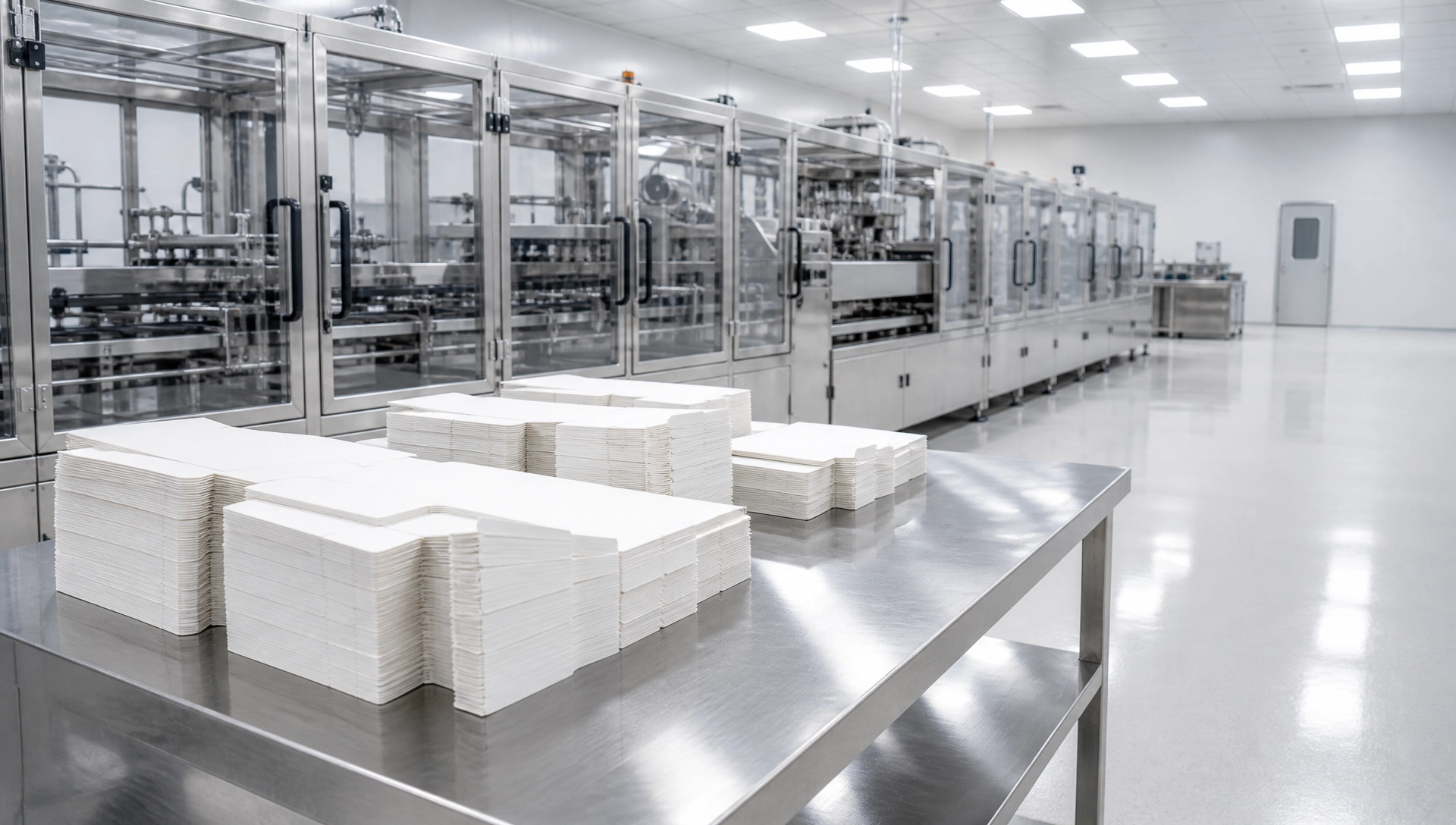
FAQ: Luxury Paper Tubes and Shelf Presence
Q1: Will a paper tube really look premium next to glass and acrylic? Yes, when the wall weight and lid tolerance are right. Interestingly, fibre now reads as more considered than plastic in premium skincare. However, a thin-walled tube reads cheaper than a decent carton, so specification matters enormously.
Q2: Does uncoated paper feel less premium than soft-touch? Not in our experience, and this project bore that out. Textured uncoated stock often wins handling tests outright, even when laminated samples look richer on screen.
Q3: How do we make the tube stand out on a crowded shelf? Shape does most of the work, since cylinders break a rectangular rhythm. Additionally, restraint in print usually outperforms busy artwork at premium price points.
Q4: Will the tube scuff in transit or on shelf? It can, particularly on mid-tone colours without lamination. Nevertheless, a matte aqueous coating, heavier wrap paper, and correct master-carton packing handle it well.
FAQ: Cost, Timeline and Sourcing
Q5: What drives cost most in this kind of project? Diameter, wall thickness, finishing, and insert tooling. Meanwhile, print colour count matters less than brands expect, and removing lamination actually reduces cost.
Q6: Where should we spend if the budget is tight? Wall weight first, lid tolerance second, finishes last. That order reflects what shoppers actually notice when they pick a product up.
Q7: What is the realistic timeline from brief to delivery? Allow two to three weeks for structural sampling, one to two for pre-production samples, then 25–35 days production. So plan roughly ten to twelve weeks total.
Q8: What do you need to start a quotation? Send your product dimensions, product use, quantity, target market, and logo file. Then we’ll recommend the right luxury paper tubes structure, material, and finish for your range.
Related Guides
This project touched several topics we’ve covered separately:
- Food Grade Paper Tube Case Study for a Snack Brand — The same construction applied to edible products.
- Perfume Paper Tube Packaging Case Study — Protecting glass fragrance bottles in fibre.
- Plastic-Free Packaging Ideas for Cosmetics and Skincare — Removing plastic across a beauty range.
- FSC Certified Paper Packaging — Proving fibre origin.
- Biodegradable Paper Tube Packaging — Tube construction and material detail.
- EPR Packaging Compliance for Brands Selling to the EU — Registration and fees per market.
- How Paper Packaging Helps Brands Build a Greener Image — Why the switch changes brand perception.
Explore More Custom Packaging Solutions
- Paper Tubes — Our dedicated collection for skincare, fragrance, candles, tea, and coffee.
- Rigid Boxes — Premium gift boxes for prestige ranges.
- Folding Boxes — Lightweight, fully customisable retail cartons.
- Corrugated Boxes — Durable e-commerce and shipping packaging.
- Child Resistant Boxes — Secure packaging for regulated products.
- Accessories — Custom inserts, tissue paper, ribbons, and labels.
Ready to Upgrade Your Shelf Presence?
What fixed this project wasn’t the foil or the emboss, honestly. It was half a millimetre of lid clearance and a heavier board wall — two things no shopper could name, yet both changed how the product felt the instant someone picked it up. That’s usually what separates luxury paper tubes that earn a listing from packaging that merely looks the part in a render.
Tell us your product size, quantity, logo file, and target market. Our team will then recommend the right structure, material, and finish — and we’ll tell you honestly where your budget will do the most work.
✉️ [Send Us Your Brief → Get a Custom Quote in 24 Hours] Include: bottle dimensions · quantity · target market · logo file
Pack Packaging | 20,000㎡ Factory | 2,000㎡ Food-Grade Workshop | FSC Certified Materials | 60+ Export Markets
Note on this case study: This walkthrough describes a representative project. We have anonymised client identity and commercially sensitive details, and consolidated certain specifics for clarity. Technical processes, testing sequences, MOQ ranges, and lead times reflect our standard practice. Figures quoted are typical ranges rather than guarantees, and your project specifications may differ.
Disclaimer: Regulatory information reflects publicly available sources as of August 2026 and does not constitute legal advice. Requirements vary by product and market, so confirm your specific obligations with a qualified advisor.