Sustainability claims are becoming more important, but buyers still need packaging that protects the product, prints well, fits the filling process and remains commercially realistic. Biodegradable paper tube packaging can be a useful direction for beauty and food brands when the paperboard, coatings, adhesives, liners, closures and inserts are selected as one complete system rather than judged by the outer paper alone.
However, “paper-based” does not automatically mean that every finished tube is biodegradable. A foil liner, plastic window, foam insert, synthetic barrier or metal closure can change the end-of-life route. Therefore, the safest approach is to design around the product requirement first and then verify which environmental claims the finished package can genuinely support.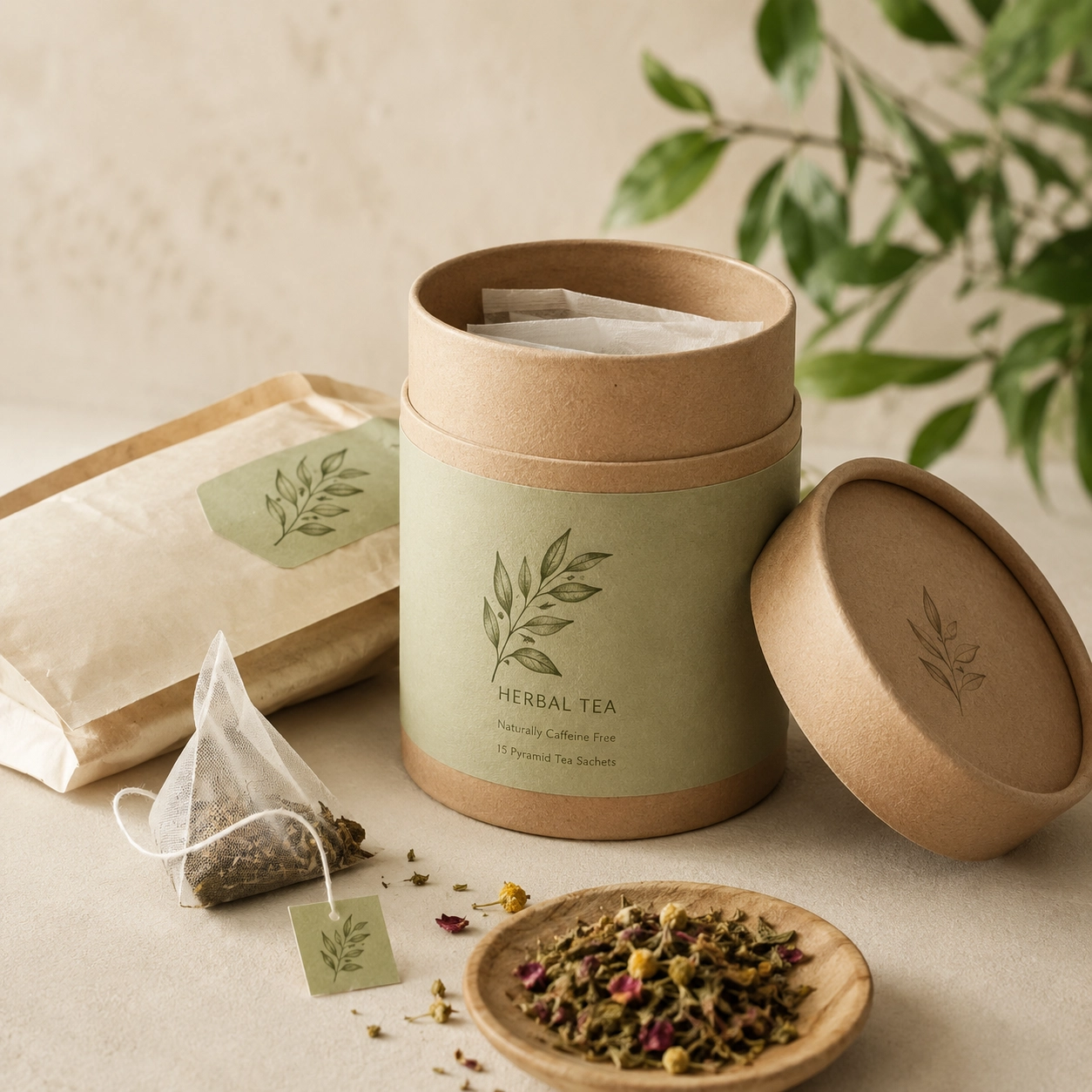
What Is Biodegradable Paper Tube Packaging?
In practical packaging terms, biodegradable paper tube packaging is a cylindrical paperboard package designed so that suitable components can break down under defined biological conditions, provided the full construction and disposal environment support that claim.
The main tube body is usually produced from spiral-wound paperboard. Meanwhile, the visible wrap may use kraft paper, art paper or specialty paper. Lids, liners, coatings and inserts can then be customized according to the product.
That last point is important.
A tube may contain mainly paper fiber but still include one or more non-biodegradable components. For example, conventional plastic lamination, aluminum foil, EVA foam or a PET window can change how the finished package should be described.
Therefore, before using the word “biodegradable,” brands should ask:
- Which components are fiber-based?
- Does the package contain plastic or metal?
- Does it require a barrier liner?
- Which adhesives and coatings are used?
- Is the environmental claim supported by documentation?
- Under which conditions can the package break down?
- Would recycling actually be the better end-of-life route?
For products marketed in the United States, the FTC advises marketers not to make broad biodegradable claims without appropriate substantiation concerning the complete product or package and its normal disposal conditions.
When Should Brands Use This Packaging Direction?
The strongest use case for biodegradable paper tube packaging is a product that can be protected adequately with a fiber-dominant construction and does not depend on a complex high-barrier, multi-material package.
For example, solid beauty products, dry accessories, individually wrapped foods and products already protected by an inner container can provide more flexibility.
By contrast, certain foods require stronger barriers against oxygen, moisture, grease or aroma. In those cases, the more realistic sustainability objective may become:
- Recyclability
- Plastic reduction
- Responsible fiber sourcing
- Material separation
- Reduced packaging weight
rather than biodegradability alone.
In fact, biodegradable, compostable and recyclable are different concepts. The European Commission also notes that biodegradability depends on defined conditions and that environmental terminology can otherwise confuse consumers.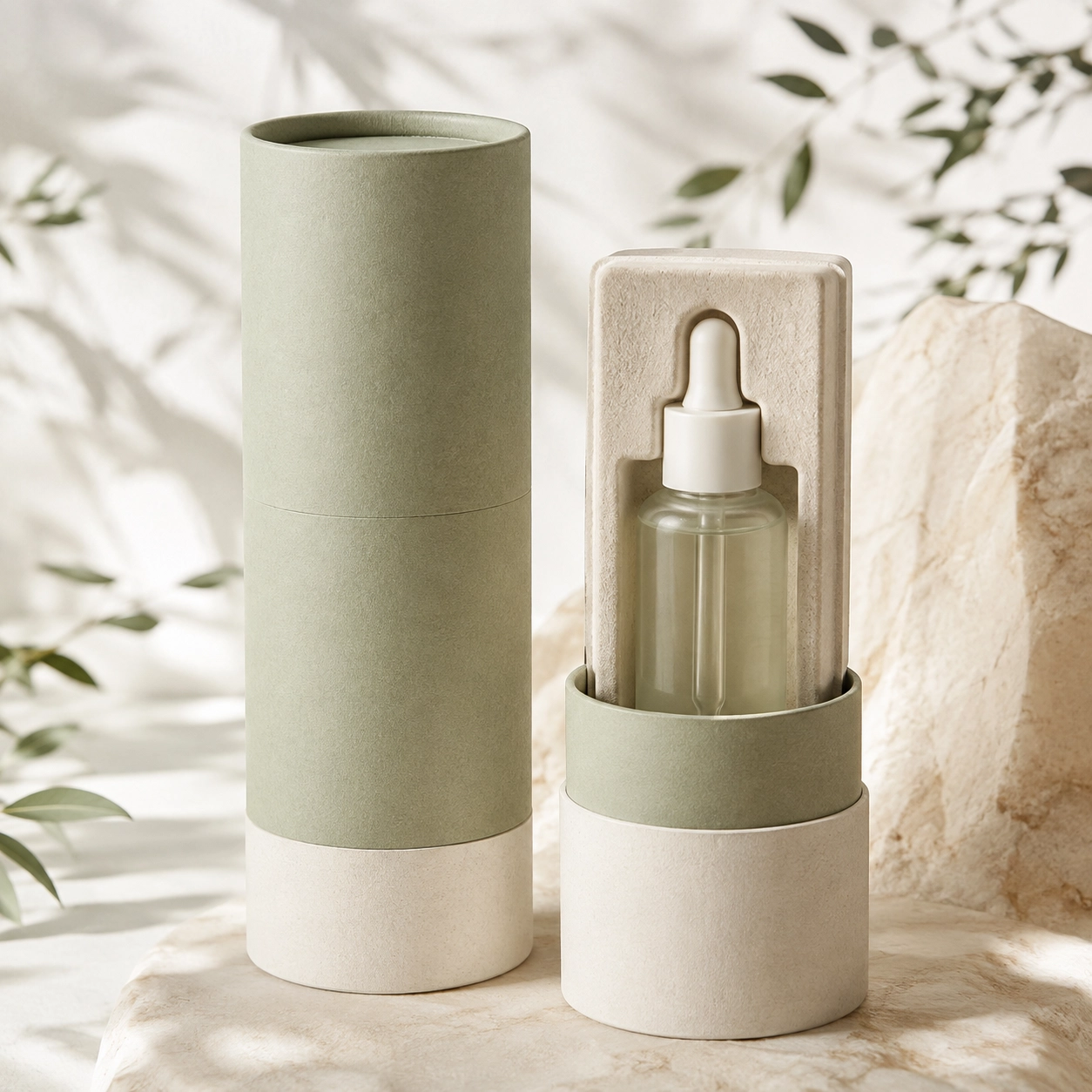
Common Applications
The practical value of biodegradable paper tube packaging depends heavily on the actual product. Beauty and food products have very different protection, hygiene and barrier requirements, so the structure should follow the product rather than a sustainability slogan.
Skincare and Beauty Products
Beauty brands can consider paper tube formats for:
- Solid perfume
- Lip balm
- Deodorant
- Solid lotion
- Soap
- Bath products
- Cosmetic accessories
- Gift sets
- Bottled skincare as secondary packaging
For solid products, push-up paper tubes can reduce dependence on conventional rigid plastic containers when the formula and contact materials are compatible.
For bottled skincare, meanwhile, the tube normally functions as secondary packaging around a glass or plastic primary container. Therefore, the paper tube does not have to provide the main barrier protecting the formulation.
A premium skincare package might combine kraft or specialty paper with:
- Minimal Pantone printing
- Small-area foil stamping
- Embossing
- Molded pulp
- Paperboard inserts
As a result, the packaging can still feel premium without using unnecessary components.
However, glass products require adequate protection. If a fiber insert cannot protect the bottle properly, another support solution may still be necessary.
Solid Cosmetics
Solid cosmetics are one of the strongest applications for biodegradable paper tube packaging, especially when the design uses a paper push-up mechanism and compatible product-contact materials.
Typical products include:
- Lip balm
- Deodorant
- Solid perfume
- Solid moisturizer
- Balm sticks
- Solid skincare
Nevertheless, formula compatibility is essential.
Oils, fragrances and waxes can interact with paper, coatings and adhesives. Therefore, brands should test the actual product rather than rely solely on empty packaging samples.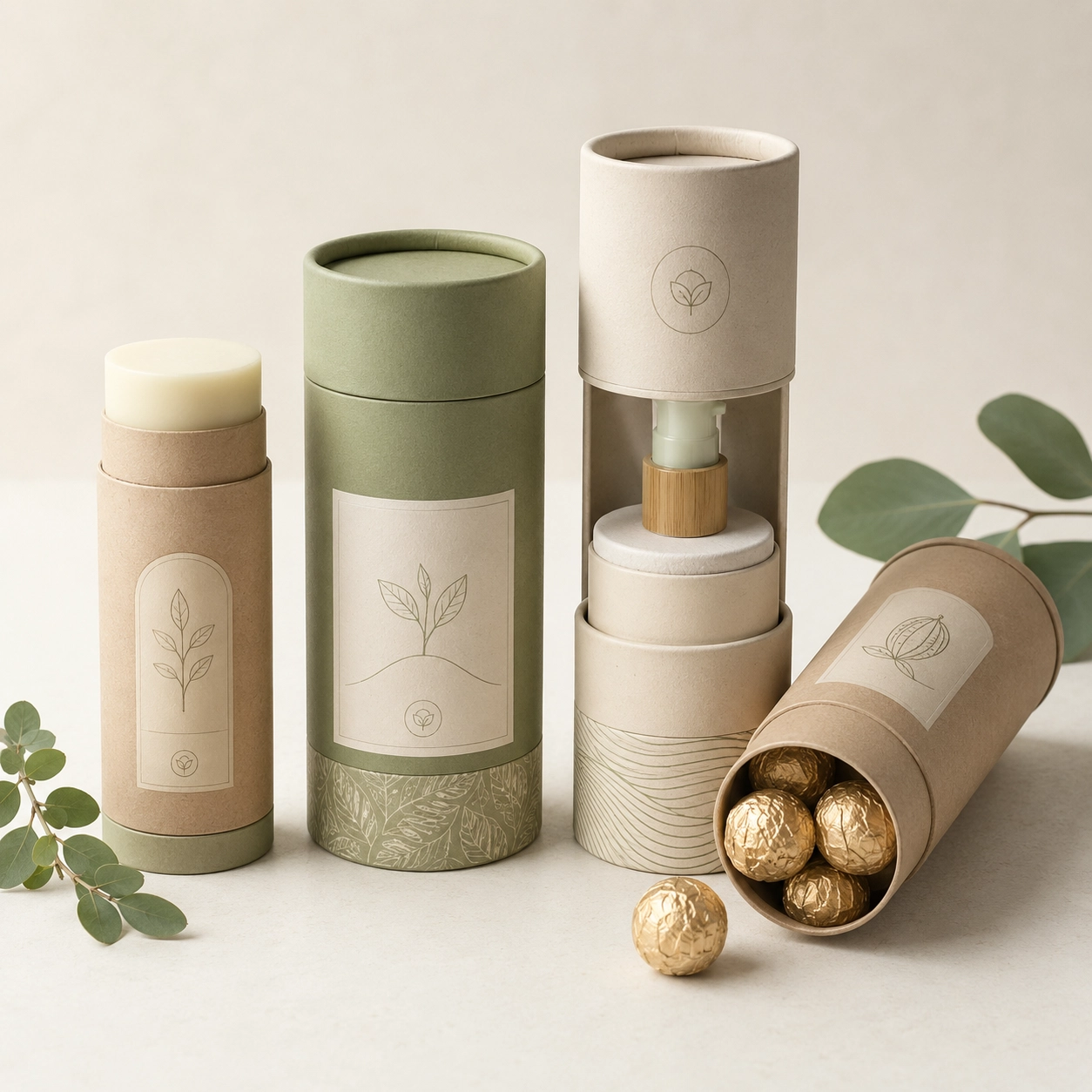
Perfume and Fragrance
Perfume is normally packaged inside a glass bottle, so the outer tube functions as secondary packaging.
A telescopic or shoulder-neck paper tube can create a premium opening experience while keeping paperboard as the main structural material.
Possible fiber-based inserts include:
- Die-cut paperboard
- Layered cardboard
- Molded pulp
However, heavy perfume bottles need strong support.
Therefore, transport and compression testing should be completed before replacing foam with a paper-based insert.
Tea
Tea can work well with paper tube packaging when the product already uses:
- Individual tea bags
- Paper sachets
- Sealed inner bags
- Separate primary containers
In this situation, the outer paper tube mainly provides branding, physical protection and gift presentation.
However, loose tea that touches the package directly may need stronger moisture and aroma protection.
Consequently, an additional liner may become necessary.
Coffee
Coffee also requires careful barrier planning.
A practical structure may use a sealed high-barrier coffee pouch inside a decorative paper tube.
The pouch provides the primary aroma and moisture barrier. Meanwhile, the paper tube provides:
- Branding
- Physical protection
- Gift value
- Shelf differentiation
Furthermore, customers can separate the outer tube from the inner pouch after use.
Chocolate, Candy and Snacks
Food brands can use biodegradable paper tube packaging for certain wrapped or separately protected products when the complete food-contact system is appropriate.
Possible applications include:
- Wrapped truffles
- Individually wrapped candy
- Cookies inside a bag
- Dried fruit in a pouch
- Nuts inside an inner pack
- Snack gift assortments
However, direct-contact foods may need grease, moisture or oxygen barriers.
Therefore, brands should never assume that a plain paperboard tube is suitable for every food product.
Candles and Gift Products
Although beauty and food are the main focus here, similar packaging structures also work for candles and gifts.
For example, a glass candle jar can stand inside a paperboard or molded-pulp insert. Meanwhile, the outer tube can use kraft paper, textured paper or minimal premium finishing.
The same approach can also work for:
- Jewelry
- Accessories
- Small gifts
- Promotional products
Material Options
Material selection determines whether biodegradable paper tube packaging is a realistic claim, a qualified claim or simply the wrong claim for that particular structure.
Kraft Paper
Kraft paper creates a natural, tactile look.
Possible options include:
- Natural kraft
- White kraft
- Recycled kraft
- Colored kraft
- Textured kraft
Moreover, the natural paper surface already provides visual character. Therefore, brands may not need heavy printing or lamination to create a premium result.
Art Paper
Coated art paper supports:
- CMYK printing
- Pantone printing
- Fine typography
- Photography
- Detailed illustrations
However, coatings and laminations should be considered when developing environmental claims.
A package may still be recyclable through an appropriate paper stream while not necessarily supporting an unqualified biodegradable claim.
Specialty Paper
Specialty paper options include:
- Linen texture
- Embossed paper
- Dyed-through paper
- Natural-fiber paper
- Pearlized paper
- Metallic-style surfaces
Nevertheless, different coatings and finishes can produce different end-of-life characteristics.
Therefore, request material information before using broad environmental claims.
Recycled Paperboard
Recycled board can reduce demand for virgin fiber and support a circular-material strategy.
However, “recycled content” and “biodegradable” describe two different attributes.
Consequently, recycled paperboard should not automatically be marketed as biodegradable without appropriate support.
Food-Grade Paper
Food packaging may require specific inner paper materials.
Options can include:
- Food-grade white paper
- Grease-resistant paper
- Coated food-contact paper
- Food-grade paperboard
- Separate primary pouches
The correct solution depends on:
- Food type
- Fat content
- Contact time
- Temperature
- Shelf-life requirements
Foil Liner
Aluminum foil and foil-based laminates can provide stronger protection against:
- Moisture
- Grease
- Aroma
- Light
However, foil introduces another material.
Therefore, a foil-lined paper tube should not automatically be described as fully biodegradable.
Instead, the brand may choose to emphasize barrier performance, material separation or recyclability where appropriate.
Water-Based and Alternative Coatings
Some buyers explore water-based or lower-material coating systems instead of conventional plastic films.
Nevertheless, words such as “water-based” do not automatically prove biodegradability.
The actual:
- Chemistry
- Food-contact suitability
- Recycling compatibility
- Breakdown conditions
should still be verified.
Structure Options
Structure also affects biodegradable paper tube packaging because lids, windows, mechanisms and inserts can introduce different materials into the final package.
Paper Lid and Base
A paper lid with a paperboard base can maintain a fiber-dominant appearance.
This structure works well for:
- Tea
- Gift products
- Wrapped snacks
- Secondary beauty packaging
However, lid friction should still be tested carefully.
Shoulder-Neck Tube
A shoulder-neck tube includes an inner neck that extends above the main body.
When the neck, lid and tube wall are all paper-based, the structure can remain largely fiber focused.
In addition, the contrasting inner neck creates a premium opening experience without requiring complex decoration.
Telescopic Tube
A telescopic structure uses:
- Long upper tube
- Short lower base
This works especially well for:
- Perfume
- Skincare bottles
- Candle jars
- Premium gifts
The short lower base can contain a fitted molded-pulp or paperboard insert, allowing the product to remain upright.
Paperboard Insert
Paperboard inserts are useful for lightweight bottles, jars and accessories.
They can be:
- Die-cut
- Folded
- Layered
- Printed
Therefore, they provide both protection and an opportunity for inside branding.
Molded-Pulp Insert
Molded pulp can provide shaped protection while maintaining a fiber-based presentation.
Applications include:
- Glass bottles
- Jars
- Candles
- Cosmetic sets
However, a new custom shape may require tooling, which can affect MOQ.
Window Structure
A transparent PET window introduces plastic into the package.
Therefore, brands targeting a fiber-dominant construction may consider an open die-cut window when the product already sits inside a sealed container or pouch.
Alternatively, a suitable alternative transparent material can be evaluated. However, its environmental characteristics should be verified before claims are made.
Push-Up Tube
Push-up tubes are particularly relevant for solid cosmetics.
The internal platform moves upward as the customer pushes from the bottom.
However, paper thickness, internal friction and formula compatibility must all work together.
Twist-Up Tube
Twist-up structures are mechanically more complex.
Therefore, extra components may be necessary.
If the design requires plastic or other materials, the sustainability message should reflect the real construction.
Sleeve Structure
A sleeve can allow several SKUs to share one primary paper tube.
For example:
- One standard tube
- Five different printed sleeves
This can reduce tooling complexity and obsolete packaging inventory.
Printing & Finishing Options
Thoughtful design can help biodegradable paper tube packaging feel premium without creating unnecessary material complexity.
CMYK Printing
CMYK is suitable for:
- Photography
- Ingredient graphics
- Gradients
- Multicolor illustrations
For large printed areas, the paper and ink coverage should be reviewed during sampling.
Pantone Printing
Pantone colors help maintain brand consistency across:
- Tubes
- Boxes
- Paper bags
- Labels
In addition, a minimalist one- or two-color design can create a premium result with less visual clutter.
Hot Stamping
Hot stamping can highlight:
- Logo
- Product name
- Decorative details
However, a small, controlled foil area can often create more impact than covering the entire tube.
Embossing and Debossing
Embossing and debossing introduce tactile value.
They work particularly well on:
- Kraft
- Textured paper
- Minimalist designs
Moreover, these effects can reduce the need for large printed graphics.
Spot UV
Spot UV creates glossy contrast.
Nevertheless, the coating system should be reviewed when biodegradability or recyclability claims are important.
Matte Lamination
Conventional plastic matte lamination can change the end-of-life characteristics of an otherwise paper-heavy package.
Therefore, ask the supplier whether a suitable coating alternative can deliver the required protection.
Gloss Lamination
The same principle applies to full gloss lamination.
If the finish is mainly decorative, brands should ask whether it is really necessary.
Biodegradable vs Recyclable vs Compostable
This distinction is central to the biodegradable paper tube packaging discussion.
These terms should not be used as synonyms.
Biodegradable refers to breakdown through biological activity under defined conditions.
Compostable generally refers to a more specific biological treatment pathway and associated performance requirements.
Recyclable refers to a package that can be collected and processed into material for further use through an applicable recycling system.
Therefore, biodegradable is not automatically “better” than recyclable.
For many paper packages, recycling may be the more realistic circular pathway when suitable collection and processing infrastructure exists.
The EU Packaging and Packaging Waste Regulation now generally applies from 12 August 2026 and includes an objective for packaging placed on the EU market to become recyclable in an economically viable way by 2030.
Related Guide: Recyclable Paper Packaging
If you are deciding between biodegradable, recyclable and mixed-material packaging, read our Recyclable Paper Packaging: What Global Brands Should Know guide.
That article looks more closely at:
- Paper recyclability
- Coatings
- Inserts
- Windows
- Mixed materials
- Recycling design
Together, the two articles answer different buyer questions:
Can this packaging break down under verified conditions?
and
Can this packaging realistically enter an existing recycling stream?
Compliance & Sustainability
A credible biodegradable paper tube packaging project should combine environmental design with clear documentation and target-market requirements.
FSC and Responsible Fiber
FSC certification can help demonstrate responsible sourcing of forest-based paper and packaging materials. However, FSC labels and trademarks must be used according to applicable certification and trademark requirements.
Therefore, brands should not simply download an FSC logo and add it to their artwork.
BRC and IFS
Food-related buyers may request supplier quality-system information such as:
- BRCGS Packaging Materials
- Relevant IFS documentation
- Food-safety management documents
However, certification claims should always match the actual audited scope.
Food Contact Safety
Food projects may require:
- Food-contact reports
- Migration testing
- Material declarations
- Ink information
- Adhesive information
- Traceability records
The exact requirements depend on the product and destination market.
PPWR
The EU PPWR covers packaging regardless of material or origin and generally applies from 12 August 2026. It establishes requirements across packaging design and waste management, including recyclability objectives.
Therefore, EU-bound projects should consider:
- Material minimization
- Recyclability
- Packaging design
- Substances of concern
- Accurate labeling
from the beginning of the development process.
EPR
Packaging EPR responsibilities vary between markets and depend on the party placing packaging on that market.
Therefore, brands and importers should confirm local:
- Registration
- Reporting
- Fees
- Labeling
requirements.
EUDR
EUDR covers specified commodities and derived products within its defined scope.
The European Commission currently lists application dates of 30 December 2026 for large and medium operators and 30 June 2027 for micro and small operators, with a specific rule for smaller operators previously covered by the EUTR.
Therefore, buyers should check the exact commodity code, product use and supply-chain role rather than assume every paper package is treated identically.
Avoid Greenwashing
Be specific.
Instead of saying:
“100% eco-friendly packaging.”
use substantiated statements such as:
- Made with FSC-certified paper, where applicable
- Contains recycled paperboard
- Designed with a removable paper insert
- Plastic-free, if the complete package genuinely is
- Recyclable in specified systems, when substantiated
- Biodegradable under defined conditions, when supported by evidence
FTC guidance in the United States specifically cautions against broad degradable or biodegradable claims without adequate evidence for the complete item and its normal disposal route.
How to Customize
Developing biodegradable paper tube packaging should start with the real product rather than the environmental claim.
Step 1: Define the Product
Provide:
- Product type
- Dimensions
- Weight
- Formula or food type
- Primary container
- Direct-contact condition
- Shelf-life requirement
- Target market
For food and beauty applications, actual product samples are especially useful.
Step 2: Define the Packaging Function
Determine whether the tube provides:
- Primary product contact
- Secondary protection
- Retail display
- Gift presentation
- Shipping protection
Secondary packaging generally gives designers more freedom because another container already protects the product.
Step 3: Define the Sustainability Goal
When specifying biodegradable paper tube packaging, decide which target genuinely matters most:
- Fiber-dominant construction
- Plastic reduction
- Recyclability
- Verified biodegradability
- Compostability
- FSC sourcing
- Recycled content
Trying to make every environmental claim at once can create unnecessary complexity.
Step 4: Choose the Structure
Possible options include:
- Paper lid tube
- Shoulder-neck tube
- Telescopic tube
- Push-up tube
- Sleeve tube
- Window tube
- Tube with insert
Step 5: Choose the Insert
Possible choices include:
- No insert
- Paperboard insert
- Molded-pulp insert
- Other verified materials
The insert should be tested with the real product.
Step 6: Select Printing and Finishing
Choose:
- CMYK
- Pantone
- Hot stamping
- Embossing
- Debossing
- Spot UV
- Coating
- Lamination where necessary
Then review each process against the intended sustainability claim.
Step 7: Request Material Documentation
Ask for applicable:
- Material specifications
- FSC documentation
- Food-contact reports
- Recycled-content information
- Barrier information
- Environmental test data
Claims should relate to the materials actually used in mass production.
Step 8: Prepare Artwork
Provide editable:
- AI
- EPS
Separate special processes such as:
- CMYK
- Pantone
- Foil
- Emboss
- Deboss
- Spot UV
- Dieline
Step 9: Confirm MOQ
MOQ depends on:
- Diameter
- Height
- Material
- Insert
- Printing
- Finishing
- Tooling
Therefore, brands launching a new product may benefit from comparing several quantity scenarios.
Step 10: Produce a Physical Sample
Test:
- Product fit
- Lid fit
- Insert position
- Printing
- Color
- Surface durability
- Functional movement
- Customer opening experience
Food-contact or cosmetic-contact packaging may also require additional compatibility testing.
Step 11: Confirm Lead Time
Lead time may depend on:
- Material availability
- Tooling
- Sample approval
- Printing
- Finishing
- Insert production
- Quantity
Therefore, seasonal launches should begin packaging development early.
Related Products: Custom Paper Tubes / Food Packaging / Cosmetic Packaging
Why Choose Pack Packaging?
Pack Packaging develops biodegradable paper tube packaging concepts as well as recyclable and conventional premium paper packaging solutions, with the final construction based on the real product and target market.
Our manufacturing facility covers 20,000㎡, including a 2,000㎡ food-grade workshop. In addition, monthly paper tube production capacity exceeds 10,000,000 pieces.
Our 20+ member design team can assist with:
- Structural development
- Size optimization
- Fiber-based material selection
- Paperboard inserts
- Molded-pulp insert concepts
- Food-grade material selection
- Artwork
- Printing
- Finishing
- Sampling
- Cost optimization
- Production planning
OEM and ODM capabilities include:
- Custom diameters and heights
- Kraft paper
- Art paper
- Specialty paper
- Recycled paperboard
- Food-contact structures
- Paper lids
- Shoulder-neck tubes
- Telescopic tubes
- Push-up tubes
- Sleeve tubes
- Window structures
- Paperboard inserts
- Molded-pulp inserts
- CMYK printing
- Pantone printing
- Hot stamping
- Embossing
- Debossing
- Spot UV
- Surface coating options
- Structural samples
- Printed samples
- Quality inspection
- Export packing
Available documentation depends on the approved material, application and destination market.
Therefore, the exact compliance package should be confirmed before mass production.
Frequently Asked Questions
1. Is biodegradable paper tube packaging always plastic-free?
No. A paper tube can still contain plastic film, foam, synthetic coatings, PET windows or other non-paper components.
Therefore, the entire bill of materials needs to be checked before describing the finished package as plastic-free or biodegradable.
2. Is biodegradable packaging better than recyclable packaging?
Not automatically.
The better route depends on the product, material and local waste-management infrastructure.
In many cases, designing a paper package for practical recycling may be more useful than making a broad biodegradability claim.
3. Can paper tubes be used for direct food contact?
Yes, when the actual liner, coating, adhesive and material combination are suitable for the specific food-contact conditions.
Relevant testing and documentation should match the real application.
4. Can biodegradable paper tube packaging use an aluminum foil liner?
A foil liner may provide useful barrier protection, but it creates a mixed-material construction.
Therefore, the complete package should not automatically be described as fully biodegradable.
5. Which inserts are suitable for fiber-focused packaging?
Paperboard and molded pulp are common options.
Nevertheless, product protection remains the first requirement.
6. Can hot stamping and embossing still be used?
Yes.
Both can create premium branding effects. However, the foil, coating and paper combination should still be reviewed against the desired environmental claim.
7. What is the MOQ?
MOQ depends on:
- Tube size
- Material
- Structure
- Inserts
- Printing
- Finishing
- Tooling
Simpler fiber-based structures may sometimes provide more flexibility than complex multi-material designs.
8. What information is needed for a quotation?
Send:
- Product dimensions
- Product use
- Quantity
- Target market
- Preferred structure
- Material preference
- Printing requirements
- Logo or artwork file
Explore More Custom Packaging Solutions
Looking for more packaging options? Discover our complete range of custom packaging products designed for different industries and applications.
Folding Boxes – Lightweight and fully customizable cartons for retail packaging.
Rigid Boxes – Premium rigid gift boxes for luxury brands.
Corrugated Boxes – Durable shipping and e-commerce packaging solutions.
Child Resistant Boxes – Secure packaging for regulated products.
Accessories – Custom inserts, tissue paper, ribbons, labels, and more.
Paper Tubes – Explore our dedicated collection of custom paper tube packaging for tea, coffee, cosmetics, candles, spirits, and other premium products on our specialized website.
Need custom packaging? Contact our team today for a free quote and expert consultation.