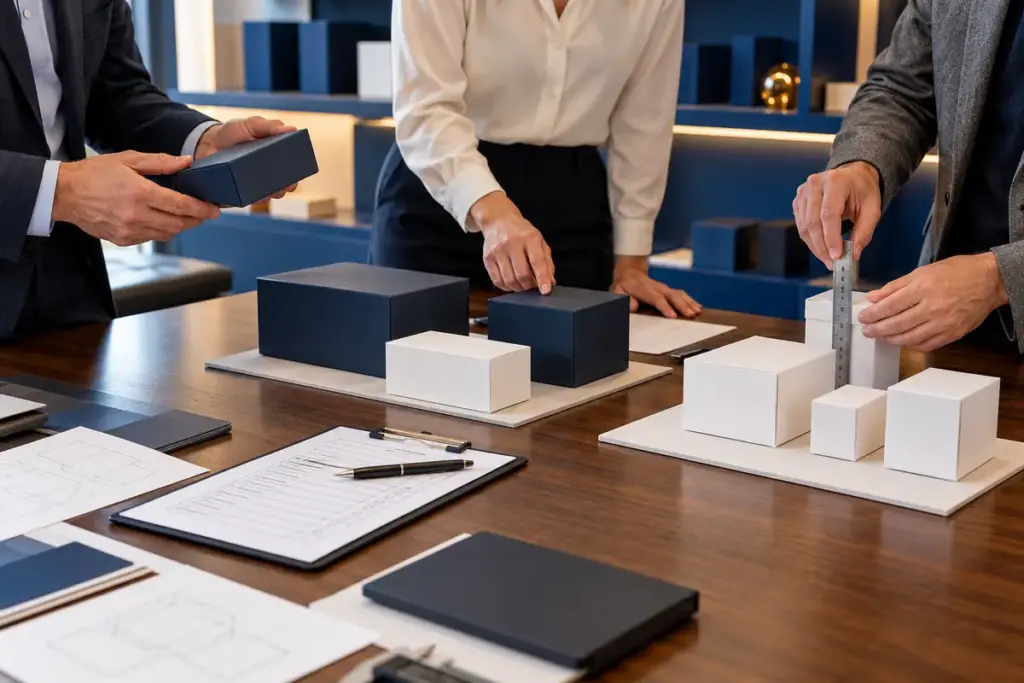
Packaging scuff resistance matters when a printed box must reach a retail shelf or gift recipient with its intended appearance intact. For procurement teams, the challenge is turning a request such as “make it scratch resistant” into a specification that the manufacturer can quote and both parties can evaluate.
Start by identifying the surface, the likely contact and the appearance you need to preserve. Then compare proposed materials using an agreed assessment. This guide explains how to define that brief, review samples and interpret evidence without confusing a finish name with a performance guarantee.

What Is Packaging Scuff Resistance?
In a purchasing brief, scuff resistance describes how well the relevant surface retains its agreed appearance when exposed to the specified rubbing contact. Define the contact and the evaluation conditions rather than treating the term as a single universal property.
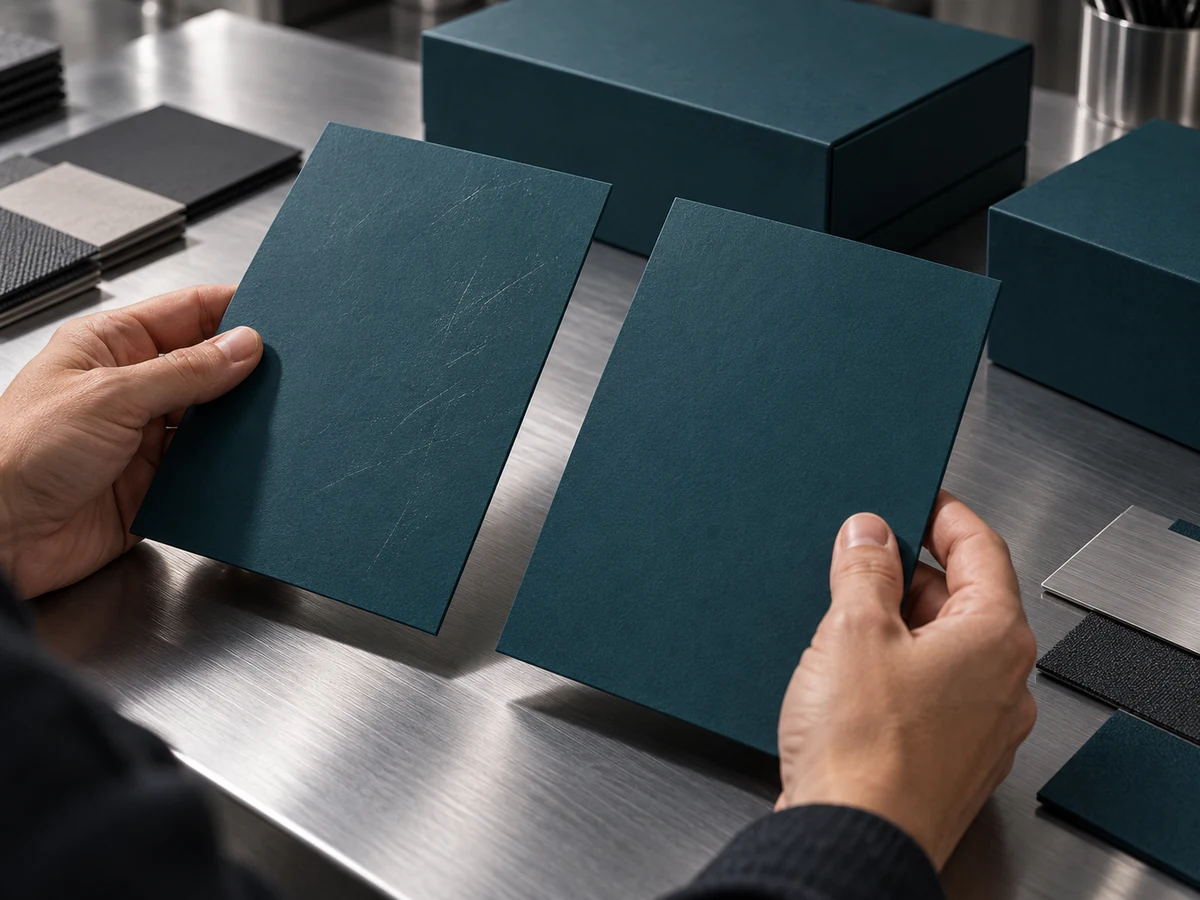
Keep different problems separate. A light change in gloss, ink transferred to another surface, a deep scratch and a crushed corner may need different investigations. Photographs help identify the problem, but a photograph alone cannot establish the cause.
على سبيل المثال, the decorative wrap of a gift box and a shipping label do not have identical acceptance priorities. One might be judged for visible surface wear; the other also needs its information to remain usable. Name the actual concern before selecting an assessment.
Map the Surfaces That Meet During Handling
Trace the box through manufacture, packing, transport and display. List likely contacts: another printed box, a divider, protective paper, a conveyor surface or repeated manual handling. Ask the packing team which contacts occur in the real process rather than inventing a test around an unlikely scenario.
Distinguish the presentation face from less visible panels. Mark the lid, front panel, edges and other relevant areas on a drawing or photograph. State whether the recipient normally sees the pack closed, open or both.
For rigid gift packaging, review the wrapped faces and contact points in the proposed shipping arrangement. For a retail carton, include the surfaces that touch neighboring packs. The goal is a useful contact map that links the purchasing requirement to the actual package.
Compare the Complete Surface Construction
Ask the manufacturer to identify the proposed substrate, الطباعة, coating or film, and any decorative elements. Request a finished sample that represents the quoted combination. A generic swatch may help select appearance, but it should not silently become the approval reference for a different construction.
When comparing varnished, laminated or uncoated proposals, keep the artwork and intended use as consistent as practical. خلاف ذلك, a change in color or paper can make the comparison difficult to interpret.
Terms such as “anti-scratch,” “soft-touch” or “protective coating” need supporting detail. Ask what material is proposed, which surface it covers and what evidence supports the requested result. Do not rank every finish by name alone.
For printed folding box projects, also inspect the assembled sample. A flat print sample does not show every fold, edge or handling point of the finished carton.
Define Appearance Acceptance Before Testing
Agree how samples will be viewed: lighting, orientation, viewing distance and the areas to inspect. Use the same arrangement when comparing proposals. Keep an untouched reference so reviewers can distinguish the original finish from changes introduced during assessment.
Describe the observations that matter. These might include visible ink transfer, exposed underlying material, changed sheen or loss of readability. Set acceptance with the responsible brand and quality teams; do not copy a tolerance from an unrelated product.
Where a boundary is difficult to explain in words, retain agreed examples or clear reference photographs. Record which sample is acceptable and why. A note saying only “looks premium” leaves too much room for disagreement when a later batch arrives.
What Should a Rub-Test Report Tell the Buyer?
The instrument manufacturer describes the Sutherland rub tester as moving a weighted test strip over a printed specimen, with different assessment options available. That description shows why the test setup matters; the name of the instrument alone does not explain what a sample experienced.
Ask the laboratory or supplier to identify the method used, sample construction, contact material, load, motion or speed, test duration or cycles, and any conditioning. Request the method revision and any deviations where applicable. Let the qualified tester choose an appropriate procedure for the stated purpose.
The report should connect the evaluated specimen to your actual artwork, material and finish revision. It should also record observations and the agreed acceptance criteria. A result without that traceability is hard to apply to a purchase order.
A high cycle count is not automatically better evidence. Compare like-for-like conditions and do not treat a surface assessment as proof that the complete package will survive every distribution route.
Use Samples to Investigate, Not Just Pass or Fail
If a proposal fails the agreed review, ask what changed on the surface and where. Retain the affected sample and its untouched reference. Give the manufacturer the contact conditions and photographs rather than reporting only that the box is “too delicate.”
Review one proposed correction at a time where possible. A different finish, a revised material combination or a changed packing arrangement creates a new comparison. Record which variable changed so the team can understand the result.
Check the revised sample against the other requirements too. The surface still needs the approved appearance, opening action and print clarity. An improvement in one assessment should not bypass the rest of the packaging approval.
Review Packing Protection Alongside the Finish
Examine how decorated faces meet inside the transport carton. Consider whether the proposed orientation, spacing or separating material changes those contacts. Ask for an explanation and a packed sample before assuming an added protective layer solves the problem.
Discuss inserts and separating components with the complete packing arrangement in view. Record which parts are included in the quotation and who installs them. A protective component that never reaches the packing station cannot form part of the effective specification.
Assess the actual distribution configuration separately where required. Keep surface appearance, structural damage and product protection as distinct observations. This makes corrective action more precise when the pack reaches its destination.

يكلف, MOQ and Change Control
Request an itemized comparison of the proposed surface constructions. Identify sample work, testing if supplied, special materials, finishing operations and protective packing. Confirm whether the quote includes the agreed evidence or only production of the boxes.
Ask how minimum quantities apply to the selected material and artwork. Do not assume a special finish has the same purchasing conditions as the standard proposal. Obtain the actual MOQ and delivery plan from the manufacturer for the final specification.
When ordering again, reference the approved construction and assessment record. Require review of relevant substitutions rather than assuming that a similar finish name means the product is unchanged. Keep the production reference and packing instruction aligned.
Sustainability and Manufacturer Selection
Request a material breakdown before making environmental claims about a protective finish or added separator. Appearance alone does not establish recyclability, and this surface review does not replace destination-specific evaluation of those claims.
Choose a manufacturer that can identify sample revisions, explain the quoted finish and distinguish its own checks from outside testing. Ask who interprets results, who approves changes and how production samples will be compared with the agreed reference.
A useful supplier discussion ends with documented responsibilities and evidence requirements, not an unsupported promise of a scratch-proof box.
التعليمات
How should buyers specify packaging scuff resistance?
Identify the surface, expected contact and required appearance. Agree the assessment conditions, sample construction and acceptance reference with the supplier and responsible quality team before approving production.
Is a hand-rub check enough?
It can help describe a concern, but uncontrolled pressure and contact make comparisons difficult. Ask for an appropriate documented assessment when purchasing decisions depend on a repeatable result.
Does an anti-scratch finish prevent all damage?
Do not interpret the name as that guarantee. Request evidence for the proposed construction and stated conditions, and evaluate structural and distribution risks separately.
Should every panel have the same acceptance criteria?
Agree this with the brand and quality teams. Visibility, printed information and the intended use may lead to different priorities, but those differences should be documented before assessment.
Request a Surface Approval Plan
Send Pack Packaging your artwork, proposed box format, packing arrangement and examples of unacceptable surface wear. Discuss representative packaging samples and request a proposal that identifies the surface construction, assessment scope and approval responsibilities. That gives both teams a practical basis for comparing options before the production order.