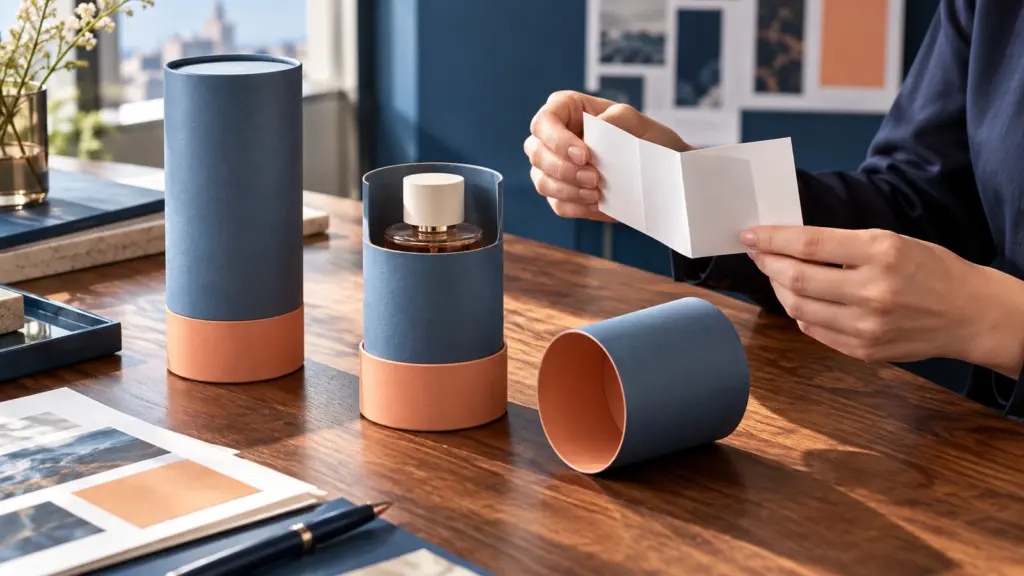
A fragrance or skincare tube may be approved around the bottle, only for an instruction leaflet to arrive later and change the fit. The folded sheet can cover the product, slide into a joint or become difficult to retrieve. Planning paper tube leaflet inserts early gives the buyer a way to approve the information component as part of the complete presentation.
This guide addresses a separate folded leaflet, booklet or welcome card inside a secondary paper cylinder. It does not establish labeling compliance or product protection. The proposed checks below are project recommendations: agree methods and acceptance criteria with your suppliers, and have the responsible product team approve the information itself.
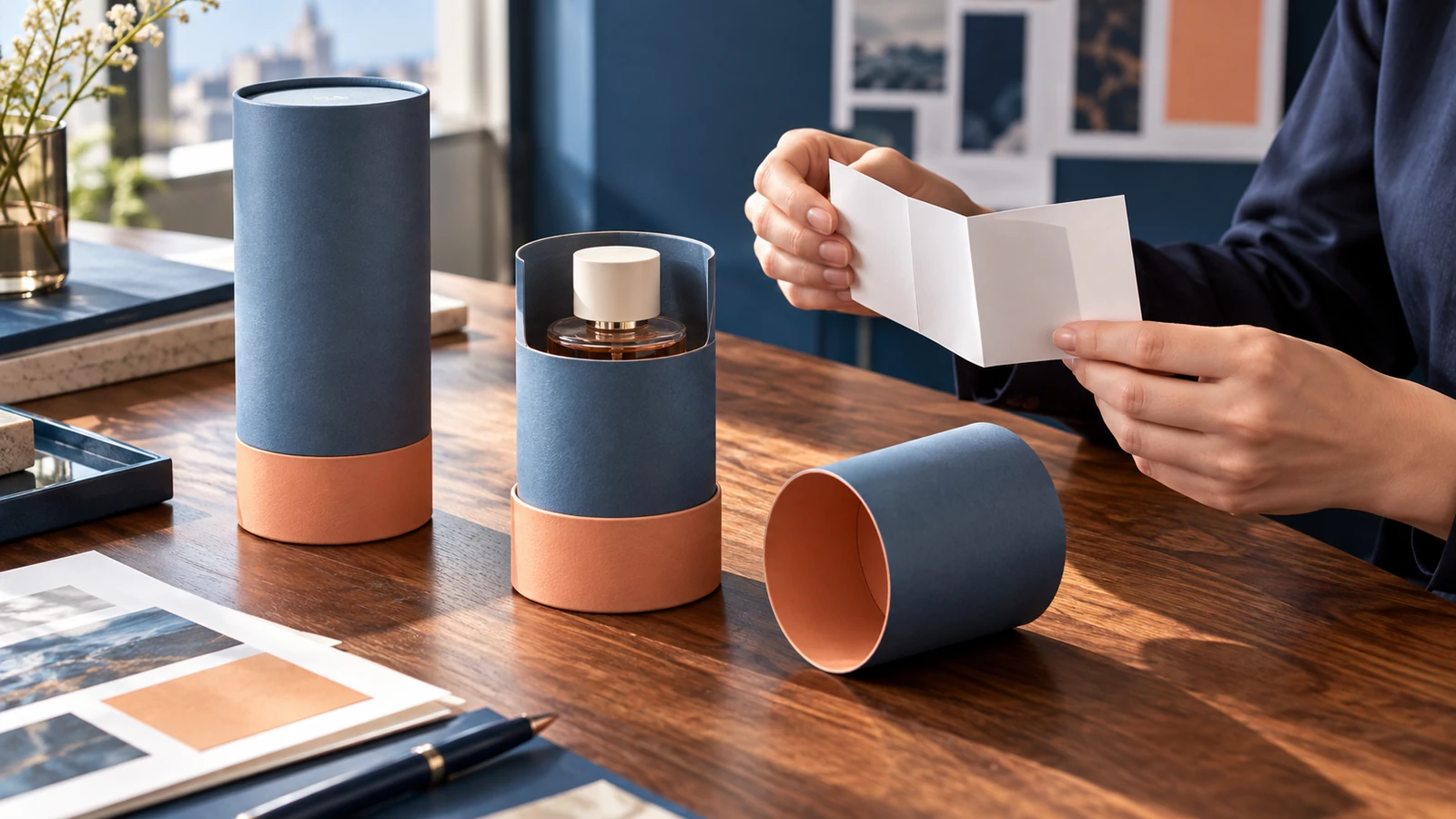
Specify paper tube leaflet inserts before sizing their space
Start with the document’s purpose and physical format. A single welcome card, an accordion-fold instruction sheet and a bound booklet are different components even when their front panels look similar. Identify whether the customer should read the document before lifting the bottle, after removing it or independently at a later time.
For a custom paper tube with booklet, send both the open artwork dimensions and the proposed folded dimensions. Include page or panel count, paper reference, binding or folding method, language version and the current document revision. A flat PDF alone cannot show the completed component’s thickness or how readily it stays folded.
Use the custom round box and paper tube range to discuss the outer presentation, then specify the document as a separate item in the pack contents. PACK Packaging’s structures and dimensions are customized around the brief; do not assume a stock diameter or height will accommodate an unfinished information design.
Measure the folded envelope and the usable pocket
The relevant leaflet envelope includes its finished width, height and thickness in the intended folded condition. Ask how those dimensions will be checked without flattening the component more than normal packing would. Record the fold orientation and which edge enters the pocket first, so different reviewers compare the same arrangement.
For paper tube leaflet inserts, distinguish the outer tube dimensions from the actual space remaining after the bottle holder and other components are installed. A rectangular document also meets a curved wall: a pocket that appears wide at its opening may be narrower where the leaflet corners need to sit. Review the complete shape through the insertion path.
Consider a simple illustrative comparison: two leaflets have the same front-panel width and height, but one language edition has more folded layers. They should not automatically share an approval. Assemble each production-intent version, observe the fit and decide whether the pocket or document format must change. This example specifies no universal clearance.
ال packaging tolerances guide provides broader fit terminology. For this component, add the leaflet’s folded envelope and pocket geometry to the dimensional record rather than relying on the bottle drawing alone.
Compare three document locations against the opening sequence
A luxury packaging instruction card needs an intentional location. Choose that location by reviewing access and interaction with the bottle, not simply by filling an apparently empty area. The following comparison is a starting point for sampling, not a claim that any arrangement is suitable for every product.
| Location to investigate | Potential presentation role | Question for the assembled sample |
|---|---|---|
| Beside the product in a separate pocket | Document visible when the lid is lifted | Can fingers retrieve it without rubbing the bottle or catching the tube joint? |
| Above the product on a defined platform | Document encountered before the bottle | Can the lid close normally, and can the document be lifted without pressing the cap? |
| Below a removable holder | Information accessed after the product | Is the holder intended to be removed, and will users discover the document? |
For cosmetic tube leaflet placement, keep the document out of the sliding lid interface unless an explicitly designed feature has been reviewed for that position. Do not instruct packers to tuck a loose edge wherever space remains. Photograph the intended final position and any areas that must stay clear.
A document pocket and a bottle holder have different jobs. Use the paper tube holder guide for product-support options, while keeping the leaflet cavity separately identified. Do not assume adding a pocket preserves the original holder behavior without another complete sample review.
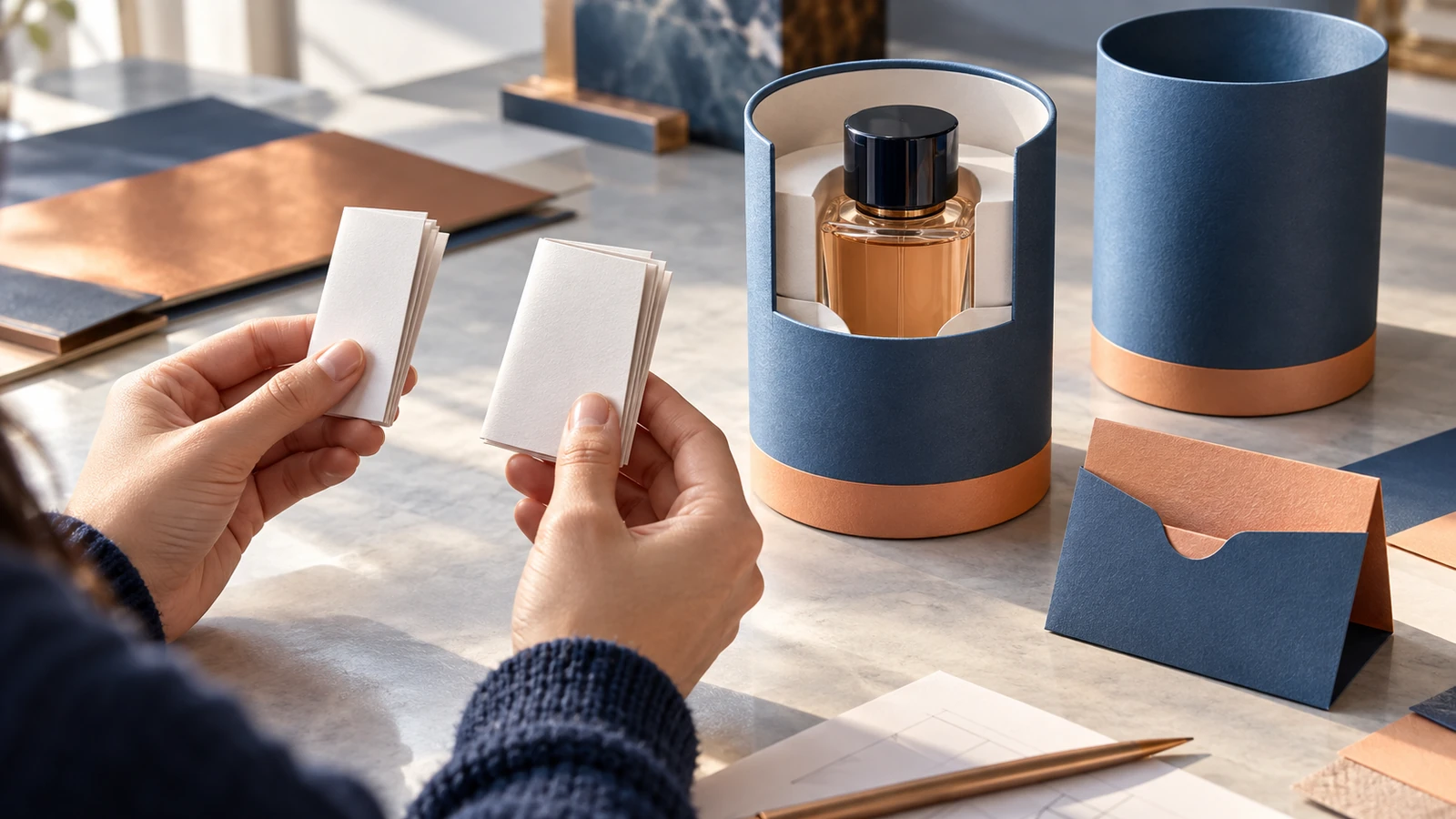
Approve folding and page order as well as the PDF
A folded leaflet thickness review should use the intended stock and fold method wherever possible. A hand-folded office-paper dummy can help explore layout, but record its substitutions. It does not approve the commercial folding result, finished edge condition or final printed appearance.
For a paperboard pocket or a folded board card, Holmen’s creasing and folding guidance explains that creasing supports defined folds and that settings should match the board. Discuss the actual board and conversion method with the supplier. This guidance concerns paperboard; it does not mean every lightweight paper leaflet needs the same creasing process.
For a bound booklet, Adobe’s booklet printing guidance explains how page arrangement supports the reading order after folding and binding. Use a folded proof to review sequence and orientation. A screen view of consecutive PDF pages is useful for copy approval, but it is a different review from checking an imposed and assembled booklet.
Read the finished document from first panel to last, unfold and refold it, and return it to its pocket. Check that headings and important text remain understandable in the agreed print sample. Have the brand’s responsible reviewers approve wording and any market-specific requirements separately; a packaging fit approval cannot authorize product claims or relocate required information.
Run a leaflet insertion and removal trial
Review paper tube leaflet inserts with the complete bottle, holder and closed lid. Begin with a known document revision, then observe an operator loading the pack in the proposed sequence. Ask them to demonstrate which face points outward and how they identify that exactly one correct document has been included.
التالي, give the closed sample to a reviewer who has not watched the packing demonstration. Observe whether the document is visible at the intended stage, whether its edge can be grasped and whether removal disturbs another component. Note any tendency to pull on the lid joint or bottle closure. These are observations to resolve, not quantified performance results.
Close and reopen the assembly using the agreed method. If the leaflet moves, inspect where it finishes rather than simply pushing it back into the approved position. Discuss whether a pocket, stop or different fold is needed. Do not add an unapproved adhesive to hold it in place without reviewing access, appearance and material compatibility.
For fragrance presentation references, the perfume bottle paper tube collection can support the visual discussion. Category photographs do not establish the correct document clearance or demonstrate performance for your particular contents.
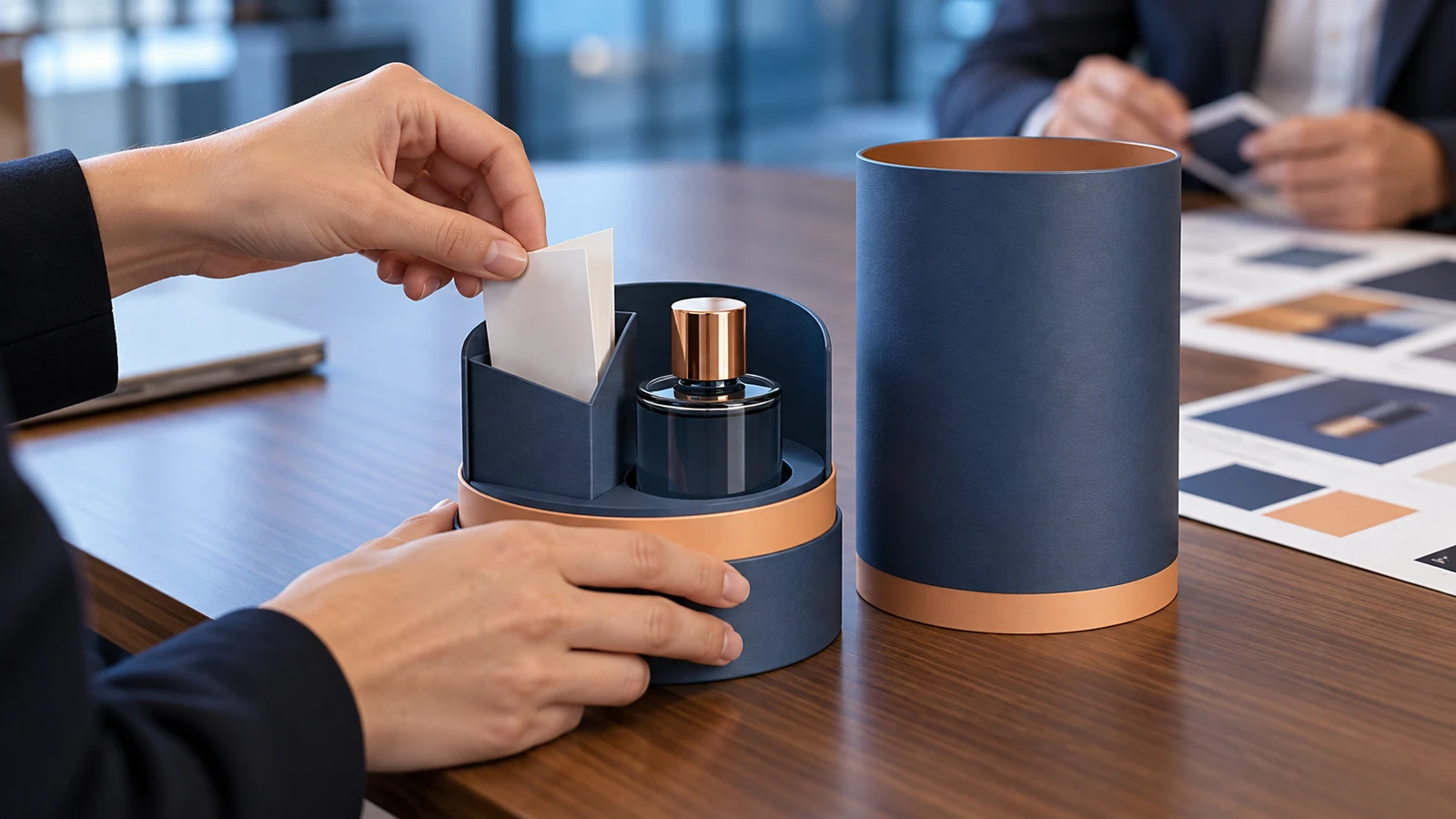
Release a document-specific approval record
A useful packaging booklet approval checklist connects the document revision to the pocket and tube revisions. Record the folded dimensions, paper specification, fold or binding reference, location photograph, loading direction and the sample reviewed. Identify unresolved questions and who must approve them before production release.
Keep one retained assembled sample with its actual document. If the language edition, page count, stock or binding changes, flag it for review even when the tube artwork is unchanged. A purchasing instruction that says only “include leaflet” leaves the physical component unidentified. Define how obsolete editions will be separated from the current packing supply.
Discuss these details during structural sampling rather than after decoration approval. If distribution handling could move the document into a closure or product-contact zone, agree a separate evaluation of the complete shipping configuration. A desktop insertion demonstration cannot establish shipping performance.
Frequently asked questions
Can we send the leaflet after approving the tube?
You can revise a project brief, but the completed pack needs another fit review. Supply the intended folded component before releasing a pocket or remaining internal space, especially if several language editions are planned.
Can one pocket fit every language edition?
Only after reviewing the actual physical versions. Additional panels, pages or a different stock can change the folded envelope. Record which document references are covered by the pocket approval.
Should we make the leaflet smaller to solve a fit problem?
Discuss size, fold pattern and location together. Keep content and readability approval with the responsible brand team. Reducing a document purely to fit the cavity may create another problem that the structural sample cannot resolve.
Does a paper pocket make the whole pack recyclable?
This guide establishes no recyclability claim. Assess the complete construction, materials and relevant collection system before making an environmental statement; a single paper component cannot establish that conclusion.
Send a complete leaflet and tube brief
For paper tube leaflet inserts, send PACK Packaging the product sample or drawing, desired presentation, كمية, document artwork and a folded reference. Include all language variants and the intended reading sequence. Agree a fully customized structure and sampling scope, then confirm project-specific specifications and commercial terms before approving production.