Zum Inhalt springen

The Complete Guide for Coffee Brands
Coffee paper tube packaging can help coffee brands combine strong shelf appeal with practical product protection. Jedoch, choosing an attractive outer paper is only the beginning. Buyers also need to consider oxygen, Feuchtigkeit, Aroma, Füllmethoden, barrier liners, Schließungen, shipping conditions and target-market requirements.
Seien wir ehrlich: coffee paper tube packaging can become confusing very quickly. One supplier may recommend a foil liner, while another may suggest a sealed pouch inside the tube. In der Zwischenzeit, a beautiful lid may look secure without creating a truly airtight package.
daher, this guide explains how materials, Liner, closures and structures work together. It also shows coffee brands what information to prepare before requesting samples or quotations.
Holen Sie sich ein individuelles Verpackungsangebot
Send us your coffee type, Produktgröße, Füllgewicht, Menge und Logo-Datei. Our team will recommend a suitable paper tube structure, liner and finish.

What Is Coffee Paper Tube Packaging?
Coffee paper tube packaging is a cylindrical paperboard container developed for roasted coffee beans, gemahlener Kaffee, instant coffee, coffee capsules and coffee gift sets.
Normalerweise, the main body consists of spiral-wound rigid paperboard. Manufacturers then wrap the tube with kraft paper, coated art paper, specialty paper or printed decorative paper.
Depending on the product requirements, the structure may also include:
- Ein Innenfutter in Lebensmittelqualität
- An aluminum foil barrier
- A sealed coffee pouch
- A fitted plug lid
- A paper lid
- A metal-style lid
- A membrane seal
- A degassing valve
- A custom insert
- A removable paper sleeve
Unlike an ordinary folding carton, a rigid paper tube keeps its cylindrical shape during display and transportation. Darüber hinaus, it provides a large printing area for logos, coffee origins, roast levels and brewing information.
Jedoch, the paper tube does not automatically protect coffee from every external condition. Stattdessen, the complete package must combine the right body, Liner, bottom and closure.
Why Does Coffee Need Protective Packaging?
Freshly roasted coffee is sensitive to its storage environment. Insbesondere, Sauerstoff, Feuchtigkeit, heat, light and surrounding odors may influence its aroma and flavor.
After roasting, coffee also releases carbon dioxide. daher, packaging for freshly roasted beans may require a suitable degassing solution, especially when the coffee is packed soon after roasting.
Ground coffee generally needs even stronger protection because more of its surface is exposed. Infolge, it may lose aroma faster than whole beans when the package does not provide an effective barrier.
The outer paper tube mainly provides:
- Structural protection
- Branding-Raum
- Regalpräsenz
- Geschenkpräsentation
- Resistance to crushing
- Additional protection for an inner pouch
In der Zwischenzeit, the freshness barrier usually comes from:
- Ein Liner aus Aluminiumfolie
- A high-barrier inner pouch
- A membrane seal
- A fitted closure
- A food-contact coating
- A degassing valve
- A combination of these components
daher, coffee brands should not evaluate the outer tube alone. Stattdessen, they should test the complete packaging system under their actual filling, storage and distribution conditions.
Allgemeine Anwendungen
Coffee paper tube packaging can support a wide range of products and sales channels.
Zu den gängigen Anwendungen gehören::
- Whole roasted coffee beans
- Ground coffee
- Instant coffee powder
- Freeze-dried coffee
- Coffee capsules
- Coffee pods
- Drip coffee bags
- Single-origin coffee
- Specialty coffee
- Organic coffee
- Flavored coffee
- Cold-brew coffee kits
- Coffee subscription products
- Corporate coffee gifts
- Holiday coffee collections
- Hotel and hospitality coffee
- Coffee and accessory gift sets
Zusätzlich, brands can use one tube structure for several origins or roast levels. Zum Beispiel, they may keep the same size and logo position while changing the color, illustration or label for each coffee.
Infolge, the collection looks consistent. Gleichzeitig, customers can quickly distinguish light roast, medium roast, dark roast and decaffeinated options

Materialoptionen
Material choice influences strength, Aussehen, Druckqualität, cost and sustainability. daher, brands should consider both the outer surface and the internal structure.
Starrer Pappkern
The spiral-wound paperboard core provides the main structural strength of the tube.
Erste, the manufacturer evaluates the diameter, height and filling weight. Nächste, the wall thickness is adjusted according to the required strength and shipping conditions.
Zum Beispiel, a small tube for drip coffee bags may need a lighter structure. Im Gegensatz, a large coffee gift tube may require a stronger wall and reinforced bottom.
Darüber hinaus, rigid paperboard helps the package resist deformation during stacking, transportation and retail display.
Natürliches Kraftpapier
Kraftpapier schafft ein natürliches Aussehen, craft-focused appearance. daher, it works particularly well for specialty coffee, organic coffee, small-batch roasters and environmentally positioned brands.
Marken können Kraftpapier mit kombinieren:
- Schwarzer Druck
- Weiße Tinte
- Minimal illustrations
- Geprägte Logos
- Geprägte Muster
- Gold- oder Kupferfolie
- Papieretiketten
- Natural textures
Jedoch, kraft paper has a brown base color. Folglich, printed colors may look different from the same colors printed on white paper.
Aus diesem Grund, buyers should review physical color samples before approving mass production.
Beschichtetes Kunstdruckpapier
Coated art paper provides a smooth surface for detailed printing.
Infolge, it supports:
- CMYK artwork
- Coffee farm photography
- Farbverlauf
- Detailed illustrations
- Komplexe Muster
- Multiple product variations
Zusätzlich, art paper works well with matte lamination, Glanzlaminierung, Spot-UV, Folienprägung und Prägung.
daher, it is a practical option for coffee brands that need accurate colors and detailed retail artwork.
Spezialpapier
Specialty paper can give coffee paper tube packaging a more tactile and premium appearance.
Zu den Optionen können gehören::
- Strukturiertes Papier
- Leinenpapier
- Perlglanzpapier
- Metallisches Papier
- Soft-Touch-Papier
- Ungestrichenes Premiumpapier
- Recyceltes Spezialpapier
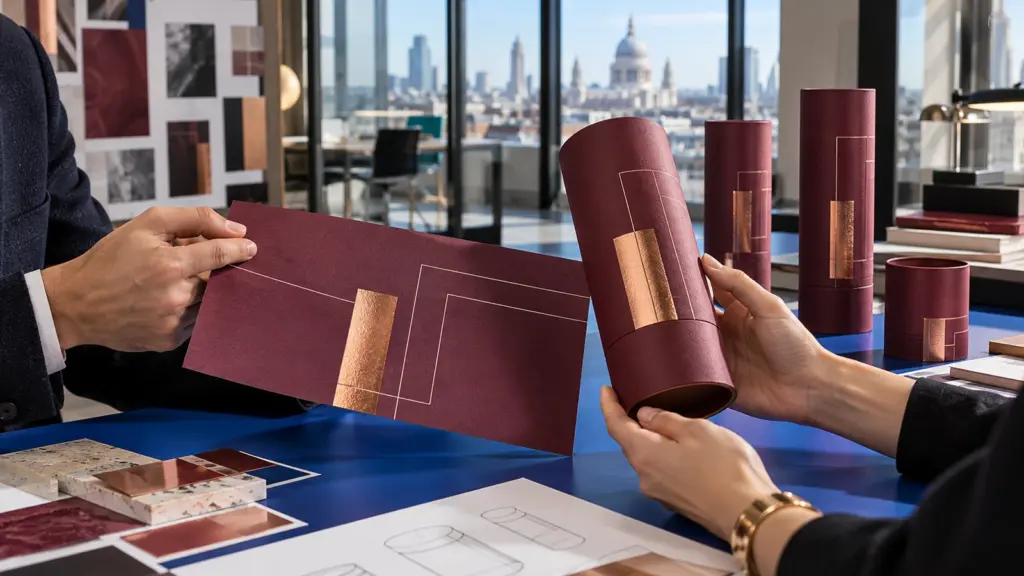
Because the paper itself creates visual interest, Das Kunstwerk kann einfach bleiben. Zum Beispiel, a dark textured surface with a small copper foil logo can look more premium than a heavily printed design.
Recycled Paper
Recycled paperboard and recycled outer wraps can support sustainability-focused packaging projects.
Jedoch, recycled materials may show natural variations in color and texture. daher, buyers should review physical samples and confirm whether minor batch differences are acceptable.
Zusätzlich, recycled content does not automatically make the complete package recyclable. The liner, Laminierung, adhesive and closure must also be considered.
Food-Grade Liner Options
The liner separates the coffee from the paperboard body and may provide additional barrier protection.
Jedoch, the best liner depends on the coffee format, shelf-life target, closure and filling process.
Papiereinlage in Lebensmittelqualität
Eine lebensmittelechte Papiereinlage sorgt für eine saubere Innenfläche.
This option may work well when the coffee is already packed inside a sealed pouch. In diesem Fall, the paper tube functions mainly as secondary packaging.
daher, the inner pouch manages freshness, while the paper tube provides protection and branding.
Aluminiumfolien-Liner
Eine Aluminiumfolienauskleidung kann die Feuchtigkeitsbeständigkeit verbessern, Sauerstoff, light and surrounding odors.
Brands often consider this option for:
- Roasted coffee beans
- Ground coffee
- Instant coffee
- Aromatic coffee blends
- Premium coffee gifts
Jedoch, a foil-lined wall alone does not make the entire tube airtight. Air may still enter through the bottom seam, lid or opening.
Folglich, the manufacturer must evaluate the liner, bottom and closure as one complete system.
PE-beschichteter oder folienkaschierter Liner
A PE-coated or film-laminated liner may provide additional moisture resistance and create a cleaner internal surface.
Trotzdem, Käufer sollten dies bestätigen:
- The exact material specification
- Eignung für den Kontakt mit Lebensmitteln
- Target-market requirements
- Temperature conditions
- Filling process
- Recycling expectations
daher, the liner should be selected according to the actual coffee product rather than appearance alone.
Separate High-Barrier Coffee Pouch
A sealed coffee pouch inside the paper tube is often a practical solution.
Erste, the pouch protects the coffee. In der Zwischenzeit, the outer tube provides structural protection and premium presentation.
This approach can also make filling easier for coffee roasters that already use pouch-sealing equipment.
Darüber hinaus, the pouch may include a degassing valve when required. Infolge, the brand can combine a proven coffee packaging format with a distinctive cylindrical outer package.
Molded or Inserted Inner Container
Some projects use a separate internal cup, jar or canister inside the paper tube.
This structure may improve resealability and daily convenience. Jedoch, it also adds materials, cost and production steps.
daher, brands should compare the customer experience with the total packaging cost before choosing this option.
Verschlussoptionen
The closure affects freshness, Öffnungswiderstand, daily usability and visual appearance.
Paper Lid
A paper lid maintains a paper-dominant appearance and supports a consistent cylindrical design.
It may include:
- A rolled paper edge
- A fitted paper shoulder
- An internal plug
- A recessed top
- A printed top panel
Jedoch, the lid fit must remain stable across production batches. daher, careful size control is important.
Plug Lid
A fitted plug lid can improve repeated opening and closing.
This structure is useful when customers store coffee inside the tube after opening it. Trotzdem, a plug lid may not provide a complete oxygen barrier by itself.
Infolge, brands may still need a sealed pouch or membrane.
Metal-Style Lid
A metal lid can create a familiar coffee-canister appearance.
Zusätzlich, it may provide a strong opening experience and good daily usability. Jedoch, mixed materials may affect recycling and material separation.
daher, buyers should evaluate both the visual value and sustainability requirements.
Membrane Seal
A membrane seal can provide tamper evidence and additional freshness protection.
Zum Beispiel, the customer removes the outer lid and then peels away the membrane before using the coffee.
Jedoch, the membrane material and sealing process must match the tube opening and filling equipment.
Resealable Inner Pouch
A resealable inner pouch can provide convenient daily storage.
Darüber hinaus, it separates the freshness function from the outer decorative package. This allows the paper tube to focus on branding, gifting and protection.
Degassing Valve
Freshly roasted coffee may continue to release carbon dioxide after packaging.
daher, some coffee paper tube packaging systems use a one-way degassing valve. The valve allows gas to escape while limiting outside air from entering.
Jedoch, not every coffee product needs the same valve solution. The roasting date, packing time, coffee format and expected shelf life all affect the decision.
Aus diesem Grund, brands should discuss the complete filling process with both the packaging supplier and coffee production team.
Strukturoptionen
Different structures create different levels of protection and perceived value.
Zweiteiliges Deckel- und Bodenrohr
This is one of the most common paper tube structures.
Es besteht aus einer starren Basis und einem separaten Deckel. Zusätzlich, brands can adjust the lid height to create different visual proportions.
Zum Beispiel, a short lid creates a clean, modernes Erscheinungsbild. Im Gegensatz, a long lid creates a more substantial gift presentation.
Teleskop-Papierrohr
A telescopic tube uses a long lid that covers most or all of the base.
Infolge, Die Verpackung hat ein glattes und kontinuierliches Aussehen. Darüber hinaus, the overlapping structure can provide additional strength.
daher, telescopic tubes work well for premium coffee beans, holiday collections and gift packaging.
Schulter-Nacken-Rohr
A shoulder-neck tube includes an internal neck that becomes visible when the customer removes the lid.
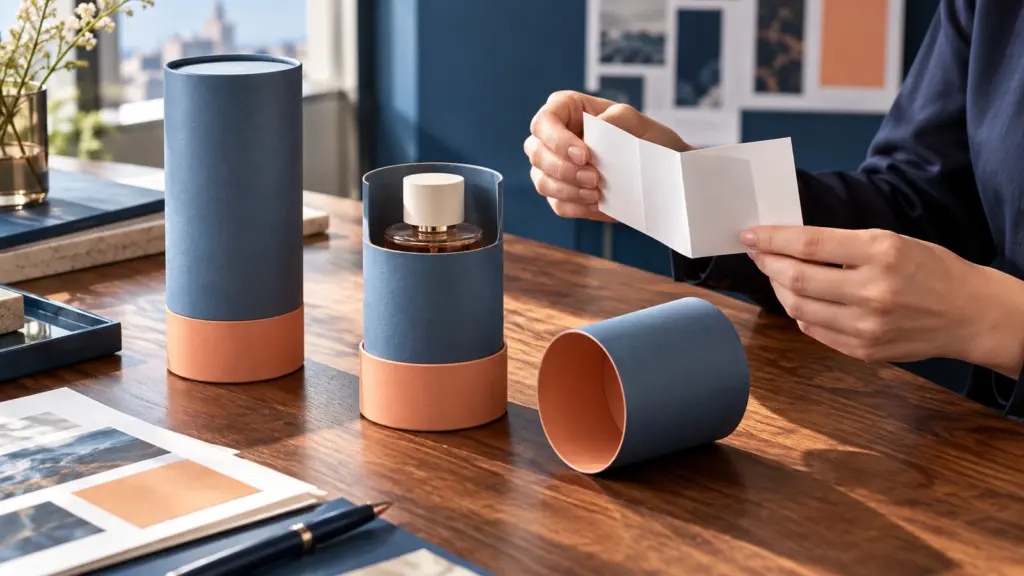
Diese Struktur schafft ein vielschichtiges Eröffnungserlebnis. Zusätzlich, the brand can use a contrasting neck color.
Zum Beispiel, a matte black exterior may include a copper or cream-colored neck. Ähnlich, a natural kraft tube may use a dark-green neck.
Folglich, the package feels more refined without requiring complicated graphics.
Ärmelstruktur
A removable paper sleeve can hold printed product information, promotional messages or seasonal artwork.
This option allows the brand to use one standard tube while changing the sleeve for different products.
Infolge, smaller product runs may become easier to manage.
Fensterpapierröhre
A transparent window allows customers to see the inner pouch, coffee capsules or product arrangement.
Jedoch, coffee may be sensitive to light. daher, brands should carefully evaluate window size, position and barrier requirements.
Zusätzlich, the window may use a different material from the paper body. Folglich, recycling instructions should remain clear.
Coffee Gift Tube with Insert
A larger paper tube can hold coffee together with accessories.
Zum Beispiel, the set may include:
- Kaffeebohnen
- Drip coffee bags
- A coffee scoop
- Eine kleine Tasse
- A filter
- Brauanleitung
- Eine Grußkarte
- Eine Marken-Story-Karte
In diesem Fall, a custom paperboard, corrugated or molded pulp insert keeps the items organized.
daher, the insert improves both transportation protection and the unboxing experience.
Druck- und Endbearbeitungsoptionen
Printing and finishing help coffee brands communicate quality, origin and personality.
Jedoch, the package should remain easy to understand. Too many decorative elements may weaken the visual hierarchy.

CMYK-Druck
Der CMYK-Druck eignet sich gut für:
- Coffee farm photography
- Origin maps
- Landschaftsillustrationen
- Farbverlauf
- Saisonale Kunstwerke
- Mehrfarbige Muster
daher, it is suitable for brands that want to tell a detailed visual story.
Pantone-Farbdruck
Pantone printing helps maintain consistent brand colors.
Zum Beispiel, a coffee brand may use the same dark blue across paper tubes, shipping boxes, Etiketten und Einkaufstaschen.
Infolge, the entire packaging system looks more consistent.
Heißfolienprägung
Hot stamping adds a metallic or colored foil detail to the surface.
Zu den beliebten Optionen gehören:
- Goldfolie
- Silberfolie
- Kupferfolie
- Rose-gold foil
- Holografische Folie
- Farbige Folie
A small foil logo can create a premium impression. Jedoch, using foil across a very large area may increase cost and reduce visual balance.
Prägung
Embossing raises selected areas of the artwork.
Zum Beispiel, brands may emboss a logo, coffee bean pattern, mountain outline or origin name.
Infolge, the customer can both see and feel the design.
Prägung
Debossing presses the artwork into the paper surface.
This finish works especially well with textured or uncoated paper. Darüber hinaus, it can create a subtle premium effect without metallic decoration.
Spot-UV
Spot UV creates a glossy highlight on selected areas.
Zum Beispiel, brands can apply it to:
- Logos
- Kaffeebohnen
- Roast-level icons
- Product names
- Decorative patterns
When combined with a matte surface, spot UV creates a visible contrast.
Matte Laminierung
Matte lamination provides a smooth, low-gloss surface.
It also protects printed artwork from light scratches and handling. daher, it remains a popular option for modern premium coffee packaging.
Soft-Touch-Laminierung
Soft-touch lamination creates a velvety surface.
Jedoch, brands should test the material carefully because dark soft-touch surfaces may show fingerprints or handling marks.
Innendruck
Inside printing adds information without overcrowding the outside.
Zum Beispiel, brands can print:
- Brauanleitung
- Coffee origin stories
- Tasting notes
- Roast information
- QR-Codes
- Dankesnachrichten
- Sustainability details
Infolge, customers discover more brand content during the opening experience.
Verwandte Produkte
- Kundenspezifische Papierröhren
- Lebensmittelverpackung
- Coffee and Tea Packaging
- Luxuriöse Geschenkverpackung
- Custom Shipping Boxes
Compliance und Nachhaltigkeit
Coffee packaging should protect the product while meeting relevant material and market requirements.
Jedoch, compliance documents must match the actual packaging structure. A document for one paper or liner does not automatically cover every finished product.
Depending on the material and destination market, buyers may request support related to:
- FSC
- BRC
- IFS Food
- FDA-related food-contact testing
- REACH-SVHC
- RoHS 2.0
- EUDR
- EPR
- MSDS or SDS when applicable
daher, buyers should confirm the required documents before sampling.
FSC
FSC-related material options can support responsible paper-sourcing requirements.
Jedoch, brands should confirm whether they need FSC-certified material, an FSC claim on the finished package or supporting chain-of-custody information.
BRC and IFS Food
BRC and IFS-related systems can help demonstrate factory controls for food packaging production.
Trotzdem, buyers should review the certification scope and make sure it matches the intended packaging application.
Sicherheit bei Lebensmittelkontakt
Materials that directly contact coffee may require food-contact documentation or testing.
daher, the brand should clearly explain:
- Whether coffee touches the tube directly
- Whether the product uses an inner pouch
- The filling temperature
- The expected storage period
- The destination market
EUDR and EPR
EUDR and EPR requirements may affect sourcing, documentation and packaging responsibility in certain markets.
Because regulations and buyer requirements may differ, brands should confirm the latest obligations with their importers or compliance advisers.
Designing for Easier Recycling
A paper outer surface does not automatically make the complete package recyclable.
Zum Beispiel, the tube may also contain:
- Aluminum foil
- Plastic film
- Laminierung
- Adhesive
- A plastic window
- A metal lid
- A foam insert
daher, brands should evaluate the complete material combination.
Wann immer möglich, they can simplify the structure by:
- Using paper inserts
- Removing unnecessary windows
- Reducing mixed materials
- Making components easy to separate
- Printing clear disposal instructions
- Choosing an appropriate package size
Infolge, customers may find the packaging easier to understand and dispose of correctly.
How to Customize Coffee Paper Tube Packaging
A clear packaging brief can reduce sampling delays and quotation errors.
Schritt 1: Confirm the Product Use
Erste, explain what the package will hold.
Zum Beispiel:
- Whole coffee beans
- Ground coffee
- Instant coffee
- Coffee capsules
- Drip coffee bags
- A sealed inner pouch
- A coffee gift set
This information helps the manufacturer recommend a suitable liner, closure and wall thickness.
Schritt 2: Provide Size and Filling Information
Nächste, provide:
- Product filling weight
- Abmessungen des Innenbeutels
- Required tube diameter
- Required tube height
- Product density
- Total packed weight
Jedoch, weight alone may not determine the correct size. Two coffee products with the same weight can occupy different volumes.
daher, sending a filled pouch or actual product sample often produces a more accurate result.
Schritt 3: Select the Material
Choose the outer wrapping paper, paperboard thickness, liner and closure.
At this stage, consider:
- Target price
- Einzelhandelsumfeld
- Versandart
- Shelf-life requirements
- Nachhaltigkeitsziele
- Destination-market regulations
Schritt 4: Prepare the Logo and Artwork
Vector artwork usually produces the best printing result.
Preferred file formats may include:
- KI
- EPS
- Editable vector files
Zusätzlich, provide Pantone references when accurate brand colors are important.
Schritt 5: Confirm Printing and Finishing
Select the required processes, such as:
- CMYK
- Pantone-Druck
- Heißprägen
- Prägung
- Prägung
- Spot-UV
- Matte Laminierung
- Soft-Touch-Laminierung
Jedoch, avoid selecting every finish simply because it is available. Stattdessen, choose the processes that support the brand’s visual direction.
Schritt 6: Develop a Sample
A physical sample allows the brand to check:
- Größe
- Kapazität
- Deckel passt
- Öffnungswiderstand
- Farbe
- Logo-Position
- Liner appearance
- Oberflächenbeschaffenheit
- Produktentfernung
- Overall presentation
daher, sample approval is an important step before mass production.
Schritt 7: Bestätigen Sie MOQ und Vorlaufzeit
MOQ and lead time depend on:
- Tube size
- Bestellmenge
- Number of designs
- Material
- Printing process
- Finishing process
- Insert complexity
- Liner and closure type
Infolge, a simple kraft tube and a multi-process luxury gift tube may have different production requirements.
Send your expected quantity and delivery schedule early so the manufacturer can recommend a practical solution.
Warum Packverpackungen wählen??
Choosing a packaging supplier involves more than comparing unit prices.
Coffee brands also need reliable structure development, color control, food-packaging production management and mass-production capacity.
Pack Packaging supports custom paper tubes and paper boxes for food, Duft, cosmetic and gift applications.
Our current capabilities include:
- A 20,000㎡ production base
- A 2,000㎡ food-grade workshop
- Monatliche Kapazität von mehr als 10,000,000 Papierröhren
- Ein Design- und Entwicklungsteam von mehr als 20 Menschen
- Custom diameter and height development
- OEM and ODM structure support
- Material and liner recommendations
- Individueller Logodruck
- Pantone-Farbanpassung
- Insert and closure development
- Musterentwicklung
- Mass-production support
- Export packaging support
Zusätzlich, our team can support projects for the European Union, the United Kingdom, North America and other international markets.
Jedoch, every coffee product is different. daher, we first review the coffee format, Füllmethode, Größe, barrier needs and target market before recommending a structure.
This approach helps reduce unnecessary materials, unsuitable closures and repeated sampling.
Häufig gestellte Fragen
Can a paper tube keep roasted coffee fresh?
A paper tube can form part of an effective coffee packaging system. Jedoch, freshness performance depends on the liner, unten, Verschluss- und Versiegelungsmethode. daher, many brands use a barrier liner or sealed inner coffee pouch inside the tube.
Is a foil liner available?
Ja. Aluminum foil liners can provide additional resistance to moisture, Sauerstoff, light and surrounding odors. Trotzdem, the complete package should be tested because the lid and bottom also affect barrier performance.
Can coffee beans contact the paper tube directly?
That depends on the liner and food-contact requirements. In vielen Projekten, brands use a food-grade liner or sealed inner pouch. daher, buyers should explain whether the coffee will contact the packaging directly.
Can you add a degassing valve?
A degassing valve may be possible through an inner pouch or a specially developed structure. Jedoch, the correct solution depends on the roasting date, Füllvorgang, coffee format and packaging equipment.
Is the same package suitable for whole beans and ground coffee?
Nicht immer. Ground coffee may require different barrier performance because it has a larger exposed surface area. Zusätzlich, the two products may have different filling densities. daher, the structure should be reviewed separately.
Können Sie jeden Durchmesser und jede Höhe individuell anpassen??
Ja. The tube diameter and height can be developed around the product, inner pouch and required capacity. Infolge, brands are not limited to a short list of standard sizes.
What is the MOQ?
MOQ hängt von der Größe ab, Material, Liner, printing process and number of designs. daher, send us your required quantity and specifications for an accurate recommendation.
How long does sampling and production take?
Sampling and production schedules depend on the structure, Kunstwerk, materials and finishing processes. Folglich, complex inserts or special closures may require more development time than a standard tube.
What documents can you provide?
Depending on the project and material, support may include FSC, BRC, IFS Food, FDA-related food-contact testing, REACH-SVHC, RoHS 2.0, EUDR and EPR documentation. Jedoch, the exact documents should be confirmed according to the destination market and packaging structure.
Entdecken Sie weitere maßgeschneiderte Verpackungslösungen
Auf der Suche nach weiteren Verpackungsmöglichkeiten? Entdecken Sie unser komplettes Sortiment an maßgeschneiderten Verpackungsprodukten für verschiedene Branchen und Anwendungen.
Faltschachteln – Leichte und vollständig anpassbare Kartons für Einzelhandelsverpackungen.
Starre Boxen – Hochwertige starre Geschenkboxen für Luxusmarken.
Wellpappkartons – Langlebige Versand- und E-Commerce-Verpackungslösungen.
Kindersichere Boxen – Sichere Verpackung für regulierte Produkte.
Zubehör – Benutzerdefinierte Einsätze, Seidenpapier, Bänder, Etiketten, und mehr.
Papierröhren – Entdecken Sie unsere spezielle Kollektion individueller Papiertubenverpackungen für Tee, Kaffee, Kosmetika, Kerzen, Spirituosen, und andere Premiumprodukte auf unserer spezialisierten Website.
Benötigen Sie eine individuelle Verpackung? Kontaktieren Sie noch heute unser Team für ein kostenloses Angebot und eine kompetente Beratung.