Most delays on acustom packaging project don’t happen in the factory. They happen in the three weeks before anyone starts making anything — waiting on artwork, discovering a dieline mismatch, or realising nobody tested the box with the actual filled product. In der Zwischenzeit, your launch date doesn’t move.
So this guide walks through the whole sequence, stage by stage, with the realistic timings and the specific decisions that tend to go wrong. Read it before you send your first enquiry, and you’ll shave weeks off the schedule.
🔘 [Holen Sie sich ein individuelles Verpackungsangebot →]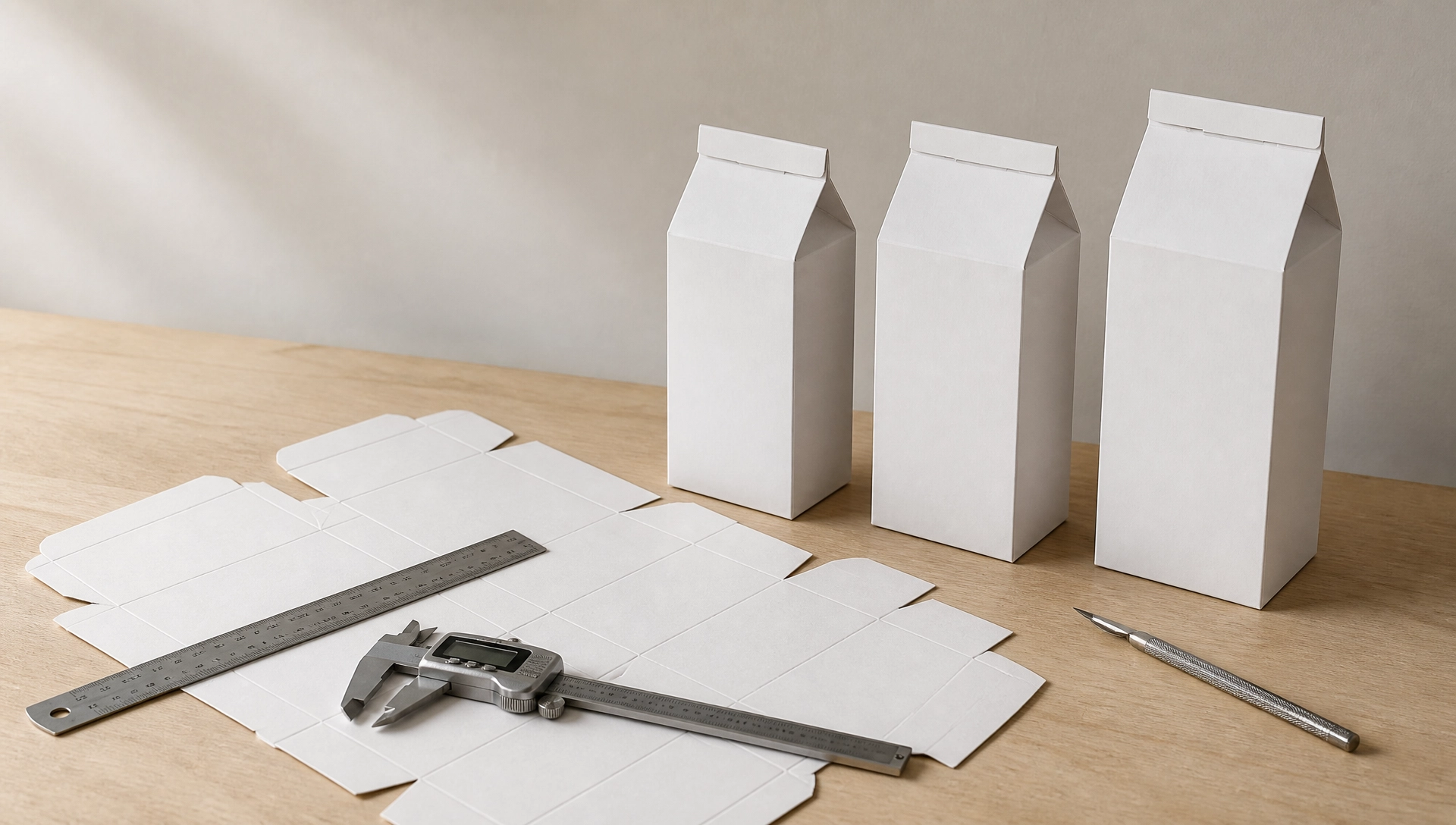
What a Custom Packaging Project Actually Involves
More Than Just Printing a Box
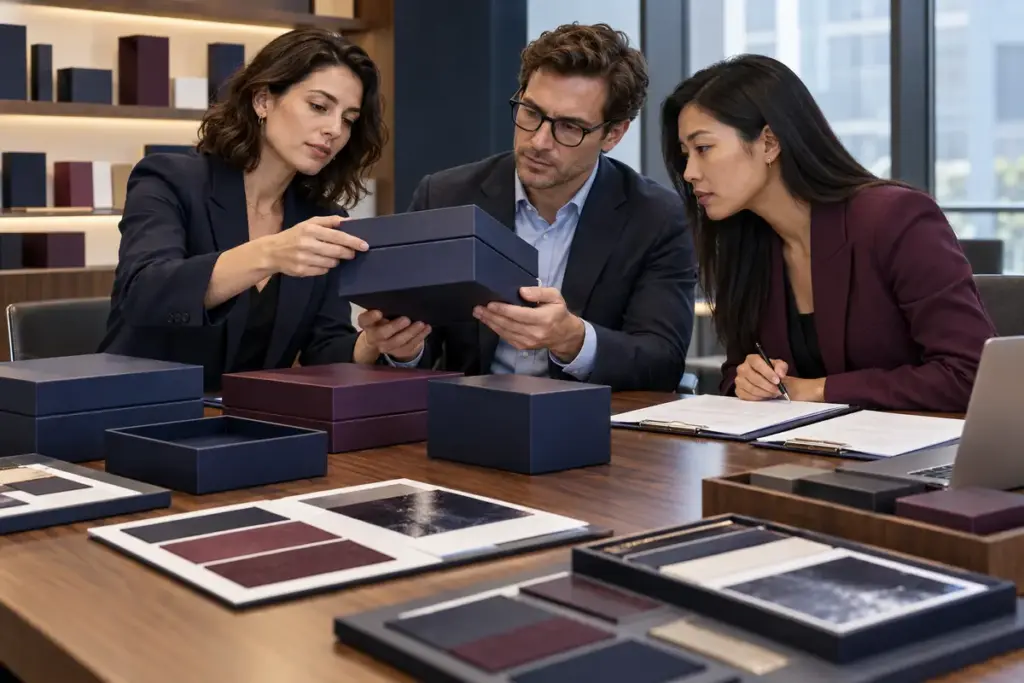
Acustom packaging project covers structural engineering, Materialauswahl, colour management, compliance documentation, Probenahme, Testen, und Produktion. Printing is honestly the easy part. Everything upstream of it decides whether the result works.
The Two Parallel Tracks
Here’s something brands often miss. Structure and artwork run on separate tracks. Structure needs your product dimensions; artwork needs a dieline that only exists once structure is settled. Folglich, sequencing matters — you can’t design the graphics before the box shape exists.
Where Most Timelines Break
In our experience, the three biggest schedule killers are late artwork, untested product fit, and colour approval loops. None of them are manufacturing problems. All of them are avoidable with preparation.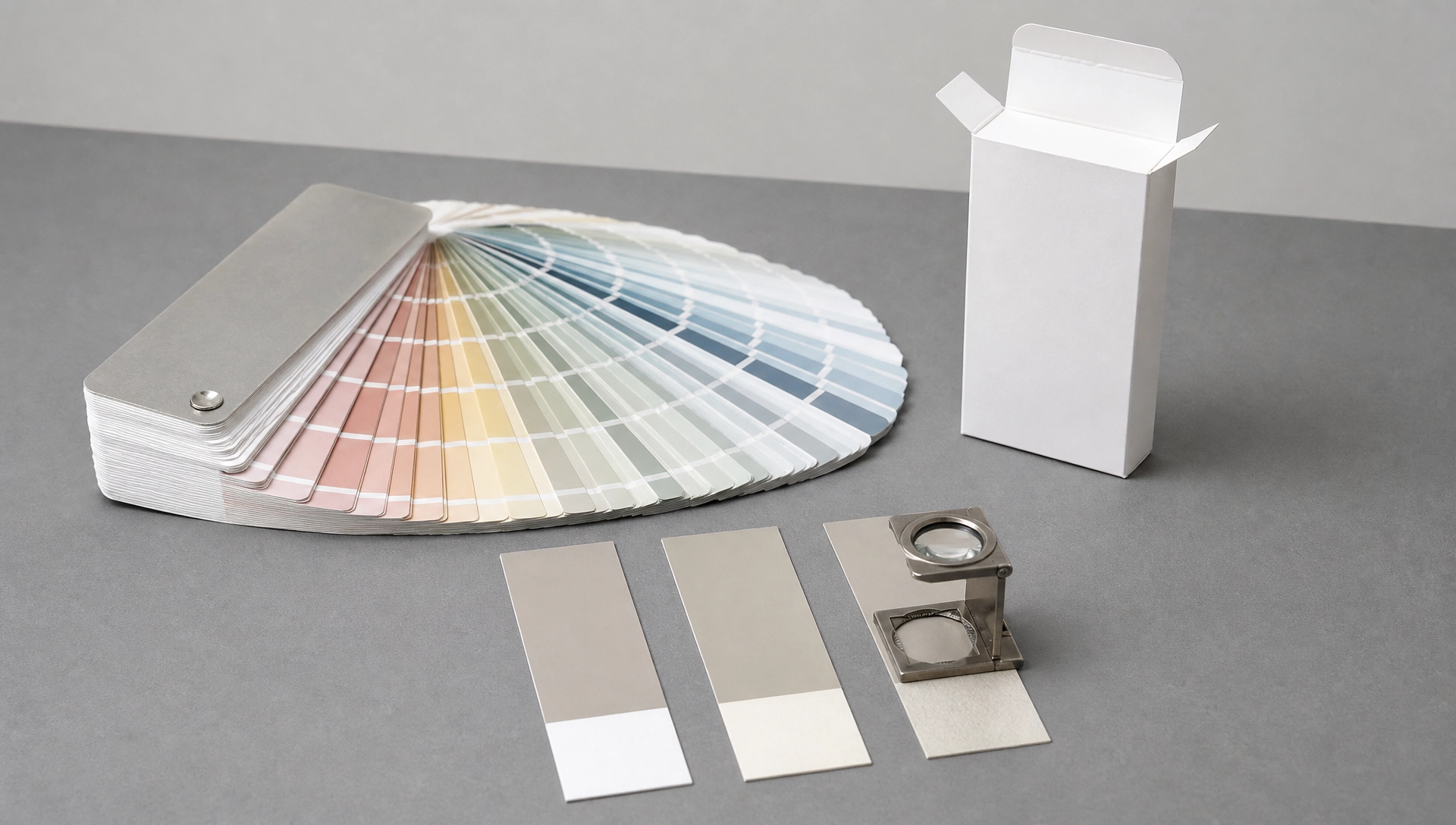
Who This Custom Packaging Project Workflow Applies To
The same sequence runs across categories, though the testing emphasis shifts:
- Hautpflege und Schönheit — Fit tolerance and premium feel dominate. Sehen Sie sich unsere an Fallstudie zur Hautpflege aus luxuriösen Papiertuben.
- Duft — Drop testing takes priority because glass breaks. Lesen Sie die Fallstudie zur Verpackung von Parfümpapiertuben.
- Food and beverage — Compliance documentation and shelf-life trials extend the timeline. Siehe die Fallstudie zu Papiertuben in Lebensmittelqualität.
- Kerzen und Raumdüfte — Weight and insert design drive the structural work.
- Supplements and wellness — Regulatory labelling space affects artwork planning early.
- Apparel and accessories — The simplest track, since barrier and fit constraints barely apply.
Stage 1: Brief and Feasibility
What to Send Us
Produktabmessungen, Gewicht, Zerbrechlichkeit, Zielmarkt, Menge, und wie es versendet wird. Zusätzlich, tell us your launch date up front — it changes what we recommend.
What Happens Next
We assess feasibility, flag anything that won’t work, and propose structures. Ehrlich gesagt, this is where an experienced supplier earns their keep, because catching an unworkable idea now saves a month later.
Typical Duration
Two to four working days for a quotation on a straightforward custom packaging project. Complex structures with custom tooling take longer.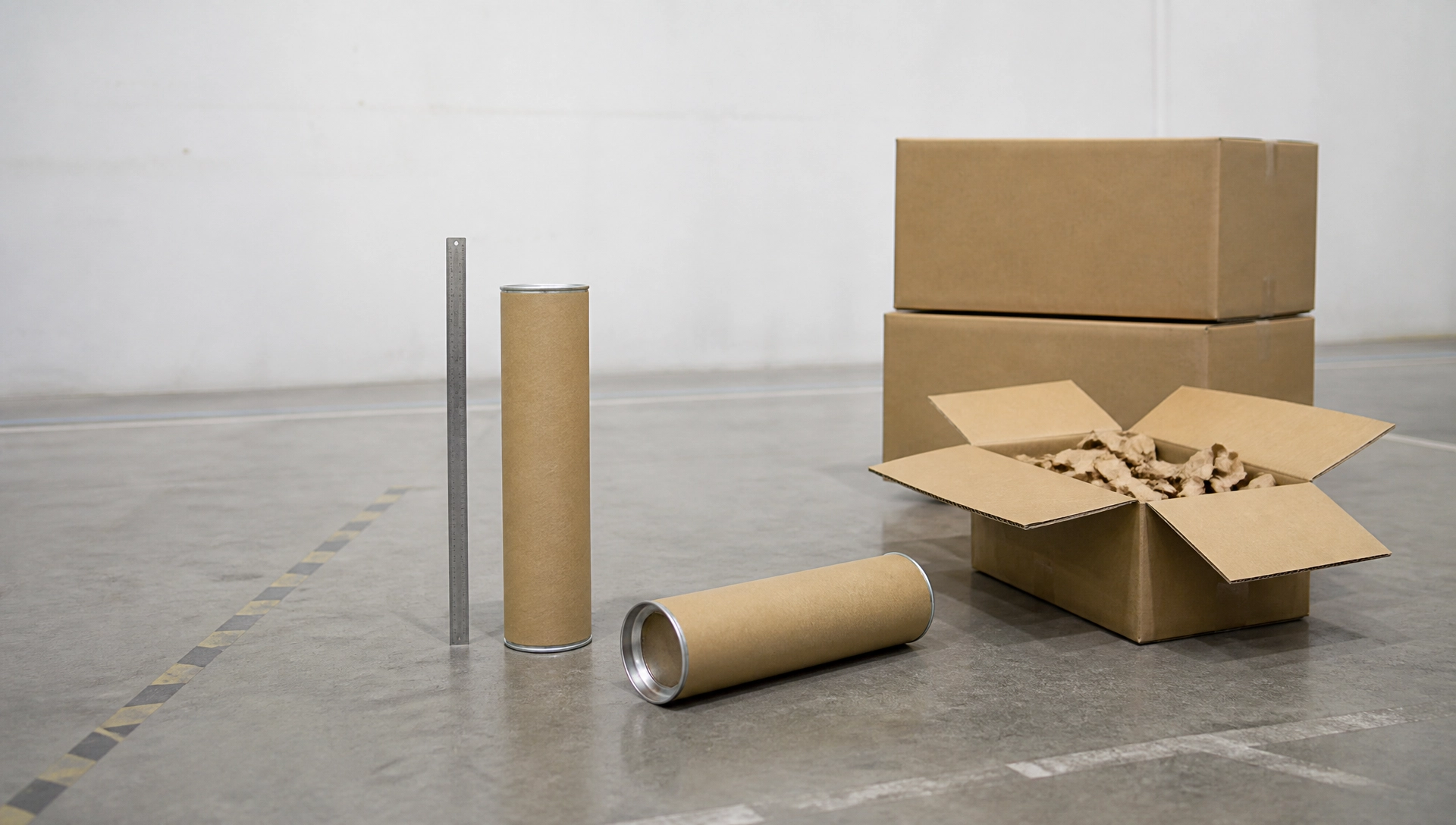
Stage 2: Custom Packaging Project Material Selection
Material Options on the Table
- Kraftpapier — Natural and unbleached, well suited to artisan and wellness positioning.
- Art paper and coated board — Smooth and highly printable for photographic artwork.
- Specialty and textured paper — Linen, gefühlt, and embossed stocks for premium ranges.
- Lebensmittelechte und fettdichte Einlagen — Essential when contents touch the surface directly.
- Foil liners and laminates — Maximum barrier, though they complicate the recycling story.
- Moulded pulp — Replaces foam and vac-form trays for fragile items.
Zertifizierte Faser
If your retailer requires FSC, flag it now rather than later. UnserFSC-zertifizierte Papierverpackung guide explains chain of custody, währendBiologisch abbaubare Papierröhrenverpackung covers fibre options in depth.
Typical Duration
Three to five days, running in parallel with early artwork planning.
Stage 3: Custom Packaging Project Structure and Dieline
Structures We Commonly Specify
- Telescopic lid and base — Deep lid over deep base, protective with a slow reveal.
- Shoulder-neck — A stepped reveal that reads distinctly premium, though tooling costs more.
- Sleeve over tray — Efficient across multiple SKUs sharing one base.
- Fenster — Film shows the product; an open die-cut avoids plastic entirely.
- Push-Up-Rohr — All-paper mechanism for balms and solid formats.
- Einlagen — Die-cut board, layered corrugated, or moulded pulp.
📦Verwandte Produkte: Kundenspezifische Papierröhren / Lebensmittelverpackung / Kosmetikverpackungen
The Dieline Handover
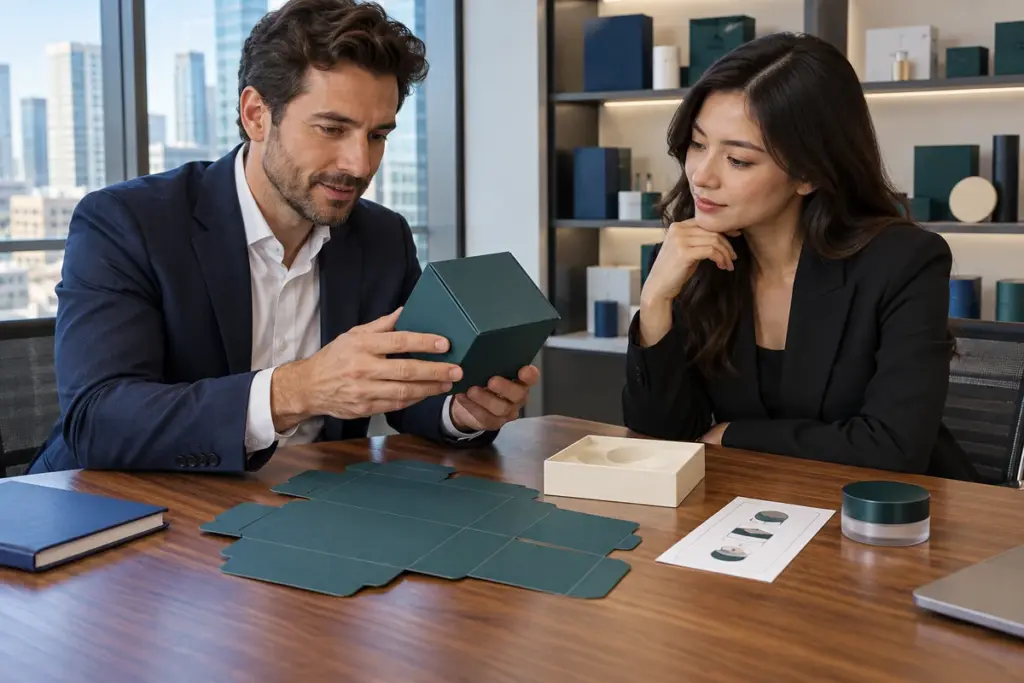
Once structure locks, we issue a dieline. Your designer works to it exactly. Trotzdem, this is where a surprising number of projects stall — so brief your design team before this arrives, not after.
Product Category Options
Depending on the format, this stage might land onstarre Boxen, Faltschachteln, corrugated shippers, or a combination.
Typical Duration
Three to seven days depending on structural complexity.
Stage 4: Artwork and Print Specification
File Requirements
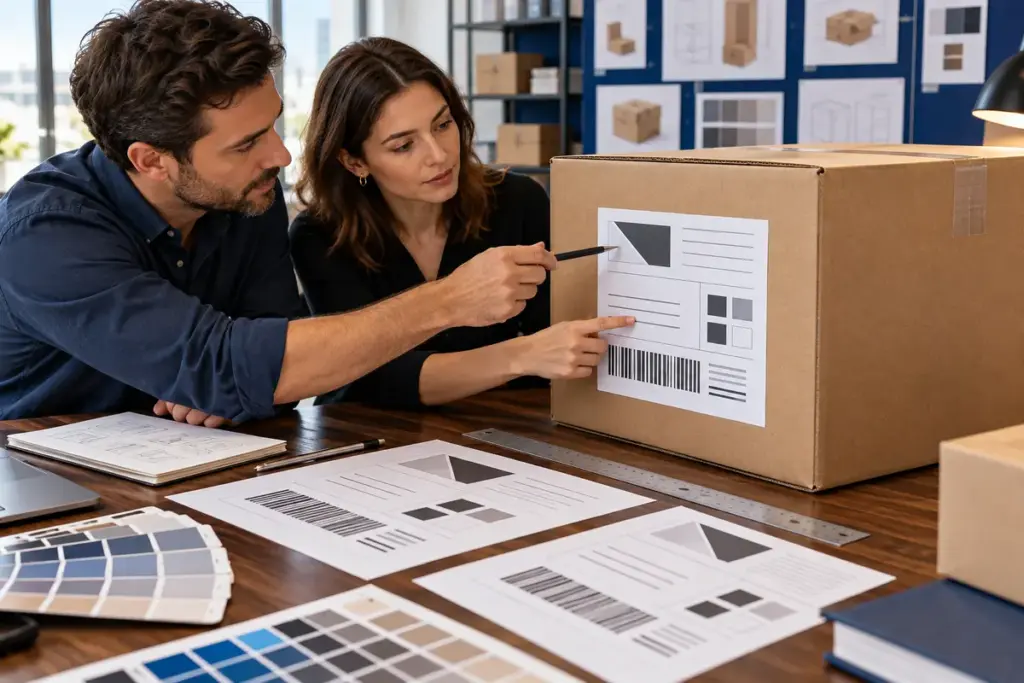
Send artwork in AI, EPS, or high-res PDF built on our dieline. Mark foil, prägen, Prägung, and spot UV as separate layers. Include Pantone references rather than screen values.
Print and Finish Options
- CMYK-Offset oder Digital — Full-colour photographic artwork.
- Pantone spot — Consistent brand colour across every run.
- Heißprägen — Metallic accents with disproportionate impact.
- Prägen und Tiefprägen — Mechanical, tactile, no added material.
- Spot-UV — Selective gloss contrast.
- Matte or gloss lamination — Durable, though it complicates recyclability.
- Wässrige Beschichtung — Water-based protection without plastic film.
The Colour Conversation
Uncoated stock absorbs ink and shifts colour noticeably. So if your brand colour matters, ask for a printed draw-down rather than approving from a screen.
Typical Duration
Five to ten days, largely dependent on how quickly your side turns around revisions.
Stage 5: Weiße Probe
What a White Sample Is
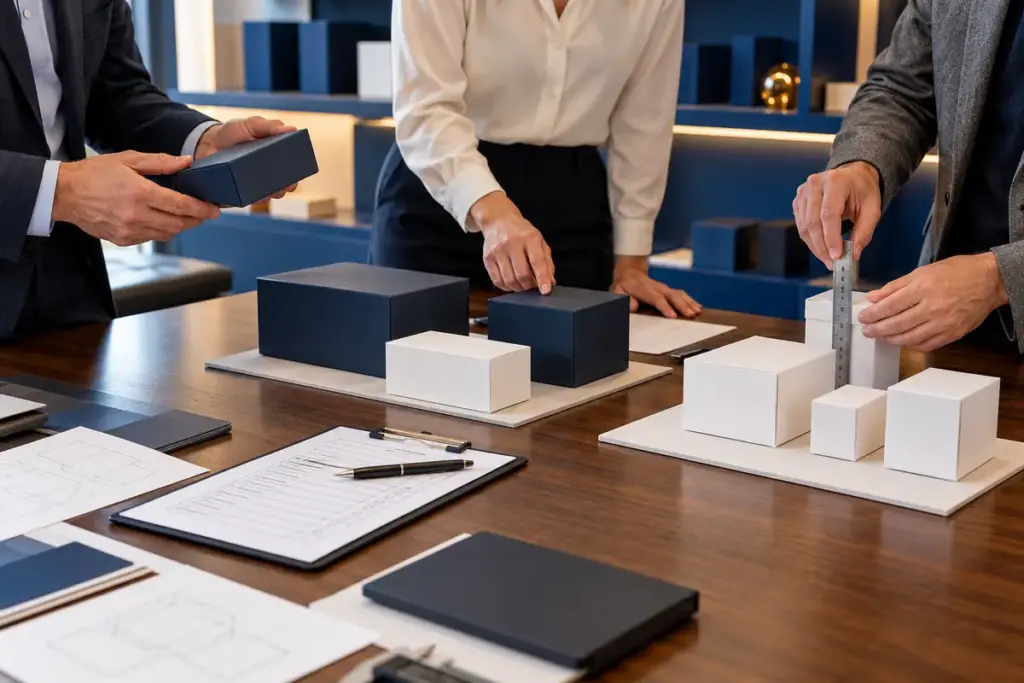
An unprinted structural prototype. It validates dimensions, fit, Steifigkeit, closure feel, and insert function before anyone commits to print or tooling.
Why It Matters More Than People Think
Ehrlich, skipping this causes more delays on acustom packaging project than any other single decision. A dimension error caught here costs days. The same error caught after printing costs weeks and a reprint.
What to Check
Put your actual product inside. Check the fit, the closure resistance, whether it stands upright, and how it feels when handled repeatedly. Our skincare case study shows how a lid tolerance issue nearly derailed a launch at exactly this stage.
Typical Duration
Five to ten days including shipping.
Stage 6: Custom Packaging Project Sample Testing
The Fully Finished Sample
Real print, real foil, real emboss, real insert. This is what you show your retail buyer, and what you test properly.
Testing to Run
- Falltest - Ecke, Rand, and flat drops with the filled product.
- Compression testing — Since goods ship in stacked master cartons.
- Haltbarkeitsversuche — Essential for food, as fats and aromatics attack fibre over time.
- Transit testing — Particularly for e-commerce without an outer carton.
Test With the Real Product
We’ll say this repeatedly because it matters. An empty sample tells you almost nothing. Weight distribution, oil migration, and aroma interaction only appear with the actual filled item.
Typical Duration
Ten to fifteen days including testing time on your side.
Stage 7: Compliance and Documentation
What to Assemble Before Production
- FSC-Produktkette — For certified fibre claims.
- BRCGS-Verpackungsmaterialien – Aktuelle Ausgabe 7, frequently requested by major retailers.
- IFS PACsecure and IFS Food — Relevant for food-contact applications.
- Food contact declarations — EU Regulation (EC) NEIN 1935/2004, plus GMP under Regulation (EC) NEIN 2023/2006.
- Component weights by material — Required for EPR filings. Sehen EPR-Verpackungskonformität.
Vorschriften zum Tagebuch
PPWR gilt ab 12 August 2026 in der gesamten EU. In der Zwischenzeit, EUDR-Verpflichtungen fallen weiter 30 Dezember 2026 für große und mittlere Betreiber, Und 30 Juni 2027 für Kleinst- und Kleinbetreiber.
Formulierung der Ansprüche
Describe construction accurately rather than making blanket eco claims. UnserVerpackung aus recycelbarem Papier UndPlastikfreie Verpackung guides cover safe wording.
Typical Duration
Runs parallel to sampling, so it rarely adds standalone time — provided you request it early.
Stage 8: Custom Packaging Project Mass Production
What Happens in the Factory
Material intake, Drucken, Abschluss, Stanzen, Montage, Qualitätsprüfung, und packen. We run in-process checks rather than inspecting only at the end.
Realistic Production Timings
Folding cartons typically take 15–20 days after sample approval. Rigid boxes and paper tubes take 25–35 days. Moulded pulp inserts need tooling first, which adds time on a first-runcustom packaging project.
MOQ Reality
MOQ generally starts at 500–1,000 units depending on structure and finish. Complex tooling pushes the economic minimum higher.
Versand
We handle incoterms and customs documentation daily across 60+ Exportmärkte. Sea freight adds four to six weeks; air freight compresses that considerably at higher cost.
Realistic Timeline for a Custom Packaging Project
The Honest Total
For a straightforward folding carton, allow roughly eight to ten weeks from brief to delivery. For rigid boxes or tubes with a custom insert, allow ten to fourteen weeks. Add sea freight on top of that.
Where You Can Compress
Prepare artwork specifications before you enquire. Approve samples quickly. Request compliance documentation at Stage 1 rather than Stage 7. Zusammen, these habits genuinely save two to three weeks.
Where You Cannot Compress
Werkzeuge, shelf-life trials, and physical sample shipping all take the time they take. daher, build them into your launch plan rather than hoping to shortcut them later.
Why Choose Pack Packaging for Your Custom Packaging Project
Fertigungskapazität
- 20,000㎡ Fabrik — Drucken, Stanzen, Folierung, tube winding, und Montage alles im Haus. Folglich, we’re not coordinating three subcontractors when something needs fixing.
- 2,000㎡ Lebensmittelwerkstatt — Eine separate, lebensmittelechte Umgebung für essbare und berührungsempfindliche Produkte.
- 10,000,000+ monatliche Kapazität — Wir skalieren von der Einführung von 5.000 Einheiten auf Millionen, ohne den Lieferanten zu wechseln.
Design and Project Management
- 20+ interne Designer — Nie ausgelagert. Bauingenieurwesen, Dieline-Erstellung, Entwicklung einfügen, und druckfertige Kunstwerke.
- One point of contact — The same person runs your custom packaging project from brief through delivery.
- Documentation as standard — FSC records, Materialspezifikationen, and component weights supplied alongside delivery.
- 60+ Exportmärkte — Incoterms und Zollabwicklung täglich.
Eine ehrliche Anmerkung
We’d rather tell you a twelve-week timeline is twelve weeks than promise eight and disappoint you at week nine. If your launch date genuinely can’t move, say so early and we’ll tell you honestly what’s achievable — including when a simpler structure is the sensible answer.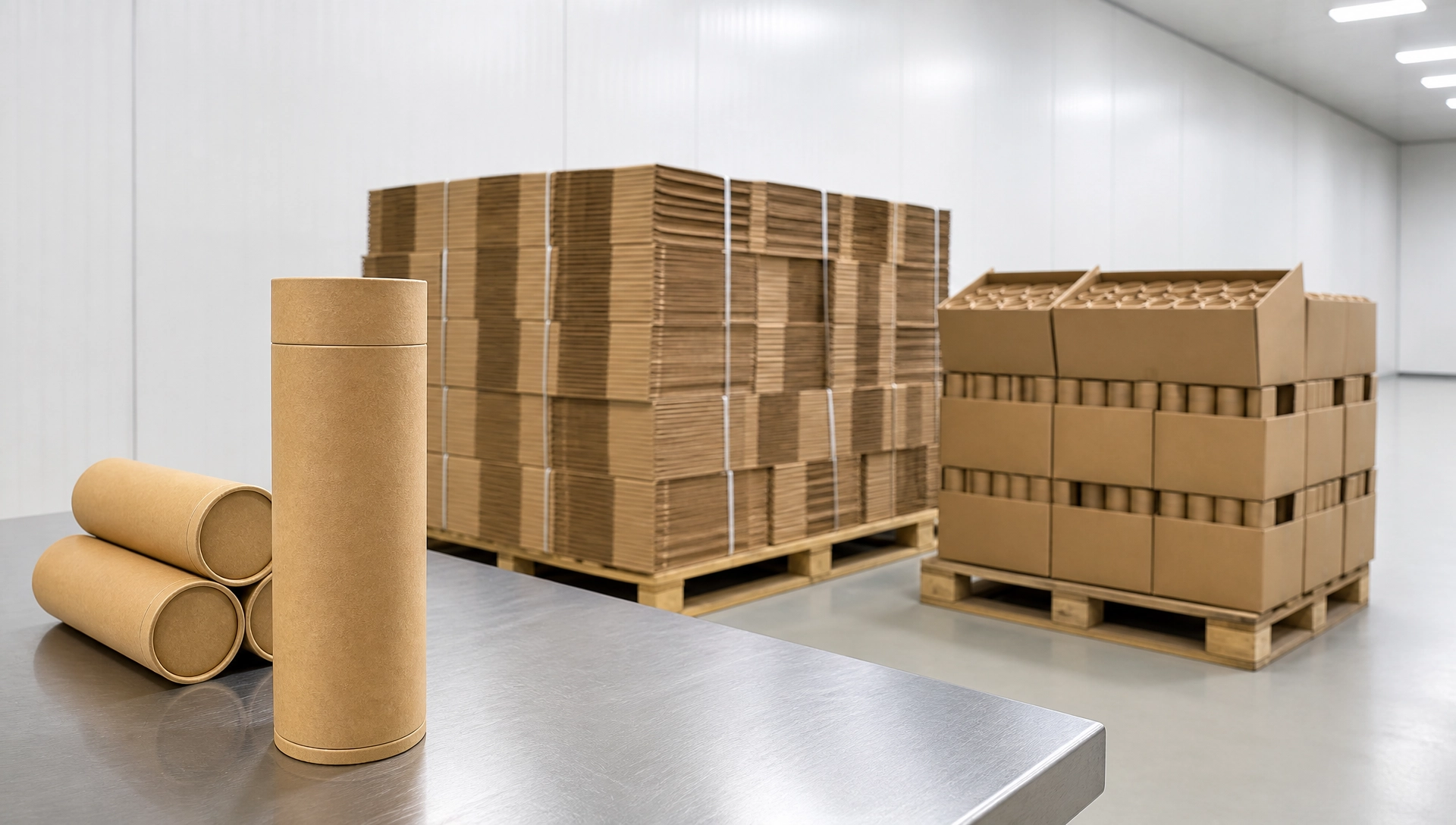
FAQ: Custom Packaging Project Timelines and Samples
Q1: How long does a custom packaging project really take? Eight to ten weeks for folding cartons, ten to fourteen for rigid boxes and tubes with custom inserts, plus freight. Jedoch, late artwork and slow approvals extend that more than production ever does.
Q2: Can we skip the white sample to save time? You can, though we’d advise against it. A structural error caught on a white sample costs days; the same error caught after printing costs weeks plus a reprint.
Q3: How many sample rounds are normal? Two to three. A white structural sample, dann ein fertiges Vorserienmuster, plus one more round if testing reveals a fit issue. Zusätzlich, custom inserts often need an extra iteration.
Q4: Do we pay for samples? Sampling costs vary by structure and finish, and we typically credit them against a confirmed production order. We quote tooling for moulded pulp separately.
FAQ: Kosten, Files and Production
F5: What drives cost most? Structure complexity, material grade, Abschluss, und Werkzeuge. Interessant, Die Anzahl der Druckfarben ist weniger wichtig, als die meisten Marken annehmen, and removing lamination reduces cost.
F6: What artwork format do you need? KI, EPS, or high-res PDF built on our dieline, with Pantone references and separate layers for foil, prägen, und Spot-UV. Screen colour values alone aren’t sufficient for brand-critical work.
F7: Can we change the design after approving samples? Minor artwork tweaks, sometimes. Structural changes, no — they restart tooling and sampling. So lock structure before investing heavily in artwork.
F8: Was benötigen Sie, um ein Angebot zu erstellen?? Senden Sie Ihre Produktabmessungen, Produktverwendung, Menge, Zielmarkt, launch date, und Logo-Datei. Then we’ll map out thecustom packaging project timeline and recommend the right structure, Material, und fertig.
Verwandte Leitfäden
Each stage of this workflow connects to a topic we’ve covered in more depth:
- Wie eine Hautpflegemarke mit luxuriösen Papiertuben die Regalattraktivität steigerte — Sampling and buyer approval in practice.
- Fallstudie zur Verpackung von Parfümpapiertuben – Drop-Tests und Insert-Iteration.
- Fallstudie zu Papiertuben in Lebensmittelqualität — Shelf-life trials and food compliance.
- FSC-zertifizierte Papierverpackung — Zertifizierte Faser und Produktkette.
- EPR-Verpackungskonformität für Marken, die in die EU verkaufen — Registrierung und Komponentengewichte.
- Nachhaltige Lebensmittelverpackung für Tee, Kaffee und Snacks — Barrier decisions for edible products.
- Wie Papierverpackungen Marken dabei helfen, ein umweltfreundlicheres Image aufzubauen — Warum der Wechsel die Markenwahrnehmung verändert.
Entdecken Sie weitere maßgeschneiderte Verpackungslösungen
- Faltschachteln — Leicht, vollständig anpassbare Einzelhandelskartons.
- Starre Boxen — Premium-Geschenkboxen für Prestige-Sortimente.
- Wellpappkartons — Langlebige E-Commerce- und Versandverpackung.
- Kindersichere Boxen — Sichere Verpackung für regulierte Produkte.
- Zubehör — Benutzerdefinierte Einsätze, Seidenpapier, Bänder, und Etiketten.
- Papierröhren — Unsere spezielle Kollektion für Schönheit, Duft, Kerzen, Tee, und Kaffee.
Ready to Start Your Custom Packaging Project?
The brands that get packaging delivered on time aren’t lucky, Ehrlich. They prepare artwork specifications before enquiring, they test with the real product, and they ask for compliance paperwork at the beginning rather than the week before shipping. None of that is complicated — it’s just sequencing.
Teilen Sie uns Ihre Produktgröße mit, Menge, Logo-Datei, und Zielmarkt. Our team will then map out yourcustom packaging project timeline and recommend the right structure, Material, and finish for your launch window.
✉️ [Senden Sie uns Ihr Briefing → Holen Sie sich ein individuelles Angebot ein 24 Std] Enthalten: product dimensions · quantity · target market · launch date · logo file
Verpackung verpacken | 20,000㎡ Fabrik | 2,000㎡ Lebensmittel-Workshop | FSC-zertifizierte Materialien | 60+ Exportmärkte
Haftungsausschluss: Timings, MOQ-Bereiche, and lead times reflect our standard practice and represent typical ranges rather than guarantees. Actual schedules vary by structure, beenden, tooling requirement, and season. Die regulatorischen Informationen basieren auf öffentlich zugänglichen Quellen mit Stand August 2026 und stellt keine Rechtsberatung dar, Lassen Sie sich daher Ihre konkreten Verpflichtungen von einem qualifizierten Berater bestätigen.