
An approved folding-carton sample and a full container of matching cartons are two different achievements. A folding carton manufacturer can meet your specification on a white sample and still drift across 200,000 Einheiten. The gap sits between the sample and high-volume production, where the dieline, Pappe, Drucken, Laminierung, die cutting, creasing, folding, and gluing each behave differently at speed.
This article walks brand procurement and packaging-development teams through that transition. It helps you judge whether a supplier can reproduce your carton reliably at the volume and lead time you need. It stays on folding-carton converting, not on factory-versus-trader comparisons.
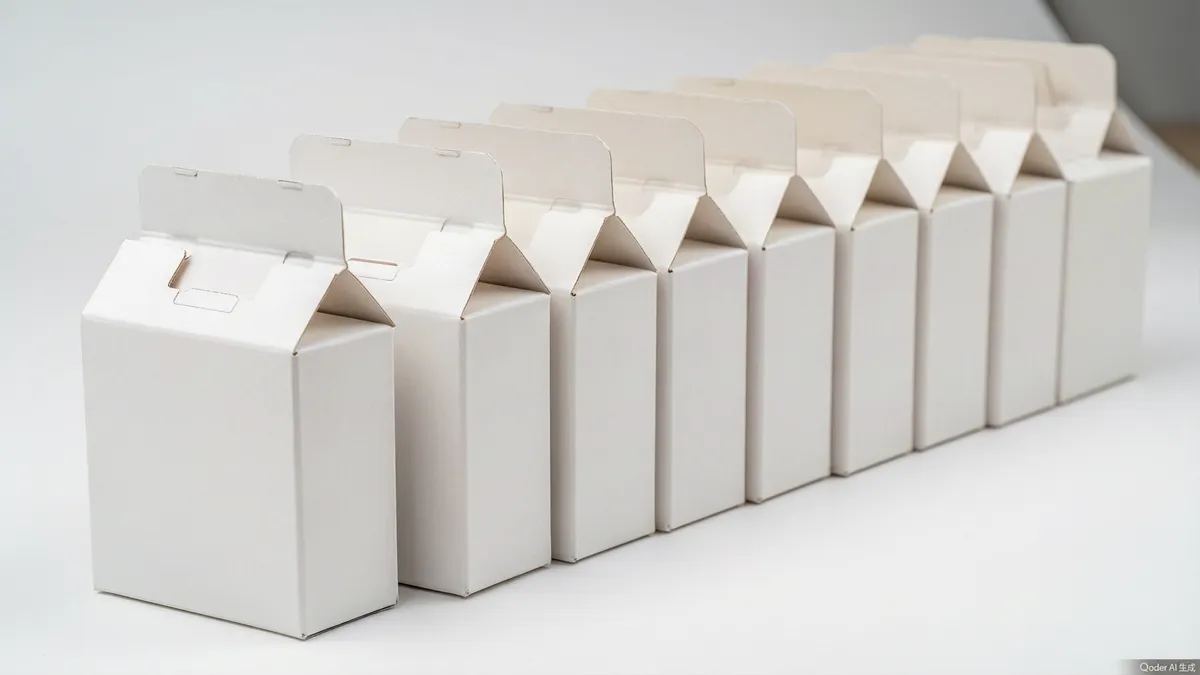
What Must Be Defined Before a High-Volume Folding Carton Project?
High-volume work starts with a frozen specification, because every later cost traces back to what was left open. Before a folding carton manufacturer quotes, define the dieline with its crease and cut lines. Specify the paperboard grade and caliper, the print colors and coating, the structural intent, and the acceptance limits you care about. Add the target quantity, the delivery window, and what each sample stage must prove.
Write these as documents, not as intentions. A shared dieline, a paperboard spec, and a color reference give both sides the same thing to measure against. Vague inputs force the factory to guess, and a guess at 200,000 units becomes a claim. If a detail does not matter to your brand, say so explicitly, so the supplier spends control effort where it counts.
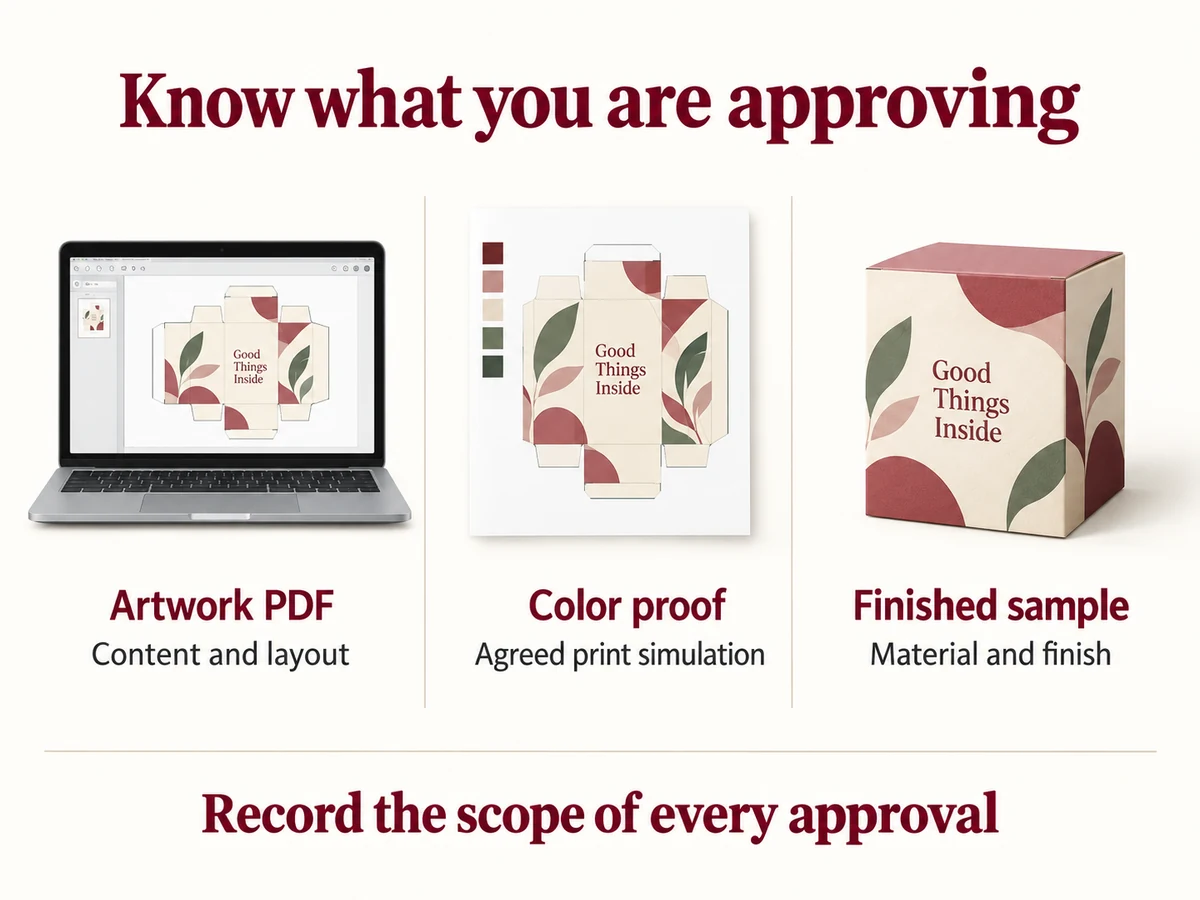
One item is easy to skip and expensive to miss: what “the same as the sample” means. Decide which sample is the reference and what deviations you will accept, before the first carton runs. That single agreement prevents most disputes later.
Can the Sample Structure Be Reproduced at Production Scale?
Samples come in stages, and each stage proves a different thing. The table below separates them so you can ask for the right proof at the right time. Do not read one stage as a guarantee of the next.
| Sample Stage | What It Proves | What It Cannot Prove |
|---|---|---|
| White sample | Struktur, Größe, and fit | Print color or finish |
| Printed prototype | Layout and approximate color | Offset mass-production color |
| Production sample | True process, Farbe, and stock | Run-to-run drift over a long job |
The structure that folds cleanly as a hand sample can behave differently on a high-speed folder-gluer, where arm pressure, feed speed, and board grain all change. Ask whether the production sample was made on the same process and stock as the run, not on a proofing device. A digital proof is a useful layout check, but it does not perfectly match offset mass production, so do not approve color from a screen alone.
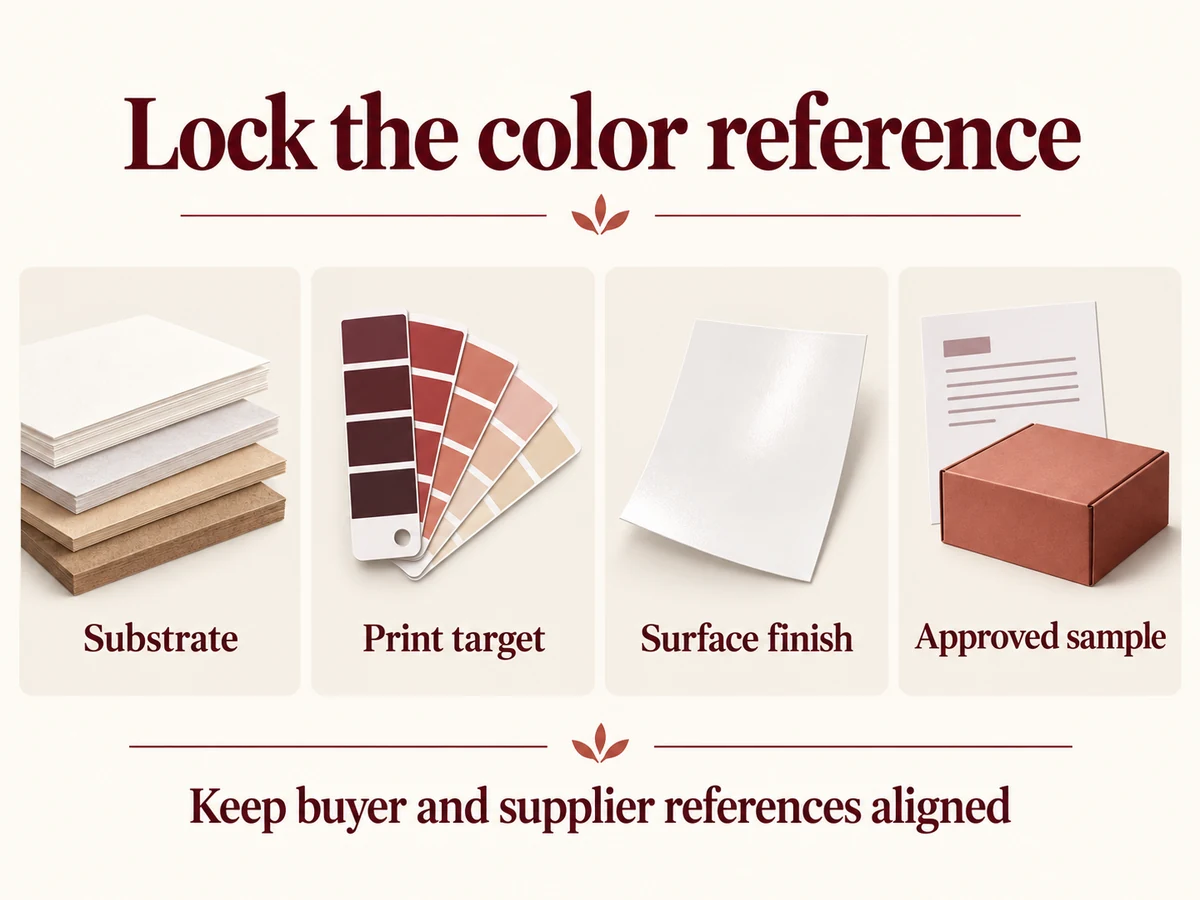
For a genuine production-scale reference, request a sample pulled from the intended press and converting line. If the target is a spot ink or a metallic, start from the guide to Farbabstimmung, then write the agreed reference into the spec. Compare it against your frozen dieline and color reference, then keep that approved sample as the physical standard for the order.
Which Production Processes Should Be Evaluated?
A folding carton passes through a chain of processes, and each one can introduce variation. Evaluate the supplier on the steps your design depends on rather than on a general promise of quality.
- Drucken: Offset or digital, color build, and registration against your reference.
- Lamination and finishing: Film, varnish, Folie, or embossing, and how they affect the crease.
- Die cutting and creasing: Cut accuracy, crease depth, and scoring matched to board caliper.
- Folding and gluing: Seam placement, glue amount, and squareness on the folder-gluer.
Not every step happens in one building. Many manufacturers outsource finishing such as foil or special varnish, and that is normal. Ask which processes run in-house and which are sent out, because an outsourced step adds a handoff where color or timing can shift. A supplier that states its own process boundaries gives you a clearer risk map than one that claims to do everything.
Keep the evaluation tied to your design. A carton that relies on tight foil registration needs a supplier whose outsourced foiling holds that register across a run. A plain varnished carton may not need the same control. List the two or three steps your artwork and structure depend on most, and ask each supplier how it holds those specific steps at volume. That focuses the conversation on your real risk instead of on generic capability.
Planning a High-Volume Folding Carton Order?
How Should Capacity and Lead Time Be Verified?
Capacity is a project-specific number, not a factory statistic. A folding carton manufacturer can quote a large monthly figure. It can still lack open time on the right press, the right size folder-gluer, or the finishing line your carton needs. Judge capacity against your format and your date, not against a headline number.
Ask the supplier to confirm the run rate for your specific carton size and construction, and how it schedules your order against other jobs in the window you need. Verify the lead time as a range that includes printing, Abschluss, converting, and shipping, then confirm what happens if a raw material or a foiling subcontractor slips. Do not anchor on a fixed sampling or production day count from a general article, because those vary by job.
A credible answer names your format and your date. A vague one recites factory area or total capacity. Treat the gap between those two answers as a signal about how carefully the supplier plans.
Buffer for the unknowns as well as the best case. Ask whether the supplier holds contingency time before your date or schedules to the edge, since a plan that only shows the smooth path is not a capacity answer. The questions that matter are what happens when a step falls behind, how soon you hear about it, and who owns the recovery. A supplier that flags a slip early lets you replan; one that absorbs it until the ship date leaves you a surprise.
How Are Print, Farbe, and Finishing Consistency Controlled?
Color control is a process, not a promise. The practical question is how the manufacturer holds a color across a long run and across reprints. A common method pairs a physical reference with a measured check: an approved print standard, and a densitometer or spectrophotometer reading during the run.
Agree the color method and the acceptance limit for your order specifically. Some brands accept a visible match to a signed sheet; others require a measured tolerance band. There is no single color tolerance that fits every board, ink set, und fertig, so set the limit for your combination and approve a reference that both sides can reproduce.
Finishing carries the same risk. A laminate can shift a color cast, and a foil can register slightly off across a run. Confirm how the supplier controls these steps and how it flags drift before the whole batch is committed.
What Quality Plan Should Be Agreed Before Production?
A quality plan turns your acceptance limits into checks someone can run. Before production starts, agree what gets measured and against what reference. A typical plan covers dimensional fit to the dieline, color against the approved standard, and glue seam strength and placement. Add squareness and finishing registration, with a defined action when a check falls outside the limit.
Resist a one-size inspection rule. The right number of samples and the tolerance you enforce depend on the carton, the closure, and how the pack line runs. Do not apply a single AQL level to every order without thought. Define what counts as a reject versus a minor cosmetic variance, and tie each to the approved sample.
Ask for batch traceability, so a problem found later can be traced to a run, a material lot, and a date. If your product needs declared fiber content or a chain-of-custody paper, request the matching documentation, such as an FSC chain-of-custody certificate code from the supplier. The sampling and reference process is detailed further on the structure and sampling page.
Decide who checks and when. A plan should say who runs each check and at which stage. Think in terms of incoming board, press sheets during the run, and finished cartons before packing, and note whether a third party inspects any of them. Agree how an out-of-limit result is reported and photographed, and what the remedy should be. That way a finding on the line turns into a decision, not a surprise at your dock.
How Should Buyers Compare Final Quotations?
Quotations are hard to compare when each one bundles items differently. Break every quote into the same line items before you judge price. The table below shows the fields worth lining up across two or three folding carton manufacturer bids.
| Quotation Field | Why It Differs Between Bids |
|---|---|
| Unit price and tooling | One-time die and plate costs spread differently |
| MOQ and price break | Volume steps start at different quantities |
| Included processes | Finishing and lamination quoted in or out |
| Sample and proof cost | Free or charged, and how many rounds |
| Lead time scope | Factory time versus door-to-door |
Once the fields match, the price gap usually comes down to what each bid leaves out. A low unit price that excludes foiling, or a fast lead time that only covers the factory floor, is not the same deal as one that includes them. Compare on identical scope, and read the exclusions as carefully as the number.
To see standard folding-carton structures and start a specification, browse the Faltschachteln range, then send PK Paper Box the frozen dieline and quantity for a like-for-like quote.
Häufig gestellte Fragen
What information is needed for a folding carton quotation?
Provide the dieline or dimensions, paperboard grade and caliper, print colors and coating, Abschluss, Zielmenge, and delivery window. Add your acceptance limits and the reference sample. Complete inputs let a supplier quote an accurate price instead of estimating around gaps.
How can buyers verify production capacity?
Verify capacity against your specific carton size and your date, not a factory-wide figure. Ask for the run rate on the press and folder-gluer that will handle your job, and how your order is scheduled alongside other work in that window.
Is a printed prototype the same as a production sample?
NEIN. A printed prototype checks layout and approximate color, often on a proofing device. A production sample is made on the intended press and converting line with the real stock, so it shows the process you will actually receive.
Which production processes may be outsourced?
Finishing steps such as foil stamping, special varnish, or lamination are commonly sent to subcontractors. Ask which processes run in-house and which are outsourced, since each handoff can affect color timing and schedule.
How should color consistency be approved?
Approve a physical reference standard and agree the acceptance limit for your board, Tinte, and finish combination. A measured check during the run supports that standard. A digital proof helps layout but does not perfectly match offset, so avoid approving color from a screen alone.
What belongs in a folding-carton quality plan?
Define the checks and their reference: dimensional fit, color against the approved standard, glue strength and placement, squareness, and finishing registration. Set reject criteria and batch traceability. Match the inspection level to the carton rather than a single fixed rule.
How should buyers compare quotations?
Break each quote into the same fields: unit price and tooling, MOQ and price break, included processes, Musterkosten, and lead-time scope. Compare on identical scope, because most price gaps come from what a bid leaves out rather than from true cost.
A folding-carton program moves from a good sample to a good bulk order only when the specification, the process, and the acceptance limits are agreed up front. Verify capacity on your format, approve color against a reproducible reference, and compare quotes on identical scope before you commit.