A buyer receives a short email from a retailer or a distributor: “these units need to be CR” oder “tamper-evident seals are required.” To many supplement, personal-care and hardware-tool brands, the two requests sound like the same safety box being ticked twice. They get quoted one solution and hope it covers the other. It usually does not, and the wrong reading of a tamper-evident vs. child-resistant requirement becomes expensive after the first production run.
This article separates the two concepts. We explain what each mechanism is designed to do, and how child-resistant performance is defined and verified at a concept level. We then cover who asks for each feature and under which regulatory system, what a buyer should confirm with a supplier, and when one package legitimately needs both.
How Do Tamper-Evident and Child-Resistant Packaging Differ?
Tamper-evident (TE) features answer one question: has this package been opened before it reached the buyer? The feature itself does not stop anyone from opening the contents. It leaves a visible trace so that the person receiving the product can tell whether the seal has been broken.
Child-resistant (CR) closures answer a different question: can a young child open this package within a reasonable time? A CR structure does not record whether anyone has opened it before. Its job is to delay or deter access by small children while remaining usable by most adults.
| Dimension | Tamper-Evident (TE) | Kindersicher (CR) |
|---|---|---|
| What it is for | Protects purchase integrity and brand trust. | Protects children from accidental access to hazardous contents. |
| When it acts | Before and at the point of purchase, on the shelf or at the doorstep. | After purchase, during storage in a home or workplace. |
| Typical mechanism | A film, band, label or tape destroyed or visibly changed when opened. | A closure action such as push-and-turn, squeeze-and-turn or a hidden tuck path. |
| What it cannot do | A broken seal says nothing about whether a child could open it. | A difficult closure says nothing about whether it was opened earlier. |
Because the questions are different, one feature cannot quietly substitute for the other. Each belongs on the specification as its own line item.
How Do Tamper-Evident Features Work?
Tamper-evident components are a general family of market solutions. They are typically produced by film converters, label printers and tape suppliers. They are applied at a converting site, a filling facility or a distribution centre rather than by the carton maker itself. Common mechanisms you will see across supplements, personal care and hardware retail cartons include:
| Mechanism | How it shows evidence |
|---|---|
| Shrink bands and overcaps | A printed plastic sleeve bridging cap and neck, which must be cut or torn to open the bottle. |
| Break-seal rings | The click-band on a medicine or supplement bottle that separates from the cap on first opening. |
| Film and skin wraps | Sealed film over a carton opening, a jar mouth or a tray, removed only by peeling or piercing. |
| VOID and holographic tapes | Sealing tapes that leave a visible pattern or message on the surface when peeled. |
| Peel-and-reveal labels and serialised stickers | Labels that delaminate or tear apart across a seam so a reseal is hard to fake convincingly. |
| Induction seals and blister seals | Sealed membranes under a cap, or lidding foil over a blister or carton cavity. |
All of these share one property: the feature is sacrificial. It is meant to be destroyed or visibly altered during normal first opening, and that altered state is the evidence. None of them is designed to slow down an adult who wants into the package, and none of them should be described as making a package child-resistant.
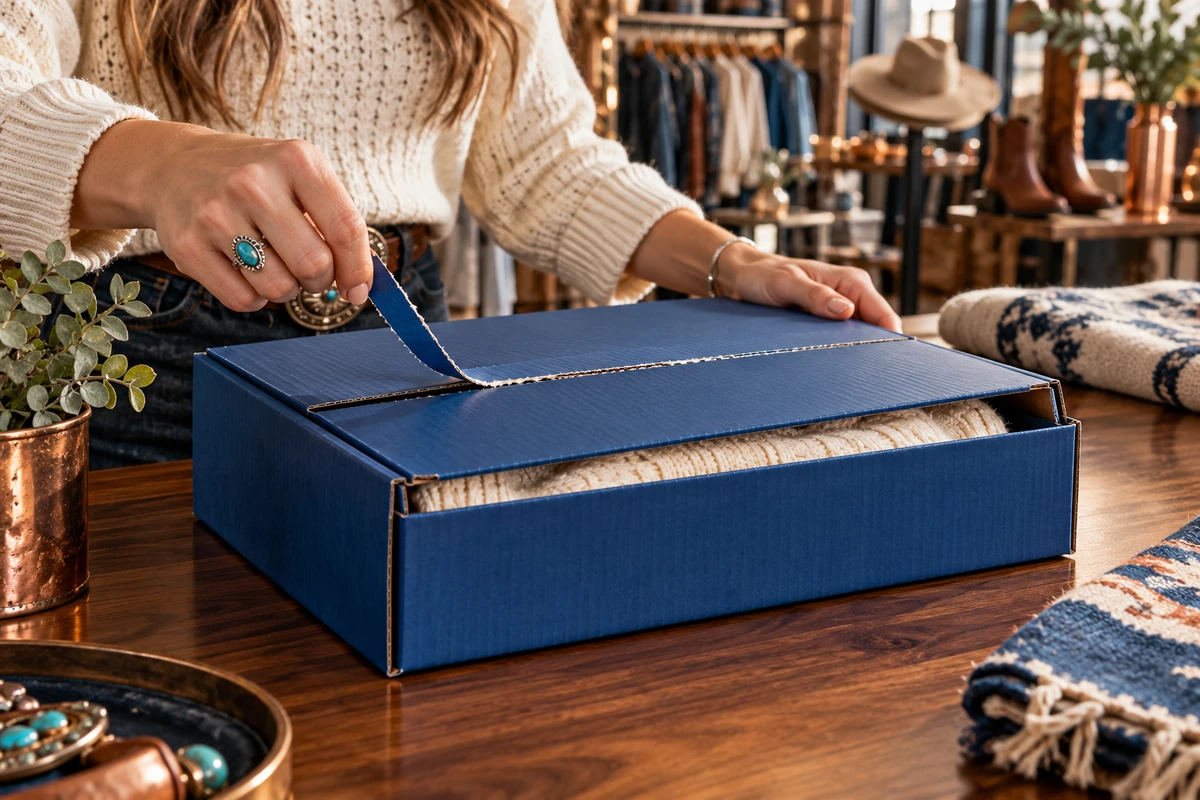
Evidence features are only as good as their specification. A generic clear film and a custom-printed VOID seal can look similar in a photo while behaving very differently in transit, cold storage or a humid bathroom. When a channel asks for “tamper-evident,” the practical follow-up question is which specific mechanism, with what visible evidence, applied by whom. A tear strip is one opening feature that also shapes returns; unser tear-strip mailer guide covers that trade-off.
How Are Child-Resistant Closures Defined and Tested?
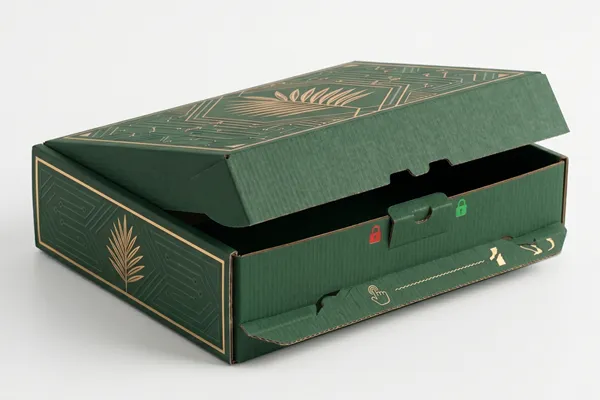
A child-resistant closure requires an action sequence that children below a certain age have typically not yet learned. These include push while turning, squeeze while twisting, align before sliding, or find a non-obvious tuck path in a folding carton. The design intent is dual. The package should be significantly difficult for a young child to open within a reasonable time, yet not so difficult that an ordinary adult struggles to use it properly.
At a concept level, that dual intent is verified with human panels rather than machines. Under a defined protocol, a group of children attempts to open the package without instruction, while a separate group of adults opens it normally. The package performs as special packaging when a specified majority of children fail within the allowed attempts and time, while a specified majority of adults succeed. Some protocols also include a senior-user panel. We do not restate the testing methodology here; unser child-resistant packaging testing guide covers the protocols, panel logic and reporting in detail.
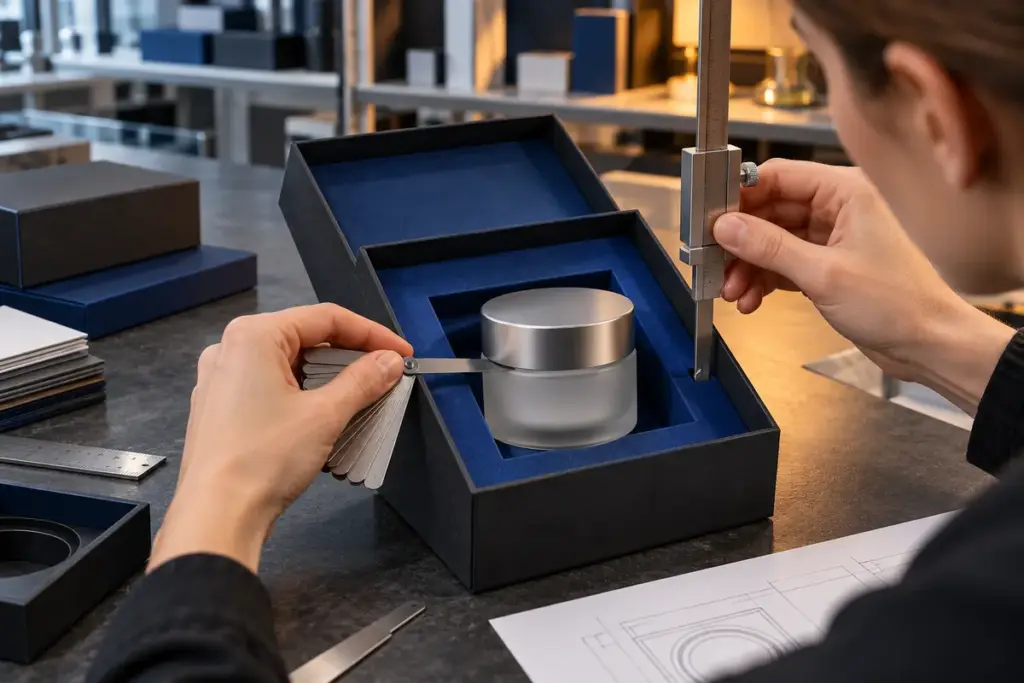
For paperboard packaging, the child-resistant behaviour lives in the closure system, not in the board grade. Unser child-resistant box structures integrate press-and-slide and hidden-tuck mechanics into cartons, and the same closure logic can be paired with different carton formats. One consequence matters for buyers: a CR result is tied to a specific tested structure. A report that describes a similar closure, a different lid tolerance or an unapproved material substitution does not transfer automatically to the production version you are buying. Unser packaging tolerances guide explains how fit and tolerance variation show up between samples and production.

Who Asks for Each Feature, and Under Which Rules?
Tamper-evident requests are usually channel-driven. Einzelhändler, marketplaces and brand-protection programmes ask for seal evidence on supplements, over-the-counter products, Kosmetika, food and tool cartons. The requirement typically comes from a supplier agreement or a category code, and the acceptable mechanism is often defined in the channel’s own packaging manual.
Child-resistant requests are usually law-driven, and the two main systems people refer to work in parallel with their own scopes. In den Vereinigten Staaten, the Poison Prevention Packaging Act (PPPA), administered by the Consumer Product Safety Commission, requires certain drugs and household chemical products to use special packaging. That packaging is significantly difficult for children under five years of age to open within a reasonable time and not difficult for adults to use properly.
In the European Union, the question is structured differently. Child-resistant closure obligations for certain hazardous mixtures sit within EU chemicals classification and labelling law. Closure requirements for medicinal products are addressed through member-state packaging rules. Closure testing is generally referenced against European harmonised (EN) standards for the relevant product family.
These two systems are described side by side, each with its own scope, and deliberately not converted into one another. A design validated under one reference does not automatically satisfy the other, and we do not rank them as stricter or equivalent. Whether either applies to you depends on your product category, your destination market, and your use scenario. Each case must be confirmed separately against the rules in force in the market you are selling into. Nothing here should be read as compliance advice or a statement that any packaging solution grants market access.
What Should Buyers Confirm With a Supplier?
Whatever wording the request arrived in, turn it into separate, concrete questions before you commit to artwork or tooling.
For a tamper-evident requirement, confirm with whoever is applying the feature (film converter, label supplier, your filling site or your distribution centre):
- Which exact mechanism is proposed, and what visible evidence does it leave on first opening?
- How does the feature behave through transit vibration, temperature swings and shelf humidity?
- Who sources and applies it, and who is accountable if a batch shows weak seals?
For a child-resistant requirement, confirm with the packaging supplier:
- Which specific closure structure is being quoted, and was that structure, as built, validated?
- What test documentation exists, against which reference, and who issued the report (an accredited testing house or an internal panel)?
- Does the documented result match the production version, including lid fit, tolerances and any material substitution?
Our testing guide explains how CR validation is performed and reported, so you can read a supplier’s documentation against a defined testing framework rather than a vague claim. And when the question concerns a child-resistant closure, ask the supplier to name the structure, the reference it was validated against, and the papers behind it. On our side, that is exactly what we confirm for the child-resistant structures we produce.
Endlich, restate your own facts to the supplier: product category, destination market, use scenario, and who fills and seals the package. The answers depend on all four.
When Does One Package Need Both?
Some products genuinely carry both requirements at once, because two different risks are in play. A common pattern is a supplement bottle with a child-resistant cap that is filled and shrink-banded at the filling facility. The band gives the consumer purchase evidence, while the cap slows a child at home. A first-aid or tool-kit carton can pair a CR carton closure with a VOID seal across the retail opening. A concentrated personal-care refill may need a hazardous-contents closure logic plus seal evidence for the retailer.
The buying consequence is that the two features often sit with different vendors and get validated through different documents. Tamper-evident evidence is checked by applying and opening samples; child-resistant performance is checked through the testing and reporting chain described above. An RFQ that lumps both into one line, “safe packaging required,” gives every party permission to assume the other one covered it.
If your product needs a child-resistant carton plus a third-party seal or band, keep them as two separate scopes. Specify the child-resistant structure and the external seal with a named owner for each.
Häufig gestellte Fragen
Is tamper-evident packaging the same as child-resistant packaging?
NEIN. Tamper-evident features show whether a package was opened before purchase; child-resistant closures slow a young child from opening it after purchase. Neither substitutes for the requirement the other one answers.
Which products legally need child-resistant packaging?
That depends on the product category, the destination market and the use scenario, not on the carton or bottle material. The US and EU systems described above each have their own scope, and neither list maps automatically onto the other. Confirm the applicable rules for your specific product and market with your regulatory affairs contact or compliance adviser; this article works at concept level only.
Can shrink wrap make a package child-resistant?
NEIN. Shrink film is evidence of opening, not a validated delay mechanism. A child who is old enough to pull, tear or hand the package to an adult is not meaningfully stopped by film. No CR reference treats a wrap as special packaging.
What documents should I ask a supplier for?
For child-resistant structures, ask which closure was validated, against which reference, by whom the testing was performed, and for the report covering the production version being quoted. Unser child-resistant packaging testing article describes what a credible test record contains. For tamper-evident features, ask for a mechanism specification and physical samples rather than a category label.
Does a closure that tested child-resistant stay child-resistant on my packaging?
Only within the configuration that was tested. Closure fit, Plattenstärke, tolerances and substitutions can change the open force and the action sequence. A result documented on one structure should be re-checked against the production configuration rather than assumed to carry over.
If a product is sold in both the US and the EU, do the same CR rules apply?
You should not assume they do. The two systems cover different product categories and reference different testing frameworks, and this article deliberately does not convert one into the other. Treat each market as its own confirmation task: identify the applicable requirement there, then check whether your structure and documentation answer it.
What should I tell a supplier at the start of a CR or TE project?
Product type and contents, destination market, who fills and seals the package, the channel’s exact requirement wording, and the volumes you are planning. Those inputs determine which supplier questions above are actually answerable and which structures are even in scope.
Letzte Gedanken
Tamper-evident answers “was it opened before me.” Child-resistant answers “could a child open it.” Every confusing request about safe packaging becomes simpler once you file it under one of those two questions, oder beides. Then specify each one separately with its own mechanism, evidence and documentation.
If your product category needs a child-resistant closure, tell us the product type, Markt, and usage scenario. We will confirm which CR structures we produce and what test documentation we can reference.
Talk to PK Paper Box about your child-resistant closure requirement.