Saltar al contenido

A premium package may look impressive on a computer screen but feel ordinary when customers hold it. Buyers must balance visual impact, brand consistency, costo, production stability and delivery time. Por lo tanto, a thoughtful acabado de embalaje de lujo plan should focus on a few well-matched effects instead of covering every surface with decoration.
For perfume, protección de la piel, té, café, chocolate, candles and gift products, the finish often shapes the first impression. Sin embargo, La apariencia es sólo una parte de la decisión.. The surface treatment must also remain readable, resist normal handling and work reliably with the selected paper and structure.
[Obtenga una cotización de embalaje personalizado]
What Is Luxury Packaging Finishing?
En términos prácticos, acabado de embalaje de lujo refers to the printing and post-printing processes used to improve the appearance, texture and perceived value of paper packaging.
Las opciones comunes incluyen:
- estampado en caliente
- Realce
- grabado
- Punto UV
- Raised spot UV
- Laminación mate
- Laminación brillante
- Laminación suave al tacto
- Laminación antirrayas
- Metallic ink
- Textured specialty paper
- Precision die-cutting
Printing creates the colors, graphics and product information. Refinamiento, por el contrario, controls how the surface reflects light, how it feels in the hand and which detail attracts attention first.
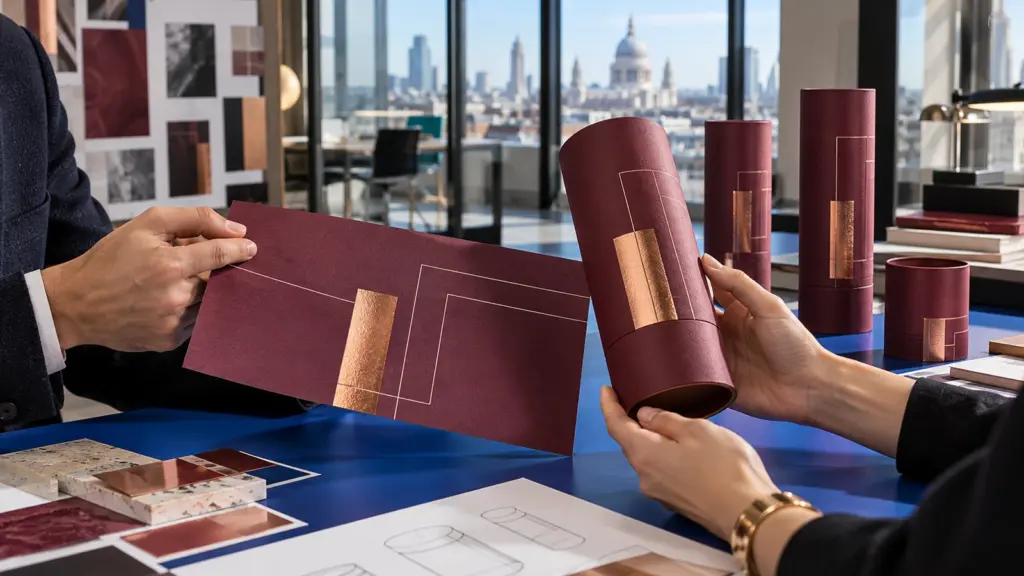
Consider two boxes with the same size and structure. One uses standard CMYK printing on coated paper. The other combines cream specialty paper, a small gold-foil logo and a lightly embossed botanical pattern. Although the second package uses only a few effects, it often feels more refined because the contrast has been planned carefully.
En otras palabras, premium packaging is not about adding the largest possible foil area. En cambio, it is about deciding what customers should notice, touch and remember.

Quick Comparison of Popular Finishing Processes
ProcessMain EffectRecommended ApplicationsKey ConsiderationHot stampingMetallic or colored reflective detailLogos, names and bordersFine lines and large areas require testingEmbossingRaised tactile surfaceLogos, symbols and patternsPaper thickness affects depthDebossingRecessed tactile surfaceMinimal branding and monogramsDeep impressions may mark the reverse sideSpot UVGlossy contrast on selected areasLogos, graphics and patternsAccurate registration is essentialRaised spot UVStrong glossy texturePremium details and tactile graphicsSmooth paper gives the cleanest resultMatte laminationLow-glare, smooth surfacePerfume, productos cosméticos, tea and giftsDark colors can show scratchesSoft-touch laminationVelvety hand feelFragrance, skincare and luxury giftsFingerprints and cost should be reviewedSpecialty paperNatural or decorative textureTea, candles and boutique goodsFine printing may appear softer
Why Finishing Changes the Customer Experience
Well-planned acabado de embalaje de lujo creates several small sensory signals before customers even read the product description.
Primero, they may notice the contrast between a matte surface and reflective foil. Próximo, they feel the paper texture or raised logo. Finalmente, the lid, inner color and insert continue the same visual story as the package opens.
Como resultado, the product can feel considered rather than generic.
Sin embargo, premium does not always mean dramatic. Many high-end designs rely on restraint. Por ejemplo, cream paper with blind embossing may appear more sophisticated than a brightly printed box covered with several metallic colors.
Before selecting a finish, ask three questions:
- What should the customer notice first?
- Which part of the package will they touch most?
- Does the finish support the product’s price and personality?
When those answers are unclear, the design may be adding cost without adding real value.
Aplicaciones comunes
The ideal acabado de embalaje de lujo combination depends on the product category, retail environment and customer expectation. Como consecuencia, brands should not copy one general luxury style across every package.
Embalaje de perfumes
Perfume packaging usually depends on controlled contrast, precise details and a memorable opening experience.
Suitable options include:
- Laminación suave al tacto
- Gold or silver hot stamping
- Blind embossed patterns
- Logotipos grabados
- Contrasting inner paper
- Flocked EVA or molded-pulp inserts
Por ejemplo, a fragrance brand could combine deep-green specialty paper with a small matte-gold logo and a subtle embossed botanical pattern.
Al mismo tiempo, the outer finish should frame the bottle rather than compete with it. If the bottle already has a reflective cap and decorative glass, a large foil area on the box may make the presentation feel too busy.

Envases para el cuidado de la piel y cosméticos
Skincare packaging needs to feel clean, reliable and professionally produced.
Blanco, ivory, beige, muted pink and pale green often support natural, clinical or premium positioning. Mientras tanto, laminación mate, raised spot UV and small silver-foil details can create contrast without reducing readability.
A balanced acabado de embalaje de lujo direction for skincare might use soft matte paper, a spot UV water-drop pattern and restrained foil on the product name.
Aún así, ingredientes, instructions and warnings must remain easy to read. Reflective foil and low-contrast text should never interfere with required information.
Envasado de té
Tea packaging can look traditional, natural, modern or gift-oriented.
Premium tea tubes often use:
- Dark-green art paper
- Laminación mate
- Estampado de lámina de oro
- Embossed leaf patterns
- Contrasting inner necks
- Textured specialty paper
Alternativamente, natural kraft paper with black printing and copper foil can suit organic or handcrafted tea.
When the decoration is applied to cylindrical packaging, the designer must account for the vertical seam and curved viewing angle. Por lo tanto, important logos should remain away from overlap areas whenever possible.
Envasado de café
Coffee packaging often communicates origin, craftsmanship and freshness.
A specialty-coffee tube may use natural kraft paper, dark-brown Pantone printing and a copper hot-stamped logo. By comparison, a premium gift box may use black anti-scratch lamination with gold debossing.
Because dark colors show scuffs easily, surface durability matters. Por esta razón, anti-scratch matte lamination can be more practical than standard matte film.
Chocolate, Snacks and Confectionery
Chocolate and gift-food packaging often benefit from rich colors and noticeable contrast.
Popular combinations include burgundy with gold, dark brown with copper, navy with silver and emerald green with raised spot UV.
Sin embargo, food packaging must also handle fingerprints, grasa, friction and temperature changes. Por lo tanto, the finish should be reviewed under realistic packing and shipping conditions.
Candle and Home-Fragrance Packaging
Candle brands frequently use tactile materials because customers associate texture with craftsmanship.
Recommended effects include:
- Uncoated specialty paper
- Linen-textured paper
- Deep debossed logos
- Blind embossing
- Warm gold or copper foil
- Laminación mate
A glass candle jar may sit inside a fitted paper tube. en ese caso, the outer surface, jar label, insert and lid should feel like one coordinated product.
Jewelry and Gift Products
Jewelry and premium gift packaging require precise registration because customers inspect the package closely.
Even a small misalignment between foil and embossing can become obvious. Por esa razón, simple layouts and accurate logo reproduction often look more luxurious than complicated artwork.
Opciones de materiales
The final result of acabado de embalaje de lujo depends heavily on the material beneath it. The same foil, UV coating or embossing die can behave differently on kraft paper, art paper and deeply textured specialty paper.
Papel kraft
Kraft paper creates a warm, natural and handcrafted appearance.
Funciona bien para:
- Té
- Café
- Velas
- Cuidado de la piel orgánico
- Aperitivos
- Handmade gifts
- Sustainable product ranges
lámina de cobre, matte-gold foil, black printing and simple debossing usually suit kraft surfaces.
Sin embargo, natural fibers can affect color and edge definition. Bright CMYK colors may appear darker, while very small foil details may look softer than they would on smooth coated paper.
Papel de arte
Coated art paper provides a smooth base for:
- Detailed CMYK printing
- colores pantone
- Product photography
- tipografía fina
- Degradados
- Complex illustrations
Después de imprimir, the sheet can receive matte, brillo, Laminación suave al tacto o antirrayas.. estampado en caliente, embossing and spot UV can then be added with relatively precise registration.
Papel especial
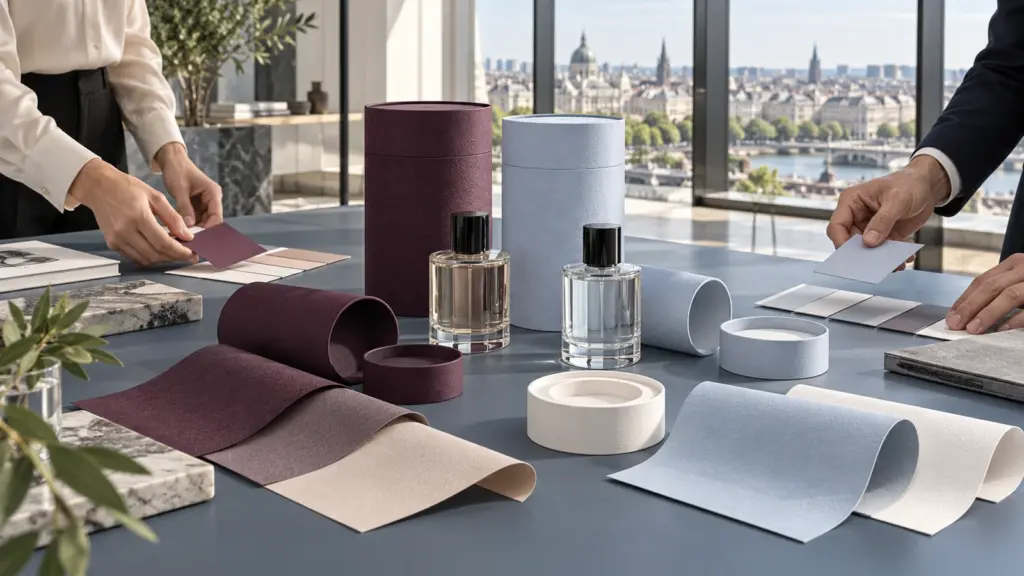
Specialty paper may have a linen, perlado, metálico, dyed-through or handmade appearance.
Because the paper already creates visual value, brands often need only one additional finish. Por ejemplo, black dyed-through paper with silver foil or cream textured paper with blind embossing can look premium without extra layers.
Aún, actual samples are essential. Deep textures can interrupt foil coverage, and absorbent surfaces may reduce the sharpness of spot UV.
Cartón Rígido
Rigid boxes usually wrap printed or specialty paper around greyboard.
Board thickness affects edge definition, structural strength, wrapping quality and embossing depth. Although a thicker board feels substantial, también aumenta el peso, material use and shipping cost.
Cartón corrugado
Corrugated board can also support premium presentation, especially for ecommerce gift boxes and subscription packaging.
Sin embargo, the flute and outer liner influence print quality. Fine embossing, Por ejemplo, may not reproduce as accurately as it does on rigid board or folding carton stock.
Food-Grade Paper and Liners
Té, café, chocolate and snack packaging may require food-grade internal materials.
Las opciones posibles incluyen:
- Tarjeta blanca de calidad alimentaria
- Papel resistente a la grasa
- papel recubierto de PE
- Revestimiento de papel de aluminio
- película metalizada
- Bolsas interiores aptas para alimentos
The decorative outer surface should remain separate from direct food contact unless the full material combination is suitable for that application.
Opciones de estructura
A strong acabado de embalaje de lujo concept should support the structure instead of ignoring it.
If the finish crosses folds, costuras, lid overlaps or window edges, the result may look attractive in the design file but awkward in production.
Cajas rígidas con tapa y base
Rigid lid-and-base boxes provide large flat surfaces for foil, realce, grabado y punto UV.
The lid can carry the main logo, while the inner base introduces a contrasting color or printed message.
Cajas de hombro y cuello
A shoulder-neck box reveals a visible inner section between the lid and base.
This area can add contrast without covering the entire package in decoration. Por ejemplo, a matte-black exterior can open to reveal a burgundy neck with gold lettering.
Telescopic Paper Tubes
A telescopic paper tube may use a long upper section and a short lower section.
The shorter base can contain EVA, EPE, cartulina, molded pulp or a blister insert, allowing bottles and jars to stand upright. Mientras tanto, the outer artwork should align across both sections.
Paper Tubes with Inserts
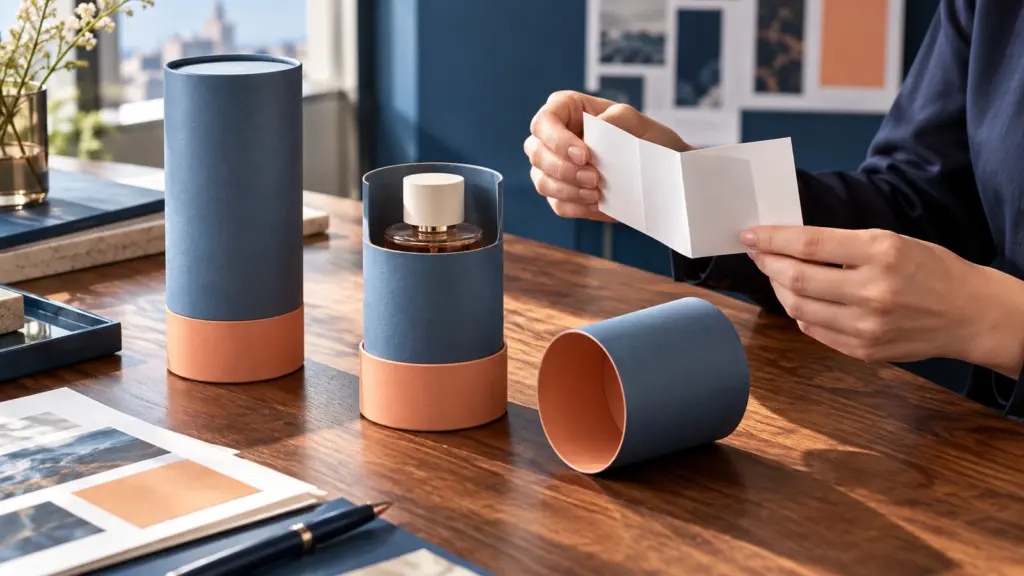
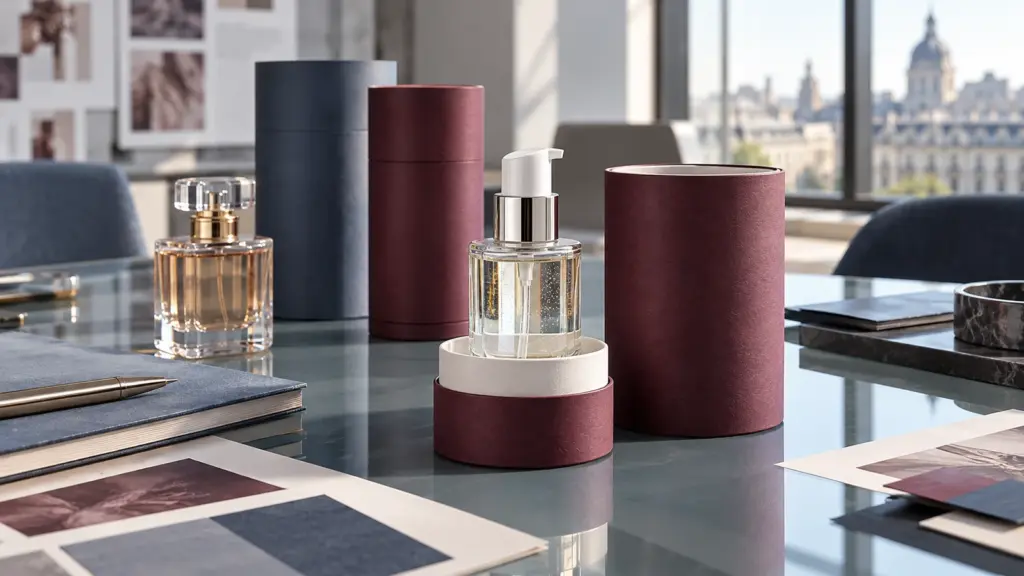
Paper tubes with lower inserts are suitable for perfume, protección de la piel, candles and gift products.
In this structure, el acabado exterior debe coordinar con el inserto. A refined exterior can lose its premium effect if the customer sees a rough, uneven or poorly fitted support inside.
Cajas de fundas y cajones
Sleeve boxes create movement during opening, while drawer boxes add a ribbon pull or finger notch.
Spot UV patterns can follow the direction of the sleeve. Asimismo, a foil line can highlight the opening edge and guide the customer visually.
Embalaje de ventana
A window helps customers view part of the product.
Because the surrounding border and die-cut edge are highly visible, accurate registration is important. Además, clear plastic film may affect recyclability and should be evaluated as part of the complete material system.
Estructuras Push-Up y Twist-Up
Push-up tubes suit lip balm, solid perfume and solid skincare. Tubos retorcidos, por el contrario, require more precise mechanical tolerances.
Since the printable area is limited, a clean logo, one Pantone color and one restrained foil detail often work better than a complicated layout.
Impresión & Opciones de acabado
This stage often creates excitement; sin embargo, it can also increase cost quickly.
Un exitoso acabado de embalaje de lujo plan should give every process one clear purpose.
Impresión CMYK
CMYK printing suits photographs, gradientes, illustrations and multi-color patterns.
Although it offers flexibility, brand colors can vary across different papers. Por lo tanto, physical color proofs are recommended for critical shades.
Impresión Pantone
Pantone printing is useful for signature colors and packaging families.
It can help match paper tubes, cajas rígidas, labels and bags. Aún así, paper color and lamination may still influence the final appearance.
Estampado en caliente
Hot stamping applies metallic, pigment or holographic foil through heat and pressure.
Las opciones populares incluyen:
- Oro
- Silver
- Rose gold
- Copper
- Negro
- Blanco
- lámina holográfica
- Colored metallic foil
Logotipos, product names, borders and selected patterns are common applications.
Large solid areas may show uneven coverage, while extremely fine lines can break or fill in. Como consecuencia, foil artwork should be reviewed specifically for stamping rather than copied directly from print artwork.
Realce
Embossing raises text or graphics above the paper surface.
It may be combined with foil or used alone as blind embossing. The blind version works especially well on thick uncoated and specialty papers because light and shadow create the effect.
Sin embargo, excessive pressure can crack coatings or distort fine details.
grabado
Debossing presses a design into the paper.
Minimal logos, monograms and simple patterns often benefit from this technique. A deep impression can feel substantial, although the artwork should remain simple enough to reproduce cleanly.
Punto UV
Spot UV applies a glossy coating to selected areas.
On a matte background, it can highlight logos, product names, botanical illustrations or geometric patterns. Raised spot UV creates stronger texture, whereas standard spot UV produces a flatter gloss.
Accurate registration is essential when the UV layer follows thin printed lines.
Laminación mate
Matte lamination provides a smooth, superficie poco deslumbrante.
Se adapta al perfume, protección de la piel, té, café, chocolate and gift packaging. Aún, standard matte film may show scratches on dark colors.
Anti-Scratch Lamination
Anti-scratch lamination can protect black, marina de guerra, burgundy and dark-green packaging during packing and shipping.
Although it costs more, it may reduce rejected or damaged units.
Laminación suave al tacto
Soft-touch film produces a velvety hand feel.
It can strengthen premium positioning for fragrance and skincare. Por otro lado, fingerprints, oil marks and durability should be tested on the selected color.
Laminación brillante
Gloss lamination increases shine and color saturation.
It often suits colorful snacks, dulce, children’s products and promotional packaging. Sin embargo, it usually feels more energetic than understated.
Combining Several Processes
A refined combination might include dark-green Pantone ink, anti-scratch matte film, a gold-foil logo and a blind embossed leaf pattern.
Another option could use cream specialty paper, black printing and a deep debossed logo without any plastic lamination.
Both approaches can feel premium because every process supports the same visual direction.
How to Choose the Right Combination
Start with the product price, target customer and retail environment.
For an understated fragrance, one tactile surface and one reflective detail may be enough. For colorful confectionery, stronger printing with limited foil may work better. Mientras tanto, organic tea can rely on visible paper texture and restrained decoration.
When planning acabado de embalaje de lujo, consider the viewing distance as well.
Perfume packaging is examined closely, so subtle embossing can be effective. Tea tubes on crowded shelves, por el contrario, may need stronger color contrast and a clearer logo.
A practical selection process is:
- Confirm the packaging structure.
- Choose the paper.
- Approve CMYK or Pantone colors.
- Select the main tactile effect.
- Add one reflective or high-contrast detail.
- Produce a physical sample.
- Review it under several lighting conditions.
- Test rubbing, scratching, folding and transportation.
Cost and Production Considerations
A realistic acabado de embalaje de lujo budget should include setup, estampación, waste, sampling and quality control.
Hot stamping and embossing usually require custom dies. Spot UV may require a dedicated plate or screen. Además, specialty papers can involve longer lead times or higher minimum purchase quantities.
Registration also becomes more demanding when printing, frustrar, embossing and UV must align precisely.
Por esa razón, buyers should request separate prices for each process. This approach makes it easier to identify which effect adds value and which one can be removed when the budget changes.
Lower cost does not automatically mean lower perceived quality.
Brands can simplify by:
- Reducing a full foil pattern to one logo
- Replacing several foil colors with one
- Using textured paper with one-color printing
- Choosing debossing instead of foil embossing
- Applying spot UV only to the product name
- Using anti-scratch film only on dark surfaces
A menudo, simplification creates a more refined result.
Cumplimiento & Sostenibilidad
Compliance depends on the final material, Aplicación del producto y mercado de destino..
FSC-certified paper may support responsible fiber sourcing when the selected material and chain-of-custody conditions apply.
Para proyectos europeos, buyers may also need to review EUDR due diligence, packaging EPR obligations and market-specific packaging rules.
Food projects can require:
- Informes de pruebas de contacto con alimentos
- Informes de migración
- Declaraciones de materiales
- Información sobre tintas y adhesivos
- Traceability documents
- Documentación de embalaje relacionada con BRC
- Documentos del sistema IFS Food o relacionados
Decorative processes can affect recycling as well. Plastic lamination, frustrar, window film, magnets and foam inserts should all be considered as parts of the full packaging system.
More responsible acabado de embalaje de lujo may involve using smaller foil areas, avoiding unnecessary lamination, choosing removable inserts and reducing oversized structures.
Durability also matters. Por ejemplo, an anti-scratch film that prevents large numbers of boxes from being rejected may help reduce waste.
Cómo personalizar
Paso 1: Share the Product and Brand Position
Begin with the product, target customer and expected retail price.
Dígale al proveedor:
- What the product is
- Where it will be sold
- Whether the package is for retail or ecommerce
- The preferred visual style
- The main competitor references
- The target launch date
This information gives the finishing decisions a commercial context.
Paso 2: Confirm the Structure and Size
Provide product dimensions, packaging dimensions, insertar requisitos, estilo de tapa, opening direction, product weight and shipping method.
Siempre que es posible, send the real bottle, jar or product sample.
Paso 3: Seleccione el papel
Elige papel kraft, art paper or specialty paper according to texture, color, finishing compatibility, budget and market position.
Do not finalize the decoration before confirming the paper because the same finish can look completely different on another surface.
Paso 4: Preparar la obra de arte
Proporcionar IA editable, Archivos PDF o EPS.
Separe la obra de arte en capas con nombres claros para:
- impresión CMYK
- impresión pantone
- estampado en caliente
- Realce
- grabado
- Punto UV
- Troquelado
- arrugado
- ventanas
Vector artwork is preferred for all special finishing areas.
Paso 5: Produce a Physical Sample
Renderings can show the design direction, but they cannot reproduce actual foil reflection, embossing depth or soft-touch feel.
Review the sample under natural and retail lighting. Además, check color, foil coverage, UV registration, scratching, fingerprints, plegable, lid fit and insert fit.
Paso 6: Confirmar MOQ y plazo de entrega
MOQ depends on structure, dimensiones, papel, impresión, estampación, finishing and insert requirements.
Lead time may include paper preparation, impresión, laminación, estampado de papel de aluminio, realce, ultravioleta, formando, asamblea, inspection and export packing.
Complex projects should allow additional time for revisions.
Paso 7: Approve a Production Standard
Keep an approved physical sample or signed color standard.
This reference helps the buyer and factory compare mass production against the confirmed result.
Información requerida para una cotización
Por favor proporcione:
- Product type and application
- Estilo de embalaje
- Required dimensions
- Cantidad de pedido
- Mercado objetivo
- Papel preferido
- CMYK or Pantone requirements
- Hot-stamping area
- Embossing or debossing area
- Spot UV area
- Lamination preference
- Insertar requisito
- Ilustraciones editables
- Plazo de entrega
- Destino de envío
Productos relacionados: Tubos de papel personalizados / Envasado de alimentos / Envases Cosméticos
¿Por qué elegir el embalaje en paquete??
Pack Packaging supports custom paper tubes, cajas rígidas, folding cartons and gift packaging from structural development through mass production.
Nuestras instalaciones de fabricación cubren 20,000㎡, incluyendo un 2,000㎡ taller de calidad alimentaria. Además, La capacidad mensual del tubo de papel excede 10,000,000 piezas, supporting both growing brands and large-volume programs.
Nuestro 20+ equipo de diseño de miembros puede ayudar con:
- Desarrollo estructural
- Selección de materiales
- Diseño de obras de arte
- Combinación de colores
- Optimización de estampado en caliente
- Embossing and debossing recommendations
- Planificación UV puntual
- Insertar desarrollo
- Sample production
- Optimización de costos
When developing acabado de embalaje de lujo, our team reviews the complete packaging system rather than treating each decorative process as an isolated effect.
Las capacidades OEM y ODM incluyen:
- impresión CMYK
- impresión pantone
- Oro, plata, copper and colored foil
- Realce
- grabado
- Standard and raised spot UV
- mate, gloss and soft-touch lamination
- Laminación antirrayas
- kraft, art and specialty paper
- Cajas rígidas
- tubos de papel
- Estructuras telescópicas
- Estructuras hombro-cuello
- Cajas de manga
- Window packaging
- Cartulina, molded-pulp and EVA inserts
- Muestras lisas e impresas.
- inspección de calidad
- Embalaje de exportación
Available documentation depends on the material, application and destination market. It may include FSC, informes de contacto con alimentos, Documentos relacionados con BRC, Documentos relacionados con IFS, RoHS 2.0, Información de soporte de REACH-SVHC y EPR.
Preguntas frecuentes
1. Which process makes paper packaging look most luxurious?
No single process works best for every project. Hot stamping creates reflection, embossing adds depth and spot UV introduces glossy contrast. Generalmente, one or two carefully selected effects create the strongest result.
2. Can hot stamping and embossing be used together?
Sí. Foil embossing combines metallic foil with a raised surface. Sin embargo, the die, paper and artwork must be planned together.
3. Is spot UV suitable for textured paper?
A veces. Deep texture can reduce gloss uniformity and edge sharpness, so a physical sample is recommended.
4. Why does gold foil look different from the rendering?
Screens cannot reproduce metallic reflection accurately. Lighting, viewing angle, paper texture and surrounding colors also change the result.
5. ¿La laminación mate se raya fácilmente??
Standard matte film may show scuffs on dark surfaces. Por lo tanto, anti-scratch lamination may be more suitable for heavily handled packaging.
6. Which artwork files are required?
IA editable, Se prefieren archivos PDF o EPS. Each special process should appear on its own vector layer.
7. ¿Cuál es la cantidad mínima de pedido??
MOQ depende de la estructura, dimensiones, papel, tooling and finishing processes. Custom dies and specialty materials may increase the starting quantity.
8. ¿Cuánto tiempo lleva el muestreo??
Sampling time depends on the number of materials and processes. A sample with foil, embossing and spot UV normally takes longer than a plain structural sample.
Explore más soluciones de embalaje personalizadas
Buscando más opciones de embalaje? Descubra nuestra gama completa de productos de embalaje personalizados diseñados para diferentes industrias y aplicaciones..
Cajas plegables – Cajas de cartón ligeras y totalmente personalizables para embalaje minorista.
Cajas Rígidas – Cajas de regalo rígidas premium para marcas de lujo..
Cajas Corrugadas – Soluciones duraderas de embalaje para envío y comercio electrónico.
Cajas a prueba de niños – Embalaje seguro para productos regulados.
Accesorios – Inserciones personalizadas, papel de seda, cintas, etiquetas, y más.
Tubos de papel – Explore nuestra colección dedicada de envases de tubos de papel personalizados para té, café, productos cosméticos, velas, espíritu, y otros productos premium en nuestra web especializada.
Necesita embalaje personalizado? Póngase en contacto con nuestro equipo hoy para obtener una cotización gratuita y una consulta de expertos..