Choosing 段ボール箱の強度 by a familiar number alone can feel reassuring—until cartons buckle in a humid warehouse, labels rub during transit or a glass product reaches the buyer damaged. ECT and Mullen ratings answer different questions, while the real shipping result also depends on box dimensions, フルート, ボード構造, クロージャ, 印刷, stacking time and distribution hazards. それで, before you approve “32 ECT” or “200#” on a quotation, it is worth defining what the box actually needs to survive.
CTA button: カスタムパッケージの見積もりを取得する
Link this button to your quotation or contact form.
Quick Answer for Buyers
Corrugated box strength cannot be described completely by ECT or Mullen alone. ECT measures the edgewise compressive resistance of a corrugated-board specimen and helps evaluate stacking-related performance. Mullen measures the pressure required to rupture combined board and reflects the contribution of liner strength and elongation. しかし, neither result replaces a box compression test, a distribution test or a project-specific specification.
Use this practical rule:
- Choose an ECT-led specification when vertical compression, warehouse stacking and pallet loads dominate the risk.
- を考えてみましょう Mullen-led specification when rough handling, concentrated pressure and board rupture are important concerns.
- Add a BCT target and transit test when failure would create high product, customer or compliance risk.
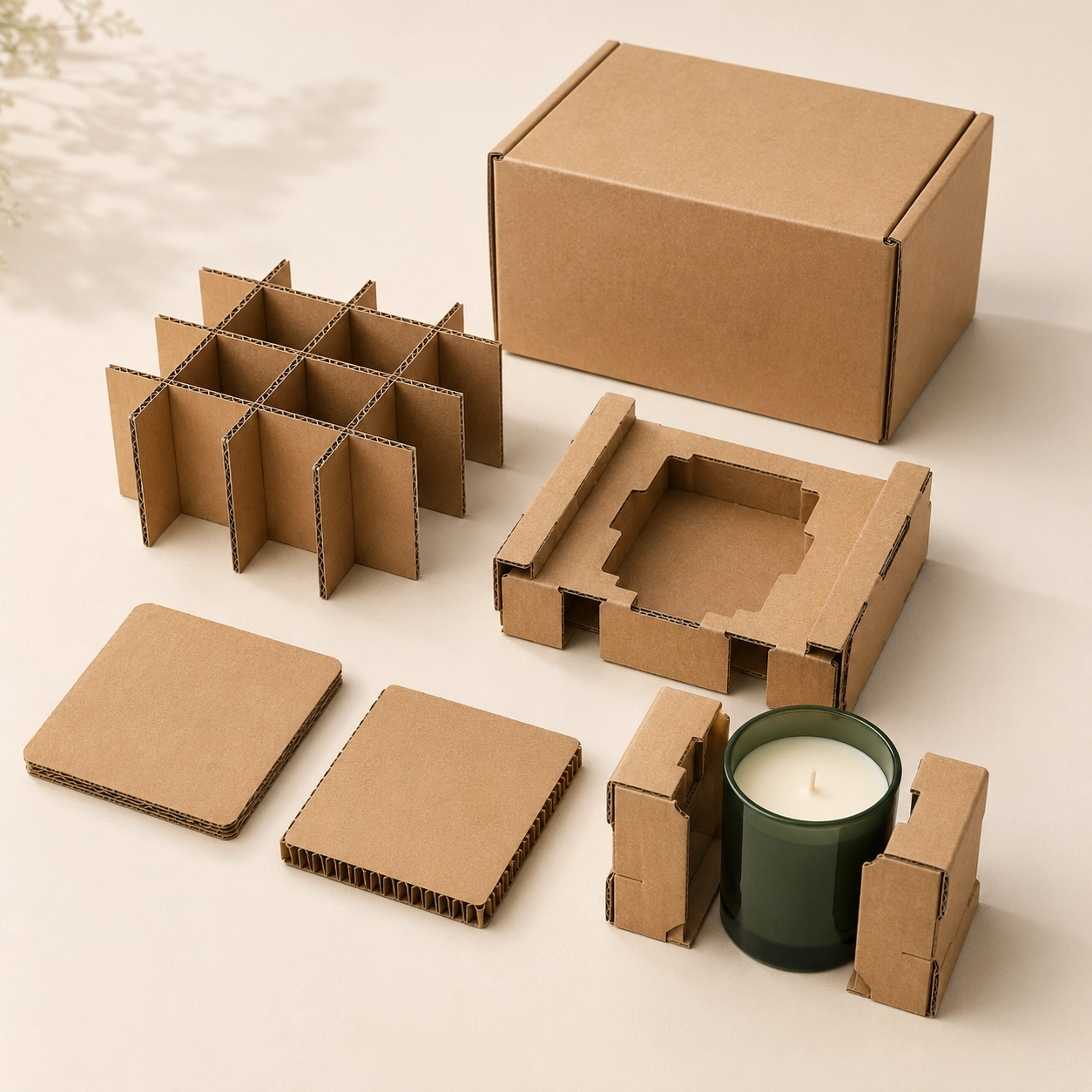

What Does Corrugated Box Strength Mean?
In purchasing, 段ボール箱の強度 may refer to several related—but different—properties. Board strength describes a material sample. Box compression describes an erected empty carton. Package performance describes the complete box, 製品, インサート, closures and pallet configuration moving through a real or simulated supply chain.
The most useful measurements include:MeasurementWhat is testedWhat it helps indicateWhat it does not proveECTA short corrugated-board specimen loaded edgewiseEdgewise compression and stacking potentialFinished-box compression by itselfMullen burstCombined board ruptured by hydraulic pressureResistance of board to rupture and liner contributionDrop, puncture or transit performance by itselfBCTAn erected box compressed between platensTop-to-bottom compression of that box designComplete distribution performancePuncture testBoard exposed to concentrated impactResistance to a penetrating forceLong-term warehouse stackingCobb testWater absorbed by paper or board surfaceSensitivity to water exposureFull humidity-aging performanceDistribution testComplete packed product and packagePerformance under defined transport hazardsEvery possible real-world route
That distinction matters. A supplier can produce board that meets an ECT value, yet the finished box may still lose compression because of deep die cuts, 手の穴, poor scores, excessive print coverage, weak joints or pallet overhang. 同じく, a high burst value cannot rescue a carton whose dimensions and stacking pattern concentrate too much load on its panels.
What Is ECT?
The Edge Crush Test measures how a short piece of corrugated fiberboard resists compression applied along its edge, perpendicular to the flute axis. TAPPI/ANSI T 811 describes the short-column test used for single-, double- and triple-wall corrugated fiberboard. Results commonly appear in pounds per linear inch (lb/in) or kilonewtons per meter (kN/m).
ECT is relevant because vertically oriented flutes and liners carry part of the top-to-bottom stacking load. 加えて, ECT works with board bending stiffness and box geometry when engineers estimate compression performance. まだ, the rating is not the same as BCT. It does not automatically account for the finished box perimeter, 身長, スコア, joint, vents, 印刷, moisture or pallet support.
A typical purchase description might say “single-wall B-flute, 32 ECT minimum.” That line is useful, but it remains incomplete. The buyer should also state dimensions, ボックススタイル, 梱包重量, stacking conditions, required BCT or safety factor and the agreed test method. 購入者向け, ECT is one part of 段ボール箱の強度, not a finished-box guarantee.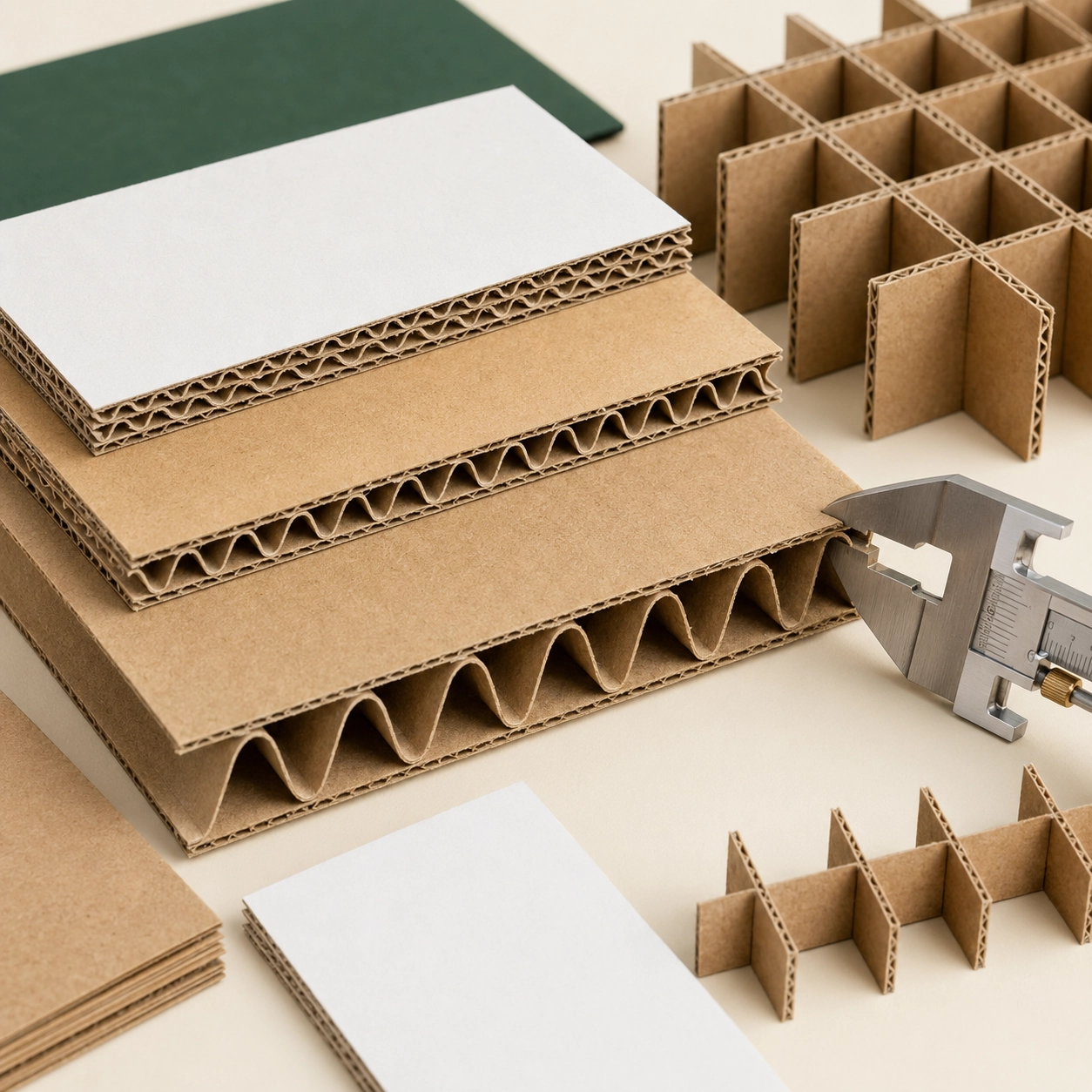
What Is the Mullen Burst Test?
The Mullen test measures the hydraulic pressure required to rupture corrugated or solid fiberboard through a flexible diaphragm. TAPPI/ANSI T 810 covers bursting strength for single- and double-wall combined board. Results usually appear in pounds per square inch (psi) or kilopascals (kPa).
Mullen performance depends strongly on the facings, including their fiber content, formation, bonding and elongation. したがって, a burst rating can be useful when the package may experience rough handling or concentrated pressure against its panels. しかし, it does not directly measure a sharp-object puncture, a drop event or the stacking strength of the assembled carton.
The familiar term “200# box” usually refers to a minimum burst specification, but the complete commercial grade can include additional construction requirements. その結果, buyers should not ask for “200#” without confirming the test method, wall construction, フルート, ライナー, dimensions and intended use. 要するに, Mullen describes one dimension of 段ボール箱の強度 rather than the complete shipping result.
ECT vs マレン: Which Rating Should You Specify?
To specify 段ボール箱の強度 correctly, start with the failure mode you need to prevent. If cartons remain stacked for weeks, ECT and BCT deserve close attention. If products or adjacent freight can push hard against a panel, burst and puncture resistance may matter more. For many export projects, the sensible answer is not “either/or” but an agreed combination of board, box and packed-product tests.Buyer situationUseful primary checkAdditional checksUniform cartons stacked on full palletsECT + target BCTHumidity conditioning, pallet pattern and stretch wrapParcel e-commerce shipmentsECT or burst by designDrop, vibration and compression sequenceGlass bottles or candlesBoard grade + BCTInsert fit, drop, impact and abrasionHeavy cans or jarsECT + BCTBottom closure, layer pads and pallet testMixed LTL freightBurst/puncture + BCTHandling and distribution simulationLong ocean or tropical storageConditioned BCTMoisture resistance, Cobb and container loading
Do not treat 32 ECT and 200# Mullen as universally interchangeable. Industry charts may place them in similar shipping categories, yet the tests measure different properties and may use different paper combinations. If a customer drawing names one rating, do not silently substitute the other. その代わり, obtain written approval after comparing the complete board and box performance.
一般的なアプリケーション
The right 段ボール箱の強度 depends heavily on what goes inside the carton and how the pack travels.
香水とフレグランス
Filled glass bottles combine concentrated weight and breakage risk. A strong outer carton helps, but fitted partitions or die-cut supports must also prevent glass-to-glass contact. したがって, test the finished pack with actual filled bottles, closures and retail boxes.
スキンケアと化粧品
血清, クリーム瓶, pumps and beauty sets may ship through parcel networks or as palletized master cartons. ECT can support stacking decisions, while drop and vibration testing reveal whether inserts release products or labels abrade.
お茶, コーヒーと軽食
Sealed bags, tins and jars can compress carton panels from the inside. さらに, humidity may weaken fiber-based packaging during ocean transport or warehouse storage. Food-contact requirements remain a separate specification from transport strength.
Candles and Glassware
Heavy jars need bottom support, separation and controlled top clearance. その結果, box compression, partition quality and drop performance should be evaluated together rather than increasing board grade automatically.
衣服, Gifts and Lightweight Products
The product may be light, yet cartons at the bottom of a high pallet still carry substantial load. Right-sized boxes, aligned corners and a stable pallet pattern can matter more than simply ordering thicker board.
Industrial Components and Canned Goods
Dense products increase bottom-closure stress and unit-load weight. この場合, double-wall board, reinforced closures, layer pads or an adjusted pack count may provide a safer and more economical design.
材質のオプション
Material selection changes 段ボール箱の強度, 外観, cost and recovery after exposure to moisture or compression. Buyers should request a complete board specification rather than the vague phrase “strong kraft carton.”Material or constructionTypical roleImportant buyer questionE fluteCompact mailers and retail-facing packsDoes the thin profile provide enough compression and cushioning?B fluteGeneral shipping, partitions and die-cut boxesIs the board grade matched to carton size and load?C fluteShipping cartons requiring more thicknessHow will it affect external size and pallet count?BC double wallHeavy products and demanding logisticsHas the complete box been compression-tested?Kraft linerboardShipping performance and natural appearanceWhat fiber, basis weight and certification are specified?White-top linerBetter printed graphicsDoes coating or print coverage affect scores and recycling?Recycled-content boardFiber efficiency and sustainability goalsDoes the selected grade maintain required performance?Art or specialty paper facingPremium visible packagingIs decorative facing necessary on the transport component?Food-grade paper or linerSelected direct-contact applicationsAre materials and documents valid for the product and market?Foil liner or barrier layerMoisture, grease or aroma controlIs it necessary, removable and compatible with disposal guidance?
Virgin and recycled fibers can both form part of reliable packaging, although performance varies by furnish, paper-making, basis weight and converting control. 同じく, アート紙, 特殊紙, food-grade liners and foil liners serve different purposes. A decorative or barrier layer should not be treated as proof of structural performance.
構造オプション
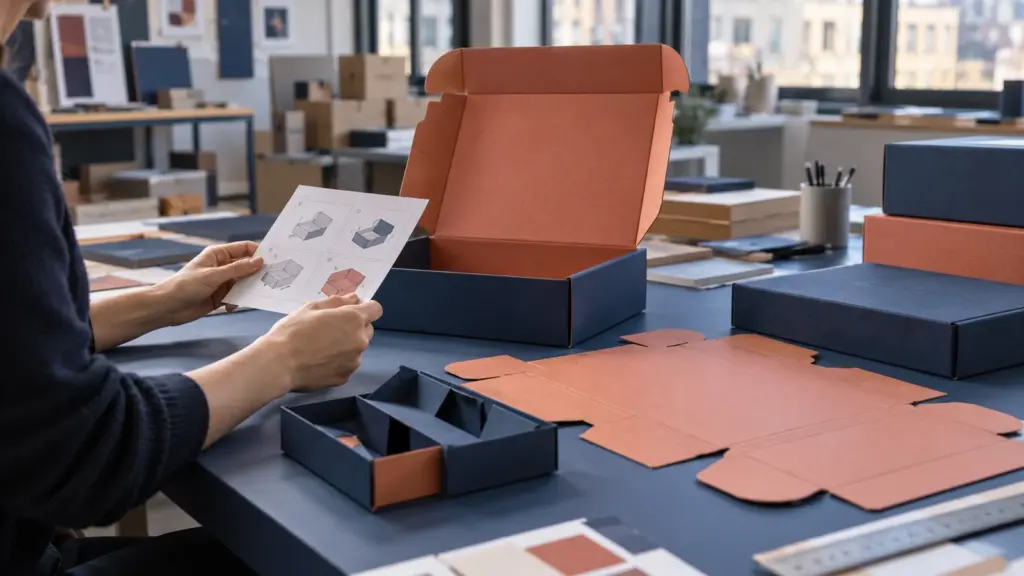
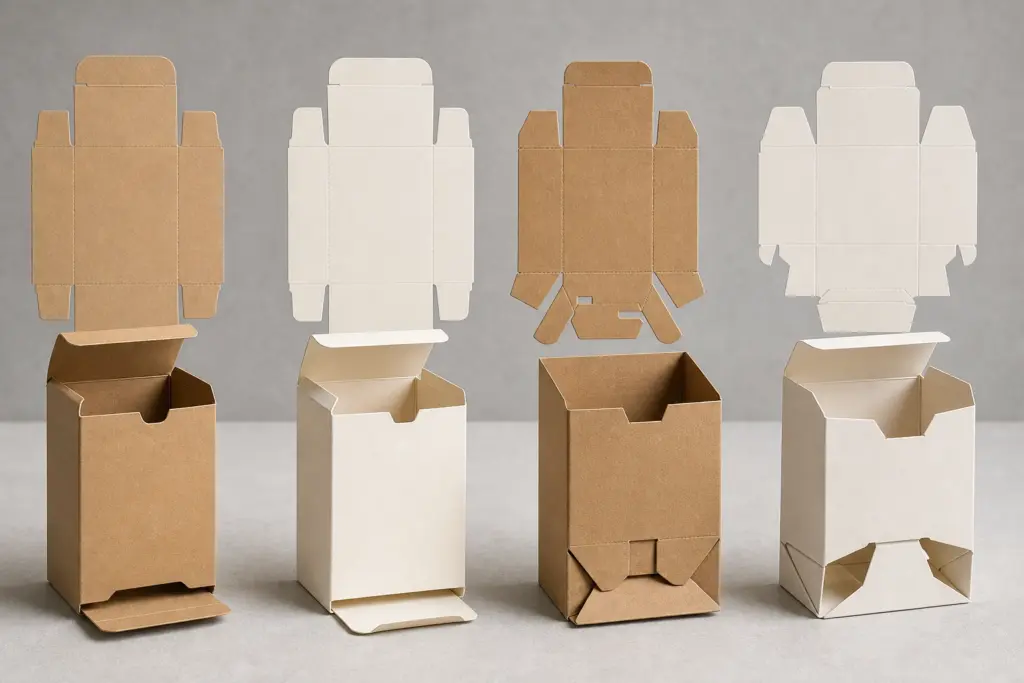
Box design can strengthen or weaken 段ボール箱の強度 even when two projects use the same board grade.
- RSC / FEFCO 0201: Efficient for master cartons, storage and pallet shipping.
- Die-cut mailer: Provides a clean opening experience, although cuts, tabs and roll-over walls change load paths.
- Full-overlap carton: Adds material across the top and bottom for selected heavy products.
- Telescopic box: A lid and base overlap to add panel layers and adjustable height.
- Sleeve with inner tray: Separates presentation from structural containment.
- Lid-and-base retail box: Supports premium presentation inside a stronger master shipper.
- パーティション, dividers and inserts: Control movement and transfer product loads more predictably.
- ウィンドウボックス: Improves visibility, yet the opening removes board and may reduce panel performance.
Push-up and twist-up paper tubes also need protective secondary or master cartons during distribution. したがって, the dispensing structure should not be confused with the shipping structure. 同様に, a beautiful sleeve or window may support branding, but it does not replace transit engineering.
For a detailed comparison of tooling and volume, see RSC vs die-cut corrugated boxes. Before locking a board grade, also review internal and external corrugated box dimensions because perimeter, height and usable pallet space affect the result.
印刷 & 仕上げオプション
Printing and finishing can influence 段ボール箱の強度 through score quality, fiber compression, moisture exposure and panel design. Light flexographic printing normally suits shipping cartons, while offset-printed liners can deliver detailed CMYK or Pantone graphics for premium mailers.
ホットスタンピング, エンボス加工, デボス加工, spot UV and matte lamination can improve a retail-facing surface. しかし, these finishes should be placed thoughtfully. Deep embossing near scores, heavy lamination across folds or large die-cut windows can change converting behavior. 加えて, dense ink coverage and repeated machine pressure may affect the final board differently from an unprinted laboratory sample.
Ask the supplier to test representative printed areas when required by the agreed method. Also keep one signed production sample showing color, 閉鎖, scores and structure so bulk inspection checks the same approved construction.
What Reduces Corrugated Box Strength in Real Shipping?
Laboratory board values are important, yet real-world 段ボール箱の強度 can drop when several practical factors combine:
- High relative humidity or direct moisture exposure.
- Long stacking duration and compression creep.
- Pallet overhang or gaps between deck boards.
- Misaligned columns and unstable interlocking patterns.
- Hand holes, vents, windows and large die-cut openings.
- Poor score lines, cracked liners or crushed flute.
- Weak glue joints, staples, tape or bottom closure.
- Excessive empty space or products that shift during transit.
- 印刷, lamination or converting pressure that changes the board.
- Mixed carton sizes stacked without a planned load path.
The solution is not always a higher ECT number. Sometimes a smaller carton, stronger corner alignment, better insert, lower stack, full pallet support or different closure produces a larger improvement. 実際には, optimizing the full system can reduce material while improving protection.
For fragile or multi-unit shipments, 私たちのガイドを読んでください corrugated inserts, partitions and dividers before finalizing the outer carton.
関連製品
カスタム紙管 · 食品包装 · 化粧品包装 · 配送梱包
コンプライアンス & 持続可能性
Responsible 段ボール箱の強度 optimization uses enough material to protect the product without overbuilding every carton. Product damage, replacement shipments and repacking create waste; しかし, unnecessary board weight and unused freight space also carry environmental and financial costs.
FSC chain-of-custody certification can support verified sourcing claims for eligible paper materials. それにもかかわらず, FSC does not certify ECT, Mullen, BCT, food-contact safety or the recyclability of the finished packaging system.
BRCGSの梱包材 そして IFS PACsecure address packaging-manufacturing processes, product safety, quality and relevant customer or regulatory controls. IFSフード, by comparison, applies to food-processing operations. したがって, request current certificate scopes and confirm that the manufacturing site and product category match the project.
For direct or foreseeable food contact, review the complete paper, インク, 接着剤, coating and barrier specification for the intended product and market. For EU projects, the responsible business should also review applicable EUDR due-diligence, EPR and Packaging and Packaging Waste Regulation requirements. These obligations do not replace physical transport testing.
ついに, make environmental claims specific and supportable. “Right-sized single-wall carton that passed the agreed distribution test” gives a buyer more useful information than a broad claim such as “100% eco-friendly.”
How to Customize and Specify the Box
Accurate 段ボール箱の強度 starts with a performance brief, not an isolated grade number. Send the supplier the actual product, distribution and storage conditions so the engineering team can identify likely failure modes.
Include the following information:
- Internal box length × width × height and permitted tolerance.
- 製品タイプ, unit dimensions, packed weight and units per carton.
- ボックススタイル, ジョイントとクロージャーの方法.
- Flute, wall count, liner appearance and recycled-content requirement.
- Requested ECT or Mullen value and named test method.
- Target BCT, safety factor or maximum stacking load, if known.
- Storage time, 湿度, cold-chain or ocean-shipping conditions.
- Pallet size, pattern, overhang limit and stretch-wrap method.
- Hand holes, vents, インサート, layer pads or die-cut openings.
- CMYK/Pantone artwork, print coverage and finishing.
- ターゲット市場, compliance documents and food-contact condition.
- サンプル量, MOQ, annual demand, delivery country and required date.
Example Performance-Based Purchase Specification
RSC / FEFCO 0201; internal size 400 × 300 × 250 mm; single-wall B flute; minimum 32 ECT tested to TAPPI T 811; kraft inner and outer liners; manufacturer’s glued joint; defined print area; packed product weight and pallet pattern supplied by buyer; conditioned BCT target and distribution-test plan to be agreed before mass production.
This is an example format, not a universal recommendation. A heavier, taller or moisture-sensitive pack may need a different grade, double-wall board or a higher compression target. あるいは, a smaller well-supported carton may perform with less material.
の ASTM D5639/D5639M framework emphasizes selecting corrugated materials and box construction through testable performance requirements agreed by buyer and supplier. その間, TAPPI/ANSI T 804 covers compression testing of fiberboard shipping containers. For packed-product distribution hazards, select an appropriate ISTA test procedure or another agreed protocol rather than assuming a board certificate predicts the entire journey.
料金, MOQとリードタイム
The cost of 段ボール箱の強度 depends on more than the printed ECT or burst value. Paper combination, フルート, シングル- or double-wall construction, 箱のサイズ, cutting yield, ツーリング, 印刷, 終わります, インサート, closure and testing all affect the quotation.
A higher material grade may increase unit cost, yet a performance-based redesign can sometimes reduce total cost. 例えば, right-sizing may improve sheet yield, pallet count and freight use. 逆に, reducing paper without testing can increase damage and chargebacks.
MOQ depends on dimensions, board availability, printing and converting setup. Pack Packaging normally develops samples in about 3–5 working days after the structure and material are confirmed. Bulk production normally takes about 15–20 working days after sample and artwork approval. One sample can be supplied free with a confirmed bulk order, subject to the final project terms.
パック包装を選ぶ理由
Pack Packaging evaluates 段ボール箱の強度 together with product fit, インサート, グラフィックス, packing speed and export logistics. Rather than treating board grade as a standalone sales label, our team reviews the complete specification before sampling.
当社の製造能力には以下が含まれます::
- 20,000㎡ factory for custom paper boxes, corrugated packaging and paper tubes.
- 2,000㎡ food-grade workshop for hygiene-sensitive packaging projects.
- 10,000,000+ units monthly capacity for repeat and high-volume programs.
- 20+ design team for structures, ダイライン, インサート, artwork checks and sampling.
- OEM/ODM support from concept review through bulk quality inspection.
- E, B and C flute plus selected double-wall constructions.
- CMYK, パントン, ホットスタンピング, エンボス加工, デボス加工, スポットUVとラミネート.
- サンプル開発, flexible MOQ planning and export packing support.
最も重要なこと, we ask practical questions. How long will cartons stay stacked? Does the pallet fully support every corner? Will the shipment cross a humid ocean route? Can an insert reduce the outer dimensions? Those answers lead to a more reliable specification and a more honest quotation.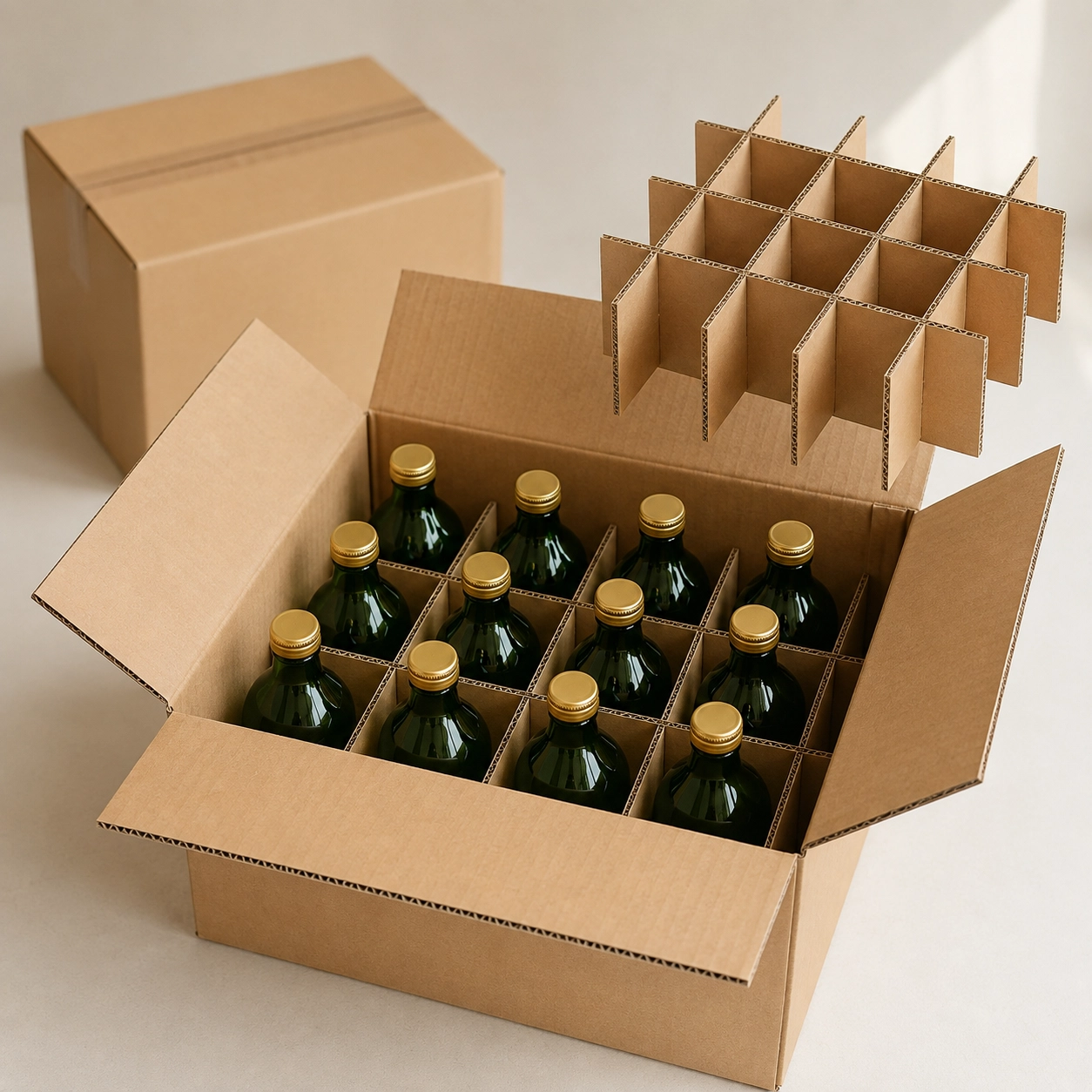
よくある質問
1. What is the difference between ECT and Mullen for corrugated box strength?
ECT measures edgewise compression of a corrugated-board specimen. Mullen measures the pressure required to rupture combined board. ECT is commonly associated with stacking-related board performance, while Mullen reflects rupture resistance and liner contribution. Neither replaces BCT or packed-product testing.
2. Is 32 ECT the same as 200# Mullen?
いいえ. Some commercial charts place them in similar use categories, but they are different tests and are not universal equivalents. Compare the full board construction, 寸法, 梱包重量, stacking and customer specification before substituting one for the other.
3. Does a higher ECT always mean a stronger finished box?
必ずしもではありません. A higher ECT can support compression performance, but box perimeter, 身長, フルート, board stiffness, スコア, openings, joint, moisture and pallet support also influence the finished result.
4. What is the difference between ECT and BCT?
ECT tests a small board specimen edgewise. BCT compresses an erected box between platens and measures the performance of that box design. したがって, BCT gives more direct information about finished-carton compression under the stated test conditions.
5. How does humidity affect corrugated cartons?
Paper fibers absorb moisture, and elevated humidity can reduce stiffness and compression performance. If the route includes tropical storage, refrigerated areas or ocean freight, define conditioning and testing requirements before approval.
6. Should glass bottles use ECT or Mullen specifications?
The answer depends on the shipping system. Glass bottles often need adequate stacking performance, panel durability, パーティション, bottom support and drop testing. したがって, combine an appropriate board specification with insert-fit and packed-product validation.
7. Does food-grade certification prove box strength?
いいえ. 食品との接触に関するコンプライアンス, factory hygiene, FSC調達, ECT, Mullen and BCT address different questions. Review each requirement separately and confirm the documents apply to the final material combination and target market.
8. What information is needed for an accurate quote?
Send internal dimensions, 製品タイプ, 梱包重量, units per carton, ボックススタイル, requested strength rating, stacking conditions, パレットパターン, アートワーク, 量, target market and delivery country. Product photos, drawings or physical samples also help.
Start Your Corrugated Packaging Project
Ready to specify 段ボール箱の強度 around your real product and shipping route? サイズをお送りください, 製品の使用, 数量とロゴファイルを入手してカスタム見積もりを取得する.
製品のサイズを教えてください, 量, ロゴファイルとターゲット市場. 私たちのチームが適切な構造を推奨します, 素材と仕上げ.
CTA button: カスタムパッケージの見積もりを取得する