
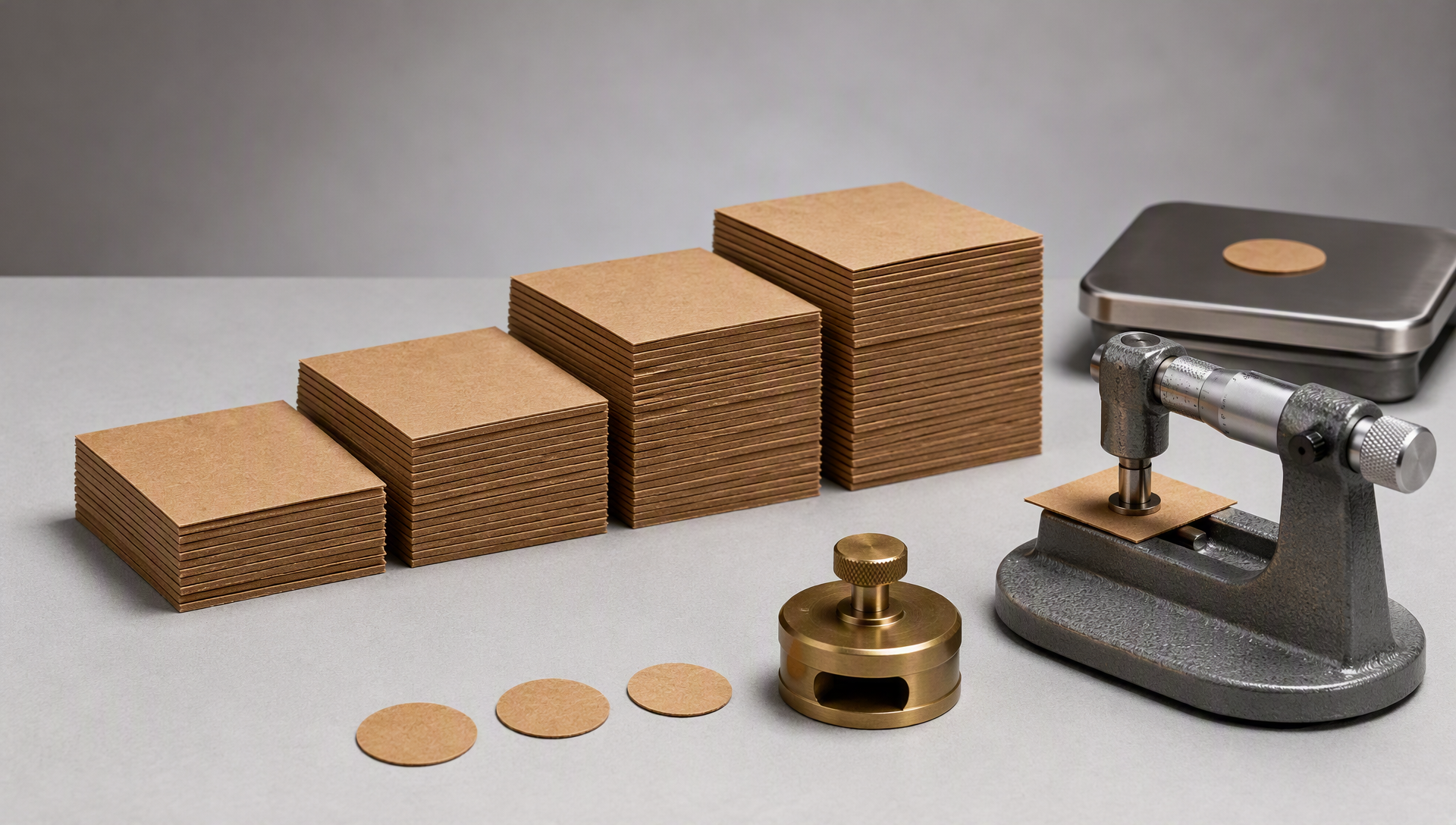
Buyers compare골판지 등급 by weight, and that single habit causes more over-spending than anything else in packaging procurement. A heavier board is not automatically a stronger box — fibre type, flute pairing, and construction all outrank grammage.
So let’s unpack how grades actually get built: what the liner does, what the medium does, and how the combination decides whether your boxes survive the warehouse or collapse three pallets high.
What Are Corrugated Board Grades?
Three Papers, One Specification
Corrugated board grades describe at minimum three papers: an outer liner, a fluting medium, and an inner liner. Consequently a grade is really a recipe rather than a single number, and reading it that way changes how you buy.
Grammage Is Only Part of It
Grammage measures weight per square metre. 하지만, two liners at identical grammage can perform very differently depending on whether the fibre is virgin or recycled. Therefore weight alone tells you cost more reliably than it tells you strength.
Direction Matters Too
Corrugated is anisotropic — its stiffness, edge crush, and tensile behaviour all change with orientation to the flutes. So the same board grade performs differently depending on how the blank gets cut.
Why Buyers Get This Wrong
Most quotations name a grammage combination and stop there. 솔직히, that leaves out fibre type, flute pairing, and moisture handling — the three things that actually determine whether the box works.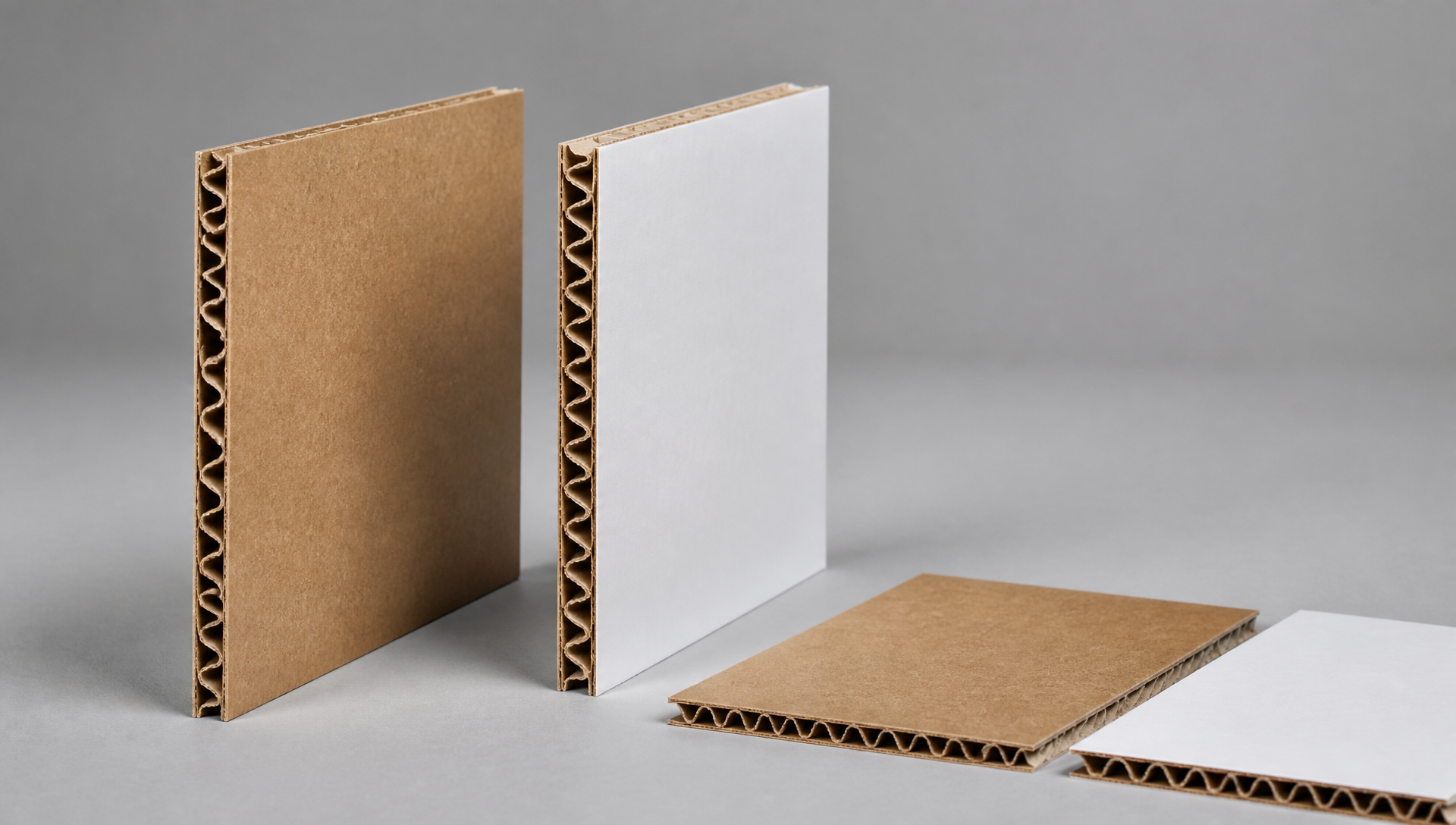
Common Applications for Different Board Grades
다른골판지 등급 genuinely suit different jobs:
- Light recycled grades — Apparel, textiles, and lightweight goods where presentation matters more than load.
- Mid-weight recycled — General e-commerce parcels and single-trip distribution.
- Kraft-faced grades — 수출사례, 습한 목적지, and anything stacked for weeks.
- White-faced grades — Cosmetics outers, retail-ready packaging, and print-led applications.
- Heavy double wall — Industrial components, machinery parts, and high unit weights.
- Food-contact specified — Produce, 빵집, and direct-contact applications needing documented compliance.
특히, most B2B buyers run two or three grades rather than one universal specification. That combination usually beats compromising on a single board.
Material Options Behind Corrugated Board Grades
Kraftliner
Virgin fibre from the kraft process. It delivers the highest tensile and burst performance, holds up better in humidity, and prints cleanly. Commonly supplied roughly between 125 그리고 225 g/m² for corrugated applications.
Testliner
Recycled fibre, widely used across Europe, and available in several quality tiers — typically T1 through T4 by fibre quality and strength. Testliner costs less, though it behaves differently under sustained load.
White Top and Coated Liners
White top liner gives a printable bright face while keeping a recycled base. Coated grades push print quality further, which matters when the outer case carries retail presentation.
The Fluting Medium
Semi-chemical medium delivers higher stiffness and better compression recovery, whereas recycled medium costs less. Fluting typically runs lighter than liners — around 90 g/m² is common in the UK, while roughly 130 g/m² is typical in the US.
Moisture Behaviour
보드 수분은 대략적으로 사이에 위치합니다. 6.5% 그리고 9.5%. 그 아래, board cracks at creases; 그 위에, compression strength falls away. Consequently your destination climate influences grade selection more than most buyers expect.
구조 옵션: Combining Corrugated Board Grades
How Combinations Are Written
Corrugated board grades pair liner, 중간, and liner in sequence. Additionally it names the flute profile, because the same three papers behave differently on different waves. 우리의골판지 플루트 유형 guide compares every profile with real dimensions.
Symmetrical Versus Asymmetrical
Symmetrical grades use matching inner and outer liners. Asymmetrical grades put a stronger or whiter liner outside and a lighter one inside — a sensible economy when only the outer face needs performance or print.
Double and Triple Wall
Double wall pairs two flutes with three liners; triple wall stacks three flutes with four. Each step adds strength, yet it also adds thickness, and thickness quietly eats container volume on every shipment.
Fitments Change the Equation
Partitions and pads take load off the outer walls. Therefore internal fitments sometimes let you drop to a lighter board grade entirely, which is the kind of trade nobody mentions unless you ask.
📦관련 제품: 골판지 배송 상자 / 접는 상자 / 인서트 & 파티션
Printing and Finishing Across Corrugated Board Grades
Surface Determines Print Ceiling
Brown kraft and testliner both print well for line work and solids. 하지만, photographic reproduction needs a white or coated face, so print ambition often decides the outer liner before strength does.
Flexo, Litho and Digital
Flexographic printing suits all골판지 등급 and stays economical at volume. Litho lamination bonds an offset-printed sheet to the board for photographic quality. Digital removes plate costs entirely on short runs and versioned artwork.
Single-Face Laminate
SFL replaces the outer liner with a pre-printed paperboard sheet, giving folding-carton print quality on a corrugated structure. It costs a premium, though it often replaces a separate sleeve and the labour to assemble one.
마무리 옵션
무광택 및 광택 라미네이션, 스팟 UV, 포일 스탬핑, 엠보싱, and debossing all apply — mostly through litho lamination. 그럼에도 불구하고 무거운 코팅은 재활용을 복잡하게 만듭니다., so many buyers now limit themselves to one accent.
Compliance and Sustainability in Corrugated Board Grades
인증된 섬유
FSC chain of custody applies across all골판지 등급, virgin and recycled alike. 우리의FSC 인증 종이 포장 guide explains how custody documentation works in practice.
식품 접촉
보드가 식품에 직접 닿는 곳, EU 규정 (EC) 아니요 1935/2004 규정에 따라 GMP와 함께 적용 (EC) 아니요 2023/2006. FEFCO also publishesGMP 표준 specifically for corrugated food packaging, and recycled grades need particular scrutiny here.
생산자의 책임
EPR schemes require component weights reported by material — paper, 잉크, 줄자, and laminate separately. 우리를 참조하십시오EPR 포장 규정 준수 세부 서류 접수 안내.
그만큼 2026 달력
PPWR은 다음에서 적용됩니다. 12 팔월 2026 EU 전역에 걸쳐. 한편 EUDR 의무는 다음과 같습니다. 30 12월 2026 대규모 및 중간 운영업체용, 그 다음에 30 6월 2027 소규모 사업자를 위한.
재활용성
모든 표준골판지 등급 recycle through the OCC stream. Wax coatings and heavy laminates cause genuine problems at the mill, so describe construction accurately rather than making broad claims. 우리의재활용 가능한 종이 포장 guide covers defensible wording.
How to Specify Corrugated Board Grades: 1~3단계
단계 1: Send Product Context
첫 번째, share internal dimensions and product weight. 내부 측정이 가장 중요합니다., since external dimensions cause fit failures more often than any other specification error.
단계 2: 여정을 설명하세요
다음, 쌓는 높이를 알려주세요, 보관 기간, 습기, 그리고 목적지 포트. A case sitting six pallets high in a humid warehouse needs different골판지 등급 from one shipping single-parcel.
단계 3: Set Performance Targets
Then specify what the box must achieve rather than naming a grammage. We work backwards from that target — and honestly, that is where buyers save the most money.
견본 추출, MOQ 및 리드타임
단계 4: Handle the Board
No specification sheet substitutes for handling samples. We produce unprinted structural samples so you can compare골판지 등급 physically before committing. 우리의맞춤형 패키징 프로젝트 작업흐름 현실적인 타이밍으로 8개의 스테이지를 모두 다룹니다..
단계 5: Verify Incoming Material
Documented checks cover grammage, 수분, and board construction at intake. 우리를 참조하십시오품질 관리 프로세스 기록이 어떻게 편집되고 제공되는지.
Reading a Box Maker’s Certificate
That printed seal on the box bottom carries real information: bursting test or edge crush rating, size limit, and gross weight limit. Learning to read it lets you verify what any supplier actually delivered.
상업 용어
MOQ는 일반적으로 등급 및 인쇄 방법에 따라 약 1,000~3,000개 단위로 시작됩니다.. 리드 타임은 일반적으로 샘플 승인 후 15~30일입니다., 다이커팅이 적용되는 툴링 추가. AI 보내기, EPS, 또는 Pantone 참조 및 3mm 블리드가 포함된 다이라인의 고해상도 PDF.
Why Choose Pack Packaging for Corrugated Board Grades
제조 규모
- 20,000㎡공장 — 인쇄, 다이커팅, 라미네이팅, 한 지붕 아래 조립.
- 2,000㎡ 식품 등급 워크샵 — 식품 접촉 생산을 위한 분리된 청정 구역.
- 10,000,000+ 월간 용량 — 공급업체를 변경하지 않고 컨테이너 프로그램을 통해 파일럿 실행.
엔지니어링 지원
- 20+ 사내 디자이너 — 구조 설계 및 다이라인, 결코 아웃소싱하지 않았다.
- 자유로운 구조 설계 — 커밋하기 전에 다이라인과 3D 프로토타입 만들기.
- G7 마스터 색상 관리 — 생산 실행 전반에 걸쳐 측정 가능한 일관성.
- ISO 9001 FSC 인증을 받았습니다 — 모든 주문과 함께 제공되는 문서.
솔직한 메모
Here’s what we see constantly: a buyer inherits a specification nobody has questioned in five years, then keeps reordering it. Meanwhile lighter 골판지 등급 would perform identically for their actual load. We would rather re-engineer that spec once and keep the account for a decade.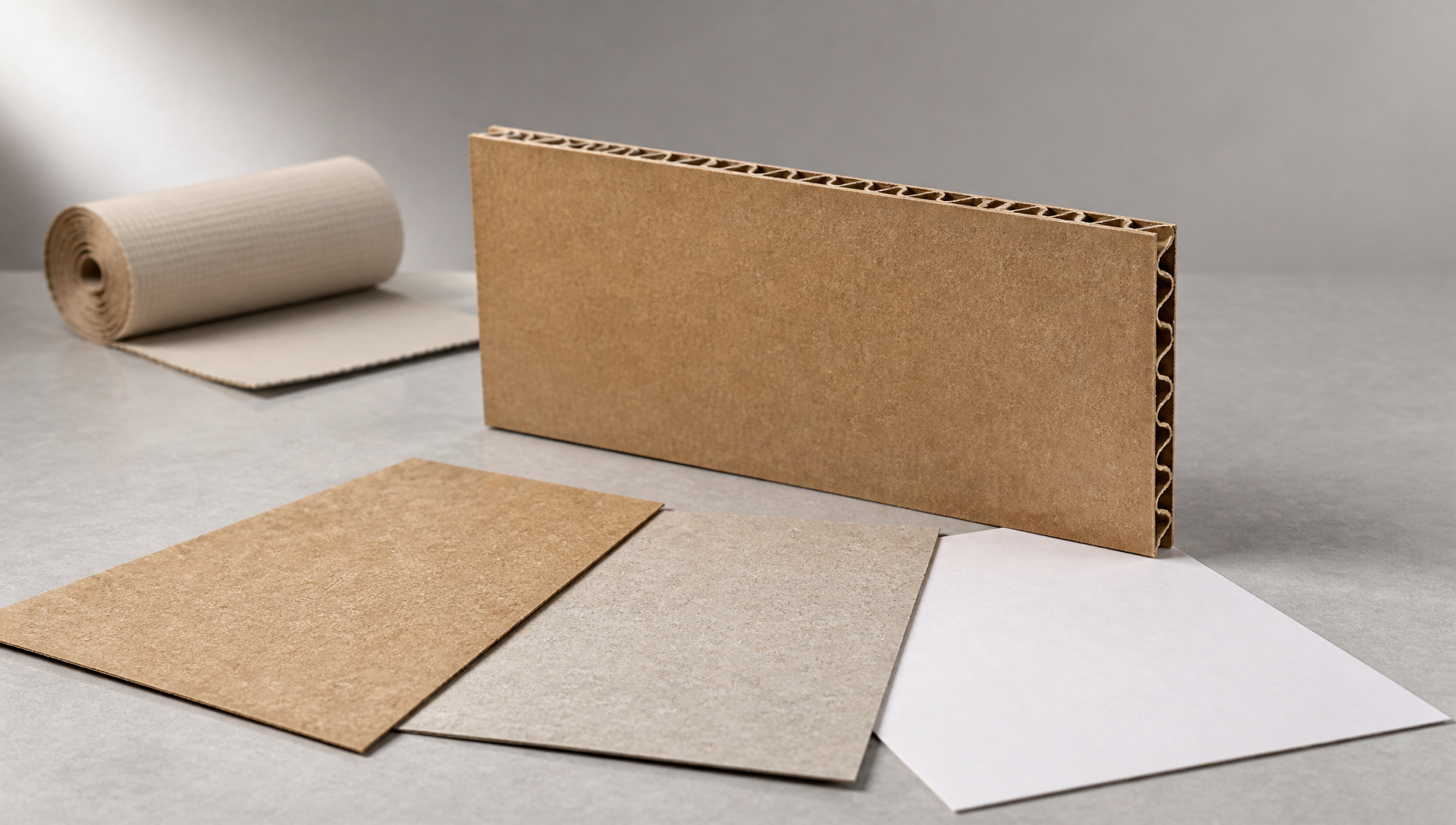
FAQ: Understanding Corrugated Board Grades
1분기: Does heavier board always mean a stronger box? 아니요. Fibre type, 플루트 프로필, and construction all matter alongside grammage. A well-matched lighter grade frequently outperforms a heavier mismatched one.
2분기: What is the difference between kraftliner and testliner? Kraftliner uses virgin fibre and performs better in humidity and sustained load. Testliner uses recycled fibre, costs less, and handles most single-trip distribution perfectly well.
3분기: How do I read a board grade specification? Read it as outer liner, 중간, 내부 라이너, plus flute profile. If a quotation omits fibre type or flute, ask — those omissions hide real performance differences.
4분기: Can recycled grades meet food-contact requirements? 때때로, though recycled fibre needs closer scrutiny for migration. Tell us the contact type early and we will specify accordingly rather than retrofitting compliance later.
FAQ: 지정 및 주문
Q5: Can you match my current supplier’s board? 보통 그렇습니다. Send a physical sample and we will identify the liner combination, 중간, 플루트, and grammage, then match or improve on it.
Q6: How do board grades affect container loading? Heavier grades are generally thicker, so fewer flat blanks fit per pallet. Right-sizing the grade often improves container fill measurably on high-volume programmes.
Q7: Do you supply board specifications with the order? 예. Grade specification, 검사 기록, and certification documents ship with every order as standard.
Q8: 정확한 견적을 위해 무엇이 필요합니까?? 내부 치수, 제품 무게, 월별 볼륨, 목적지 포트, 그리고 예술작품. 이 조합을 사용하면 자리 표시자를 인용하는 대신 적절하게 지정할 수 있습니다..
관련 가이드
- 골판지 상자: B2B 사양 가이드 — 완전한 보드, 스타일, 및 규정 준수 프레임워크.
- 골판지 플루트 유형 설명 — A, 비, 기음, 이자형, F 및 치수가 포함된 결합 프로파일.
- FSC 인증 종이 포장 — 관리 연속성 문서 설명.
- EPR 포장 규정 준수 — Component weight reporting by material.
- Quality Control Process — Inspection from incoming board to final AQL.
포장 범위 살펴보기
- 골판지 상자 — 배송 케이스, 우편물, 수출 포장.
- 접는 상자 — 경량 소매 상자.
- 단단한 상자 — 프리미엄 선물 및 프리젠테이션 상자.
- 인서트 및 액세서리 — 파티션, 패드, 그리고 맞춤형 부속품.
- 종이 튜브 — 미용을 위한 원통형 포장, 음식, 그리고 선물하기.
Ready to Match Your Corrugated Board Grades?
수년간 인용한 후의 패턴은 다음과 같습니다.: buyers who send performance context get the right grade first time, whereas buyers who name a grammage and a target price usually revise twice. 아이러니하게도, that second route costs more.
제품 사이즈를 알려주세요, 제품 사용, 수량, 그리고 로고 파일. Our team will then recommend the right liner combination, 중간, and flute — and we will say plainly where a lighter grade serves you just as well.
✉️ [귀하의 사양을 보내주십시오 → 견적을 받으십시오 24 시간] 포함하다: 내부 규격 · 제품 중량 · 월별 수량 · 목적지 포트 · 작품 파일
팩 포장 | 20,000㎡ 공장 | 2,000㎡ 식품 등급 워크샵 | ISO 9001 | FSC 인증 | G7 마스터 컬러 | 60+ 수출 시장
부인 성명: Grammage ranges and grade classifications cited reflect widely published industry reference figures; 실제 사양은 제지 공장과 지역에 따라 다릅니다.. MOQ 수치와 리드타임은 보증이 아닌 일반적인 값을 나타냅니다.. 규제 정보는 8월 현재 공개적으로 이용 가능한 출처를 반영합니다. 2026 법적 조언을 구성하지 않습니다., 따라서 자격을 갖춘 조언자와 함께 귀하의 특정 의무를 확인하십시오..