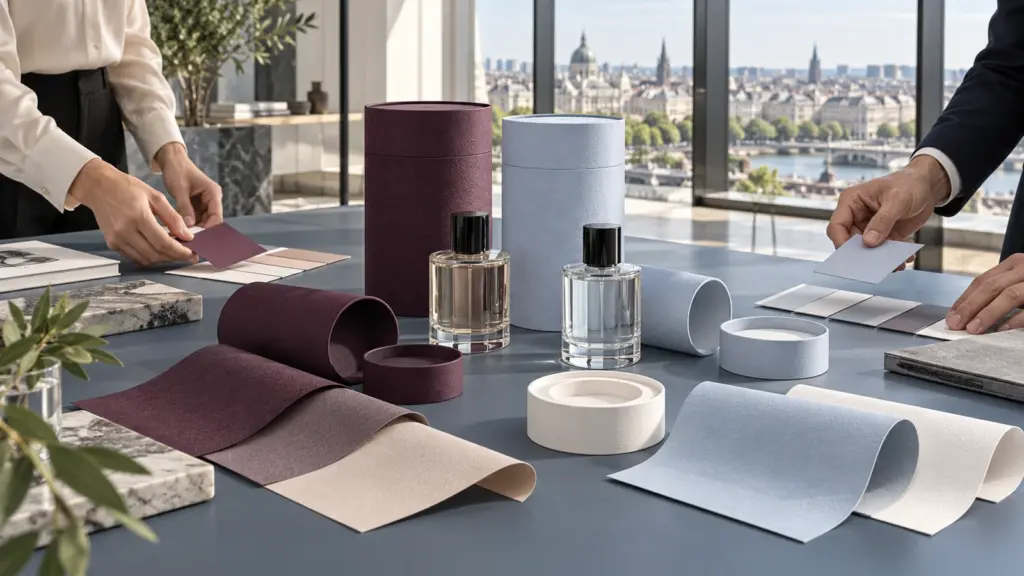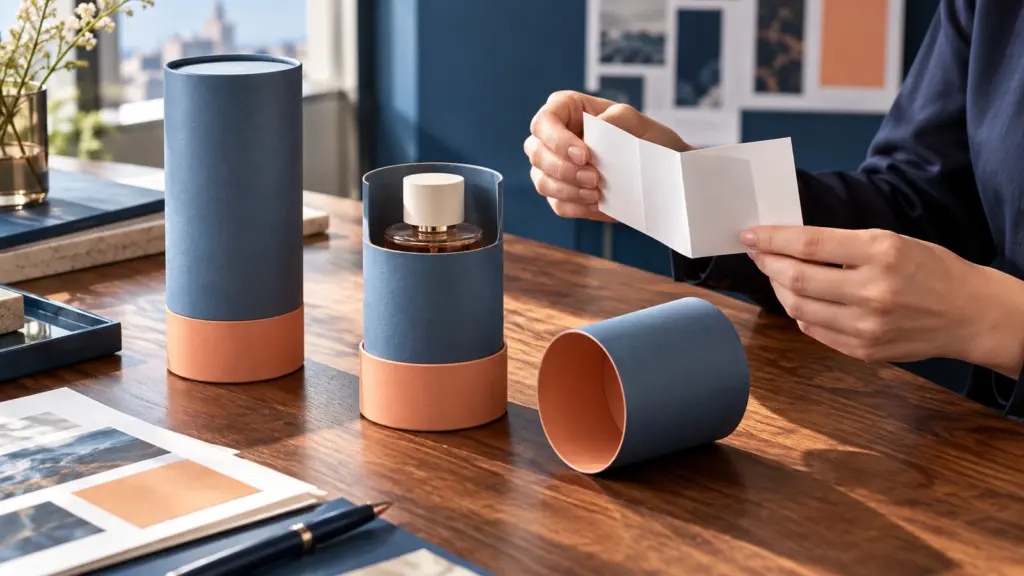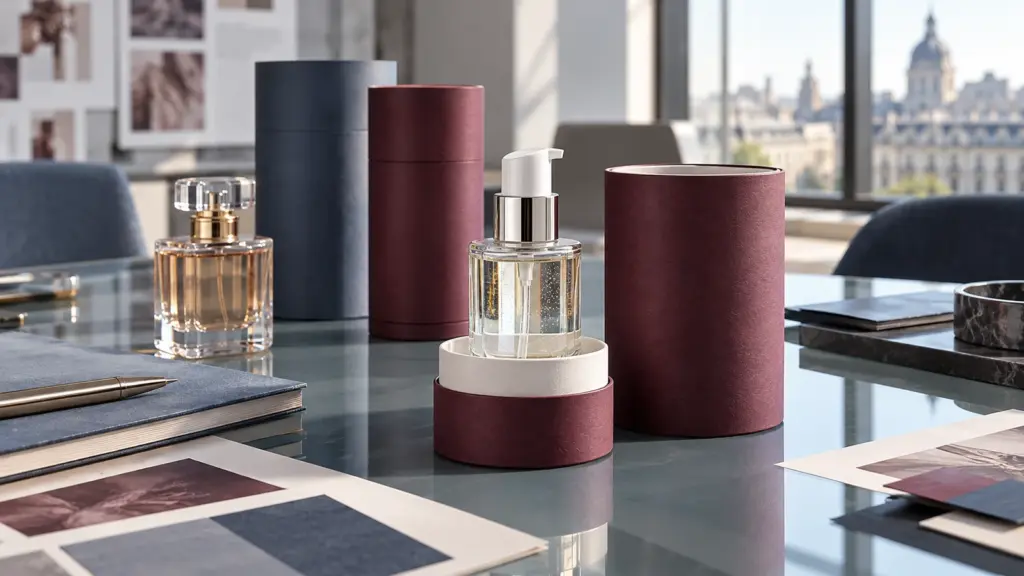
A luxury fragrance bottle can look excellent in its paper cylinder while the buyer still has an unanswered question: what will the customer notice when opening the outer pack? A useful paper tube odor assessment turns a vague instruction such as “no strong smell” into an identifiable sample, an agreed evaluation route and a documented release decision.
This guide concerns custom secondary paper tubes for sealed perfume and skincare containers. It proposes a purchasing and sample-handoff workflow, not a laboratory procedure or a safety certification. It does not cover direct filling of food or cosmetics into the tube. Those applications require their own material, compatibility and regulatory assessment.
Define the purchasing question before asking for a test
Separate three questions in the brief. Does the empty presentation pack have an unwanted odor? Does the complete presentation change the opening experience around a sealed product? Is there a concern about substances transferring into the product? These questions can require different evidence and should not be collapsed into one informal approval.
For luxury paper tube odor control, identify the product, primary container and intended presentation. Record whether the bottle is filled and sealed, which closure is used, and whether the tube includes a paperboard holder or other accessories. A review of an empty shell does not describe every component in the final gift pack.
Start with the custom paper tube and round box range to identify the structure being developed. Dimensions and construction should follow the project brief. A category image or an attractive sample cannot establish sensory suitability for an unspecified product.
Map the complete converted construction
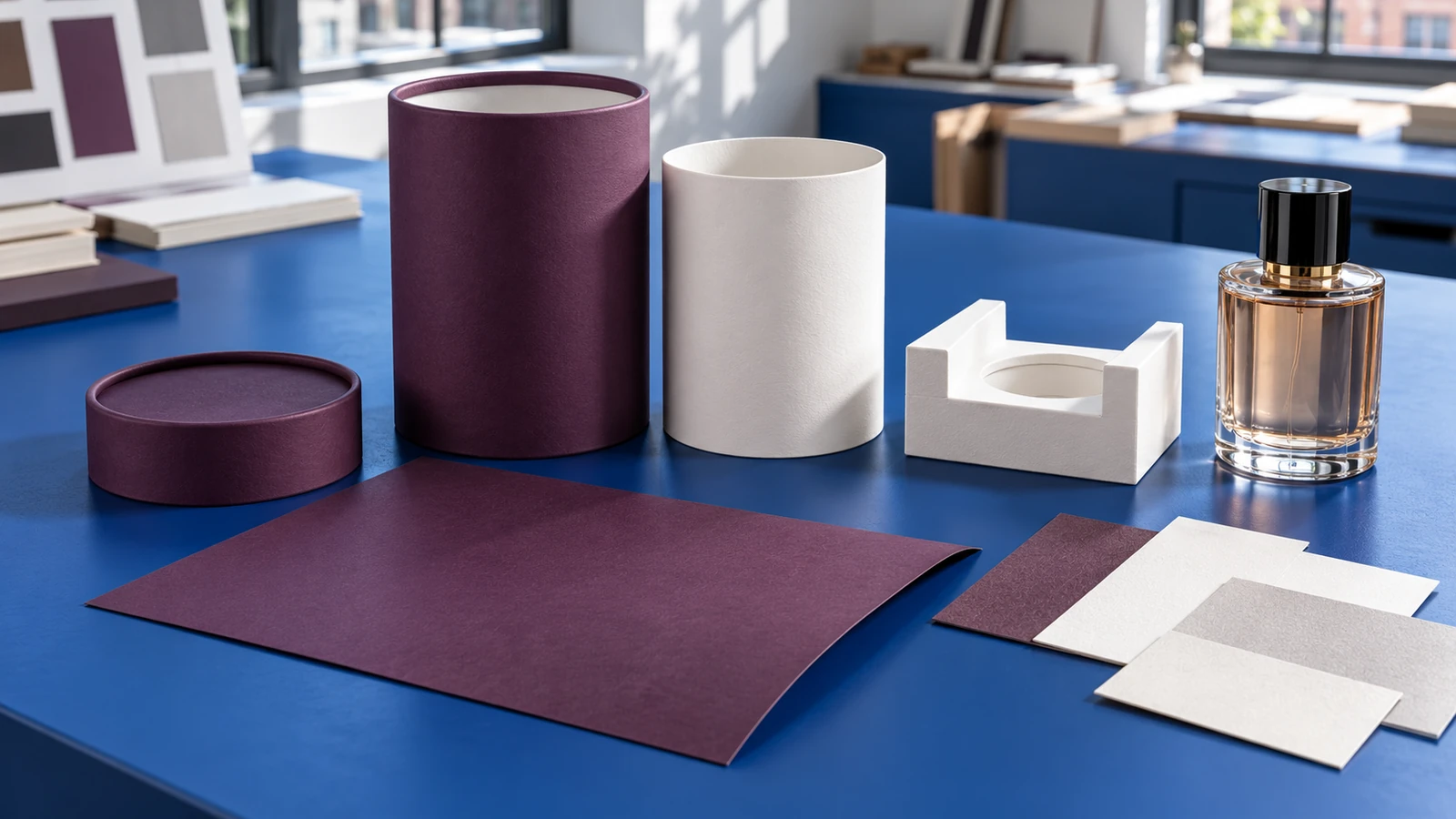
A paper tube odor assessment needs an actual component list: structural board, outer wrap, inner sleeve, liner, ink, surface finish, adhesive and holder. Mark which materials are present in the submitted sample and which remain provisional. Ask the supplier to identify conversion stages and the material revisions represented.
Holmen’s paperboard guidance identifies board constituents, printing and conversion as potential odor contributors. It also warns that board can pick up odor during storage. This supports reviewing the converted pack rather than relying exclusively on a baseboard description; it does not identify the cause of a particular tube’s smell.
For a low odor printed paper tube, ask what evidence applies to the printed and assembled item. A supplier’s material specification can help identify inputs, but a statement about the raw board should not silently become a claim about the wrap, adhesives and finished cylinder. Likewise, “water-based” describes a formulation feature rather than an acceptance result.
Keep the holder in the review. The paper tube insert guide supports construction discussions, while the sensory brief should identify the actual holder material and any assembly adhesive. If a decorative ribbon or welcome card is added later, record the change before treating the original approval as complete.
Choose between a project observation and specialist evaluation
An internal purchasing observation can flag a concern, but it should not be reported as a standardized sensory test. Agree who receives the sample, what question they are answering and how a concern will be escalated. Do not invent an intensity limit simply because a spreadsheet needs a pass/fail column.
ASTM E619-17(2023) is a practice addressing odors and flavors associated with paper packaging. Its public scope includes auxiliary components such as inks, coatings and adhesives, and it describes evaluation by trained sensory panels. The public summary is not the complete method. A laboratory must determine whether that practice and its procedures fit your actual question.
For packaging sensory sample preparation, ask the chosen laboratory for instructions before collecting or shipping specimens. Let it specify quantities, packaging, conditioning, controls and any product medium. Do not substitute this article for those instructions, and do not ask untrained purchasing staff to taste products or repeatedly smell unfamiliar materials.
Smithers describes both sensory panel work and analytical investigation for packaging taint and odor issues. That distinction is useful when an observation needs investigation: describing an off-note and identifying its chemical source are different tasks. Neither service description proves that a PACK Packaging product has passed testing.
Create a sample matrix that can answer the question
For paper tube odor assessment, avoid sending one unlabelled finished tube and asking a laboratory to discover its entire history. Discuss a small comparison matrix first. The proposed matrix below is a procurement planning tool; the laboratory may request different specimens or controls.
| Sample group to discuss | Question it may help explore | Identity to retain |
|---|---|---|
| Unprinted structural components | What material references are represented before decoration? | Board and sleeve references, lot and supplier |
| Printed wrap and finished empty tube | What changed across conversion and assembly? | Artwork, ink, finish, adhesive and production references |
| Complete secondary presentation | What is observed with all approved components together? | Holder, accessories, sealed product and pack configuration |
| Retained comparison sample | Is there a difference from a defined earlier reference? | Original approval, storage history and sample condition |
Different groups can help organize an investigation, but a difference does not by itself establish causation. A wrap sample and a finished tube have different geometry and processing histories. Give those facts to the evaluator instead of presenting a simple comparison as proof that one ingredient is responsible.
Consider an illustrative fragrance launch: a matte plum tube was approved with a white board holder, then a darker printed holder was proposed. Keep the original reference and submit the changed construction for an agreed review. The example sets no universal rejection rule; it shows why a holder substitution should remain visible in the approval record.
Record handling history and sample boundaries
A perfume packaging smell review should distinguish the outer tube from the fragrance itself. Ask whether the evaluator needs empty packaging, sealed filled bottles or both, and keep their identities separate. A strong intended fragrance can complicate interpretation, so the specialist should decide how comparisons are made.
Record when the sample was assembled, how it was packed and where it was stored before dispatch. Note any known exposure to scented goods or cleaning materials. For formal investigation, follow the laboratory’s contamination-control and shipping instructions. A sample whose history is unknown should be identified as such rather than assigned a reassuring assumption.
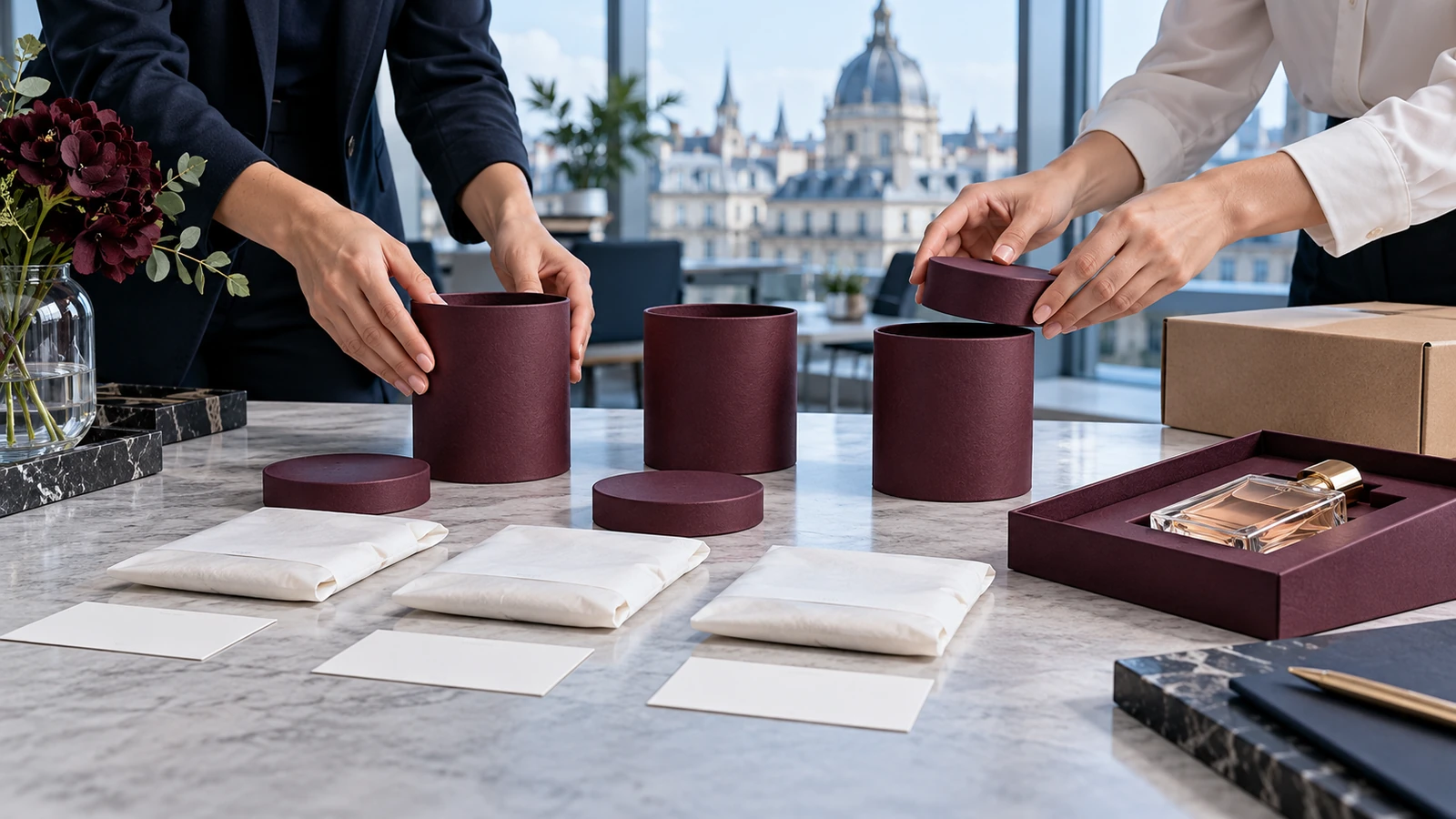
Retain the actual supplied wrapping and transport details where requested. If samples arrive damaged, mixed together or without identification, ask the evaluator whether they remain suitable. Do not quietly rewrap and relabel them in a way that erases the uncertainty. The aim is an interpretable record, not a clean-looking photograph.
Close the paper tube odor assessment with a defined scope
A practical paper tube odor assessment concludes with a decision tied to specific references. Record the evaluated construction, sample lot, method or observation route, date, report identifier and responsible reviewer. State whether approval covers only the empty secondary packaging or a defined complete presentation.
Use a packaging odor approval checklist to identify changes requiring another discussion: board source, wrap paper, ink system, finish, adhesive, holder, accessories, conversion route or storage arrangement. Review needs should follow project risk and the evaluator’s advice. Do not assume a different color is always equivalent or that every administrative change requires the same test.
Connect this record to structural sampling and the retained physical reference. The lid fit and opening approval guide addresses a separate part of sample release. Sensory review and structural fit answer separate questions, but procurement should know which construction each approval represents. Passing one review must not conceal an unresolved issue in the other.
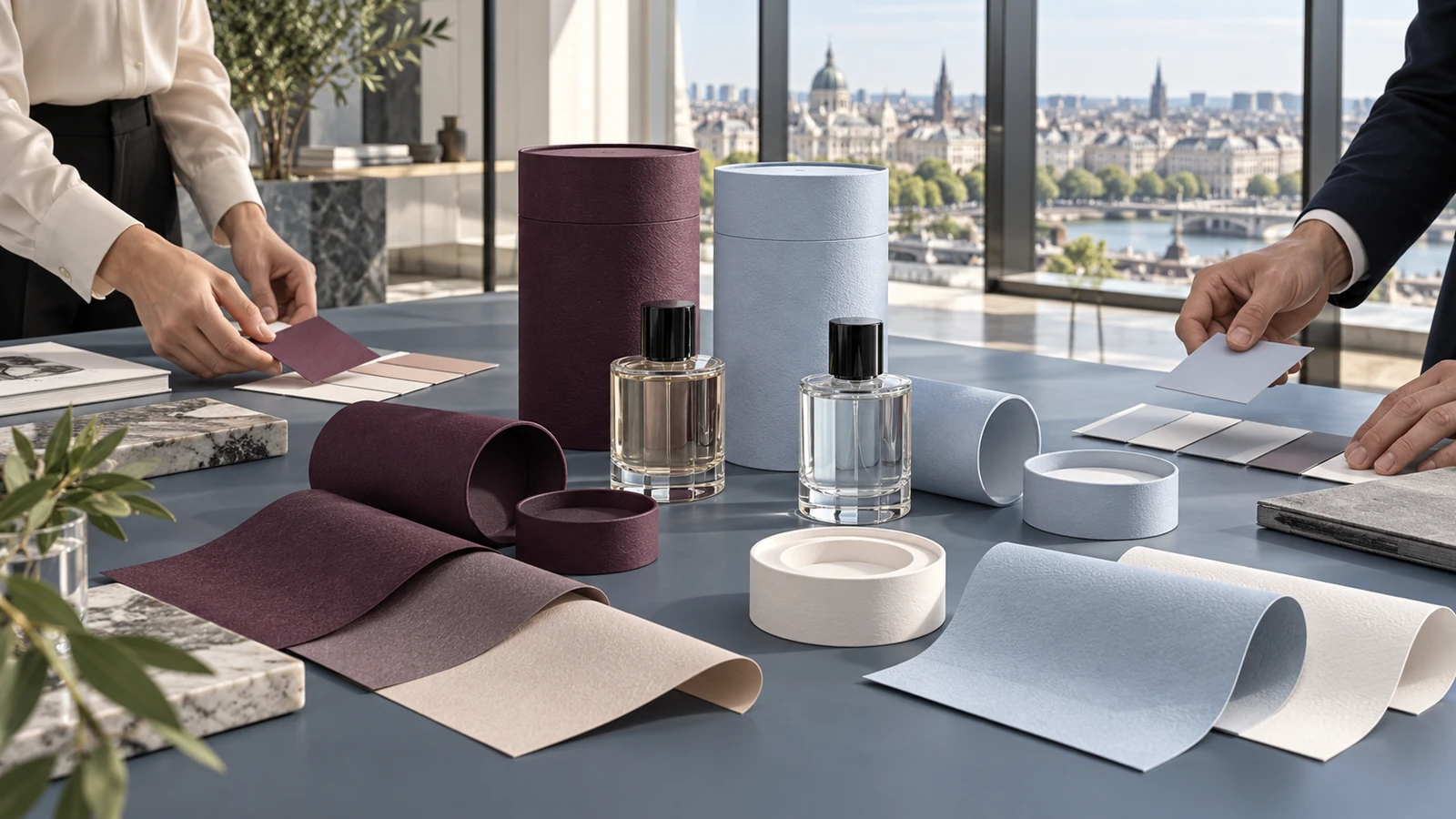
For visual direction, the perfume bottle paper tube collection can support a presentation discussion. Product photographs are design references, not odor results. Keep a short written list of evidence still needed before purchase release rather than implying every displayed design has the same approval.
Frequently asked questions
Does an odor-free impression establish product safety?
No. A casual impression does not identify all substances or establish compliance. Route safety, migration and product compatibility questions to the responsible technical specialists with the actual intended use.
Can a raw-board report approve the decorated tube?
It can support the material file within its stated scope. Ask separately what evidence covers printing, finishing, adhesive and the assembled construction. Do not extend the report beyond its sample and conditions.
Should we leave a sample open until the smell disappears?
Do not improvise conditioning and then present the result as representative. Agree preparation and evaluation conditions first. If a process change is proposed, identify the changed sample and review its suitability with the evaluator.
Can we specify the same requirement for every fragrance?
Use a common documentation framework, but ask the brand’s technical team whether each product and primary container are covered. Similar outer artwork does not establish equivalent product interaction or opening experience.
Send a traceable secondary-packaging brief
Send PACK Packaging your sealed-container reference, presentation dimensions, intended holder, decoration brief and sensory question. Include existing report scopes and sample-handling requirements. We can discuss the custom structure and sampling information; agree any independent evaluation and acceptance criteria before production release. A clear brief makes the evidence needed for approval explicit.