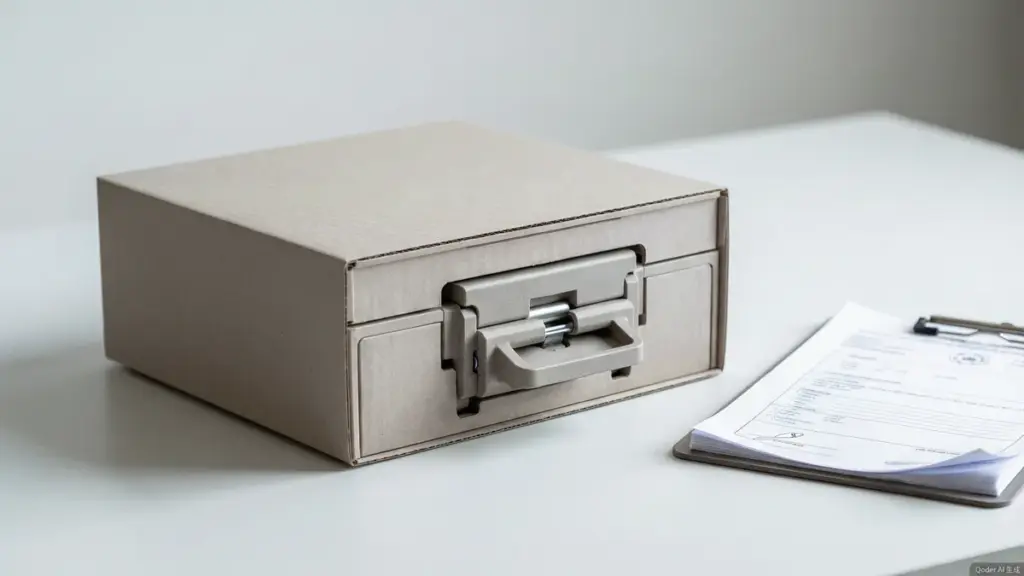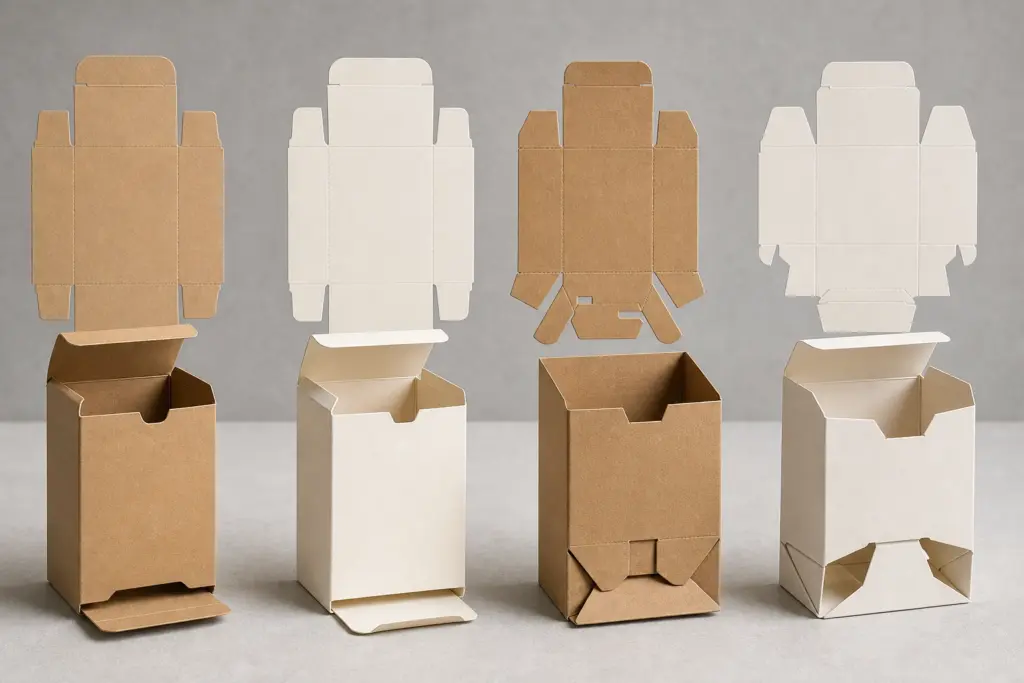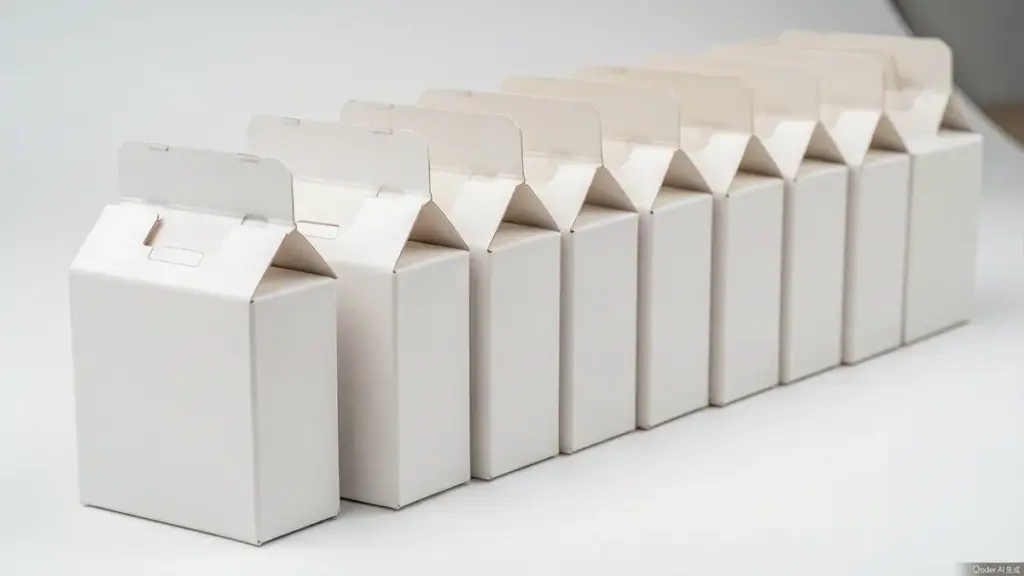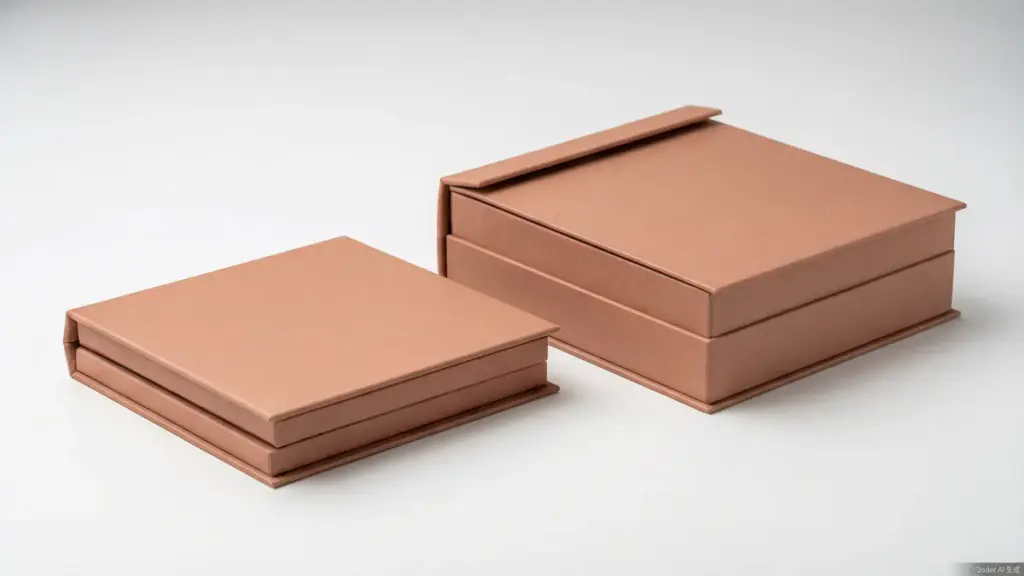
Uma caixa pode parecer perfeita em uma mesa de amostra e ainda assim falhar gravemente após empilhá-la, classificação de pacotes ou um impacto de canto duro. Por isso teste de caixa de papelão ondulado should be planned around the packed product, rota de envio e nível de dano aceitável - não apenas em torno de uma caixa genérica. Bem feito, teste de caixa de papelão ondulado helps buyers reduce transit damage, avoid excessive material and approve production with clearer evidence.
Obtenha orçamento de embalagem personalizada
Resposta rápida
Corrugated box testing evaluates whether a complete package can withstand the main hazards expected during storage and distribution. Compression testing measures resistance to stacking loads; drop testing examines shock from handling impacts; enquanto isso, an ISTA procedure combines selected hazards in a controlled sequence that better represents a defined distribution system. The correct plan depends on the product weight, fragilidade, dimensões da caixa, construção de placa, encerramento, padrão de palete, route and buyer requirements.
What Is Corrugated Box Testing?
Em termos práticos, teste de caixa de papelão ondulado is the controlled evaluation of the box, the product and the internal protection as one packaging system. A laboratory may test board properties, an empty box, a filled shipping case or a complete pallet load. No entanto, those results answer different questions, so one value should never be used as a substitute for all the others.
Por exemplo, ECT measures edgewise compression of a board specimen. Em contraste, a box compression test loads an erected shipping container between platens. A drop test then evaluates the packed product after a defined face, edge or corner impact. Because teste de caixa de papelão ondulado examines several failure modes, it gives a far more useful picture than simply asking for “strong cardboard.”
Before testing begins, agree on what counts as failure. Possible criteria include:
- Product breakage, leakage or functional damage
- Insert movement or loss of product restraint
- Box collapse, panel buckling or open seams
- Excessive corner crushing or closure failure
- Unacceptable scuffing on retail-facing graphics
- Loss of barcode readability or label adhesion
This step sounds simple. Ainda, it prevents a common dispute: the laboratory sees a carton that remained closed, while the buyer sees a product that no longer meets retail presentation standards.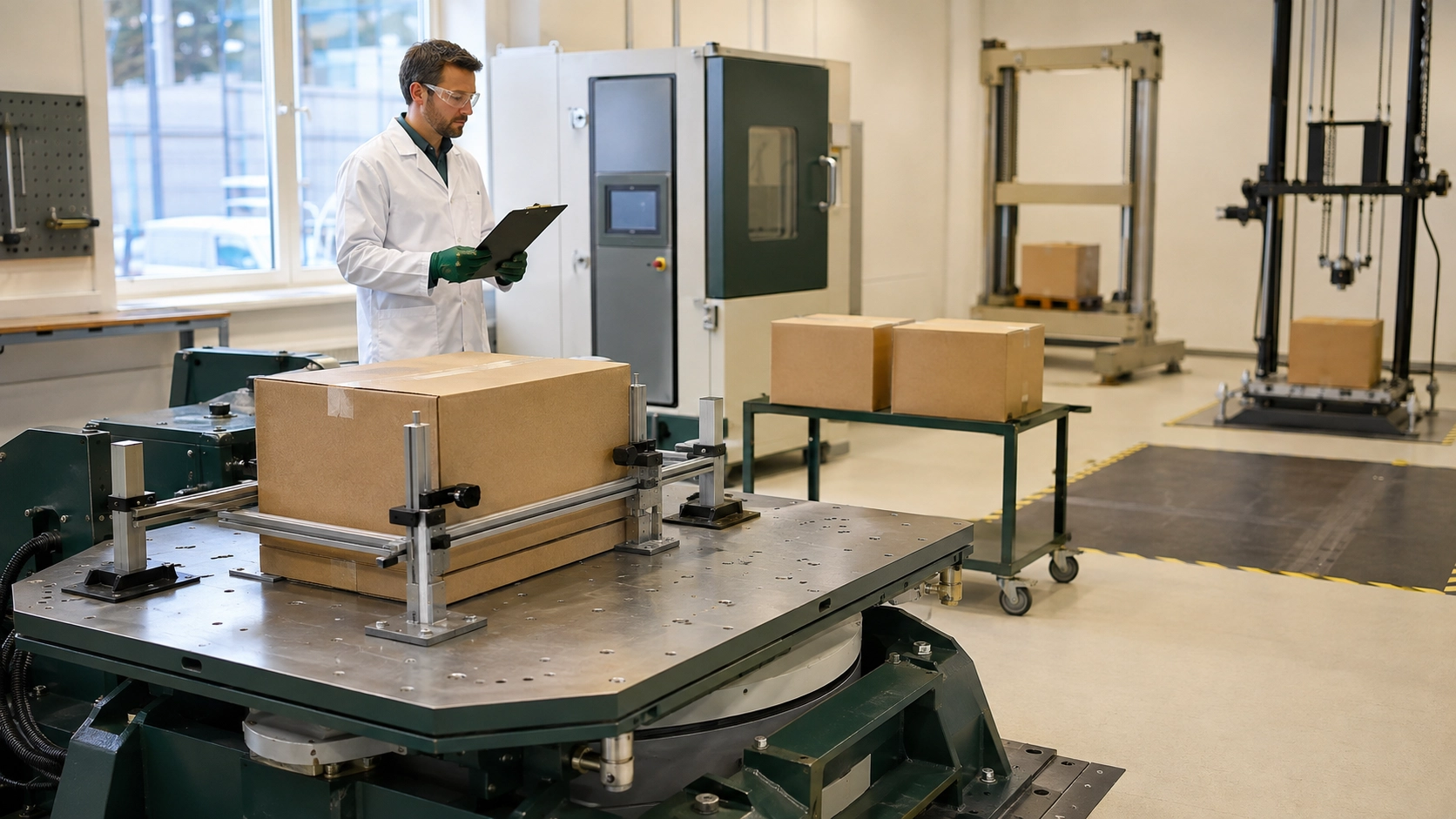
Compression Testing: ECT, BCT and Stacking Loads
Compression is often the first concern when cartons will be palletized, stored in a warehouse or stacked inside a container. In this part of teste de caixa de papelão ondulado, the team must distinguish board-level data from finished-box performance.
ECT Is a Board Test
The Edge Crush Test measures the edgewise compressive resistance of a small corrugated-board specimen. It helps engineers compare board constructions and estimate stacking potential. No entanto, ECT does not include the finished box dimensions, score lines, joints, buracos para as mãos, impressão, closure or packed-product support.
BCT Tests the Erected Box
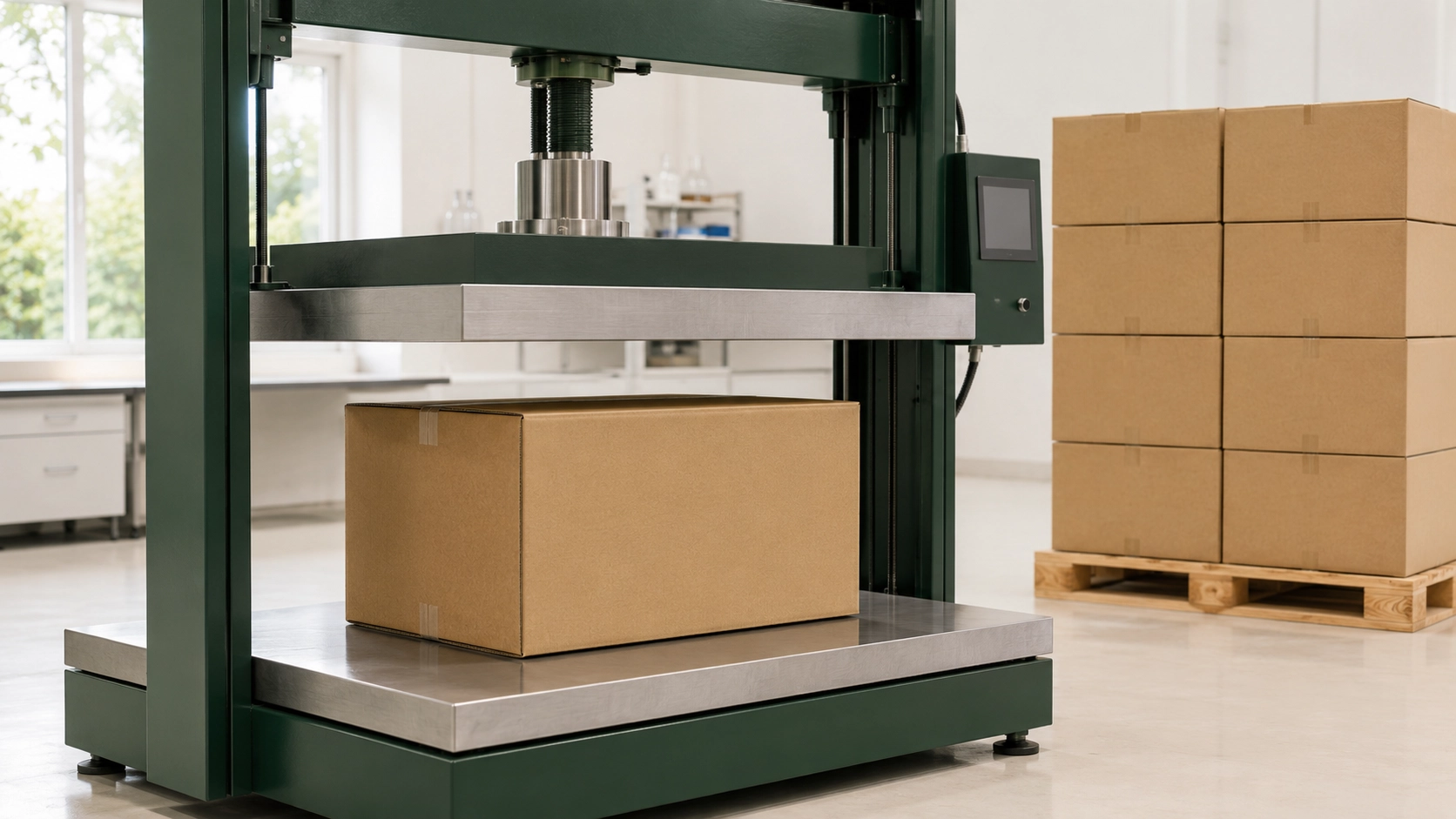
A Box Compression Test places an erected container between large parallel platens and applies load at a controlled rate. Depending on the objective and chosen method, the box may be tested empty or with contents. The result can show maximum load, deformation behavior and the location of panel failure.
ASTM lists D642 as the method for determining compressive resistance of shipping containers, componentes e cargas unitárias. Because standards are revised, buyers should confirm the current edition and laboratory scope before ordering a report. The official ASTM packaging standards directory is the safest reference.
Board strength is only one input. Box length, width and height also affect performance, as do flute direction, umidade, pallet overhang, poor taping and unsupported voids. For a deeper comparison of ECT, Mullen and finished-box requirements, leia nosso corrugated box strength guide.
Static Stacking Is Not the Same as BCT
A compression machine usually applies load over a relatively short period. Real warehouse stacking, no entanto, can continue for days or weeks while humidity and time-dependent creep reduce performance. Portanto, a realistic safety factor and, quando necessário, a constant-load or long-duration study should support the initial compression result.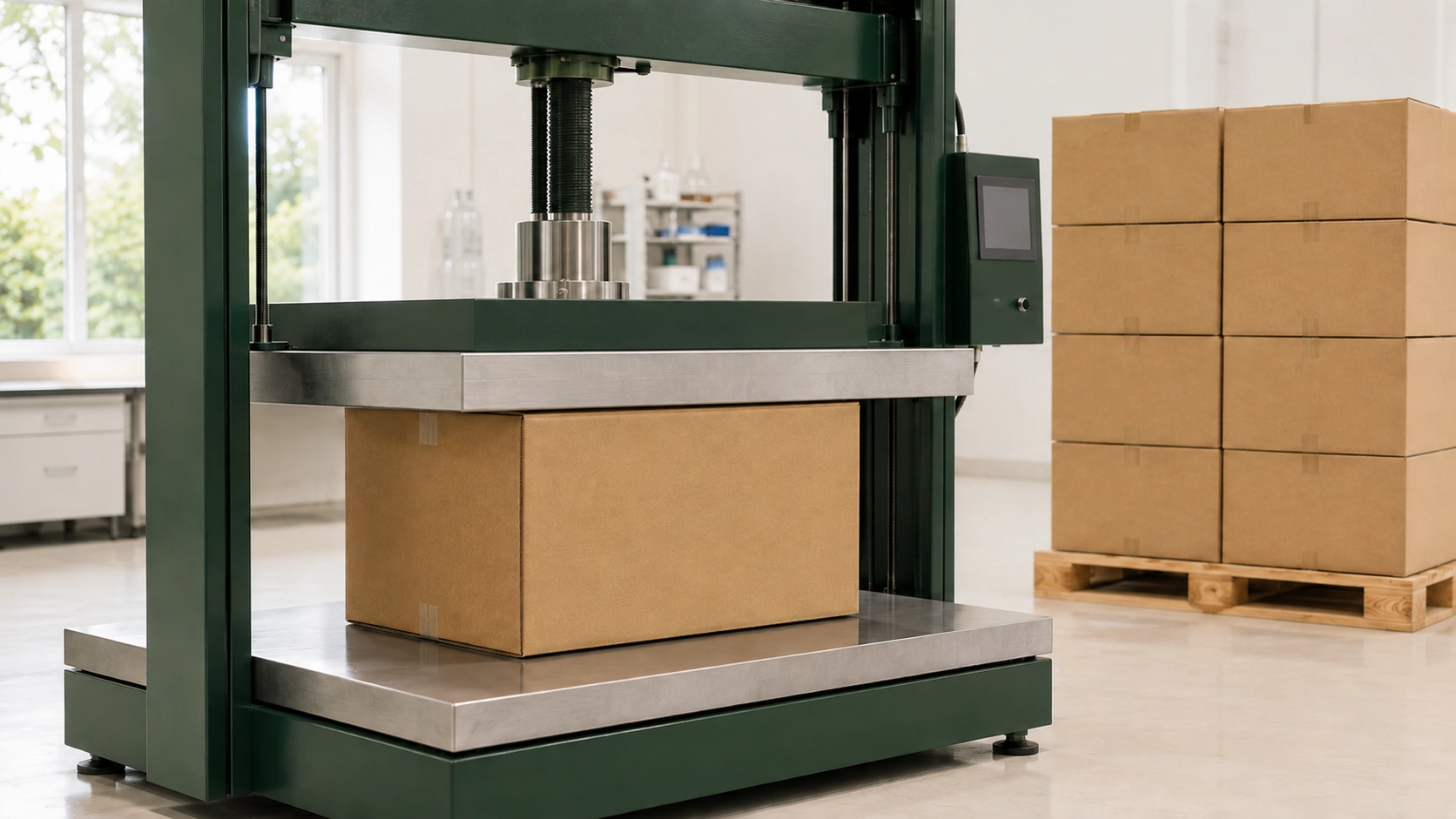
Drop Testing: What a Controlled Impact Reveals
During teste de caixa de papelão ondulado, a drop sequence shows what happens when a filled package hits a surface on a selected face, edge or corner. ASTM D5276 covers free-fall drop testing of loaded containers, but the actual height, orientação, sequence and number of samples must match the agreed test plan.
The box should contain the real product or a justified equivalent with the same mass, center of gravity and fragility. Além disso, inserções, bolsas, garrafas, bonés, tape and labels should match production intent. Testing an empty carton may reveal obvious structural problems, yet it cannot demonstrate protection for a glass perfume bottle, skincare jar, candle or canned product.
A useful drop evaluation checks more than the outer dent. Inspectors should examine:
- The product before testing and record its condition.
- Every face, edge and corner after the specified sequence.
- Insert displacement, bottle-to-box contact and closure security.
- Leaks, cracks, cosmetic damage and product functionality.
- Whether the box can still be handled, identified and opened safely.
Além disso, sample reuse matters. Damage accumulates throughout a sequence, so changing the order or replacing the package halfway through can alter the result. Follow the chosen method exactly and document every deviation.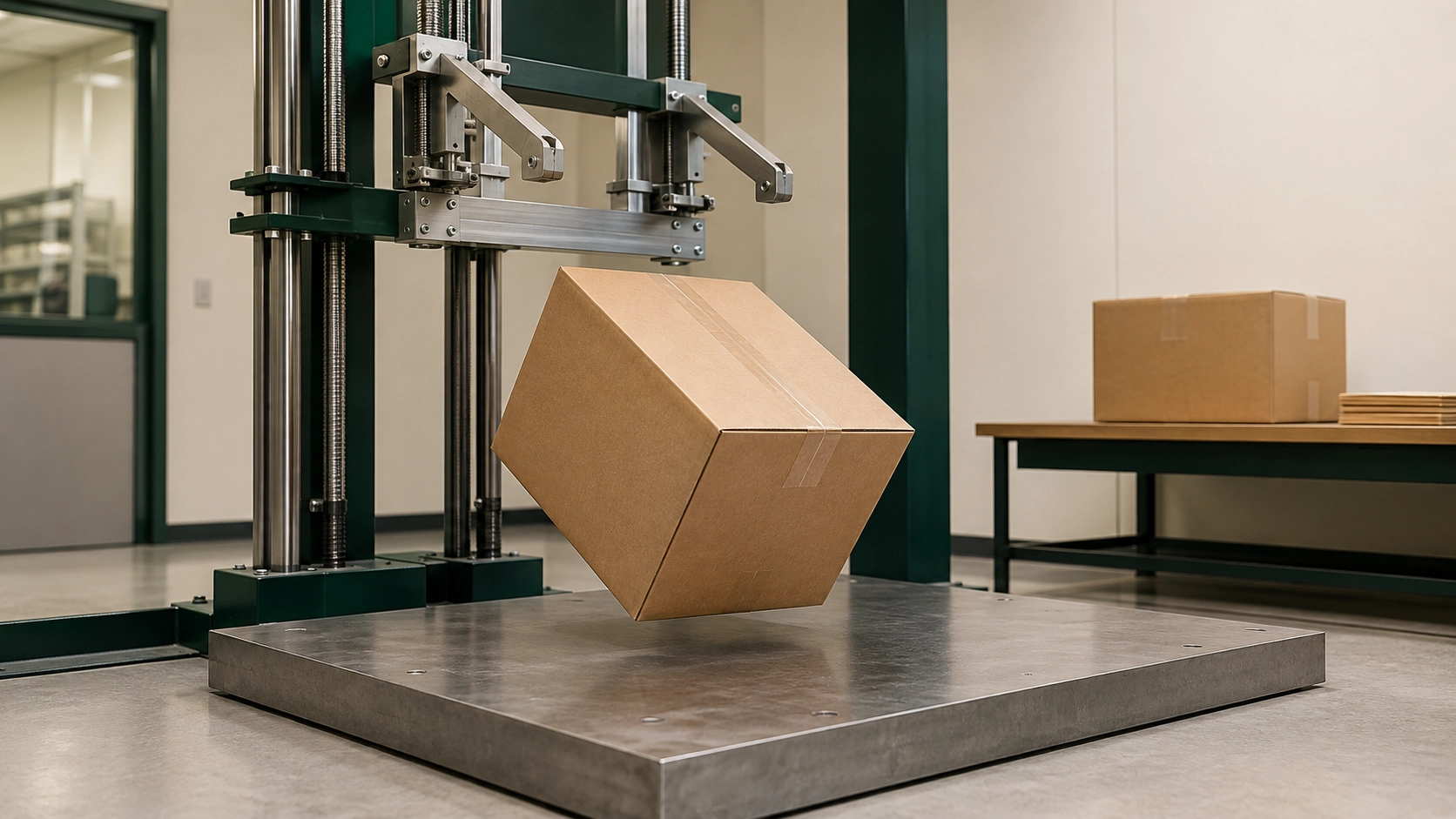
How ISTA Protocols Fit the Test Plan
ISTA procedures make teste de caixa de papelão ondulado more systematic by combining hazards such as atmospheric conditioning, compressão, vibração, shock and drop in defined sequences. No entanto, “ISTA tested” is incomplete wording. A buyer should ask which procedure, edition, package type, weight class, acceptance criteria and laboratory were used.
O official ISTA procedure directory separates tests by purpose. Resumidamente:ProcedureBest suited toPractical roleISTA 1APackaged products up to 150 lb / 68 kgEarly integrity screening; not a general distribution simulationISTA 2APackaged products up to 150 lb / 68 kgPartial simulation with conditioning or vibration elementsISTA 3AIndividual parcels up to 150 lb / 70 kgGeneral simulation for parcel delivery by air or groundISTA 3BLTL distributionMixed less-than-truckload handling and palletized packagesISTA 3ESimilar products in unitized truckloadsFull-truckload movement toward one destinationISTA 3LE-commerce retailer fulfillmentRetailer fulfillment and carrier distribution through final delivery
ISTA explains that its 1-Series procedures are integrity tests and are useful for screening, whereas 3-Series procedures are general simulations of transport environments. Além disso, ISTA identifies 3A for parcel delivery and 3L for generalized e-commerce retailer fulfillment. Portanto, the most demanding-looking protocol is not automatically the most appropriate one.
One more distinction matters: ISTA certifies eligible laboratories, while a package is tested to a named procedure under defined conditions. Do not describe every tested carton as an “ISTA-certified box” unless the relevant program and authorization clearly support that claim. When third-party validation is required, use an appropriately qualified laboratory and keep the full report, sample details and photographs.
Aplicativos comuns
Corrugated box testing is especially valuable whenever product value, breakage risk or distribution complexity makes trial-and-error expensive.
Perfume and Skincare
Glass bottles and jars can survive an outer drop while still contacting each other inside the box. Portanto, fitted corrugated, cartão, polpa moldada, EVA or foam inserts should be evaluated with the actual filled weight. Caps, pumps and decorative finishes also need inspection after testing.
Chá, Café e Lanches
For sealed tea, café, chocolate, snacks and other food products, the shipping box must protect the primary packs without creating crushing, abrasion or seal damage. If refrigeration or high humidity is involved, conditioning becomes particularly important.
Candles and Gifts
Heavy candle jars create concentrated loads, while premium gift sets often contain several items with different shapes. Partitions and cavities should prevent movement without adding unnecessary material.
Apparel and E-commerce
Apparel is less fragile, but oversized mailers may buckle, open or arrive with unacceptable corner damage. E-commerce packages also experience repeated sorting, vibration and handling, so a parcel-oriented procedure may be more relevant than a simple drop alone.
Canned Goods and Beverages
Here, weight rises quickly. Consequentemente, compressão, integridade do fechamento, bottom support and pallet pattern deserve careful review. Any leakage criterion must also be agreed before the trial.
Material Options and Their Effect on Testing
During teste de caixa de papelão ondulado, material selection should be recorded as a complete board construction rather than a color description. “Kraft box” does not tell the laboratory the flute, liner weights, medium, recycled content or moisture condition.
As opções comuns incluem:
- Kraft linerboard for shipping strength and a natural appearance
- White-top liner for cleaner graphics and retail presentation
- Art paper laminated to E- or F-flute for premium printed mailers
- Specialty paper for tactile gift or cosmetic packaging
- B-, C- or E-flute single-wall board
- BC or other double-wall combinations for heavier loads
- Food-grade or grease-resistant liners where required
- Foil or barrier liners for moisture, aroma or grease control
No entanto, a liner or foil layer can change recyclability, bonding and end-of-life instructions. It may also require separate food-contact evidence. Portanto, test the final converted construction rather than a plain-board substitute whenever the finish or liner may affect performance.
Structure Options and Test Risks
The structure submitted for teste de caixa de papelão ondulado must match production geometry. A regular slotted carton, die-cut mailer, telescopic box, sleeve pack and box with a separate lid distribute loads differently. Da mesma maneira, Windows, buracos para as mãos, tear strips and large print cutouts can create local weak points.
Inserções, partitions and dividers are part of the protective system, not decorative extras. They should hold the product away from vulnerable panels, control movement and transfer load without damaging labels or primary containers.
Enquanto isso, push-up and twist-up formats are normally paper-tube structures rather than corrugated shipping boxes. Portanto, they need a test plan designed for their own closure and dispensing mechanisms.
For pallet loads, also define:
- Column or interlocked stacking
- Number of layers and cartons per layer
- Pallet deck-board spacing
- Stretch wrap, straps and corner boards
- Allowed overhang or, preferably, full pallet support
- Warehouse stack height and storage duration
Opções de impressão e acabamento
Corrugated box testing should use production-equivalent printing and finishing whenever those processes may influence the result. Impressão CMYK ou Pantone, estampagem a quente, gravação em relevo, gravação em relevo, spot UV and matte lamination can affect scoring, surface friction, abrasion and fold behavior.
Por exemplo, a heavy laminated facing paper may crack at a tight score. De forma similar, a large embossed area can change local stiffness, while foil may scuff after vibration. Consequentemente, premium retail mailers should receive both structural inspection and appearance criteria. A box can remain closed yet still fail the buyer’s shelf-quality requirement.
Conformidade e Sustentabilidade
Corrugated box testing proves performance only within the defined sample and test conditions. Não, por si só, prove food-contact safety, legal compliance, reciclabilidade, Fornecimento FSC, EUDR due diligence or EPR registration.
These workstreams should connect, but they should not be confused:
- BRCGS Packaging Materials or IFS PACsecure can support manufacturing and hygiene-system assurance when the certificate scope is relevant.
- FSC Chain of Custody supports verified tracking of eligible forest-based material through the supply chain.
- Food-contact paper, tintas, revestimentos, adhesives and liners require suitable evidence for the intended contact condition and market.
- EUDR applicability depends on product scope, customs classification and how the packaging enters the EU market.
- EPR and PPWR obligations relate to market placement, reporting, design and end-of-life responsibilities—not transit-test performance.
O FSC Chain of Custody overview, BRCGS Packaging Materials standard e European Commission packaging guidance are useful starting points. Ainda, buyers should verify the exact certificate holder, escopo, product construction and destination-market requirement.
How to Customize a Testing Plan
A useful teste de caixa de papelão ondulado brief begins with the journey, not with a laboratory machine. Primeiro, define how the package will move. Então, identify the most likely hazards and select the method that answers the commercial question.
Send the supplier or testing partner:
- Internal box dimensions and packed dimensions
- Tipo de produto, unit count and total packed weight
- Product fragility, leak risk and acceptable cosmetic damage
- Estilo de caixa, flauta, nota do conselho, método de junta e fechamento
- Inserir, partition, void fill and primary-pack details
- Shipping route: parcela, LTL, full truckload, sea freight or mixed mode
- Pallet pattern, stack height and expected storage duration
- Temperature and humidity exposure
- Required protocol, retailer specification or customer standard
- Artwork file, requisitos de impressão e acabamento
- Quantidade de amostra, target MOQ and annual demand
- Destination country and required report format
Próximo, approve a physical sample with the actual packed product. After any design correction, test new samples through the complete sequence rather than combining the best results from several partly tested packs. Finalmente, freeze the approved material, dimensões, closure and insert in the production specification.
Testing Cost, Quantidade mínima e prazo de entrega
There is no honest universal testing price. Cost depends on the protocol, number of samples, package weight, conditioning time, equipment, third-party laboratory fees and reporting requirements. Da mesma maneira, packaging MOQ depends on size, construção de placa, impressão, finish and die-cut tooling.
For custom development, Pack Packaging normally supports physical samples in about 3–5 working days after specifications and artwork are confirmed. Bulk production is generally planned for 15–20 working days after sample approval, subject to materials, quantity and factory schedule.
If a formal third-party transit report is required, add laboratory booking and testing time to the project plan.
Produtos Relacionados
Explore matching packaging solutions:
Tubos de papel personalizados · Embalagem de alimentos · Embalagens Cosméticas
Por que escolher a embalagem Pack?
Our role in teste de caixa de papelão ondulado begins before the test itself. We review product dimensions, peso embalado, direção da flauta, construção de placa, inserções, closure and shipping route so the prototype has a realistic chance of succeeding.
Além disso, when a buyer needs formal transit validation, we can prepare production-representative samples and coordinate the required third-party testing scope rather than presenting a basic internal check as an ISTA report.
Pack Packaging supports global B2B projects with:
- UM 20,000 m² manufacturing facility
- UM 2,000 oficina de qualidade alimentar m²
- Monthly paper-tube capacity exceeding 10,000,000 pedaços
- UM 20+ member design and engineering team
- OEM/ODM structural design and artwork support
- Custom corrugated boxes, caixas dobráveis, rigid boxes and paper tubes
- CMYK, Pantone, estampagem a quente, gravação em relevo, gravação em relevo e UV spot
- Flexible MOQ and 3–5 working-day sampling
- Scalable bulk production and quality inspection
- Compliance-document coordination
Em outras palavras, we connect the drawing, the sample, the packed product and the production specification. That connection matters because a good laboratory result has little value if mass production quietly changes the board, insert or closure.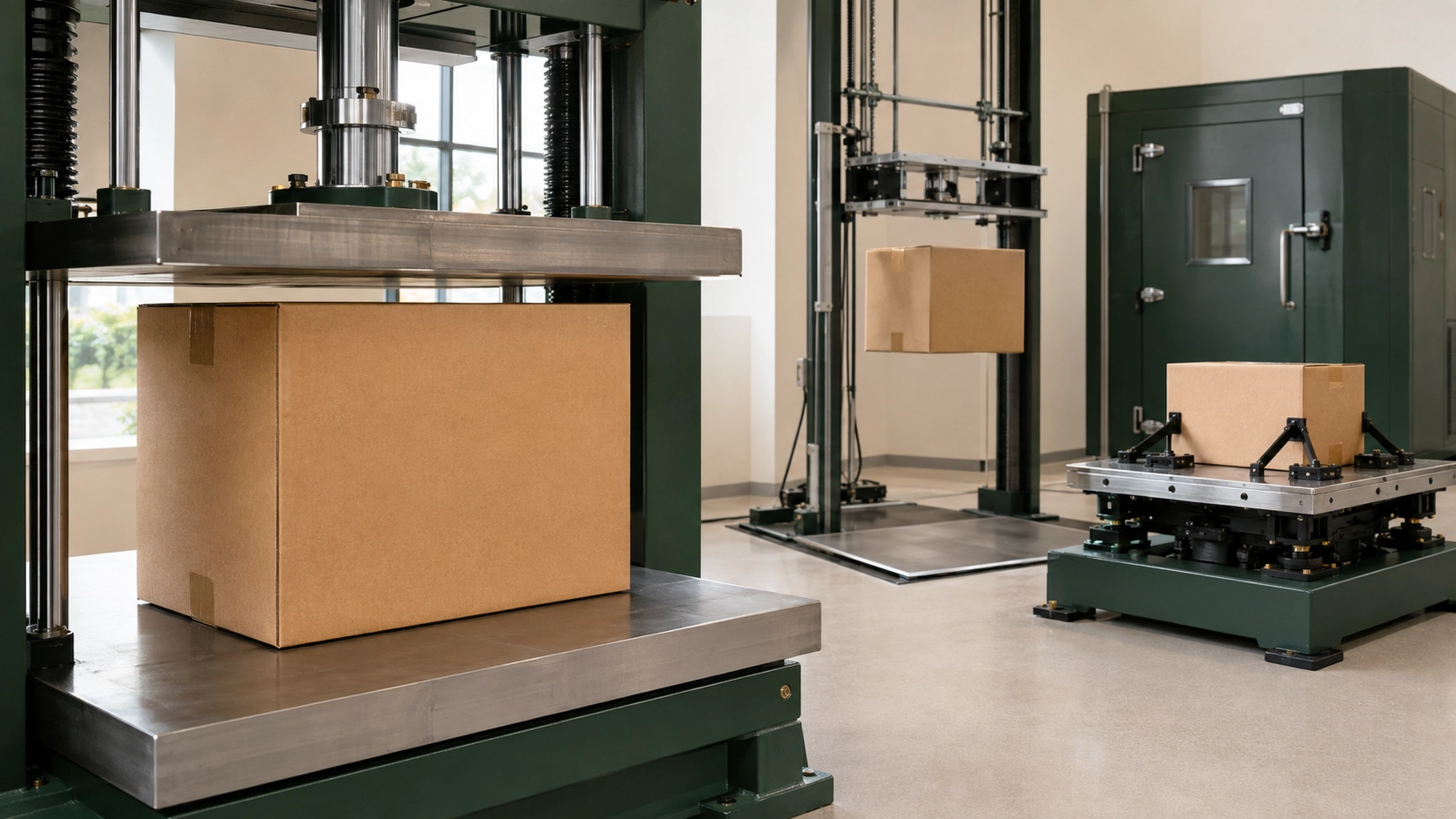
Perguntas frequentes
1. Which corrugated box testing protocol should I request?
Start with the actual distribution route. ISTA 1A is commonly used as an early screening procedure for lighter packaged products, while ISTA 3A is designed for individual parcel delivery. ISTA 3B addresses LTL shipments, and ISTA 3L addresses generalized e-commerce retailer fulfillment.
No entanto, retailer or customer specifications may control, so confirm their exact requirement before testing.
2. How many samples are needed?
The number depends on the procedure, package type, laboratory rules and the confidence level required. At minimum, provide enough production-representative samples to complete the full sequence without substituting a damaged package unless the procedure permits it.
Ask the laboratory for its sample plan before manufacturing test units.
3. Can you test an empty corrugated box?
Sim, an empty box may be appropriate for certain compression or construction comparisons. No entanto, a distribution-performance test should normally use the actual packaged product or a justified equivalent.
Peso do produto, center of gravity, fragility and insert interaction strongly influence the outcome.
4. What is the difference between ECT and box compression testing?
ECT measures the edgewise resistance of a corrugated-board specimen. Box compression testing evaluates an erected container and reflects more variables, incluindo dimensões, pontuações, joints and panel behavior.
Portanto, boxes with the same ECT rating can produce different compression results.
5. Why can a box pass a drop test but fail during stacking?
Drop resistance and compression resistance are different performance modes. A flexible structure may absorb impact well but buckle under long-term top load.
Por outro lado, a stiff box may stack well yet transmit too much shock to a fragile product. That is why both hazards may belong in one test plan.
6. Does humidity affect the result?
Sim. Corrugated board absorbs moisture, and higher humidity can reduce compression performance. Portanto, record conditioning conditions and consider the real warehouse, refrigerated or ocean-freight environment rather than relying only on a dry-room result.
7. Does corrugated box testing make a package “ISTA certified”?
Not automatically. A package can be tested to a named ISTA procedure, while ISTA separately certifies qualifying laboratories and operates specific marking programs.
Ask for the exact procedure, edition, laboratory status, test report and authorization before making a certification claim.
8. What information is required for a quotation?
Please send the internal size, tipo de produto, peso embalado, quantidade, estilo de caixa, flute or board preference, insert requirement, obra de arte, rota de envio, destination country and requested test standard.
Photos or physical product samples also help us recommend a realistic structure.
Get a Custom Testing and Packaging Quote
For a practical teste de caixa de papelão ondulado plan, tell us where the package is going, what it holds and what damage is unacceptable. Então, our team can recommend the box style, construção de placa, inserir, prototype plan and appropriate test route without adding cost that does not solve a real risk.
Envie-nos o seu tamanho, uso do produto, arquivo de quantidade e logotipo para obter um orçamento personalizado.
Also include the packed weight, shipping method, destination market and any required ISTA, ASTM or retailer protocol.