Pular para o conteúdo
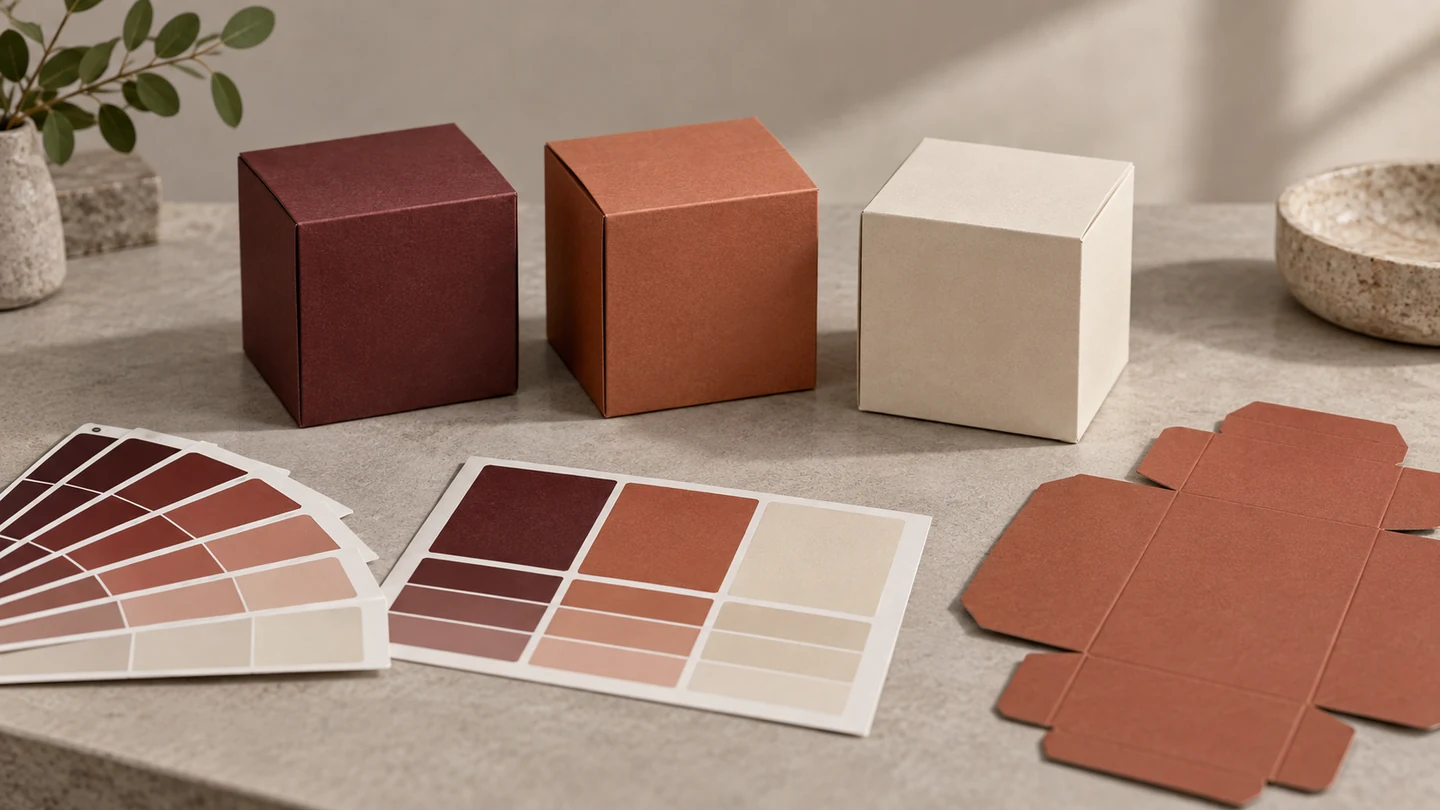
Custom packaging color matching starts before the press runs. A brand may approve a burgundy logo on a laptop, a buyer may keep a printed sample, and the factory may work from a different paper reference. If those approvals describe different targets, everyone can follow instructions and still disagree about the finished boxes.
For B2B buyers, the solution is a clear approval process: name the color reference, identify the material and finish, define what each proof demonstrates, and record who can approve a change. This guide helps procurement teams build that process without promising an identical result across every surface or printing method.
What Is Custom Packaging Color Matching?
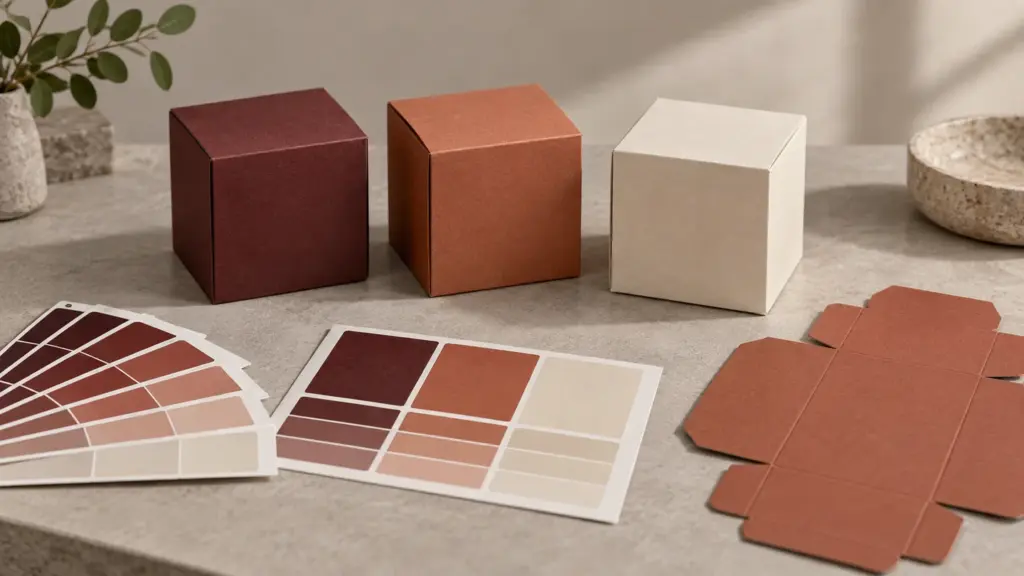
Color matching is the work of reproducing an agreed color appearance within a defined production setup. The target might be a physical brand reference, an approved printed sample or a specified color value evaluated under agreed conditions. The key word is “agreed”: a color name alone leaves room for interpretation.
Separate the target from the method used to print it. A process-color build and a separately specified spot color are different production choices. Ask the manufacturer how it proposes to reproduce your important brand colors on the selected material, and what reference will govern acceptance.
Why Approval Scope Matters for Brands
Cosmetic collections, seasonal gift sets and retail replenishment orders often put related packs next to one another. Buyers therefore need a reference that travels across departments and remains identifiable when an order repeats.
Consider a skincare launch using an outer gift box and several inner packs. Approving the outer box does not automatically approve the inner packs, particularly if their surfaces differ. List every component that needs coordinated review and specify which one establishes the main visual reference.
For a starting point, explore these printed cosmetic gift boxes. Confirm the proposed paper, print method and finish for your own design rather than treating a product photograph as a color standard.
Choose the Right Proof for Each Decision
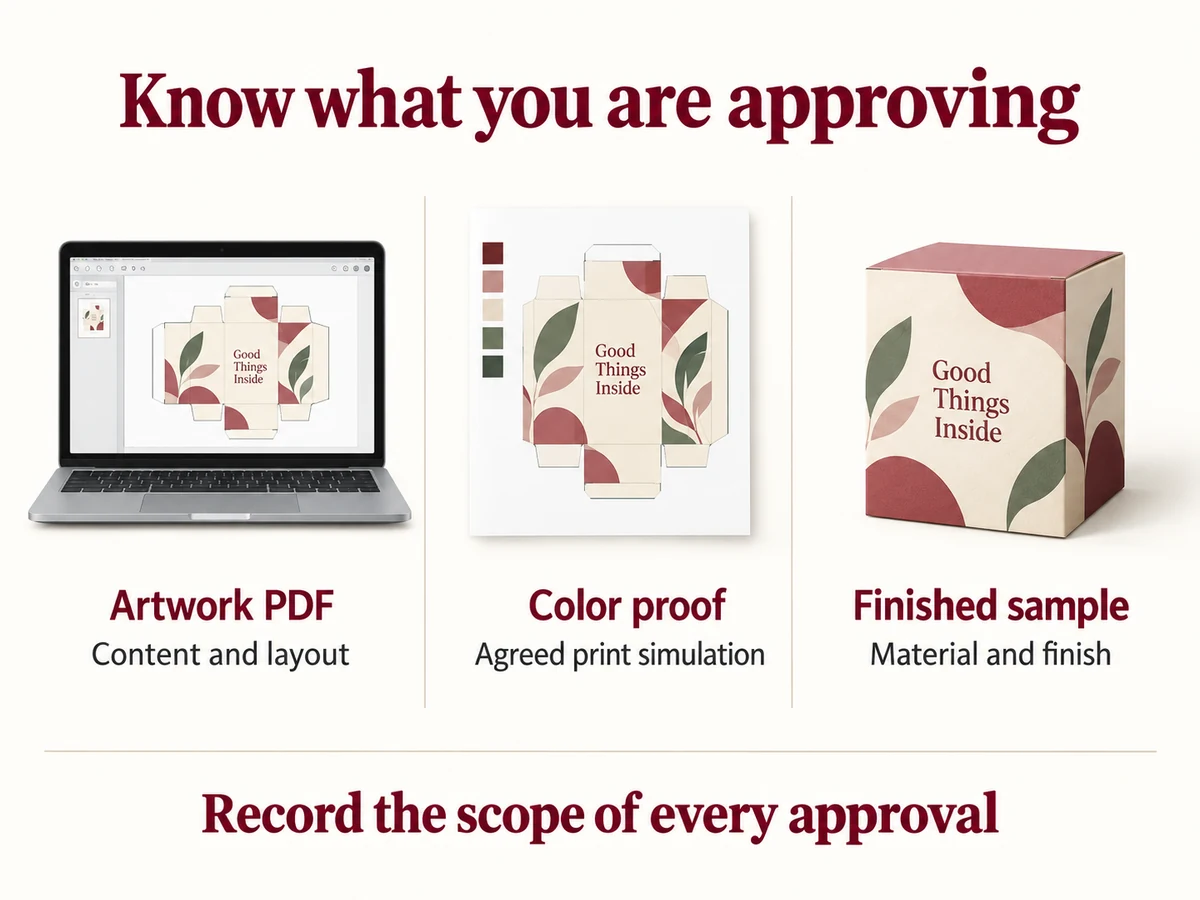
Artwork PDF: content and placement
Use the artwork review to check text, gráficos, orientation and the correct file version. Do not assume an ordinary PDF opened on any screen is a color-controlled proof. Ask explicitly whether the supplier is requesting artwork approval, color approval or both.
Color proof: an agreed simulation
Ask which printing condition the proof represents, how it was produced and which features it cannot reproduce. A proofing sheet may be useful for color evaluation without using the actual box material or final finishing process.
Finished sample: the complete appearance
Review a representative finished sample for the combined effect of paper, impressão, surface finish and assembly. Identify any differences between sample production and the proposed bulk process. A sample is a reference only for the characteristics it actually represents.
Keep the approval stages visible in the project record. “Artwork approved; finished color pending” is more useful than an unqualified “approved” message.
Why a Screen Alone Is Not Enough
The International Color Consortium explains that soft proofing simulates print appearance on a display and that calibration, profiling and viewing conditions affect that work. An ordinary screen preview is therefore not automatically a controlled print reference. See the ICC’s display calibration guidance.
Ask the designer and printer to agree on the intended color-management workflow. Avoid asking a supplier to chase the appearance of a phone photograph taken under unknown lighting. Photographs can document placement or a visible issue, but they should not silently replace the agreed physical reference.
Materials and Structures: Identify the Printed Surface
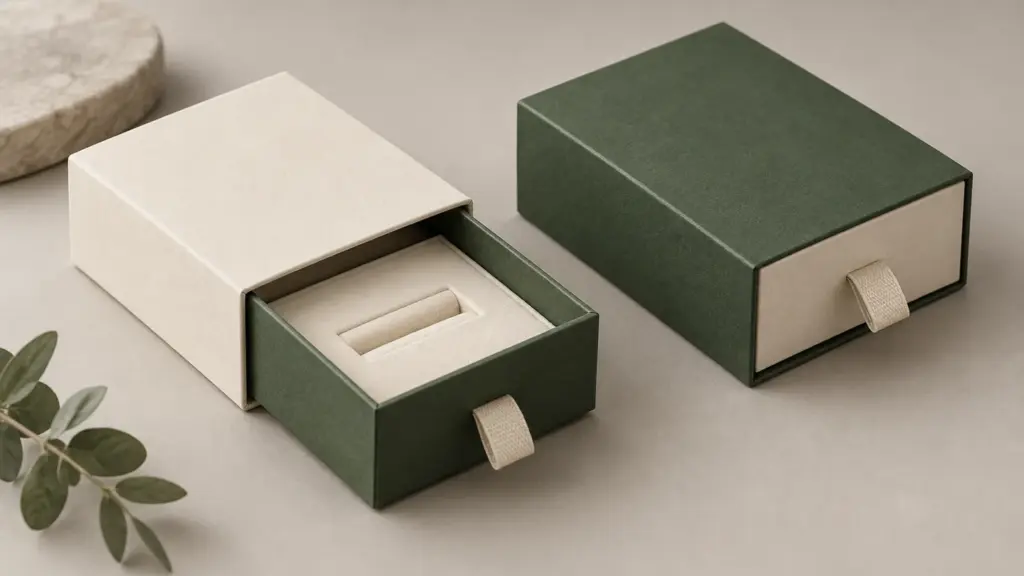
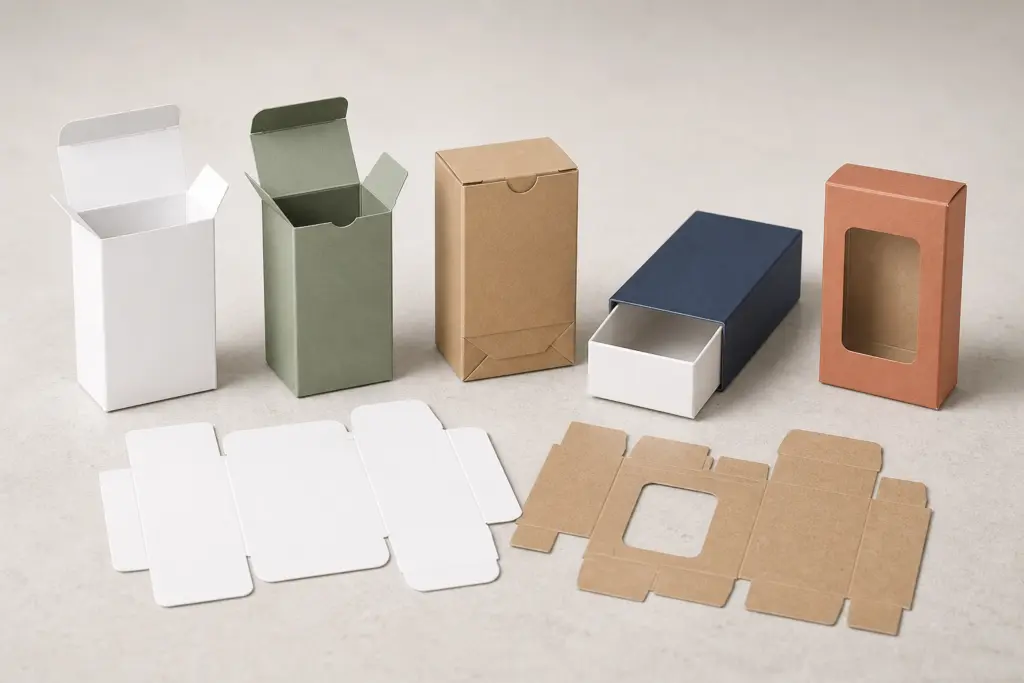
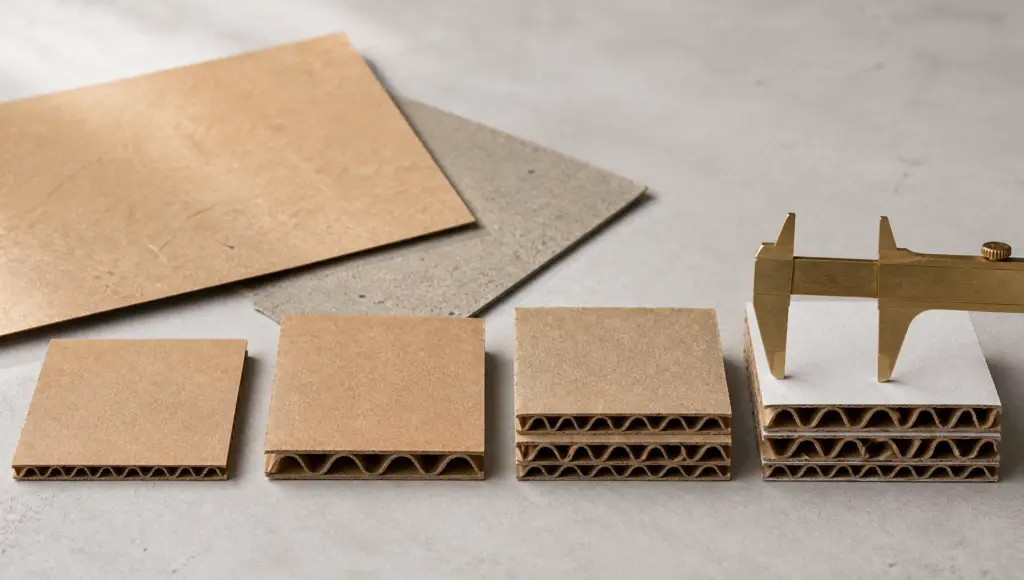
A packaging description such as “rigid box” identifies a broad construction, not the exact surface that receives the artwork. Record the printed wrap or sheet separately from the structural board underneath it.
Por exemplo, these book-style perfume boxes use a printed paper wrap, while these corrugated gift box options also describe an outer printed paper. Ask how the actual proposed surface compares with your reference. Do not assume the structural category determines the color result.
Keep an identified unprinted material sample with the approval record when the paper appearance matters. If the supplier proposes a substitution, ask whether a new color review is needed before agreeing to it.
Also identify which panels people see together after assembly. A sleeve, base, lid and insert may use separate artwork or materials even when they belong to one pack.
Impressão e Acabamento: Review the Final Combination
Tell the manufacturer which colors are commercially sensitive. Distinguish a brand-color background from product photography, decorative patterns or less critical interior artwork. This lets the discussion focus on the areas where variation would be most noticeable to your team.
Record the proposed surface finish alongside the print specification. Ask to review the finished appearance if lamination, varnish or another treatment is part of the design. Approval of an unfinished print should not automatically authorize every later finish change.
Foil and other decorative effects also need their own references. A metallic-looking patch in a mockup does not specify the physical foil. Label the intended material or supplier sample and confirm how its appearance will be reviewed on the box.
Write an Approval Record That Can Be Reused
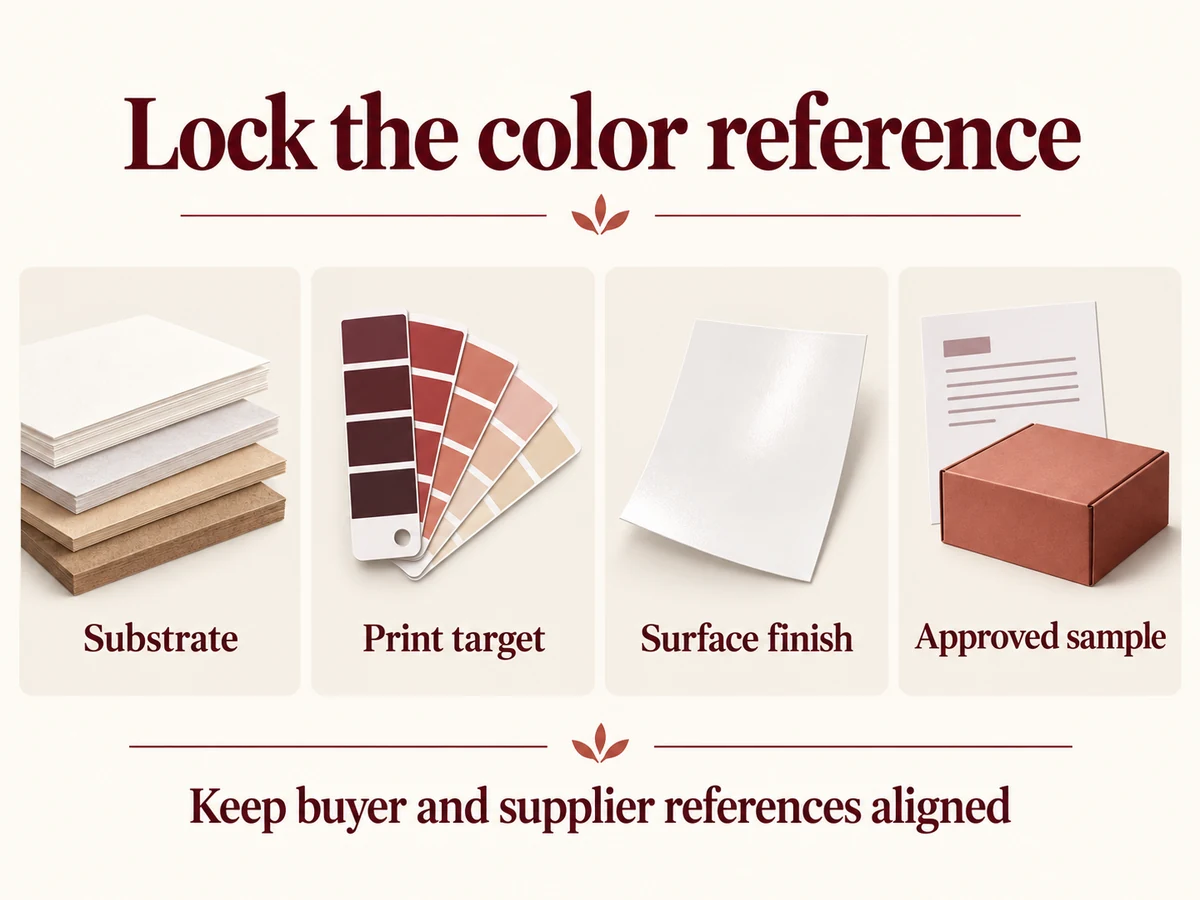
Use one approval record for each relevant packaging version. At minimum, include:
- Artwork filename and revision identifier.
- Material description and any agreed material reference.
- Color target, sample identifier and date of approval.
- Print method and surface finish represented by the sample.
- Viewing or measurement conditions agreed with the supplier.
- Approval owner, open issues and the changes requiring another review.
If color measurement is part of the agreement, ask the supplier to document the method and proposed tolerance. Do not copy an arbitrary color-difference number into the order without understanding how it will be measured and whether it suits the pack.
Make sure both parties retain identifiable references. For a repeat order, confirm that the material, finish and reference remain current before using the previous approval again.
Custo, MOQ and Scheduling Questions
Ask the quotation to identify the proposed proofing route and any separate charges for samples, print setup or additional approval rounds. Compare suppliers on equivalent approval scope; a low sample charge may cover a different type of proof.
Request MOQ information for each artwork version and printing proposal. Do not assume that sharing a box structure means several colorways count as one production version. Ask how a revised color specification would affect the quotation.
Agree when color approval is needed in the project schedule and who responds if a sample needs correction. Obtain order-specific timing from the manufacturer. This guide does not assign a standard cost, MOQ or lead time to color matching.
How to Assess a Manufacturer’s Color Workflow
Ask the supplier to explain what happens between your artwork submission and production approval. Useful answers identify the review stages, sample limitations, reference handling and route for resolving disagreements.
Discuss those points alongside the manufacturer’s packaging production capabilities. If a process capability is important to your order, request relevant evidence rather than treating general marketing language as a project-specific commitment.
Be cautious about promises to match every material perfectly without reviewing the design. A practical supplier should identify uncertainty and propose a way to evaluate it. Clear limitations are more useful than an unsupported guarantee.
Perguntas frequentes
What should I send for custom packaging color matching?
Send the artwork version, important brand colors, a named reference, the intended materials and finishes, and any related packaging that needs coordinated review. State who will approve the result.
Does approving a PDF approve the printed color?
Only if both parties explicitly agree that the proof and review setup are suitable for that decision. De outra forma, separate artwork approval from physical color approval.
Can the same color target cover different box materials?
It can communicate the intended direction, but ask the manufacturer to assess each material and provide appropriate samples. Agree acceptable appearance before placing the order.
What should happen when a repeat order looks different?
Compare the identified current reference and production sample under the agreed conditions. Confirm the artwork, material and finish versions, then use the agreed review process to resolve the difference.
Approve the Reference Before Approving Production
A reliable color decision connects the artwork to a named material, finish and reference. Write down what the proof represents, keep approvals specific and request another review when the specification changes.
Send your artwork, reference samples and order requirements to discuss our packaging sampling process. A clear approval brief gives both your team and the manufacturer a usable target for production.