Skip to content
Sourcing essential oil paper tube packaging for an essential oil bottle often looks easy at first. However, buyers soon face several practical questions: Will the glass bottle move inside the tube? Can the insert protect the dropper? Will a small oil leak damage the printed paper?
Moreover, brands need to balance appearance, protection, sustainability, cost, MOQ and delivery time. Good essential oil paper tube packaging solves these problems with a strong paperboard body, a correctly fitted insert and a finish that matches the brand’s market position.
Quick answer: Essential oil paper tube packaging combines a rigid cylindrical paperboard shell with a protective insert. The tube protects and presents essential oil bottles, roller bottles, fragrance oils and other small glass containers.
Send us your bottle size, order quantity, target market and logo file. Our team will recommend a suitable tube structure, insert and surface finish.
What Is Essential Oil Paper Tube Packaging?
An essential oil paper tube acts as secondary packaging around a glass or plastic bottle. The bottle holds the liquid, while the paper tube protects the bottle and presents the brand.
Most designs combine three main parts:
- A rigid spiral-wound paperboard body
- A printed or specialty-paper outer wrap
- A fitted insert that holds the bottle securely
Although the structure looks simple, each part affects the final result. For example, an oversized tube allows the bottle to shake during shipping. On the other hand, an insert that fits too tightly slows down packing and makes the product difficult to remove.
Therefore, your packaging supplier should design the tube around the actual bottle. The design team needs the bottle diameter, total height, cap size and filled weight before creating the internal structure.
In addition, the supplier should leave enough space around the cap and dropper. This clearance prevents the cap from rubbing against the lid during transportation.
Paper tubes also offer stronger crush resistance than thin folding cartons. Meanwhile, their cylindrical shape helps essential oil brands create a more distinctive retail presentation.
Still, the tube cannot solve a leaking bottle. Brands must test the bottle seal, dropper, cap and closure before starting mass packaging production.
Common Applications
Brands commonly choose essential oil paper tubes for:
- 5 ml, 10 ml, 15 ml and 30 ml dropper bottles
- Custom-size aromatherapy oil bottles
- Rollerball essential oils
- Perfume and fragrance oils
- Facial serums and skincare concentrates
- Botanical extracts
- Beard oils and hair treatment oils
- Wellness and spa products
- Essential oil discovery kits
- Multi-bottle gift sets
- CBD oil products in compliant markets
In addition, manufacturers can adapt similar paper tube structures for perfume, skincare, candles and other small glass containers. However, every product needs a different internal structure.
For instance, a candle jar usually weighs more than an essential oil bottle. As a result, the candle tube may need a thicker wall and a stronger base.
Food packaging creates different requirements again. Tea, coffee and snack tubes may need food-grade liners, moisture barriers or additional food-contact documentation. Therefore, brands should always tell the supplier how they plan to use the packaging.
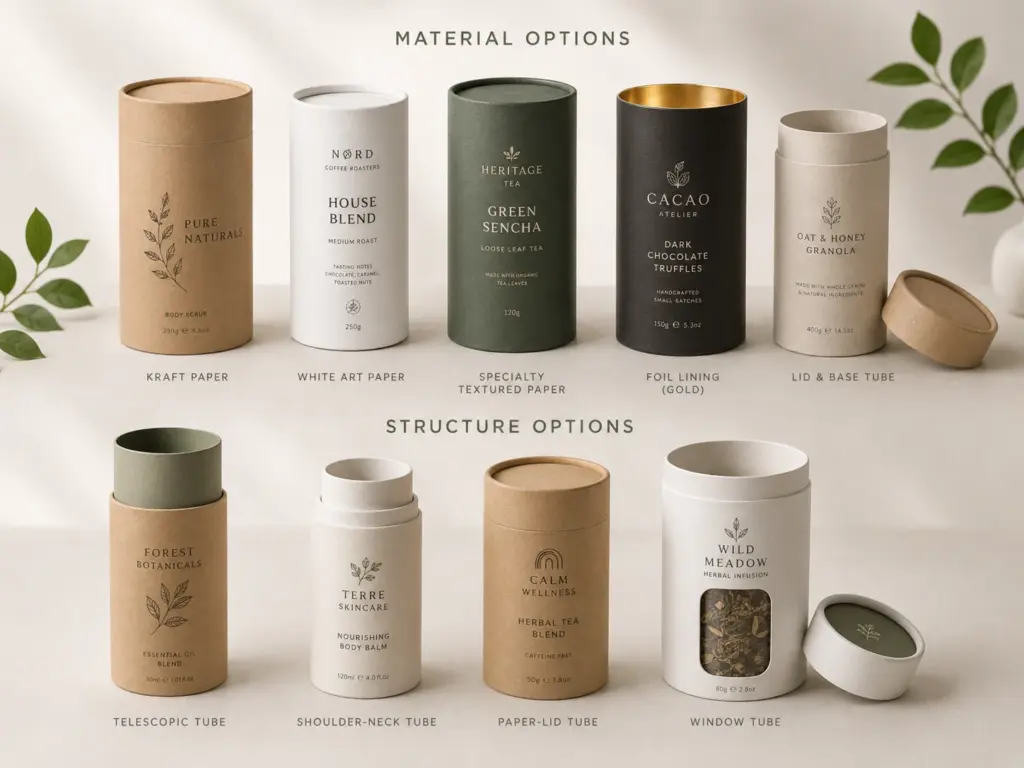
Material Options
The right material depends on the bottle weight, brand style, printing requirements, sustainability goals and target cost. Consequently, buyers should compare both visual appearance and technical performance before making a final choice.
Kraft paper
Kraft paper creates a natural, warm and environmentally conscious appearance. Organic skincare, aromatherapy and wellness brands often choose this option.
However, natural kraft paper changes the appearance of printed colors. Light colors may look darker or less vivid than they do on white paper. Therefore, request a printed sample before approving the final design.
White art paper
White art paper provides a smooth surface for CMYK artwork, Pantone colors, photographs and detailed illustrations. As a result, it works well for colorful retail packaging and modern cosmetic brands.
A matte, gloss or soft-touch finish can also protect the printed surface. In addition, the coating can improve resistance to scratches and fingerprints.
Black paper
Black paper creates a deep, minimalist and luxurious appearance. Brands can combine it with gold foil, silver foil, spot UV or embossing.
Nevertheless, black surfaces often show dust, fingerprints and scuff marks more easily. For this reason, your supplier should test the selected finish before mass production.
Specialty paper
Specialty paper adds texture, color and visual depth without excessive graphics. For example, brands can choose linen-textured, pearl, metallic, soft-touch or uncoated papers.
Meanwhile, the natural texture may influence foil stamping and fine printing. A physical sample helps you judge the final effect more accurately.
FSC-certified paper options
Brands that focus on responsible paper sourcing can request FSC-certified material options. However, the supplier should confirm the paper scope, certificate validity and logo-use requirements before printing any FSC claim.
Foil or barrier liner
A foil liner may provide additional moisture or aroma protection for certain applications. However, most essential oil tubes do not need direct-contact liners because the sealed bottle already contains the oil.
If the bottle may leak, improve the closure first. A foil liner may reduce visible staining, but it cannot repair an unreliable bottle seal.
Paperboard wall
Manufacturers normally build the tube body with spiral-wound kraft paperboard. Pack Packaging can supply different wall thicknesses according to the bottle weight, tube diameter and shipping conditions.
For example, a lightweight 10 ml bottle may need less reinforcement than a heavy multi-bottle gift set. Therefore, the engineering team should calculate the structure after reviewing the actual product.
Insert Options for Essential Oil Bottles
Honestly, the insert often determines whether the package feels secure or inexpensive. Buyers sometimes spend most of their time choosing foil colors and paper textures. However, customers will notice a loose bottle as soon as they pick up the tube.
Paperboard insert
A folded paperboard insert works well for brands that want a paper-focused structure. The supplier can die-cut the paperboard and add supporting tabs around the bottle.
Moreover, paperboard inserts reduce package weight and allow additional printing. Nevertheless, the structural designer must carefully test them with heavy glass bottles.
Molded pulp insert
Molded pulp gives the packaging a natural and tactile appearance. It can also hold the bottle securely while reducing the amount of plastic-based material.
On the other hand, molded pulp has a rougher surface than EVA or flocked foam. In addition, a custom shape may require dedicated tooling.
EVA or foam insert
EVA provides accurate bottle positioning and good shock absorption. Therefore, many premium essential oil and cosmetic brands choose it for glass bottles and gift sets.
However, EVA creates additional material-separation challenges during recycling. If recyclability forms part of your core brand message, compare EVA with paperboard or molded pulp before confirming the structure.
Flocked insert
A flocked insert creates a soft, jewelry-box-style presentation. Luxury perfume, skincare and essential oil gift sets often use this material.
Nevertheless, flocking increases material complexity and cost. Consequently, buyers should reserve it for projects where presentation carries more importance than simplified recycling.
Multi-bottle insert
A multi-bottle insert holds several oils inside one paper tube. This structure works particularly well for discovery kits, gift collections and aromatherapy sets.
However, the designer must consider the spacing between bottles, cap height and removal clearance. Finger notches or pull ribbons can make each bottle easier to remove.
Before approving any insert, ask the supplier to perform a physical fit test with the actual filled bottle. A digital drawing cannot fully predict glass tolerances, surface friction or removal force.
Structure Options
Most essential oil brands choose a two-piece or three-piece telescopic tube. Nevertheless, the best structure depends on the desired opening experience, bottle size and project budget.
Full telescopic tube
A full telescopic lid covers most or all of the base. As a result, the structure offers a clean appearance and protects a large area of the printed surface.
Partial telescopic tube
A partial telescopic lid leaves part of the base visible. Therefore, designers can use a contrasting color or printed band to highlight the opening line.
Three-piece tube with neck
This structure combines an outer base, an internal neck and a separate lid. The neck guides the lid and creates a smoother opening experience.
Moreover, the visible neck can introduce a second brand color. Many premium fragrance and skincare brands use this detail to increase the sense of ceremony.
Paper sleeve structure
A printed sleeve can slide over an inner tube or tray. In addition to creating a different opening movement, the sleeve provides more space for branding and product information.
Window tube
A die-cut window allows customers to see the bottle or label. However, a large window may reduce structural strength and limit light protection.
Some essential oils require dark glass bottles because light can affect product stability. Therefore, consider the bottle type and retail environment before adding a large transparent window.
Push-up and twist-up structures
Brands commonly use push-up and twist-up paper tubes for solid deodorant, lip balm and balm sticks. In contrast, these structures rarely suit a separate glass essential oil bottle.
For most dropper bottles, a telescopic tube with a fitted insert offers a more practical solution.
Printing & Finishing Options
Printing and finishing turn a basic tube into recognizable retail packaging. However, a premium design does not need every available process.
CMYK printing
CMYK printing works well for photographs, botanical illustrations, gradients and multi-color artwork. Therefore, it suits brands with detailed packaging designs.
Pantone printing
Pantone printing helps brands maintain more consistent spot colors. In particular, it works well for logo colors, minimalist graphics and large solid-color areas.
Hot foil stamping
Gold, silver, rose gold and holographic foil can highlight logos, borders or small decorative details. Nevertheless, large foil areas may show imperfections more easily. A controlled foil area often creates a more refined result.
Embossing and debossing
Embossing raises a selected design above the paper surface, while debossing presses it inward. Both processes add texture and encourage customers to touch the packaging.
For example, a blind-embossed logo on textured paper can create a quieter luxury effect than a large metallic logo.
Spot UV
Spot UV adds gloss to selected areas. As a result, brands can create contrast between matte backgrounds and glossy logos, patterns or product names.
Matte lamination
Matte lamination produces a smooth, low-glare surface. It also helps protect the print from light scratches during handling and transportation.
Gloss lamination
Gloss lamination creates a brighter and more reflective appearance. Therefore, it can strengthen colorful artwork and improve retail visibility.
Soft-touch finish
A soft-touch finish gives the tube a velvety texture. However, oil, dust and fingerprints may affect some soft-touch surfaces. For that reason, test the finish with the real product before confirming mass production.
Essential oils can also affect inks, coatings and adhesives if a bottle leaks. Consequently, brands should perform compatibility and storage tests with the finished packaging sample.
Compliance & Sustainability
Compliance requirements change according to the product category, packaging function and destination market. For example, authorities may treat an essential oil as a cosmetic, fragrance, food flavoring or household product depending on its formulation and marketing claims.
A standard paper tube normally acts as secondary packaging and does not touch the oil. Therefore, food-contact testing does not automatically apply to every essential oil tube.
Depending on the project, Pack Packaging can discuss the following options and documents:
- FSC-certified paper material options
- BRC- and IFS-related manufacturing documentation
- FDA-related material testing for applicable projects
- REACH and RoHS-related testing requirements
- MSDS or SDS documents for relevant materials
- EPR packaging information
- Paper traceability documentation
- Food-contact safety documents for relevant applications
However, brands should not place every certification logo on the packaging automatically. First, confirm the certificate scope, document validity and logo-use rules. Then, check whether the certification applies to the factory, material or finished packaging.
In addition, EUDR does not function as a simple product certification. It involves supply-chain information, risk assessment and due-diligence responsibilities for relevant products. Therefore, importers and suppliers should review material origin and traceability according to the specific paper product and destination market.
Clear and verifiable claims build more trust than a long row of unsupported certification logos.
Related Packaging Products
Custom essential oil paper tube packaging
Explore custom paper tube packaging for perfume, skincare, candles, gifts and promotional products.
Cosmetic Packaging
Discover custom rigid boxes and paper tubes for essential oils, serums, perfume and beauty products.
Food Packaging
View paper tube structures with suitable barriers and supporting food-packaging documentation.
How to Customize Essential Oil Paper Tube Packaging
A successful project starts with the actual bottle rather than the artwork. Therefore, follow these steps before confirming mass production.
1. Send the bottle specifications
First, provide the bottle diameter, total height, cap diameter and filled weight. In addition, send a technical drawing or physical bottle sample whenever possible.
Glass bottle dimensions may vary slightly between production batches. Consequently, the packaging team needs enough tolerance to prevent an overly tight fit.
2. Choose the packaging structure
Next, select the tube style, opening method, insert material and bottle position. For a gift set, confirm the number of bottles and all included accessories.
3. Select the materials
After that, choose the paperboard wall, outer wrapping paper and insert material. You should also tell the supplier about any FSC, food-contact or target-market requirements.
4. Prepare the artwork
Provide vector artwork in AI, PDF or EPS format. Moreover, place Pantone colors, foil areas, embossing and spot UV instructions on separate artwork layers.
5. Produce a sample
A plain structural sample allows you to check size, fit and bottle removal. In contrast, a fully printed sample helps you review color, foil, texture and the complete unboxing experience.
6. Confirm MOQ and lead time
The factory calculates MOQ according to the tube size, insert, printing process and finish. Therefore, send your target quantity during the quotation stage.
Production time also depends on the material, complexity and order volume. The factory will confirm the schedule after both sides approve the sample and artwork.
7. Complete essential oil paper tube packaging tests
Finally, test bottle insertion, removal force, cap clearance, drop resistance and shipping-carton stacking. If leakage creates a potential risk, perform compatibility tests with the actual essential oil and finished packaging.
Why Choose Pack Packaging?
Pack Packaging supports custom paper tube and paper box projects from structural design through mass production.
Our manufacturing capabilities include:
- 20,000㎡ packaging production facility
- 2,000㎡ food-grade production workshop
- Monthly capacity of more than 10,000,000 units
- A design and development team of more than 20 people
- Custom sizes, structures, inserts, printing and finishing
- OEM and ODM packaging support
- Structural and printed sample development
- Packaging solutions for cosmetic, fragrance, food and gift industries
More importantly, our team reviews the relationship between the bottle, insert and outer tube. We do more than place a logo on an existing cylinder.
As a result, brands can develop packaging that looks attractive, protects the bottle and works efficiently on the packing line.
Explore More Custom Packaging Solutions
Looking for more packaging options? Discover our complete range of custom packaging products designed for different industries and applications.
Folding Boxes – Lightweight and fully customizable cartons for retail packaging.
Rigid Boxes – Premium rigid gift boxes for luxury brands.
Corrugated Boxes – Durable shipping and e-commerce packaging solutions.
Child Resistant Boxes – Secure packaging for regulated products.
Accessories – Custom inserts, tissue paper, ribbons, labels, and more.
Paper Tubes – Explore our dedicated collection of custom paper tube packaging for tea, coffee, cosmetics, candles, spirits, and other premium products on our specialized website.
Need custom packaging? Contact our team today for a free quote and expert consultation.
Frequently Asked Questions
1. What information do you need for a quotation?
Please send the bottle dimensions, filled weight, order quantity, insert preference, artwork and destination market. In addition, a bottle photo or technical drawing will help our team understand the project.
2. Can you produce tubes for 10 ml and 30 ml dropper bottles?
Yes. Our team can create the diameter, height, lid depth and insert around your bottle. However, we recommend a physical fit test before mass production.
3. Which insert works best for a glass essential oil bottle?
EVA provides precise positioning and shock absorption. Meanwhile, folded paperboard and molded pulp support a more paper-focused structure. The best option depends on bottle weight, budget and sustainability goals.
4. Can the tube protect the package if the bottle leaks?
The tube provides secondary protection, but it cannot replace a reliable bottle seal. Therefore, test the dropper, cap and closure before approving the packaging.
5. Can you provide Pantone printing and gold foil?
Yes. We offer CMYK, Pantone, hot foil stamping, embossing, debossing, spot UV and different surface finishes. Moreover, our team can recommend combinations that suit your budget and design.
6. Do you offer FSC-certified paper?
Yes, we can discuss FSC-certified paper options. However, both sides should confirm the material scope, documentation and logo-use requirements before printing.
7. What is your MOQ?
MOQ depends on the size, structure, insert, printing process and finish. Therefore, send your target quantity so our team can recommend a cost-effective specification.
8. Can one essential oil paper tube packaging hold several essential oil bottles?
Yes. Our team can develop a multi-bottle insert for discovery kits and gift collections. Please send the dimensions and quantities of every bottle and accessory.
Start Your Custom Packaging Project
Premium essential oil paper tube packaging must feel secure before it looks beautiful. When the bottle fits correctly, the insert works smoothly and the surface finish supports the brand, customers notice the difference immediately.
Moreover, a well-planned structure can reduce product movement, packing problems and shipping damage. Therefore, involving the packaging supplier early can save both time and unnecessary sampling costs.