Tear strip mailer boxes can make an ecommerce delivery easier to open, but the opening feature deserves the same attention as board strength and print. A clean pull on a showroom sample does not tell a buyer whether a packed box will stay closed during dispatch, open predictably after transit, or remain usable for a return.
Для одежды, accessories and subscription brands, the buying decision is a sequence: seal the outbound order, protect it, guide the first opening, then provide a workable return closure if required. This guide explains what to specify and what to examine before approving a production order.

Define three functions before choosing the structure
The opening strip, outbound seal and return seal perform different jobs. A tear strip guides the customer through a planned opening path. An adhesive closure keeps the dispatch flap attached. A spare closure gives the customer a fresh bonding area after the first opening. One feature does not automatically provide the others.
Write down whether the project needs easy access only or an outbound-and-return workflow. Also identify who packs the order, what the customer removes, and whether inserts must go back inside. A returns-friendly structure needs enough usable flap and undamaged board after opening, not simply an extra adhesive line.
FEFCO describes tear-off opening systems and resealable return features in its ecommerce packaging overview. These are available design approaches, rather than evidence that every box using them will perform equally. Evaluate the proposed construction with your actual product and packing method.
Specify the box around the packed product
Start with the complete order: product, retail pack, protective insert, tissue and documents. Check your largest intended combination as well as a smaller order. Excess empty space can let contents move, while an overfilled mailer can push against the lid and closure area.
For tear strip mailer boxes, internal fit also affects opening. A bulky garment or raised insert should not press against the removable band. Keep the pull path clear of product edges and loose wrapping. Record internal dimensions and agreed tolerances using the principles in our corrugated box dimensions guide.
Document the base style and the added features
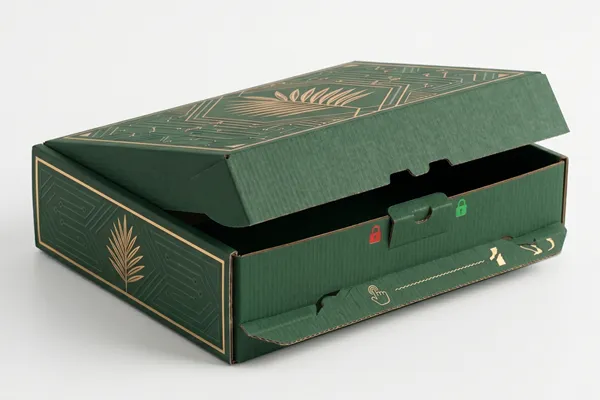
The FEFCO design code provides a common language for corrugated box constructions. Use a suitable reference where applicable, together with a dimensioned drawing. The drawing should identify opening direction, pull-tab position, adhesive zones and the board remaining after the strip is removed.
Ask the supplier to explain whether the opening uses board perforations, a reinforcing tear tape, or another construction. Confirm the materials separately. A paper exterior does not establish that every adhesive, liner or opening component is paper, plastic-free or suitable for every recycling system.
Evaluate opening with unfamiliar users
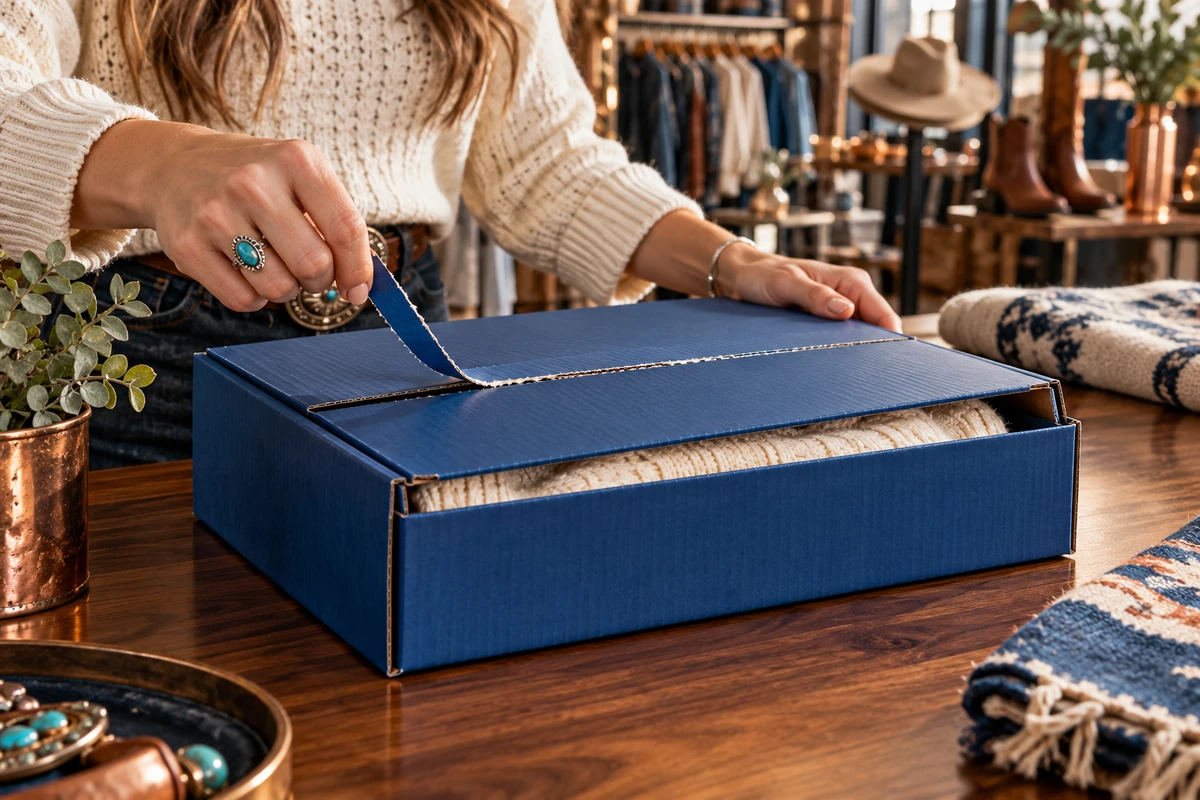
A designer already knows where to pull. A first-time recipient does not. Hand a sealed, packed sample to someone who has not seen the assembly process. Observe whether they find the tab, choose the intended direction and complete the opening without tools or extra instructions.
An easy open corrugated mailer should make the starting point discoverable. Inspect tab clearance, grip space and the printed opening cue. Avoid hiding the tab beneath a shipping label or placing decorative graphics where they obscure the intended path. Keep essential information outside the removable band.
Record failure modes, not just a successful video
A useful tear strip opening test records a broken tab, a strip that separates early, a tear that travels into the lid, and excessive effort. Check different samples rather than opening the same revised prototype repeatedly. Where a measured force matters, agree the method and acceptance limits with a qualified testing provider.
Do not invent a universal pull-force target. Вес продукта, доска конструкция, opening length and user needs differ. Your acceptance plan should explain what a successful opening looks like and what makes a sample unacceptable. Include people with different grip preferences; one confident operator is not a complete usability assessment.
Approve the outbound seal independently
A peel and seal mailer box can simplify the packing sequence, but the adhesive must match the specified contact surface and handling conditions. Ask for application instructions, required pressure, storage guidance and any relevant supplier data. Check adhesion on the final printed and finished board, not only an unprinted sample.
For tear strip mailer boxes, inspect whether the sealed flap lies flat, whether the adhesive lands fully on its intended area, and whether side gaps expose the contents. Record how the liner is removed and disposed of at the packing station. A curled flap or misaligned strip can make an otherwise attractive design awkward to pack consistently.
Agree transit validation for the complete packed order and distribution route. Opening convenience does not replace transport protection. Наш corrugated box testing guide explains why buyers should distinguish different test purposes. Any claimed test result must identify the tested construction and conditions.
Walk through the actual return process
Return ready ecommerce packaging should work after a realistic first opening. Remove the outbound strip, take the product out, put it back with the required protection, and close the pack using the intended return method. Check whether the remaining flap reaches the bonding area without stretching or forcing the box.
On a dual adhesive strip mailer, the spare liner should remain protected during outbound packing and first opening. Confirm that the customer can distinguish the return strip from the dispatch strip. Review simple instructions and make clear which parts must stay with the box.

DHL eCommerce’s return packing guidance allows the original box or another sturdy box and calls for closing the parcel with tape or adhesive tape. An integrated return seal is therefore a design option to validate, not a universal carrier requirement or a guarantee of delivery performance.
Plan a return shipping label area that does not cross the opening band. Confirm the merchant and carrier process for replacing or obscuring obsolete routing information. Review the final label position alongside our packaging barcode approval checklist; decorative printing should not compete with essential routing information.
Compare quotations on the same specification
A custom printed return mailer quotation should identify dimensions, доска конструкция, печать, обработка поверхности, opening components and closure configuration. Ask which operations and materials the price includes. Also clarify packing quantities and how flat blanks are protected in storage and transport.
Do not assume a second seal has no effect on cost or production planning. Compare equivalent constructions before judging unit price. If the project requires a target quantity, delivery window or certification document, ask for current confirmation for that order rather than relying on a generic website claim.
For tear strip mailer boxes, sample approval should capture both appearance and function. Keep a signed reference sample, the drawing revision and the agreed opening and sealing observations. A later change in liner, клей, board or finish should trigger a review of the affected functions.
Use a practical sample approval checklist
- Confirm product clearance and the intended corrugated mailer closure design.
- Record opening direction, tab access and the remaining return flap.
- Check outbound seal contact on the finished board surface.
- Run the first-opening and repacking sequence with unfamiliar users.
- Review labels, instructions and protection after the opening strip is removed.
- Agree a relevant validation plan and documented acceptance criteria.
This mailer box sample approval checklist is a purchasing aid, not a certification or a substitute for a defined test protocol. Set the sample quantity and acceptance rules with the supplier before the review. Preserve failed samples and photographs so corrections address the observed problem.
Frequently asked questions
Does a tear strip also seal the mailer?
Не обязательно. The opening path and the closure are separate functions. Confirm how the outbound flap bonds and what remains after opening.
Can the same mailer be used for a return?
Potentially, if its condition, remaining structure and closure suit the return shipment. Validate opening, repacking and resealing with the actual product.
Are these boxes tamper-proof?
No opening feature proves that claim by itself. If visible opening evidence matters, define the required behavior and examine the complete closure system.
Should the opening strip be paper or reinforced tape?
Compare the proposed constructions on function and material documentation. Ask what the reinforcement, adhesive and release liner contain before making environmental claims.
Can artwork cover the pull tab?
Graphics may surround it, but the starting point must remain clear. Review the final print and shipping label together so the tab stays accessible.
What should a buyer send for a quotation?
Send packed-product dimensions, order combinations, destination routes, artwork and the required opening and return sequence. Request confirmation of the proposed specification.
Develop a mailer around your opening and return workflow
When sourcing tear strip mailer boxes, bring the packed product and customer journey into the sample review. Изучите наш custom corrugated boxes and share your opening, sealing and return requirements with Pack Packaging. Ask for a proposed structure, material breakdown and sample validation plan before committing to production.