Let’s start with something a bit uncomfortable. Shoppers have grown genuinely sceptical about green claims — and honestly, who can blame them? They’ve seen too many plastic tubs with a leaf logo printed on the side.
So here’s why paper packaging still cuts through that scepticism: people can feel it. They pick it up, they hear the difference, they notice there’s no plastic tray inside. It’s evidence they can hold, rather than a claim they have to trust. But — and this matters enormously — only if the story behind it holds up when someone checks.
🔘 [Get Custom Packaging Quote →]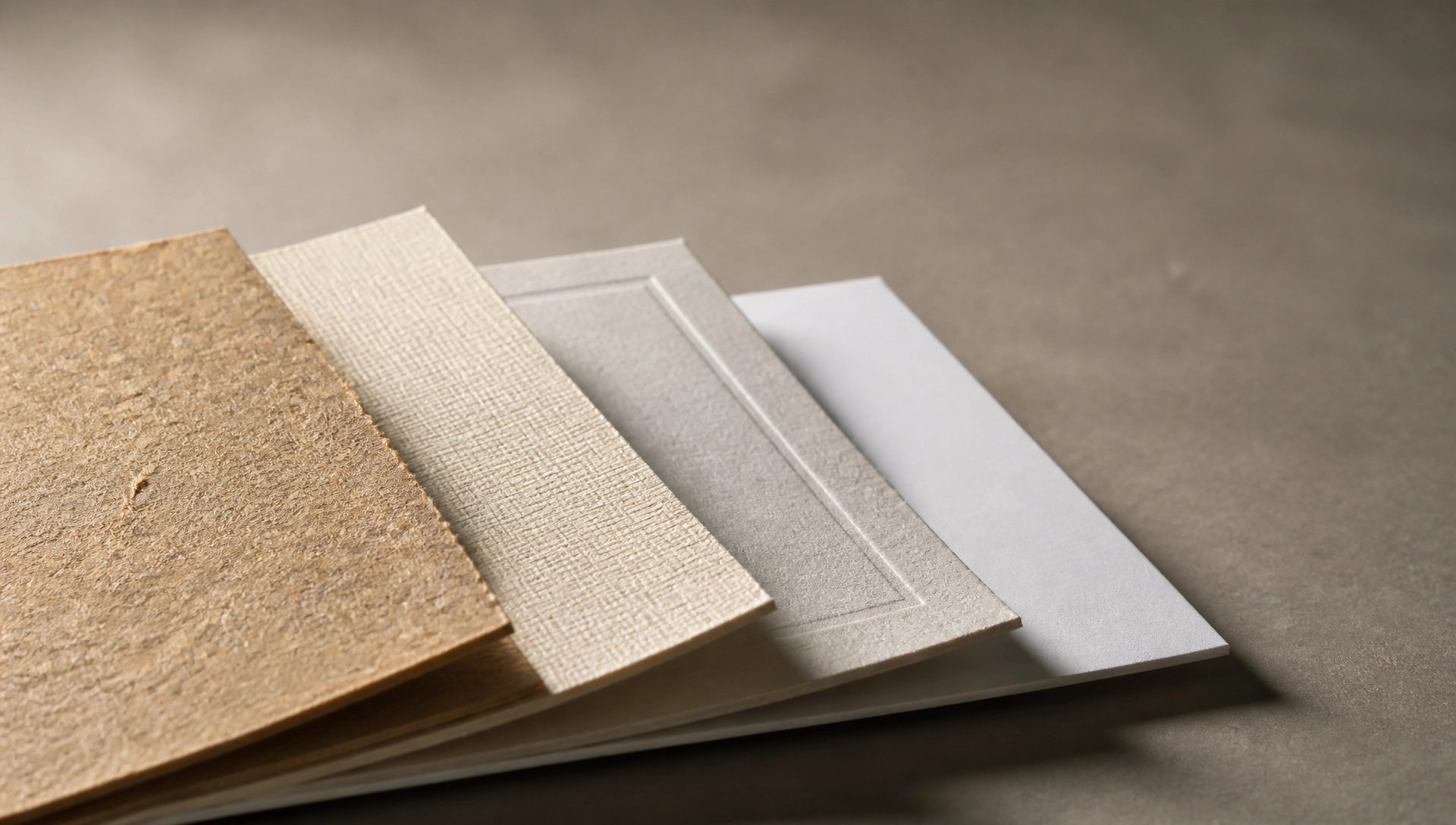
Why Paper Packaging Shapes Brand Perception
It Communicates Before Anyone Reads a Word
Texture, weight, and sound all register instantly. Uncoated kraft signals something quite different from glossy plastic, and shoppers process that in about a second — well before they read your sustainability blurb.
It Turns an Abstract Claim Into Physical Proof
Saying “we care about the planet” costs nothing. Meanwhile, switching to paper packaging costs real money and shows up in the customer’s hands. That asymmetry is exactly why it reads as credible rather than performative.
It Improves the Unboxing Moment
E-commerce shoppers photograph and share unboxing. Consequently, a clean fibre-based reveal generates far better user content than a pile of bubble wrap and plastic trays.
But It Only Works If the Substance Matches
Here’s the catch though. A kraft box with a plastic window, foam insert, and polybag mailer undermines itself. So the perception benefit depends entirely on whether the whole package tells one consistent story.
What Shoppers Actually Notice
Touch and Weight
Uncoated stock feels warmer and more tactile than film-laminated board. Additionally, a slightly heavier board reads as considered rather than cheap.
Visible Material Honesty
Exposed kraft fibre, a pulp insert, or a paper tape seal all read as genuine. Conversely, a fibre outer hiding plastic components reads as a cover-up once discovered.
The Absence of Plastic
Interestingly, people often notice what isn’t there. No crinkle of film, no foam tray, no plastic zipper. That absence registers strongly.
Consistency Across the Range
One eco SKU among ten plastic ones looks like marketing. However, a whole range in paper packaging looks like a decision — and shoppers read that difference easily.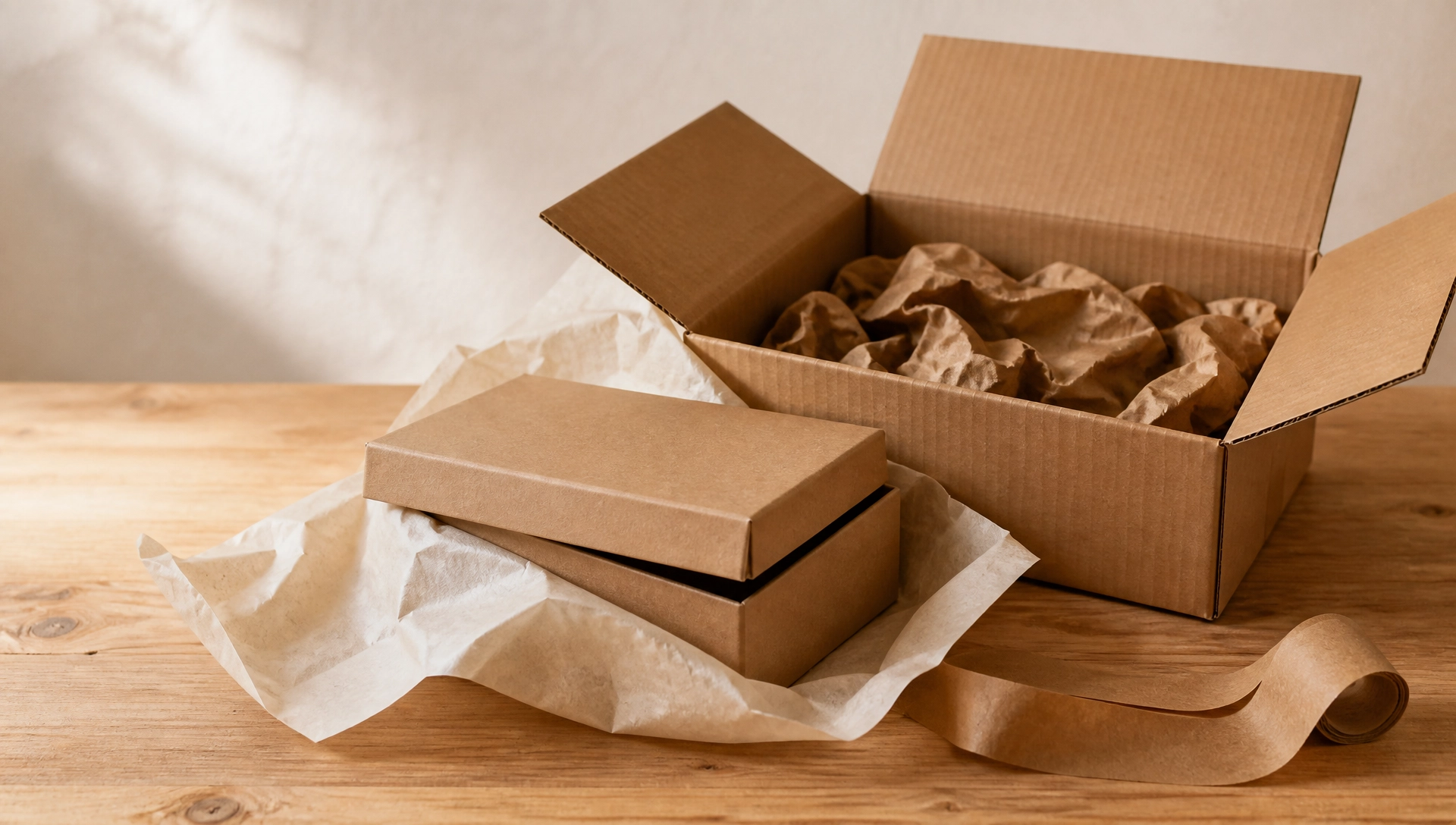
Common Applications Across Categories
Beauty and Skincare
Cartons, rigid boxes, and paper tubes for serums, balms, and solid formats. Our guide on Plastic-Free Packaging Ideas for Cosmetics and Skincare covers this category in depth.
Tea, Coffee and Snacks
Kraft tubes and cartons for speciality food brands. Barrier requirements complicate things here, so read Sustainable Food Packaging for Tea, Coffee and Snacks before finalising a structure.
Perfume and Fragrance
Rigid boxes with pulp cradles replace vac-form trays. Furthermore, the tactile reveal genuinely suits prestige positioning.
Candles and Home Fragrance
Kraft telescopic tubes and gift boxes. These convert to paper packaging with almost no technical friction.
Supplements and Wellness
Cartons and tubes around sealed inner packs. Meanwhile, the fibre outer carries the clean-label story.
Apparel and Accessories
Mailers, folding cartons, and tissue. Frankly, this is the easiest category of all — no barrier requirement whatsoever.
Gifting and Subscription Boxes
Where presentation drives the entire experience. Therefore, moulded pulp and paperboard inserts do genuine brand work here.
Material Options That Support the Story
Kraft Paper
Unbleached and visibly natural. It reads as honest instantly, and it suits artisan, wellness, and clean-beauty positioning particularly well.
Recycled Board
Visible flecks and speckles signal recycled content without a word of copy. So the material itself does the communicating.
Art Paper and Coated Board
Smooth and highly printable for photographic artwork. However, standard lamination complicates recyclability — so consider aqueous coating where the finish is decorative.
Specialty and Textured Paper
Linen, felt, and embossed stocks deliver luxury feel without soft-touch film. Consequently, premium brands can drop lamination without dropping perceived quality.
Moulded Pulp
Replaces EVA foam and vac-form trays. Additionally, its rough organic texture contrasts beautifully against glass and metal components.
Food-Grade and Barrier Liners
Where products need protection, a separable liner keeps the outer paper packaging clean and recyclable. Honest construction beats a compromised single layer.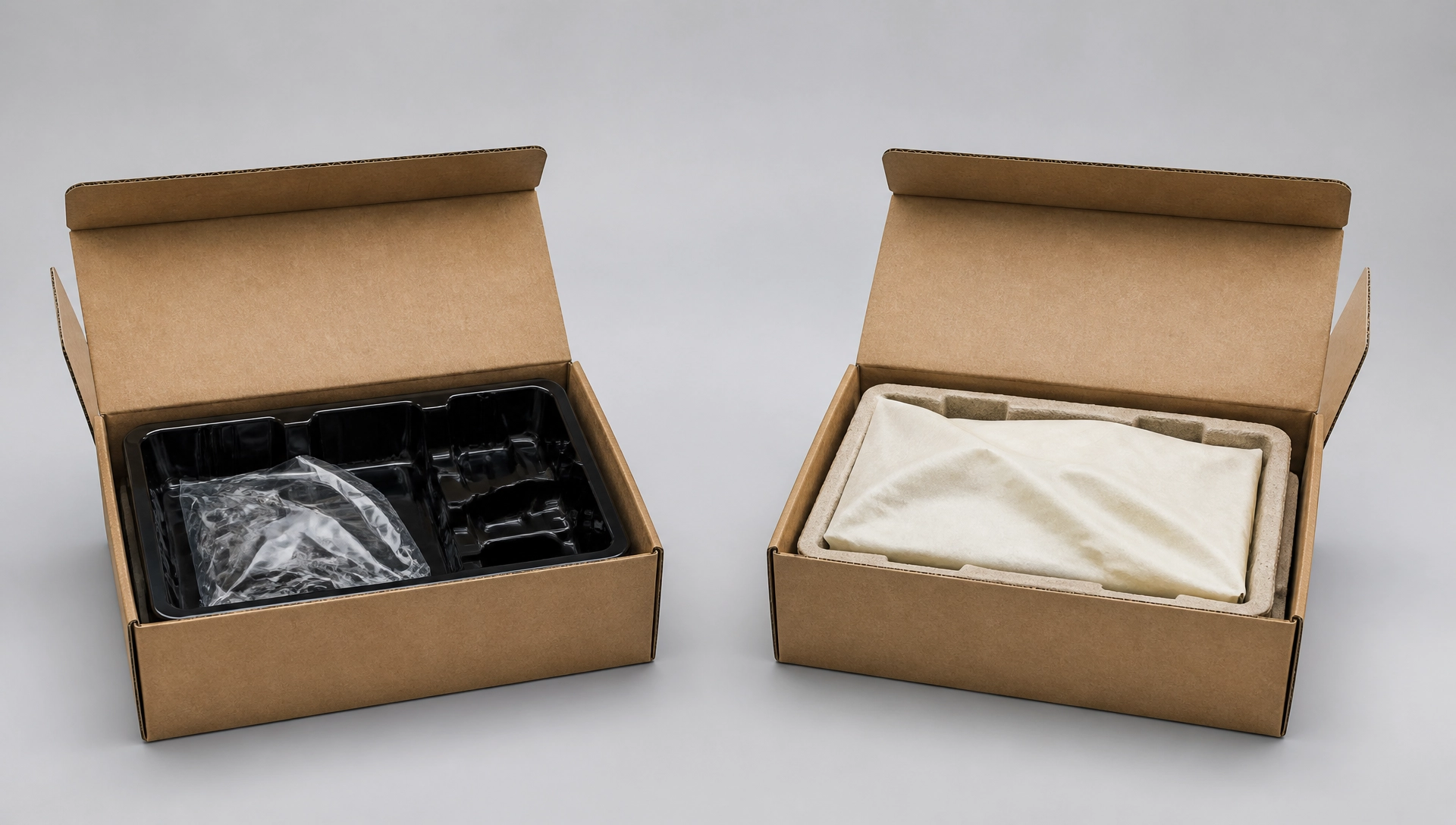
Structure Options That Reinforce the Message
Folding Cartons
Folding cartons with tuck-end or auto-lock closures. Efficient, flat-packed, and endlessly customisable.
📦 Related Products: Custom Paper Tubes / Food Packaging / Cosmetic Packaging
Rigid Boxes
Rigid boxes with lid-and-base or magnetic closure. They carry weight and gravitas, which matters for prestige ranges.
Paper Tubes
Cylindrical kraft tubes stand out on shelf precisely because most competitors use cartons. See Biodegradable Paper Tube Packaging for construction detail.
Sleeves and Telescopic Builds
A sleeve lets multiple SKUs share one base. Meanwhile, telescopic builds add a satisfying two-stage reveal.
Windows
Film windows add plastic. Alternatively, open die-cut windows deliver the same reveal with none — provided the product sits in a sealed inner pack.
Inserts
Die-cut paperboard, layered corrugated, or moulded pulp. So your insert reinforces the story instead of quietly contradicting it.
The Shipping Layer
Corrugated boxes with paper tape and paper void fill. Because the mailer is genuinely part of the brand experience now.
Printing and Finishing Without Undermining the Claim
Print Methods
- CMYK offset or digital — Full-colour artwork with no material implication.
- Pantone matching — Consistent brand colour across every production run.
- Screen printing — Vivid opaque ink, ideal on kraft and specialty stock.
Finishes That Reinforce the Story
- Embossing and debossing — Purely mechanical, zero added material, strong tactile signal.
- Hot stamping — Small metallic accents lift perceived value considerably.
- Aqueous coating — Water-based protection instead of plastic film.
Finishes to Reconsider
- Matte and gloss lamination — Plastic film. It protects well, but it complicates the story and the recycling route.
- Soft-touch lamination — Lovely to handle, though textured specialty paper achieves something similar without film.
- Spot UV — Fine in targeted areas; worth reviewing the coating chemistry.
Less Design Often Reads as More Credible
Here’s a counterintuitive point. Restrained one- or two-colour print on uncoated paper packaging frequently signals authenticity more effectively than full-bleed photographic artwork. So the sustainable choice and the premium choice increasingly point the same direction.
Compliance: The Evidence Behind the Image
Why Documentation Protects Your Brand
A green image without evidence is a liability. Regulators, retailers, and journalists all check now. Therefore, treat compliance documentation as part of your brand asset, not an admin chore.
Certifications Worth Holding
- FSC — Certified fibre sourcing with chain of custody. See FSC Certified Paper Packaging for label types and verification.
- BRCGS Packaging Materials — Currently Issue 7, frequently requested by major retailers.
- IFS Food and IFS PACsecure — Relevant for food-contact applications.
- Food contact safety — EU Regulation 1935/2004 plus GMP under Regulation 2023/2006.
Regulations Already in Motion
- PPWR — Applies from 12 August 2026 across the EU.
- EUDR — 30 December 2026 for large and medium operators; 30 June 2027 for micro and small operators.
- EPR — National registration and fees per market. See EPR Packaging Compliance.
Wording Claims Safely
The FTC’s Green Guides caution against broad unqualified environmental claims. Meanwhile, the European Commission has proposed a green claims law targeting greenwashing — still a proposal, but a clear signal of direction. So say “plastic-free outer carton” rather than “eco-friendly,” and read our Recyclable Paper Packaging guide on claim wording.
How to Customize: Steps 1–3
Step 1: Audit What Your Current Packaging Says
First, look honestly at every component. Which parts support your intended image, and which quietly contradict it? Usually the insert and the mailer are the culprits.
Step 2: Decide How Far the Story Goes
Next, choose your scope — full fibre construction, or fibre outer with a separable functional liner. Both work commercially. However, only one of them supports an unqualified claim.
Step 3: Choose Structure and Material
Then send us your product dimensions, weight, category, and positioning. We’ll recommend the paper packaging construction that fits both the protection requirement and the brand impression you want.
How to Customize: Steps 4–6
Step 4: Artwork and Finish
Send your logo in AI, EPS, or high-res PDF with Pantone codes. Meanwhile, we’ll flag any finish that would weaken your sustainability position and propose an alternative.
Step 5: Sample and Test
Always test with the real product. Fats, oils, fragrances, and moisture interact with fibre over time — so an empty sample tells you very little about real-world performance.
Step 6: MOQ, Lead Time and Documentation
MOQ typically starts at 500–1,000 units depending on structure. Folding cartons take roughly 15–20 days; rigid boxes and tubes take 25–35 days after sample approval. We supply material specifications and certification documents alongside delivery.
Why Choose Pack Packaging
Manufacturing Capability
- 20,000㎡ factory — Full in-house production from die-cutting through finishing, so we control quality at every stage.
- 2,000㎡ food-grade workshop — A dedicated food-safe environment for edible and contact-sensitive products.
- 10,000,000+ monthly capacity — We scale from a 5,000-unit launch to millions without changing supplier.
Design and Evidence
- 20+ in-house designers — Never outsourced. Structural development, insert engineering, and print-ready artwork.
- Documentation you can publish — Material specifications, component weights, and certification records that support your paper packaging claims under scrutiny.
- FSC-certified materials — With chain of custody support through production.
- 60+ export markets — Incoterms and customs handled daily.
A Straight Word
We won’t help you build an image your packaging can’t support. If a component needs plastic for the product to survive, we’ll tell you — and then design the structure so that component separates cleanly, and word the specification so your claim stays defensible.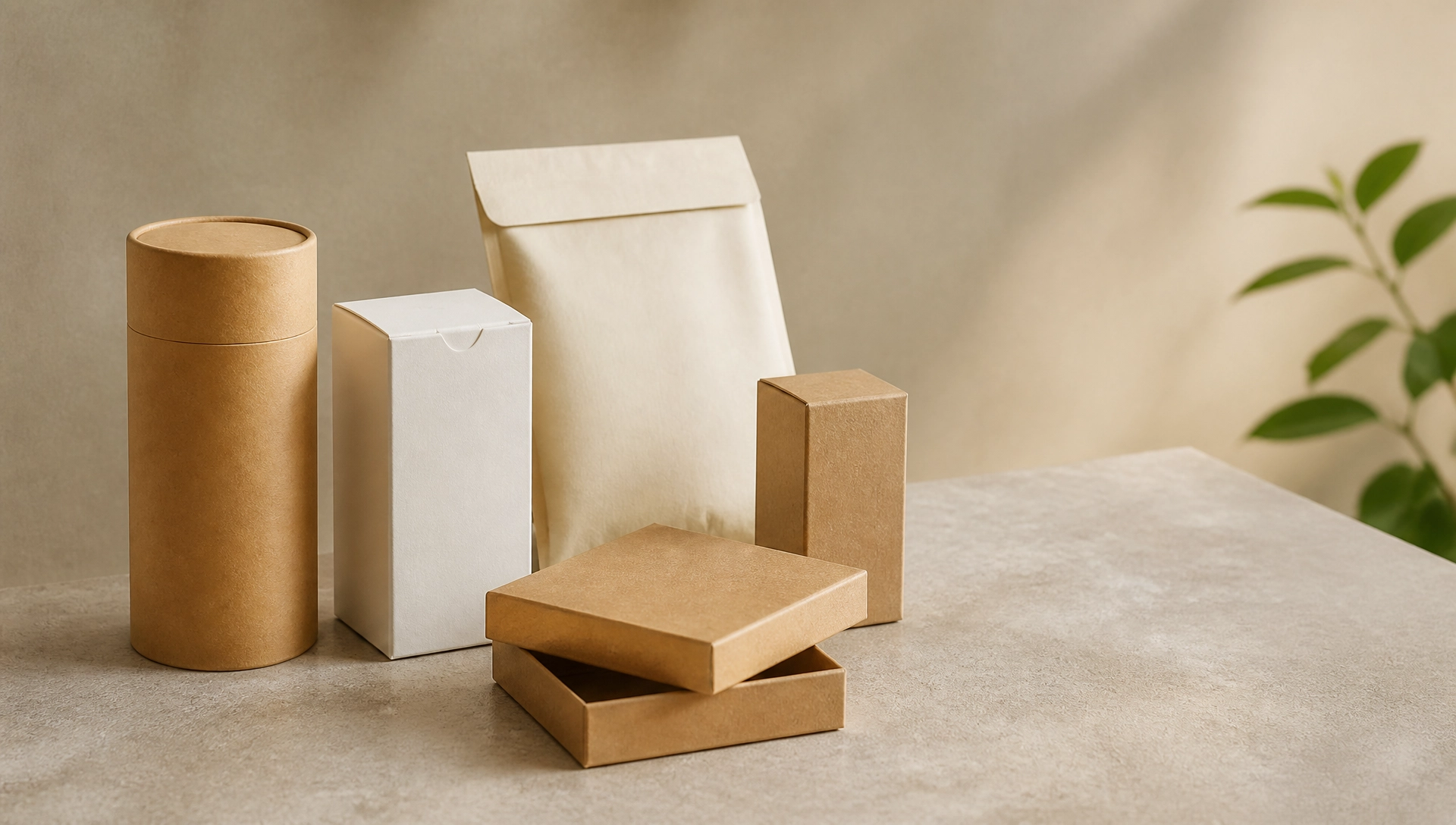
FAQ: Brand Image and Perception
Q1: Will switching to paper packaging actually change how customers see us? It contributes, though it isn’t magic on its own. Physical evidence lands harder than copy — but only when the whole package is consistent. A fibre outer hiding foam inside tends to backfire once someone opens it.
Q2: Does kraft look too cheap for a premium brand? Not anymore. Uncoated and textured stocks have become a prestige signal in beauty and speciality food particularly. Furthermore, embossing and hot stamping add perceived value without any plastic film.
Q3: Should we announce the switch publicly? Yes, but describe it precisely. “Our outer cartons are now FSC-certified and plastic-free” beats “we’ve gone green.” Specific claims survive scrutiny; vague ones invite it.
Q4: What if only part of our range can convert? Convert what you can and say exactly that. Honestly, phased transitions read as credible — brands claiming everything changed overnight tend to attract more suspicion, not less.
FAQ: Practical and Commercial
Q5: Is paper packaging more expensive than plastic? It depends on structure and volume. Removing lamination reduces cost, while moulded pulp tooling adds upfront investment. Overall, the difference is usually smaller than brands expect.
Q6: What documentation should we ask our supplier for? Request material specifications, component weights, FSC chain of custody records, and food-contact declarations where relevant. Additionally, you’ll need component weights anyway for EPR registration.
Q7: Can paper packaging protect fragile products properly? Yes, with correct board weight and insert design. Moulded pulp and layered corrugated protect glass very effectively. Nevertheless, always run transit testing with the real filled product.
Q8: What do you need to start a quotation? Send your product dimensions, product use, quantity, target market, and logo file. Then we’ll recommend the right paper packaging structure, material, and finish for your brand.
Related Guides
Building a credible green brand image touches several connected decisions. So we’ve covered each separately:
- This guide — Why the switch changes perception, and how to keep the claim credible.
- Sustainable Food Packaging for Tea, Coffee and Snacks — Protecting flavour while reducing impact.
- Plastic-Free Packaging Ideas for Cosmetics and Skincare — Removing plastic across a beauty range.
- FSC Certified Paper Packaging for Eco-Conscious Brands — Proving where your fibre came from.
- Recyclable Paper Packaging: What Global Brands Should Know — Whether your pack enters a recycling stream.
- EPR Packaging Compliance for Brands Selling to the EU — What you register and pay per market.
In sequence, they cover: why switch, how per category, where the fibre came from, what happens after use, and what you must file.
Explore More Custom Packaging Solutions
- Folding Boxes — Lightweight, fully customisable retail cartons.
- Rigid Boxes — Premium gift boxes for prestige ranges.
- Corrugated Boxes — Durable e-commerce and shipping packaging.
- Child Resistant Boxes — Secure packaging for regulated products.
- Accessories — Custom inserts, tissue paper, ribbons, and labels.
- Paper Tubes — Our dedicated collection for beauty, candles, tea, and coffee.
Ready to Build a Greener Brand Image?
A greener image isn’t something you announce. It’s something customers conclude — after they’ve held the box, opened it, and found nothing inside that contradicts the message. And that conclusion forms in seconds, long before anyone reads your sustainability page.
So get the paper packaging right, document it properly, and describe it accurately. The perception tends to follow on its own.
Tell us your product size, quantity, logo file, and target market. Our team will then recommend the right structure, material, and finish — plus the documentation to back up every claim you make.
✉️ [Send Us Your Brief → Get a Custom Quote in 24 Hours] Include: product dimensions · quantity · target market · logo file
Pack Packaging | 20,000㎡ Factory | 2,000㎡ Food-Grade Workshop | FSC Certified Materials | 60+ Export Markets
Disclaimer: This guide offers general commercial information about paper packaging and brand positioning, reflecting publicly available regulatory sources as of August 2026. It does not constitute legal or marketing-compliance advice. Environmental claim rules differ by market and continue to evolve. Therefore, confirm your specific wording with a qualified advisor before publishing any environmental claim.