انتقل إلى المحتوى
Folding cartons are one of the most widely used packaging solutions for retail products, offering a balance of protection, printability, and cost efficiency. From cosmetics and food products to pharmaceuticals and consumer goods, brands use folding cartons to create functional packaging while improving shelf presentation.
PK Packaging provides custom folding carton solutions with flexible options for materials, structures, الطباعة, and finishing. This guide compares key carton types and specifications to help brands choose the right packaging solution.
What Are Folding Cartons?

Folding cartons are paperboard containers that ship flat and are folded into a box just before use. This design saves significant space and reduces logistics costs.
Core Definition and Structure
A folding carton is a paperboard package that is produced flat and assembled during the filling process. Pre-scored lines and die-cut features allow the carton to be folded into its final shape, reducing storage space and transportation costs compared with pre-assembled packaging.
Folding cartons are widely used for retail products, including cosmetics, food, pharmaceuticals, and consumer goods. Brands can customize carton structures, paperboard grades, printing methods, and finishing options to meet product protection, presentation, and branding requirements.
Common Materials
Folding cartons are produced using different paperboard grades selected based on strength, print quality, appearance, and cost requirements. Common materials include Solid Bleached Sulfate (SBS), Folding Box Board (FBB), and Coated Recycled Board (CRB).
Premium products often use SBS for its smooth surface and excellent print performance, while recycled boards provide an option for brands seeking more sustainable packaging solutions. The appropriate board grade and thickness depend on the product weight, packaging structure, and required level of protection.
Key Functions in the Supply Chain
In the supply chain, folding cartons serve several critical roles:
- Protection: They shield products from dust, scratches, and minor impacts during transport and handling.
- Branding: The structure provides a printable surface for branding, detailed product information, and essential regulatory compliance text.
- Containment: They contain and group single or multiple items, making retail display and sales more efficient.
- Automation: They are designed for compatibility with both manual assembly and high-speed automated packing lines.
Primary Industry Applications
You can find folding cartons in almost every aisle of a store. Their primary applications are concentrated in several key industries:
- Food and Beverage: Cereal boxes, snack packaging, and boxes for various dry goods.
- Pharmaceuticals and Healthcare: Packaging for over-the-counter medicine and many medical devices.
- Cosmetics and Personal Care: Boxes for perfume, skincare products, and other beauty items.
- Consumer Goods: Packaging for electronics accessories, toys, and countless household items.
How Are Folding Cartons Made?
Manufacturing turns flat paperboard into retail-ready boxes through a precise sequence of design, الطباعة, cutting, and folding, all optimized for high-speed production and flat shipping.
Structural Design and Prepress
Before any ink touches paperboard, the carton exists as a digital blueprint. This initial phase defines both the structural integrity and visual layout of the final package, ensuring everything aligns perfectly after production.
- The process begins by creating a 2D structural layout, or dieline, which maps out every cut line, crease, and glue flap needed to form the box.
- Graphic designers then place all artwork, branding, and regulatory text directly onto this dieline to guarantee correct alignment after the carton is folded.
- Finally, prepress teams prepare these files for manufacturing by creating the necessary printing plates and generating proofs for a final client review.
Printing and Finishing
Once the design is approved, large sheets of paperboard are printed with the artwork. Printing and finishing determine how the carton looks on the shelf. Brands can choose from different options, including offset printing, matte or gloss coatings, ختم احباط, النقش, and other decorative treatments. The right combination depends on the product category, target market, and desired price positioning.
- Paperboard sheets are printed using offset lithography for high-volume, high-quality runs or digital printing for smaller quantities and variable data.
- After printing, finishing treatments like aqueous coatings, lamination, or UV varnish are applied to protect the ink from scuffing and improve the carton’s look and feel.
- Special effects such as foil stamping or embossing can be added to create a premium, tactile experience that helps the product stand out.
Die-Cutting and Creasing
This is the converting step where the printed flat sheets are physically transformed into carton blanks. A custom tool, known as a die, acts like a large, precise cookie cutter to define the carton’s shape and fold lines.
- The custom-made die, which contains sharp steel rules for cutting and dull rules for creasing, is mounted into a press.
- In a die-cutting press, the die is pressed with immense force into the printed paperboard sheet, simultaneously cutting the carton’s outline and scoring the fold lines.
- This single action transforms the large printed sheet into a series of precisely cut but still interconnected carton blanks.
Waste Stripping and Blank Separation
After die-cutting, the excess paperboard material must be removed to isolate the individual carton blanks. This mechanical “cleanup” stage is critical for preparing the cartons for the final folding and gluing process.
- The excess paperboard surrounding the cartons, known as the waste skeleton, is mechanically removed in a process called stripping.
- This separates the individual, flat carton blanks from the waste material, leaving them ready for the next step.
- The flat blanks are then counted and stacked, preparing them for the final converting stage.
Folding and Gluing
This is the final manufacturing step where the flat blanks are converted into collapsed boxes. High-speed machinery automates the folding and gluing process, resulting in cartons that ship flat to save on freight and storage space.
- The flat blanks are fed into a folder-gluer machine, where adhesive is precisely applied to the designated glue flaps or manufacturer’s joint.
- A series of belts and guides fold the blank along its pre-creased lines into its final collapsed shape, such as a flat tube for a standard tuck-end box.
- The finished cartons are then packed into cases and shipped flat, which optimizes storage and freight costs for the end user.
Need Custom Folding Carton Solutions?
What Materials Are Used for Folding Cartons?
Folding cartons primarily use single-ply paperboard from 250–400 gsm. The specific material choice balances print quality, strength, cost, and sustainability goals for the final product.
Primary Paperboard Substrates
Most folding cartons are made from single-ply paperboard with a weight between 250 and 400 grams per square meter (gsm). The core options vary based on the desired finish and performance.
- Solid Bleached Sulfate (SBS) is a premium virgin fiber board known for its bright white surface. Its excellent print quality makes it ideal for high-end applications like cosmetics and pharmaceuticals.
- Coated Unbleached Kraft (CUK/CKB) provides superior strength and durability. Brands choose it when product protection is more critical than achieving a pure white finish.
- Folding Boxboard (FBB) offers a balanced combination of good stiffness and printability. It is a versatile and widely used material for general retail packaging.
Virgin vs. Recycled Fiber Boards
The choice between virgin and recycled fiber comes down to a trade-off between aesthetics, cost, and sustainability. Virgin fiber boards deliver the highest consistency, brightness, and print fidelity, making them the standard for premium retail graphics. In contrast, recycled paperboard like Coated Clay Newsback (CCNB) provides a cost-effective and more sustainable alternative for non-food items or packaging that isn’t heavily reliant on graphics. The final selection depends on balancing these priorities.
Strength-Oriented and Specialty Boards
When standard paperboard isn’t tough enough, brands turn to specialty options. Kraft-based paperboards are selected for their high tear resistance, durability, and natural brown aesthetic. For products that need extra rigidity and crush resistance, like heavier consumer electronics, manufacturers use micro-flute corrugated board. These stronger materials provide enhanced protection during shipping and handling.
Coatings and Laminations for Enhanced Performance
The surface of a paperboard can be modified to add specific functional or aesthetic properties. These additions are critical for performance and shelf appeal.
- Gloss or matte coatings are applied to improve the carton’s appearance and protect the printed surface from scuffs and abrasions.
- Barrier coatings add resistance to moisture, grease, or oxygen, a crucial requirement for many food and pharmaceutical applications.
- Foil laminations create a premium metallic finish that enhances visual impact on the shelf, helping products stand out.
- Plastic windows can be added for product visibility. They can, however, complicate the recycling process unless designed for easy separation from the paperboard.
What Are the Main Types of Folding Cartons?
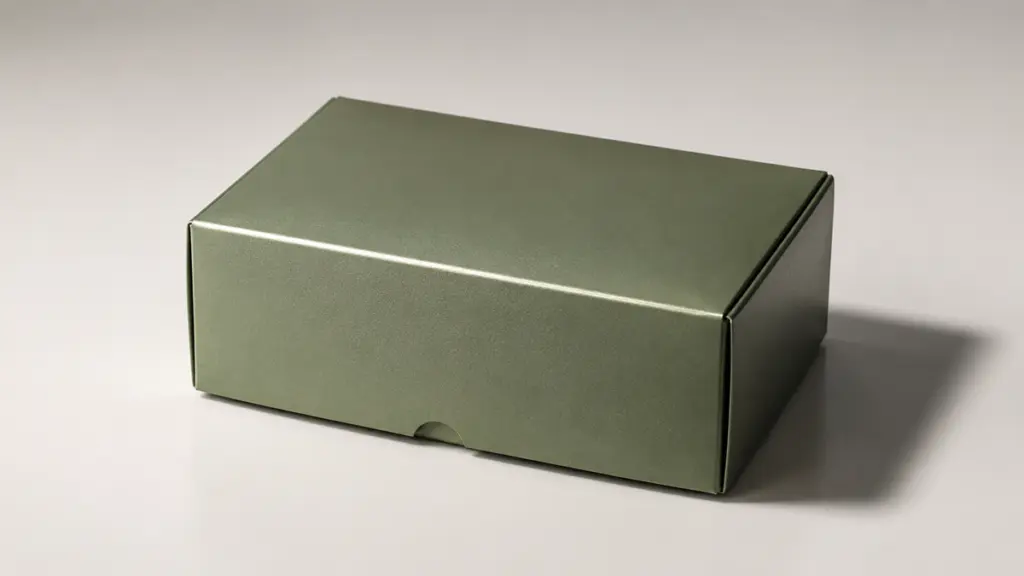
Folding cartons aren’t a one-size-fits-all solution. The right structure depends entirely on the product’s weight, how it will be filled, and its final destination on a retail shelf. These styles are generally grouped by their closure method, bottom strength, or presentation format.
Tuck-End and Seal-End Cartons
These are the workhorses of retail packaging, defined by how their top and bottom flaps close.
- Straight Tuck End (STE): Both top and bottom tuck flaps are on the same panel. This creates a clean, uninterrupted front face, making it a go-to for cosmetics or any product where high-end graphics are critical.
- Reverse Tuck End (RTE): This is the most common and economical style. The tuck flaps are on opposite panels, which allows for tighter nesting on a press sheet and optimizes paperboard usage.
- Seal-End: Instead of tucking, the flaps are permanently glued shut after the product is filled. This provides tamper evidence and is standard for products like dry foods, powders, or cereals.
Cartons with Reinforced Bottoms
When a simple tuck won’t support the product’s weight, these reinforced bottom structures are used.
- Auto-Lock (Crash) Bottom: The base is pre-glued so it automatically snaps into a locked position when the carton is squared up. This significantly speeds up manual or semi-automated assembly lines.
- Snap-Lock Bottom (1-2-3 Bottom): This style requires an operator to manually fold four interlocking flaps to create a strong base. It’s a solid choice for holding heavier items like glass bottles or jars.
Two-Piece, Sleeve, and Pillow Pack Styles
These styles focus more on the unboxing experience and creating a premium presentation.
- Two-Piece Cartons: A separate tray and lid construction delivers a premium, gift-like feel. This is common for high-end cosmetics, إلكترونيات, or chocolate assortments.
- Sleeves: A simple paperboard wrap slides over a product or an inner tray. It provides branding with minimal material use while still allowing the product to be seen.
- Pillow Packs: A unique, curved carton shape gives a distinctive appearance for small gifts, product samples, or promotional items where shelf presence is key.
Display and Merchandising Cartons
These cartons are designed with a dual purpose: shipping the product and then converting into a retail display.
- Counter Display Cartons: They ship like a standard box but feature perforations or special folds that allow them to be quickly transformed into a point-of-sale display, complete with a branding header.
- Hanger Cartons: These integrate a die-cut hole or tab, making them ready for pegboard display in retail stores. This format is common for small tools, مُكَمِّلات, and personal care items.
Multi-Pack and Specialty Wrap Cartons
For bundling products or packaging items with unusual shapes, specialty structures are required.
- Five-Panel Folders: This wrap-around style is an efficient way to bundle multi-packs or package long, narrow products that don’t fit well in a standard box.
- Beverage Carrier Cartons: This is a category of specialized structures, often with integrated handles or dividers, most commonly seen in beverage multipacks for bottles or cans.
What Products Use Folding Carton Packaging?
Folding cartons are the workhorse of retail, used for nearly any lightweight consumer product where branding, regulatory information, and efficient logistics are critical.
Food and Beverage
Food companies use folding cartons for products that require strong shelf appeal and functional protection. Common applications include cereals, snacks, confectionery, frozen foods, and beverage multipacks. Different coatings and barrier treatments can improve resistance to moisture, grease, and temperature changes.
Pharmaceuticals, مستحضرات التجميل, and Personal Care
Folding cartons are essential for products that require clear product information and premium presentation. They are commonly used for medicine packaging, supplements, skincare products, مستحضرات التجميل, perfumes, and personal hygiene items, providing space for instructions, branding, and regulatory details.
Consumer Electronics and Household Products
For lightweight electronics and household goods, folding cartons provide a balance of product protection, branding space, and cost efficiency. They are often used for accessories, batteries, cleaning products, and other retail items that require organized packaging and shelf visibility.
What Are the Benefits and Limitations of Folding Cartons?
Cost and Supply Chain Benefits
Folding cartons offer significant advantages in cost efficiency and logistics, especially for medium to high-volume production. Because they are shipped and stored flat, they require less warehouse space and reduce transportation costs compared with pre-assembled packaging options.
Their lightweight structure also makes them suitable for automated packing operations, helping brands improve production efficiency while maintaining consistent packaging quality.
Branding and Customization Advantages
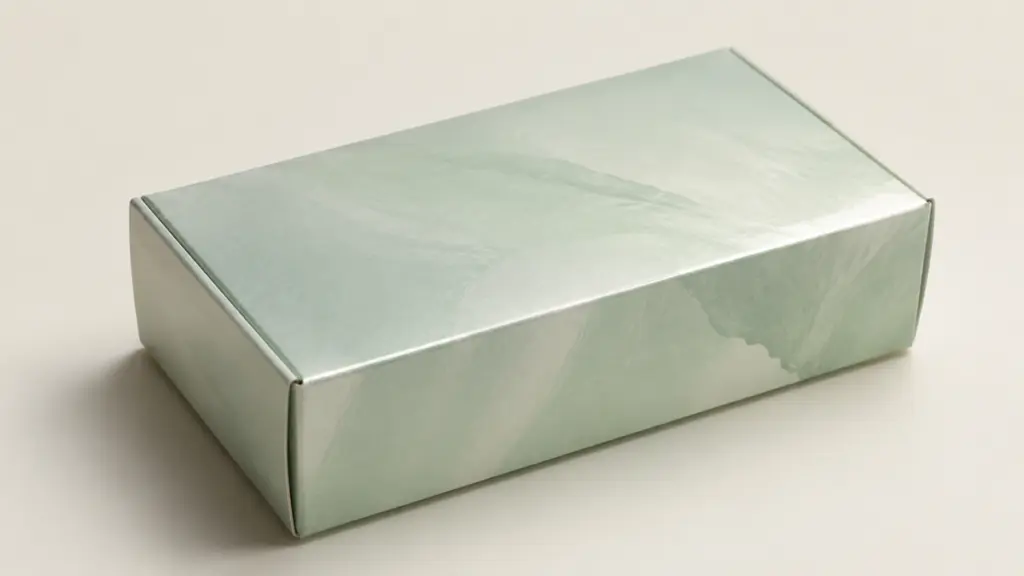
One of the key benefits of folding cartons is their ability to combine product protection with strong visual presentation. The paperboard surface supports high-quality printing, coatings, and decorative finishes such as foil stamping and embossing.
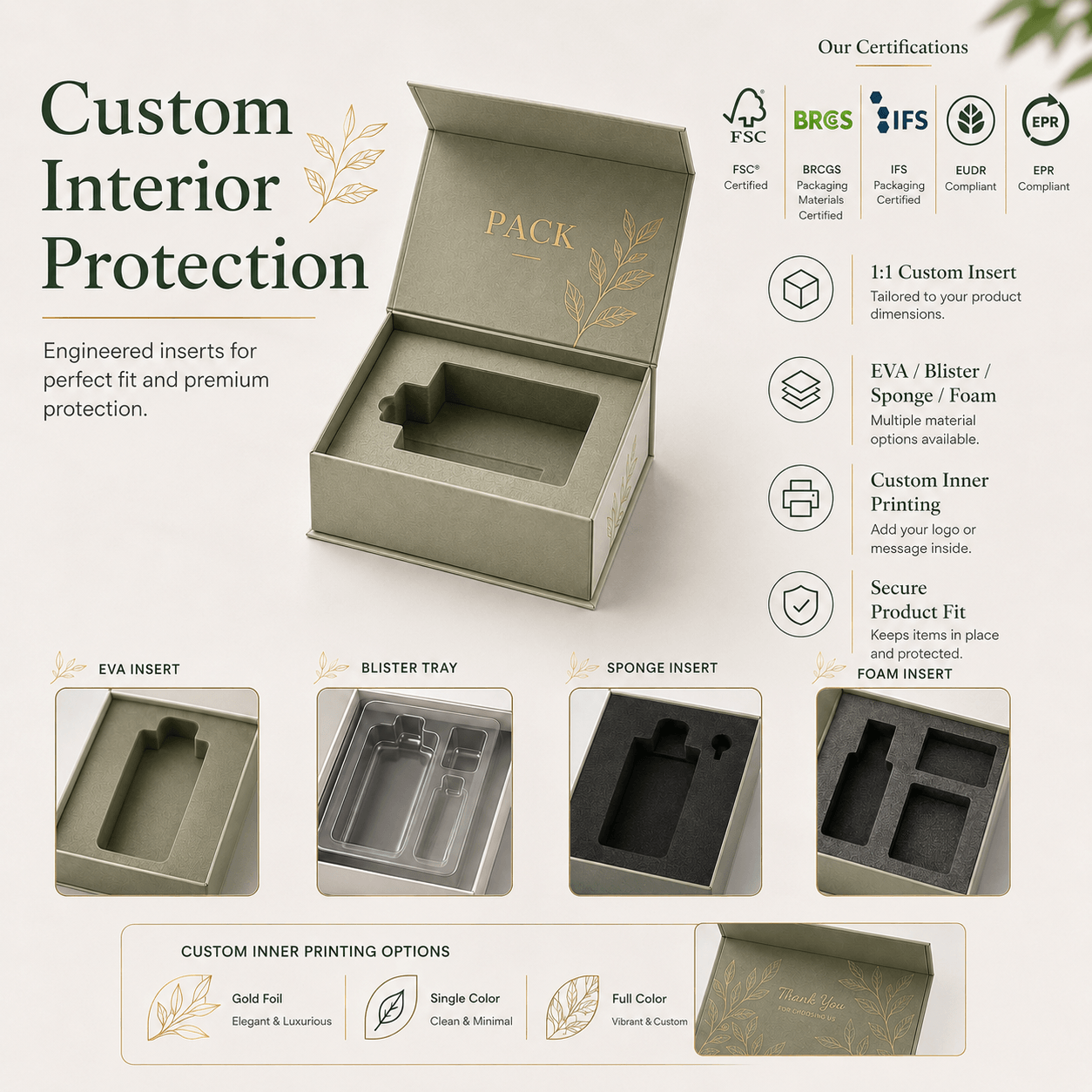
Custom folding cartons can also include different structures, die-cut windows, إدراج, and other design features to improve product display and customer experience. The printable surface provides space for branding, product information, barcodes, and regulatory details.
Limitations to Consider
Although folding cartons are versatile, they are not suitable for every application. Compared with corrugated or rigid packaging, standard paperboard cartons provide less resistance to heavy impacts, crushing, and extreme handling conditions.
For heavier or fragile products, additional protection such as inserts, trays, or outer shipping cartons may be required. Standard paperboard is also sensitive to moisture, grease, and humidity unless protective coatings or barrier treatments are applied.
Complex carton structures or specialty finishes may also increase production requirements and costs, so designs should balance appearance, functionality, and manufacturing efficiency.
Are Folding Cartons Sustainable?
Folding carton sustainability depends on the materials, coatings, design choices, and recycling systems involved. When responsibly sourced and properly designed, paperboard cartons can provide a more sustainable packaging option for many retail applications.
Renewable Materials and Responsible Sourcing
Most folding cartons are made from paperboard produced from wood pulp, a renewable material sourced from managed forests. Brands can choose certified materials such as FSC-certified paperboard to improve supply chain transparency and support responsible forestry practices. The FSC Standards define requirements for responsible forest management and certification practices.
Many carton materials also include recycled fibers, helping reduce reliance on virgin materials.
Recyclability and Design Considerations
Paperboard folding cartons are compatible with common paper recycling systems. However, recyclability depends on the carton design and additional materials used.
Using recyclable coatings, water-based inks, and appropriate adhesives can improve end-of-life performance. On the other hand, excessive use of plastic windows, heavy laminates, or mixed materials may make recycling more difficult.
Sustainability Limitations
Folding cartons are not suitable for every product requirement. Some applications, especially food or products requiring strong moisture and oxygen barriers, may need additional protective materials.
The most sustainable approach is to balance material efficiency, product protection, and recyclability based on the specific application.
How Do You Choose the Right Folding Carton?
Choosing the right folding carton requires balancing product requirements, packaging performance, visual appeal, and production efficiency. Before selecting a carton structure or material, brands should evaluate the following factors.
Define Product and Logistics Requirements
Start by understanding how the carton will be used throughout the supply chain. Consider product dimensions, weight, fragility, filling method, and storage conditions.
Key factors include:
- Product size and weight, including any inserts or accessories.
- Whether the carton is used as primary packaging, secondary packaging, or retail display packaging.
- Environmental conditions such as humidity, temperature changes, and stacking requirements.
Select the Right Carton Style and Structure
The carton structure should match both the product and packing process. Lightweight products may use tuck-end cartons, while heavier items may require reinforced structures such as auto-lock bottoms.
Consider:
- Tuck-end cartons for general retail products.
- Auto-lock or reinforced bottoms for heavier products.
- Inserts, trays, or partitions for fragile or multi-component items.
- Sleeves or specialty structures when presentation is the priority.
Cost and Supply Chain Benefits
Folding cartons offer significant advantages in cost efficiency and logistics, especially for medium to high-volume production. Because they are shipped and stored flat, they require less warehouse space and reduce transportation costs compared with pre-assembled packaging options.
Their lightweight structure also makes them suitable for automated packing operations, helping brands improve production efficiency while maintaining consistent packaging quality.
Branding and Customization Advantages
One of the key benefits of folding cartons is their ability to combine product protection with strong visual presentation. The paperboard surface supports high-quality printing, coatings, and decorative finishes such as foil stamping and embossing.
Custom folding cartons can also include different structures, die-cut windows, إدراج, and other design features to improve product display and customer experience. The printable surface provides space for branding, product information, barcodes, and regulatory details.
Limitations to Consider
Although folding cartons are versatile, they are not suitable for every application. Compared with corrugated or rigid packaging, standard paperboard cartons provide less resistance to heavy impacts, crushing, and extreme handling conditions.
For heavier or fragile products, additional protection such as inserts, trays, or outer shipping cartons may be required. Standard paperboard is also sensitive to moisture, grease, and humidity unless protective coatings or barrier treatments are applied.
Complex carton structures or specialty finishes may also increase production requirements and costs, so designs should balance appearance, functionality, and manufacturing efficiency.
Frequently Asked Questions
What is a folding carton?
A folding carton is a box made from paperboard that can be shipped and stored flat, then assembled into a three-dimensional container. It is primarily used as retail packaging to contain, protect, and present products such as food, مستحضرات التجميل, and pharmaceuticals. Unlike pre-assembled rigid boxes, folding cartons save significant space during transport and warehousing.
What is the difference between a folding carton and a cardboard box?
A folding carton is made from single-ply, lightweight paperboard and is designed for high-quality printing and retail presentation. In contrast, a typical “cardboard box” is a corrugated shipping box, made from a fluted paper medium between linerboards. Corrugated boxes are engineered for structural strength and protection during transit, not for on-shelf aesthetics.
What materials are used to make folding cartons?
Folding cartons are typically made from single-ply paperboard with a thickness of 12–28 pt (0.012″–0.028″). Common materials include Solid Bleached Sulfate (SBS) for premium print quality, Coated Unbleached Kraft (CUK) for strength, Folding Box Board (FBB) for a balance of stiffness and weight, and Coated Recycled Board (CRB) for cost-effective, sustainable options.
What are the most common types of folding cartons?
Common folding carton styles are defined by their closure and assembly methods. The main types include Tuck End Cartons (Straight Tuck and Reverse Tuck), which are versatile and cost-effective; Bottom-Closure Cartons (Snap Lock and Auto-Lock) for heavier products; Seal-End Cartons for tamper evidence; and Two-Piece Cartons (Tray and Lid or Sleeve) for a premium unboxing experience.
What products are suitable for folding carton packaging?
Folding cartons are ideal for light to medium-weight products that require strong branding and shelf presence. They are widely used for food and beverages (cereals, snacks), pharmaceuticals (medicines, supplements), مستحضرات التجميل (العناية بالبشرة, makeup), and small consumer electronics. For heavier or fragile items, cartons with reinforced bottoms and internal inserts are used.
Are folding cartons recyclable?
نعم, folding cartons are recyclable. As a fiber-based product, the paperboard can be repulped and recycled multiple times. Recyclability is highest when non-paper components like plastic windows or heavy laminates are minimized, and the carton is placed in the appropriate paper recycling stream.
How are custom folding cartons manufactured?
The manufacturing process involves several key stages. It begins with structural design and creating a dieline (a 2D blueprint). The design is then printed onto flat sheets of paperboard using offset or digital printing. After printing, the sheets are die-cut and creased. Finally, the flat carton blanks are run through a folder-gluer machine to be folded, glued, and packed for shipment.
Final Thoughts
Selecting the right folding carton involves balancing material performance, structural design, appearance, and production requirements. Working with an experienced packaging manufacturer can help brands avoid design issues and achieve consistent quality from prototype to mass production.
If you are developing custom folding cartons for cosmetics, food, or retail products, share your product specifications with our team to explore suitable materials, structures, and finishing options.