Skip to content
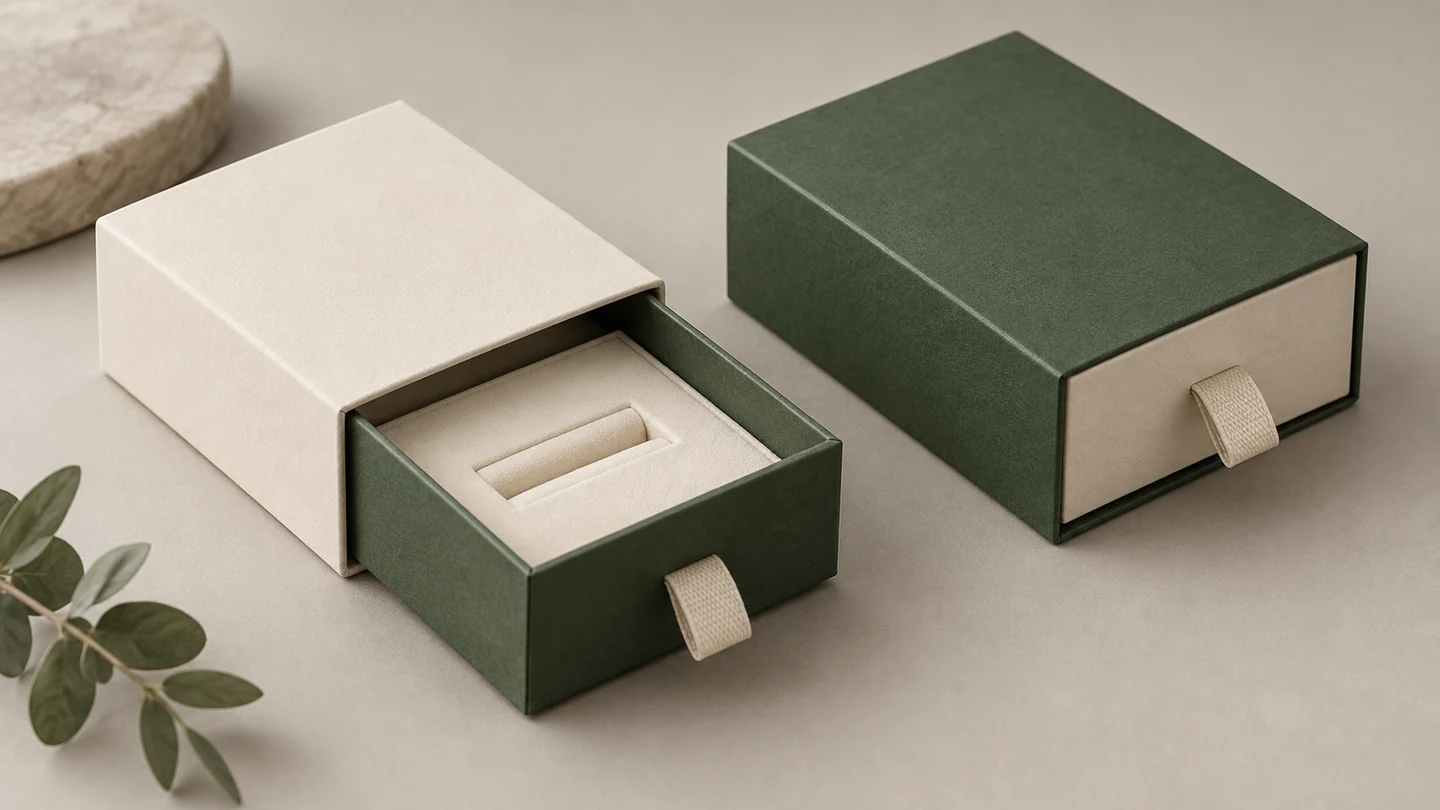
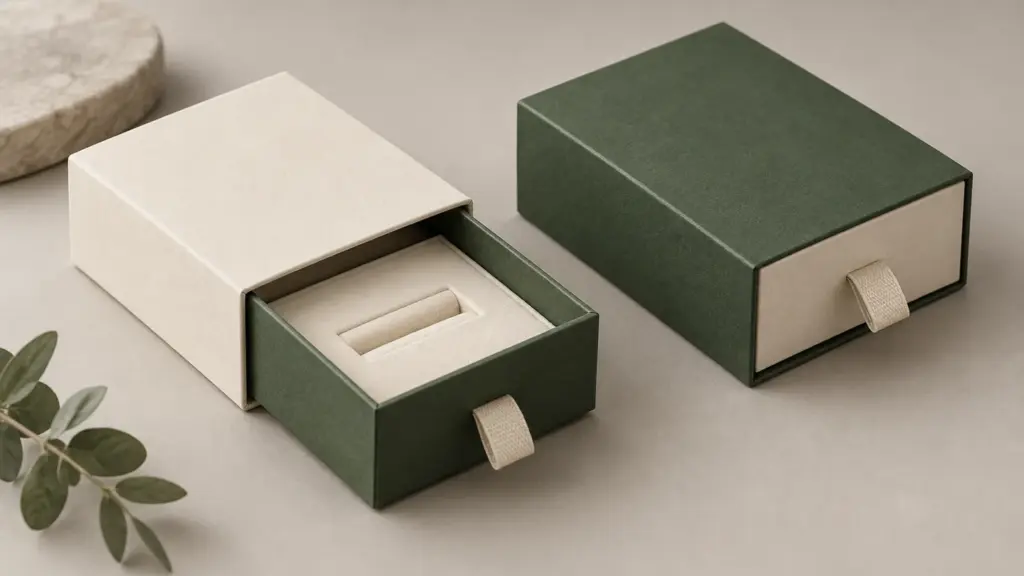
Custom drawer boxes give jewelry, watches and small gift sets a controlled reveal: the customer slides a tray out of an outer sleeve to reach the product. For a buyer, however, the important question is how that movement works once the box contains the real product, insert and accessories.
A tray that jams can frustrate customers. One that moves too freely can slip out during handling. A good sourcing brief therefore connects opening feel, product restraint, packing work and delivery requirements. Use this guide to compare proposals and decide what your supplier must demonstrate before you approve production.
What Are Custom Drawer Boxes?
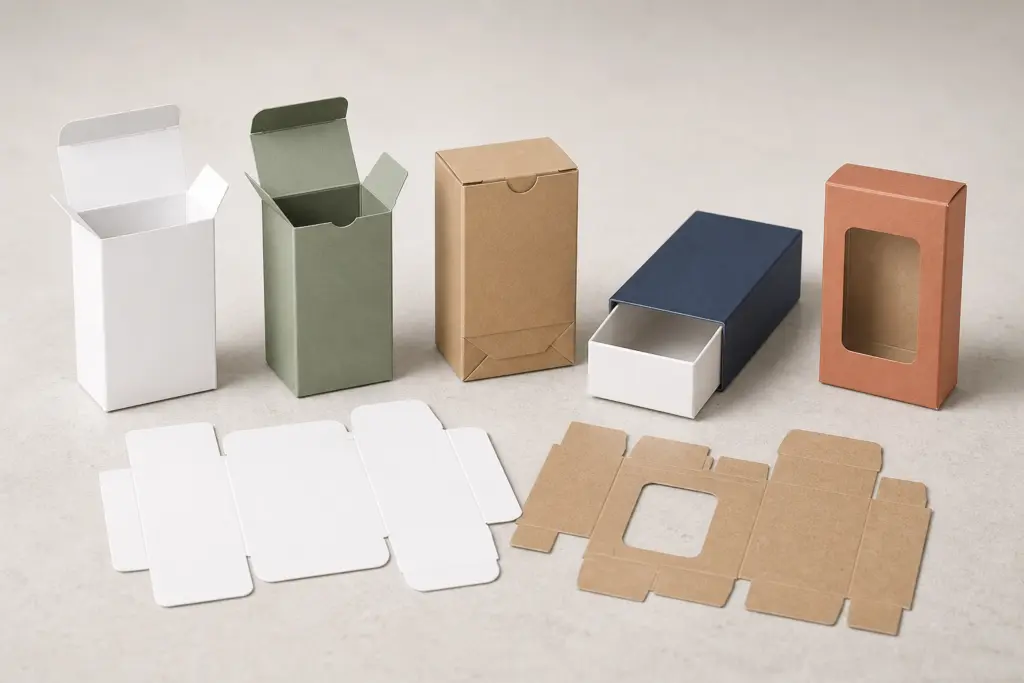
A drawer box combines an outer sleeve with an inner tray that slides through an opening. Rigid versions use a shaped board construction covered with paper. Buyers may also encounter folding-paperboard sleeve-and-tray packs, so specify which construction you want instead of relying on the word “drawer.”
The opening feature might be a ribbon pull, paper tab or thumb notch. Each changes how people grip the tray and how the front face looks. These rigid drawer boxes for jewelry illustrate a sleeve-and-tray format with several opening options.
Also confirm whether the tray is intended to come out completely. If you need a retaining feature, ask the manufacturer to propose and sample it. Do not assume a stop mechanism is included in every drawer construction.
Start with the Filled Pack and the Opening Direction
Send the supplier a complete product set, including tags, care cards, pouches and any accessory that shares the tray. Record how the product should sit when the box is opened. A necklace arrangement, a ring slot and a watch pillow create different space and handling requirements.
Next, identify the intended orientation on a shelf, during packing and when the customer opens it. Review where the customer holds the sleeve and pulls the tray. Test the proposed pack in realistic handling positions, rather than judging it only while it rests flat on a table.
For watch projects, review these custom watch drawer boxes against the actual case, strap and presentation support. Include any alternative strap configurations you plan to sell. An approved fit for one version does not automatically cover another.
Materials and the Sleeve-to-Tray Fit
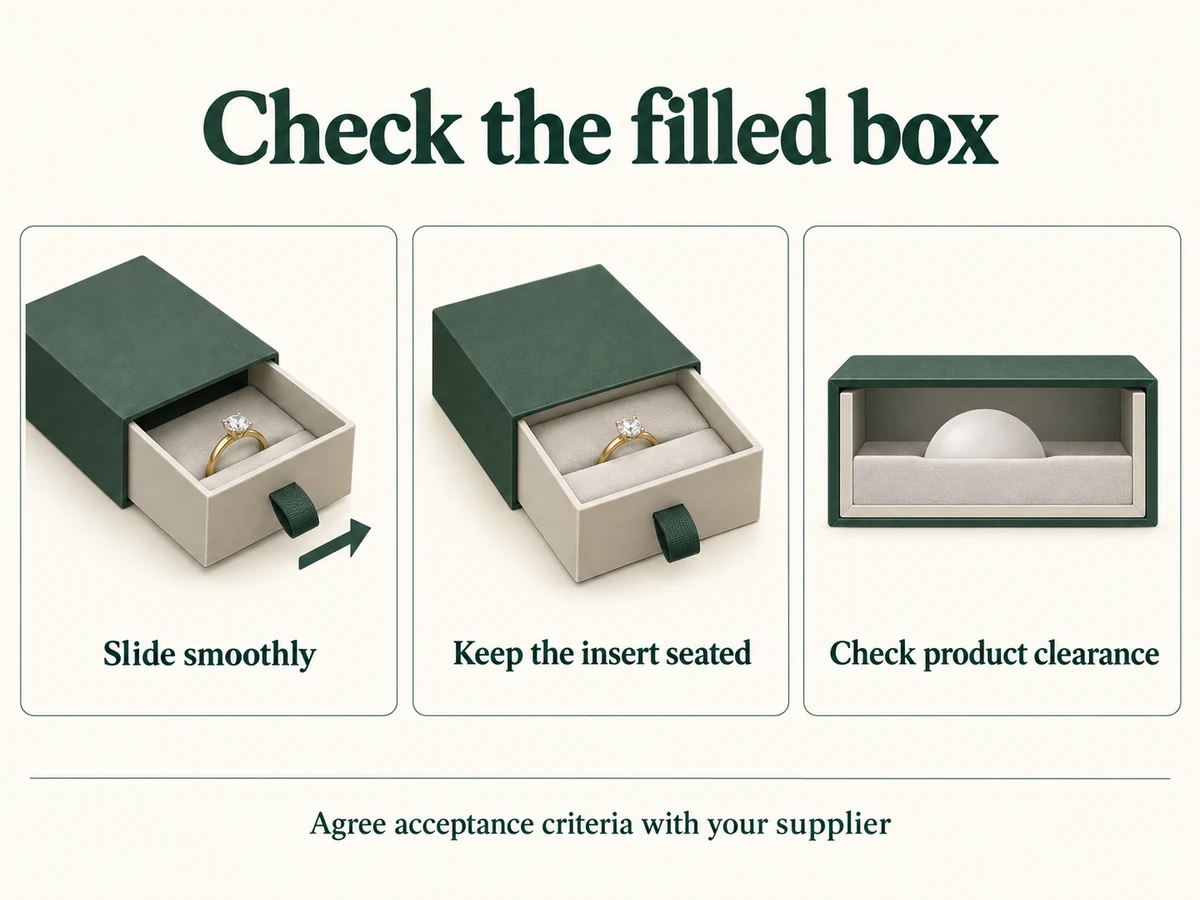
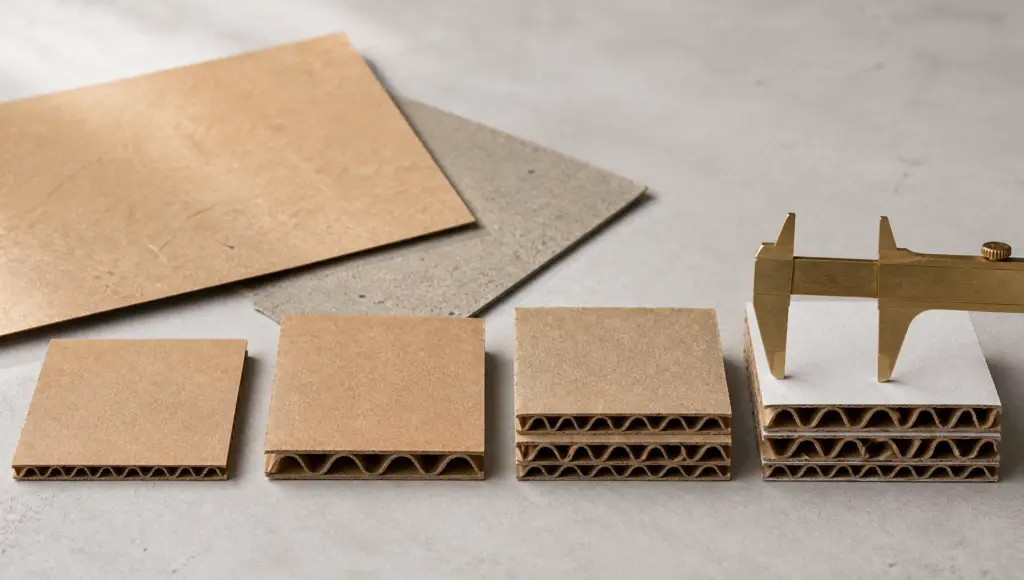
Ask for separate descriptions of the structural board, outer wrap and tray lining. A photograph of kraft-colored paper does not tell you the board construction beneath it. Similarly, specifying a thick board without reviewing the assembled box does not establish a smooth sliding action.
The relevant fit is the finished fit. Ask the supplier to account for the actual wrapping, lining, adhesive application and finishing process when developing the sleeve and tray. A plain structural prototype is useful, but it may not reproduce the opening feel of the finished pack.
During review, load the tray and operate it several times as a qualitative check. Look for catching corners, uneven movement, sleeve distortion or visible rubbing. Agree with the supplier how the production sample will be evaluated and what counts as an unacceptable result.
Avoid inserting an arbitrary clearance or pull-force number into the purchase order. Ask the manufacturer to recommend measurable acceptance criteria for the specific construction, then confirm them through sampling.
Choose an Insert That Stays with the Tray
The insert has two jobs: position the product and work with the opening motion. When the tray slides, check whether the insert shifts, lifts or catches the sleeve. Then remove the product and see whether the insert remains seated as intended.
Paperboard layouts, shaped foam and presentation supports solve different problems. Ask for the exact proposed material and attachment method. Evaluate contact surfaces with representative products, especially polished finishes or delicate parts, without assuming a material name guarantees protection.
Check access as carefully as restraint. A tight ring slot or deep recess may look tidy but make removal awkward. Provide room for fingers or an agreed lifting feature where needed. For broader merchandising ideas, our jewelry packaging solutions provide context for different product presentations.
Finally, test the complete set. A care card placed on top of the product can interfere with the sleeve even if the product fits comfortably on its own.
Printing and Finishing: Map the Moving Surfaces
Specify artwork for the sleeve, tray front and any visible inner surfaces separately. Show the intended reading direction when the box is closed and as the tray opens. This prevents an attractive flat artwork file from producing an awkward reveal.
Before approving foil, embossing or a textured wrap, ask which surfaces touch during movement. Review a sample made with the proposed materials and processes for visible rubbing, marks and consistent operation. Request design alternatives if a decorative feature interferes with the sliding action.
Use agreed physical references for color and finish. A screen rendering can communicate placement, but it cannot confirm surface feel or how the final pack behaves. Record what each proof represents and what still requires a finished sample.
Single Drawers and Multi-Drawer Gift Sets
A single drawer suits a focused product presentation. Multi-drawer layouts introduce another purchasing task: managing several compartments, product assignments and artwork positions in one pack.
If you are evaluating multi-drawer gift packaging, prepare a compartment map. Identify each product, its position, the opening direction and the corresponding artwork. Confirm whether trays can be mixed up during packing and how the packing team will identify them.
Review the filled set as one unit. Similar-looking compartments can contain different products or inserts. Approving an empty display sample will not expose every assembly or loading problem.
Cost and MOQ: Quote the Complete Pack
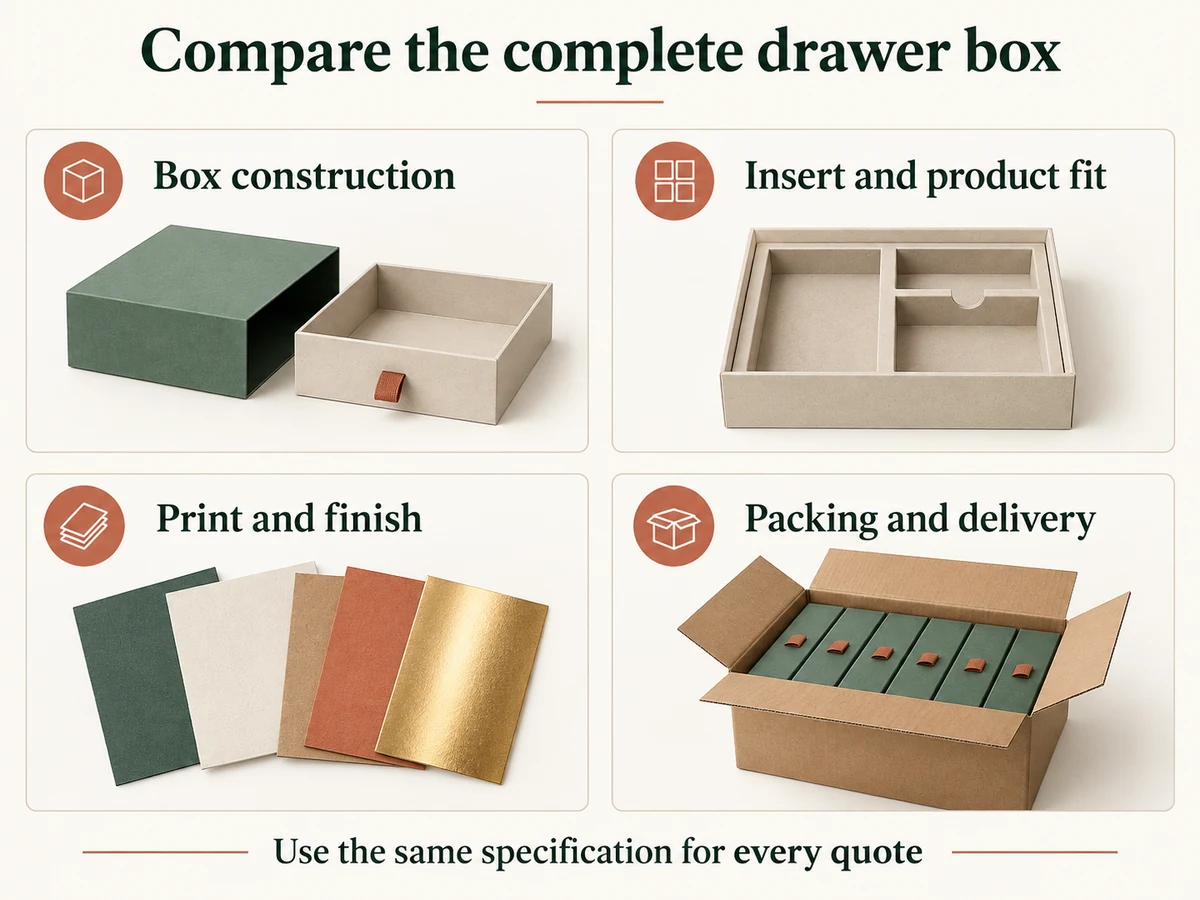
Give each supplier the same pack specification. Include the sleeve and tray, insert, opening feature, printing, finishing, protective packing and delivery destination. Confirm what the quoted price includes before comparing unit costs.
Ask whether structural development, samples or tooling carry separate charges. For repeat orders, establish which components or setup items can be reused and which artwork or construction changes require another quotation. Treat proposed savings as options to sample, especially when they alter the fit.
Obtain the MOQ for each size and artwork version. A combined order containing several designs may not meet the minimum for each version. There is no universal MOQ or price for all drawer packaging, and this guide does not promise one.
Also request the packed carton dimensions and quantity per carton. Compare the implications for transport, storage and packing labor alongside the packaging price.
Sustainability: Ask About the Actual Components
List the sleeve, tray, wrap, insert, pull and decorative layers separately. Then ask how they can be separated after use and what evidence supports any proposed recycling or material claim. Avoid labeling the entire pack from the appearance of its paper exterior.
If your brand requires a sourcing certification or destination-specific documentation, make that requirement explicit in the brief. Ask for evidence covering the relevant supplier, material and order scope before using the claim. A generic packaging description is not a substitute for project documentation.
Approve a Sample Your Packing Team Has Used
Request a clear sampling sequence through the manufacturer’s structural development and sampling service. Identify which sample checks dimensions, which represents the finish and which is the reference for production.
Have the packing team load the product, add the accessories, close the drawer and place the pack into its intended shipping protection. Record any extra adjustments or handling steps. These observations can reveal practical problems that a design review misses.
- Confirm the product, insert and artwork versions against the brief.
- Review sliding action and tray retention in intended handling positions.
- Check product removal, accessory clearance and visible rubbing.
- Agree defect descriptions and acceptance criteria in writing.
- Record the approved sample version and any remaining changes.
A drawer box is not automatically a parcel-ready shipping container. Evaluate the filled retail pack and outer protection together for the actual distribution route; agree any required performance testing separately.
FAQ
What should buyers check first in custom drawer boxes?
Start with the loaded tray: product fit, insert stability, clearance and sliding action. An empty box may behave differently from the complete customer pack.
Is a ribbon pull better than a thumb notch?
Choose through sampling. Compare grip, appearance, attachment and packing requirements. The better option depends on the box layout and how customers will handle it.
Can several jewelry items share one drawer box?
Yes, if the layout and insert are developed for the set. Sample every intended combination and check that items stay separated and remain easy to remove.
Should the tray be removable?
Specify the intended behavior. Full removal may suit some presentations; other projects may need a retaining feature. Ask the supplier to demonstrate the chosen solution.
Build a Clear Drawer Box Brief
Specify the product arrangement, sliding behavior, insert and finished appearance together. That gives manufacturers a concrete basis for a sample and gives your team a fair basis for comparing quotations.
Explore our rigid packaging structures, then send your product details, quantities by version, preferred finish and delivery requirements. Include the opening experience you want the sample to demonstrate.