Skip to content
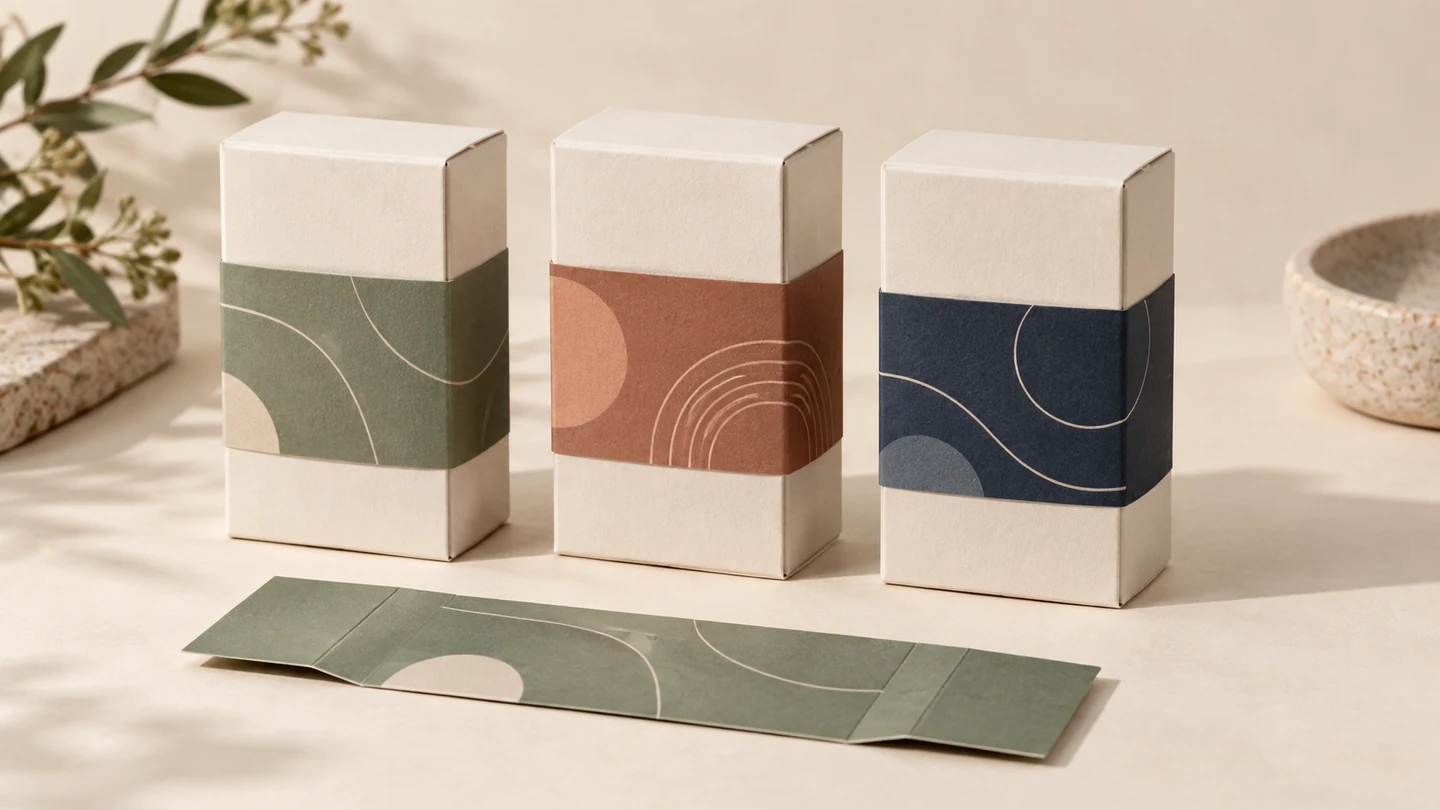
Custom packaging sleeves can help a brand introduce seasonal artwork or distinguish product variants without redesigning every part of its box. That flexibility becomes valuable when several stock-keeping units, or SKUs, share the same finished package dimensions.
However, a low sleeve price does not automatically mean a lower packaging bill. Buyers also need to account for fitting, gluing, packing labor, artwork changes and leftover stock. This guide explains how to decide whether a sleeve belongs in your packaging system and what to confirm before placing a production order.
What Are Custom Packaging Sleeves?
A packaging sleeve is an open-ended paper or paperboard wrapper that fits around an existing box or packed product. A narrow version is often called a belly band. A wider sleeve offers more printable surface and may cover most of the underlying box.
Its main job in this guide is branding and variant identification. The base box still needs to provide the structure and product support appropriate to the order. Do not assume a removable band provides a shipping closure, a moisture barrier or evidence of tampering.
When discussing paperboard packaging structures, identify the sleeve and base box as separate components. A sleeve around a closed carton has a different role from the outer shell of a drawer box.
When a Shared Box Makes Commercial Sense
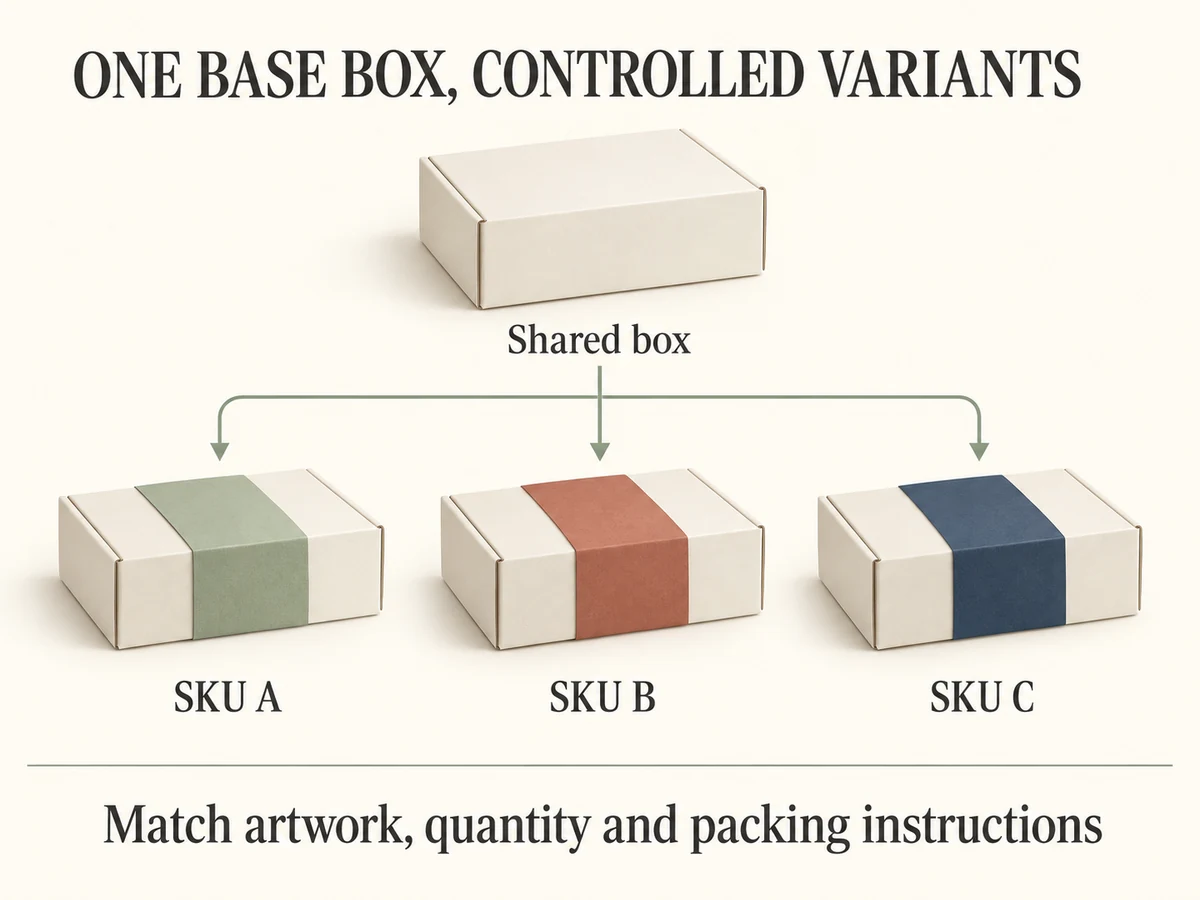
Start by listing what changes between your SKUs. If only the fragrance name, color scheme or promotional message changes, a common base box may be practical. If bottle height, accessories or protective inserts change, the common box needs a separate fit review.
For example, imagine a brand offering three gift sets in the same outer box size. It could order a neutral base box and three sleeve designs. This is an illustrative purchasing scenario, not a claim about savings or a completed customer project.
Use actual demand forecasts for each variant. A shared base can remain useful across several campaigns, but an outdated promotional sleeve may still become waste. Also compare a sleeve with a label or a fully printed carton: each option changes the amount of visible branding and the packing work required.
Choose Materials Around the Finished Pack
Specify the paper grade, thickness, surface and finish together. A material name alone does not describe how the sleeve will fold, print or sit on the box. Ask for a sample made with the intended material before fixing the specification.
White paperboard, natural kraft and textured stocks offer different visual starting points. Show your supplier the required artwork and request a printed material sample if small text, a pale background or a particular surface feel matters.
A heavier-looking band is not automatically the best choice. Review how the folds sit around the actual corners and whether the assembled joint creates an unwanted ridge. Treat proposed thicknesses as sample candidates; do not borrow a numerical specification from an unrelated pack.
Define Structure, Fit and Assembly
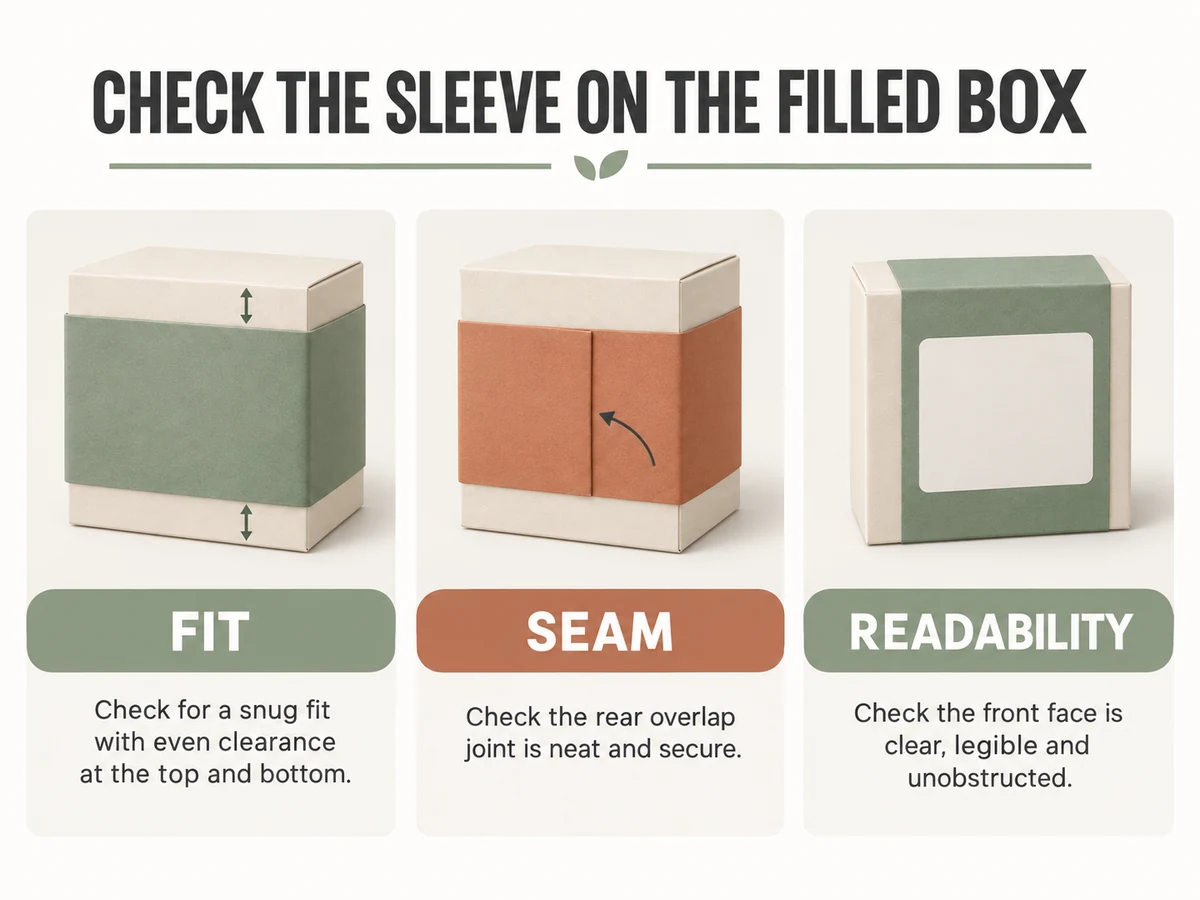
Provide a filled, closed box for fitting. Include labels, wrapping, inserts and other components that affect its final shape. The supplier should develop the sleeve dieline around that finished assembly, including its joint and folding allowances.
Clarify the delivery format. A pre-glued sleeve arrives as a loop that the packer opens and slides onto the box. An unglued band requires wrapping and joining at the packing location. Ask who supplies the adhesive or closure and who approves the assembled result.
During a packing trial, check whether the sleeve slides into position without crushing the carton or rubbing its surface. Then handle the pack in its intended retail orientation and confirm that the band stays where the artwork needs it. Agree acceptable movement with the supplier instead of using an arbitrary universal clearance.
Printing, Finishing and Barcode Placement
Map the front, back, folds and joint before approving artwork. Keep important text readable after assembly, and inspect any decoration that crosses a crease. Ask the supplier to mark the joining area so print and finishing decisions account for assembly.
Compare printing methods against your design count, quantities and approval requirements. Foil, embossing or selective gloss can emphasize a logo, but request samples of the finished sleeve on its base box. Check whether decoration remains visible once the pack is displayed.
Barcode placement needs particular care. GS1’s barcode quality guidance highlights clear surrounding areas, contrast, symbol positioning and packaging that can obstruct scanning. Confirm the correct symbol, clear surrounding area and placement with the responsible barcode team, then check the assembled production sample.
Applications and Customization Boundaries
Cosmetic sets, apparel gifts and promotional bundles are possible applications when the underlying pack already meets the product’s needs. Sleeves can carry campaign artwork, language variants or product identifiers, subject to the brand’s own labeling review.
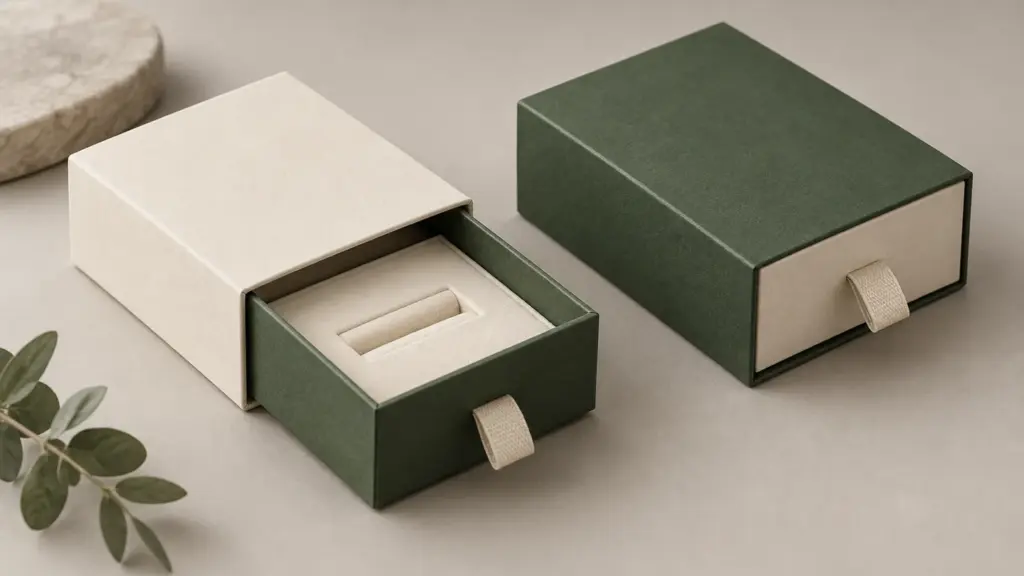
For a beauty gift range, assess the base packaging first. Our collapsible rigid cosmetic gift boxes are one base-box format to discuss; a sleeve would need separate development around the assembled box. They are not the same construction as a lightweight folding carton.
For seasonal projects, review the wider gift packaging options before deciding which component should carry the campaign design. Avoid placing essential information where removing the sleeve would create an unresolved labeling issue.
Compare Total Cost and MOQ by Variant
Ask for separate lines for the base box, sleeves, tooling, print setup, finishing, assembly and delivery. Then calculate the cost per usable finished pack using the quantity of each variant you expect to sell.
There is no single MOQ that applies to every sleeve project. Ask whether the quoted minimum applies to the shared cutting shape, each printed design, each finishing treatment or the entire order. Different artwork can share a shape without automatically sharing every production setup.
- State the quantity for each SKU rather than only the combined total.
- Ask whether designs can share a production run and what constraints apply.
- Identify any artwork-specific tooling and repeat-order charges.
- Include fitting labor, packing rejects and unused seasonal stock in your comparison.
Request a second quotation for a fully printed box using the same demand forecast. That comparison makes the sleeve decision reviewable without assuming a saving in advance.
Prevent SKU Mix-Ups at Packing
Create a simple approval register with the SKU name, sleeve artwork revision, base-box reference, quantity and destination. Include a picture of the assembled approved pack. If two variants look similar, give packers a readable identifier beyond color alone.
Confirm how the supplier will separate and label sleeve bundles. At your packing location, check the first completed pack after every variant change against the register. Keep old artwork out of the active picking area and document who can release a revised version.
Also agree the procedure for repeat orders. A change to the base box, material or closure should trigger a sleeve fit review, even when the marketing artwork remains the same.
Sustainability and Specification Discipline
Evaluate the complete pack rather than calling a sleeve sustainable because it contains paper. Record the material, coating, adhesive and any additional components. Ask how the proposed construction should be separated after use and verify claims for the intended market before printing them.
A sleeve may help keep a common base box usable through an artwork change. It also adds a component. Compare actual material use, obsolete stock and product damage risk across the options; avoid unsupported percentage reductions or universal recyclability claims.
How to Choose a Sleeve Packaging Manufacturer
Choose a supplier that asks about the underlying box, packing method and variant mix before recommending a construction. Request a clear dieline, a written material and finish specification, and a sample plan covering both appearance and assembly.
Use structural development and sampling to resolve fit before committing to bulk quantities. Your approval should identify the actual box and sleeve combination, artwork revision and agreed inspection points. A flat printed sample alone cannot demonstrate the complete packing operation.
FAQ
Are custom packaging sleeves cheaper than printed boxes?
They can be economical in some projects, but the answer depends on the base box, design quantities, setup and packing work. Compare complete finished-pack quotations rather than the sleeve unit price alone.
Can different products use the same sleeve size?
Only after checking their finished outer packaging. Matching nominal box dimensions does not prove that filled packs, closures and surface finishes behave identically during assembly.
Should sleeves arrive glued or unglued?
Choose the format around your packing process. Trial the proposed method and account for the equipment, labor and inspection needed at the location that performs the work.
Can I change artwork without changing the base box?
Often that is the purpose of the sleeve, but review fit, product identification and labeling whenever a variant changes. Keep each new artwork revision linked to an approved packing record.
Plan the Sleeve and Base Box Together
The strongest sleeve proposal connects branding flexibility with a manageable packing process. Send us your filled-box dimensions, base-box sample, SKU quantities, artwork and intended delivery format. We can review the combination and prepare a quotation and sample plan for your packaging project.