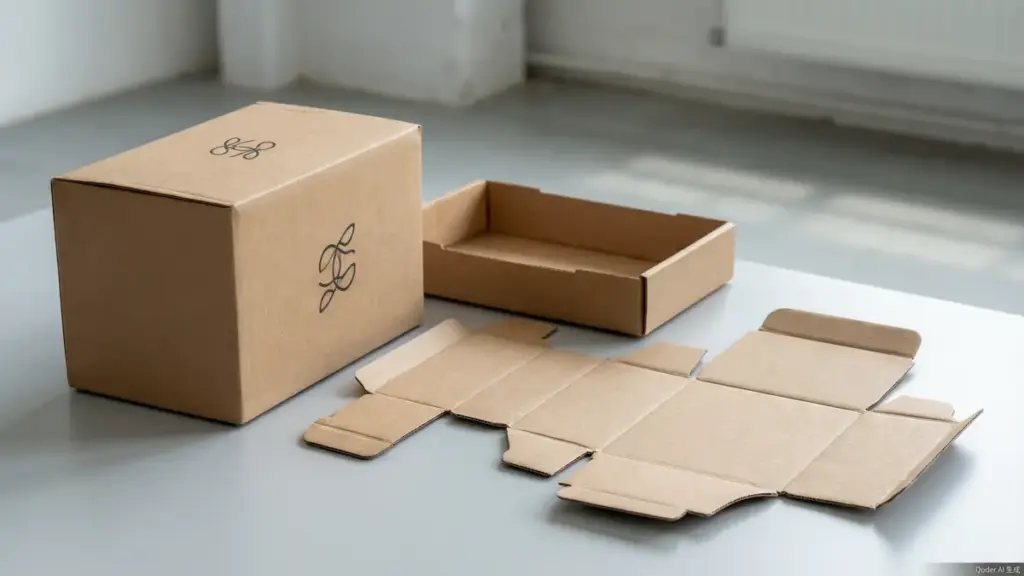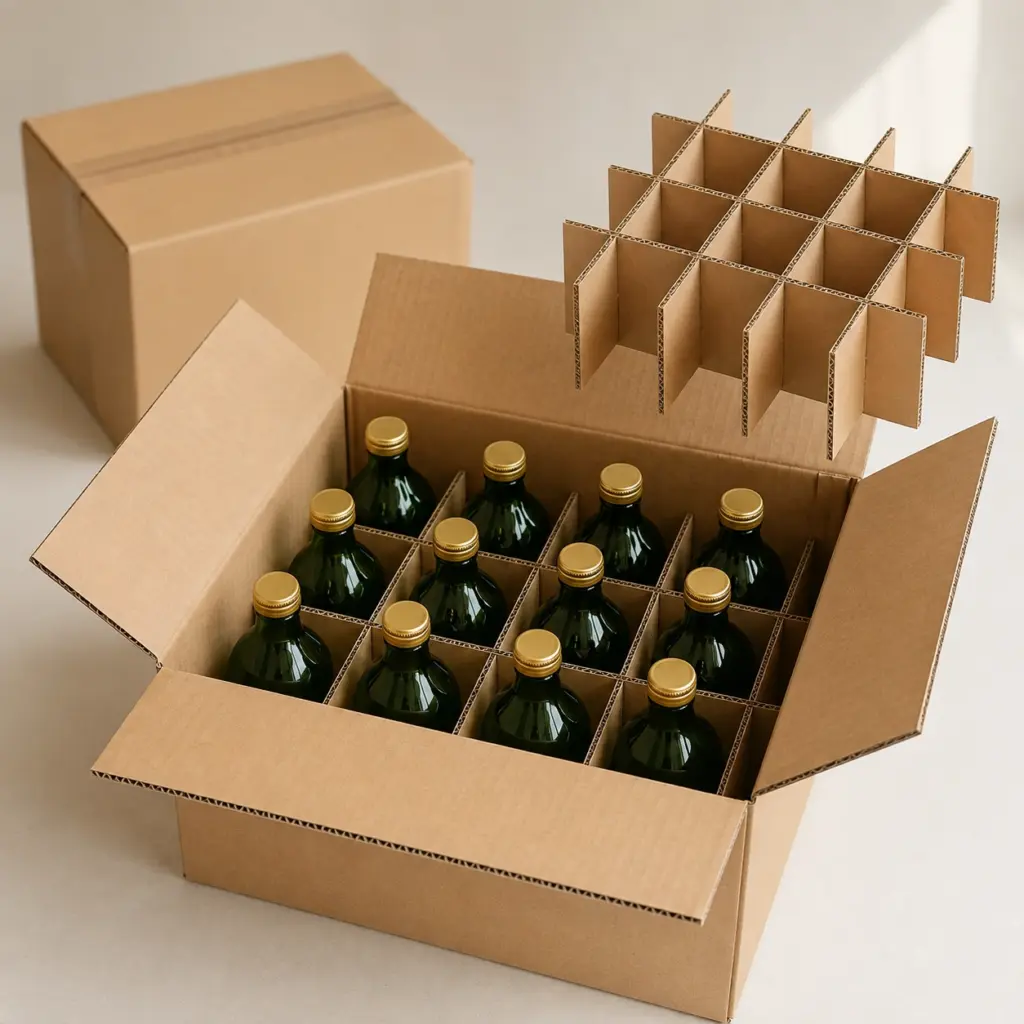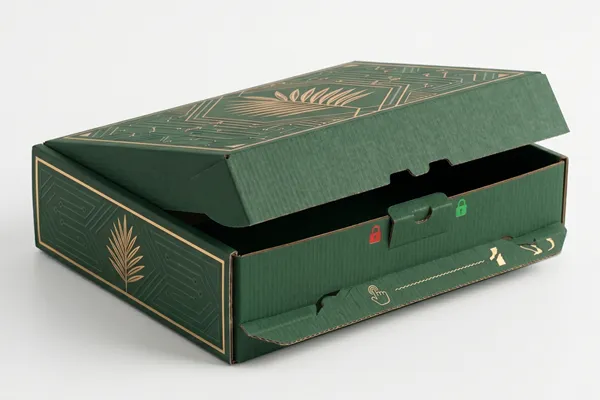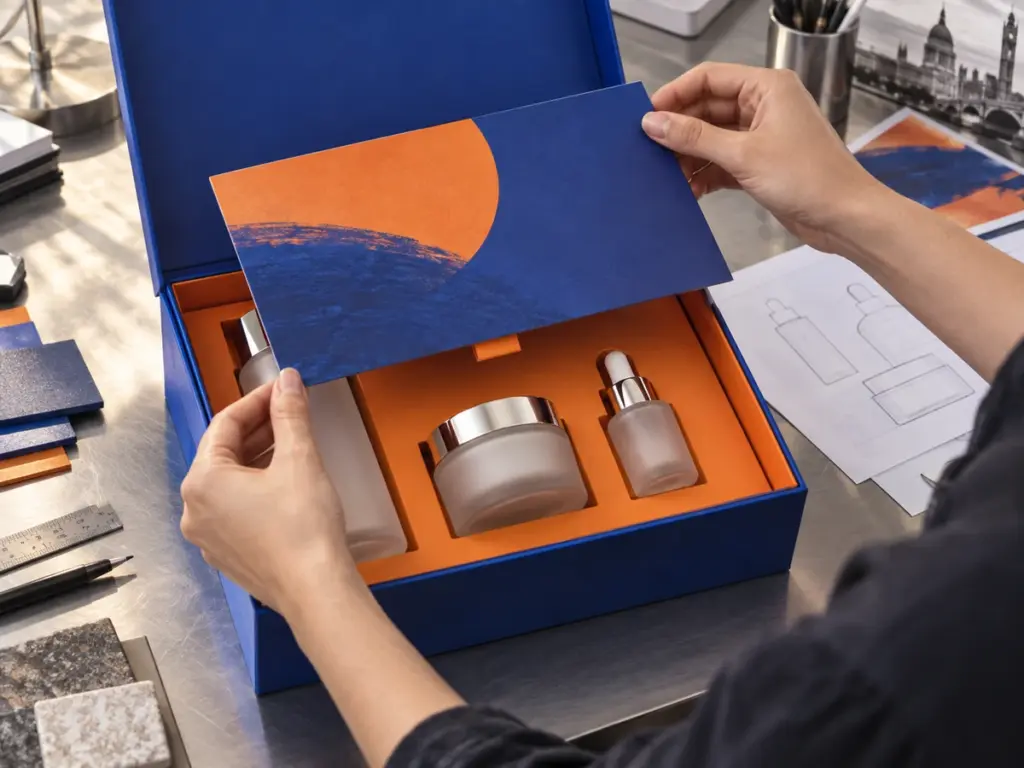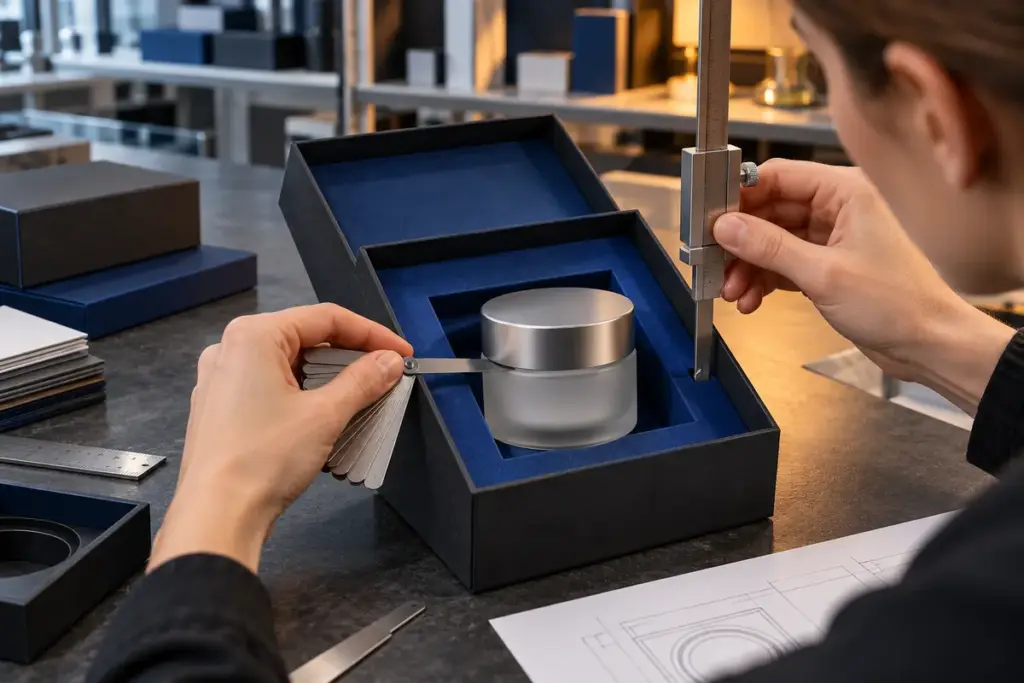
Custom chocolate boxes need to present an assortment neatly without making packing or product removal difficult. A beautiful outer lid cannot compensate for a tray that rocks, a wrapper that catches on a divider or a tall bonbon pressed against the inside cover. Those details deserve attention before decorative artwork becomes the main discussion.
For chocolate brands and packaging buyers, the useful starting point is the complete packed layer: chocolates, individual wrappers or cups, tray, any cover sheet and the closed box. This guide focuses on approving that relationship in rectangular gift boxes, with clear questions for your packaging supplier.
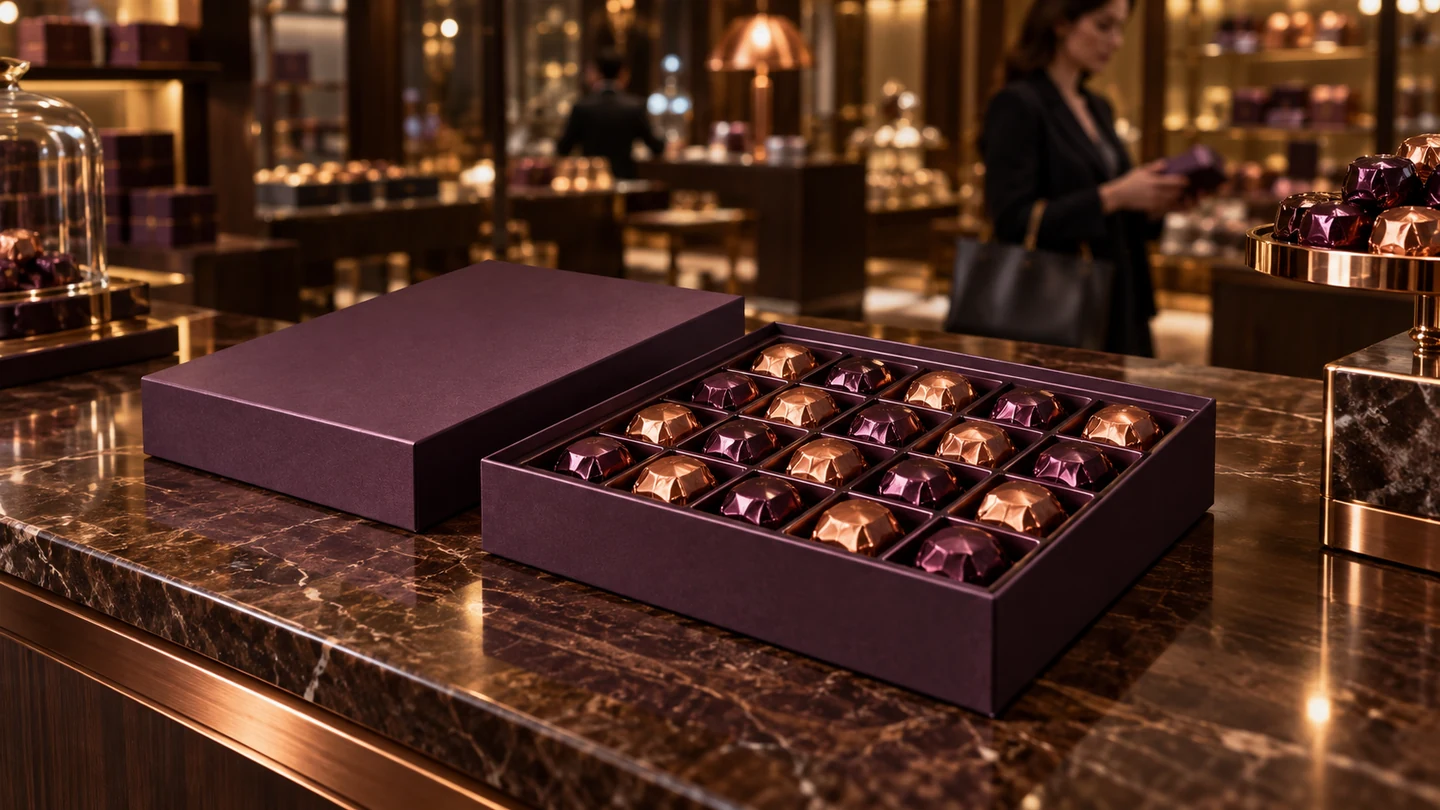
What Makes Custom Chocolate Boxes Work as a System?
A chocolate gift pack combines an outer structure with an internal arrangement. The outer box establishes the presentation and opening action. The tray positions the assortment, while wrappers, cups and other specified layers form part of the actual packed product.
Approve these components together. A box dimension alone does not tell you whether the tray seats properly or the cover clears the tallest piece. Equally, an empty tray can look correct while behaving differently once filled.
Begin with a physical reference such as our rigid chocolate gift box format, then develop the construction around your own assortment. Treat photographs as structural inspiration; request confirmation of the materials and supplied condition for your order.
Build an Assortment Profile Before the Tray Drawing
Send representative chocolates in their final individual packaging, rather than measurements of the chocolate alone. Record the packed footprint, overall height, shape and intended orientation of each item. Include wrapper folds, decorative tops and cups wherever they will remain in the finished box.
For products with noticeable size variation, provide examples across the range you intend to pack. Ask the designer which examples govern cavity size, depth and removal access. Do not let the largest piece become an undocumented assumption.
Also identify the pieces that share a cavity design. A round truffle and a rectangular praline may need different support even when their nominal widths appear similar. Mark which seasonal substitutions are permitted, and which need a fresh fit review.
Choose the Outer Structure Around the Packing Method
Lid-and-base rigid boxes
A separate lid lets the packer inspect the complete layer before closing it. Specify how the lid should seat on the base and how the recipient should lift it. Check opening with the loaded sample on a table rather than judging the empty shell alone.
Folding carton options
For a carton-based proposal, explore custom folding box structures with the intended tray. Confirm whether packing happens through the top or an end opening. A tray that loads easily into an open base may catch when pushed through a narrower opening.
Multiple layers
If the assortment uses stacked trays, review the support and access for every layer. Define how the upper tray is lifted and where it rests after removal. Do not assume the lower chocolates can support the layer above them.
Inspect the Tray-to-Box Interface
Ask the supplier to show the tray’s seating surfaces, folded edges and any retaining features. Then place the empty tray in the box and check for rocking, bowed sides, exposed cut edges or corners that prevent full seating.
Repeat the review with the actual assortment. Observe whether loading changes the tray’s position or pulls a divider out of shape. Check the outer rows as carefully as the center: the relationship between the tray rim and box wall matters at every edge.
Discuss custom inserts and packaging components as a coordinated set rather than ordering the box and tray independently from unrelated drawings. If different suppliers make them, assign responsibility for checking the finished combination.
Record acceptable results with photographs and agreed dimensional references. Avoid a universal clearance number; the appropriate fit depends on construction, Materialien, product variation and how the package is packed.
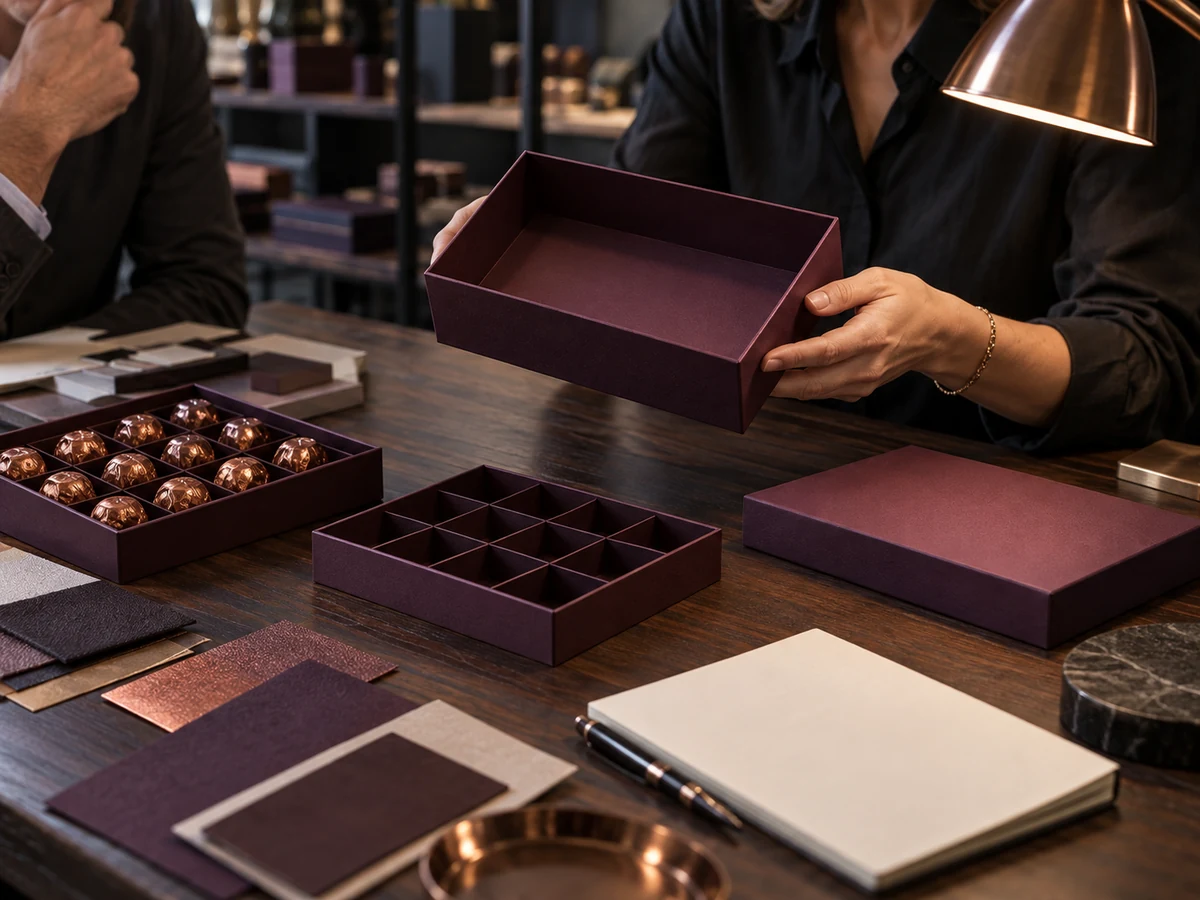
Check Lid Clearance Without Using the Chocolate as a Spacer
Prepare the complete layer, including the highest packed piece, any protective sheet and the assortment card. Close the box using the intended motion. If the lid needs extra pressure or sits unevenly, investigate the cause instead of accepting force as part of the packing process.
Open it again and inspect for displaced wrappers, compressed cups or contact marks. Ask the supplier to identify what controls the closed height. Product tops should not become the unintended stop for the lid.
A sample review can reveal fit problems, but it does not establish shipping protection. Evaluate the complete transport pack separately using a method appropriate to the intended route. Keep the approved tray, Kasten, products and protective layers identified so any change triggers the relevant recheck.
Separate Food-Contact Evidence from Appearance
Create a component map showing what can touch the food and what remains outside its primary wrapping. Include cups, Liner, tray surfaces and any cover sheet. Tell the supplier the intended storage conditions, food type and destination market when requesting supporting documentation.
The FDA’s food types and conditions-of-use reference distinguishes food categories and storage or processing conditions. Für Käufer, this reinforces a practical question: does the evidence supplied address the proposed use? It is not a certificate approving a finished gift box.
For EU, UK or other destinations, request a review against the applicable market requirements rather than assuming a US reference covers them. Have the responsible food-safety or compliance specialist assess the final construction. Neither an attractive paper cup nor an individual wrapper, allein, settles the suitability of every surrounding component.
Printing and Finishing Around the Assortment
Approve decoration after confirming the tray and closed height. Changing the structure late can affect artwork placement, lid alignment and the visible margin around the assortment.
Review foil, embossing or printed detail on a representative finished sample. Examine the lid corners and the surfaces handled during opening. Ask which materials and processes the sample represents, and document any difference from the production proposal.
Keep flavor identification easy to follow. An assortment card should match the actual arrangement and remain readable when removed. Give each approved combination of card, tray and products a revision reference so a seasonal flavor change does not leave outdated information in the box.
Run a Packing and Removal Trial
Ask the intended packing team to fill and close sample boxes using the proposed delivery format. A preassembled tray and a flat component kit create different work at the packing station, so evaluate the version you plan to purchase.
Observe where wrappers catch, where fingers need access and whether a packer must rearrange neighboring pieces to insert the last item. Record these issues before deciding that a layout is ready for production.
Nächste, remove pieces from the center, corners and outer rows. Check whether the recipient can grasp the wrapped product without collapsing the adjacent divider. Repeat with the permitted assortment variants, not just the most convenient sample.
Compare Cost, MOQ and Component Waste
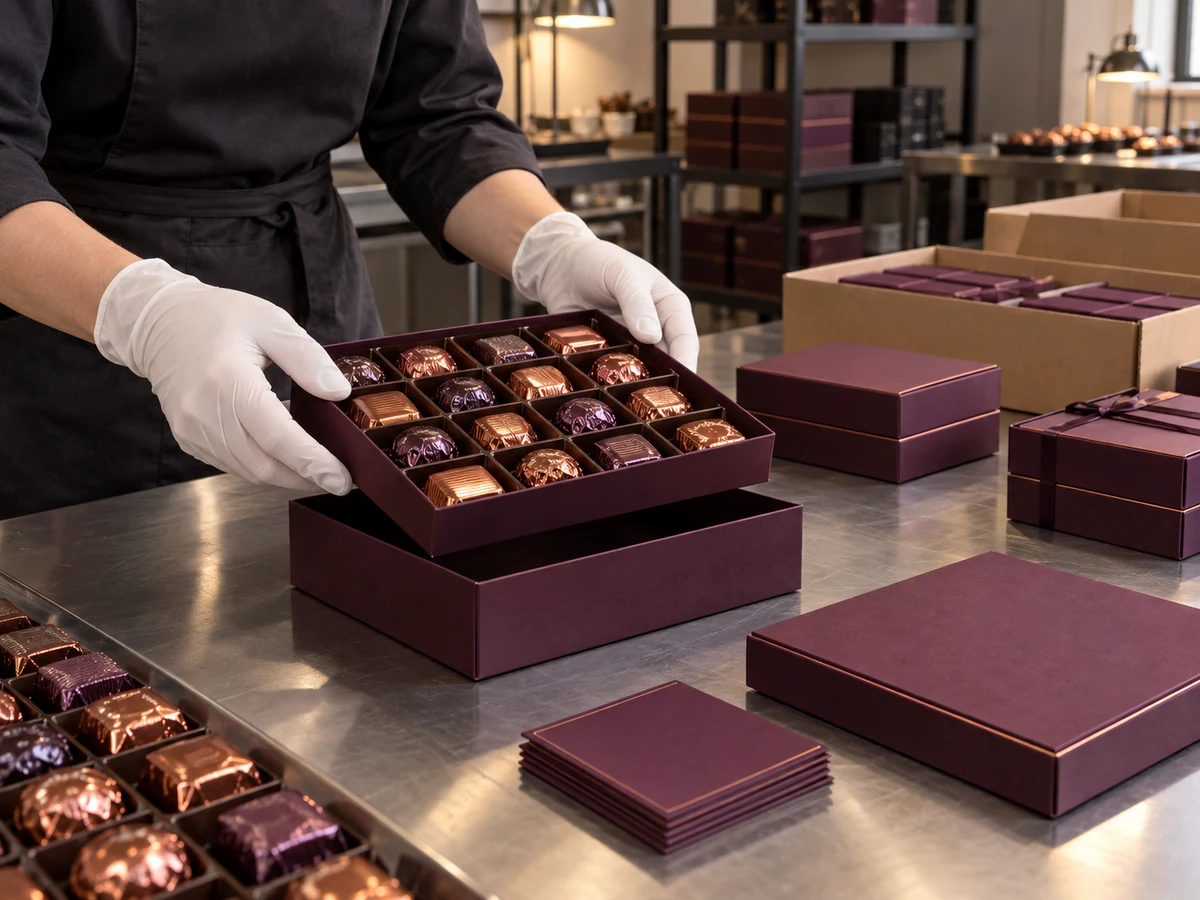
Request prices for the same complete set: Kasten, Deckel, tray, cups or liners where supplied, printed card and agreed assembly. Separate one-time tooling or development charges from recurring unit costs. Clarify which components your chocolate producer will source independently.
Ask for minimum quantities by tray design, box size and artwork version. A shared outer box does not automatically remove the minimum for a different insert. Obtain project-specific quotations rather than relying on a standard MOQ claim.
For waste reduction, compare fewer unique components and the ability to separate them after use. Review the full material list before making environmental claims. Removing a layer is only a useful change if the revised pack still satisfies the agreed product, handling and compliance requirements.
FAQ
What samples are needed for custom chocolate boxes?
Provide the intended assortment in its final wrappers or cups, including meaningful size variations. Include the card and any cover layer, or specify them clearly, so the supplier can review the complete packed height.
Can we use one tray for several flavors?
Möglicherweise, if the packed shapes, heights and removal requirements work in the proposed cavities. Check each permitted substitution and keep the matching assortment information current.
Does a thicker box solve a tight lid?
Nicht von alleine. First identify whether the issue is tray seating, product height, added layers or the proposed lid-and-base fit. Ask the designer to correct the relevant relationship and provide another sample.
How should we choose a manufacturer?
Look for clear component specifications, coordinated box-and-tray development and an approval record that identifies the actual assortment. Ask who resolves fit issues and what documentation is available for the proposed materials and intended use.
Request a Coordinated Chocolate Box Sample
Send Pack Packaging your wrapped assortment, pack count, quantities and target markets to discuss a structural sample for your chocolate gift box. Ask for a coordinated proposal covering tray seating, Deckelfreiraum, removal access and component responsibilities before committing to the final decoration.