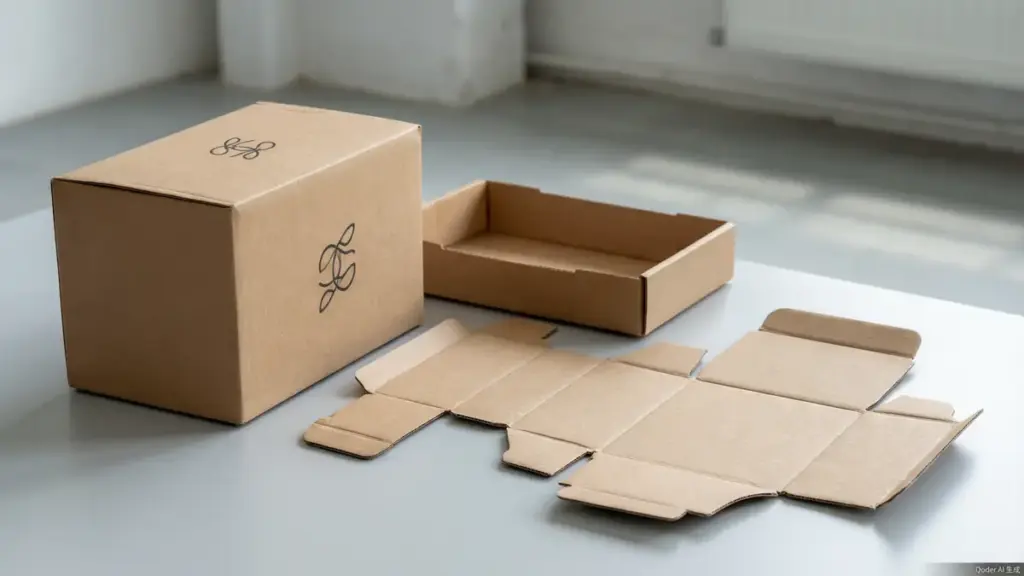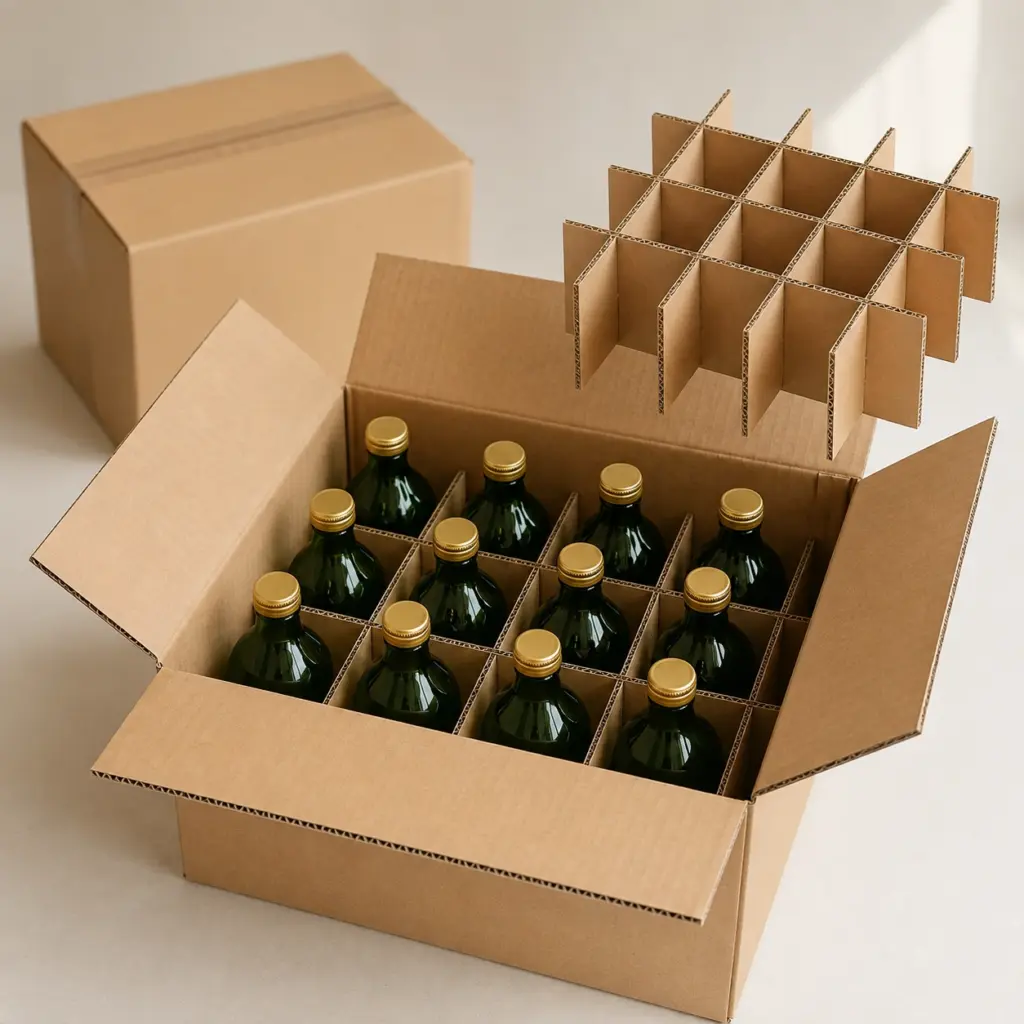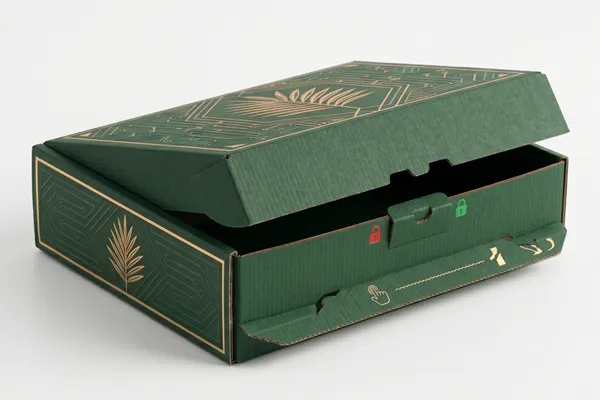
Wählen zwischenPapiertube vs. Kunststoffverpackung ist nicht nur eine Frage, welches Material umweltfreundlicher aussieht. Premiummarken benötigen weiterhin eine Verpackung, die das Produkt schützt, Fotos gut, unterstützt Einzelhandelspreise, erfüllt die Marktanforderungen, kommt pünktlich an, und bleibt innerhalb des Budgets.
Die kurze Antwort lautet:: Für hochwertige Sekundärverpackungen und Trockenprodukte sind Papiertuben oft die bessere Wahl, während Kunststoff bei direktem Kontakt nützlich bleibt, hohe Barriereleistung, geringes Gewicht, Transparenz, oder Dosierfunktion ist unerlässlich. In vielen erfolgreichen Projekten, Die beste Lösung ist nicht „Papier oder Kunststoff“, sondern eine sorgfältig gestaltete, papierdominierte Struktur mit nur einem Minimum an funktionellem Liner, Schließung, oder Innenbehälter erforderlich.
Holen Sie sich ein individuelles Verpackungsangebot
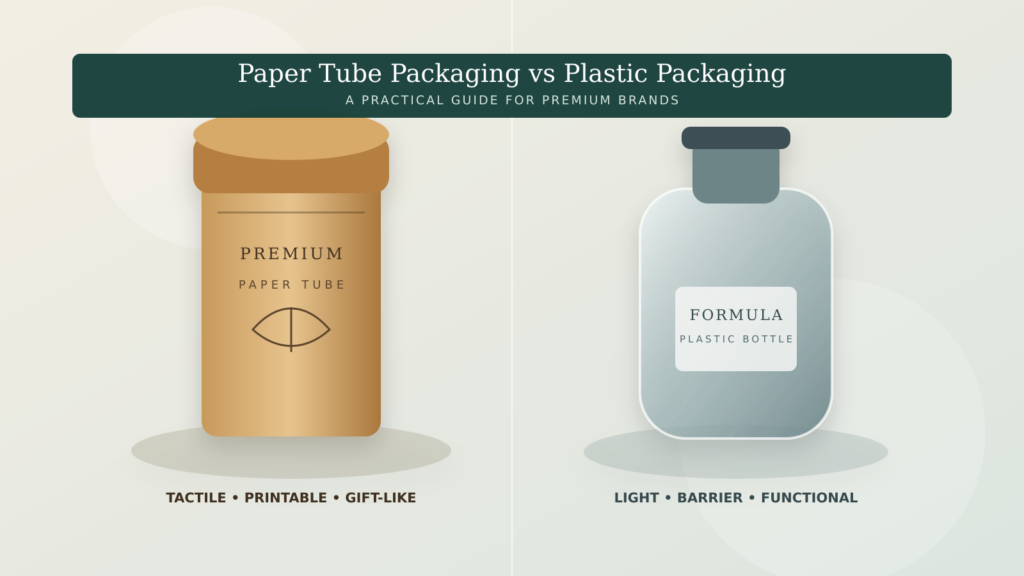
Eine Premium-Verpackung sollte den Wert vermitteln, bevor der Kunde sie öffnet – sie muss aber auch während der gesamten Befüllung funktionieren, Versand, Lagerung, Einzelhandelsdisplay, und Entsorgung.
Was sind Papierröhrenverpackungen und Kunststoffverpackungen??
Bei der Papierröhrenverpackung handelt es sich um ein zylindrisches Format, das aus mehreren Lagen Pappe besteht, Kraftpapier, Kunstdruckpapier, oder Spezialpapier. Abhängig vom Produkt, es kann einen Papierdeckel enthalten, Form- oder Papiereinlage, lebensmittelechter Liner, Folienlaminat, Fenster, oder separate Innentasche. Die Struktur kann von einem einfachen Kraftrohr bis hin zu einer luxuriösen Teleskopbox mit starrer Wand und passgenauem Einsatz reichen.
Zu den Kunststoffverpackungen gehören auch Flaschen, Gläser, Wannen, Kappen, Pumps, Beutel, Tabletts, Ärmel, und geformte Behälter aus Materialien wie PET, PETG, PP, PE, oder andere Polymere. Kunststoff ist leicht, feuchtigkeitsbeständig, und sehr formbar. Das erschwert den Austausch in Anwendungen, die einen dichten Primärbehälter erfordern, Pumpensystem, klare Produktsichtbarkeit, oder starke Barriereleistung.
Der wichtige Unterschied istPrimär- versus Sekundärverpackung. Eine Hautpflegeflasche benötigt möglicherweise einen Primärbehälter aus Kunststoff oder Glas, da die Formel flüssig ist, während eine Papierröhre als hochwertige Umverpackung dienen kann. Tee, Kaffee, Nahrungsergänzungsmittel in Pulverform, Kerzen, Parfümflaschen, Für trockene Snacks kann auch eine Papierröhre verwendet werden, mit der richtigen Auskleidung oder Innentasche zum Schutz.
Papierröhre vs. Kunststoffverpackung: Ein praktischer Vergleich
Es gibt keinen universellen Gewinner. Das bessere Format hängt vom Produkt ab, Zielmarkt, Vertriebskanal, Markenpositionierung, und lokales Abfallsystem.
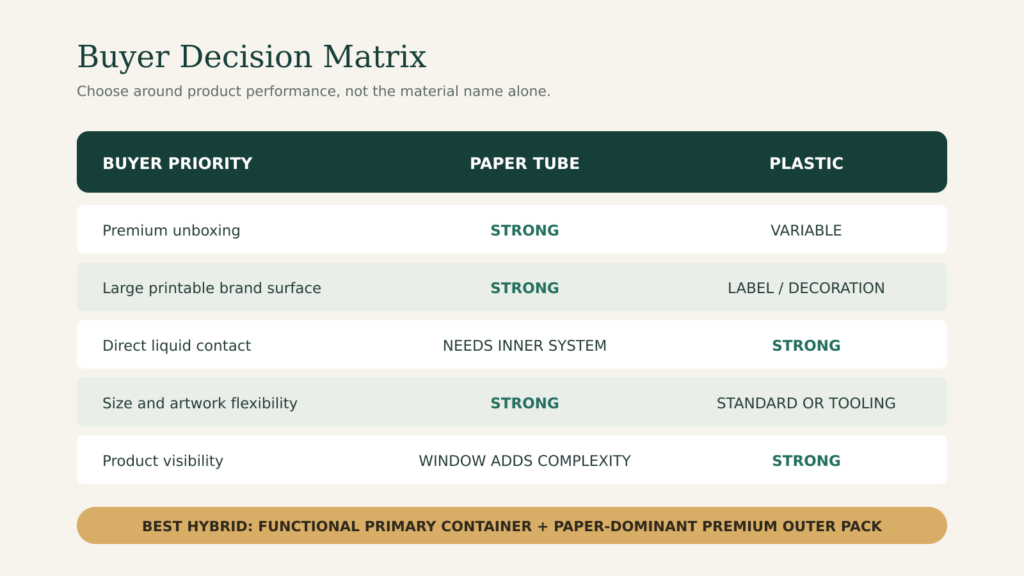
Markenwahrnehmung und Regalwirkung
Papierröhren erzeugen auf natürliche Weise eine starre Form, Geschenkähnliche Präsentation. Die Eröffnungsaktion wirkt bewusst, Die zylindrische Form sticht unter den rechteckigen Kartons hervor, und die bedruckbare Oberfläche gibt Designern Raum, eine Markengeschichte zu erzählen. Kraft-Texturen eignen sich gut für eine natürliche und organische Positionierung, während beschichtete Papiere oder Spezialpapiere für einen saubereren, luxuriösen Look sorgen können.
Auch Kunststoff kann sich hochwertig anfühlen, vor allem, wenn es transparent ist, dickwandig, individuell gefärbt, oder gepaart mit einer ausgereiften Pumpe. Jedoch, Ein gewöhnliches geformtes Glas oder eine gewöhnliche Flasche sieht möglicherweise eher wie eine Massenware aus, wenn es nicht die Form ist, beenden, und Dekoration sind sorgfältig ausgearbeitet.
Beste Passform: Papiertuben für taktiles Auspacken und hochwertige Sekundärverpackung; Kunststoff für Produktsichtbarkeit, Abgabe, und geformte Form.
Produktschutz und Barriereleistung
Kunststoff ist feuchtigkeitsbeständig und kann ein effektiver Direktkontaktbehälter für Flüssigkeiten sein, Cremes, Öle, und Produkte, die in feuchten Umgebungen verwendet werden. Es kann auch Manipulationsnachweise integrieren, Threads, Pumps, und Verschlüsse in einem System.
Karton bietet gute Steifigkeit und Schutz vor Quetschungen, Normalpapier ist jedoch nicht automatisch feuchtigkeitsbeständig, Sauerstoff, Fett, oder Aromaverlust. Kaffee, Tee, Snacks, Pulver, und andere empfindliche Produkte erfordern möglicherweise eine lebensmittelechte Auskleidung, Folienlaminat, versiegelter Innenbeutel, oder separater Primärbehälter. Die richtige Lösung hängt von den Haltbarkeitszielen ab, Lagerbedingungen, Füllmethode, und ob das Produkt die Verpackung direkt berührt.
Beste Passform: Kunststoff für anspruchsvolle Anwendungen mit Flüssigkeiten oder hoher Feuchtigkeit; Technische Papierhülsen für Trockenwaren, geschützte Primärbehälter, Geschenksets, und Sekundärverpackung.
Nachhaltigkeit und Lebensende
Papier hat eine starke Geschichte als erneuerbares Material, wenn seine Fasern aus verantwortungsvollen Quellen stammen. Eine papierdominierte Tube kann auch die sichtbare Menge an Kunststoff in einer Verpackung reduzieren. Trotzdem, „Papier“ bedeutet nicht automatisch, dass es überall recycelbar ist. Laminate, metallische Folien, Kunststofffenster, Schaumstoffeinlagen, Magnete, Klebstoffe, und Verschlüsse aus gemischten Materialien können die Trennung und das Recycling erschweren.
Kunststoff ist in manchen Anwendungen ressourcenschonend, da er leicht ist und mit wenig Material einen hohen Schutz bieten kann. Das tatsächliche Recycling hängt jedoch von der Art des Polymers ab, Farbe, Etiketten, Schließungen, Sammelsysteme, und lokale Verarbeitungskapazität. Mehrschichtige oder kleinformatige Kunststoffbauteile stellen in vielen Märkten eine besondere Herausforderung dar.
Eine glaubwürdige Premiummarke sollte daher vage Aussagen wie „100 % umweltfreundlich“ vermeiden. Ein besserer Ansatz ist die Angabe der Materialzusammensetzung, FSC-Angabe, sofern zulässig, Recyclinganteil wurde überprüft, Entsorgungshinweise, und alle Komponenten, die der Verbraucher trennen sollte.
Die USA. Die EPA empfiehlt, die Verpackung über ihren gesamten Lebenszyklus hinweg zu betrachten, anstatt die Nachhaltigkeit nur anhand des Materials zu beurteilen. In der EU, die Verpackungs- und Verpackungsabfallverordnung (PPWR) gilt grundsätzlich ab 12 August 2026 und soll Verpackungsmüll reduzieren und die Recyclingfähigkeit und Kreislaufwirtschaft verbessern. Siehe dieEPA-Leitfaden für nachhaltige Verpackungen und diePPWR-Übersicht der Europäischen Kommission.
Kosten, Mindestbestellmenge, und Werkzeuge
Maßgeschneiderte Papiertuben erfordern häufig kostengünstigere Werkzeuge als eine komplett neu geformte Plastikflasche oder ein Glas. Dies macht Papier für Premium-Launches attraktiv, Saisonale Kollektionen, Geschenksets, und Private-Label-Projekte. Die Kosten ändern sich weiterhin mit dem Durchmesser, Höhe, Wandstärke, Papiertyp, einfügen, Liner, Druckabdeckung, und Abschluss.
Kunststoff kann bei sehr großen Mengen kostengünstig sein, wenn ein Standardbehälter verfügbar ist. Eine maßgeschneiderte Form, Jedoch, erhöht die Werkzeugkosten und die Entwicklungszeit. Käufer sollten die gesamten Verpackungskosten vergleichen – nicht nur den Preis der leeren Verpackung einschließlich Beilagen, Etiketten, Montage, Lagerung, Fracht, Füllgeschwindigkeit, Schadensrate, und EPR-Verpflichtungen.
Durchlaufzeit und Lieferkettenflexibilität
Papiertuben sind in ihrer Größe äußerst flexibel, Grafik, und Abschluss. Normalerweise kann eine Fabrik den Durchmesser anpassen, Höhe, Packpapier, Deckel, und einfügen, ohne eine völlig neue Materialplattform zu entwickeln. Diese Flexibilität ist hilfreich, wenn eine Marke über mehrere SKUs verfügt oder häufige Bildaktualisierungen erwartet.
Kunststoffverpackungen können im großen Maßstab sehr konsistent sein, Aber eine neue geformte Struktur erfordert mehr Ingenieurskunst, Werkzeuge, und Validierung. Standard-Kunststoffflaschen und -Gläser können die Lieferzeit verkürzen, allerdings erschweren sie auch die Markendifferenzierung.
Allgemeine Anwendungen
Papierröhren werden häufig für die Präsentation von Produkten verwendet, Struktur, und die Markengeschichte ist wichtig:
- Parfüm und ätherische Öle: starre Außenrohre mit Flascheneinsätzen
- Hautpflege und Kosmetik: Sekundärverpackung für Gläser, Flaschen, Werkzeuge, und Geschenksets
- Tee und Kaffee: ausgekleidete Tuben oder Tuben, die mit versiegelten Innenbeuteln verwendet werden
- Snacks und Süßwaren: lebensmittelechte Strukturen, die für das Produkt und die angestrebte Haltbarkeit ausgewählt wurden
- Kerzen: stabile Rohre mit aufgesetzten Standfüßen oder Schutzeinlagen
- Nahrungsergänzungsmittel und Pulver: ausgekleidete Rohre, Innentaschen, oder separate Primärbehälter
- Lippenbalsam und Deodorant: Push-Up- oder Twist-Up-Papierformate, unterliegen einer Formel- und Mechanismusprüfung
- Luxusgeschenke: Teleskoprohre, Band zieht, Fenster, und kundenspezifische Einsätze
Kunststoff bleibt für flüssige Formeln praktisch, quetschbare Produkte, transparente Displays, Pumps, Sprays, luftdichte Verschlüsse, und leichte Reiseverpackungen. Für viele Parfüm- und Hautpflegemarken, Eine Hybridlösung funktioniert am besten: die funktionelle Flasche oder das Glas darin, und außen eine Premium-Papierröhre.
Materialoptionen
Die Materialspezifikation sollte beim Produkt beginnen – nicht bei einem Trend.
Kraftpapier gibt ein natürliches, taktiles Aussehen und passt zum Tee, Kaffee, Bio-Kosmetik, Kerzen, und handwerklich hergestelltes Essen.Kunstdruckpapier unterstützt den detaillierten CMYK- oder Pantone-Druck und ist eine flexible Wahl für Markenverpackungen im Einzelhandel.Spezialpapier kann Textur hinzufügen, Farbe, Perlglanz, oder einen Soft-Touch-Effekt, ohne sich nur auf schwere Dekoration zu verlassen.
Für empfindliche Trockenfutter, Zu den Optionen können gehören:lebensmittelechter Liner, Barriereschicht auf PE-Basis, Aluminiumfolienlaminat, oder ein separater versiegelter Innenbeutel. Jede Option verändert die Barriereleistung und die Handhabung am Ende der Lebensdauer, Daher sollte die Spezifikation zum tatsächlichen Abfüllprozess und Absatzmarkt passen.
Für Einlagen, Marken können Karton in Betracht ziehen, geformter Zellstoff, Faltpapiertechnik, oder andere Strukturen, bevor Sie standardmäßig auf Schaumstoff oder eine große Kunststoffschale zurückgreifen. Die Reduzierung unnötiger Komponenten verbessert häufig sowohl die Kosten als auch die Recyclingfähigkeit.
Strukturoptionen
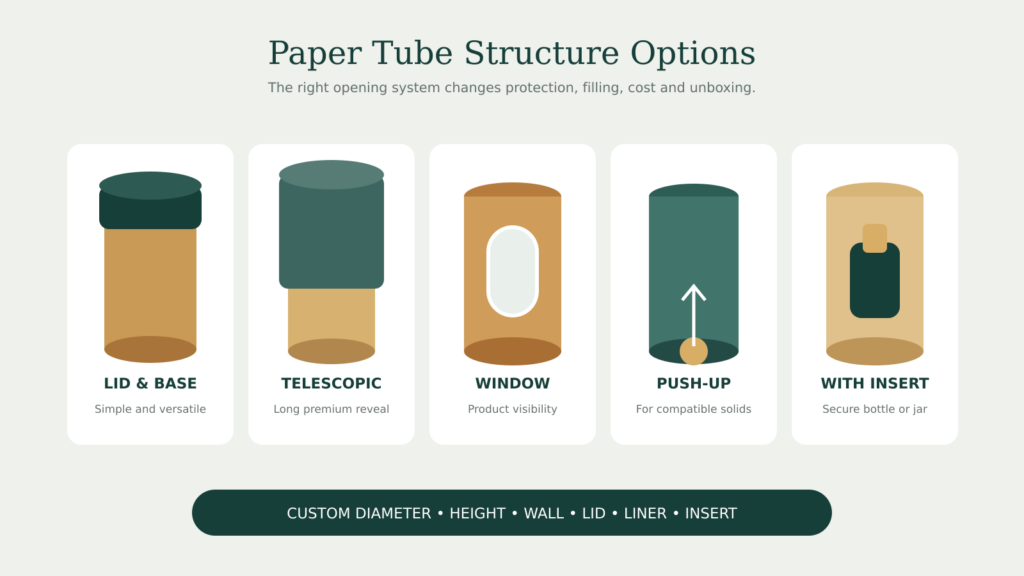
Zu den beliebten Strukturen gehören:
- Deckel- und Bodenrohr: einfach, starr, und für viele Einzelhandelsprodukte geeignet
- Teleskoprohr: eine längere Deckelüberlappung für ein erstklassiges Öffnungserlebnis
- Randbündiges Rohr: saubere Ausrichtung zwischen Deckel und Gehäuse
- Ärmelstruktur: eine verschiebbare Laibung, die sich gut für Geschenksets eignet
- Fensterrohr: Zeigt das Produkt, kann aber eine Materialtrennungsentscheidung hinzufügen
- Push-Up-Rohr: Wird für feste Produkte wie bestimmte Balsame oder Deodorants verwendet
- Aufdrehbares Rohr: kombiniert Papieroptik mit einem mechanischen Spendersystem
- Rohr mit Einsatz: hält eine Parfümflasche, Kosmetikdose, Kerze, oder Geschenkartikel sicher aufbewahren
Kleine Designentscheidungen sind wichtig. Eine Papierkante sollte sauber aussehen, Der Deckelsitz sollte gleichmäßig sein, und der Einsatz sollte das Produkt halten, ohne dass das Entfernen frustrierend wird. Eine Bemusterung ist unerlässlich, da Zeichnungen allein keinen Nachweis des Öffnungswiderstandes erbringen können, Reibung, Farbe unter echtem Licht, oder der Klang und das Gefühl der Verpackung in der Hand.
Drucken & Finishing-Optionen
Papierröhren bieten eine große, ununterbrochene Oberfläche für Markengrafiken. Zu den gängigen Druckoptionen gehören:CMYK, Pantone-Sonderfarben, und Innen- oder Außendruck. Premium-Ausführungen umfassenHeißprägen, Prägung, Prägung, Spot-UV, matte Laminierung, Glanzlaminierung, strukturiertes Papier, und Soft-Touch-Beschichtungen.
Mehr Veredelung bedeutet nicht immer mehr Premium. Tatsächlich, Ein dezentes Foliendetail auf einem ungestrichenen Papier kann mehr Aufmerksamkeit erregen als mehrere konkurrierende Effekte. Es kann auch die Produktion vereinfachen und die Anzahl der Materialschichten reduzieren. Die beste Verarbeitung unterstützt die Markenidentität, übersteht den Kratztest, und bleibt für den Zielmarkt praktisch.
Anfrageeintrag in der Mitte der Seite
Verwandte Produkte
- Kundenspezifische Papierröhren & Runde Boxen
- Lebensmittelverpackungslösungen
- Kosmetikverpackungslösungen
Benötigen Sie Hilfe bei der Auswahl einer Struktur?? Holen Sie sich eine Empfehlung direkt ab Werk basierend auf Ihrer Produktgröße, Füllmethode, Menge, und Zielmarkt.
Einhaltung & Nachhaltigkeit
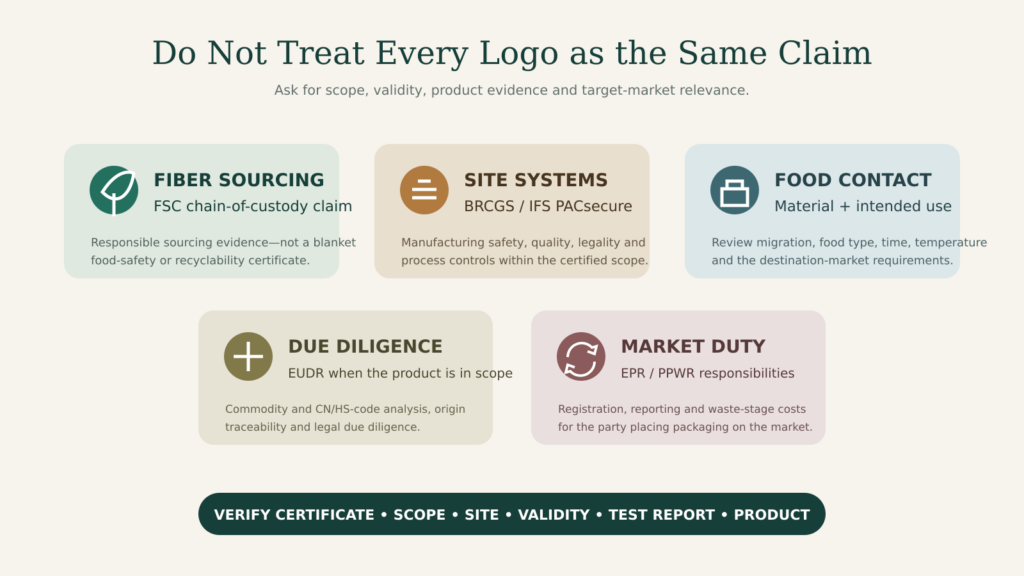
Compliance-Bedingungen werden häufig auf Verpackungswebsites zusammengefasst, aber sie bedeuten nicht dasselbe:
- FSC: befasst sich mit verantwortungsvoller Faserbeschaffung und Chain-of-Custody-Ansprüchen. Ein FSC-Logo sollte nur in der Lieferkette verwendet werden, Produktanspruch, Genehmigung des Kunstwerks, und die Markenregeln erlauben dies.
- BRCGS-Verpackungsmaterialien: ist ein Standard auf Standortebene für Verpackungshersteller zur Produktsicherheit, Qualität, Rechtmäßigkeit, und Betriebskontrollen. BRCGS erklärt den Standard hier.
- IFS PACsecure: ist für die Herstellung und Verarbeitung von Verpackungsmaterialien konzipiert. Es ist für eine Verpackungsanlage direkter relevant, als einfach nur „IFS Food“ zu sagen. Siehe die Offizielle IFS PACsecure-Übersicht.
- Sicherheit bei Lebensmittelkontakt: kommt auf das Material an, Verwendungszweck, Migrationsrisiko, Lebensmitteltyp, Temperatur, Kontaktzeit, und Zielmarkt. In der EU, Alle Lebensmittelkontaktmaterialien müssen dem allgemeinen Sicherheitsrahmen der Verordnung entsprechen (EC) NEIN 1935/2004. Siehe die Leitlinien der Europäischen Kommission zu Materialien, die mit Lebensmitteln in Berührung kommen.
- EUDR: ist eine Due-Diligence-Verordnung zur Abholzung bestimmter Rohstoffe und Folgeprodukte, einschließlich bestimmter Holzprodukte. Es handelt sich nicht um ein einfaches Produktabzeichen. Käufer sollten bestätigen, ob der genaue HS/CN-Code und die Verwendung der Verpackung in den Geltungsbereich fallen, und bei Bedarf Informationen zur Rückverfolgbarkeit anfordern. Siehe die EUDR-Übersicht der Europäischen Kommission.
- EPR: bedeutet, dass Hersteller die finanzielle und/oder organisatorische Verantwortung für die Verpackung im Abfallstadium tragen können. Es handelt sich um einen rechtlichen Verantwortungsrahmen, kein Werkszertifikat. Die Anforderungen hängen vom Land ab, Verkaufsmodell, und derjenige, der die verpackte Ware in Verkehr bringt. Der Europäische Kommission erläutert EPR in der Abfallrahmenrichtlinie.
Für Käufer, Der praktische Schritt besteht darin, das aktuelle Zertifikat anzufordern, ausstellende Stelle, Umfang, Website-Adresse, Gültigkeitsdauer, Materialdeklaration, Testbericht, und jegliche marktspezifische Dokumentation. Ein Logo allein reicht nie aus.
So passen Sie die Papierröhrenverpackung individuell an
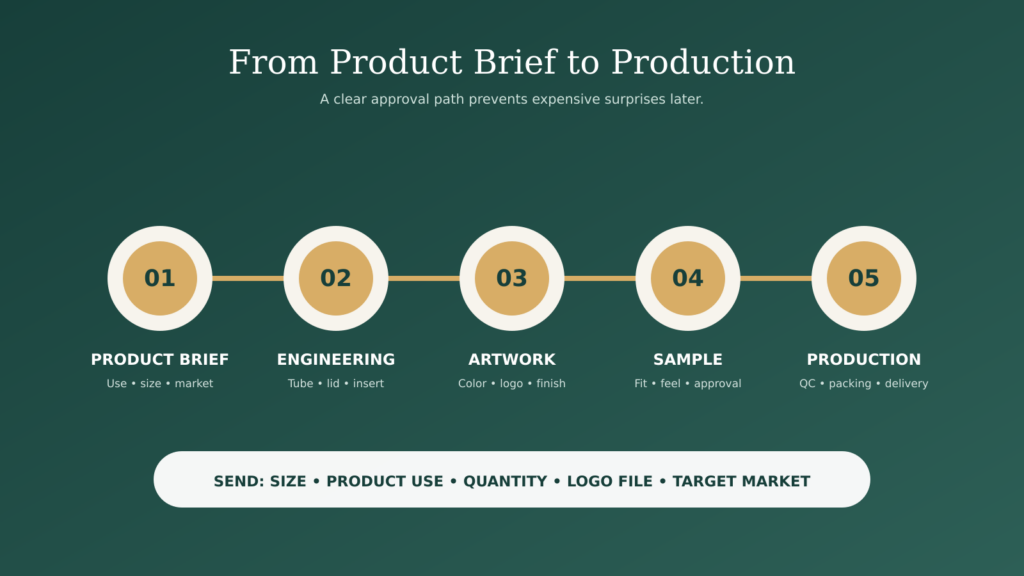
Ein reibungsloses individuelles Projekt folgt normalerweise fünf Schritten:
- Teilen Sie die Produktdetails. Senden Sie die Produktabmessungen, Gewicht, Verwendungszweck, Füllmethode, erforderlichen Schutz, und Zielmarkt.
- Wählen Sie Struktur und Material. Bestätigen Sie den Rohrdurchmesser, Höhe, Wandstärke, Papier, Deckel, einfügen, Liner, und Eröffnungsstil.
- Überprüfen Sie Kunstwerke. Stellen Sie eine bearbeitbare AI- oder PDF-Datei mit umrissenen Schriftarten bereit, verlinkte Bilder eingebettet, Pantone-Referenzen, Logo-Platzierung, und Abschlussschichten deutlich gekennzeichnet.
- Genehmigen Sie ein Muster. Passgenauigkeit prüfen, Farbe, beenden, Öffnungswiderstand, Insert-Retention, Lesbarkeit des Barcodes, und alle Lebensmittelkontakt- oder Transportanforderungen.
- Bestätigen Sie die Massenproduktion. Menge abschließen, Mindestbestellmenge, Vorlaufzeit, Verpackungsmethode, Inspektionsstandard, Versandzeichen, und Lieferplan.
Um ein genaues Angebot zu erhalten, Senden Sie IhreGröße, Produktverwendung, Menge, Logo oder Bilddatei, Zielmarkt, bevorzugtes Material, und gewünschtem Liefertermin. Falls Sie den Aufbau noch nicht kennen, Für den Anfang genügt ein Produktmuster oder eine Maßzeichnung.
Warum Packverpackungen wählen?
Pack Packaging unterstützt globale Marken, Importeure, Händler, und Private-Label-Unternehmen mit kundenspezifischen Papiertuben, Papierboxen, Lebensmittelverpackung, Kosmetikverpackungen, und Geschenkverpackungen.
Zu unseren Produktionsressourcen gehören a20,000㎡ Fabrik, A2,000㎡ Lebensmittelwerkstatt, 10,000,000+ Einheiten der monatlichen Kapazität, und a20+ Personendesign-Team Unterstützung der Strukturentwicklung, Artwork-Checks, Probenahme, und Produktion. Diese Zahlen sind wichtig, Aber was Käufer normalerweise am meisten schätzen, ist die Einfachheit: ein Paket, das richtig passt, sieht stimmig aus, entspricht der vereinbarten Spezifikation, und kann ohne böse Überraschungen nachbestellt werden.
Wir können Ihnen beim Vergleich der Papierqualität helfen, Rohrwand, Liner, Deckel, einfügen, Drucken, Abschluss, Verpackungsmethode, und Compliance-Dokumentation rund um das eigentliche Produkt. Das ist besonders nützlich, wenn ein Premium-Design auch den internationalen Versand und die Prüfung durch Einzelhändler überstehen muss.
FAQ
1. Ist eine Papierröhrenverpackung immer besser als eine Plastikverpackung??
NEIN. Papierröhren eignen sich oft besser für eine hochwertige Präsentation, Sekundärverpackung, Trockenprodukte, und die Reduzierung von sichtbarem Plastik. Für Flüssigkeiten ist Kunststoff möglicherweise besser geeignet, Pumps, quetschbare Produkte, Transparenz, oder anspruchsvolle Feuchtigkeitsbarrieren. Eine Betrachtung des Lebenszyklus und der Produktleistung ist zuverlässiger als die alleinige Beurteilung des Materialnamens.
2. Können Papiertuben für Lebensmittelverpackungen verwendet werden??
Ja, wenn die Struktur und Kontaktmaterialien für das jeweilige Lebensmittel ausgewählt werden, Haltbarkeit, Füllvorgang, Temperatur, und Zielmarkt. Tee, Kaffee, Snacks, Pulver, und Süßwaren benötigen möglicherweise eine lebensmittelechte Einlage, Folienlaminat, oder versiegelter Innenbeutel. Compliance-Dokumente sollten mit der exakten Materialkonstruktion übereinstimmen.
3. Sind Papierhülsen recycelbar??
Röhrchen, die hauptsächlich aus Papier bestehen, können möglicherweise dort recycelt werden, wo örtliche Einrichtungen sie annehmen, aber Liner, Folie, Fenster, Magnete, Schaum, Plastikkappen, und starke Beschichtungen können das Ergebnis verändern. Fragen Sie den Lieferanten nach der Komponentenaufschlüsselung und geben Sie dem Verbraucher marktgerechte Entsorgungsanweisungen, anstatt eine Pauschalreklamation zu erheben.
4. Welche Verpackung sieht hochwertiger aus??
Papierröhren sorgen normalerweise für eine bessere Haptik, Geschenkähnliches Auspackerlebnis und eine große Druckfläche. Kunststoff kann in seiner Form immer noch hochwertig aussehen, Gewicht, Transparenz, Farbe, und das Ausgabesystem sind sorgfältig konzipiert. Die richtige Wahl sollte zur Markenposition und Produktfunktion passen.
5. Ist eine Papiertubenverpackung teurer als eine Plastiktubenverpackung??
Es kommt auf Volumen und Spezifikation an. Papiertuben können für maßgeschneiderte Premium-Projekte kostengünstig sein, da sie möglicherweise weniger Werkzeuge erfordern als ein neu geformter Kunststoffbehälter. Standard-Kunststoffverpackungen können im großen Maßstab wirtschaftlich sein. Vergleichen Sie die kompletten Verpackungskosten, inklusive Werkzeug, Einsätze, Montage, Fracht, Schaden, Lagerung, und Herstellerverantwortungsgebühren.
6. Wie hoch ist die Mindestbestellmenge für kundenspezifische Papiertuben??
MOQ hängt von der Rohrgröße ab, Material, Drucken, Abschluss, Liner, einfügen, und Produktionsmethode. Die Weitergabe der Zielmenge und der Jahresprognose hilft dem Werk, die wirtschaftlichste Spezifikation und den wirtschaftlichsten Bestellplan zu empfehlen.
7. Kann ich vor der Massenproduktion ein Muster erhalten??
Ja. Zur Bestätigung der Größe wird dringend empfohlen, ein Muster anzufertigen, fit, Papierfarbe, drucken, Abschluss, Deckelwiderstand, Leistung einfügen, und Gesamtpräsentation. Fragen Sie, ob das Muster digital gedruckt oder im vorgesehenen Massenproduktionsverfahren hergestellt wurde, weil die Farbe und das Finish abweichen können.
8. Welche Informationen werden für ein Angebot benötigt??
Senden Sie die Produktabmessungen, Verpackungsgröße, falls bekannt, Produktverwendung, Menge, Zielmarkt, Logo oder Bilddatei, bevorzugtes Material, Struktur, Liner, einfügen, Drucken, Abschluss, Lieferland, und Wunschtermin. Fotos oder ein physisches Muster sind hilfreich, wenn die Struktur noch nicht endgültig ist.
Welche Verpackung sollte Ihre Marke wählen??
Wählen Sie einPapierrohr wenn sich das Paket verschenkbar anfühlen soll, unterstützt starke Grafiken, Schützen Sie ein trockenes Produkt oder einen Innenbehälter, und unnötiges Plastik reduzieren. WählenPlastik wenn die Verpackung selbst eine Flüssigkeit enthalten muss, eine Formel abgeben, widerstehen feuchtigkeit, bleiben sehr leicht, oder das Produkt deutlich zeigen. Betrachten Sie aHybrid, papierdominiertes System wenn die Leistung eine funktionale Innenkomponente erfordert, die Marke aber dennoch eine erstklassige Papierpräsentation wünscht.
Die beste Premiumverpackung ist nicht die mit dem lautesten Umweltanspruch. Es ist derjenige, der nur die benötigten Materialien verwendet, schützt das Produkt während seiner gesamten Reise, erklärt die Entsorgung ehrlich, und gibt dem Kunden einen Grund, das Paket aufzubewahren oder ordnungsgemäß zu recyceln.
Erhalten Sie eine individuelle Empfehlung
Teilen Sie uns Ihre Produktgröße mit, Menge, Logodatei und Zielmarkt. Unser Team empfiehlt Ihnen die richtige Struktur, Material und Verarbeitung.
Schicken Sie uns IhreGröße, Produktverwendung, Menge und Logo-Datei um ein individuelles Angebot zu erhalten.
Holen Sie sich ein individuelles Verpackungsangebot
SEO-Publishing-Paket (Entfernen Sie diesen Abschnitt aus dem öffentlichen Artikel, wenn Ihr Theme ihn separat anzeigt)
Fokus-Schlüsselwort: Papiertube vs. Kunststoffverpackung
SEO-Titel: Papierröhre vs. Kunststoffverpackung: Beste Wahl für Premium-Marken
Schnecke: paper-tube-vs-plastic-packaging
Meta-Beschreibung: Vergleichen Sie Papiertuben mit Kunststoffverpackungen für Premiummarken. Rezensionsschutz, kosten, Nachhaltigkeit, Drucken, Compliance und Anpassung.
Vorgeschlagener Auszug: Papierröhren bieten erstklassige Präsentation und flexible Individualisierung, während Kunststoff eine starke Barriere- und Abgabeleistung bietet. Vergleichen Sie die tatsächlichen Kompromisse, bevor Sie Ihre Verpackung auswählen.
Empfohlenes Schema: Artikel + BreadcrumbList + FAQ-Seite (Nur wenn die FAQ auf der Seite sichtbar ist und Ihr SEO-Plugin nicht bereits ein doppeltes FAQ-Schema ausgibt).
Empfohlene interne Links: Runde Boxen, Lebensmittelverpackung, Kosmetikverpackungen, FSC-Papierverpackung, Hersteller von Papierrohrverpackungen, Kontaktieren Sie uns.
Bild ALT-Text:
- Papiertubenverpackungen vs. Kunststoffverpackungen für Premiummarken
- Käufervergleich von Papiertuben und Kunststoffverpackungen
- Kundenspezifische Papierröhrenstrukturen für Kosmetika, Lebensmittel, Kerzen und Geschenke
- FSC BRCGS IFS PACsecure EUDR EPR und Rahmenwerk für Lebensmittelkontaktverpackungen
- Bemusterung und Produktionsprozess für kundenspezifische Papiertubenverpackungen
Werkseitige Fotoersetzungen, die dem Artikel ein menschlicheres Aussehen verleihen:
- Nach der Einführung: Gegenüberstellung einer fertigen Luxus-Papiertube und eines herkömmlichen Plastikbehälters, im gleichen Licht gedreht.
- Nach „Materialoptionen“: Nahaufnahme von Kraftpapier, Kunstdruckpapier, Spezialpapier, Liner, und Folienmuster, die von einem echten Verpackungsingenieur gehalten werden.
- Nach „Drucken & Abschluss“: Makrofoto mit Folienprägung, Prägung, Spot-UV, mattes Finish, und Farbmuster.
- Im Abschnitt „Anpassen“: Offenes Foto eines Designers, der Stanzlinien überprüft, oder eines Technikers, der eine Rohrprobe mit Messschiebern misst.
- Vor dem letzten CTA: Saubere Fabrikhalle oder Inspektionsfoto, das die tatsächliche Produktion und Qualitätskontrolle zeigt.
Überprüfung der Veröffentlichung: Bestätigen Sie den Fabrikbereich, Werkstattbereich in Lebensmittelqualität, monatliche Kapazität, Größe des Designteams, Zertifikatsnamen/-bereiche, und Kontakt-URL vor der Veröffentlichung mit aktuellen Unternehmensunterlagen vergleichen. Auf der Live-Homepage wird derzeit a angezeigt 5 Millionen-Monatskapazitätsabrechnung in einem Abschnitt, während dieser Auftrag angefordert wurde 10,000,000+; Verwenden Sie auf der gesamten Website konsistent eine verifizierte Zahl.