Saltar al contenido
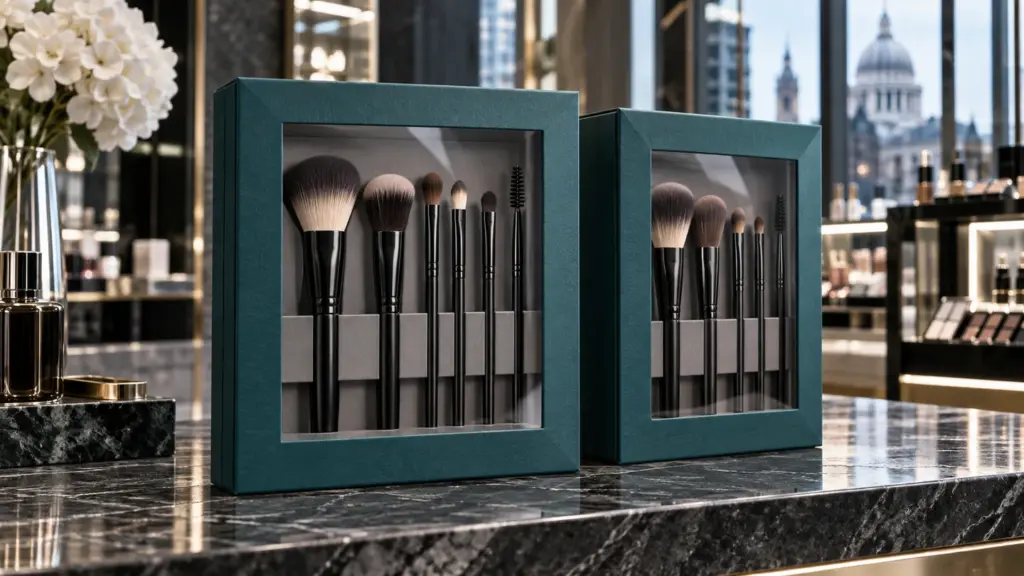
Custom window boxes combine a printed paper structure with a view of the product inside. For a buyer, approving the opening shape is only the first step. The finished sample must also show the correct part of the product, keep the transparent panel in place and work with the intended loading process.
This guide focuses on sample approval for flat-panel paper boxes used for cosmetics, accessories and gift products. Use it to connect the visible opening, window patch, artwork and inner support before confirming a production order.
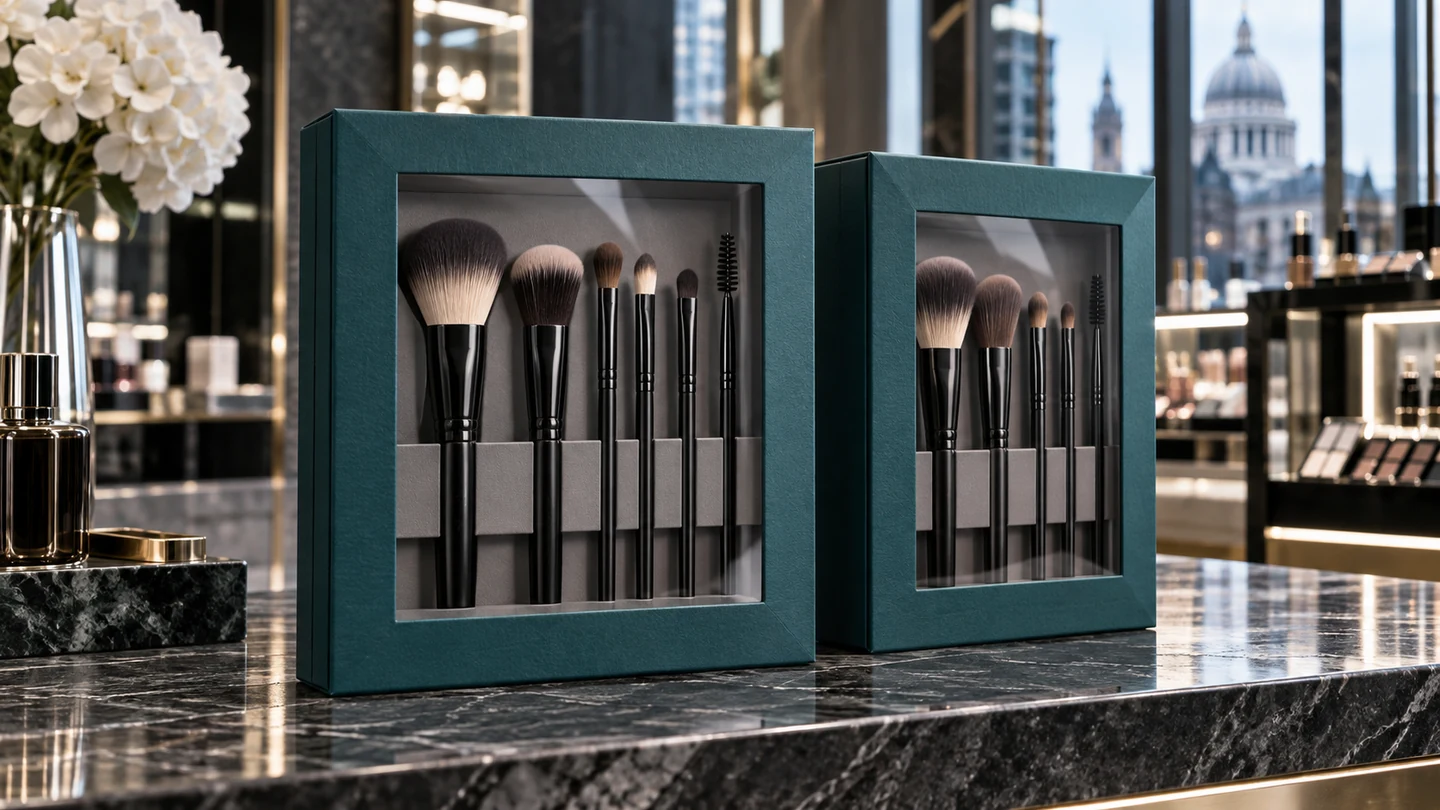
What Are Custom Window Boxes?
A window box has an opening in a paper panel, sometimes covered by a transparent sheet attached behind it. The visible cutout and the larger attached sheet are separate features. Buyers should identify both in the specification instead of approving a rendering that shows only the front view.
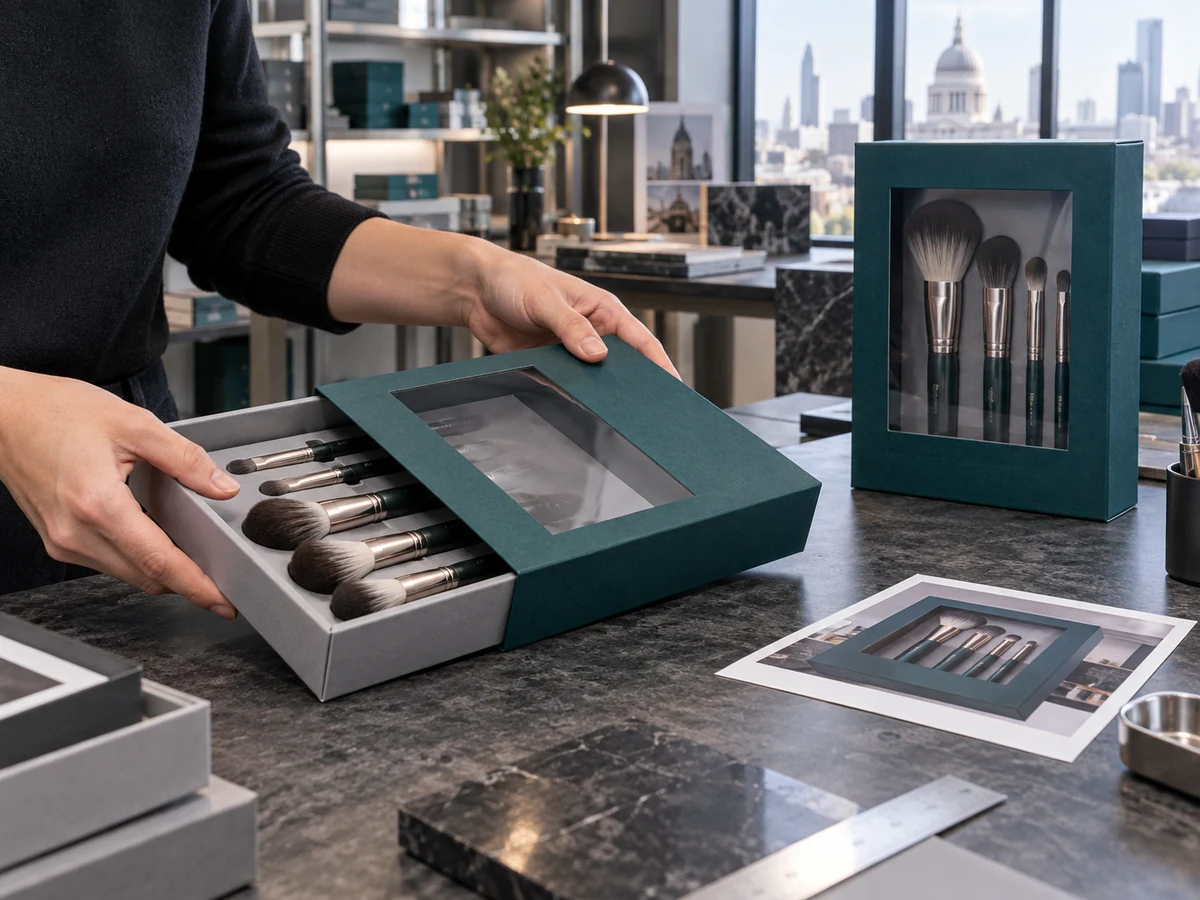
A window can be incorporated into different structures. Por ejemplo, nuestro rigid drawer gift box with a clear window combines a viewing panel with a sliding inner tray. A folding carton uses a different assembly sequence, so its window needs review in that context.
Define the intended structure and product arrangement first. The same opening artwork does not automatically transfer between box constructions.
Approve the View With the Product in Place
Mark exactly what customers should see: a brush head, a jar label, a color assortment or a decorative detail. Then load the real product and check the closed box from the intended display position. A view that works from directly above may not work on a shelf.
Check the edges of the visible area with the product positioned at the limits allowed by the insert. The goal is to understand whether normal positioning variation hides important details or exposes unwanted areas. Ask the supplier to propose and document an acceptable alignment range rather than inventing a universal clearance.
For multiple SKUs, review every product arrangement assigned to the shared box. Keep a photograph of each approved view and connect it to the product and insert reference.
Review the Cutout and the Remaining Paper Panel
Ask the supplier to show the window on the structural drawing, including its relationship to folds, corners, seams and opening features. Review the remaining paper border as part of the complete box rather than treating it as unused space available for a larger window.
On the physical sample, inspect the cut edge and nearby wrap. Look for loose fibers, untidy turns, exposed layers or distortions that affect the intended appearance. Discuss any concerns with the manufacturer before final decoration is approved.
Para folding carton structures, include erection and closure in the review. For a rigid sleeve, examine the loaded sliding action. Each format creates a different interaction between the opening, the product and the rest of the package.
Specify the Transparent Patch Separately
Request the proposed window material, thickness specification, patch dimensions and attachment method. These details belong in the quotation and approved component record. Do not assume that all clear sheets are interchangeable because they look similar in a digital mockup.
View the actual material over the product under relevant lighting. Check whether reflections, haze or surface marks obscure the feature you intend to display. Agree on a physical reference for acceptable appearance rather than judging photographs taken under different conditions.
Ask how the patch will be protected and handled during conversion and packing. If protective film is part of the proposal, identify who removes it and at which stage. Any temporary protection should have a defined role in the production process.
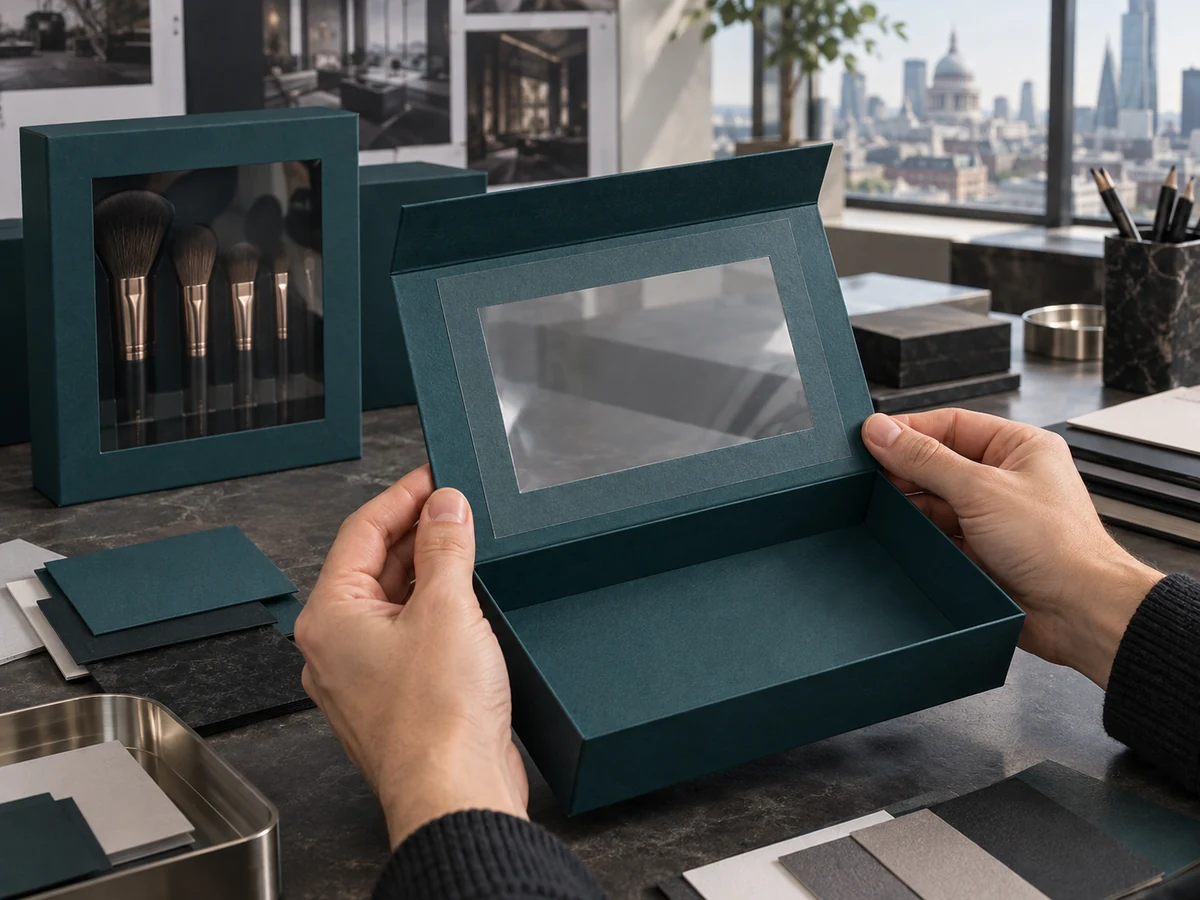
Inspect the Inside Attachment Area
Open the sample and inspect the attachment around the entire window. Check for visible lifting, loose edges, adhesive showing through the viewing area or a patch positioned unevenly behind the cutout. Ask the supplier to explain how these features will be checked during production.
Do not set an arbitrary overlap or bond requirement from a photograph. Have the manufacturer propose the construction for the selected materials and intended handling, then agree on how it will be evaluated. Record the approved drawing and material references together.
Also inspect the places where a tray, product or loading tool passes near the patch. A clean empty sample can conceal interference that appears only after the box is filled.
Keep Product Support Independent of the Window
Decide what holds the product in its display position. The transparent panel should not become an unintended stop that the product presses against simply because the insert leaves too much movement.
Evaluate product supports and custom inserts with the window sample. Check that the product remains visible after the agreed handling sequence and that its label or decorative finish does not rub against the viewing surface during loading.
para un conjunto, inspect the tallest, widest and most awkwardly positioned item. If the assortment changes, recheck the product-to-window relationship even when the outer box dimensions remain unchanged.
Coordinate Artwork and Finishing Around the Opening
Place the window on the approved artwork template, with its visible boundary and any supplier-defined restricted areas clearly identified. Avoid positioning essential text where small registration differences could make it appear crowded or partially hidden.
Compare the decorated sample with the structural sample. Frustrar, realce, coatings and wrap selection should be evaluated in the final combination. Ask whether any chosen effect changes the proposed production sequence or attachment area.
Check the finished front panel as a composition: product, window edge, logo and printed information. A larger opening is not necessarily better if it leaves the brand message difficult to read or makes the product arrangement look accidental.
Trial the Actual Packing Sequence
Ask the intended packing team to load representative products using the proposed materials. Observe where hands touch the viewing area, whether items catch on the patch and whether the insert stays aligned as the box closes.
Review the package immediately after loading and again after the handling sequence agreed for the project. Document visible marks and alignment changes. Separate appearance checks from any transport evaluation; a window that looks clean on the workbench is not proof of delivery performance.
Use a short reference sheet showing the loading orientation, product position and finished front view. This gives packers a practical way to recognize an incorrect assembly without relying on memory.
Costo, MOQ and Supplier Responsibilities
Compare quotations that include the same box, transparent material, patch application, insertar, decoration and protective packing. Separate tooling or development charges from recurring production costs, and identify whether the supplier provides assembled boxes or components.
MOQ can depend on the structure, material sourcing, artwork versions and production setup. Ask which minimum applies to each part of your proposal. Do not assume that several window shapes or printed editions can be combined under one minimum without confirmation.
Choose a manufacturer that can explain who approves the drawing, who checks the patch and who verifies the loaded appearance. Request a revised quotation if sample changes alter the material or assembly scope.
Material Claims and End-of-Use Information
Describe the complete construction accurately. A paper box with a transparent plastic window should not be presented as plastic-free. Asimismo, the appearance of a clear sheet does not establish its recycled content or disposal route.
Ask for supporting information about the actual selected materials and confirm any separation instructions for the destination market. Keep environmental claims specific to the approved construction. If the application introduces special contact or product-protection requirements, have the relevant specialists review them before ordering.
Preguntas frecuentes
What should I approve before ordering custom window boxes?
Approve the loaded view, structural drawing, window material, patch attachment, insertar, artwork and packing sequence. Keep references for the complete sample rather than approving each item in isolation.
Can I enlarge the window after approving artwork?
Treat it as a structural change. Ask the supplier to review the remaining panel, attachment area, product support and artwork before issuing a revised sample.
Should a window box arrive flat or assembled?
That depends on the chosen structure and supply arrangement. Confirm delivery configuration and trial any setup steps with the intended packing team.
Does a clear window replace an inner protective package?
Not automatically. Define the product’s requirements separately and evaluate the complete packaging system. Visibility alone does not establish protection or suitability.
Request a Window Box Sample Review
Send PK your product samples, preferred viewing area, order quantities and intended display arrangement. Use our structure and sampling service to review the cutout, patch, support and packing sequence together. A documented loaded sample gives purchasing and production teams a concrete standard to work toward.