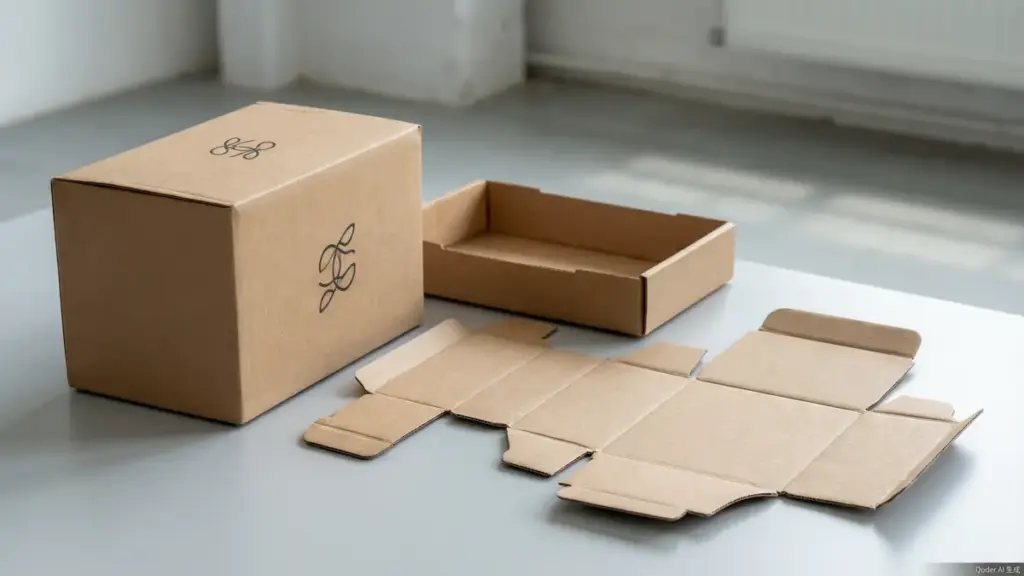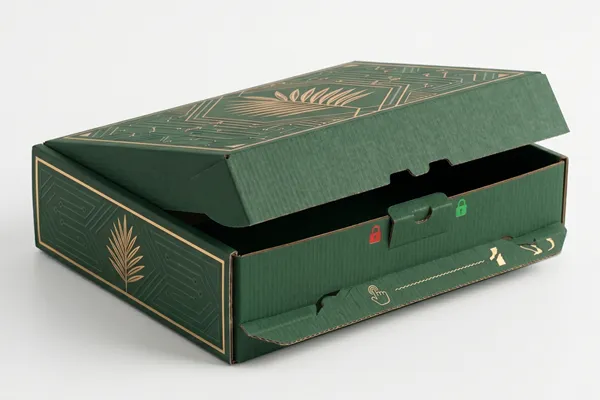
AI-generated concept image for illustration; not a photograph of an actual factory inspection or customer project.
Packaging tolerances define how much a finished box, tapa, manga, insertar, or opening may vary from an approved target. Para compradores B2B, the goal is not to demand an impossible zero-variation result. It is to identify which dimensions affect product protection, asamblea, presentación en estante, and packing speed, then agree on measurable acceptance criteria before mass production.
Papel, cartón, adhesivo, wrapping paper, impresión, troquelado, plegable, and hand assembly all introduce some variation. A sound specification separates critical fit dimensions from cosmetic preferences. This guide explains how to build that specification, approve a sample, and inspect production without relying on vague descriptions such as “tight,” “premium,” or “same as the sample.”
Why Packaging Tolerances Need a Written Agreement
A dieline gives nominal dimensions, but nominal dimensions alone do not define an acceptable finished pack. A rigid lid that is slightly too tight can trap air or slow packing. A lid that is too loose may lift during handling. A folding carton that varies at the crease can affect squareness and closure. An insert that grips a bottle too firmly may damage decoration, while excessive clearance can allow movement.
Start with the product, not only the box. Record the product’s maximum and minimum dimensions, the surfaces that may contact packaging, and the direction in which it is inserted or removed. El packaging size guide explains why internal space should be based on real product measurements. If the product itself varies, the package must accommodate that range.
Strong packaging tolerances start with a useful custom box dimensional tolerance statement that identifies the measurement point, target, permitted range, tool, sample condition, and inspection quantity. It should also state what happens when a result falls outside the agreed range. This turns a subjective discussion into a repeatable decision.
Which Dimensions Are Critical?
Internal product space
The inside length, ancho, and depth determine whether the product loads smoothly and remains protected. Measure the usable space after wrapping paper, revestimientos, inserciones, and folded flaps are in place. For soft goods, define the packed condition. For bottles or jars, include caps, zapatillas, collars, etiquetas, and any protective bags.
Tapa, manga, and drawer movement
A rigid box lid fit tolerance is not only a single length or width. Grosor del tablero, wrap buildup, corner construction, humedad, and box squareness can all influence the final action. Approve the opening experience as well as the dimensions: does the lid seat evenly, release without excessive force, and remain secure during normal handling? For drawer boxes, check both side clearance and the pull direction.
Folds, locks, and glued seams
Folding carton production variation often appears at scores, glue seams, solapas plegables, and locking tabs. Inspect whether the erected carton stays square, closes without buckling, and runs through the intended packing process. El folding carton defects guide provides a useful review of cracking, arrugando, gluing, and print problems that should remain separate from dimensional acceptance.
Insert position and holding force
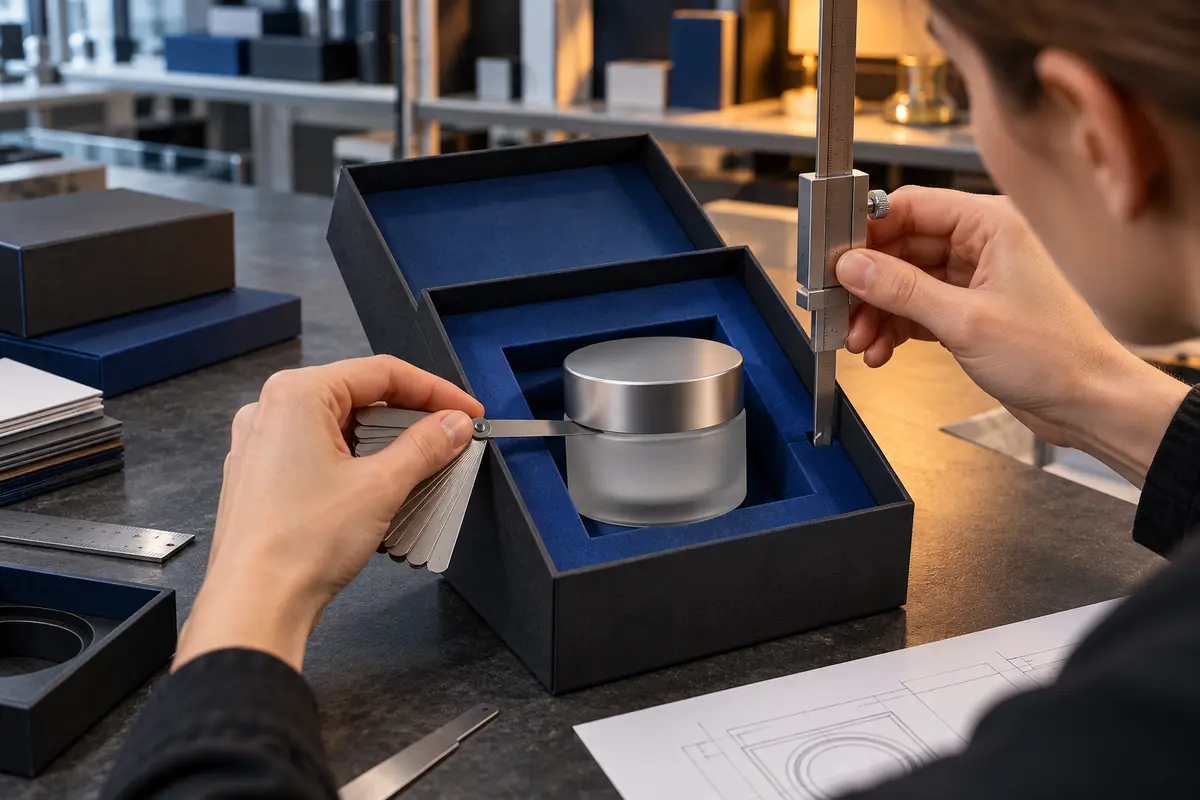
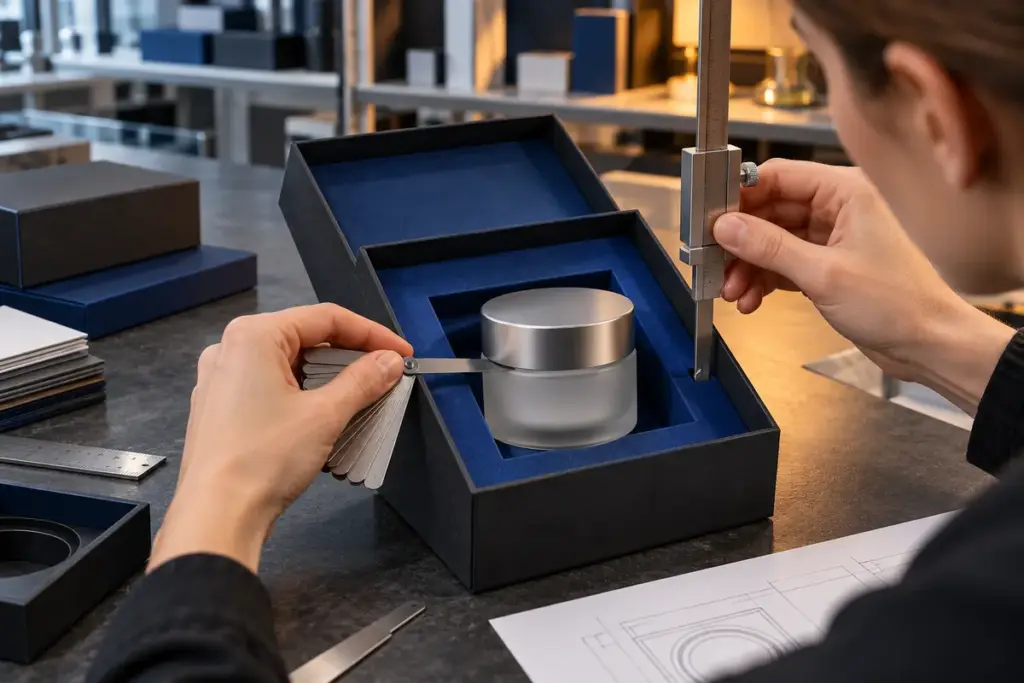
AI-generated concept image for illustration; not a photograph of an actual factory inspection or customer project.
Packaging insert clearance must balance protection and usability. Record the cavity dimensions, the location of the product centerline, the depth of support, and any finger-access area. Test the finished product with its normal surface decoration. A laboratory bottle or 3D print may not behave like a glass jar with a label, revestimiento, or pump.
For multi-component sets, confirm the distance between products and the top clearance below the lid. If a booklet, cable, spoon, or accessory sits underneath, include its thickness in the assembled trial. El structure and sampling page shows why physical trials are important before approving a packaging structure.
Build a Measurement Method Buyers and Suppliers Can Repeat
A custom packaging measurement method should answer five questions: what is measured, where it is measured, which tool is used, when the sample is measured, and how the result is recorded. Use a diagram or marked photograph when a box has several possible reference points. Por ejemplo, “inside width” could mean the distance at the opening, the base, or the narrowest usable point.
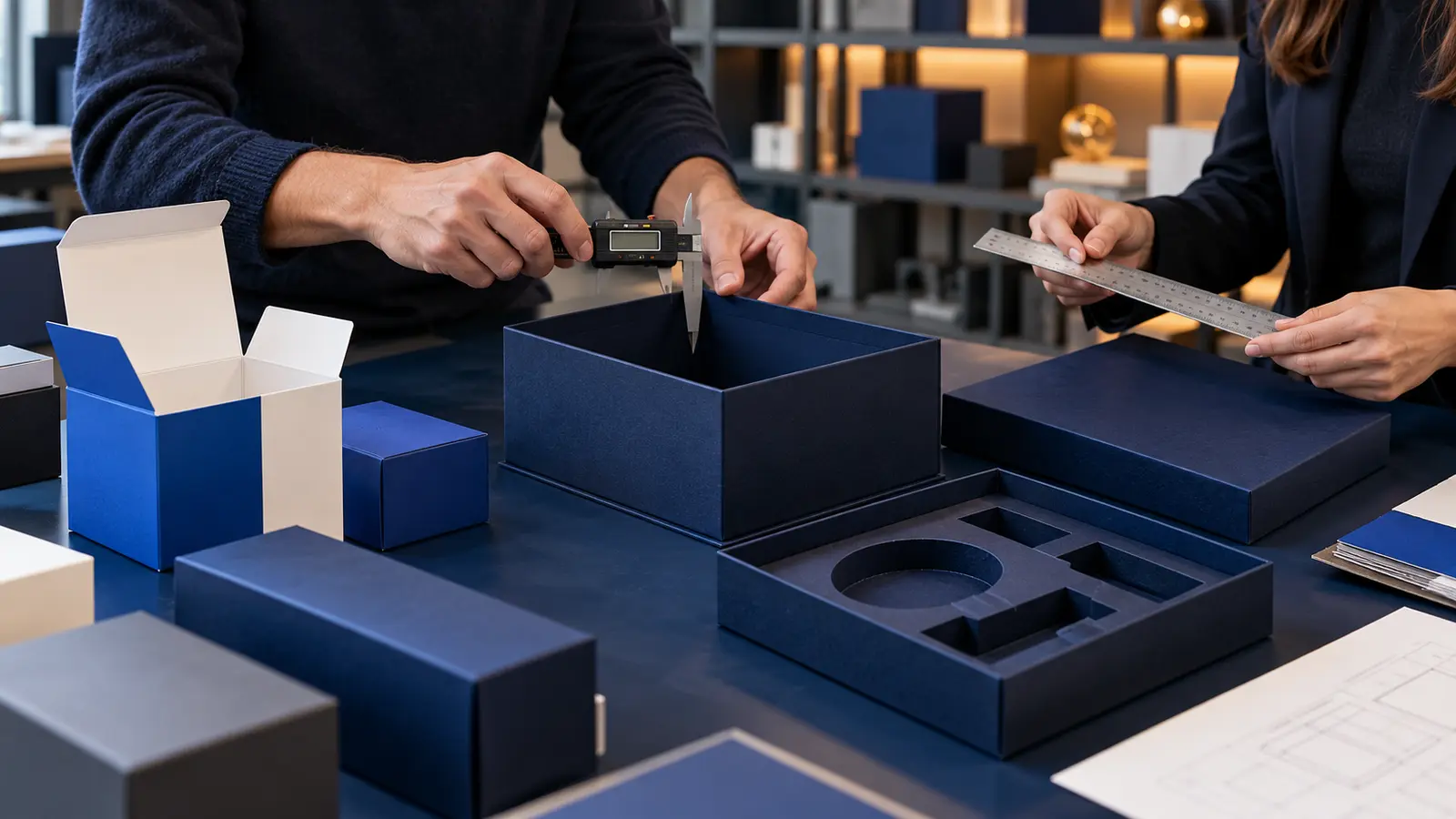
Calipers suit smaller features and insert openings; a verified steel ruler may suit larger box dimensions. A go/no-go product gauge can be valuable when functional fit matters more than a decimal reading. Whichever method you choose, use the same method for sample approval and production inspection.
Paper-based materials respond to moisture and temperature, so avoid comparing a newly delivered cold carton with a reference sample stored for months under different conditions. Record the inspection environment when it is important to the fit. Do not copy a generic tolerance table from another product: construction, tamaño, material, converting method, and use case all matter.
Approve a Golden Sample and a Limit Sample
A signed reference, sometimes called a golden sample, is most useful when it includes the correct product and every packaging component. El box sample approval checklist should cover dimensions, opening action, product loading, insert position, cierre, artwork version, referencia de color, refinamiento, and pack-out order. Keep the approved sample protected and identify its version.
When a characteristic is difficult to describe, consider approving a limit sample that shows the boundary of acceptability. One sample may represent the loosest acceptable lid; another may show the maximum acceptable corner exposure. Limit samples do not replace measurements, but they help align visual judgments between procurement, calidad, and production teams.
Changes must trigger a controlled review. A new product mold, thicker label, different board, revised insert, or adjusted wrapping paper can change fit. Follow a documented flujo de trabajo del proyecto de embalaje personalizado so the supplier knows which version is authorized for production.
Turn the Specification Into a Batch Inspection Plan

AI-generated concept image for illustration; not a photograph of an actual factory inspection or customer project.
Un práctico packaging quality inspection plan separates defects by risk. A dimension that prevents product loading may be critical to function. Slight visual movement at a non-contact edge may be less important. Define categories and acceptance decisions before inspection begins.
ISO 2859-1:2026 describes acceptance sampling plans for inspection by attributes. Buyers may use an agreed sampling approach, but the standard does not choose your product-specific defects or limits for you. The brand and supplier still need to define what counts as conforming. See the official ISO 2859-1 overview before referencing it in a purchase specification.
Para mass production packaging consistency, combine functional checks with measurement records. A compact inspection sheet can include sample number, cavity or station, target dimension, result, pass/fail decision, and defect photograph. Inspect across the run rather than taking every sample from one case. If the order contains several SKUs, record results separately by SKU and artwork version.
Dimensional checks should sit beside other approval controls. Surface rub resistance, color, registration, foil placement, pegamento, and appearance require their own criteria. Use the scuff-resistance approval guide y color-matching guide to keep these checks distinct.
Questions to Put in Your RFQ
- Which dimensions are nominal, and which are critical to function?
- How will each critical dimension be measured?
- Will measurements use finished internal dimensions or flat dieline dimensions?
- Which product sample and packaging version will be used for fit approval?
- What opening, closing, loading, and removal tests will be performed?
- How will the production lot be sampled and recorded?
- What change requires a new sample or written approval?
Preguntas frecuentes
Can a custom paper box have zero dimensional variation?
No production process is completely free of variation. Buyers should define functional targets and acceptable ranges for the characteristics that matter to product fit, protección, asamblea, and presentation.
Should tolerances be printed on the dieline?
Critical finished dimensions can be referenced on a controlled specification or inspection drawing. Keep nominal dieline geometry, finished-box measurements, and acceptance limits clearly distinguished.
Is the approved sample enough for mass production?
The sample is an essential reference, but a written measurement method and batch inspection plan make approval more repeatable. Store the sample with its product, artwork revision, date, and approval record.
How should insert fit be approved?
Use the real finished product whenever possible. Check loading force, holding, removal, surface contact, top clearance, accessory placement, and movement during normal handling.
Who should define packaging tolerances?
The buyer should identify functional and brand requirements, while the manufacturer confirms what the selected materials and construction can consistently achieve. Final limits should be agreed in writing.
When should a new sample be required?
Request a new approval when a change may affect fit or appearance, including product dimensions, junta, insert construction, wrapping material, estampación, obra de arte, finalizar, or assembly method.
Make Fit a Controlled Requirement
Bien packaging tolerances connect design intent with measurable production decisions. Envía las dimensiones de tu producto., physical sample, desired opening experience, insertar requisitos, and packing process with your RFQ. PACK Packaging can then review the structure with your team and prepare a fit-focused sampling plan before production approval.