
Elegir el tamaño de embalaje adecuado parece sencillo: medir el producto, agrega un poco de espacio, y pide la caja. En realidad, que el “poco espacio” afecta la protección, diseño de inserción, uso de materiales, costo de envío, presentación en estante, e incluso la primera impresión del cliente.
Si el paquete está demasiado apretado, El producto puede ser difícil de cargar o quitar.. Sin embargo, si es demasiado grande, El artículo puede moverse durante el tránsito mientras usted paga por el material y el aire.. Esta guía explica cómo seleccionar el tamaño de embalaje adecuado para cajas y tubos de papel sin tener que adivinar..
Obtenga una cotización de embalaje personalizado
respuesta rapida: El tamaño de embalaje correcto es el tamaño interno validado más pequeño que se ajuste al producto., insertar, transatlántico, cierre, y el espacio libre requerido y al mismo tiempo proteger el artículo mediante el embalaje., transporte, almacenamiento, y uso normal del cliente. Confírmelo siempre con una muestra física antes de la producción en masa..
¿Cuál es el tamaño de embalaje correcto??
El tamaño de embalaje adecuado equilibra cinco cosas: ajuste del producto, protección, usabilidad, presentación, y costo total en destino. No es simplemente la longitud del producto, ancho, y altura copiada en una línea troquelada.
Primero, separado dimensiones del producto, dimensiones internas del embalaje, y dimensiones del embalaje externo. Los compradores a menudo los confunden, y honestamente, ese pequeño malentendido puede generar una revisión de muestra muy costosa.
- Dimensiones del producto son la longitud máxima, ancho, y altura del artículo, incluyendo gorras, zapatillas, cierres, accesorios, y cualquier parte que sobresalga.
- Dimensiones internas describir el espacio utilizable dentro del paquete terminado.
- Dimensiones exteriores incluir el espesor del tablero, bordes envueltos, tapa, base, y otras capas estructurales. Estas dimensiones influyen en la planificación del master-carton, disposición de paletas, almacenamiento, y flete.
El tamaño de embalaje correcto también debe tener en cuenta la forma en que se empaqueta el producto.. Una botella colocada directamente en una caja plegable necesita un espacio diferente al de la misma botella contenida en un inserto grueso de EVA dentro de una caja rígida..
Una fórmula de tallas práctica
Utilice esto como marco inicial, no como una especificación de producción final:
Tamaño interno requerido = tamaño máximo del producto + espacio de inserción o revestimiento + autorización funcional + tolerancia de producción
Mida cada eje por separado. Para un recipiente redondo, registrar el diámetro máximo y la altura total. para un conjunto, Organice todos los productos en el orden de presentación previsto antes de medir la huella completa..
Luego haga cuatro preguntas prácticas.:
- ¿Puede el personal de producción cargar el producto sin forzarlo??
- ¿Puede el cliente retirarlo cómodamente??
- ¿El artículo permanecerá estable cuando el paquete se agite o se gire??
- ¿Se pueden aceptar variaciones normales de fabricación sin que queden flojas o dañadas??
Esa última pregunta importa. Papel, junta, inserciones, botellas, y los componentes de llenado tienen tolerancias. Por lo tanto, el tamaño de embalaje correcto debe funcionar a pesar de la variación normal de lotes, no sólo por un prototipo perfecto.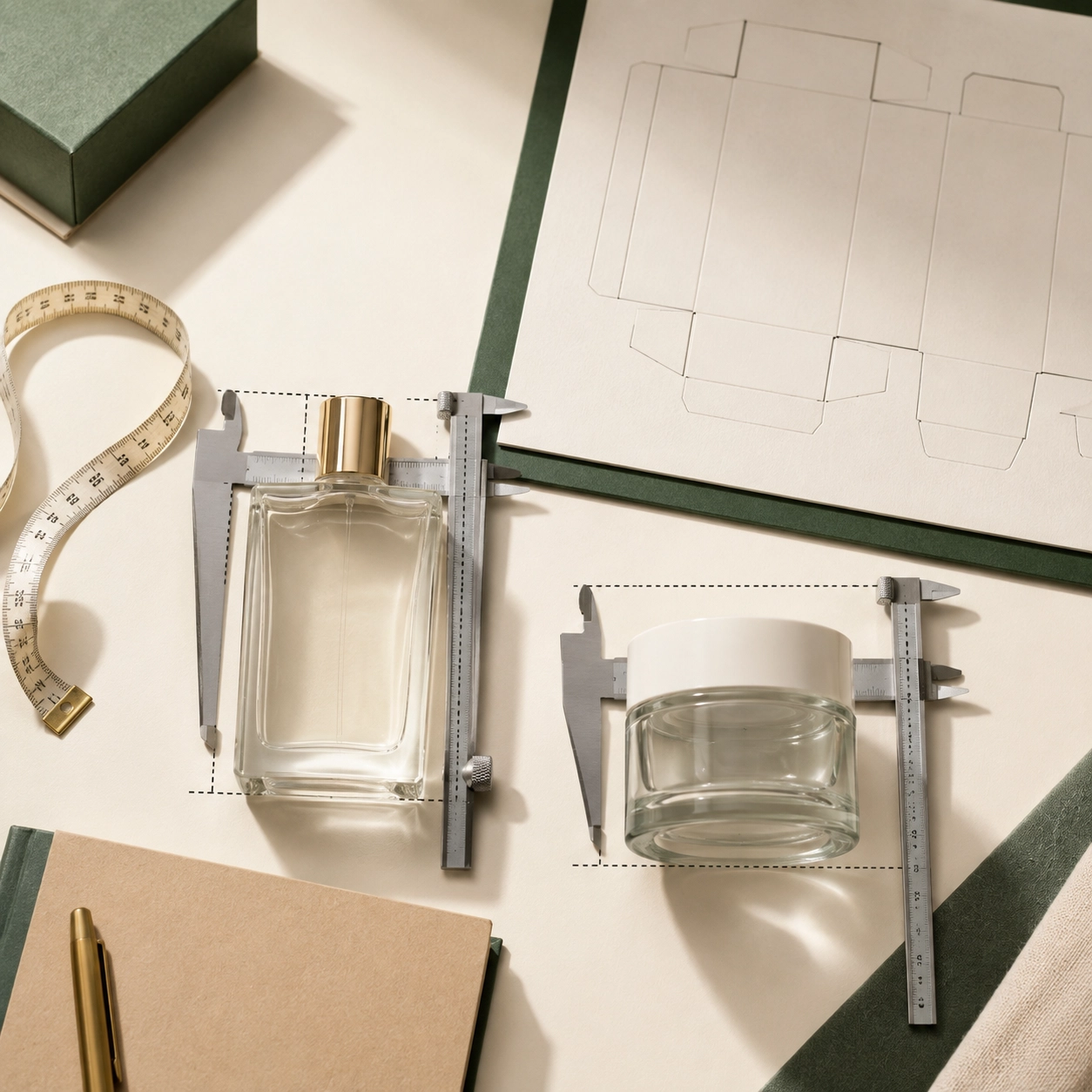
Aplicaciones comunes
En la práctica, el tamaño de embalaje correcto cambia con el peso del producto, fragilidad, forma, canal de ventas, y experiencia de usuario. Una caja minorista compacta y un sobre protector de comercio electrónico pueden contener el mismo artículo., sin embargo, hacen trabajos muy diferentes.
Perfumes y Fragancias
Los frascos de perfume de vidrio necesitan un soporte estable alrededor de la base, espalda, y gorra. El tamaño correcto del envase de perfume debe incluir el perfil del inserto., tolerancias de la botella, y suficiente espacio para los dedos para retirarlo. Si la botella está demasiado baja, la presentación se siente incómoda; si está demasiado alto, la tapa puede golpear la tapa.
Cuidado de la piel y cosméticos
Tarros de crema, botellas de suero, juegos de maquillaje, pomada para labios, desodorante, y el perfume sólido requieren una lógica de tamaño diferente. Las bombas y los goteros suelen ser los puntos más anchos o delicados., así que mídelos con cuidado. Además, comprobar si las etiquetas o collares decorativos aumentan el diámetro del producto final.
Té, Café, y bocadillos
Los envases de alimentos pueden necesitar un revestimiento apto para alimentos, revestimiento de aluminio, bolsa sellada, membrana fácil de pelar, o espacio de cabeza adicional. El tamaño de envase adecuado para alimentos debe basarse en el peso de llenado real y la densidad aparente del producto., no solo el peso. Por ejemplo, 100 g de té a granel puede requerir mucho más volumen que 100 g de caramelo denso.
Velas, Regalos, Joyas, y juguetes
Un frasco de vidrio para velas necesita amortiguación y espacio alrededor del borde. Las joyas se benefician de un inserto de presentación cómodo, mientras que los juguetes pueden tener partes irregulares o ventanas de visualización. Mientras tanto, Los juegos de regalo necesitan un diseño planificado para que cada artículo parezca deliberado en lugar de simplemente colocado en una gran caja vacía..
Productos de comercio electrónico y suscripción
Los paquetes de envío deben sobrevivir a la manipulación, apilado, y entrega. Como consecuencia, dimensiones externas, amortiguación, flauta corrugada, y la utilización del cartón se vuelven tan importantes como la apariencia en los estantes. Un paquete que se ve hermoso pero que se envía principalmente por vía aérea rara vez es rentable.
Opciones de materiales
La selección del material puede cambiar el tamaño correcto del empaque porque cada capa ocupa espacio y se comporta de manera diferente durante la conversión..
Papel y Cartón Kraft
El papel kraft ofrece un aspecto natural y funciona bien para el té., café, bocadillos, velas, regalos, y cosmética natural. Sin embargo, El tablero estructural debajo de la superficie impresa determina la rigidez.. Un producto más pesado puede requerir tableros más gruesos o una construcción de pared más resistente..
Papel de arte
El papel artístico C2S proporciona una superficie lisa para impresión CMYK y Pantone.. Por lo general, se envuelve sobre cartón gris para cajas rígidas o se usa como superficie impresa en cajas plegables y tubos de papel.. Aunque la hoja impresa exterior es delgada, el tablero estructural debajo cambia la relación de dimensiones internas y externas.
Papel especial
texturizado, lino, perlado, metálico, o el papel con apariencia de cuero puede crear una sensación premium. Sin embargo, El papel especial puede reaccionar de manera diferente en los pliegues., esquinas envueltas, costuras, y radios pequeños. El proveedor debe confirmar si el papel elegido se adapta a las dimensiones y estructura del paquete..
Revestimientos de barrera y de calidad alimentaria
Papel de calidad alimentaria, papel recubierto de PE, capas resistentes a la grasa, revestimientos de aluminio, y otros materiales de barrera pueden afectar el diámetro o volumen interno utilizable. Más importante aún, el revestimiento seleccionado debe coincidir con el producto real, método de llenado, objetivo de vida útil, y mercado objetivo.
Insertos
Cartulina, pulpa moldeada, EVA, espuma, pulpa de papel, ampolla, y las inserciones flocadas no utilizan el espacio de la misma manera. Un inserto grueso puede agregar protección y valor visual; sin embargo, También puede agrandar el paquete exterior.. Por esa razón, diseñar el prospecto y el paquete juntos en lugar de tratar el prospecto como un accesorio de último momento.
Opciones de estructura
La estructura suele decidir el tamaño correcto del envase porque la tapa, base, insertar, partes móviles, y el método de apertura todos necesitan espacio de trabajo.
- Caja con tapa y base: Incluir la superposición de la tapa., altura de la base, espesor de pared, y posición de inserción.
- Insertar cuadro: Permitir la carga del producto., muescas en los dedos, tirar de las pestañas, y autorización de remoción.
- Caja de ventana: Mantenga el producto alineado detrás de la ventana mientras protege las áreas de corte débiles.
- tubo de flexión: Calcular el diámetro del producto., disco de empuje, distancia recorrida, y el espacio libre inferior juntos.
- tubo giratorio: Deje espacio para el mecanismo interno y confirme el rango de llenado y movimiento del producto..
- Caja de manga: Agregue espacio deslizante para que la bandeja se mueva suavemente sin sentirse suelta..
- Tubo telescópico o caja: Confirmar la profundidad de la tapa, altura del hombro o del cuello, y la resistencia de apertura entre las partes superior e inferior.
A primera vista, Reducir unos milímetros puede parecer un ahorro fácil.. Sin embargo, si la manga se atasca, la tapa se levanta, o el inserto aplasta la etiqueta del producto, el paquete ya no funciona. Una muestra física en blanco revela estos problemas mucho antes que una representación en pantalla..
Impresión & Opciones de acabado
Después de elegir el tamaño de embalaje adecuado, desarrollar la línea dieline alrededor de la estructura aprobada. CMYK, colores pantone, estampado en caliente, realce, grabado, mancha ultravioleta, laminación mate, laminación brillante, y los acabados suaves al tacto se pueden colocar con precisión.
La mayoría de los acabados superficiales no cambian drásticamente el tamaño general.. Aún así, Pueden influir en las tolerancias y la estructura de producción.. Por ejemplo, El relieve intenso cerca de un pliegue puede afectar la formación., La laminación de cobertura total cambia la fricción de la superficie., y el papel de aluminio o el UV puntual colocado a lo largo de una costura puede ser difícil de alinear de manera consistente.
Mantenga logotipos críticos, texto pequeño, códigos de barras, e información legal lejos de líneas de corte, pliegues, áreas de pegamento, y bordes envueltos. Además, mostrar cada acabado especial en una capa de arte separada con nombre.
Una vez aprobada la estructura y dieline, Utilice nuestra guía sobre cómo preparar archivos de ilustraciones para la impresión de envases personalizados para organizar colores CMYK o Pantone, sangrar, fuentes, imágenes, y capas de acabado antes de la producción.
Productos relacionados
Tubos de papel personalizados · Envasado de alimentos · Envases Cosméticos
Cumplimiento & Sostenibilidad
El tamaño de embalaje adecuado puede reducir el uso innecesario de papel, insertar volumen, espacio de almacenamiento, y volumen de carga. Aún, Más pequeño no es automáticamente más sostenible si una protección inadecuada aumenta los daños., rechaza, o envíos de reemplazo.
Para solicitudes de papel FSC, Confirmar la reclamación del material y la documentación de respaldo para el pedido final.. Para proyectos alimentarios, especificar si el embalaje tocará el producto directamente o servirá como embalaje secundario. Esto afecta la selección de materiales., diseño de barrera, pruebas, y documentación.
Dependiendo del proyecto y mercado de destino, Los compradores pueden solicitar soporte relacionado con los materiales de embalaje BRCGS., Requisitos de la cadena de suministro de IFS PACsecure o IFS Food, seguridad en contacto con alimentos, EUDR, EPR, y PPWR. Estos términos no significan todos lo mismo: algunos se relacionan con sistemas o materiales de gestión certificados, mientras que otros crean una debida diligencia específica del mercado, responsabilidad-del-productor, u obligaciones de embalaje. Por lo tanto, confirmar el alcance exacto, validez del certificado, informe de prueba, material, y responsabilidad legal antes de imprimir cualquier reclamo en el paquete.
En otras palabras, el dimensionamiento eficiente apoya la sostenibilidad, pero la selección documentada del material y un diseño de protección adecuado siguen siendo lo primero.
Cómo personalizar el tamaño de embalaje adecuado
Para confirmar el tamaño de embalaje correcto de forma eficiente, enviar información completa al inicio. Ahorra tiempo, reduce las citas repetidas, y ayuda al equipo estructural a recomendar una solución realista.
Paso 1: Mida el producto real
Proporcionar longitud máxima × ancho × alto en milímetros. Para tubos, paso, y botellas, enviar diámetro × altura total. incluir la gorra, bomba, etiqueta, sello, accesorios, y cualquier parte que se extienda más allá del cuerpo principal.
Paso 2: Comparta el peso y la cantidad del producto por paquete
Indique el peso neto y bruto del producto.. Confirme también si un paquete contiene un solo artículo., un conjunto, recargas, accesorios, o regalos promocionales.
Paso 3: Explicar el entorno de ventas y envíos
¿El paquete quedará en el estante de una tienda minorista?, enviar a través del comercio electrónico, entrar en una caja maestra, o servir como regalo de lujo? Además, compartir el mercado de destino porque los requisitos de cumplimiento y etiquetado pueden diferir.
Paso 4: Seleccione la estructura e inserte
Elija el estilo de caja o tubo preferido, luego dígale al proveedor cómo desea que se muestre y retire el producto. Si no estás seguro, envíe fotos del producto o muestras físicas y solicite una recomendación estructural.
Paso 5: Seleccionar Materiales y Acabados
Confirmar papel kraft, papel de arte, papel especial, revestimiento de calidad alimentaria, revestimiento de aluminio, espesor del tablero, insertar material, colores de impresión, y acabados superficiales. Naturalmente, Estas opciones deben respaldar tanto el producto como su posición de precio..
Paso 6: Envíe el archivo de logotipo y obra de arte
IA editable, PDF, o los archivos EPS son los mejores para comprobar la línea de troquel, texto, bandera, y capas de acabado. Si la obra de arte terminada no está lista, envíe primero el logotipo y la dirección de la marca para que el equipo pueda evaluar la viabilidad.
Paso 7: Confirmar cantidad mínima de pedido, Muestra, y plazo de entrega
Comparta sus cantidades objetivo, por ejemplo, 500, 1,000, 5,000, o 10,000 piezas—porque la estructura, método de impresión, estampación, y el costo unitario puede cambiar con el volumen. Solicite una muestra estructural blanca antes de una muestra impresa cuando el ajuste sea la principal preocupación. Finalmente, Confirmar por escrito el tiempo de muestra específico del proyecto y el cronograma de producción a granel..
Paso 8: Prueba antes de la producción en masa
Coloque el producto real en la muestra.. Ábrelo y ciérralo repetidamente, ponlo al revés, comprobar la eliminación del producto, inspeccionar las posiciones de impresión y acabado, y evaluar el embalaje de cartón maestro. Para comercio electrónico o mercancías frágiles, agregar pruebas de tránsito apropiadas. No apruebe la producción a granel únicamente a partir de las dimensiones..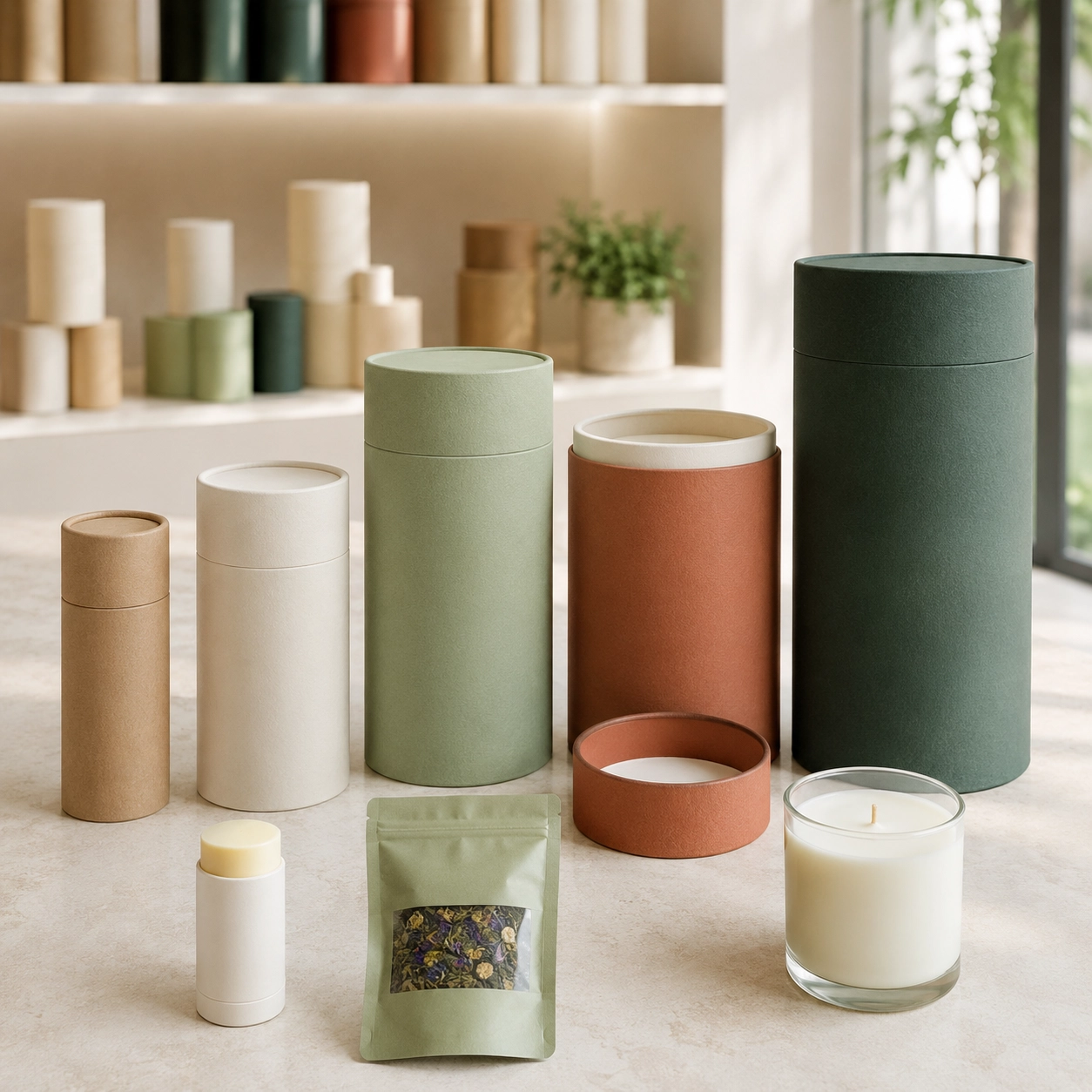
¿Por qué elegir el embalaje en paquete?
Pack Packaging ayuda a las marcas a elegir el tamaño de embalaje adecuado a través del diseño estructural, muestreo, selección de materiales, revisión de obras de arte, y producción OEM/ODM para cajas de papel y tubos de papel..
Nuestra base de fabricación abarca 20,000 m², incluyendo un 2,000 m² de taller libre de polvo apto para uso alimentario. Además, La capacidad mensual del tubo de papel excede 10,000,000 piezas, apoyando marcas en crecimiento, programas estacionales, distribuidores, y proyectos de gran volumen.
Nuestro 20+ equipo de diseño puede ayudar con dimensiones personalizadas, inserciones, estructuras de tapa, revestimientos, dielines, adaptación de obra de arte, impresión, y terminando. En lugar de recomendar un paquete más grande simplemente porque es más fácil, el equipo evalúa las dimensiones del producto, peso, necesidades de protección, mercado objetivo, método de embalaje, cantidad, y posición de marca juntos.
Ese enfoque ayuda a los compradores a evitar dos problemas comunes.: un paquete que luce impresionante pero desperdicia espacio, o un paquete compacto que falla durante el embalaje y el transporte..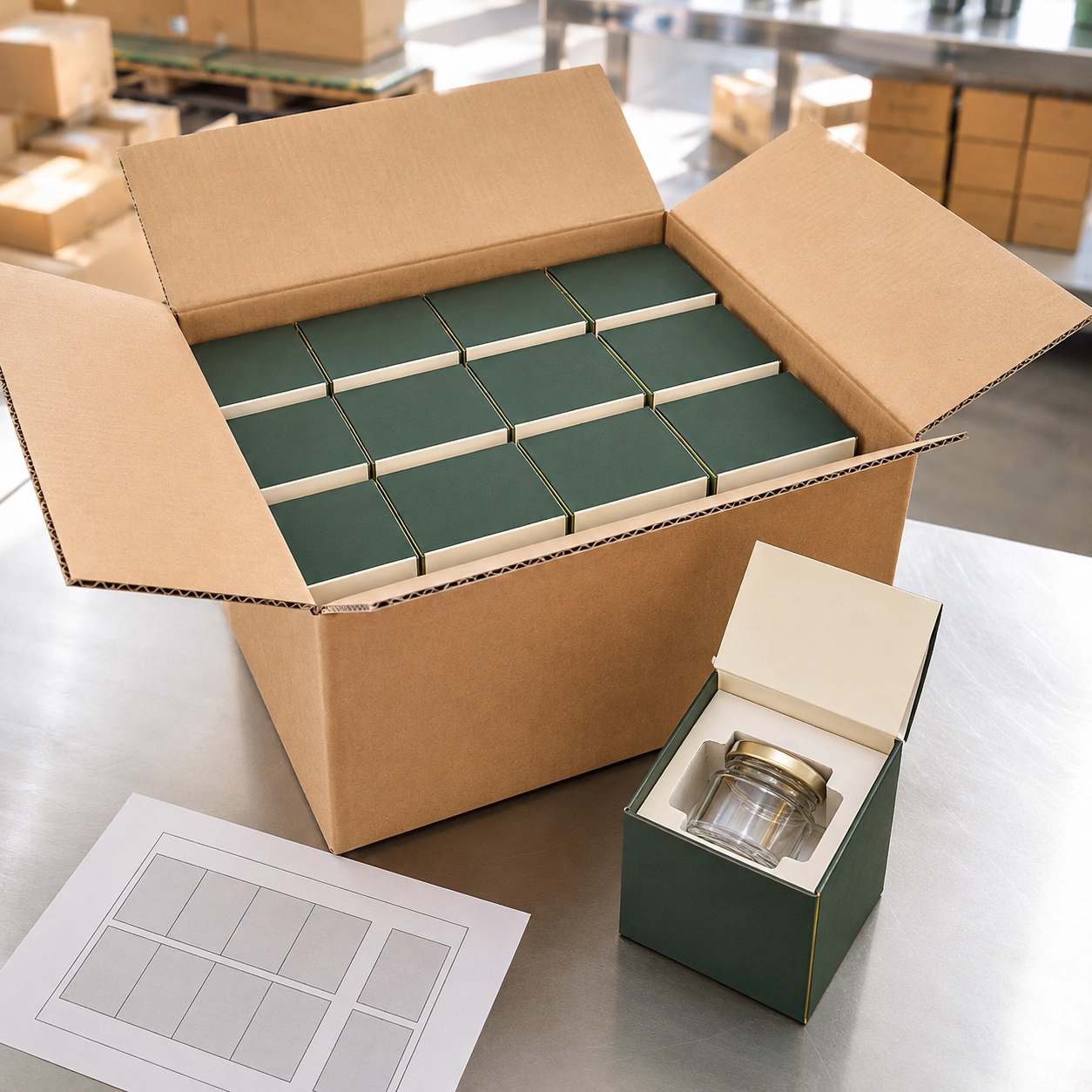
Preguntas frecuentes
1. ¿Cómo calculo el tamaño de embalaje correcto??
Mida el producto en sus puntos más anchos y altos., luego agregue espacio para el inserto o revestimiento, autorización funcional, y tolerancia de fabricación realista. Porque cada material y estructura se comporta de manera diferente, confirmar el resultado con una muestra física.
2. ¿Debo proporcionar dimensiones internas o externas??
Proporcione ambos si están disponibles, y etiquetarlos claramente. Si solo conoces las dimensiones del producto, dilo. Luego, el fabricante puede desarrollar primero las dimensiones internas y calcular el tamaño externo terminado a partir del tablero y la estructura seleccionados..
3. ¿Cuánto espacio vacío debo dejar alrededor del producto??
No existe un número universal.. La respuesta depende de la tolerancia del producto., peso, fragilidad, insertar material, método de carga, y experiencia de apertura. Un ingeniero estructural debe establecer el espacio libre inicial y verificarlo con su producto real..
4. ¿Un inserto cambia el tamaño de la caja o del tubo??
Sí. Cartulina, pulpa moldeada, EVA, espuma, ampolla, y los insertos flocados tienen diferentes espesores de pared y zonas de apoyo. Por lo tanto, el inserto puede cambiar tanto el espacio interno requerido como las dimensiones externas finales.
5. ¿Puedo usar un tamaño de paquete para varios SKU??
A menudo, Sí. Un paquete exterior común con diferentes inserciones puede reducir la cantidad de componentes impresos y simplificar el inventario.. Sin embargo, compare los ahorros de material y flete con cualquier compromiso de presentación y espacio no utilizado.
6. ¿Pueden los envases más pequeños reducir el costo de envío??
Puede reducir el volumen de la caja maestra y mejorar la utilización de palés o contenedores.. Sin embargo, Los gastos de envío reales dependen de las dimensiones del cartón., peso bruto, método de envío, destino, y reglas del transportista. Solicite datos de la caja antes de realizar el pedido final..
7. ¿Necesito una muestra antes de la producción a granel??
Sí, especialmente para botellas, paso, productos frágiles, mecanismos de movimiento, inserciones, y juegos de regalo premium. Una muestra física comprueba el ajuste., apertura, eliminación del producto, posición de impresión, y terminar antes de la ejecución masiva.
8. ¿Qué información se necesita para una cotización personalizada??
Enviar el tipo de producto, dimensiones máximas del producto, peso del producto, cantidad por paquete, cantidad de pedido objetivo, estructura preferida, material, insertar, finalizar, mercado de destino, fecha de entrega, y archivo de logotipo o diseño gráfico. Las fotos del producto también son útiles..
Obtenga una recomendación de embalaje personalizado
Listo para confirmar el tamaño de embalaje correcto para su próxima caja o tubo de papel? Díganos el tamaño de su producto, cantidad, archivo de logotipo y mercado objetivo. Nuestro equipo le recomendará la estructura adecuada., material y acabado.
Envíanos tu talla, uso del producto, cantidad y archivo de logotipo para obtener una cotización personalizada.
Obtenga su recomendación personalizada
ENLACE INTERNO INVERSO AL ARTÍCULO DE ILUSTRACIÓN EXISTENTE
Añade este párrafo a https://www.pkpaperbox.com/custom-packaging-artwork-files-2/ después de la sección dieline o sangrado:
Antes de finalizar la línea de muerte, Confirmar las dimensiones internas del paquete., insertar asignación, método de apertura, y tolerancia de producción. nuestra guía para elegir el tamaño de embalaje adecuado para su producto explica cómo validar el ajuste del producto antes de preparar el diseño final.
Explore más soluciones de embalaje personalizadas
Buscando más opciones de embalaje? Descubra nuestra gama completa de productos de embalaje personalizados diseñados para diferentes industrias y aplicaciones..
Cajas plegables – Cajas de cartón ligeras y totalmente personalizables para embalaje minorista.
Cajas Rígidas – Cajas de regalo rígidas premium para marcas de lujo..
Cajas Corrugadas – Soluciones duraderas de embalaje para envío y comercio electrónico.
Cajas a prueba de niños – Embalaje seguro para productos regulados.
Accesorios – Inserciones personalizadas, papel de seda, cintas, etiquetas, y más.
Tubos de papel – Explore nuestra colección dedicada de envases de tubos de papel personalizados para té, café, productos cosméticos, velas, espíritu, y otros productos premium en nuestra web especializada.
Necesita embalaje personalizado? Póngase en contacto con nuestro equipo hoy para obtener una cotización gratuita y una consulta de expertos..