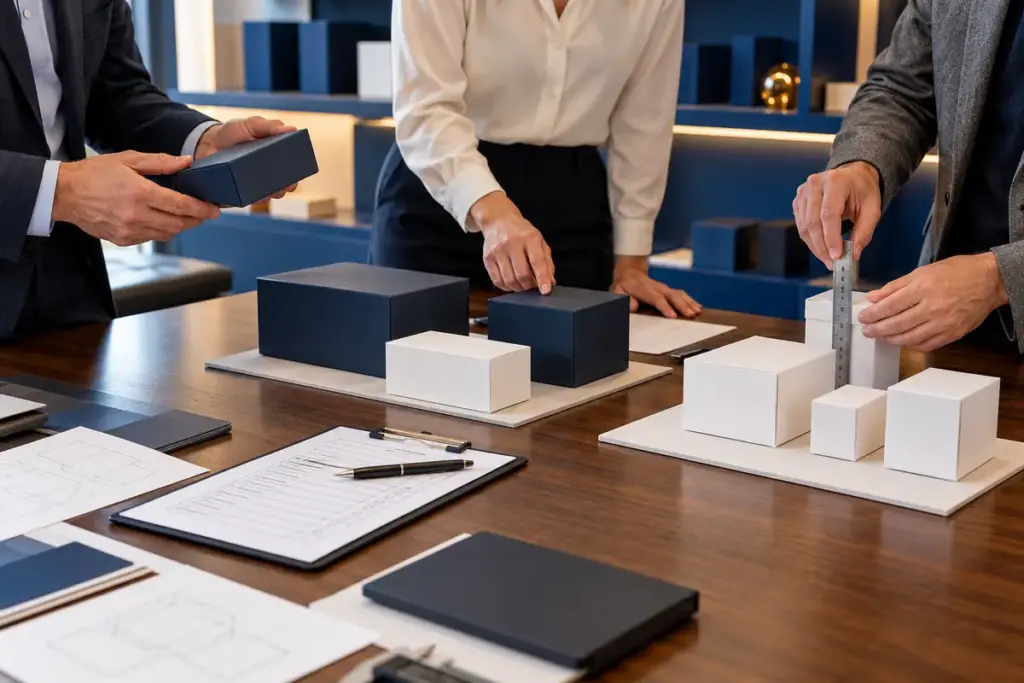
Choosing the right packaging size sounds simple: measure the product, add a little space, and order the box. In reality, that “little space” affects protection, Design einfügen, material use, shipping cost, shelf presentation, and even the customer’s first impression.
If the package is too tight, the product may be difficult to load or remove. Jedoch, if it is too large, the item can move during transit while you pay for material and air. This guide explains how to select the right packaging size for paper boxes and paper tubes without guessing.
Holen Sie sich ein individuelles Verpackungsangebot
Schnelle Antwort: The right packaging size is the smallest validated internal size that fits the product, einfügen, Liner, Schließung, and required clearance while still protecting the item through packing, transport, Lagerung, and normal customer use. Always confirm it with a physical sample before mass production.
What Is the Right Packaging Size?
The right packaging size balances five things: product fit, Schutz, usability, presentation, and total landed cost. It is not simply the product’s length, Breite, and height copied onto a dieline.
Erste, separate Produktabmessungen, internal packaging dimensions, Und external packaging dimensions. Buyers often mix them up, and honestly, that small misunderstanding can create a very expensive sample revision.
- Produktabmessungen are the maximum length, Breite, and height of the item, including caps, Pumps, Schließungen, Zubehör, and any protruding parts.
- Innenmaße describe the usable space inside the finished package.
- External dimensions include the board thickness, wrapped edges, Deckel, Base, and other structural layers. These dimensions influence master-carton planning, Palettenlayout, Lagerung, and freight.
The right packaging size should also account for the way the product is packed. A bottle placed directly in a folding carton needs different clearance from the same bottle held in a thick EVA insert inside a rigid box.
A Practical Sizing Formula
Use this as a starting framework, not as a final production specification:
Required internal size = maximum product size + insert or liner space + functional clearance + production tolerance
Measure every axis separately. For a round container, record the maximum diameter and total height. For a set, arrange all products in their intended presentation order before measuring the complete footprint.
Then ask four practical questions:
- Can production staff load the product without forcing it?
- Can the customer remove it comfortably?
- Will the item remain stable when the package is shaken or turned?
- Can normal manufacturing variation be accepted without loose fit or damage?
That final question matters. Papier, Planke, Einsätze, Flaschen, and filling components all have tolerances. daher, the right packaging size must work across normal batch variation, not only for one perfect prototype.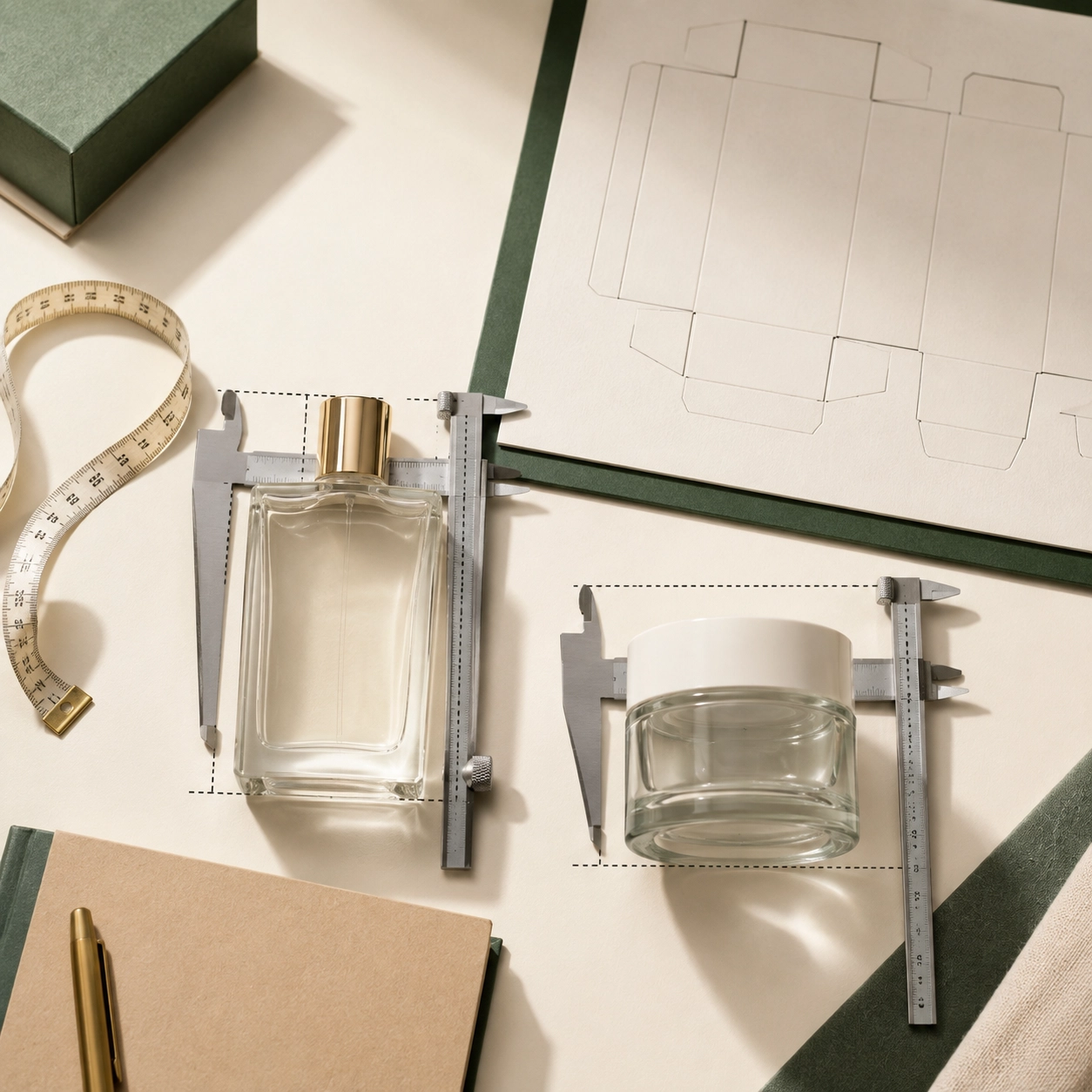
Allgemeine Anwendungen
In der Praxis, the right packaging size changes with the product’s weight, Zerbrechlichkeit, Form, Vertriebskanal, und Benutzererfahrung. A compact retail carton and a protective ecommerce mailer may hold the same item, yet they do very different jobs.
Parfüm und Duft
Glass perfume bottles need stable support around the base, shoulders, and cap. The right packaging size for perfume should include the insert profile, bottle tolerances, and enough finger space for removal. If the bottle sits too low, the presentation feels awkward; if it sits too high, the cap may strike the lid.
Hautpflege und Kosmetik
Cremetiegel, Serumflaschen, makeup sets, Lippenbalsam, Deodorant, and solid perfume all require different sizing logic. Pumps and droppers are often the widest or most delicate points, so measure them carefully. Zusätzlich, check whether labels or decorative collars increase the final product diameter.
Tee, Kaffee, und Snacks
Food packaging may need a food-grade liner, Folieneinlage, sealed pouch, easy-peel membrane, or additional headspace. The right packaging size for food should be based on the product’s actual fill weight and bulk density, not weight alone. Zum Beispiel, 100 g of loose tea can require far more volume than 100 g of dense candy.
Kerzen, Geschenke, Schmuck, and Toys
A glass candle jar needs cushioning and clearance around the rim. Jewelry benefits from a snug presentation insert, while toys may have irregular parts or viewing windows. In der Zwischenzeit, gift sets need a planned layout so that every item looks deliberate rather than simply placed in a large empty box.
Ecommerce and Subscription Products
Shipping packages must survive handling, stacking, and delivery. Folglich, external dimensions, Dämpfung, corrugated flute, and carton utilization become just as important as shelf appearance. A package that looks beautiful but ships mostly air is rarely cost-efficient.
Materialoptionen
Material selection can change the right packaging size because every layer occupies space and behaves differently during conversion.
Kraft Paper and Paperboard
Kraft paper offers a natural look and works well for tea, Kaffee, Snacks, Kerzen, Geschenke, and natural cosmetics. Jedoch, the structural board beneath the printed surface determines rigidity. A heavier product may require thicker board or a stronger wall construction.
Kunstdruckpapier
C2S art paper provides a smooth surface for CMYK and Pantone printing. It is commonly wrapped over greyboard for rigid boxes or used as the printed surface of folding cartons and paper tubes. Although the outer printed sheet is thin, the structural board underneath changes the internal-to-external dimension relationship.
Spezialpapier
Strukturiert, Leinen, perlmuttartig, metallisch, or leather-look paper can create a premium feel. Trotzdem, specialty paper may react differently at folds, wrapped corners, Nähte, and small radii. The supplier should confirm whether the chosen paper works with the package dimensions and structure.
Food-Grade and Barrier Liners
Food-grade paper, PE-beschichtetes Papier, grease-resistant layers, Folieneinlagen, and other barrier materials can affect the usable internal diameter or volume. Noch wichtiger, the selected liner must match the actual product, Füllmethode, shelf-life goal, und Zielmarkt.
Einlagen
Karton, geformter Zellstoff, EVA, Schaum, Papierbrei, blister, and flocked inserts do not use space in the same way. A thick insert can add protection and visual value; Jedoch, it may also enlarge the outer package. Aus diesem Grund, design the insert and package together rather than treating the insert as a last-minute accessory.
Strukturoptionen
Structure often decides the right packaging size because the lid, Base, einfügen, moving parts, and opening method all need working space.
- Lid-and-base box: Include the lid overlap, Grundhöhe, Wandstärke, and insert position.
- Insert box: Allow for product loading, finger notches, pull tabs, and removal clearance.
- Window box: Keep the product aligned behind the window while protecting weak cut-out areas.
- Push-Up-Rohr: Calculate product diameter, push disc, travel distance, and bottom clearance together.
- Aufdrehbares Rohr: Allow room for the internal mechanism and confirm the product’s fill and movement range.
- Sleeve box: Add sliding clearance so the tray moves smoothly without feeling loose.
- Telescopic tube or box: Confirm lid depth, shoulder or neck height, and the opening resistance between upper and lower parts.
Auf den ersten Blick, reducing a few millimeters may seem like easy savings. Yet if the sleeve jams, the lid lifts, or the insert crushes the product label, the package is no longer functional. A physical white sample reveals these issues far earlier than a screen rendering.
Drucken & Finishing-Optionen
After choosing the right packaging size, develop the dieline around the approved structure. CMYK, Pantone-Farben, Heißprägen, Prägung, Prägung, Spot-UV, matte Laminierung, Glanzlaminierung, and soft-touch finishes can then be positioned accurately.
Most surface finishes do not dramatically change the overall size. Auch so, they can influence production tolerances and structure. Zum Beispiel, heavy embossing near a fold may affect forming, full-coverage lamination changes surface friction, and foil or spot UV placed across a seam may be difficult to align consistently.
Keep critical logos, small text, barcodes, and legal information away from cut lines, folds, glue areas, and wrapped edges. Darüber hinaus, show every special finish on a separate named artwork layer.
Once the structure and dieline are approved, use our guide on how to prepare artwork files for custom packaging printing to organize CMYK or Pantone colors, bluten, fonts, images, and finishing layers before production.
Verwandte Produkte
Kundenspezifische Papierröhren · Lebensmittelverpackung · Kosmetikverpackungen
Einhaltung & Nachhaltigkeit
The right packaging size can reduce unnecessary paper use, insert volume, storage space, and freight volume. Trotzdem, smaller is not automatically more sustainable if inadequate protection increases damage, rejects, or replacement shipments.
For FSC paper requests, confirm the material claim and supporting documentation for the final order. For food projects, specify whether the packaging will touch the product directly or serve as secondary packaging. This affects material selection, barrier design, Testen, and documentation.
Abhängig vom Projekt und Zielmarkt, buyers may request support related to BRCGS Packaging Materials, IFS PACsecure or IFS Food supply-chain requirements, Sicherheit beim Lebensmittelkontakt, EUDR, EPR, and PPWR. These terms do not all mean the same thing: some relate to certified management systems or materials, while others create market-specific due-diligence, producer-responsibility, or packaging obligations. daher, confirm the exact scope, certificate validity, Testbericht, Material, and legal responsibility before printing any claim on the package.
Mit anderen Worten, efficient sizing supports sustainability, but documented material selection and a suitable protective design still come first.
How to Customize the Right Packaging Size
To confirm the right packaging size efficiently, send complete information at the beginning. It saves time, reduces repeated quotations, and helps the structural team recommend a realistic solution.
Schritt 1: Measure the Actual Product
Provide maximum length × width × height in millimeters. For tubes, Gläser, and bottles, send diameter × total height. Include the cap, pump, Etikett, Siegel, Zubehör, and any part that extends beyond the main body.
Schritt 2: Share the Product Weight and Quantity per Pack
State the net and gross product weight. Also confirm whether one package holds a single item, a set, refills, Zubehör, or promotional gifts.
Schritt 3: Explain the Sales and Shipping Environment
Will the package sit on a retail shelf, ship through ecommerce, go into a master carton, or serve as a luxury gift? Zusätzlich, share the destination market because compliance and labeling requirements may differ.
Schritt 4: Select the Structure and Insert
Choose the preferred box or tube style, then tell the supplier how you want the product displayed and removed. If you are unsure, send product photos or physical samples and ask for a structural recommendation.
Schritt 5: Select Materials and Finishes
Confirm kraft paper, Kunstdruckpapier, Spezialpapier, lebensmittelechter Liner, Folieneinlage, Plattenstärke, Material einlegen, printing colors, and surface finishes. Naturally, these choices should support both the product and its price position.
Schritt 6: Send the Logo and Artwork File
Bearbeitbare KI, PDF, or EPS files are best for checking the dieline, Text, Farben, und Abschlussschichten. If finished artwork is not ready, send the logo and brand direction first so the team can evaluate feasibility.
Schritt 7: Confirm MOQ, Probe, and Lead Time
Share your target quantities—for example, 500, 1,000, 5,000, oder 10,000 pieces—because the structure, Druckverfahren, Werkzeuge, and unit cost may change with volume. Ask for a white structural sample before a printed sample when fit is the main concern. Endlich, confirm the project-specific sample time and bulk production schedule in writing.
Schritt 8: Test Before Mass Production
Place the real product in the sample. Open and close it repeatedly, turn it upside down, check product removal, inspect print and finish positions, and evaluate master-carton packing. For ecommerce or fragile goods, add appropriate transit testing. Do not approve bulk production from dimensions alone.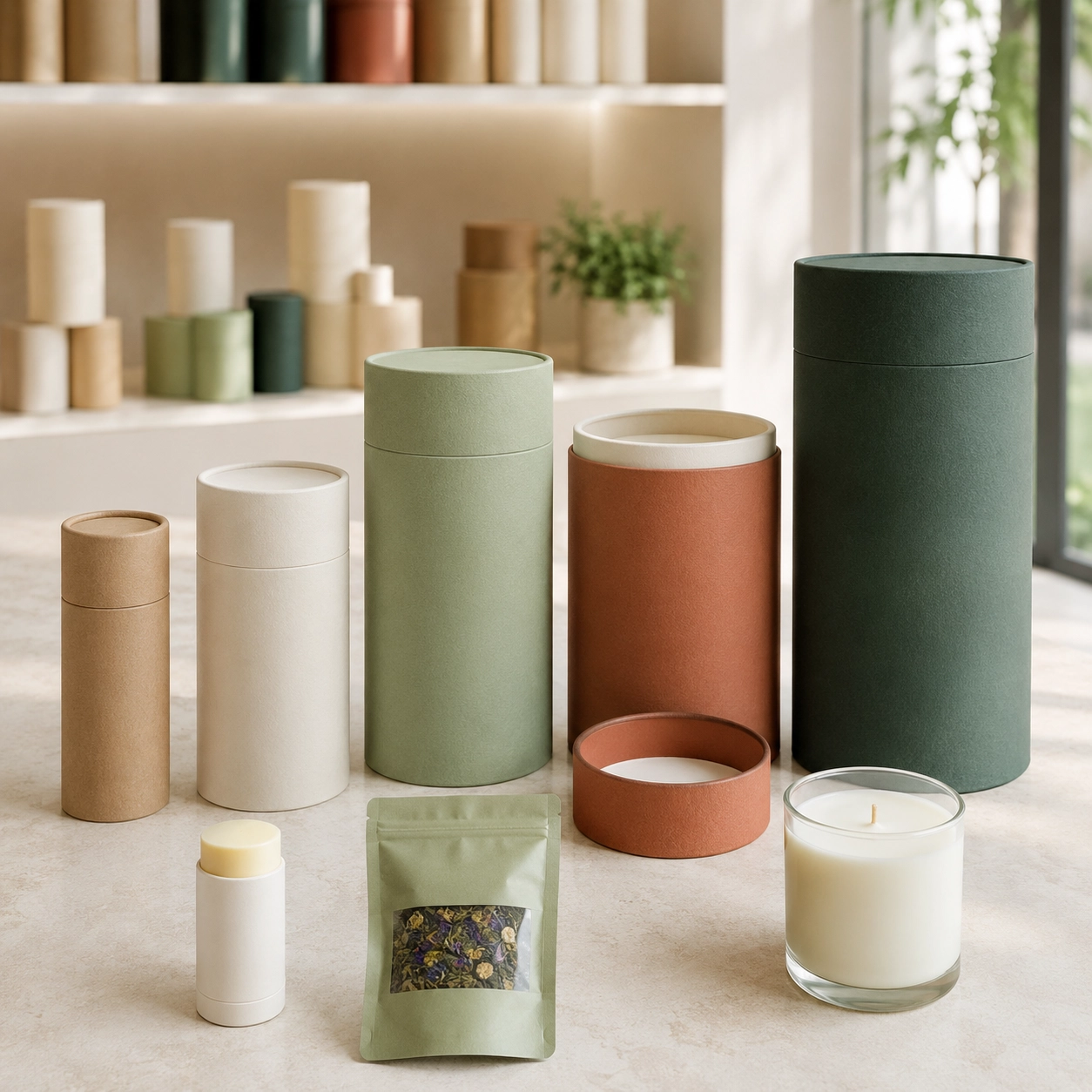
Warum Packverpackungen wählen?
Pack Packaging helps brands choose the right packaging size through structural design, Probenahme, Materialauswahl, Kunstwerk-Rezension, and OEM/ODM production for paper boxes and paper tubes.
Our manufacturing base covers 20,000 m², darunter a 2,000 m² food-grade dust-free workshop. Zusätzlich, Die monatliche Papierröhrenkapazität überschreitet 10,000,000 Stücke, supporting growing brands, seasonal programs, Händler, and large-volume projects.
Unser 20+ Designteam can assist with custom dimensions, Einsätze, lid structures, Liner, Dielines, Artwork-Adaption, Drucken, und Abschluss. Instead of recommending a larger package simply because it is easier, the team evaluates product dimensions, Gewicht, Schutzbedarf, Zielmarkt, Verpackungsmethode, Menge, and brand position together.
That approach helps buyers avoid two common problems: a package that looks impressive but wastes space, or a compact package that fails during packing and transport.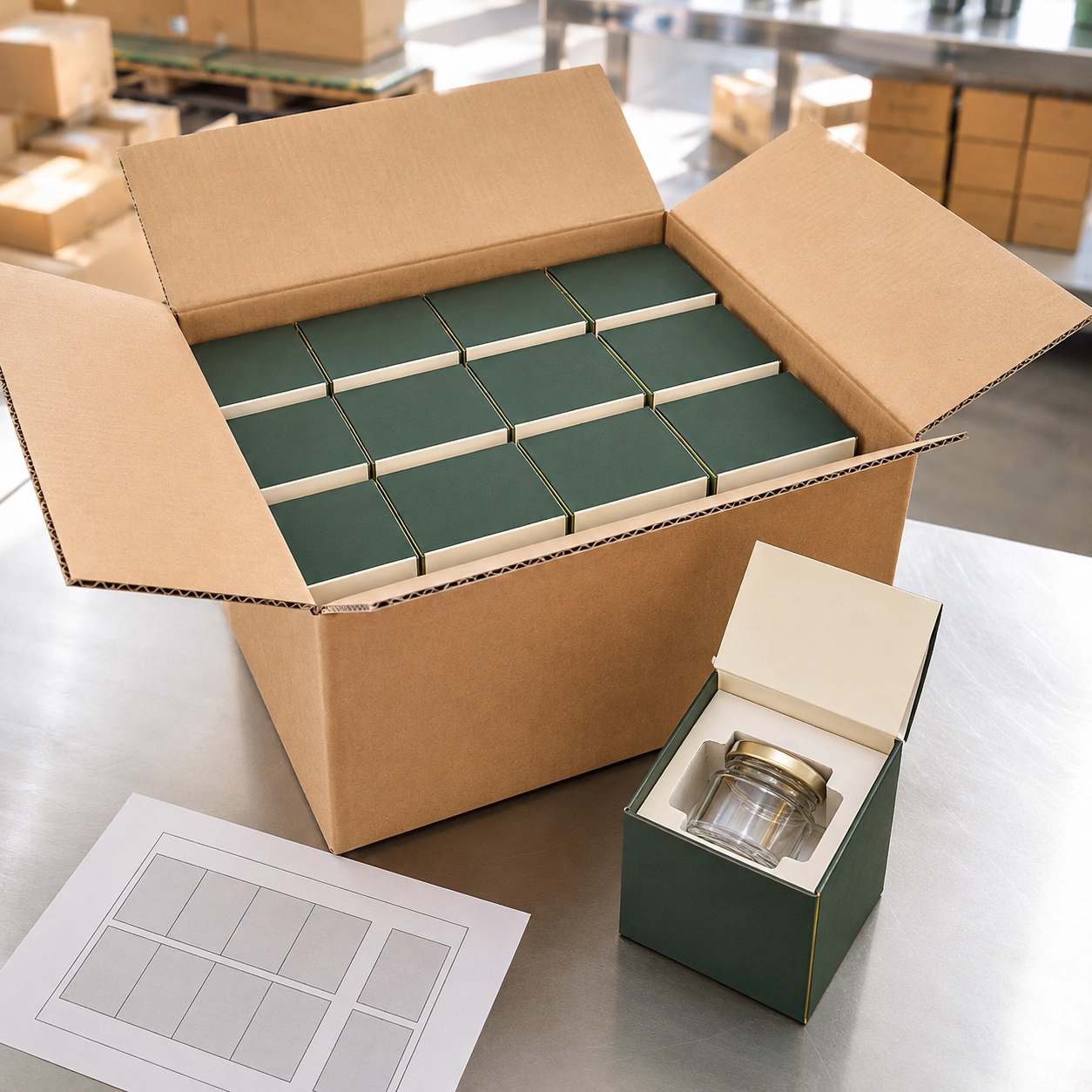
Häufig gestellte Fragen
1. How do I calculate the right packaging size?
Measure the product at its widest and tallest points, then add space for the insert or liner, functional clearance, and realistic manufacturing tolerance. Because every material and structure behaves differently, confirm the result with a physical sample.
2. Should I provide internal or external dimensions?
Provide both if available, and label them clearly. If you only know the product dimensions, say so. The manufacturer can then develop internal dimensions first and calculate the finished external size from the selected board and structure.
3. How much empty space should I leave around the product?
There is no universal number. The answer depends on product tolerance, Gewicht, Zerbrechlichkeit, Material einlegen, loading method, und Eröffnungserlebnis. A structural engineer should set the starting clearance and verify it with your actual product.
4. Does an insert change the box or tube size?
Ja. Karton, geformter Zellstoff, EVA, Schaum, blister, and flocked inserts have different wall thicknesses and support zones. daher, the insert can change both the required internal space and the final external dimensions.
5. Can I use one package size for several SKUs?
Oft, Ja. A common outer package with different inserts can reduce the number of printed components and simplify inventory. Jedoch, compare the material and freight savings against any unused space and presentation compromise.
6. Can smaller packaging reduce shipping cost?
It can reduce master-carton volume and improve pallet or container utilization. Trotzdem, actual freight charges depend on carton dimensions, Bruttogewicht, Versandart, Ziel, and carrier rules. Ask for carton data before placing the final order.
7. Do I need a sample before bulk production?
Ja, especially for bottles, Gläser, fragile products, moving mechanisms, Einsätze, und Premium-Geschenksets. A physical sample checks fit, opening, product removal, print position, and finish before the bulk run.
8. What information is needed for a custom quote?
Send the product type, maximum product dimensions, Produktgewicht, quantity per package, target order quantity, preferred structure, Material, einfügen, beenden, destination market, delivery date, and logo or artwork file. Product photos are also helpful.
Get a Custom Packaging Recommendation
Ready to confirm the right packaging size for your next paper box or paper tube? Teilen Sie uns Ihre Produktgröße mit, Menge, Logodatei und Zielmarkt. Unser Team empfiehlt Ihnen die richtige Struktur, Material und Verarbeitung.
Senden Sie uns Ihre Größe, Produktverwendung, Menge und Logo-Datei, um ein individuelles Angebot zu erhalten.
Get Your Custom Recommendation
REVERSE INTERNAL LINK FOR THE EXISTING ARTWORK ARTICLE
Add this paragraph to https://www.pkpaperbox.com/custom-packaging-artwork-files-2/ after the dieline or bleed section:
Before finalizing the dieline, confirm the package’s internal dimensions, insert allowance, Öffnungsmethode, and production tolerance. Our guide to choosing the right packaging size for your product explains how to validate product fit before you prepare the final artwork.
Entdecken Sie weitere maßgeschneiderte Verpackungslösungen
Auf der Suche nach weiteren Verpackungsmöglichkeiten? Entdecken Sie unser komplettes Sortiment an maßgeschneiderten Verpackungsprodukten für verschiedene Branchen und Anwendungen.
Faltschachteln – Leichte und vollständig anpassbare Kartons für Einzelhandelsverpackungen.
Starre Boxen – Hochwertige starre Geschenkboxen für Luxusmarken.
Wellpappkartons – Langlebige Versand- und E-Commerce-Verpackungslösungen.
Kindersichere Boxen – Sichere Verpackung für regulierte Produkte.
Zubehör – Benutzerdefinierte Einsätze, Seidenpapier, Bänder, Etiketten, und mehr.
Papierröhren – Entdecken Sie unsere spezielle Kollektion individueller Papiertubenverpackungen für Tee, Kaffee, Kosmetika, Kerzen, Spirituosen, und andere Premiumprodukte auf unserer spezialisierten Website.
Benötigen Sie eine individuelle Verpackung? Kontaktieren Sie noch heute unser Team für ein kostenloses Angebot und eine kompetente Beratung.