Let’s be honest about how this usually goes. A beauty brand decides to go plastic-free, swaps the outer carton to kraft, photographs it beautifully — and then someone notices the PET window, the EVA foam insert, the plastic lamination, and the polybag it shipped in. Suddenly that clean claim looks shaky.
Here’s the thing though: plastic-free packaging is genuinely achievable across most of a beauty range. You just have to work through the whole bill of materials rather than only the part customers photograph. So let’s walk through what actually works, category by category.
🔘 [Obtenga una cotización de embalaje personalizado →]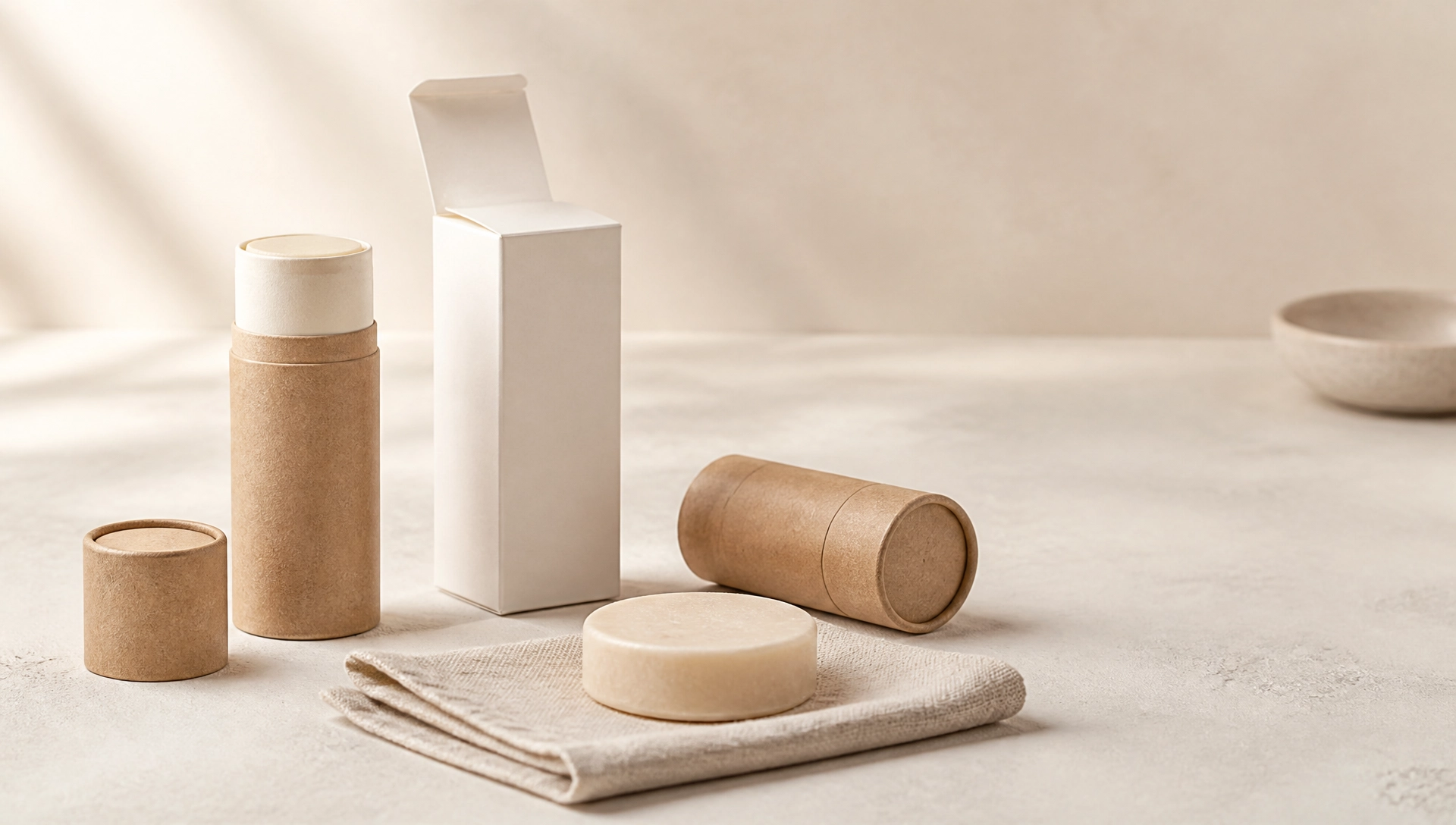
What Does Plastic-Free Packaging Actually Mean?
The Honest Definition
Plastic-free packaging means every component of the finished package — outer, inner, cierre, insertar, ventana, revestimiento, and adhesive — contains no plastic. Not “mostly paper.” Not “plastic-reduced.” Every component.
Why the Distinction Matters
That’s a stricter bar than most brands realise. And regulators increasingly agree. The FTC’sGreen Guides caution marketers against unqualified environmental claims that consumers may read more broadly than intended.
Primary vs Secondary Packaging
Here’s a distinction that unlocks a lot of options. Primary packaging touches the formula directly. Secondary packaging surrounds it. Como consecuencia, achievingplastic-free packaging on the secondary layer is straightforward for almost any brand — while the primary layer depends heavily on the formula itself.
Where Plastic-Free Packaging Works Best
Realistic From Day One
Some categories suitplastic-free packaging naturally. Solid formats especially — because they don’t need barrier protection against oxygen or moisture the way emulsions do.
Genuinely Difficult
Mientras tanto, water-based serums, actives that oxidise, and anything requiring an airless pump present real technical barriers. Pretending otherwise leads to failed stability testing and unhappy customers.
The Honest Middle Ground
So many brands land somewhere sensible: fully plastic-free secondary packaging, plus a reduced-plastic or refillable primary container. That’s a defensible position, provided you word it accurately rather than over-claiming.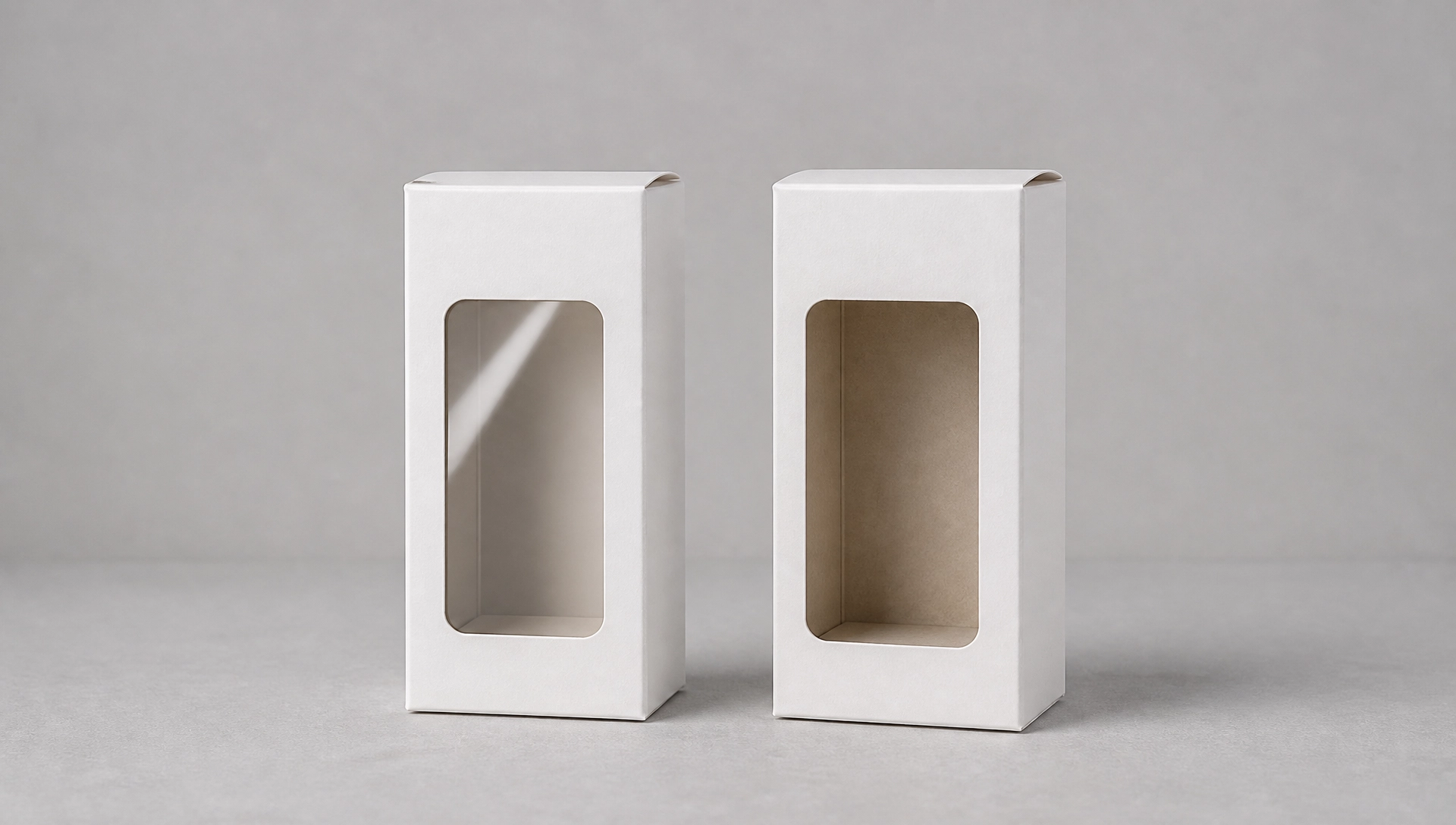
Common Applications Across Beauty and Personal Care
Solid Cosmetics
Shampoo bars, conditioner bars, perfume sólido, barras desodorantes, pomada para labios, and cleansing bars. Honestamente, this is whereplastic-free packaging works best of all — a paper push-up tube or a simple wrap handles it completely.
Skincare Secondary Packaging
botellas de suero, cremas, and oils inside a folding carton or rigid box. The primary container may stay glass, but the surrounding layer converts easily.
Perfumes y Fragancias
Glass bottles inside telescopic paper tubes or rigid boxes with pulp inserts. Además, the premium unboxing moment actually improves when you swap plastic vac-form for moulded pulp.
Bath and Body
Bath salts, soaps, scrubs, y juegos de regalo. These handle fibre-based structures well. Además, gift assortments give you room for creative fibre inserts.
Velas y fragancias para el hogar
Glass jars in kraft telescopic tubes with pulp cradles. Como resultado, you get protection plus presentation without a single plastic component.
Refill and Sample Programmes
Refill pouches remain challenging. Sin embargo, sample sachets, discovery sets, and refill outer cartons all convert to fibre readily.
Material Options for Plastic-Free Packaging
Papel kraft
The default starting point forplastic-free packaging in beauty. Natural, sin blanquear, and honest-looking. It supports the story visually without needing heavy print. Además, its texture reads premium in the current beauty aesthetic.
Papel artístico y cartón estucado
Smooth and highly printable for photographic artwork. However — and this matters — standard coated board often carries plastic lamination. So specify an uncoated or aqueous-coated alternative if the claim must hold.
Papel especial y texturizado
Lino, sintió, and embossed papers deliver luxury tactility with zero plastic. Como consecuencia, they’re a favourite for prestige skincare where soft-touch lamination would otherwise be the default.
Moulded Pulp
This is the quiet hero ofplastic-free packaging in beauty. Moulded pulp cradles glass bottles, paso, and compacts securely — replacing the EVA foam and PET vac-form trays that break most plastic-free claims.
Aqueous and Water-Based Coatings
These replace plastic lamination for scuff protection. Sin embargo, always confirm the specific chemistry with your supplier rather than assuming “water-based” automatically means plastic-free.
Verifying Your Fibre Source
If your sustainability story also needs certified sourcing, nuestra guía sobre Embalajes de papel con certificación FSC para marcas ecológicas explains label types, chain of custody, y el 2026 trademark rules.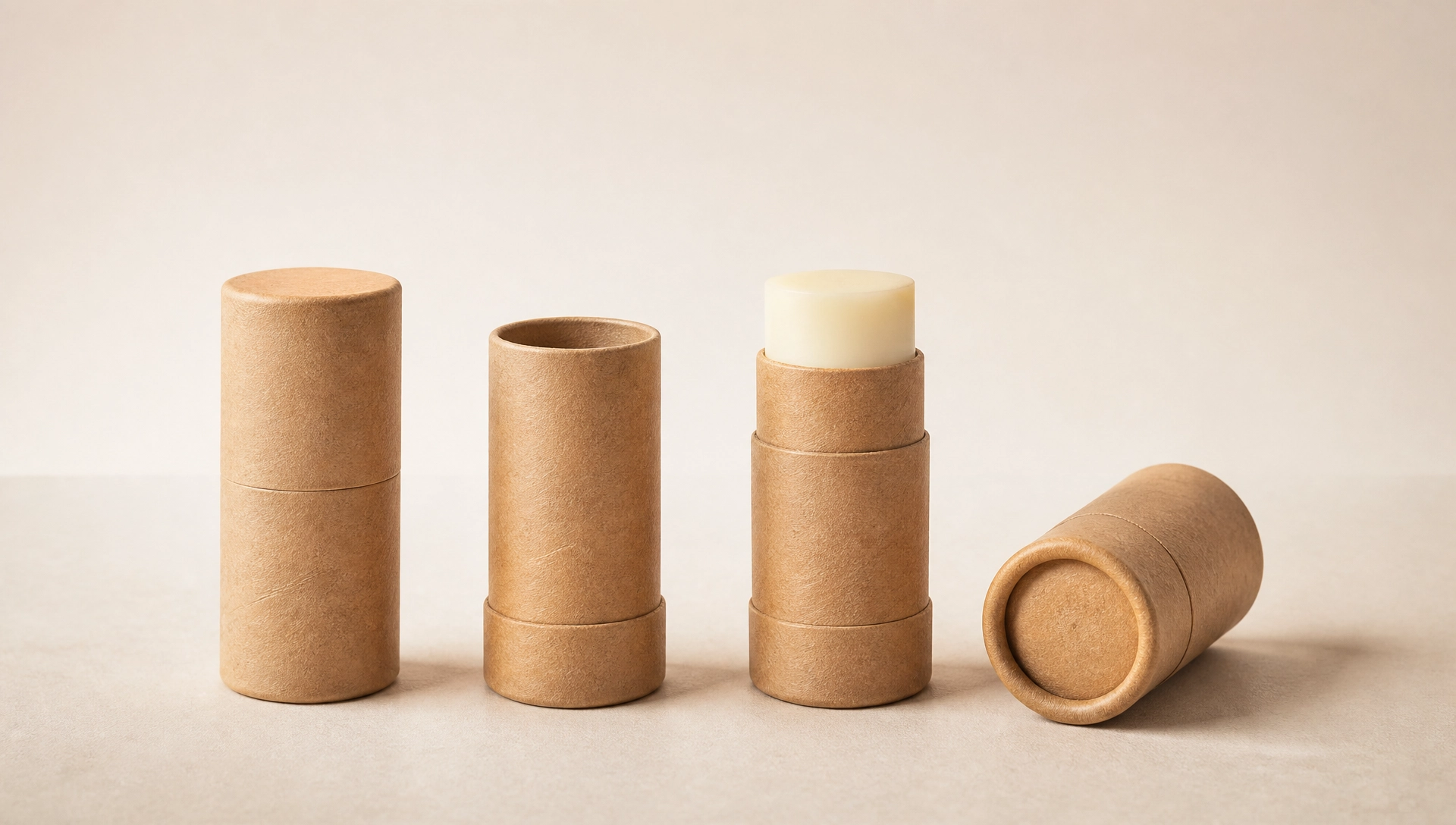
Structure Options That Eliminate Plastic
Structure decides whether yourplastic-free packaging claim survives contact with a real product.
Paper Push-Up Tubes
An all-paper mechanism pushes solid product upward from the base. Ideal for deodorant, perfume sólido, pomada para labios, and balm sticks. So this single structure replaces a whole category of plastic containers.
📦Productos relacionados: Tubos de papel personalizados / Envasado de alimentos / Envases Cosméticos
Telescopic and Shoulder-Neck Tubes
A deep lid slides over a deep base, or an inner neck creates a premium reveal. Both stay entirely fibre-based. Además, they protect glass well when paired with a pulp cradle. nuestra guía sobreEnvases de tubos de papel biodegradables para belleza & Alimento covers tube construction in depth.
Cajas plegables
Cajas plegables with tuck-end or auto-lock closures use no plastic at all — provided you skip the lamination and the window film.
Rigid Lid-and-Base and Sleeve Builds
Cajas rígidas wrap greyboard in printed paper. Mientras tanto, a sleeve-over-tray build adds a reveal moment with zero added material.
Windows Without Film
A conventional window uses PET film. Sin embargo, anopen die-cut window delivers the same visual reveal with no plastic — and it works perfectly when the product already sits in a sealed inner container.
Inserts That Replace Foam
Swap EVA foam and vac-form trays for die-cut paperboard, corrugado en capas, o pulpa moldeada. Por lo tanto, yourplastic-free packaging claim survives all the way to the insert.
The Shipping Layer
cajas de corrugado with paper tape and paper void fill complete the picture. Because honestly, a plastic-free retail box inside a polybag mailer defeats the whole exercise.
Mechanisms to Approach Carefully
Twist-up mechanisms usually need non-fibre components. Similarmente, airless pumps and droppers remain plastic-dependent. So plan those categories around refill or glass strategies instead.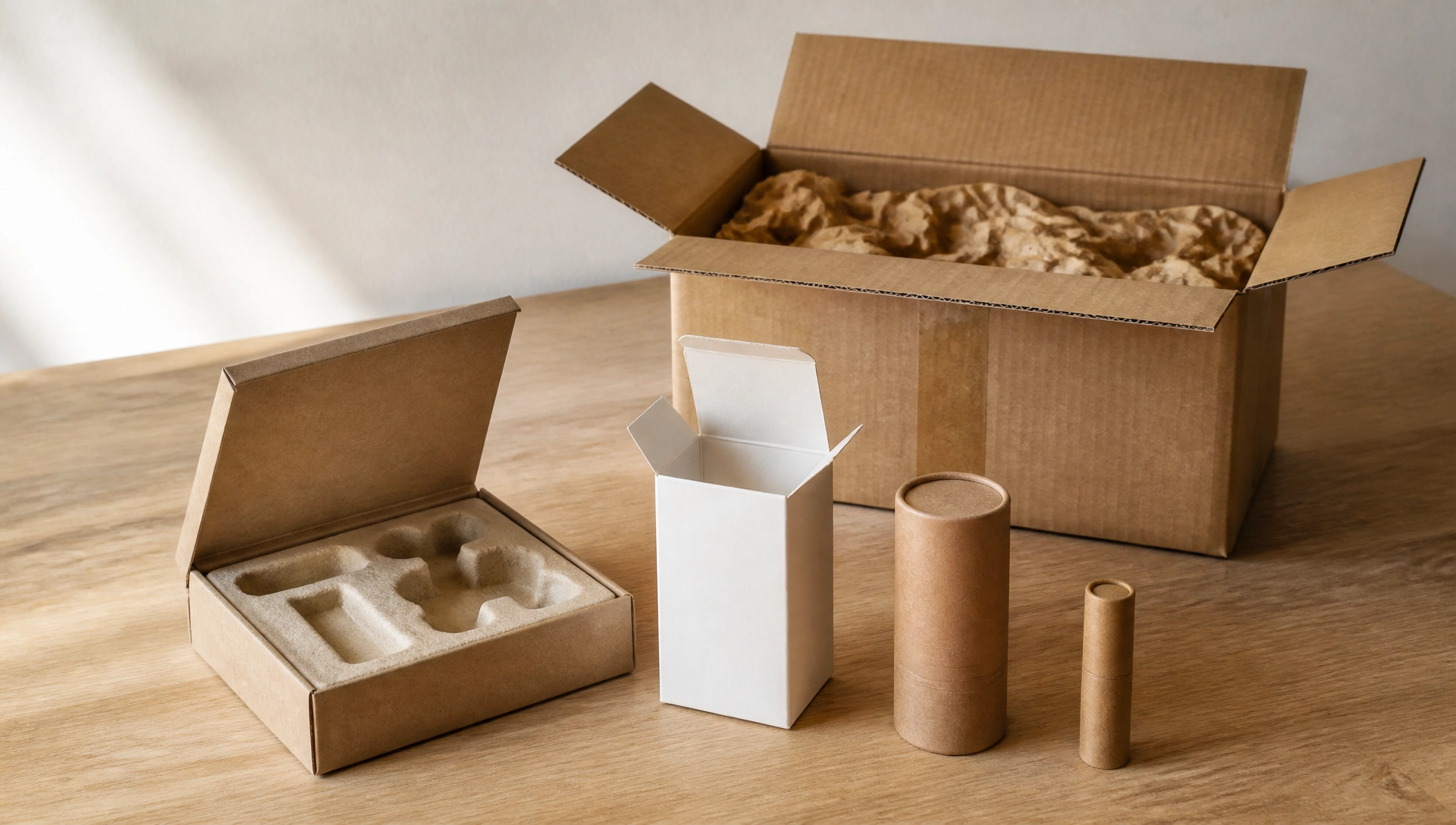
Printing and Finishing Without Plastic
Métodos de impresión
- CMYK offset o digital — Full-colour artwork with no impact on your claim.
- Coincidencia de Pantone — Brand colour consistency across every run. Además, a restrained one- or two-colour design often reads more premium on uncoated stock.
- Serigrafía — Tinta opaca vívida, well suited to kraft and specialty papers.
Finishes That Stay Plastic-Free
- Estampado y grabado — Purely mechanical. Zero added material, strong tactile impact.
- estampado en caliente — Small foil areas add metallic accent. Worth discussing with your supplier if the claim must be absolute across every component.
- Recubrimiento acuoso — Protección contra rozaduras a base de agua en lugar de película plástica.
Finishes That Break the Claim
- Laminación mate y brillo — Plastic film, punto final. So this is usually the first thing to remove.
- Laminación suave al tacto — Beautiful, but plastic. Textured specialty paper delivers a comparable feel without the film.
- Punto UV — Worth reviewing the specific coating chemistry with your supplier.
The Practical Trade-Off
Removing lamination changes how a box feels and how it resists scuffing. Sin embargo, uncoated and textured stocks have become the prestige signal in beauty — so this trade-off increasingly works in your favour rather than against it.
Compliance and Making Claims Safely
Say Exactly What Is True
This is where good brands get into avoidable trouble. An unqualified “plastic-free” claim covers theentire package. So if one component contains plastic, qualify the statement precisely.
Better Wording Patterns
- “Plastic-free outer carton” — when only the secondary layer qualifies
- “Paper-based tube with no plastic components” — specific and verifiable
- “Moulded pulp insert, no foam” — concrete rather than vague
- Avoid: “ecológico,” “100% verde,” “planet-positive” — unsubstantiated and increasingly risky
Regulatory Context
The FTC Green Guides caution against broad unqualified environmental claims in US marketing. Mientras tanto, the European Commission hasproposed a green claims law to tackle greenwashing — worth tracking, since it remains a proposal rather than settled law.
Other Standards to Line Up
- FSC — Certified fibre sourcing, with chain of custody through your converter.
- Materiales de embalaje BRCGS — Manufacturing quality and hygiene.
- Cosmetic contact safety — Relevant when fibre touches the formula directly, as with solid products.
- EUDR — The Commission lists 30 Diciembre 2026 para grandes y medianos operadores, 30 Junio 2027 para micro y pequeños operadores.
Plastic-Free Is Not the Same as Compliant
Removing plastic doesn’t remove your registration duties. You still owe EPR fees on fibre packaging in EU markets. For that side, readCumplimiento del embalaje EPR para marcas que venden en la UE.
Cómo personalizar: Pasos 1 a 3
Paso 1: Audit Your Full Bill of Materials
Primero, list every single component — outer, inner, insertar, ventana, cierre, revestimiento, adhesivo, cinta, and mailer. Honestamente, this step alone surprises most brands. You can’t remove what you haven’t inventoried.
Paso 2: Decide Primary vs Secondary Scope
Próximo, decide how far the claim needs to reach. Fullplastic-free packaging across everything? Or secondary-only, worded precisely? Both are legitimate — but decide before design starts, no después.
Paso 3: Elija estructura y material
Then send us your product dimensions, peso, fragilidad, and formula type. We’ll recommend the fibre construction that protects properly while meeting your claim scope.
Cómo personalizar: Pasos 4 a 6
Paso 4: Artwork and Finish Selection
Envía tu logo en IA, EPS, o PDF de alta resolución con códigos Pantone. Mientras tanto, we’ll flag any finish that would compromise the claim and suggest a fibre-safe alternative.
Paso 5: Sample and Compatibility Testing
Never skip this — and forplastic-free packaging it matters even more than usual. Test the real formula against the real paper, because oils, ceras, and fragrances genuinely interact with fibre, revestimientos, and adhesives. Empty samples won’t reveal that.
Paso 6: Cantidad mínima de pedido, Lead Time and Production
La cantidad mínima de pedido suele comenzar entre 500 y 1000 unidades, según la estructura.. Las cajas plegables tardan entre 15 y 20 días aproximadamente; Las cajas y tubos rígidos tardan entre 25 y 35 días después de la aprobación de la muestra.. Moulded pulp inserts may need tooling, so factor that into your launch timeline early.
¿Por qué elegir el embalaje en paquete?
Capacidad de fabricación
- 20,000㎡ fábrica — Producción interna completa desde el troquelado hasta el acabado.. Como resultado, we control every component in your bill of materials.
- 2,000㎡ taller de calidad alimentaria — A dedicated safe-contact environment, relevant for solid cosmetics that touch fibre directly.
- 10,000,000+ capacidad mensual — We scale with you, from a 5,000-unit launch to millions.
Diseño y Documentación
- 20+ diseñadores internos — Nunca subcontratado. Our team develops fibre structures, pulp insert concepts, y obras de arte listas para imprimir.
- Component-level specifications — We supply material breakdowns so you can verify your plastic-free packaging claim line by line.
- Certified sourcing support — FSC-certified materials plus BRCGS and contact-safety documentation on request.
- 60+ mercados de exportación — We handle incoterms and customs paperwork daily.
Being Straight With You
We won’t tell you every beauty product can go fully plastic-free today. Some formulas genuinely need barrier protection we can’t deliver in fibre. So we’d rather scope your project honestly — full plastic-free where it works, reduced-plastic where it doesn’t — than help you make a claim that won’t survive scrutiny.
Preguntas frecuentes: Feasibility and Formulas
Q1: Can my serum or cream go fully plastic-free? The secondary carton, insertar, and shipper can. The primary container is harder — water-based and oxygen-sensitive formulas usually still need glass with a plastic-component closure, or an airless system. So many brands run plastic-free secondary plus glass primary.
Q2: Which products convert most easily? Solid formats. Shampoo bars, perfume sólido, barras desodorantes, pomada para labios, and soaps all work beautifully in paper push-up tubes or wraps. Como consecuencia, these are usually where brands start.
Q3: Will paper packaging survive my supply chain? Sí, with the right board weight and structure. Sin embargo, always run transit testing with the real filled product — particularly for glass in fibre inserts.
Q4: Do oils and fragrances damage paper packaging? They can, which is exactly why sample testing matters. Aceites, ceras, and fragrance components interact with paper, revestimientos, y adhesivos a lo largo del tiempo. Por lo tanto, test with your actual formula rather than an empty sample.
Preguntas frecuentes: Claims, Costo y abastecimiento
Q5: Is plastic-free packaging more expensive? Sometimes moderately, though it varies. Removing lamination actually reduces cost. Moulded pulp tooling adds upfront investment but often beats vac-form at volume. So the net difference is usually smaller than brands expect.
Q6: Can I say “plastic-free” if only the outer box qualifies? Not without qualifying it. Say “plastic-free outer carton” instead. An unqualified claim implies the whole package, and regulators increasingly scrutinise exactly that gap.
P7: Does plastic-free automatically mean recyclable or compostable? No — three different attributes. Fibre packaging generally recycles well, but coatings and inserts affect the route. Similarmente, compostability requires its own verification.
P8: ¿Qué necesitas para iniciar una cotización?? Envía las dimensiones de tu producto., uso del producto, cantidad, mercado objetivo, claim scope, y archivo de logotipo. Entonces te recomendaremos el correcto.plastic-free packaging estructura, material, y terminar para tu rango.
Guías relacionadas
Sustainable beauty packaging usually breaks into four connected questions. So we’ve covered each separately:
- esta guía — How to physically remove plastic from your packaging.
- Embalajes de papel con certificación FSC para marcas ecológicas — How to prove your replacement fibre came from responsible sources.
- Embalaje de papel reciclable: Lo que las marcas globales deben saber — Whether the finished package realistically enters a recycling stream.
- Cumplimiento del embalaje EPR para marcas que venden en la UE — What you must register and pay once it reaches the EU market.
Read in order, they cover the full sequence: how do we remove it, where did the replacement come from, ¿Se puede reciclar?, y¿Qué debemos presentar?.
Explore más soluciones de embalaje personalizadas
- Cajas plegables — Ligero, cajas de venta al por menor totalmente personalizables.
- Cajas Rígidas — Premium gift boxes for prestige beauty.
- Cajas Corrugadas — Embalaje duradero para envíos y comercio electrónico.
- Cajas a prueba de niños — Embalaje seguro para productos regulados.
- Accesorios — Inserciones personalizadas, papel de seda, cintas, y etiquetas.
- Tubos de papel — Our dedicated collection for cosmetics, velas, té, y cafe.
Ready to Remove the Plastic?
Switching toplastic-free packaging isn’t really a single decision. It’s a series of small component choices — the window, the insert, the coating, the tape — that either add up to a claim you can defend, or quietly undermine it. And the brands that get this right tend to be the ones who audited the whole bill of materials before touching the design.
Díganos el tamaño de su producto, cantidad, archivo de logotipo, y mercado objetivo. Nuestro equipo le recomendará la estructura adecuada., material, and finish — and give you the component-level specification to back up your claim.
✉️ [Envíenos su resumen → Obtenga una cotización personalizada en 24 Horas] Incluir: dimensiones del producto · cantidad · mercado objetivo · archivo de logotipo
Embalaje del paquete | 20,000㎡ Fábrica | Materiales certificados FSC | 2,000㎡ Taller de calidad alimentaria | 60+ Mercados de exportación
Descargo de responsabilidad: Esta guía ofrece información comercial general sobreplastic-free packaging for cosmetics and skincare, and reflects publicly available regulatory guidance as of August 2026. It does not constitute legal or marketing-compliance advice. Environmental claim rules differ by market and continue to evolve. Por lo tanto, confirm your specific wording with a qualified advisor before publishing any environmental claim.