Skip to content
Buying folding carton packaging looks simple until two suppliers quote different paperboard, closure styles, colours and tolerances for what appears to be the same box. Then the real risks show up: a carton that cracks on the crease, jams the packing line, misses the brand colour or arrives too late for launch.
This guide gives B2B buyers a practical specification framework. It explains what to define before requesting a quote, where cost and quality change, and which evidence to approve before mass production.
What Is Folding Carton Packaging?
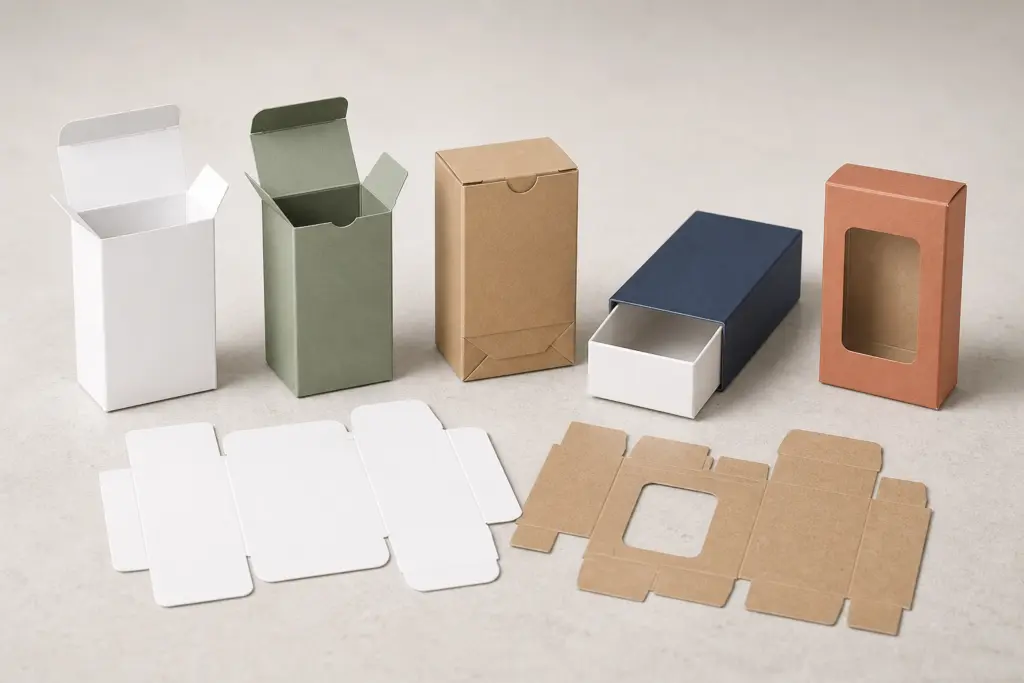
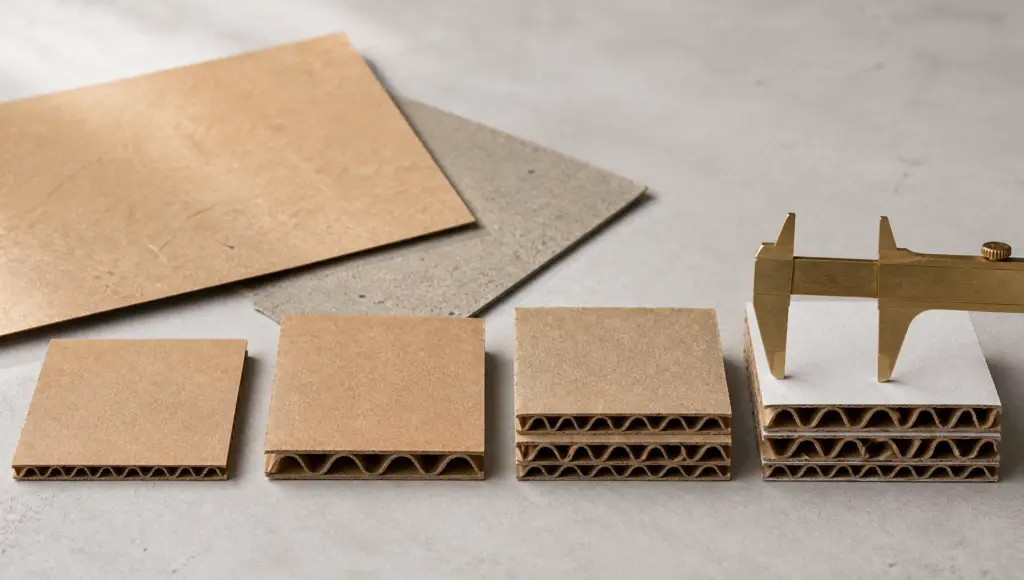
Folding carton packaging is made from paperboard that is printed, finished, die-cut, creased, folded and glued into a collapsible retail box. Unlike a rigid box, it normally ships flat. Unlike corrugated packaging, it uses solid paperboard rather than fluted board, so it offers a smoother print surface with less transit strength.
That distinction matters commercially. A lightweight skincare bottle may need a straight-tuck carton and a paper insert, while a heavy candle may need an auto-lock bottom or even a different packaging category. Our folding cartons versus rigid boxes guide explains where each format earns its cost.
How the Carton Is Made
Production starts with a dieline. The printer lays artwork across the flat structure, then prints and applies any coatings or decorative effects. A cutting die forms the outline, crease rules create controlled fold lines, and a folder-gluer pre-breaks panels before applying adhesive. The finished cartons pack flat for delivery and are erected by hand or on a cartoning line.
So, honestly, the dieline is not just an artwork template. It controls fit, grain direction, glue zones, assembly sequence and how efficiently the design nests on a press sheet. A weak dieline creates cost and quality problems long before anyone sees the finished box.
Common Applications for Folding Carton Packaging
Folding carton packaging works best for retail products that need a printable outer pack without the weight of a rigid box. However, the right structure changes with product weight, filling method, sales channel and contact conditions.
- Perfume and skincare: tuck cartons, sleeves, windows and fitted paper inserts for bottles, jars and tubes.
- Tea and coffee: branded cartons for sachets, inner bags, capsules and gift assortments.
- Snacks and confectionery: cartons for wrapped food, trays and secondary food packs.
- Candles and glass jars: reinforced bottoms and inserts that manage concentrated weight.
- Supplements and pharmaceuticals: accurate text, batch areas, barcodes, leaflets and traceability controls.
- Electronics and accessories: hanging panels, windows, compartments and anti-scuff presentation.
Food, beauty and nutraceutical projects often need more documentation than ordinary retail packaging. Before choosing a supplier, clarify whether the carton touches the product directly, holds a sealed primary pack or serves only as an outer display box.
Explore our food packaging solutions and cosmetic packaging solutions for application-specific options.
Material Options for Folding Carton Packaging
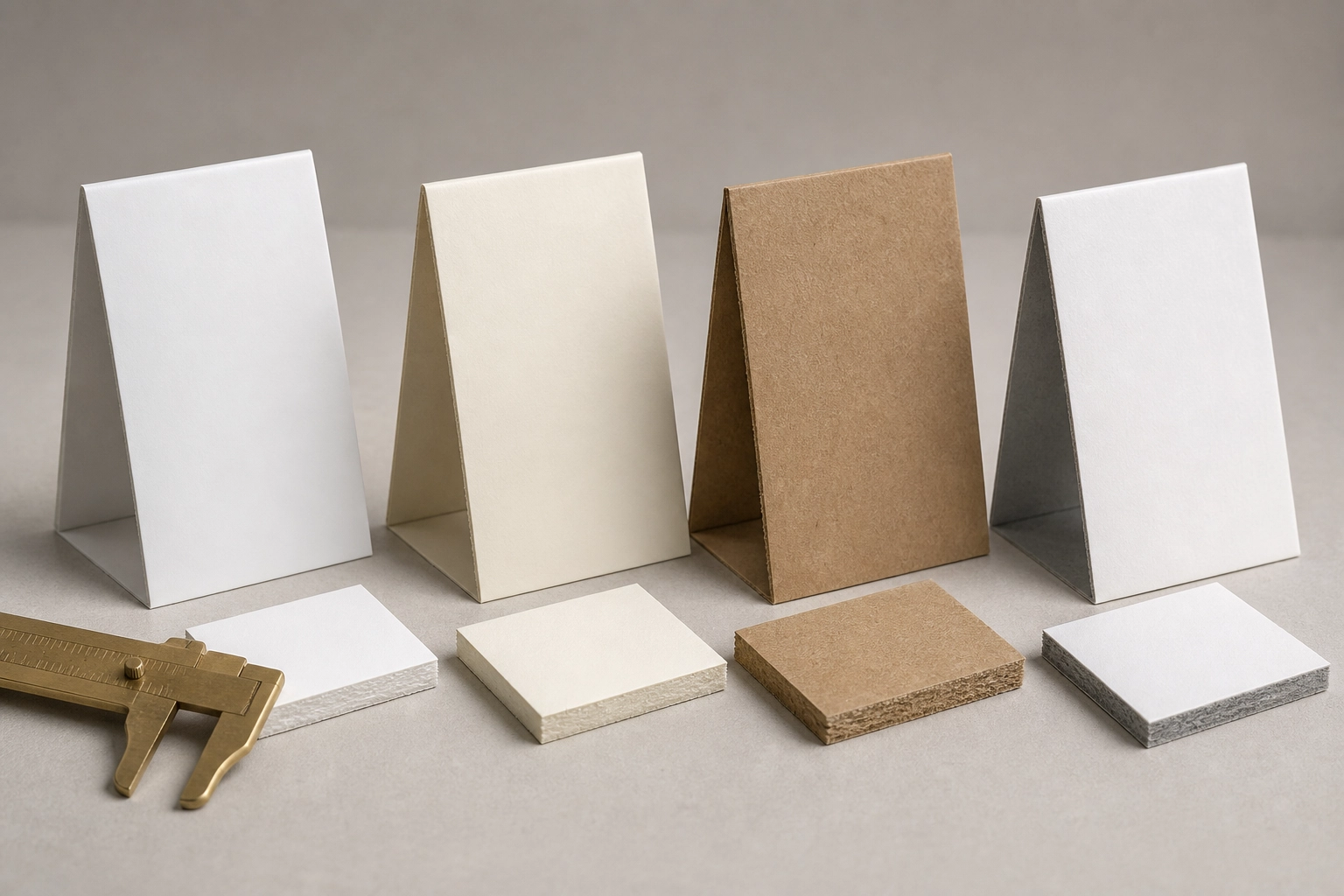
Paperboard drives stiffness, crease quality, print appearance and a large share of cost. Therefore, specifying only grammage is not enough. Two sheets at the same gsm can behave differently because fibre mix, bulk, coating and moisture vary.
SBS and Art Paperboard
Solid bleached board offers a clean white surface and strong colour reproduction. It suits perfume, skincare, supplements and premium food cartons. Coated art paperboard also supports detailed offset printing, Pantone colours and fine finishing, although the exact grade should match the product weight and fold geometry.
FBB
Folding boxboard combines mechanical and chemical pulp layers to deliver good stiffness at a relatively low basis weight. It is widely used for cosmetics, food and healthcare cartons where material efficiency matters.
Kraft and Unbleached Board
Kraft paperboard creates a natural brown appearance and offers good tear performance. Yet colour shifts on brown stock, so white ink, spot colours and photography need realistic proofing rather than assumptions from a screen.
Recycled Board
CCNB or coated recycled board can reduce material cost and increase recycled content. It works well for many dry products and secondary packs, but its reverse side, odour, stiffness and food-contact suitability must match the application.
Specialty and Functional Materials
Textured paper, metallic board, holographic board and foil-faced stock can create shelf impact. Food-grade liners, grease-resistant coatings and functional barriers address specific contact or moisture conditions. Still, each added layer can affect glue adhesion, crease performance and recyclability, so test the complete construction.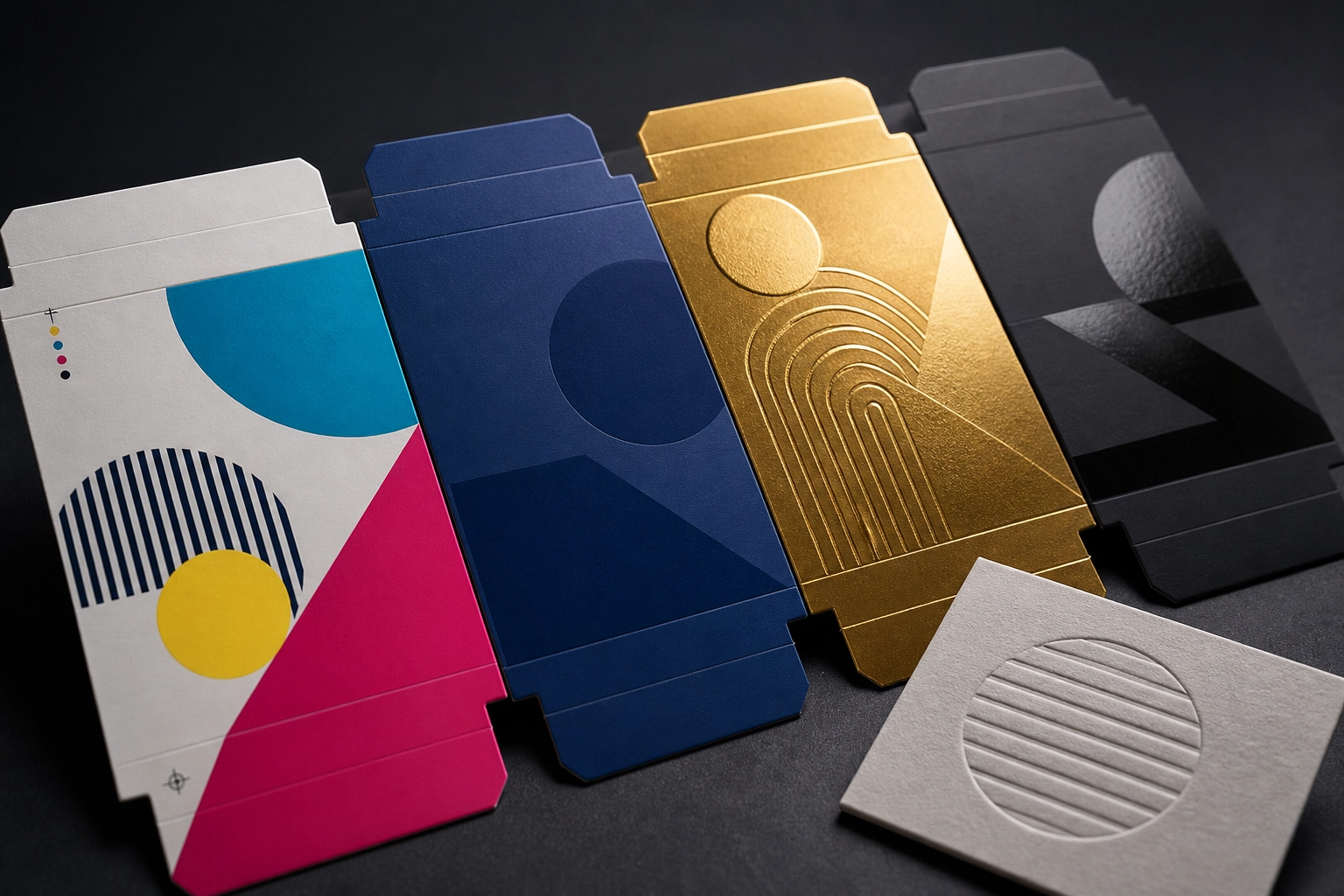
Structure Options in Folding Carton Packaging
Structure decides assembly time, product retention, packing-line compatibility and sheet utilisation. In practice, the prettiest design is not always the best production design.
- Straight tuck end: top and bottom tuck from the same side, giving cleaner front and rear display panels.
- Reverse tuck end: closures tuck in opposite directions and may nest more efficiently on the sheet.
- Snap-lock or 1-2-3 bottom: interlocking flaps support moderate product weight but require manual assembly.
- Auto-lock or crash-lock bottom: a pre-glued base opens quickly and suits higher packing speed or heavier contents.
- Seal-end carton: glued end flaps support automated filling and tamper-evident applications.
- Sleeve and tray: useful for gift sets, product reveals and branded upgrades around a plain inner tray.
- Window carton: shows the product, although the cutout and film can change strength and recycling instructions.
- Insert carton: holds bottles, tubes, vials or accessories in a controlled position.
Push-up and twist-up mechanisms appear more often in paper tubes than conventional folding cartons, while telescopic structures are more typical of two-piece or corrugated formats. Mentioning every structure in one request does not create a better brief; matching one structure to the filling and retail process does.
When evaluating folding carton packaging, tell the supplier whether workers erect it manually or a machine forms and fills it. Tuck direction, glue flap position, carton opening force and grain direction can all affect line performance.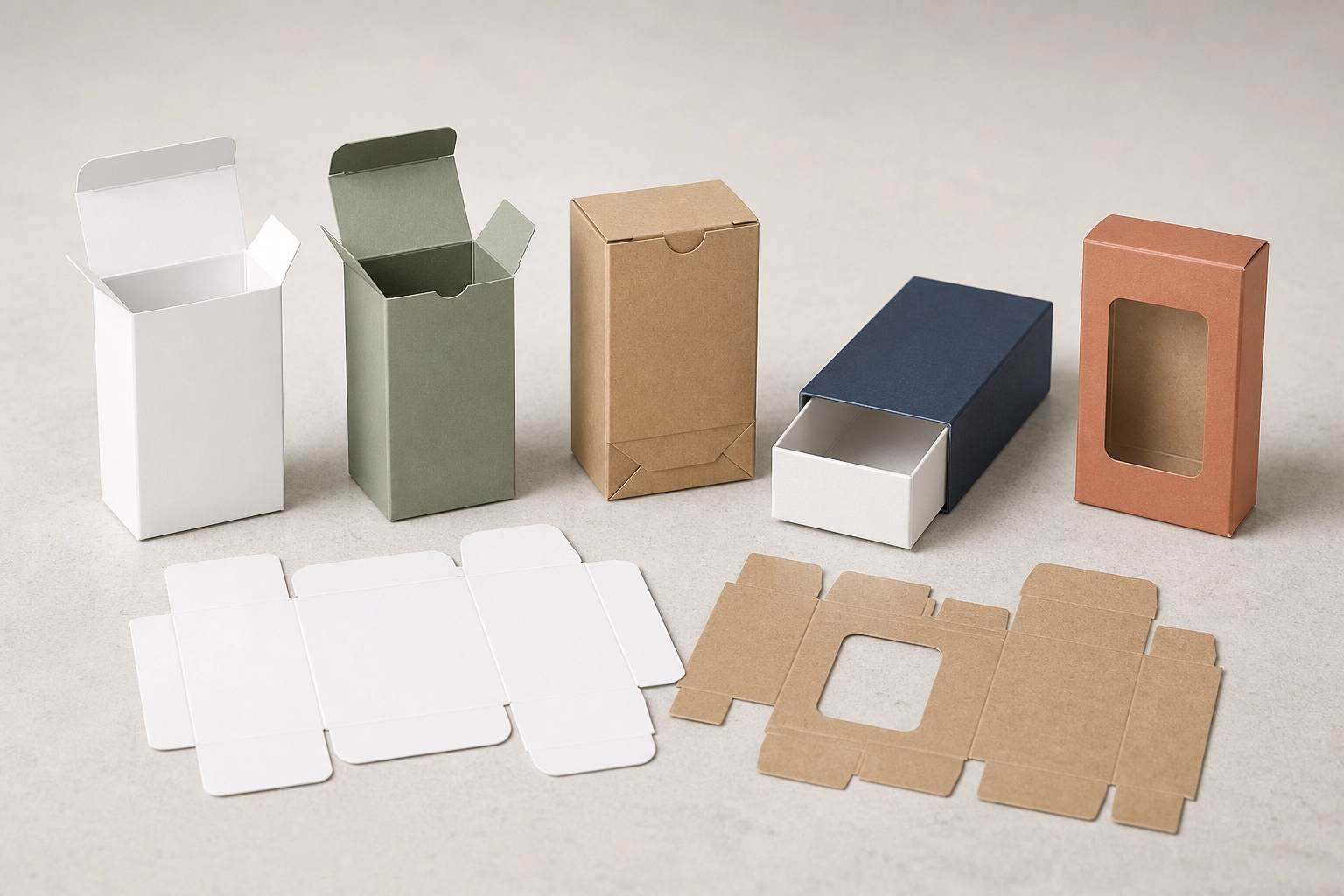
Printing and Finishing Options for Folding Carton Packaging
Offset printing remains the standard for detailed retail artwork and stable colour at production volume. Digital printing avoids conventional plates, so it can suit prototypes, short runs and multiple artwork versions. Flexographic printing serves simpler work where speed and economy matter more than photographic detail.
Colour Systems
CMYK builds images from four process colours. Pantone spot colours use mixed inks for tighter brand-colour control, although substrate colour, coating and finish still change the visual result. Approve colour against a physical standard under controlled lighting, not only on a monitor.
Surface Finishes
- Hot stamping: adds metallic or pigmented foil to logos and details.
- Embossing and debossing: raise or recess selected elements.
- Spot UV: creates local gloss contrast.
- Matte or gloss lamination: changes appearance and rub resistance but adds a film layer.
- Aqueous coating or varnish: offers lighter surface protection and can simplify material construction.
- Soft-touch finish: creates a tactile surface but needs scratch and glue-zone testing.
Here is the honest advice: one well-executed finish usually looks more premium than five effects competing on the same panel. Before adding another pass, ask whether it helps shelf conversion, protects the print or simply makes the quote larger.
Related Products: Custom Paper Tubes / Food Packaging / Cosmetic Packaging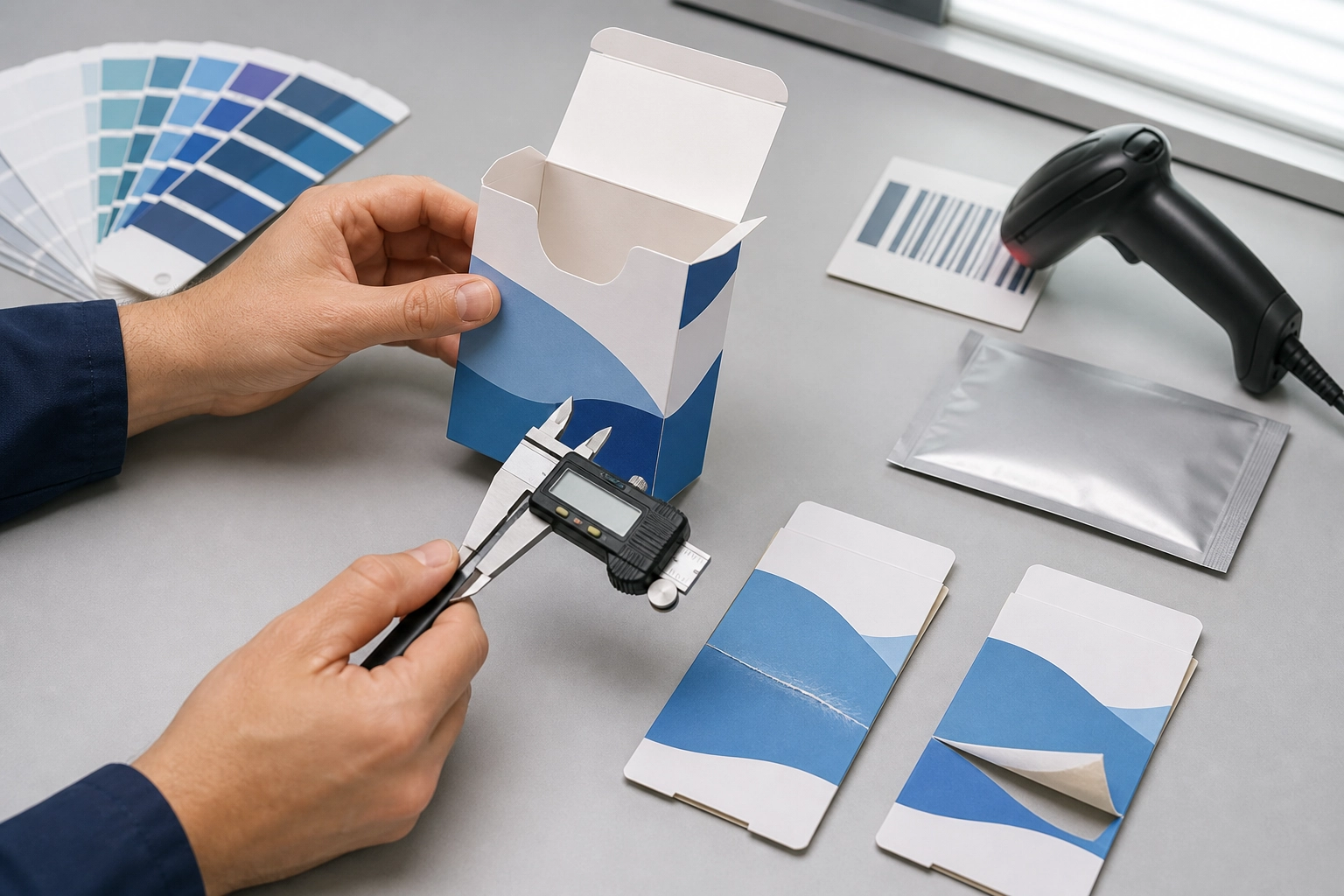
Compliance and Sustainability in Folding Carton Packaging
Compliance starts with the intended market and use condition. A paperboard carton around a sealed perfume bottle has different requirements from a carton touching dry food, frozen food or a pharmaceutical product.
Food Contact and Hygiene
For the US, paper and paperboard components used in food contact applications may fall under 21 CFR Part 176. However, the final assessment must consider the paperboard, ink, coating, adhesive, barrier, food type, temperature and contact time.
BRCGS Packaging Materials and IFS packaging-related requirements can support supplier hygiene and quality systems where a customer or market requires them. Still, a management-system certificate does not automatically prove that every finished carton is safe for every food-contact condition. Match certificates and declarations to the actual plant, material and project.
Certified Fibre and Due Diligence
FSC chain of custody supports tracking of certified material through the supply chain. Buyers should distinguish between buying FSC-certified material, working with a certified site and printing an FSC trademark on the carton. Our FSC paper packaging guide explains that distinction.
The EU Deforestation Regulation covers specified commodities and derived products, including relevant wood and paper categories. Application dates and obligations depend on operator size and role, so check the current European Commission EUDR guidance rather than relying on a generic supplier claim.
PPWR, EPR and Recyclability
The EU Packaging and Packaging Waste Regulation, Regulation (EU) 2025/40, establishes requirements covering packaging and packaging waste. EPR reporting and fees vary by national scheme, so brands need accurate component weights and market-specific guidance. Our EPR packaging compliance guide provides a practical starting point.
For cleaner recycling, keep folding carton packaging as simple as performance allows. A paper window, water-based coating or paper insert may reduce mixed materials, but the correct choice depends on product protection and local recycling infrastructure.
How to Customise Folding Carton Packaging
A reliable quote needs more than a logo and a target price. Start with the product, then build the specification around how it is packed, sold and transported.
- Confirm size: provide product dimensions and required internal carton dimensions in the same order, such as L × W × H.
- Share product context: include product weight, fragility, contact condition, retail channel and filling method.
- Select structure: choose the opening, bottom, insert, window and glue pattern around assembly needs.
- Define material: state paperboard family, colour, thickness or performance target rather than only gsm.
- Prepare artwork: provide an editable AI or print-ready PDF with dieline, bleed, fonts, images, spot colours, barcode and glue zones.
- Approve a sample: use a blank sample for fit, a digital sample for appearance or a production proof for the highest colour confidence.
- Confirm commercial terms: ask for MOQ, quantity breaks, tooling, sample cost, lead time, overrun/underrun tolerance, packing method and freight terms.
Our custom packaging quote guide lists the information buyers should send, while the project workflow explains what happens from dieline review to delivery.
If you already have a sample or dieline, send both. Comparing a physical reference with the artwork is often the fastest way to uncover incorrect dimensions, hidden glue zones or a finish that will not survive folding.
Cost, MOQ and Lead Time
The price of folding carton packaging comes from paperboard, sheet layout, printing, coatings, finishing, tooling, folding and gluing, packing and freight. Quantity matters because setup and tooling spread across more units, but material cost does not disappear at higher volume.
MOQ depends on the production route, dimensions, paper availability, number of artwork versions and finishing complexity. Likewise, lead time starts after structural files, artwork, material, proof and commercial terms are approved—not on the day of the first enquiry.
To compare quotations fairly, ask every supplier to state board grade and thickness, colours, coating, tooling, proofing, quantity tolerance, packing method, freight term and delivery schedule. Otherwise, you may be comparing different boxes that happen to share the same outside dimensions.
Quality Control for Folding Carton Packaging
Quality approval for folding carton packaging should cover more than appearance. A carton can look beautiful on a table and still fail on the packing line.
- Dimensions and fit: internal size, panel squareness and product clearance.
- Print: colour, registration, missing text, scuffing and contamination.
- Die-cutting: cut position, burrs, stripping and window accuracy.
- Creasing: fold force, cracking, whitening and grain direction.
- Gluing: bond strength, glue squeeze-out, contamination and opening force.
- Function: bottom retention, insert fit, manual erection and machine-line trials.
- Identification: barcode readability, batch areas and artwork-version control.
- Packing: pieces per carton, flatness, moisture protection and pallet plan.
Approve a signed reference sample and define measurable acceptance criteria before production. Then keep retained samples by batch. That workflow gives both buyer and supplier something objective to compare if a dispute appears later.
Why Choose Pack Packaging for Folding Carton Packaging?
Pack Packaging operates a 20,000㎡ factory with a 2,000㎡ food-grade workshop, monthly capacity above 10,000,000 units and a design team of more than 20 people. Those numbers matter only when the process behind them works, so our team reviews structure, material, artwork and production risks before mass production.
We support OEM and ODM projects from dieline development and sampling through printing, finishing, die-cutting, folding, gluing, inspection and export packing. More importantly, we will sometimes recommend a simpler structure or finish when it meets the requirement at lower cost. A repeatable carton is worth more than an impressive sample that cannot scale.
Browse our custom folding cartons manufacturing page to compare structures, materials and application options.
FAQ About Folding Carton Packaging
What information do you need to quote folding carton packaging?
Send internal dimensions, product weight, quantity, artwork, box style, material preference, finishes, filling method, destination country and required delivery date. If any item is unknown, send the product and current box details so the structure can be reviewed before pricing.
What is the difference between SBS, FBB, kraft and recycled board?
SBS offers a clean white print surface, FBB gives high stiffness at efficient weight, kraft provides natural colour and tear strength, and recycled board can lower cost and increase recycled content. The best option depends on print, fold, strength, contact and market requirements.
Can folding cartons hold perfume bottles, candles or glass jars?
Yes, but product weight and impact risk matter. Heavy items may need an auto-lock or reinforced bottom, a fitted insert and a transit case. Test the complete pack rather than judging the empty carton alone.
Which carton style works best on an automatic packing line?
It depends on the cartoner, opening method, tuck direction, glue pattern, filling direction and target speed. Share the equipment model and a current carton before finalising the dieline.
How can I prevent cracking on folded edges?
Match paper grain, board moisture, crease width and depth, coating and finish to the fold. Dark ink coverage and lamination make cracking more visible, so test decorated production material rather than only an unprinted white sample.
Does FSC certification make a carton food safe?
No. FSC addresses responsible fibre sourcing and chain of custody. Food-contact suitability requires separate assessment of the full material construction and intended use conditions.
Can you make recyclable folding carton packaging with a window?
Yes, depending on the required visibility and local recycling route. Options include a film window, cellulose-based film, an open cutout or a paper-based alternative. Test product protection before removing a functional barrier.
How do I reduce cost without making the carton weaker?
Improve sheet layout, right-size the carton, remove unnecessary finishing, use the correct board stiffness and choose a structure that packs efficiently. Often the best saving comes from changing the specification before requesting final quotations.
Related Guides
- Folding Cartons vs Rigid Boxes — compare structure, cost, logistics and presentation.
- How to Request a Custom Packaging Quote — prepare dimensions, material, quantity and delivery details.
- Custom Packaging Project Workflow — understand design, sample, production and delivery stages.
- FSC Certified Paper Packaging — clarify material claims and chain of custody.
- EPR Packaging Compliance in the EU — review reporting and market responsibilities.
Get a Custom Recommendation
Tell us your product size, quantity, logo file and target market. Our team will recommend the right structure, material and finish for your folding carton packaging, then prepare a comparable quotation based on the same approved specification.