Skip to content
Choosing between folding cartons and corrugated boxes depends on where and how your products will be used. This guide compares their differences in material structure, strength, printing quality, cost, and applications to help you select the right packaging solution.
PK Packaging provides custom folding carton solutions with flexible structures, premium printing options, and tailored designs for brands across retail, e-commerce, and consumer product industries.
What Is the Difference Between a Folding Carton and a Corrugated Box?

A folding carton is a lightweight box for retail branding. A corrugated box is a multi-layer container built for shipping protection and stacking strength.
Material and Structural Differences
A folding carton is made from a single, lightweight layer of paperboard, giving it a smooth surface. A corrugated box has a more complex, multi-layer structure, featuring a wavy, fluted sheet of paper sandwiched between inner and outer linerboards. That fluted layer is the key difference, creating air pockets that provide superior cushioning and strength.
Primary Function: Retail Presentation vs. Shipping Protection
The main purpose of a folding carton is retail presentation. Its smooth surface is designed for high-quality printing to grab a customer’s eye on a store shelf. In contrast, the primary function of a corrugated box is to protect products during shipping, handling, and stacking. The folding carton holds the individual item for the consumer, while the corrugated box transports a case of those items to the retailer or customer.
Strength and Durability
Corrugated boxes are designed to provide structural protection during transportation, helping products withstand common distribution hazards such as shocks, vibrations, and handling impacts. Packaging performance is commonly evaluated through transportation tests such as ISTA 3A Packaged-Products for Parcel Delivery System Shipment, which simulates stresses encountered during parcel delivery. Folding cartons have much lower structural strength and are only suitable for protecting lightweight, non-fragile items. Choose corrugated for any product that requires protection from being crushed, dropped, or vibrated during shipping.
How to Choose Between Them
- Use a folding carton when your priority is branding and shelf appeal for a product sold directly to consumers in a retail store.
- Use a corrugated box when your priority is protecting goods during shipment, especially for e-commerce, bulk distribution, or heavy and fragile items.
- Often, brands use both: a folding carton serves as the primary retail package, which is then placed inside a corrugated box for shipping.
How Do Paperboard and Corrugated Board Differ?

Paperboard is a single, dense sheet for retail looks. Corrugated board is a multi-layer structure engineered with internal flutes for shipping strength and protection.
Structural and Material Construction
The main difference between paperboard and corrugated board is their structure. Paperboard is a single, dense layer of pressed paper fibers, making it lightweight and smooth. Corrugated board uses multiple layers with a fluted inner core, creating air pockets that improve cushioning, stiffness, and compression strength.
Printability and Graphic Quality
Paperboard has a smoother surface, making it better suited for high-quality printing, fine details, and premium finishes. Corrugated board has a rougher surface and is typically used for functional printing such as logos, labels, and shipping information. While advanced printing methods can improve corrugated graphics, paperboard remains the preferred choice for retail packaging where visual presentation is important.
Common Applications and Use Cases
Paperboard is commonly used for folding cartons in industries such as cosmetics, food, and pharmaceuticals, where branding and shelf appeal matter. Corrugated board is mainly used for shipping boxes, e-commerce packaging, and protective packaging due to its strength. Many brands combine both materials by using a printed folding carton as the primary package and a corrugated box for transportation.
Unlock Brand Value with Custom Paper Boxes
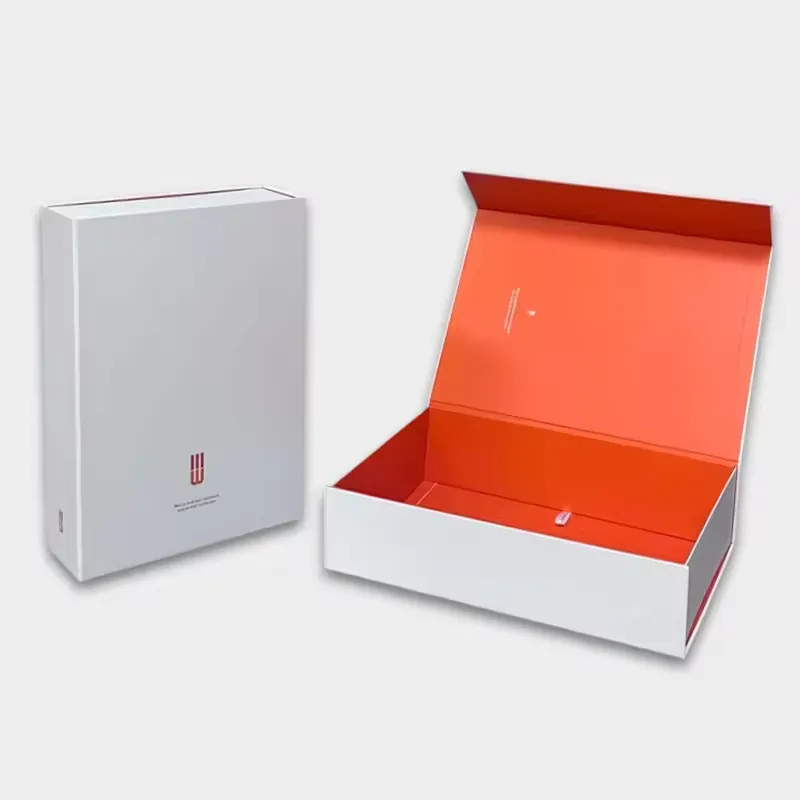
Which Option Provides Better Printing and Finishing?
Folding cartons provide superior printing and premium finishes for retail appeal, while corrugated focuses on functional graphics for shipping durability.
Printing and Finishing Differences
Folding cartons have a smoother paperboard surface, making them ideal for high-quality printing, fine details, and vibrant colors. They support advanced printing techniques such as offset printing, digital printing, and premium finishes like foil stamping, embossing, and soft-touch coatings, which are commonly used to enhance retail shelf appeal.
Corrugated boxes have a rougher surface and are typically used for functional graphics such as logos, shipping marks, and product information. While printing upgrades such as litho-lamination can improve their appearance, these options usually increase cost and are more suitable for applications where both protection and presentation are required.
Choosing the Right Option for Your Goal
Choose folding cartons when branding, shelf presence, and customer experience are the priority. Choose corrugated boxes when durability, stacking strength, and shipping protection are more important. For many products, a combination of both works best—a printed folding carton for retail presentation inside a corrugated shipper for safe transportation.
How Do Cost, Storage, and Assembly Compare?
Folding cartons win on unit price and handling efficiency for light goods, but corrugated often provides a lower total landed cost by preventing shipping damage for fragile items.
Cost, Storage, and Assembly Differences
Folding cartons often have lower unit costs for lightweight retail products because they use less material and are designed for efficient high-volume production. Corrugated boxes typically require more material and structural reinforcement, but they can provide better overall value when product protection during shipping is a priority.
Total packaging cost depends on more than the box price. Factors such as product damage, returns, storage space, freight, and fulfillment labor can all affect the final cost. For many brands, the best choice depends on balancing packaging cost with the level of protection required.
Folding cartons are shipped flat and have a compact structure, helping reduce storage space and inbound freight requirements. Corrugated boxes also ship flat but generally take up more volume due to their thicker construction.
In terms of assembly, folding cartons are often quicker to set up with designs such as tuck-end or auto-bottom structures. Corrugated shipping boxes usually require additional steps, such as folding and sealing, which can increase handling time in fulfillment operations.
Which Option Is Better for Retail and E-Commerce?

Folding cartons are built for retail shelf appeal, while corrugated boxes are engineered for shipping protection. The right choice depends entirely on where and how you sell your product.
Folding Cartons for Retail Packaging
Folding cartons are well suited for retail environments where packaging appearance and brand presentation are important. Their smooth paperboard surface supports high-quality printing and premium finishes, making them a popular choice for products such as cosmetics, food, and consumer goods. Their lightweight, compact structure also helps with efficient storage and shelf display.
Corrugated Boxes for E-commerce Shipping
Corrugated boxes are designed for protection during transportation. Their fluted structure provides the strength needed to handle stacking, impacts, and multiple handling points throughout the shipping process. They are commonly used for e-commerce, wholesale distribution, and products that require additional protection.
A Hybrid Approach for Multiple Sales Channels
Brands selling through both retail and online channels often combine the two packaging types. A printed folding carton can provide the customer-facing experience, while a corrugated shipper offers protection during transportation. This approach balances presentation and durability across different sales channels.
When Should You Use Micro-Flute Corrugated Packaging?
Micro-flute corrugated is the right choice when a folding carton is too weak, but a standard corrugated box is too bulky or lacks the required premium print quality.
Micro-flute corrugated bridges the gap between presentation-focused folding cartons and protection-focused shipping boxes. It’s a specialized material for specific jobs. You should specify it when your project meets one or more of these criteria.
When Product Protection Outweighs Folding Carton Capabilities
A standard folding carton is essentially a single layer of paperboard. It’s great for display but fails quickly under physical stress. Switch to micro-flute when:
- Your product is fragile (e.g., glass, ceramic, electronics) and needs cushioning to survive drops and impacts.
- The product’s weight is heavy enough to cause a standard folding carton to bow, crush, or tear during handling.
- Your distribution plan involves stacking that requires crush resistance (ECT) beyond what paperboard can offer.
- The packaging must withstand potential punctures common in parcel shipping, which folding cartons often fail.
For Premium Branding and Retail Shelf Impact
Standard corrugated boxes often have a “washboard” effect that ruins high-end graphics. Micro-flute offers a superior surface without sacrificing structure. It’s the right call when:
- You require high-resolution graphics, fine text, and vibrant colors without the washboarding seen on standard corrugated.
- The brand image demands a package that looks and feels substantial and high-end, more than a simple paperboard box.
- The box is the primary packaging on a retail shelf, where clean folds, sharp edges, and a slim profile are critical.
- The unboxing experience is a key part of your brand, and the packaging itself must communicate quality and durability.
In E-commerce and Direct-to-Consumer (DTC) Supply Chains
The e-commerce supply chain is brutal on packaging. A flimsy box leads to damaged products and unhappy customers. Micro-flute is purpose-built for this environment, especially when:
- The same package must serve as both the shipping box and the primary branded product box.
- Your packaging must endure the unpredictable handling, drops, and stacking common in parcel delivery networks.
- You need to reduce shipping costs by minimizing dimensional weight without sacrificing protection.
- Transit damage with flimsier packaging leads to high costs from customer complaints, returns, and replacements.
How Do You Choose the Right Packaging Option?
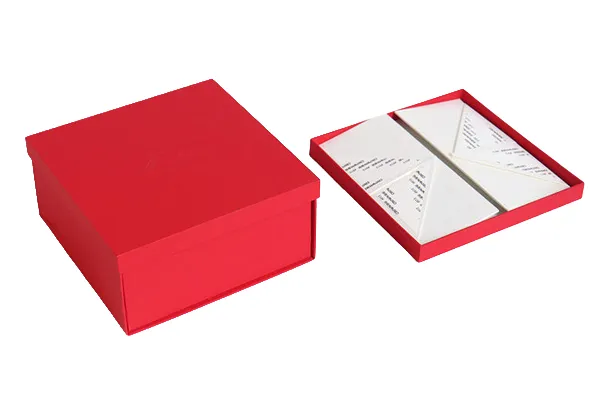
Choosing between a folding carton and a corrugated box depends on balancing product protection, supply chain demands, branding needs, and total cost—not just the price per box.
| Decision Factor | Key Considerations |
|---|---|
| Analyze Product Weight, Fragility, and Size | Use folding cartons for lightweight, durable items. Corrugated is necessary for heavy, bulky, or fragile products like glass and electronics that need impact resistance. |
| Evaluate Your Supply Chain and Distribution Path | Select corrugated for long-distance shipping, multiple handling points, or high warehouse stacking. Folding cartons work for controlled, short-distance retail replenishment. |
| Consider Branding Needs and the Customer Experience | Folding cartons offer superior print quality for shelf appeal. For D2C, the corrugated shipper often becomes the primary branding surface. |
| Calculate the Total Landed Cost | Look beyond the box price. Factor in inserts, fulfillment labor, freight, and damage rates. A cheaper box that causes returns is more expensive in the long run. |
| Test Prototypes and Consider a Hybrid Strategy | Always ship-test your actual product in the proposed packaging. A hybrid approach—a folding carton inside a corrugated shipper—combines branding with protection. |
Analyze Product Weight, Fragility, and Size
The physical characteristics of your product are the first filter. Not all boxes are created equal, and matching the structure to the item is non-negotiable. Mismatching strength and weight is a direct path to damaged goods and unhappy customers.
- Use folding cartons for lightweight, durable items like cosmetics, small food products, or accessories.
- Choose corrugated boxes for heavy, bulky, or multi-unit products that require structural support.
- Prioritize corrugated for fragile items (glass, ceramics, electronics) to provide essential cushioning and impact resistance.
- Consider folding cartons for small, uniformly shaped products to maximize shelf space and retail presentation.
Evaluate Your Supply Chain and Distribution Path
How your product gets from your facility to the customer’s hands dictates the level of protection it needs. A box that performs perfectly on a short, controlled trip to a local retailer will fail in a national e-commerce network with automated sorters and multiple transit points.
- Select corrugated for long-distance shipping or routes with multiple handling points and sortation centers.
- Use folding cartons (within a master shipper) for controlled, short-distance logistics from a distribution center to a retail store.
- If packages will be stacked high in a warehouse, corrugated is necessary for its superior compression strength.
- For direct-to-consumer (D2C) models, a branded corrugated mailer often serves as both the shipping and presentation box.
Consider Branding Needs and the Customer Experience
Your packaging is often the first physical interaction a customer has with your brand. The choice between a folding carton and corrugated box depends on where that interaction happens. Is it on a crowded retail shelf or on their front porch?
- Folding cartons offer superior print quality for high-resolution graphics, vibrant colors, and premium finishes like foil stamping or embossing.
- If shelf appeal is the primary goal, a folding carton acts as the ‘hero pack’ at the point of sale.
- If the first customer touchpoint is a box arriving at their home, the corrugated shipper becomes the primary surface for branding.
- Corrugated can be printed, but it’s better suited for simpler graphics compared to the fine detail achievable on smooth paperboard.
Calculate the Total Landed Cost
Focusing solely on the per-unit cost of the box is a common mistake. A cheap box is only cheap if the product arrives safely. The true cost includes everything required to get an undamaged product to the customer.
- Look beyond the per-unit box price and analyze the total cost per shipped unit.
- Include expenses such as inserts, fulfillment labor, freight costs based on size and weight, and damage rates.
- A cheaper box that leads to a higher rate of product damage and returns is often more expensive in the long run.
- An investment in protective corrugated packaging can lower total costs by reducing damage claims and preserving brand reputation.
Test Prototypes and Consider a Hybrid Strategy
Theory and spec sheets only go so far. Real-world testing is the only way to confirm your packaging choice. For many products, the best solution isn’t one or the other, but a combination of both packaging types.
- Always test prototypes by shipping your actual product in the proposed packaging to see how it performs.
- Evaluate if a two-layer system is needed: a branded folding carton for retail display inside a protective corrugated shipper for transit.
- This hybrid approach combines the branding benefits of a folding carton with the structural integrity of a corrugated box.
- A combined strategy is ideal for high-value or fragile goods that must arrive safely and look premium on the shelf.
Frequently Asked Questions
What is the difference between a folding carton and a corrugated box?
A folding carton is a lightweight, single-ply paperboard box designed for retail display and branding. A corrugated box is a multi-layer, fluted paperboard structure designed for strength, protection, and shipping.
Is corrugated cardboard stronger than paperboard?
Yes. Corrugated cardboard is substantially stronger than paperboard in compression, stacking, and impact resistance. This is why it is used for shipping and transport, while paperboard is used for lightweight retail folding cartons.
Can folding cartons be used for shipping?
Folding cartons can be used for limited, controlled shipping of small, lightweight items. However, they are not a structural substitute for corrugated boxes in mainstream e-commerce or industrial logistics, where they primarily serve as inner retail packaging.
Which box offers better printing quality?
Folding cartons offer better printing quality. Their smooth, single-ply paperboard surface is ideal for high-resolution graphics, fine text, and premium finishes, making them suitable for retail shelf appeal.
Are folding cartons cheaper than corrugated boxes?
Folding cartons are generally cheaper per unit for retail applications. Corrugated boxes can be more cost-effective overall when the total cost of shipping, including potential product damage, is considered.
When should I use micro-flute corrugated packaging?
Use micro-flute corrugated packaging when you need more strength than a folding carton but better graphics and a more premium feel than a standard shipping box. It is a hybrid solution for retail-ready packaging that requires both protection and presentation.
Final Thoughts
The choice between folding cartons and corrugated boxes depends on your product requirements, distribution method, and customer experience goals. Folding cartons are ideal for retail presentation and branding, while corrugated boxes provide the strength needed for shipping and protection.
For products that require both visual appeal and durability, a combined packaging approach may be the best option. PK Packaging can help develop custom paper packaging solutions based on your product size, application, and branding requirements. Contact us to discuss your packaging needs and find the right structure for your products.