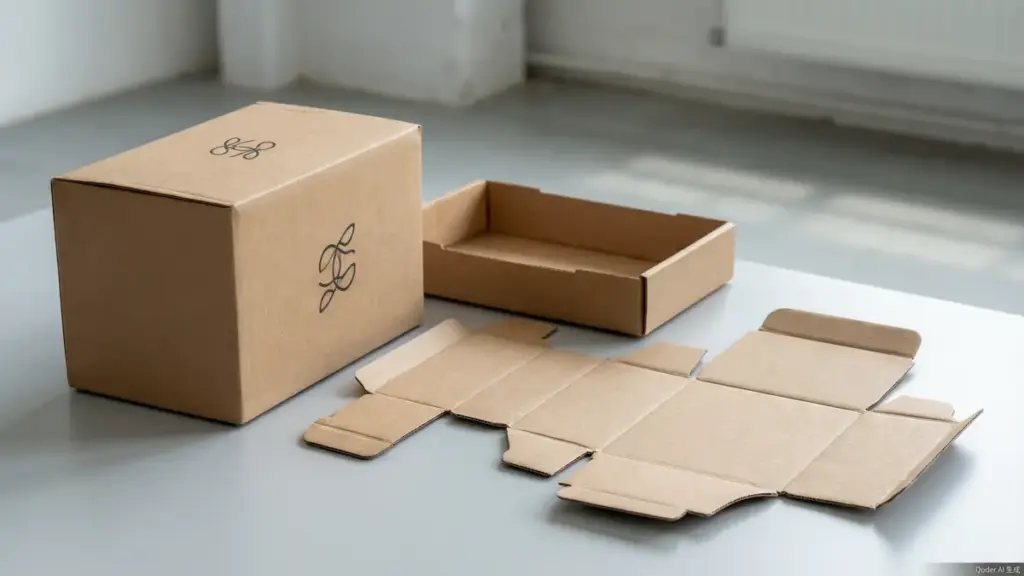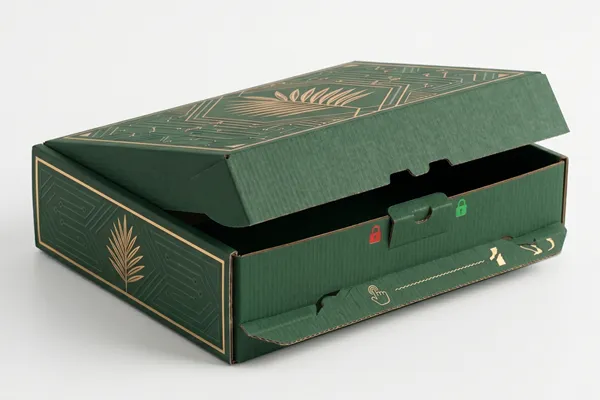
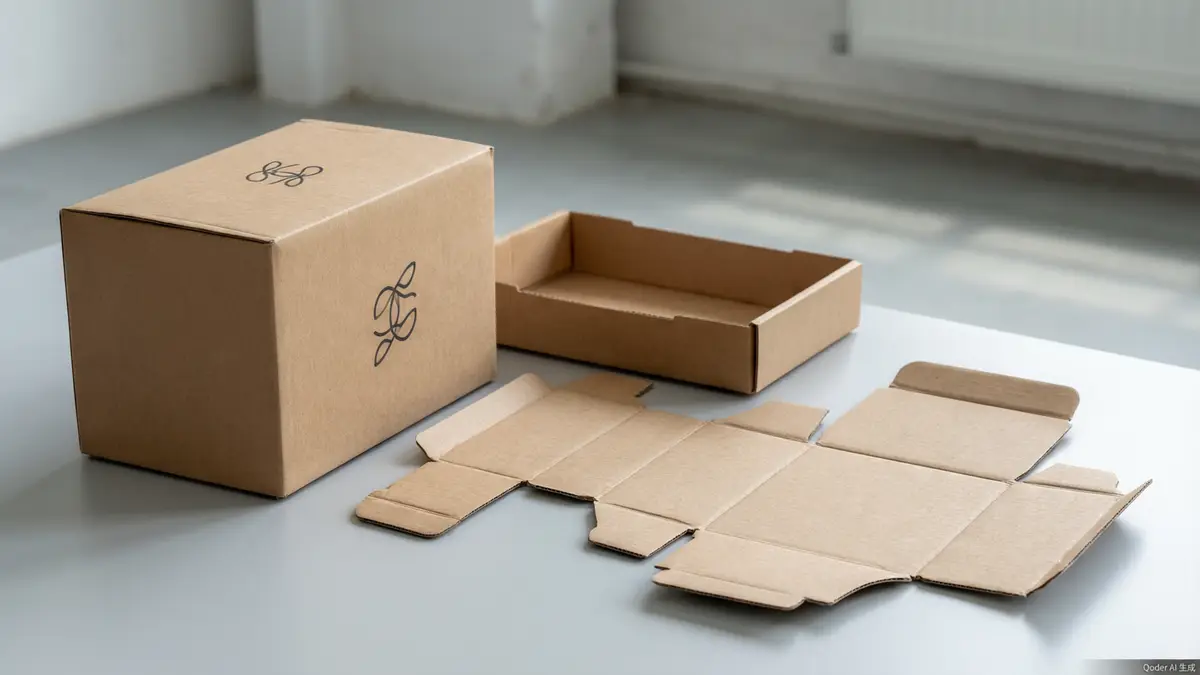
A buyer sourcing custom mailer boxes usually starts the same way: product measurements, a logo file, and a target price. The quotes come back, and none of them match. One supplier proposes kraft with two-color flexo, another quotes a white board with full-color litho lamination, a third quietly substitutes a heavier board than anyone discussed. Each quote is technically correct, and none is comparable to the others.
This article lays out the four decisions that actually shape a mailer quote — board grade, struttura, stampa, and cost — in the order a specification should be written. For each decision we cover what you should fix yourself and what belongs with the supplier. We also show how to record it so two factories quote the same box line by line.
What Four Decisions Shape a Mailer Quote?
A mailer has to do three jobs. It protects the contents through packing, sorting, and last-mile handling. It presents the brand when the customer opens it. And it does both at a landed cost that works per order in a fulfilment operation. A quotation reflects four inputs that serve those jobs:
- Board grade and flute — how much protection the material itself provides.
- Structure and features — style, chiusure, opening aids, and depth.
- Printing and finishing — how the box looks on the doorstep.
- Quantity and commercial terms — run size, utensileria, and freight scope.
When quotes diverge wildly, it is usually because one of these four was left open and every supplier filled the blank differently. Fix them in order — performance before decoration, structure before print, quantities before price — and the comparison becomes mechanical. The general material, forza, and compliance layer for corrugated packaging is covered in our complete corrugated boxes specification guide. This article stays on the mailer scenario and does not repeat it.
Which Board Grade Fits a Custom Mailer Box?
Specify the board backwards from the contents and the route, not from a competitor’s box or a specification you once saw online. Three inputs drive the choice: total packed weight, fragility of what is inside, and how the parcel actually travels. A courier-handled apparel parcel and a densely stacked fulfilment bin of cosmetics behave very differently, and the same mailer can survive one and fail the other.
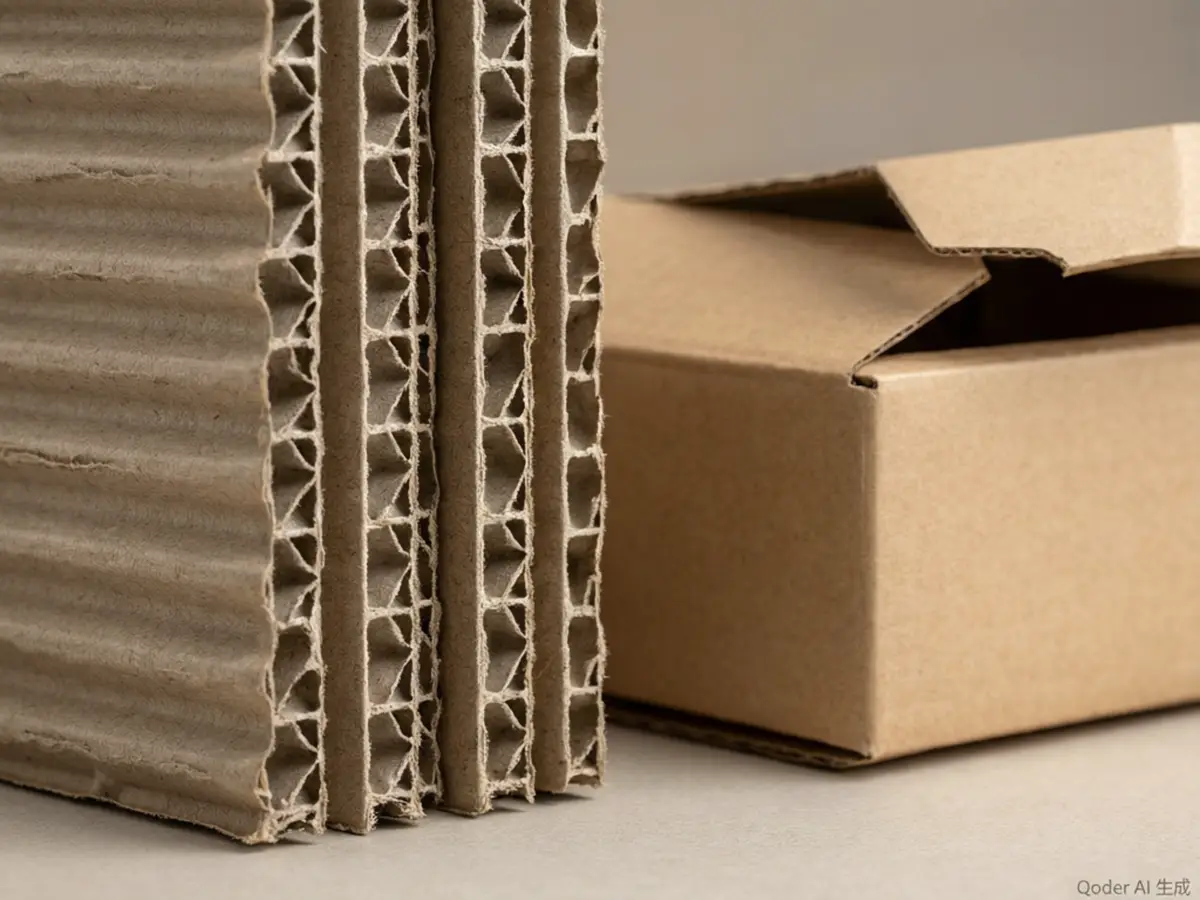
For light, durable contents such as apparel, socks, or accessories, a well-built single-wall mailer is typically enough, and a heavier board mostly adds material cost and shipping weight. For heavy or fragile goods — glass skincare, ceramica, dense retail sets — the sensible direction is usually double-wall construction. In alternativa, a lighter outer board with paperboard partitions stops products from loading the walls themselves. Even at moderate unit weights, consider stacking: mailers crushed under other parcels in a fulfilment cage need compression resistance that a drop-safe but thin board does not provide.
Two reading rules matter before you write anything into an RFQ. Primo, ECT and Mullen measure different failure modes and do not convert into each other. Pick one measurement system with your supplier and state it plainly in the RFQ. Secondo, flute choice is a trade between cushioning and print fidelity — taller flutes absorb more impact, finer flutes print cleaner and fold sharper. Rather than re-listing profiles here, read the flute type guide and bring one candidate profile, not five, to the quotation.
Scenario-specific contents push the logic further. Mailers carrying books add their own sizing and protection concerns. Subscription boxes that repeat monthly reward standardized sizes even more.
The table below gives reading directions, not a fixed spec. Confirm every row against packed weight, route, and stack height.
| Contents Profile | Usual Board Direction | Verify Before Quoting |
|---|---|---|
| Leggero, durable goods (abbigliamento, accessori) | Single-wall mailer with a finer flute | Stacking pressure in fulfilment cages |
| Heavy or fragile goods (glass, ceramica) | Double-wall, or partitions with a lighter outer board | Weight limits and freight class impact |
| Moderate weight, hard parcel stacking | Single-wall with a stated ECT or Mullen target | Which measurement system applies |
| Subscription or repeat programs | Standardized sizes across two or three SKUs | Flat-pack count per outer carton |
Which Mailer Structure Details Do Buyers Forget?
Between a plain shipping carton and a branded mailer sit several structural decisions that buyers routinely leave unstated — and then get quoted inconsistently.
Style family. As a first fork, a regular slotted container avoids cutting dies. A die-cut mailer buys tape-free closure and better presentation at the cost of tooling. The split is laid out in our comparison of RSC and die-cut corrugated boxes. Most mailer projects land on the die-cut side. To name the construction unambiguously in a quote, reference the FEFCO design code, the common language for corrugated box structures. IL FEFCO code system defines each style, so no code table is repeated here. Citing a code names the structure only; it does not mean a finished box has been tested or certified to any standard.
Opening and re-closure. A tear strip turns opening into a designed moment, but it is a component and a converting step, not a free feature. A return workflow may also need a second adhesive strip that survives the first opening. What to specify and how to validate it is the subject of our tear strip mailer box guide. For the RFQ, state whether the box needs outbound opening only or an outbound-and-return path, then ask the supplier to itemize the difference.
Glue seams and bottom construction. Side-wall seams, auto-bottom locks, and glued flaps each add labor and change how the box erects on a packing bench. A mailer that is pleasant to assemble packs faster and gets crushed less by impatient hands. Tell the supplier who packs the boxes — a human at a bench or an automated line — and confirm where each glue line sits on the drawing.
Depth and proportions. A shallow tray and a deep box of the same footprint behave differently under top load and against shifting contents. Depth should follow the packed order’s tallest realistic combination, measured with protective wrap included, not the product on its own. Excess void lets contents move; excess depth wastes material and dimensional weight.
How Do Kraft and White Surfaces Change Print?
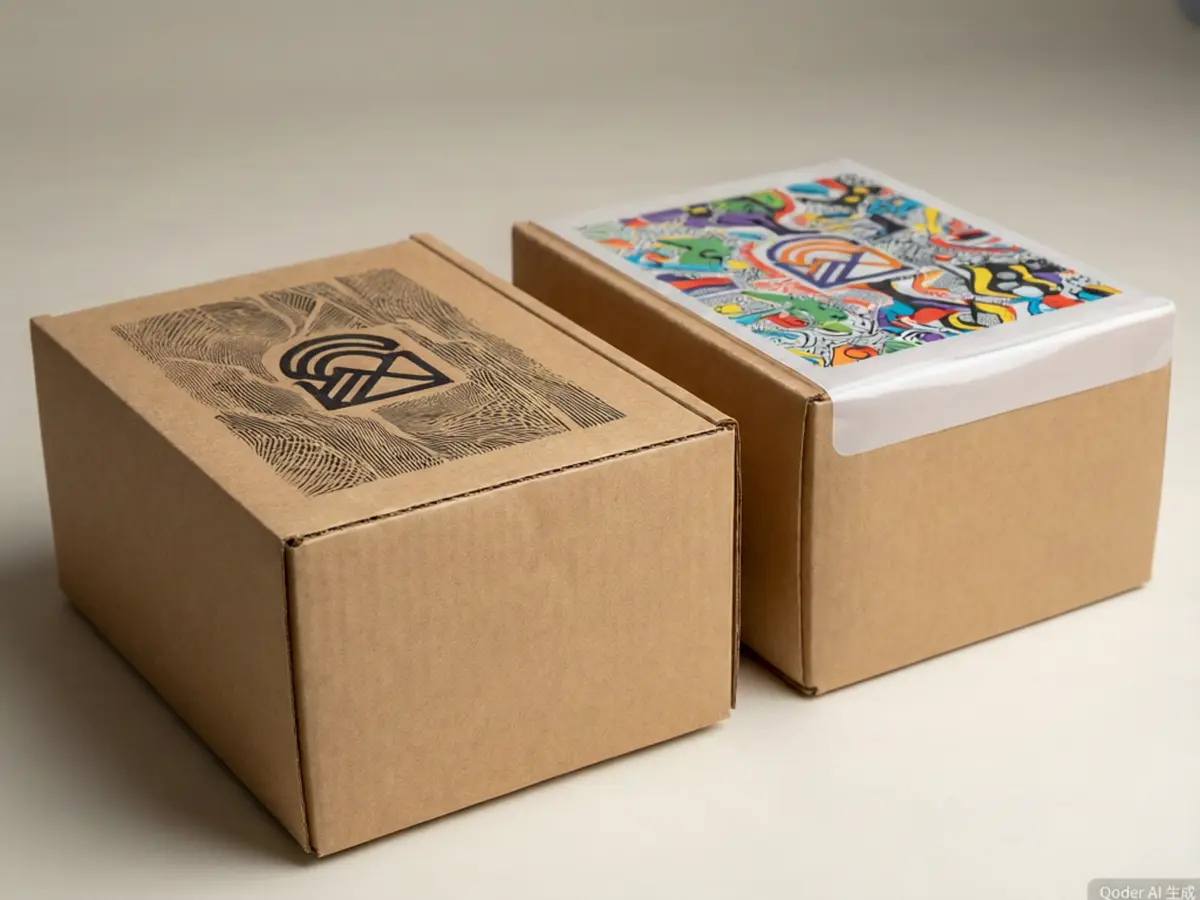
Print decisions are bounded by the surface they sit on. Kraft is a warm, absorbent base. Direct flexo in strong spot colors, line art, and solid blocks works well on it. Pale or white graphics need an opaque ink base, and photographic imagery does not realistically live there. If your custom mailer boxes must carry full-color artwork, the usual route is a white top surface. Litho lamination or digital printing then changes both the look and the cost tier of the box. State the base color you want and the imagery you need, and let the supplier match method to surface rather than the other way around.
Two more choices shape the print scope. Primo, outside-only versus outside-and-inside printing. An inside print doubles the printed area and the plate or setup work. Justify it by unboxing value rather than copying another brand. Secondo, finishing — foil, goffratura, spot UV, and laminations reach mailers mostly through litho construction, and each effect changes how the printed surface behaves. One design caution travels across all methods. Heavy ink coverage over coarse flute can telegraph the wavy lines through the surface, which is a reason to pair fine flute with print-heavy artwork.
As one product example of how board, struttura, and print combine on a real program, see our custom cosmetic mailer boxes. The construction on that page is one configuration, non una raccomandazione universale.
What Actually Moves the Price?
Three levers dominate a mailer quote, and they move in different directions.
Quantità. Plates, dies, and setup costs amortize across the run, so the first-order quantity and your reorder cadence together matter more than either alone. Minimum order quantities depend on style and print method. A die-cut litho mailer and a flexo RSC are not quoted on the same floor. Send your realistic monthly figure and ask what drives the supplier’s minimum, rather than accepting it as a wall.
Size and board consumption. Dimensions drive material use nonlinearly. A slightly deeper box can move into a different cutting pattern and a heavier freight class. Flat-packed versus assembled shipping also changes how many units fit per carton and per container. Standardizing on two or three sizes across a product line typically beats one “universal” box sized for the worst case.
Decoration. Color count, laminazione, finitura, and inside printing each add steps. This is usually the cheapest lever to pull because removing decoration does not weaken the box; quietly downgrading the board does.
The calculation layer — how these factors enter a cost formula line by line — belongs to our corrugated packaging cost guide and is not rebuilt here. What this article adds is the decision order. Fix performance and structure first. Then reduce cost by simplifying decoration or standardizing sizes. Only then revisit the board, with a supplier who can show why a lighter construction still meets your stacking target.
The table summarizes the three levers and the safer first move.
| Lever | What It Changes | Preferred First Move |
|---|---|---|
| Quantità | Amortizes plates, dies, and setup cost | Set a realistic reorder cadence first |
| Size and board | Board consumption, freight class, units per outer | Standardize on two or three sizes |
| Decoration | Plates, laminazione, and finishing steps | Cut colors or inside print before board |
What Belongs on One Comparable Spec Sheet?
The deliverable of all four decisions is one page you send to every supplier. Before the first quote for your custom mailer boxes goes out, make sure the page states:
- Dimensioni interne of the packed order, with the tolerance range you will accept in writing.
- Contents weight per box and a short description of what ships inside, including protective wrap.
- Shipping profile: courier route, expected handling, and stack height in transit or storage.
- Asse: grade, or a performance target such as an ECT figure, with the measurement system named.
- Construction: FEFCO code or a dimensioned sketch, plus the closure and tear strip decision.
- Stampa: method, color count, outside-only or outside-and-inside, and surface color.
- Finitura: none, or the specific effects, kept to what the brand actually needs.
- Quantities: first run, reorder frequency, and forecast monthly volume.
- Campioni: whether you need an unprinted structural sample, a printed proof, or both before production.
Then require two things back: each quote broken down so tooling, decoration, and freight scope are visible separately, and an explicit flag wherever the supplier assumed something you left open. If a field is undecided, say so in the sheet rather than staying silent — suppliers fill blanks differently, and that is exactly what makes quotes incomparable.
Domande frequenti
What board grade do I need for a heavy product in a mailer box?
There is no single answer that survives contact with reality. The grade depends on packed weight, stack height in transit, and how fragile the contents are. Send those three inputs and ask the supplier to propose board against a stated performance target, instead of prescribing a grade yourself.
Does a tear strip raise the cost much?
It adds a component and a converting step, so typically some cost, but the impact depends on the construction and the supplier’s line. Ask for the strip to be itemized in the quote. Compare a version with and without it on the same board and print scope, then judge whether the opening experience earns its place for your brand.
How many colors can I print on a custom mailer?
On kraft with direct flexo, strong spot colors work well and the practical color count is limited by the press, so confirm it with your supplier. Full-color photographic artwork generally means a white surface with litho lamination or digital printing, which is a different cost tier rather than a different number of inks.
Is single-wall enough for ecommerce mailers?
For many light, durable orders, SÌ, and the double-wall habit quietly costs buyers material and freight on every shipment. Consider double wall when contents are heavy or fragile, or when parcels stack hard in transit — ideally after a trial shipment with your actual packed order.
What minimum order should I expect for custom mailer boxes?
MOQ depends on style, print method, and the supplier’s equipment. Treat any number as a question: ask what drives it, and whether simpler decoration or fewer sizes lowers it. Share your first-run and forecast monthly quantities and let the supplier quote against real demand.
Do I need a dieline before I can get a quote?
Not initially. A dimensioned sketch or even the FEFCO code plus your packed-order measurements is usually enough to price the box. The supplier then produces the dieline for your approval before artwork is committed. Insist that artwork lands only on the approved, revision-marked dieline.
Considerazioni finali
The cheapest mailer quote is rarely the cheapest mailer. The expensive pattern is the one described at the start: an open brief, three incomparable quotes, and a board or opening feature chosen by whoever guessed the blank best. The fix is procedural rather than clever — decide the contents and route first, then board, then structure, then print, then quantities, and write each decision into one shared specification sheet.
Right-size rather than over-build. Many programs run fine on a lighter board or one fewer print step than the brief assumed. A supplier who knows the performance target will usually point out where money is wasted, and that conversation keeps the account for years.
Once the sheet is complete, get the samples you specified, test the opening with people who did not design it, and compare the returned quotes line by line. Where two suppliers still differ, ask them to explain the difference in construction terms rather than simply picking the lower number.
Inviare PK Paper Box your contents weight, inner dimensions, print colors, and monthly quantity, and we will quote a mailer spec sheet you can compare line by line.