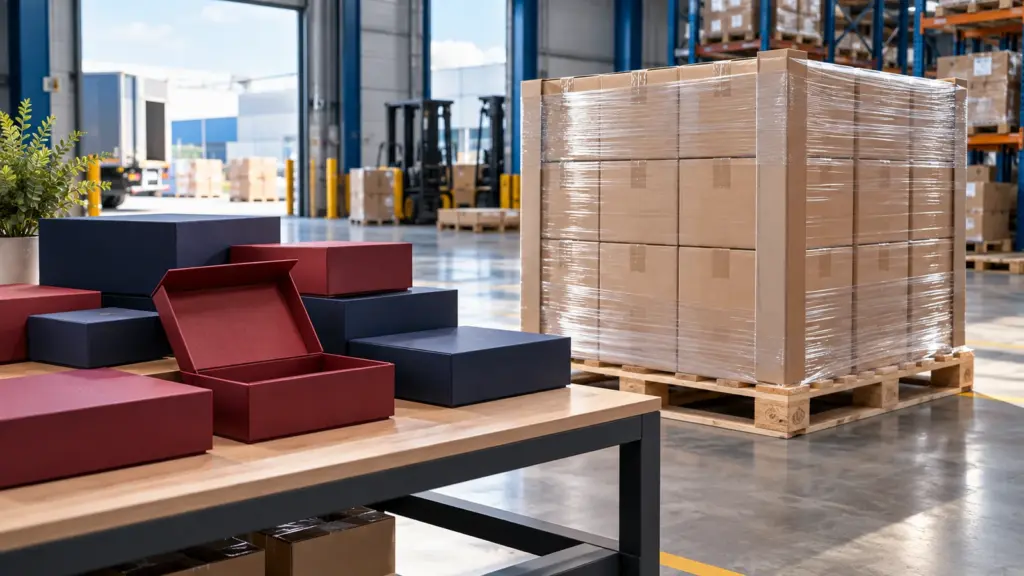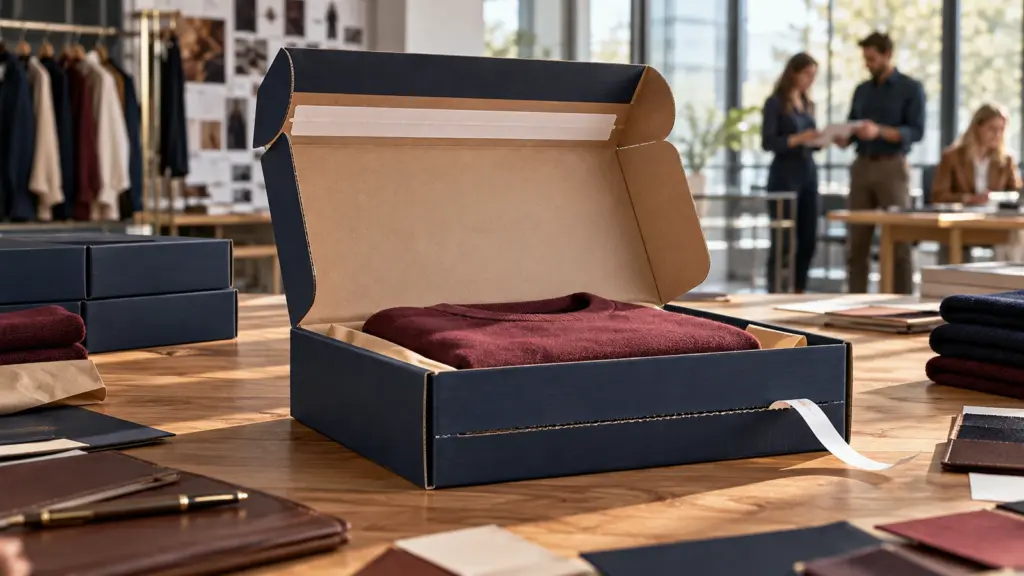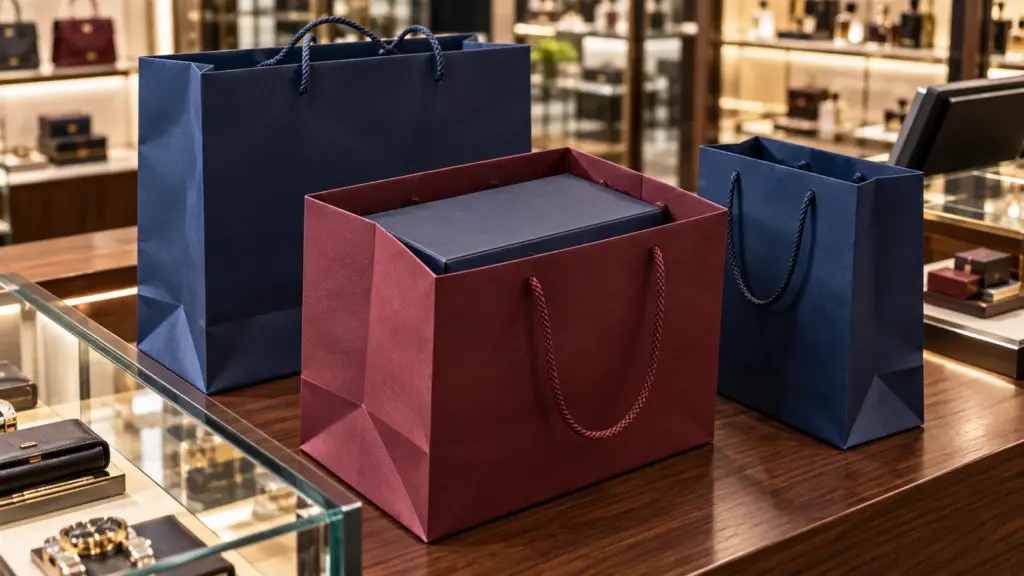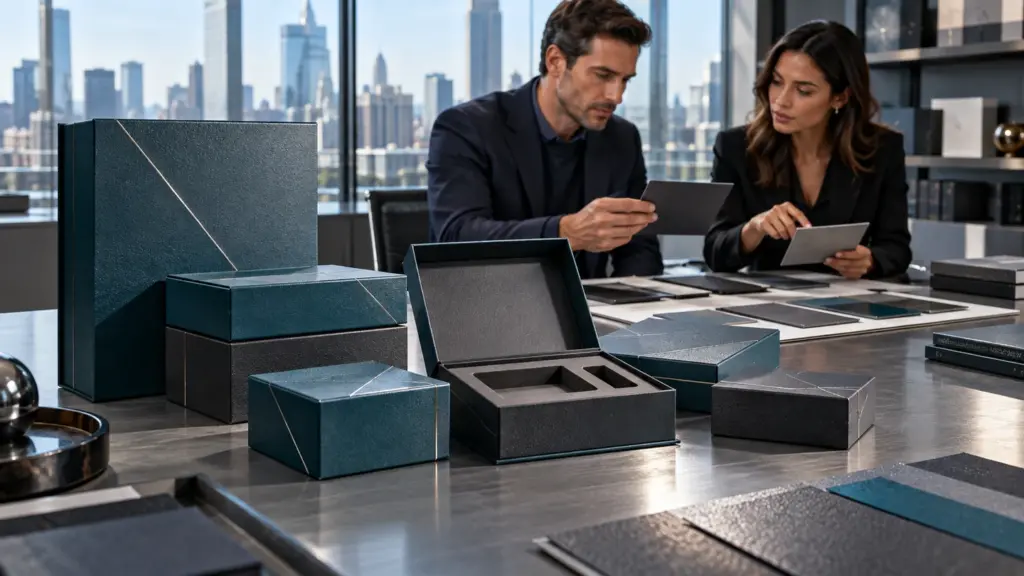
Choosing between an RSC box and a die-cut corrugated box can look like a simple price comparison. 하지만, the wrong structure may increase tooling charges, packing labour, board waste, shipping damage or delivery time. 많은 프로젝트에서, the RSC box is the better workhorse, while die-cut packaging earns its cost when product fit, presentation or packing speed matters more.
What Is an RSC Box?
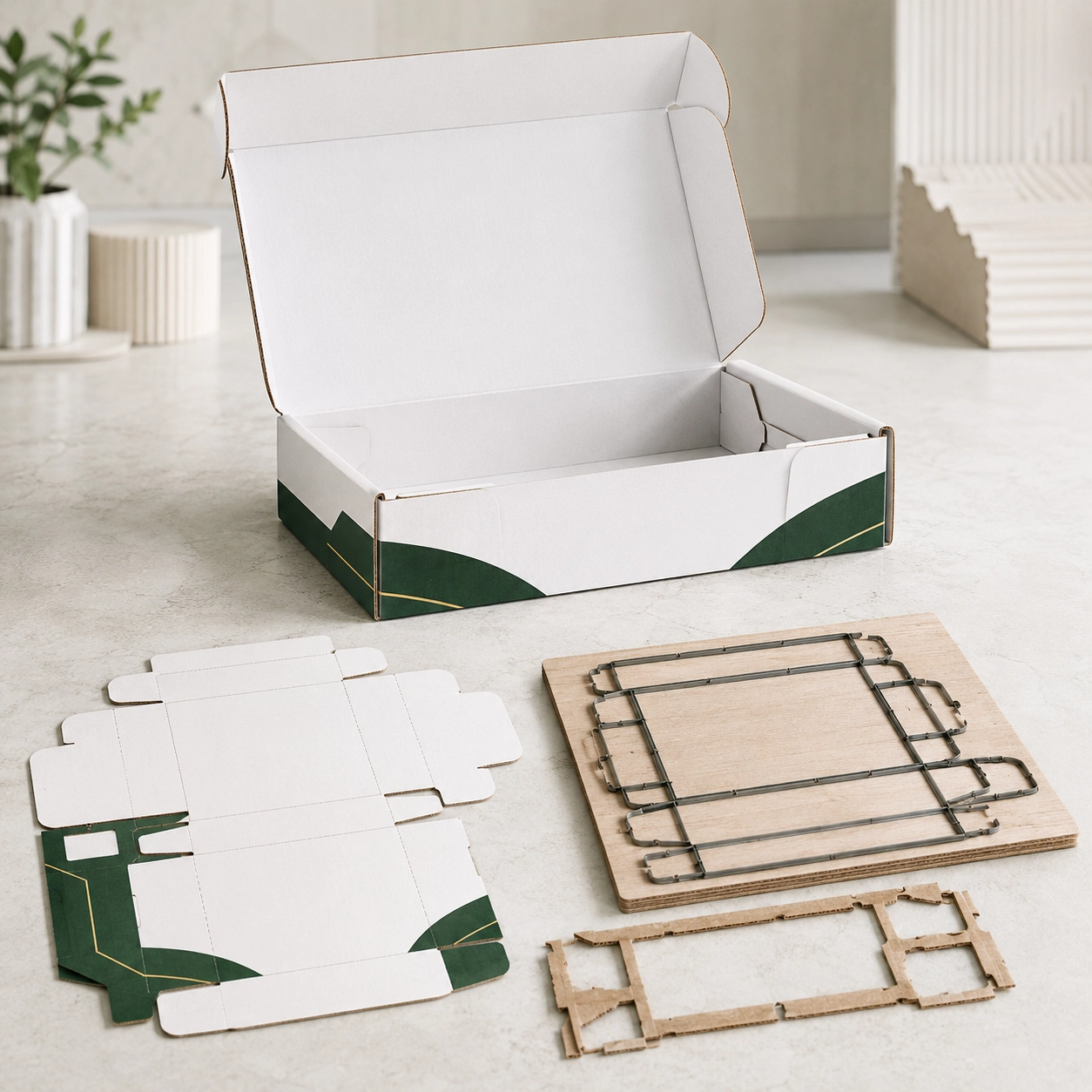
An RSC box is a Regular Slotted Case made from one corrugated blank. Its four top flaps and four bottom flaps are slotted so the major flaps meet when the case is closed. 대개, the manufacturer’s joint is glued, stitched or taped, while the top and bottom are sealed during packing.
Because an RSC box has a standardized, efficient layout, it runs well on flexographic printer-slotter-folder-gluer equipment. FEFCO explains that regular slotted cases are commonly printed, 자르다, folded and glued in one inline operation, whereas die-cut containers use rotary or flatbed equipment to cut and crease more complex shapes. That production difference sits behind much of the tooling and cost gap between the two formats.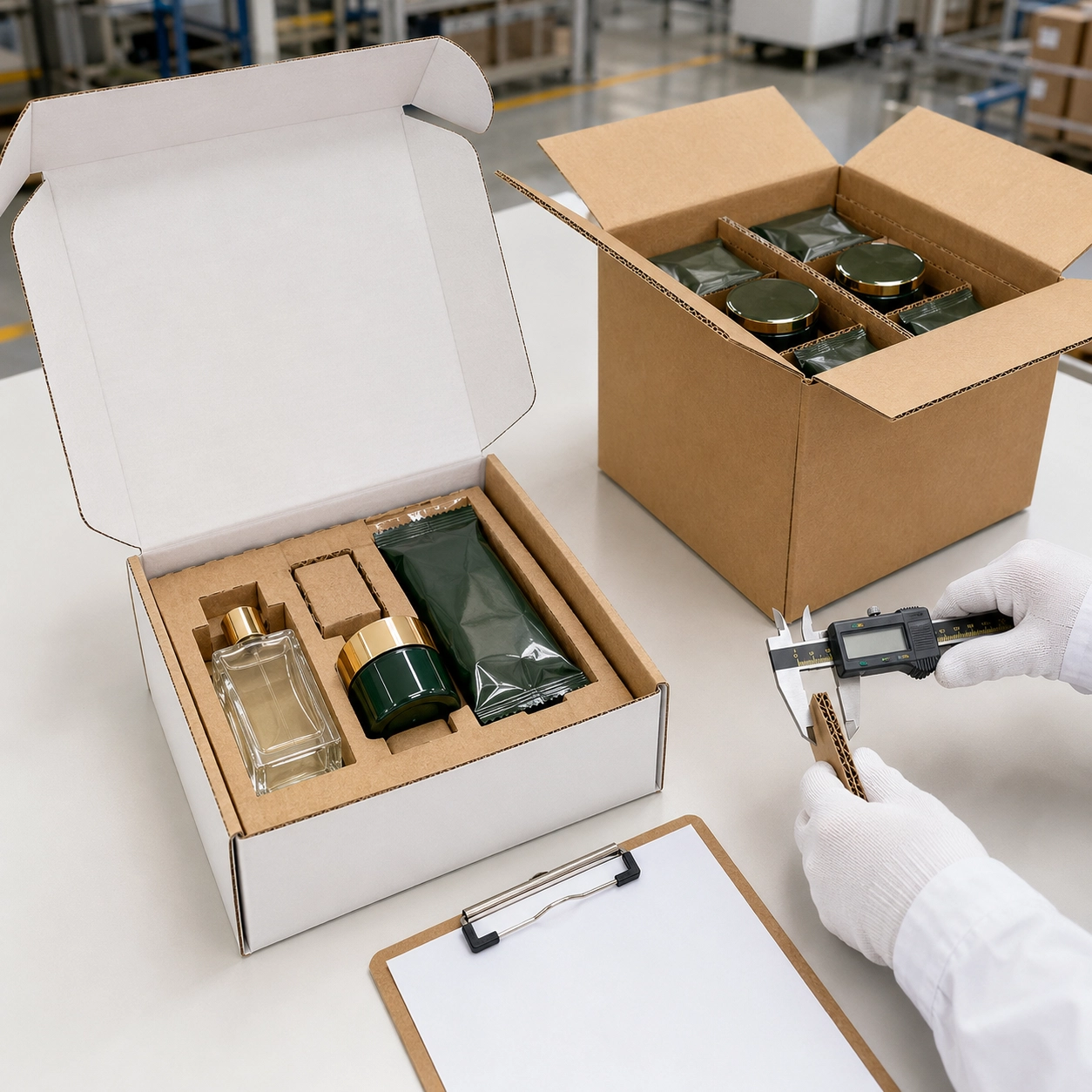
What Is a Die-Cut Corrugated Box?
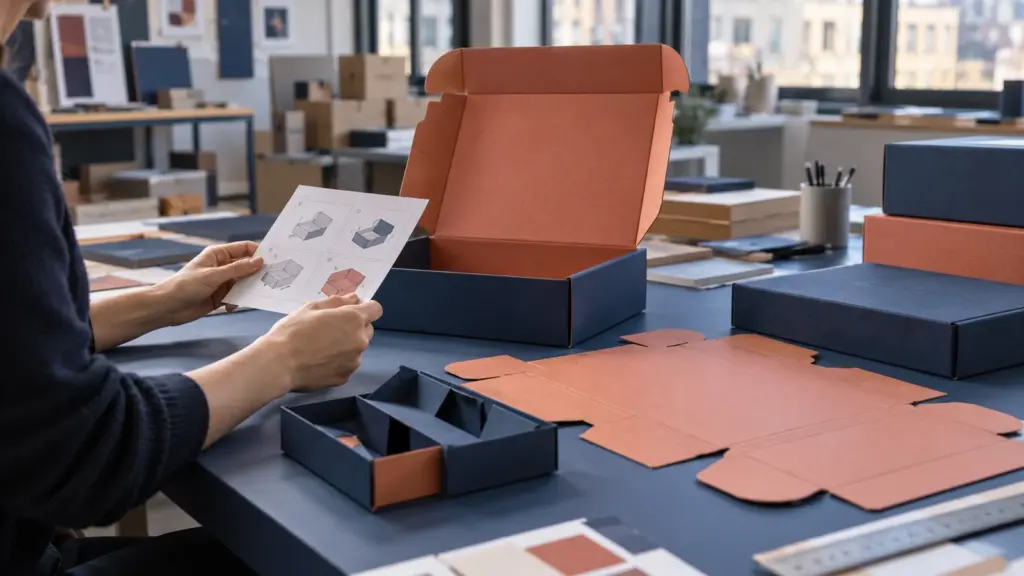
A die-cut corrugated box is cut and creased with a custom cutting form. 그러므로, it can include tuck tabs, locking wings, 손 구멍, 창문들, tear strips, display panels, auto-lock features and close-fitting cavities that a standard slotted case cannot create efficiently.
하지만, “die-cut” does not automatically mean “luxury,” nor does it always mean “expensive.” A simple mailer may use modest tooling, while a large rotary-die-cut shipping case may be engineered for very high volume. The real question is whether the added geometry creates measurable value.
Quick Comparison: RSC vs Die-Cut Corrugated Boxes
Buying FactorRSC boxDie-Cut Corrugated BoxBasic structureRegular slotted shipping caseCustom-cut locking or presentation structureToolingUsually low for a standard styleCustom rotary or flatbed cutting dieUnit costUsually lower for simple transport useUsually higher, depending on complexityPackingOften needs tape and separate insertsCan include locks, dividers or fitted featuresPrint optionsFlexo, digital or litho-laminatedFlexo, digital or litho-laminatedBest volume fitMedium to very high repeat volumeShort digital runs or scalable die-cut runsMain advantageCost-efficient protection and stackingProduct fit, presentation and packing efficiencyMain riskOversized void space or extra labourTooling, waste and over-engineering
The table gives a useful starting point. 아직, the cheapest quotation is not always the lowest total cost. You also need to compare assembly time, 줄자, 인서트, damage rates, pallet use and the likelihood of future artwork or size changes.
압형: Where the Cost Difference Begins
For an RSC box, a standard slotted layout normally avoids a custom cutting die. 따라서, sampling is faster, structural revisions are easier and the initial setup charge is usually lower. Printing plates may still be required for flexographic artwork, so “no cutting die” does not mean “no setup cost.”
A die-cut design, 대조적으로, requires a cutting form matched to the approved dieline. Rotary tooling suits repeat production and high-speed output, whereas flatbed tooling handles precise or complex layouts. 게다가, separate tools may be needed for embossing, debossing or foil stamping on a litho-laminated face.
That makes the RSC box appealing when sizes change frequently or the first order is cautious. 반면에, a stable die-cut structure spreads its tooling cost over repeat orders. If the die also removes tape, reduces inserts or shortens packing time, it may pay back surprisingly quickly.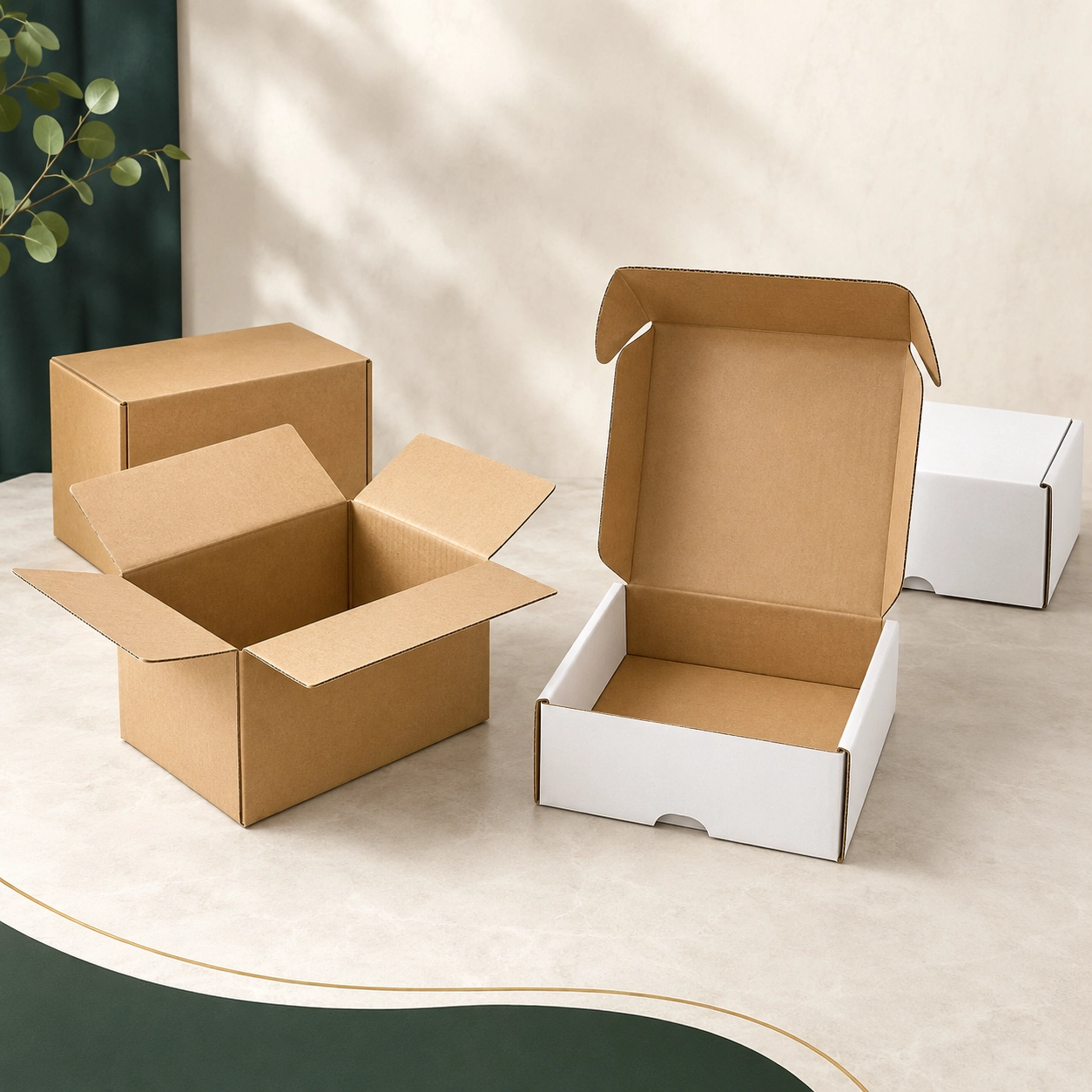
What Should Buyers Ask About Tooling?
Before approving a quotation, ask these practical questions:
- Is the cutting die charged once or again for repeat orders?
- Who owns the tooling after payment?
- How long will the factory store it?
- Can artwork change without replacing the structural die?
- Will a size change require a new die and print plates?
- Is digital cutting available for prototypes or trial orders?
솔직히, these questions prevent uncomfortable surprises later. A low first quotation can become expensive if tooling ownership and revision rules are vague.
비용: Compare the Whole Packing System
An RSC box often starts with the lower unit price because the blank is efficient and the converting route is familiar. 게다가, factories can produce standard cases quickly, ship them flat and run them at scale. For straightforward transport packaging, that simplicity is hard to beat.
Yet an RSC box may require tape, 파티션, void fill or more packing motions. Imagine a fulfilment team folding, taping and filling several thousand cases per shift. A few extra seconds per pack suddenly becomes a real labour expense.
Die-cut packaging may cost more per unit, but a self-locking base, fitted insert or integrated divider can simplify the line. 결과적으로, buyers should compare total packed cost rather than box price alone.
Total packed cost = box + tooling allocation + 인서트 + 줄자 + labour + 저장 + 화물 + expected damage
예를 들어, a die-cut mailer that costs more but reduces product movement and eliminates void fill may be the cheaper system. 거꾸로, adding elaborate locks and premium finishes to an ordinary warehouse shipper can waste money without improving protection.
Volume: Which Structure Scales Better?
At medium and high repeat volumes, an RSC box usually offers excellent economics for master cartons, export cases and warehouse distribution. 게다가, its flat blank is easy to bundle, palletize and store. Automated case erectors and sealers also favour standardized dimensions.
Die-cut economics depend more heavily on the production method. Digital cutting avoids a physical die for prototypes and very small runs, although its unit cost is higher. Flatbed die cutting works well for precise structures and moderate runs, while rotary die cutting can support high-speed repeat production.
그러므로, volume alone should not decide the format. Ask whether the structure will repeat, how many SKUs share it and how quickly designs may change. A custom die is easier to justify when one dieline serves several campaigns or repeat orders.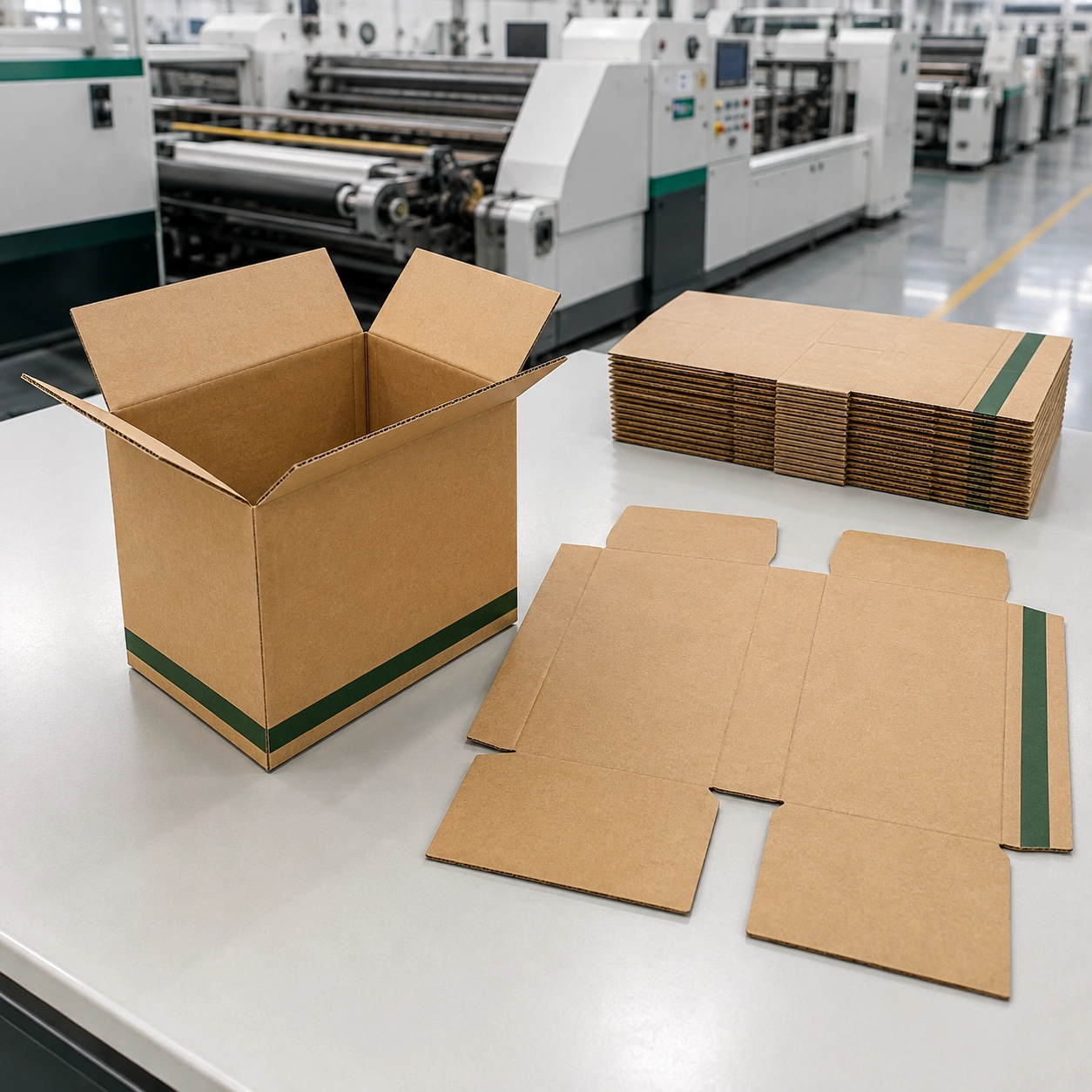
A Practical Volume Guide
Project SituationRecommended Starting PointNew size with uncertain demandStandard case or digitally cut prototypeRepeat transport cartonRegular slotted case with flexographic printSubscription or e-commerce packDie-cut mailer with locking tabsFragile multi-part kitDie-cut pack with integrated or separate insertHigh-speed warehouse packingCompare case erector and auto-lock compatibilityMultiple SKUsStandardize the outer size and vary inserts or labels
These are starting points rather than rigid rules. 궁극적으로, a physical packed sample and a timed assembly trial reveal more than a spreadsheet.
일반적인 응용
An RSC box is commonly used for e-commerce shipments, food and beverage master cartons, 의복, books, household products, 양초, 화장품, 스킨케어, perfume and industrial components. It is especially effective when the main job is stacking, transport and warehouse handling.
Die-cut boxes are often chosen for subscription kits, retail-ready trays, cosmetic launch sets, fragrance gift packs, 전자 제품, bottle multipacks and promotional packaging. 예를 들어, locking tabs improve presentation, while fitted partitions keep products upright and separated.
For direct-to-consumer brands, the two formats may work together. A branded die-cut presentation pack can sit inside a stronger outer shipping case, providing both visual appeal and transit protection.
재료 옵션
For an RSC box, common options include natural kraft liner, white-top liner, recycled testliner and virgin kraftliner. 그 동안에, 비, C and E flute cover many everyday requirements, while double-wall combinations support heavier loads or demanding stacking conditions.
Die-cut packaging uses the same corrugated board families. 하지만, E and F flute are especially useful for compact mailers and premium printing because their finer profile creates cleaner folds and a smoother face. Litho-laminated structures can add C2S art paper, white card stock or specialty paper to the corrugated core.
Material selection should follow performance, not appearance alone. 그러므로, share packed weight, 적층 높이, storage humidity, delivery route and pallet pattern before confirming the grade. For food projects, also state whether the corrugated pack is secondary packaging for sealed products or is intended for direct contact.
구조 옵션
Start with an RSC box when you need a simple four-flap shipping case. From there, related slotted styles can include half-slotted cases, overlap flaps, full-overlap flaps and cases with partitions or pads.
Choose die-cut construction when the brief requires:
- Tuck-front mailer lids and locking side wings
- Auto-lock or crash-lock bottoms
- Integrated dividers and bottle cells
- Carry handles, ventilation holes or display openings
- Tear strips and return-ready closures
- Retail trays, sleeves or counter displays
- Fitted paperboard, 골판지, 성형펄프, EVA 또는 폼 인서트
그럼에도 불구하고, every feature should solve a real problem. A handle changes load distribution, a window removes board area and a locking tab affects assembly. 따라서, prototype testing should happen with the actual packed product rather than an empty sample.
인쇄 & 마무리 옵션
Direct flexographic printing keeps an RSC box economical for logos, handling marks, barcodes and one-to-four-colour graphics. 게다가, digital printing supports short runs and multiple artwork versions without conventional print plates.
For photographic retail graphics, litho lamination bonds an offset-printed sheet to corrugated board. This route supports CMYK, Pantone colours, 무광택 또는 광택 라미네이션, aqueous coatings and selected specialty effects.
Die-cut presentation packaging can also use hot stamping, 엠보싱, 디보싱 및 스팟 UV. 하지만, finish placement must respect score lines, flute direction and folding stress. Foil placed directly across a hard crease, for instance, may crack during assembly.
생산 전, approve a physical colour and finish sample. Screens are helpful for layout, but they do not reliably show metallic foil, 종이 질감, coating gloss or the way colour shifts between kraft and white liners.
규정 준수 & 지속 가능성
If an RSC box is used for food, cosmetics or regulated supply chains, ask which certificate applies to the actual manufacturing site, material and product scope. Relevant documentation may include FSC chain of custody, BRCGS 포장 재료, IFS PAC보안, food contact safety declarations, migration reports and supplier traceability. IFS Food generally applies to food-processing operations, whereas IFS PACsecure is the more relevant packaging standard.
EU 프로젝트의 경우, EPR reporting may require component weights by material. 게다가, the PPWR은 다음에서 적용됩니다. 12 팔월 2026, although individual obligations have different transition dates. EUDR scope should be checked against the specific commodity and product code; current EU guidance places the main application date at 30 12월 2026 for large and medium operators and 30 6월 2027 for most micro and small operators.
Recyclability also depends on the complete construction. Standard corrugated board generally fits established paper recovery streams, whereas heavy plastic laminates, 왁스, oversized foam inserts or mixed-material windows may complicate collection and separation. 그러므로, use the simplest structure that meets protection, barrier and presentation needs.
How to Customize Your Corrugated Packaging
To quote an RSC box accurately, start with internal length × width × height, packed weight and order quantity. 다음, provide the number of units per case, 적층 높이, pallet size, 보관 조건, destination market and required print coverage.
For die-cut packaging, we also need the product shape, 오프닝 경험, insert layout and packing method. Ideally, send a physical product sample or a precise 3D drawing. Then our structural team can build the dieline around real clearances rather than guesses.
The normal development path is straightforward:
- Project brief: 크기, 제품 사용, 무게, quantity and market.
- Structure proposal: 판자, 플루트, 스타일, inserts and closure.
- Dieline: Editable AI or PDF artwork template.
- 견본: Unprinted structural sample followed by a printed sample if required.
- 테스트: 맞다, 압축, 떨어지다, print and assembly review.
- Approval: Signed specification and approved physical reference.
- Mass production: In-process inspection and final packing.
Samples normally take 3–5 working days after specifications are confirmed. Bulk production commonly takes 15–20 working days after approval, although board availability, 인쇄 복잡성, volume and seasonal capacity can change the schedule.
관련 제품
맞춤형 종이 튜브 · 식품 포장 · 화장품 포장 · 골판지 배송 상자
Quality Control Across Packaging Formats
Corrugated boxes and paper tubes use different forming processes. 그럼에도 불구하고, buyers should expect the same discipline around incoming materials, dimensional tolerances, 인쇄 등록, finish inspection, traceability and final sampling.
Our guide to the paper tube quality control process shows how these checkpoints are documented for another packaging format. It also helps procurement teams build a consistent supplier-audit checklist across paper boxes and cylindrical packs.
팩 포장을 선택하는 이유?
Our team tests each RSC box against the approved dimensions, board specification, print reference and intended packing method. 게다가, die-cut projects receive structural review around tab engagement, crease performance, insert fit and assembly sequence.
Pack Packaging supports global projects with:
- 20,000㎡ 규모의 제조시설
- A separated 2,000㎡ food-grade workshop
- Monthly paper tube capacity above 10,000,000 단위
- 에이 20+ person design and structural engineering team
- OEM/ODM 개발, sampling and repeat-order support
- In-process inspection and documented final quality checks
가장 중요한 것은, we do not recommend extra tooling simply because a structure looks impressive. If a standard case protects the product and fits the packing line, we will say so. 거꾸로, if a custom die can reduce labour, damage or shipping volume, we will show where the saving comes from.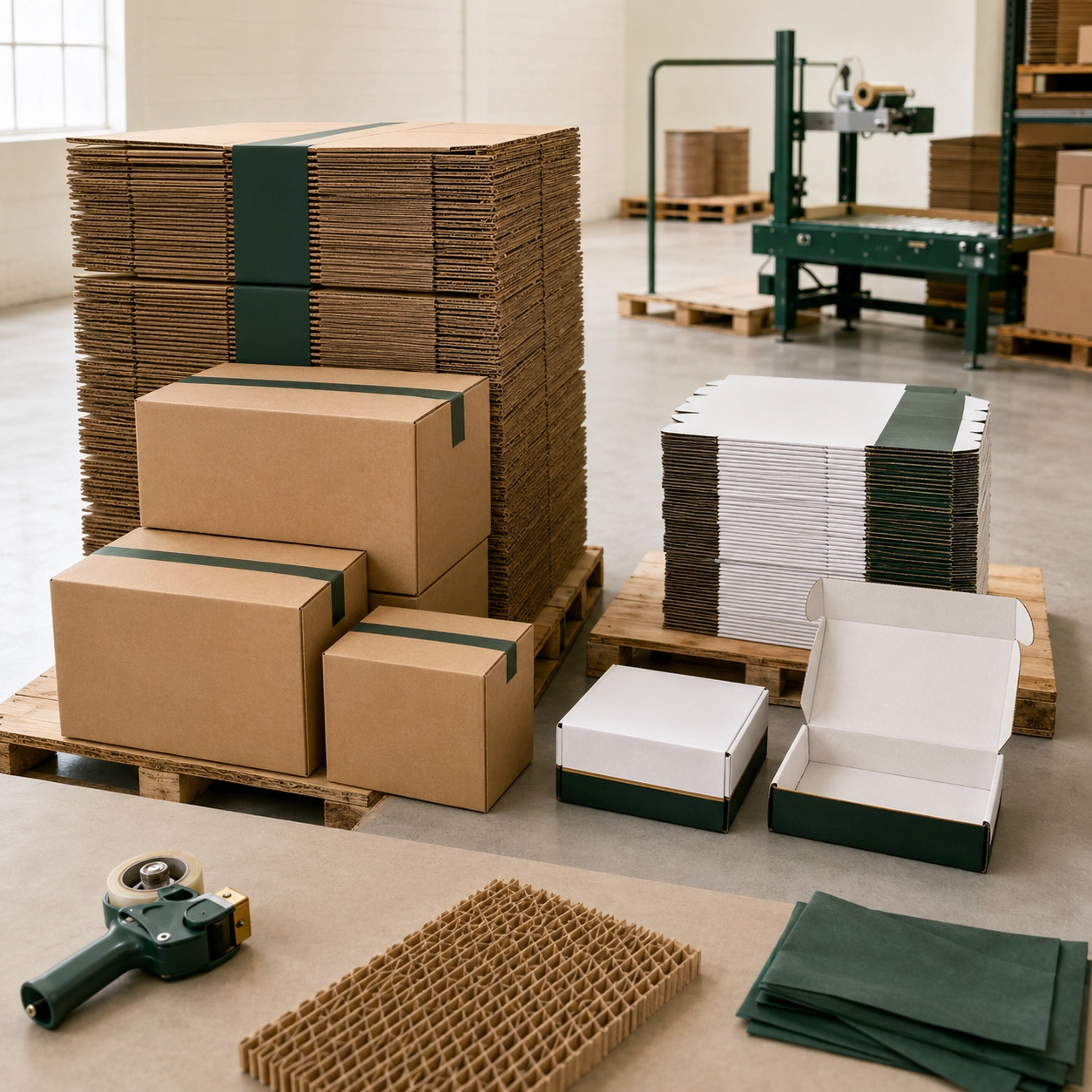
FAQ
1. Is an RSC box cheaper than a die-cut corrugated box?
대개, 예, when both use a similar board grade and the project only needs a straightforward shipping case. 하지만, total packed cost may favour a die-cut design if it removes tape, 인서트, void fill or packing labour.
2. Does a regular slotted case require tooling?
A standard slotted structure normally does not require a custom cutting die. 그럼에도 불구하고, flexographic printing may require printing plates, and special slots, hand holes or structural changes may add tooling.
3. When is a die-cut box worth the extra cost?
It is worth considering when product fit, 소매 디스플레이, unboxing, integrated protection or faster assembly creates measurable value. 그러므로, compare the improvement against tooling allocation and the unit-price difference.
4. Can you make prototypes without a cutting die?
예. We can use sample-making or digital-cutting equipment for structural prototypes. 하지만, mass production still requires the approved production method and, for conventional die cutting, a dedicated cutting form.
5. Which flute is best for shipping boxes?
B and C flute are common starting points for general shipping, while E and F flute suit compact printed mailers. Double wall may be needed for heavier loads. 비록 그렇다 하더라도, board grade should be selected using weight, stacking, humidity and transit conditions.
6. Can one structure fit several product sizes?
예, if the outer dimensions remain constant and inserts control the product variations. 결과적으로, brands can reduce tooling and board inventory, although they must manage insert identification carefully during packing.
7. What artwork files should we send?
Please send editable AI, EPS or print-ready PDF files with outlined fonts, linked high-resolution images, bleed and Pantone references. 게다가, barcodes should be placed at final size and tested on the chosen print surface.
8. 견적에 필요한 정보는 무엇입니까??
Send the internal dimensions, 포장된 제품, unit weight, 주문 수량, print colours, delivery country and required structure. 마지막으로, tell us whether the priority is lowest unit cost, faster packing, stronger protection or premium presentation.
Final Recommendation
Here is the honest answer: neither format wins every project. A regular slotted case is difficult to beat for efficient transport and repeat logistics, whereas die-cut packaging becomes valuable when geometry improves fit, presentation or packing speed.
제품 사이즈를 알려주세요, 수량, 로고 파일 및 목표 시장. 우리 팀이 올바른 구조를 추천해 드립니다., 소재와 마감, then explain the tooling and cost trade-offs before you approve a sample.
Send Us Your Brief → Get a Custom Quote
부인 성명: 압형, MOQ and lead-time ranges vary by dimensions, 보드 등급, 인쇄, finish and production schedule. Compliance information is general guidance rather than legal advice; confirm the requirements that apply to your product and destination market.