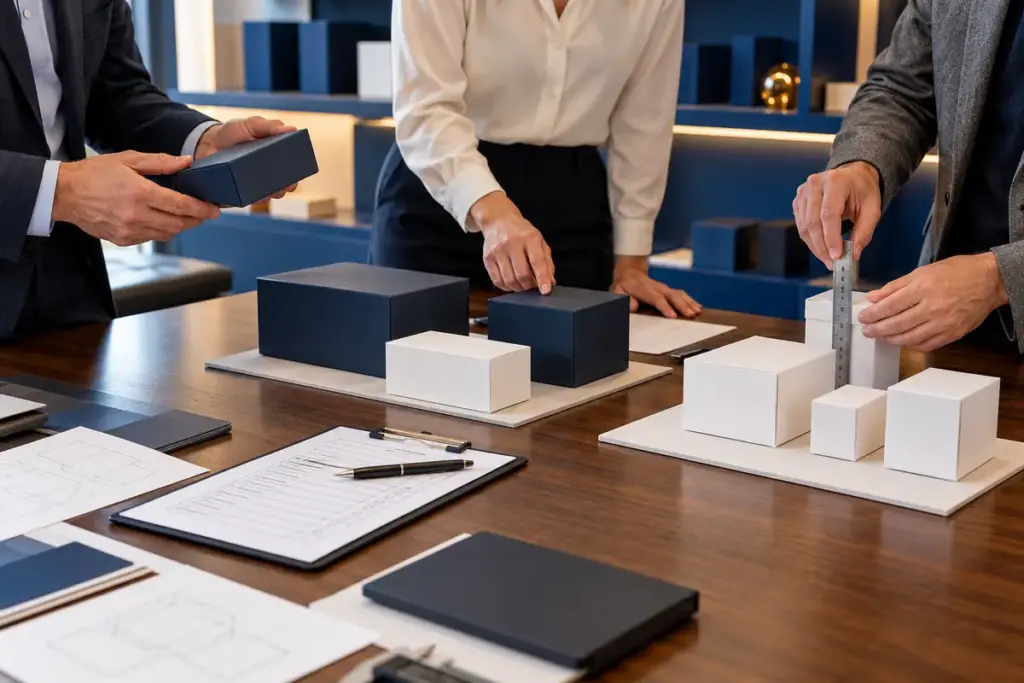
Here’s the tension every food brand runs into. You want packaging that looks and feels responsible — but coffee goes stale, tea loses its aroma, and biscuits go soft. So the moment you strip out the barrier layer, you’ve got a beautiful box protecting a disappointing product.
That’s the honest challenge withsustainable food packaging: it has to satisfy two masters at once. Fortunately, there’s usually a smart middle path — and it starts with understanding which of your products actually needs a barrier, and which ones don’t.
What Is Sustainable Food Packaging?
A Working Definition
Sustainable food packaging means fibre-forward packaging that protects food properly, meets food-contact safety law, and reduces material impact wherever the product genuinely allows it. Notice that “protects food properly” comes first — because packaging that fails its job creates food waste, which is far worse environmentally than a bit of extra material.
Why Food Is Harder Than Beauty or Retail
Cosmetics packaging mostly protects against knocks. Food packaging fights oxygen, 수분, 빛, 유지, and aroma loss simultaneously. 따라서, you can’t simply copy a beauty packaging approach across.
The Two-Layer Mindset
So most successful projects split the problem. The barrier layer does the technical work. 그 동안에, the fibre layer does the branding, 구조, and sustainability work. And once you separate those two jobs, the options open up considerably.
Common Applications Across Food and Beverage
Different categories need very differentsustainable food packaging approaches, so let’s go through them properly.
차
Loose leaf, pyramid bags, and sachets. Bagged tea sits comfortably inside a plain paper carton or tube. 하지만, loose leaf touching bare board needs a moisture and aroma barrier.
커피
Whole bean and ground. 솔직히, this is the toughest category — coffee off-gasses CO₂ after roasting and oxidises fast. 그러므로, a sealed high-barrier pouch inside a kraft tube or carton usually beats trying to make the fibre do everything.
비스킷, Cookies and Baked Goods
Grease is the main enemy here. Greaseproof or coated liners handle it, while the outer carton carries the brand story.
초콜릿 및 제과
Temperature-sensitive and aroma-absorbing. Individually wrapped pieces inside a rigid box work beautifully. 추가적으로, gift assortments give you room for pulp or paperboard inserts.
Nuts, Dried Fruit and Snacks
Oxygen drives rancidity in nuts particularly. So a sealed inner pack remains necessary, though the outer layer converts to fibre easily.
Spices, Supplements and Powders
Moisture and aroma control matter enormously. 그럼에도 불구하고, paper tubes with an appropriate liner handle many of these formats well.
Gift Sets and Hampers
Where sustainable food packaging is easiest, frankly — because each item already carries its own primary protection.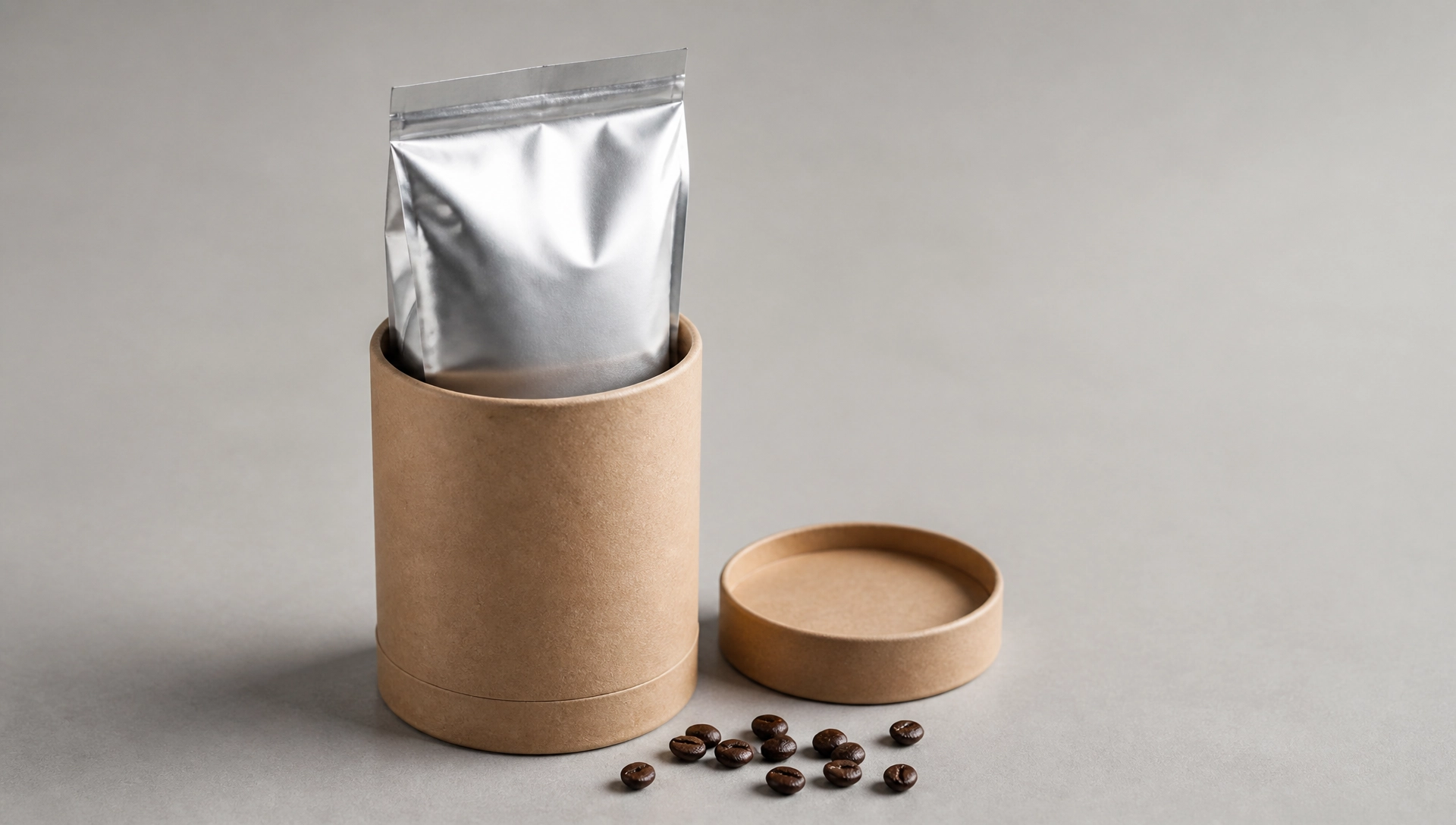
재료 옵션: Where the Real Decisions Happen
Material choice is where mostsustainable food packaging projects succeed or quietly fail.
크래프트 종이
자연스러운, 표백되지 않은, and instantly readable as responsible. Widely available food-grade. 게다가, its texture suits artisan tea, 커피, and bakery brands especially well.
Art Paper and Coated Board
Smooth and highly printable for photographic packaging. It works fine as an outer layer. 하지만, standard lamination affects recyclability, so consider aqueous coating where the finish is decorative rather than protective.
Specialty and Textured Paper
리넨, 펠트, and embossed stocks lift a premium tea or chocolate range. 따라서, they let you skip soft-touch lamination while still feeling luxurious.
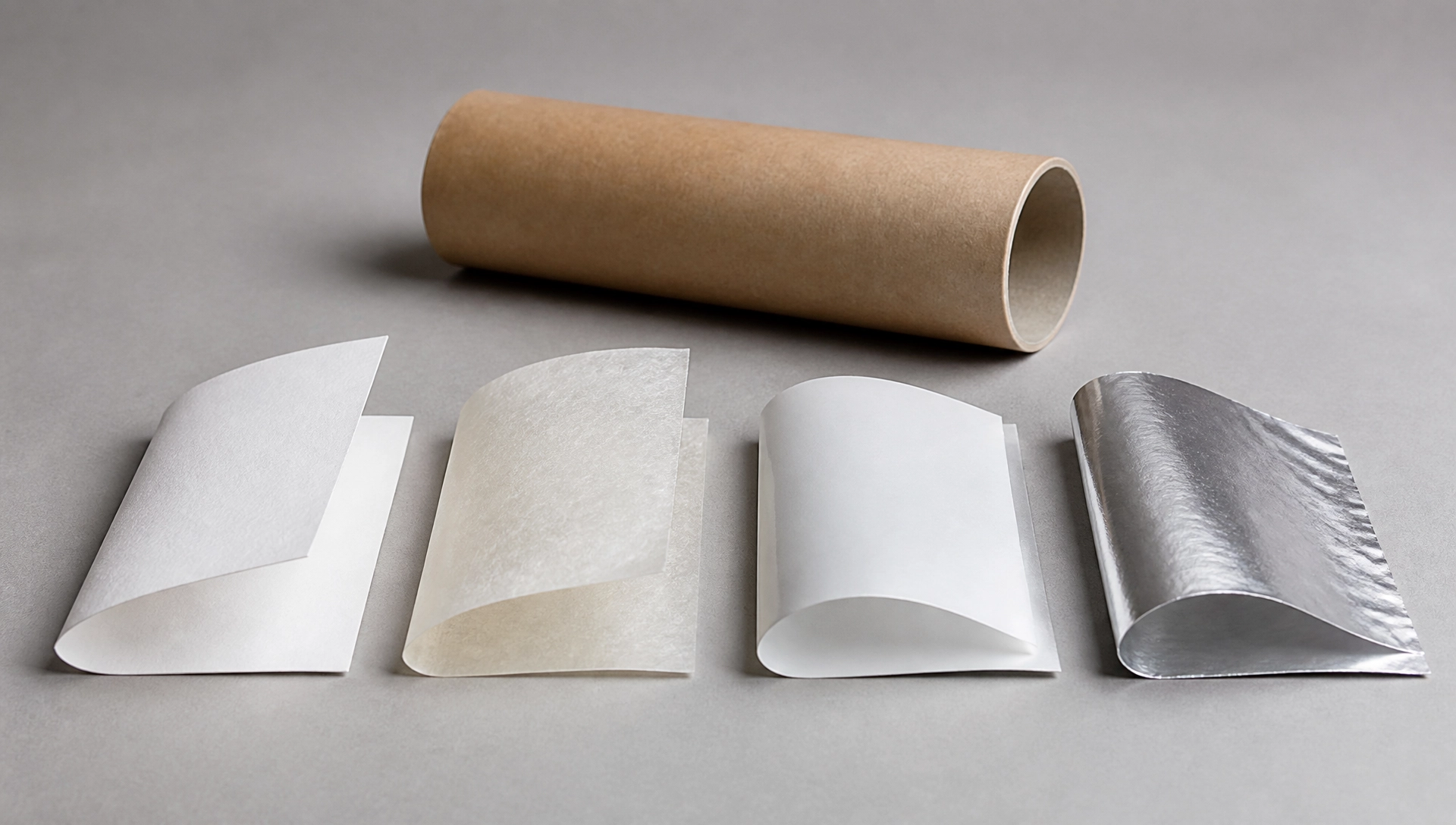
Food-Grade Paper and Greaseproof Liners
The workhorses ofsustainable food packaging. Greaseproof papers handle bakery and fried snacks. 그 동안에, food-grade white papers suit dry goods with modest barrier needs.
PE-Coated and Water-Based Barrier Papers
These offer moisture protection with a thinner plastic layer than a full laminate. So they represent a genuine middle ground — though they aren’t plastic-free, and you should describe them accurately.
Foil Liners and High-Barrier Laminates
Aluminium foil delivers the strongest protection against oxygen, 수분, 빛, and aroma loss. 그러므로, coffee and long-shelf-life products often still need it. It’s a mixed-material construction, but honest framing beats a failed product.
Choosing Between Barrier and Fibre Purity
If your project sits closer to the plastic-free end of the spectrum, 우리의 가이드 Plastic-Free Packaging Ideas for Cosmetics and Skincare covers fibre-only construction in depth — many of those principles transfer directly to dry food.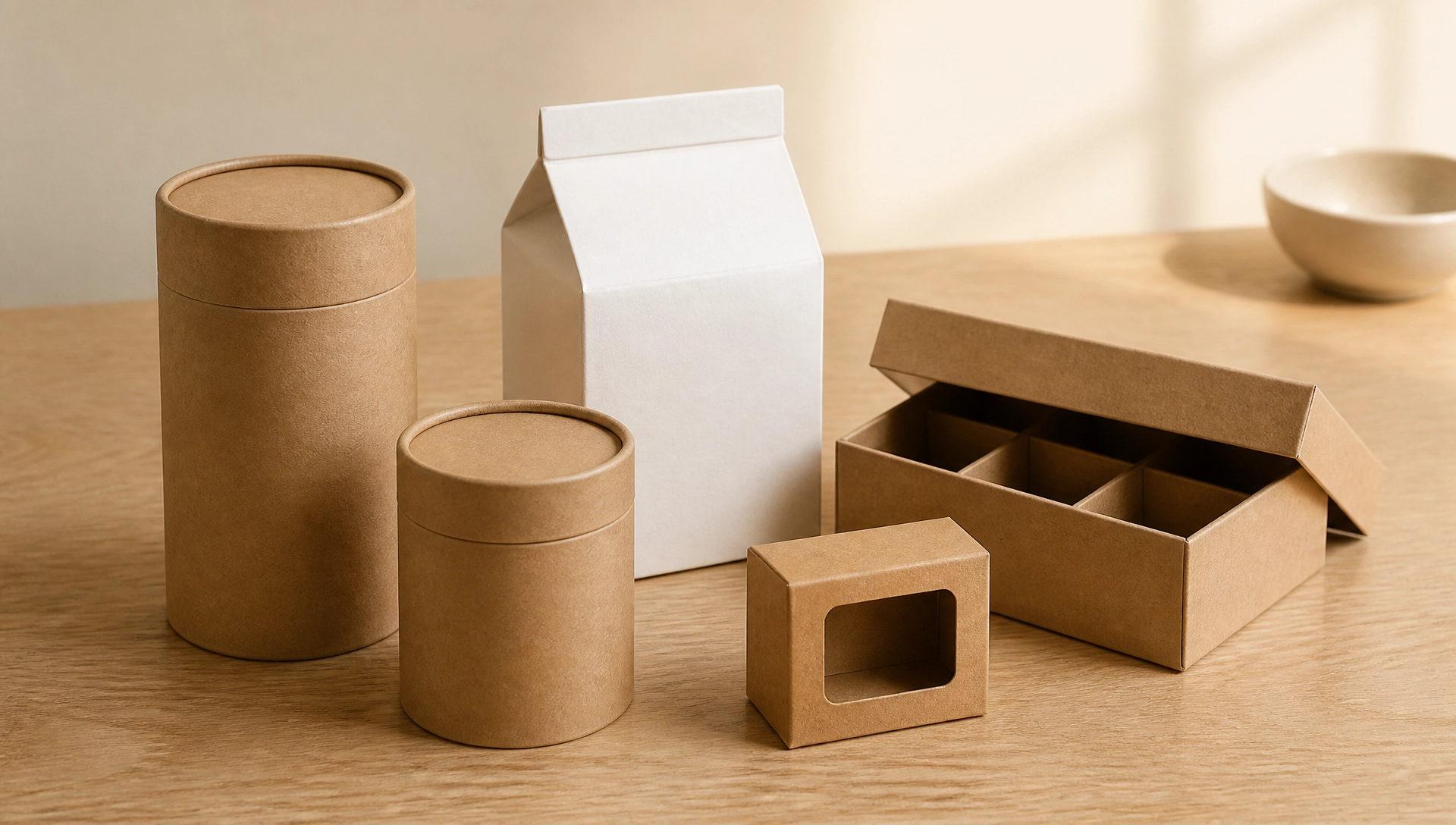
Structure Options for Food and Beverage
Structure decides how yoursustainable food packaging performs on shelf and in transit.
종이 튜브
A kraft tube around a sealed inner pouch gives you shelf presence plus separable materials. It suits tea, 커피, 향료, and snack gifting particularly well. 우리의 가이드미용을 위한 생분해성 종이 튜브 포장 & 음식 covers tube construction in detail.
📦관련 제품: 맞춤형 종이 튜브 / 식품 포장 / 화장품 포장
접는 상자
접는 상자 with tuck-end or auto-lock closures remain the volume workhorse. Efficient, flat-packed, and cheap to ship.
Rigid Boxes and Gift Formats
단단한 상자 suit premium tea, 초콜릿, and hampers. 뿐만 아니라, paperboard or moulded pulp inserts hold individual items neatly without foam.
윈도우
A film window shows the product but adds plastic. 대안으로, an open die-cut window works when the item already sits in a sealed inner bag. So decide based on whether shoppers genuinely need to see the contents.
슬리브 및 텔레스코픽 구조
A sleeve lets several SKUs share one base structure. 그 동안에, telescopic tubes and lid-and-base builds add protection and a satisfying reveal.
Closures and Reclosability
Tin-tie closures, tuck flaps, and paper labels all offer reclosability without plastic zippers. 하지만, for products needing a genuine airtight reseal, a sealed inner pouch remains the practical answer.
배송 계층
골판지 상자 with paper tape complete a coherent fibre story from warehouse to doorstep.
Printing and Finishing for Food Brands
Ink and Food Safety Come First
Here’s something specific tosustainable food packaging for edible products. Ink, 점착제, and coating choices aren’t purely aesthetic — they carry migration implications. 따라서, your printer needs documented food-grade systems, not just nice colour reproduction.
인쇄 방법
- CMYK 오프셋 또는 디지털 — Full-colour artwork for photographic food imagery and ingredient graphics.
- 팬톤 매칭 — Consistent brand colour across every batch, which matters when your range sits together on shelf.
- 스크린 인쇄 — Vivid opaque ink, well suited to kraft tubes and specialty stocks.
Finishes That Work Well
- 엠보싱 및 디보싱 — Mechanical, no added material, strong tactile signal for premium tea and chocolate.
- 핫 스탬핑 — Small foil accents lift perceived value considerably.
- 수성 코팅 — Water-based scuff protection instead of plastic film.
Finishes to Review Carefully
- 무광택 및 광택 라미네이션 — Effective protection, but it complicates recyclability. So use it where genuinely needed, not by default.
- 스팟 UV — Fine in targeted areas; worth checking the coating chemistry for food-adjacent applications.
Compliance and Food Contact Safety
The Legal Baseline
Every layer of yoursustainable food packaging that touches food in the EU must comply withRegulation (EC) 아니요 1935/2004 on food contact materials. 추가적으로, manufacturing must follow Good Manufacturing Practice under Commission Regulation (EC) 아니요 2023/2006.
이것이 실제로 의미하는 바
Your supplier should provide declarations of compliance, 해당되는 경우 마이그레이션 테스트, and documentation covering inks, 접착제, and coatings — not just the base board. So ask for the full set rather than a single certificate.
Standards Retailers Request
- BRCGS 포장 재료 — 현재 문제 7. Major retailers frequently require it from sustainable food packaging 공급업체.
- IFS PAC보안 — A packaging-specific standard developed by IFS with PAC, recognised across EU retail.
- IFS 식품 — Requested where the supplier also handles food operations.
- FSC — Certified fibre sourcing with chain of custody through your converter. 우리의 FSC 인증 종이 포장 guide explains label types and verification.
Regulations on the Horizon
- PPWR — Design rules and Declaration of Conformity, 에서 신청 12 팔월 2026.
- EUDR — 30 12월 2026 대규모 및 중간 운영업체용; 30 6월 2027 소규모 사업자를 위한.
- EPR — National registration and fees in each EU market. 보다 EU에 판매하는 브랜드에 대한 EPR 포장 규정 준수.
Claim It Accurately
A foil-lined tube isn’t plastic-free, and saying so invites trouble. 대신에, describe what’s true: separable materials, reduced plastic, certified fibre, recyclable outer. 우리의재활용 가능한 종이 포장 guide covers claim wording in more depth.
사용자 정의 방법: 1~3단계
단계 1: Define the Product and Its Enemies
첫 번째, tell us what the food actually is — fat content, 수분, 아로마 감도, 목표 유통기한, and whether it touches the package directly. Genuinely, this determines everything downstream insustainable food packaging design.
단계 2: Decide Where the Barrier Lives
다음, decide whether the fibre carries the barrier or a sealed inner pack does. Separating those roles usually gives you a better sustainability outcome than forcing one material to do both jobs.
단계 3: Choose Structure and Material
Then we’ll recommend thesustainable food packaging construction — tube, 판지 상자, 단단한 상자, or sleeve — plus the specific liner and board grade for your conditions.
사용자 정의 방법: 4~6단계
단계 4: Artwork and Food-Safe Finishing
AI로 로고 보내기, EPS, 또는 Pantone 코드가 포함된 고해상도 PDF. 그 동안에, we confirm ink and coating systems suit food-contact requirements for your specific application.
단계 5: Sample and Shelf-Life Testing
Never skip this — and for food, test with the real product, not an empty sample. Fats, 유화, and aromatics interact with paper, 코팅, and adhesives over time. 그러므로, real shelf-life validation protects you from an expensive recall later.
단계 6: MOQ, 리드타임 및 문서화
MOQ는 일반적으로 구조에 따라 500~1,000개 단위로 시작됩니다.. 접이식 상자는 대략 15~20일이 소요됩니다.; rigid boxes and tubes take 25–35 days after sample approval. We supply material specifications and compliance documentation alongside delivery.
팩 포장을 선택하는 이유
Food-Grade Manufacturing
- 2,000㎡ 식품 등급 워크샵 — A dedicated food-safe production environment, separated from general manufacturing. 을 위한 sustainable food packaging, this is the single most important thing to verify in any supplier.
- 20,000㎡공장 — 다이커팅부터 마무리까지 전체 자체 생산, so we control every stage.
- 10,000,000+ 월간 용량 — We scale from a 5,000-unit pilot to millions.
설계 및 문서화
- 20+ 사내 디자이너 — 절대 아웃소싱하지 않음. 구조적 발전, 라이너 선택, 삽화, and print-ready files.
- Compliance documentation — Food-contact declarations, 재료 사양, and component weights for your EPR and retailer filings.
- Certified sourcing — FSC-certified materials with chain of custody support.
- 60+ 수출 시장 — 인코텀즈 및 관세는 매일 처리됩니다..
솔직한 메모
We won’t pretend every food product can go fully fibre-only today. Coffee and long-shelf-life snacks often still need a barrier layer we can’t deliver in paper alone. So we’d rather design you a genuinely separable, reduced-plastic structure than help you make a claim that collapses under scrutiny.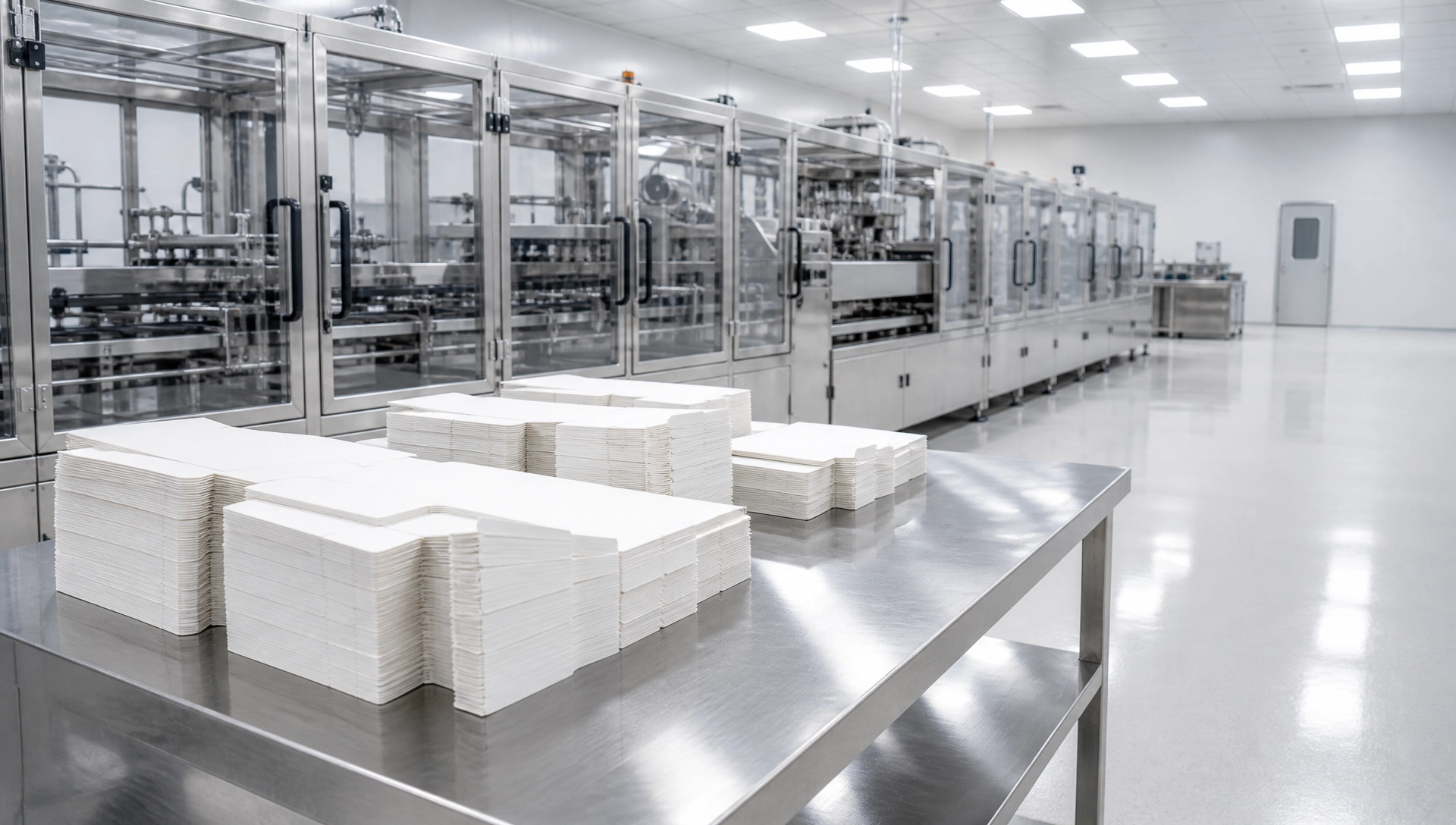
FAQ: Barriers and Shelf Life
1분기: Can I package coffee without any plastic? Whole bean coffee for short local distribution sometimes manages with a heavily coated paper bag. 하지만, for retail shelf life and export, most brands still need a sealed high-barrier pouch inside a kraft tube or carton. That structure separates cleanly after use.
2분기: How long will my product stay fresh in paper packaging? That depends entirely on your product, the barrier specification, and storage conditions — so nobody can quote you a number without testing. 따라서, we always recommend real shelf-life trials with your actual formulation.
3분기: Does loose leaf tea need a liner? 보통 그렇습니다, if it touches the board directly. Tea loses aroma quickly and absorbs odours. 그럼에도 불구하고, bagged or sachet tea often sits fine in an unlined carton because the inner wrap already protects it.
4분기: Will greasy snacks stain a kraft box? Without a greaseproof liner, very likely. 그러므로, specify a food-grade greaseproof layer for anything with meaningful fat content.
FAQ: 규정 준수, 비용 및 소싱
Q5: What food safety documentation should I ask for? Request declarations of compliance under Regulation 1935/2004, migration test reports where applicable, and documentation covering inks, 접착제, and coatings. 추가적으로, ask whether the supplier holds BRCGS Packaging Materials or IFS PACsecure certification.
Q6: Is sustainable food packaging more expensive? It varies. Removing lamination reduces cost, while high-barrier liners add it. 솔직히, the bigger cost driver is usually structure complexity and tooling rather than the sustainability element itself.
Q7: Can I print full-colour artwork on sustainable food packaging? 예. CMYK and Pantone both work on food-grade stock. The important part is confirming that your printer uses documented food-safe ink systems for the specific application.
Q8: 견적을 시작하려면 무엇이 필요합니까?? Send your product type, 치수, 수량, 목표 시장, 필요한 유통기한, 그리고 로고 파일. Then we’ll recommend the rightsustainable food packaging 구조, 정기선, and finish for your range.
관련 가이드
Food packaging decisions usually branch into several connected questions. So we’ve covered each one separately:
- 이 가이드 — How to protect food properly while reducing packaging impact.
- Plastic-Free Packaging Ideas for Cosmetics and Skincare — Fibre-only construction principles, many of which transfer to dry food.
- 환경을 생각하는 브랜드를 위한 FSC 인증 종이 포장 — Proving where your fibre came from.
- 재활용 가능한 종이 포장: 글로벌 브랜드가 알아야 할 것 — Whether your finished pack enters a recycling stream.
- EU에 판매하는 브랜드에 대한 EPR 포장 규정 준수 — What you register and pay in each EU market.
In sequence, they cover: will it protect the food, can we remove plastic, where did the fibre come from, 재활용할 수 있나요?, 그리고what must we file.
더 많은 맞춤형 포장 솔루션 살펴보기
- 접이식 상자 — 경량, 완전 맞춤형 소매 상자.
- 단단한 상자 — Premium gift boxes for tea, 초콜릿, and hampers.
- 골판지 상자 — 내구성이 뛰어난 전자상거래 및 배송 포장.
- 어린이 방지 상자 — 규제 대상 제품의 안전한 포장.
- 부속품 — 맞춤형 인서트, 티슈 페이퍼, 고삐, 그리고 라벨.
- 종이 튜브 — 차 전용 컬렉션, 커피, 향료, and premium gifting.
프로젝트 시작 준비?
Gettingsustainable food packaging right isn’t about choosing the greenest material on paper. It’s about matching the barrier to the product honestly, putting the fibre where it does the most good, and being able to document every claim you make. And the brands that approach it this way rarely end up with either a failed product or a shaky sustainability story.
제품 사이즈를 알려주세요, 수량, 로고 파일, 그리고 목표 시장. 그러면 우리 팀이 올바른 구조를 추천해 드립니다., 재료, and finish — plus the food-contact documentation your buyers will ask for.
✉️ [귀하의 개요를 보내주십시오 → 맞춤형 견적을 받으십시오 24 시간] 포함하다: 제품 크기 · 수량 · 목표 시장 · 로고 파일
팩 포장 | 20,000㎡ 공장 | 2,000㎡ 식품 등급 워크샵 | FSC 인증 재료 | 60+ 수출 시장
부인 성명: 이 가이드는 다음에 대한 일반적인 상업 정보를 제공합니다.sustainable food packaging and reflects publicly available regulatory sources as of August 2026. It does not constitute food safety or legal advice. 요구 사항은 제품마다 다릅니다., 시장, and application. 그러므로, 생산 전에 자격을 갖춘 식품 접촉 규정 준수 고문과 함께 특정 의무를 확인하십시오..