
Packaging barcode printing can look like a small artwork task, yet buyers need to approve more than a block of black lines. The encoded information must match the intended product, the symbol must suit its scanning environment, and the finished package must preserve the approved design.
For brand owners and procurement managers, the practical question is who checks each part before production. This guide focuses on commissioning printed paper boxes and agreeing a useful approval record. It does not provide a universal barcode size or replace the applicable GS1 specification and trading partner requirements.

What Packaging Barcode Printing Approval Must Cover
Separate the decision into three questions: is this the intended information, is the printed symbol suitable, and does the final pack present it correctly? A marketing artwork approval should not silently become acceptance of every technical requirement.
Assign an owner for the product-to-code mapping, an owner for the released artwork and an owner for print-quality acceptance. These may be different people or organizations. Put the responsibilities in the brief so the packaging manufacturer knows what it receives and what it must check.
For a range of similar cartons, create a controlled list connecting each packaging SKU to its artwork revision and approved barcode data. Treat the list as a purchasing reference, with a named person responsible for releasing changes.
Confirm the Sales Channel Before Choosing the Symbol
Ask the retailer, distributor or fulfillment partner which barcode requirements apply to the specific pack. Identify whether the box is an individual sale unit, a grouped trade item or a transport pack. Avoid using the appearance of another brand’s barcode as the specification.
Send the confirmed requirements to the party generating the barcode artwork. Ask that party to state the intended symbology and application in the handoff record. If a proposed design includes both a consumer-facing code and an operational barcode, identify each one’s purpose.
This is especially useful when the same brand sells through different channels. A decorative gift box and a warehouse shipping carton may be handled by different systems. Have the relevant partner confirm the requirement for each rather than assuming one artwork file covers every use.
Release Data and Artwork as a Matched Pair
Ask the brand’s responsible team to approve the encoded data and the associated product record before the print file is released. Record who supplied the data, who created the symbol and which file revision is approved.
For example, a skincare range may use almost identical carton designs across several variants. Review the SKU-to-artwork mapping line by line instead of approving one sample as a proxy for the entire range. Have a second responsible person review the mapping if the purchasing workflow allows it.
Keep the barcode asset linked to the correct dieline and artwork revision. When the design changes, ask the supplier to identify the affected files rather than replacing an attachment informally in a long email conversation. The purpose is a clear release record that purchasing, design and production can all follow.
Protect Space, Contrast and Symbol Geometry
GS1’s barcode quality checklist identifies quiet zones, contrast, color choice, symbol size, bar height, positioning and damage as important checks. Quiet zones are the clear areas required around a symbol; their dimensions depend on the symbol and application.
Reserve this space in the design brief. Do not let surrounding graphics occupy it during later artwork edits. Ask the barcode supplier to confirm the required geometry rather than squeezing the symbol into whatever area remains. In particular, GS1 warns that shortening bar height reduces reading efficiency.
Discuss the barcode treatment separately from decorative brand graphics. Require the print supplier to explain the proposed treatment and its acceptance evidence.
Review Placement on the Finished Box
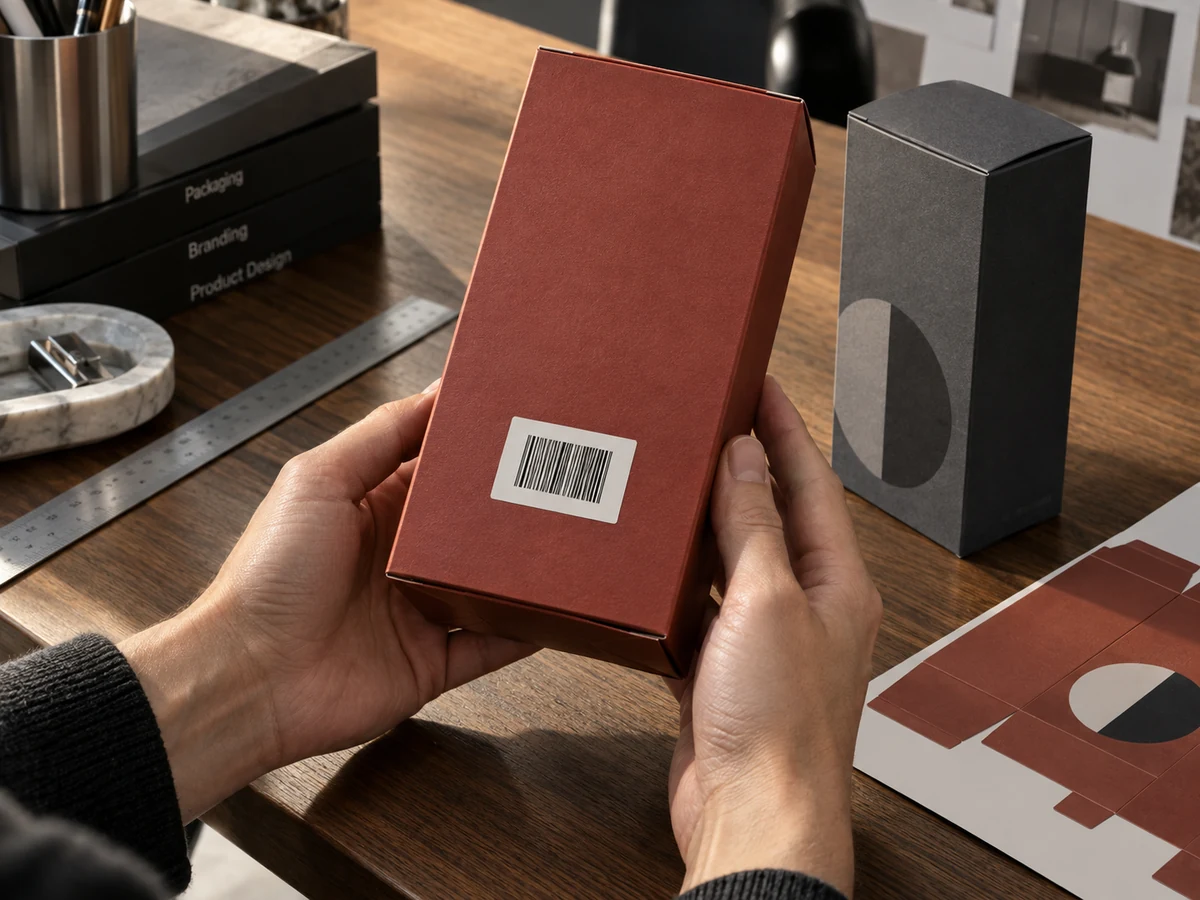
GS1 also notes that packaging can obstruct a scanner’s access and that the appropriate position depends on the symbol and handling process. Therefore, discuss placement while the structure is still being developed.
On printed folding cartons, review the erected sample alongside the flat dieline. Mark the proposed barcode panel and check what happens when flaps close or another packaging component is added.
For rigid retail and gift boxes, include the actual lid and any removable covering in that review. Ask the customer-facing team how the pack will be handled at the point where the barcode is needed.
Similarly, specify the relationship between branding and operational labels on custom printed mailer boxes. Agree a clear labeling area with the fulfillment partner rather than letting the packer choose a location on each shipment.
Assess the Proposed Material and Finish
Identify the actual board, print process and finish in the approval request. If the quotation offers alternative materials, make it clear which version the reviewed sample represents. Do not carry approval from one version to another without considering what changed.
Ask how the manufacturer will keep decorative treatments and the barcode area coordinated. Where the package uses foil, embossing, lamination or another finish, review the finished construction instead of approving the barcode only on an unfinished print sheet.
Use a packaging sample review to document the location and treatment you intend to buy. Keep the approved reference with the relevant artwork file. A photograph can help explain the placement, but it should not replace the agreed physical or technical acceptance evidence.
Distinguish a Scan Check from Quality Verification
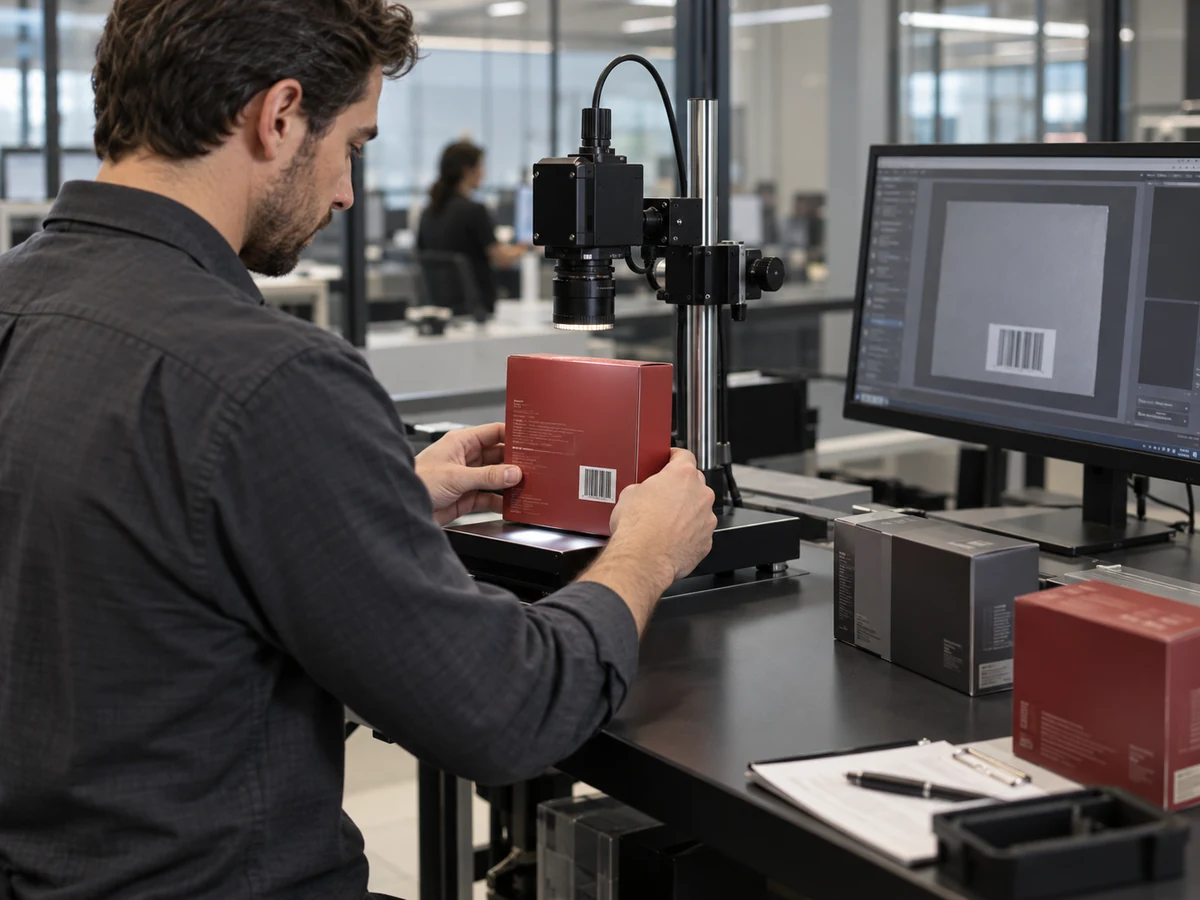
A successful read on one device is useful operational feedback, but it is not the same record as a measured print-quality assessment. The GS1 System Architecture distinguishes decoding, data validation and verification, and describes print-quality verification after the barcode image has been rendered.
Agree what evidence the project needs, who supplies it and which physical sample it covers. Ask for the applicable specification, the assessment method and the acceptance requirement to be identified in advance. Do not invent a universal grade for every barcode application.
Separately confirm the product data relationship with the brand’s responsible team. A report about the printed symbol should not be treated as automatic approval of the commercial product record. Keep both decisions visible in the release documentation.
Agree Production Scope, Cost and MOQ
Ask the quotation to separate artwork preparation, proofing, sample production, any agreed verification service and the box manufacturing scope. Confirm whether externally supplied artwork requires an additional prepress review.
Request quantities by printed variant and ask how they affect the minimum order quantity. If different SKUs share the same box structure, verify how the supplier handles the different artwork files and identification data. Do not assume that one structural design means one combined print minimum.
Include the approval steps in the proposed schedule. Prices, production time and any rework arrangement should come from the supplier’s written offer, not an estimated promise in a general buying guide.
Keep the Release Record Useful for Repeat Orders
Save the product mapping, final artwork, sample identification and acceptance records together. For a repeat order, ask whether the board, finish, printing route or barcode asset has changed.
If a change is proposed, identify which part of the approval needs to be revisited. Give purchasing a clear hold point before manufacturing proceeds. Retain superseded files as an archive with an obvious status, so they cannot be mistaken for the current production release.
FAQ
What should buyers provide for packaging barcode printing?
Provide the approved data, the relevant channel requirements, the packaging SKU and artwork revision, and the intended box construction. State who owns technical barcode approval and what evidence is required before production release.
Can the designer simply make the barcode smaller?
Have the symbol’s required dimensions checked against its application first. Resolve the layout with the responsible barcode supplier; do not approve a resized symbol merely because it looks neat in the artwork.
Is a phone scan enough to approve production?
Use it only as the limited check it represents. Agree the required verification and operational acceptance process with the relevant parties rather than treating one successful read as universal proof.
Does changing the box material require another review?
Assess the change with the manufacturer and the person responsible for barcode quality. Document which previous approvals remain applicable and what new evidence is needed for the revised finished pack.
Build a Clear Barcode Printing Brief
Send PK Packaging your box specification, artwork revision, approved barcode asset, quantity by variant and destination channel requirements. Include the approval responsibilities and evidence your team expects.
A clear brief helps the manufacturer quote the right scope and keeps product data, print quality and finished-pack handling in the same purchasing conversation.