
Every buyer who has been burned once asks the same question: what happens if the shipment arrives wrong? Proper paper tube quality control answers that before it becomes a problem — because by the time 20,000 tubes land in your warehouse with loose lids, nobody wins.
So rather than listing inspection buzzwords, we’ll walk you through what actually gets checked, at which point in production, and what we do when something fails. Including the failures, honestly, because those are the useful part.
🔘 [Get Custom Packaging Quote →]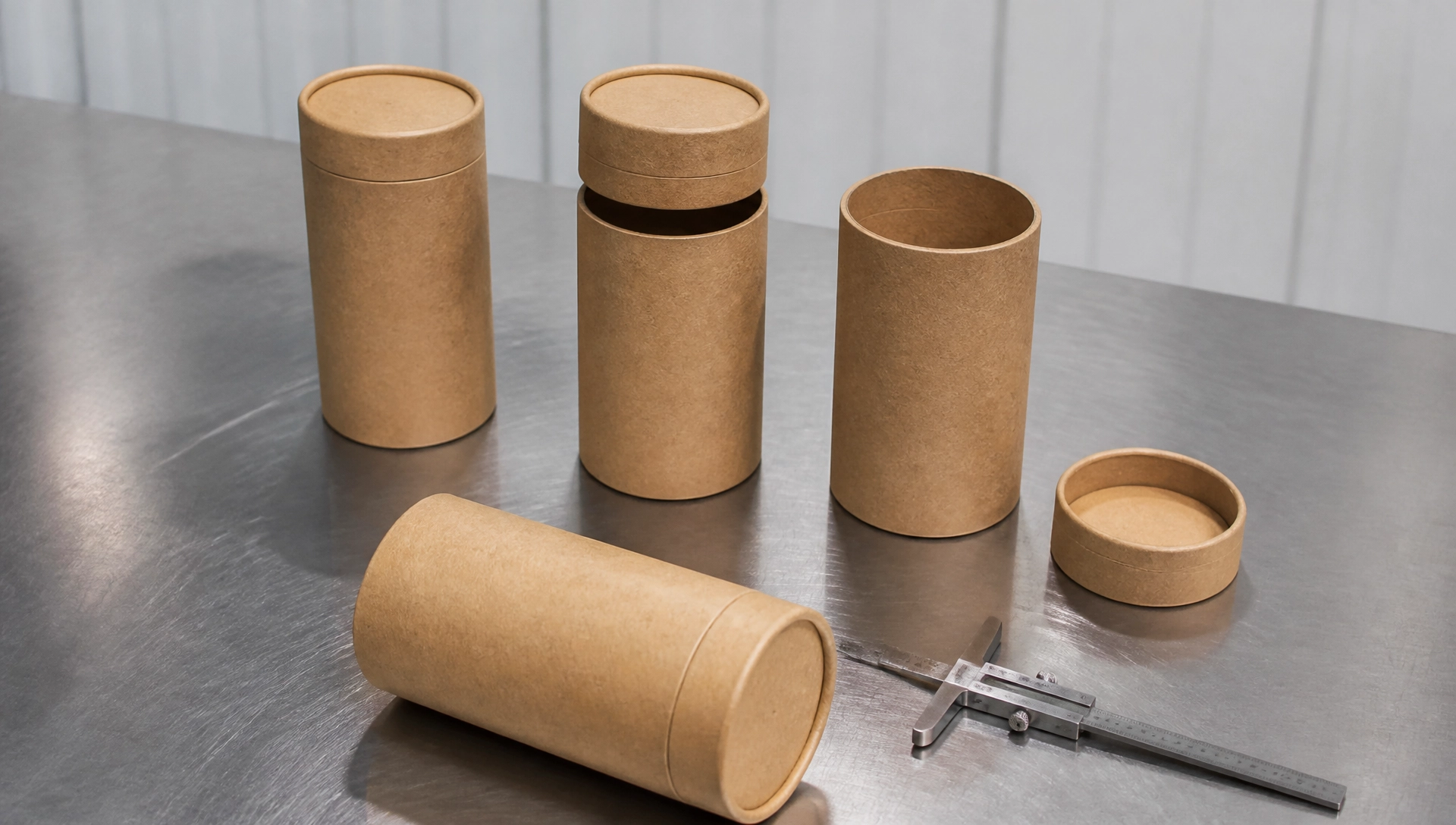
What Paper Tube Quality Control Actually Covers
Four Things That Can Go Wrong
Paper tube quality control exists because a tube fails in one of four ways: dimensional drift, lid fit problems, print defects, or structural weakness at the base. Each has its own check point, and each catches a different failure mode.
Why End-of-Line Inspection Is Not Enough
Here’s the uncomfortable truth. If you only inspect finished goods, you find problems after paying for materials, printing, and labour. Consequently, our paper tube quality control runs during production, while a run is still correctable.
The Cost Logic
Catching a wall thickness issue at winding costs you an hour. Catching the same issue after assembly costs the entire run. Therefore, front-loading inspection isn’t diligence for its own sake — it’s simply cheaper.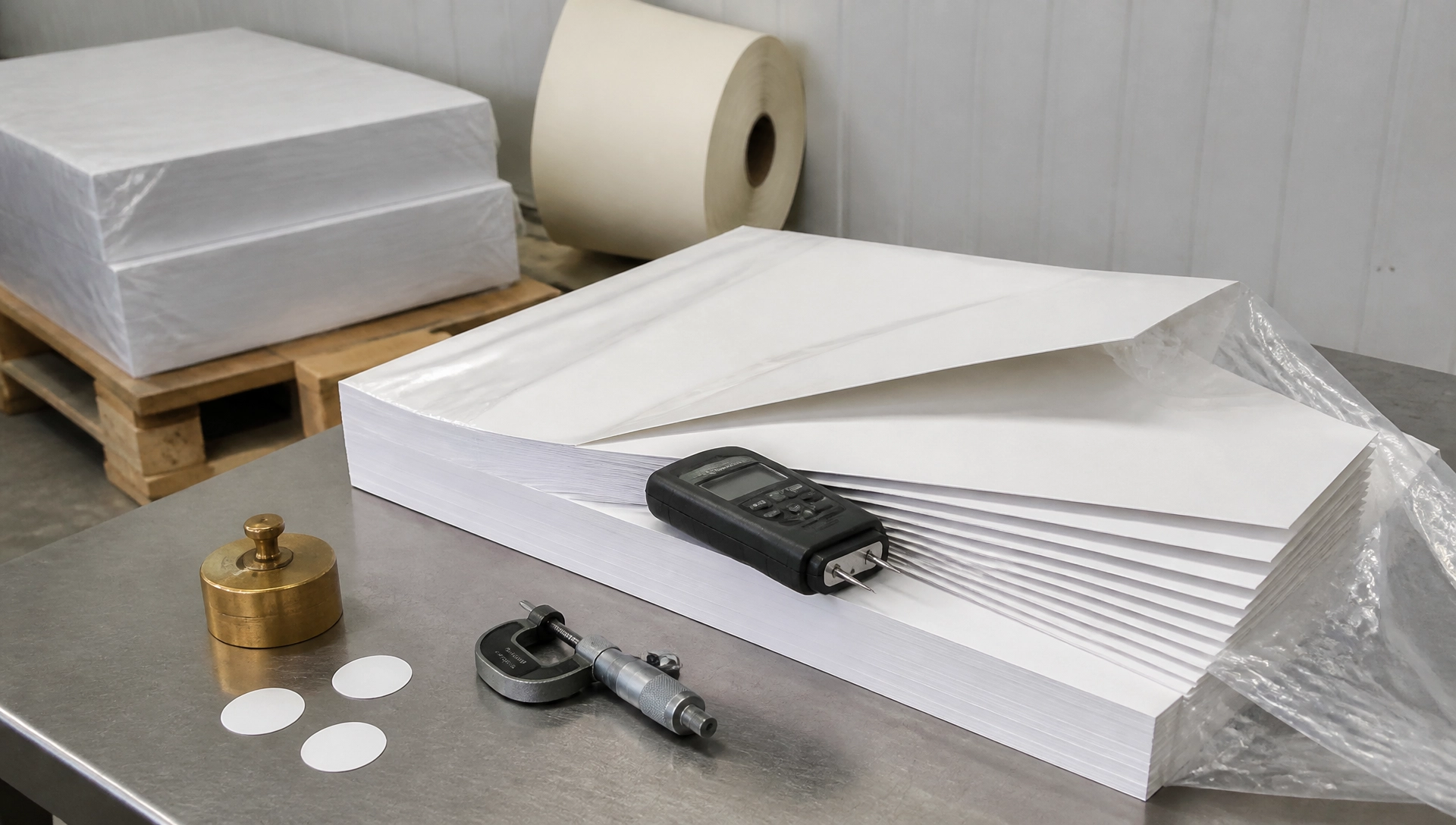
Where Paper Tube Quality Control Matters Most
Different categories fail differently, so we weight the checks accordingly:
- Fragrance — Drop performance dominates, since glass breaks. See our perfume paper tube packaging case study.
- Skincare and beauty — Lid tolerance and premium feel. Read the luxury paper tubes skincare case study.
- Snacks and dry food — Liner integrity and base seam sealing. See the food grade paper tube case study.
- Tea and coffee — Aroma retention, so barrier testing takes priority.
- Candles — Weight tolerance and base strength, because a heavy vessel stresses the bottom.
- Supplements — Documentation and traceability, since audits come frequently.
Material Checks Before Paper Tube Quality Control Begins
Incoming Goods Inspection
Paper tube quality control begins before production, since nothing enters the floor unverified. We check board grammage, thickness, moisture content, and supplier certification against the specification before a single tube gets wound.
Why Moisture Matters More Than People Expect
Paperboard absorbs ambient humidity, and damp board winds differently, glues differently, and dries into dimensional drift. So we condition material before running it — a dull step that prevents genuinely expensive problems.
Materials We Verify
- Kraft paper — Grammage consistency and fibre uniformity.
- Art and coated board — Surface smoothness for print quality.
- Specialty textured stock — Batch-to-batch texture consistency, which varies more than brands expect.
- Food-grade and greaseproof liners — Certification and barrier specification.
- Foil liners — Lamination integrity, checked for pinholes.
Certified Fibre
FSC-certified stock carries chain of custody documentation from intake onward. Our FSC Certified Paper Packaging guide explains how that paper trail works.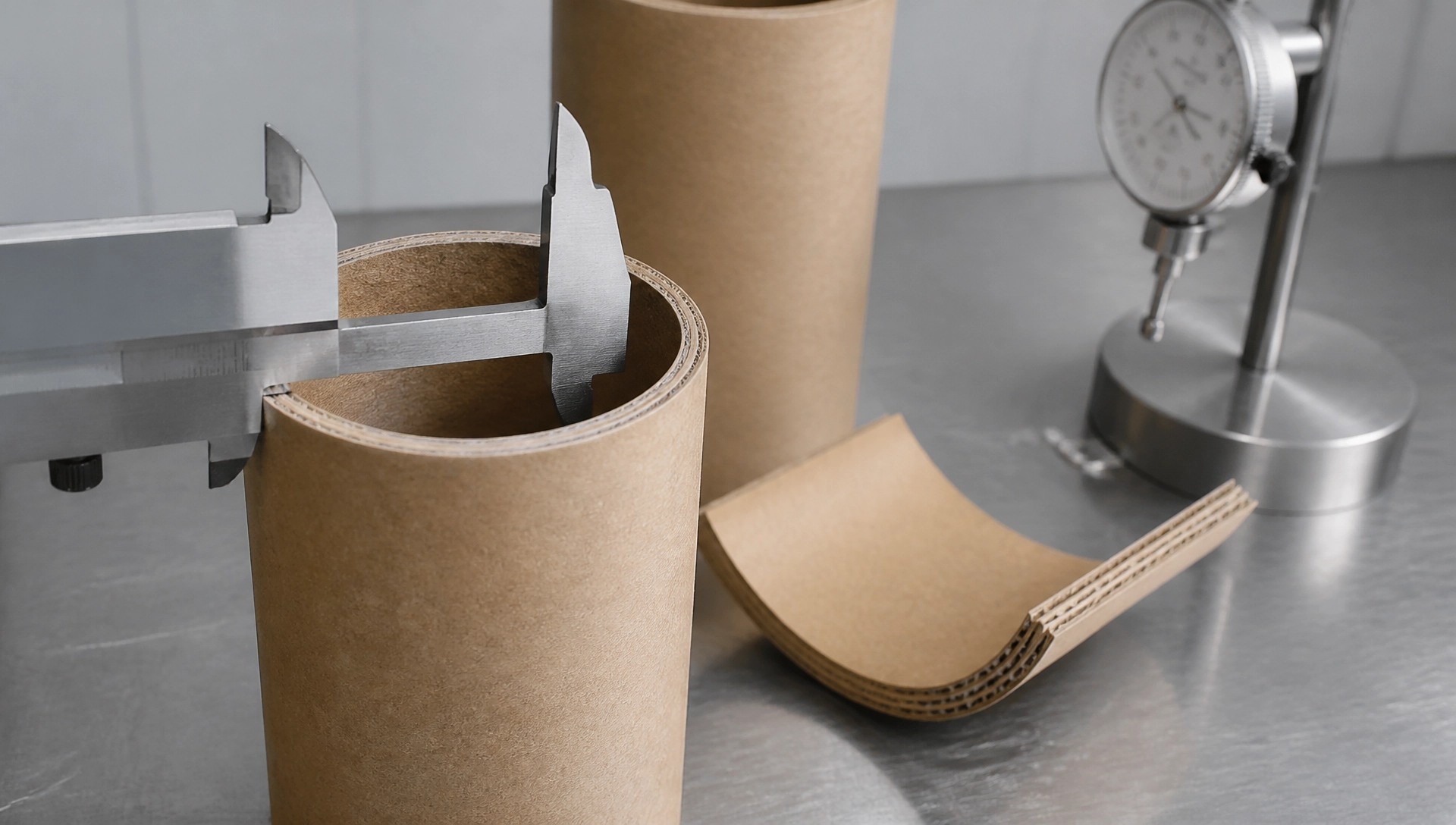
Structural Checks in Paper Tube Quality Control
Wall Thickness and Winding
Paper tube quality control starts at winding, where we measure wall thickness at multiple points around the circumference rather than just once. Uneven winding produces a tube that feels solid on one side and flexes on the other, which shoppers notice immediately.
📦 Related Products: Custom Paper Tubes / Food Packaging / Cosmetic Packaging
Lid Fit and Tolerance
This is where paper tube quality control gets subjective, frankly. A lid within numerical tolerance can still feel wrong. We therefore check both the measured clearance and the handling feel — draw resistance, release sound, and whether it stays on when inverted.
The Skincare Project That Taught Us This
A retail buyer once rejected a sample as “loose” when it sat comfortably inside our tolerance band. Technically we were right. Commercially we were wrong. Nevertheless, that project changed how we specify lid clearance on premium work.
Base Seam Integrity
Operators inspect every base seam individually on food formats. Our snack brand project failed its first oil migration test at exactly this point, and we’ve never treated base seams casually since.
Structures We Check Differently
Telescopic, shoulder-neck, push-up, and sleeve formats each have their own weak point. Push-up mechanisms need travel testing; shoulder-neck needs tighter concentricity.
Print and Finish Checks in Paper Tube Quality Control
Colour Consistency
Paper tube quality control on colour means pulling samples throughout a run and comparing against an approved physical reference, never a screen. Spot colours drift across long runs, and drift is easier to correct early.
Registration and Alignment
On a cylinder, misregistration shows up as a visible seam step. Additionally, wrap alignment matters enormously — a wrap that spirals by even a degree looks careless on shelf.
Finish Defects We Look For
- Foil — Incomplete transfer, cracking on curves, edge lift.
- Emboss and deboss — Depth consistency and registration to print.
- Lamination — Bubbles, edge peel, and scuff resistance.
- Spot UV — Overspill beyond the intended area.
- Aqueous coating — Even coverage without streaking.
Set-Off Risk
For food work we assess set-off — ink transferring from a printed face to an inner surface when sheets stack. It’s a genuine migration pathway, and auditors ask about it specifically.
Testing That Supports Paper Tube Quality Control
Physical Tests We Run
- Drop testing — Corner, edge, and flat, always with the filled product.
- Compression — Because tubes ship in stacked master cartons.
- Lid retention — Inversion and shake testing.
- Base load — Particularly for candles and heavy contents.
Barrier and Food Tests
- Grease resistance — For nuts, bakery, and fried snacks.
- Migration testing — Verifying nothing transfers into product.
- Seal integrity — On lined and sealed formats.
- Shelf-life trials — Real filled product, real time, ideally.
The One Rule We Repeat Constantly
Test with your actual product. An empty tube tells you almost nothing about how fats migrate or how weight distributes. We’ve seen empty samples pass everything, then fail in week three with real contents inside.
Compliance Behind Our Paper Tube Quality Control
Standards and Documentation
- BRCGS Packaging Materials — Currently Issue 7, the standard most retailers name directly.
- IFS PACsecure — Recognised across European retail supply chains.
- EU food contact framework — Regulation (EC) No 1935/2004, with GMP under Regulation (EC) No 2023/2006.
- FSC chain of custody — Supporting certified fibre claims.
- EPR component weights — Split by material. See EPR Packaging Compliance.
Where Food Work Happens
Food-contact production runs inside our separated clean area. Our food grade packaging workshop walkthrough covers the airlock, filtration, and environmental monitoring in detail.
Regulations to Diary
PPWR applies from 12 August 2026 across the EU. Meanwhile, EUDR obligations fall on 30 December 2026 for large and medium operators, and 30 June 2027 for micro and small operators.
Traceability
Every batch links material lot, production date, line, and operator. Consequently, if a question surfaces a year later, we can reconstruct exactly what happened rather than guessing.
Sustainability Claims
Describe construction accurately instead of making blanket eco claims. Our Recyclable Paper Packaging and Plastic-Free Packaging guides cover defensible wording.
How Paper Tube Quality Control Fits Your Project: Steps 1–3
Step 1: Define What Matters Most
First, tell us your priority. Premium feel, food safety, and transit survival lead to different inspection weighting, and pretending everything matters equally helps nobody.
Step 2: Agree the Specification
Next, we document dimensions, tolerances, material grades, and finish standards in writing. Ambiguous specifications are where disputes start, so we’d rather over-document at this stage.
Step 3: Approve a Physical Reference
Then your approved pre-production sample becomes the physical benchmark. Every subsequent check compares against that object, not against a description.
Paper Tube Quality Control in Sampling: Steps 4–6
Step 4: White Sample Verification
An unprinted structural sample validates dimensions, rigidity, and lid feel before printing commits you to anything. Our custom packaging project workflow guide covers the full sequence.
Step 5: Pre-Production Sample and Testing
A fully finished sample with real print, foil, and liner. Run your own testing here — genuinely, put it through what it’ll actually face.
Step 6: In-Process and Final Inspection
During production we run scheduled in-process checks, then a final AQL-based inspection before packing. You’ll receive the inspection record with your shipment.
MOQ, Lead Time and Files
MOQ typically starts at 500–1,000 units. Lead time usually runs 25–35 days after sample approval. Send artwork as AI, EPS, or high-res PDF on our dieline with Pantone references.
Why Choose Pack Packaging for Paper Tube Quality Control
Facility and Capability
- 20,000㎡ factory — Winding, printing, foiling, and assembly all in house, so paper tube quality control covers every stage rather than stopping at a subcontractor boundary.
- 2,000㎡ food-grade workshop — Separated clean environment with its own airlock and dedicated equipment.
- 10,000,000+ monthly capacity — Consistency maintained from a 5,000-unit launch through to millions.
People and Records
- 20+ in-house designers — Structural engineering and dieline creation, never outsourced.
- Documented inspection records — Supplied with every shipment, not on request only.
- Audit access — We host customer and third-party audits.
- 60+ export markets — Incoterms and customs handled daily.
An Honest Note
No factory achieves a zero-defect rate, and any supplier claiming otherwise is selling you something. What matters is the defect rate, whether problems get caught internally rather than by your warehouse team, and what happens when something slips through. We’d rather tell you about the snack project that failed its first oil test than pretend our record is spotless.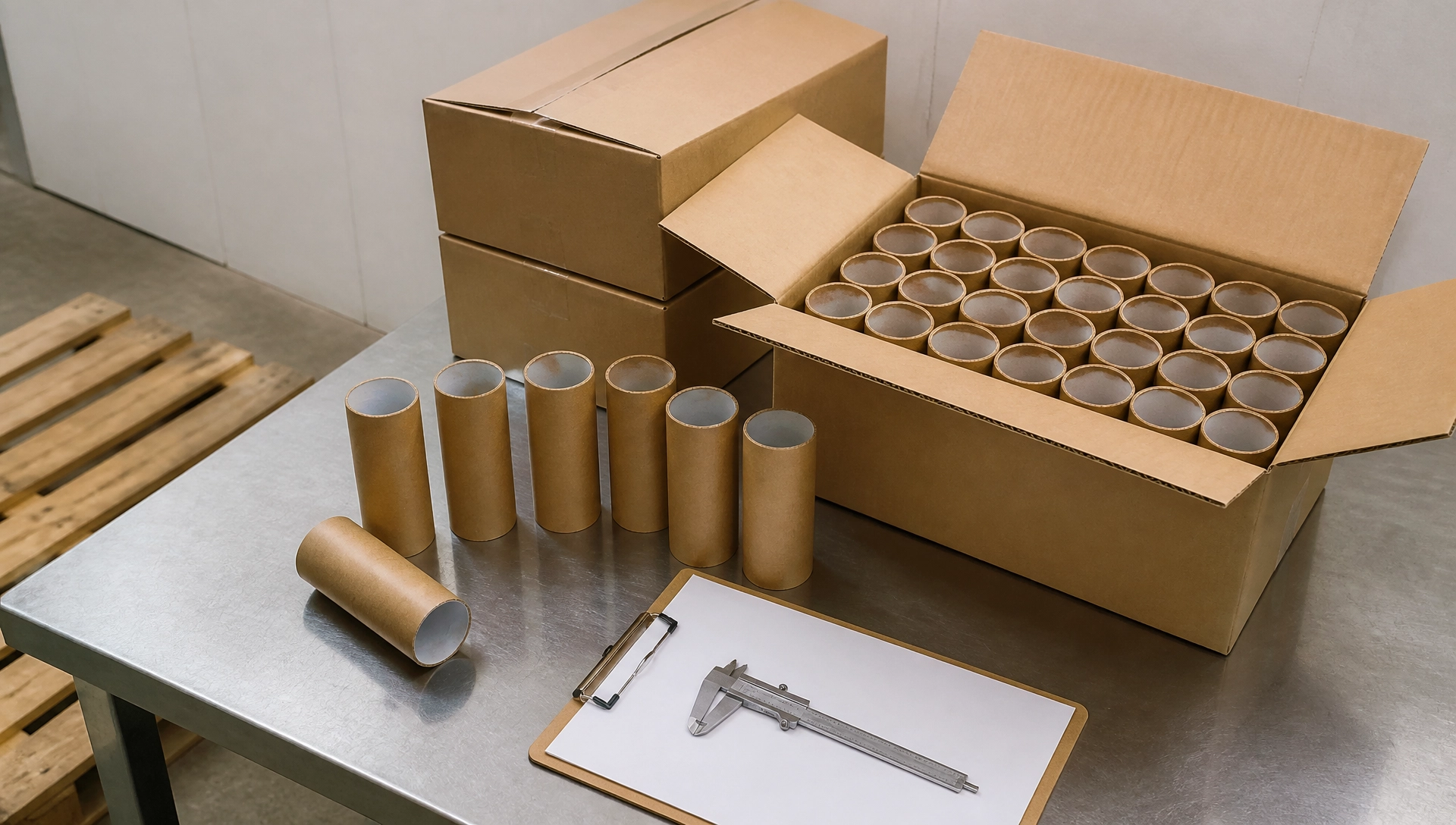
FAQ: Inspection and Standards
Q1: What inspection standard do you work to? We run in-process checks throughout production plus a final AQL-based inspection. Additionally, we’ll work to your own AQL levels or nominated third-party inspector if you prefer.
Q2: Can we appoint our own inspector? Yes, and many customers do. We host third-party inspections and provide production schedules in advance so timing works.
Q3: What tolerance should we expect on dimensions? Tolerance depends on diameter and structure, and we document it in the specification before production. However, published tolerance means little without an approved physical reference alongside it.
Q4: What happens if a shipment has defects? We investigate against the batch record, identify the root cause, and agree remediation — rework, replacement, or credit depending on severity. Traceability makes that conversation factual rather than adversarial.
FAQ: Testing, Cost and Timelines
Q5: Do you test with our actual product? We’d strongly prefer to. Send us filled samples where possible, since empty-tube testing misses migration, weight distribution, and aroma behaviour entirely.
Q6: Does thorough quality control add cost? Marginally, yes. Nevertheless, it costs far less than a rejected shipment, a delayed launch, or a retailer delisting — and considerably less than reprinting a run.
Q7: How long do shelf-life trials add to the timeline? That depends on your target shelf life. Accelerated testing compresses it, although we’d still recommend real-time confirmation for high-fat products.
Q8: What do you need to start a quotation? Send your product dimensions, product use, quantity, target market, and logo file. Then we’ll recommend the right structure, material, and finish — and set the paper tube quality control plan around what matters most for your product.
Related Guides
Each check described here connects to a topic we’ve covered separately:
- Inside Our Food Grade Dust-Free Packaging Workshop — The environment where food-contact production runs.
- From Sample to Mass Production: Custom Packaging Project Workflow — The full eight-stage process.
- Food Grade Paper Tube Case Study — Base seams, liners, and oil migration in practice.
- Perfume Paper Tube Packaging Case Study — Drop testing and insert iteration.
- Luxury Paper Tubes Skincare Case Study — Lid tolerance and buyer perception.
- FSC Certified Paper Packaging — Certified fibre and chain of custody.
- EPR Packaging Compliance for Brands Selling to the EU — Registration and component weights.
- Biodegradable Paper Tube Packaging — Construction and fibre detail.
- Sustainable Food Packaging for Tea, Coffee and Snacks — Barrier decisions across edible categories.
Explore More Custom Packaging Solutions
- Paper Tubes — Our dedicated collection for beauty, fragrance, food, and gifting.
- Rigid Boxes — Premium gift boxes for prestige ranges.
- Folding Boxes — Lightweight, fully customisable retail cartons.
- Corrugated Boxes — Durable e-commerce and shipping packaging.
- Child Resistant Boxes — Secure packaging for regulated products.
- Accessories — Custom inserts, tissue paper, ribbons, and labels.
Ready to Discuss Your Specification?
Good quality control isn’t really about catching defects, honestly. It’s about designing a specification precise enough that defects have nowhere to hide — an approved physical sample, documented tolerances, and agreement on what “correct” means before anyone starts winding. Get that right, and inspection becomes confirmation rather than discovery.
Tell us your product size, quantity, logo file, and target market. Our team will then recommend the right structure, material, and finish, and set the paper tube quality control checkpoints around your product’s real risks.
✉️ [Send Us Your Brief → Get a Custom Quote in 24 Hours] Include: product dimensions · quantity · target market · logo file
Pack Packaging | 20,000㎡ Factory | 2,000㎡ Food-Grade Workshop | BRCGS Certified | FSC Certified Materials | 60+ Export Markets
Disclaimer: Inspection procedures, tolerance ranges, MOQ, and lead times reflect our standard practice as of August 2026 and represent typical ranges rather than guarantees. Please confirm certification status with us directly. Regulatory information reflects publicly available sources and does not constitute legal advice, so confirm your specific obligations with a qualified advisor.