A child-resistant box is only as good as the evidence behind it. A supplier can show you a test report, and that report can still describe a package you are not buying: a different size, a different closure, or a different insert. The buyer’s job is to confirm that the child-resistant packaging testing actually covers the exact configuration you intend to order. This article explains what that evidence should contain, how a report applies to a specific package, and where compliance testing stops and routine factory quality control begins. It is general packaging information, not a legal conclusion for any product or market.
What Does Child-Resistant Packaging Mean?
Child-resistant packaging uses a closure or structure designed to make opening difficult for young children while still usable for most adults. It aims to slow a child down long enough to reduce the chance of accidental exposure. That aim shapes everything downstream, from how child-resistant packaging testing is run to what a design change can cost you.
A term worth separating early: “child-resistant” is not the same as “child-proof.” No package stops every determined child every time, and reputable standards are written around resistance measured by test, not around an absolute guarantee. Treat any claim of a package being impossible for a child to open as a red flag rather than a selling point.
Nos Estados Unidos, child-resistant requirements for certain household, drug, and chemical products trace to the Poison Prevention Packaging Act and its rules. Those rules define both the products covered and the testing approach. Whether your specific product falls under those rules is a regulatory question, and a qualified compliance professional should confirm it for your market.
What Packaging Configuration Is Actually Evaluated?
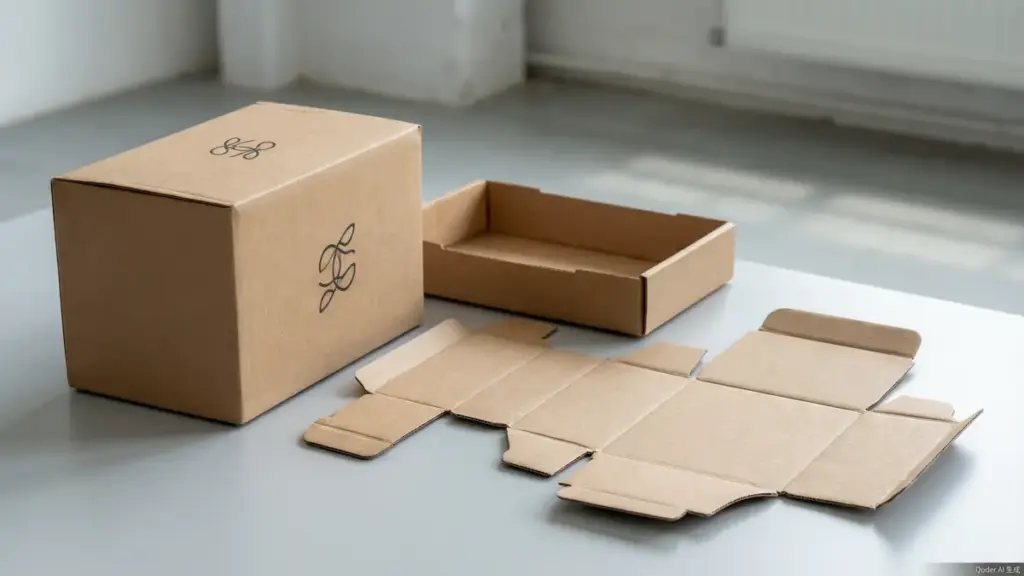
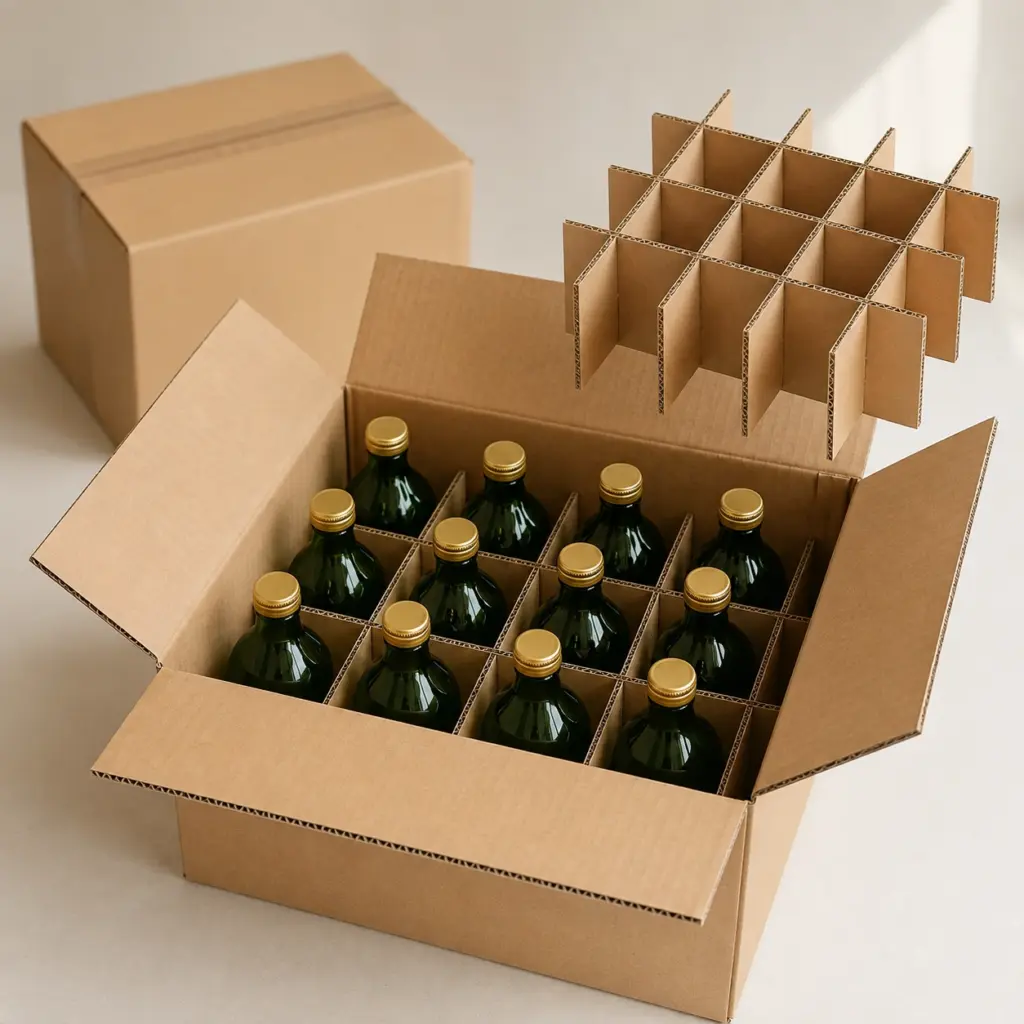
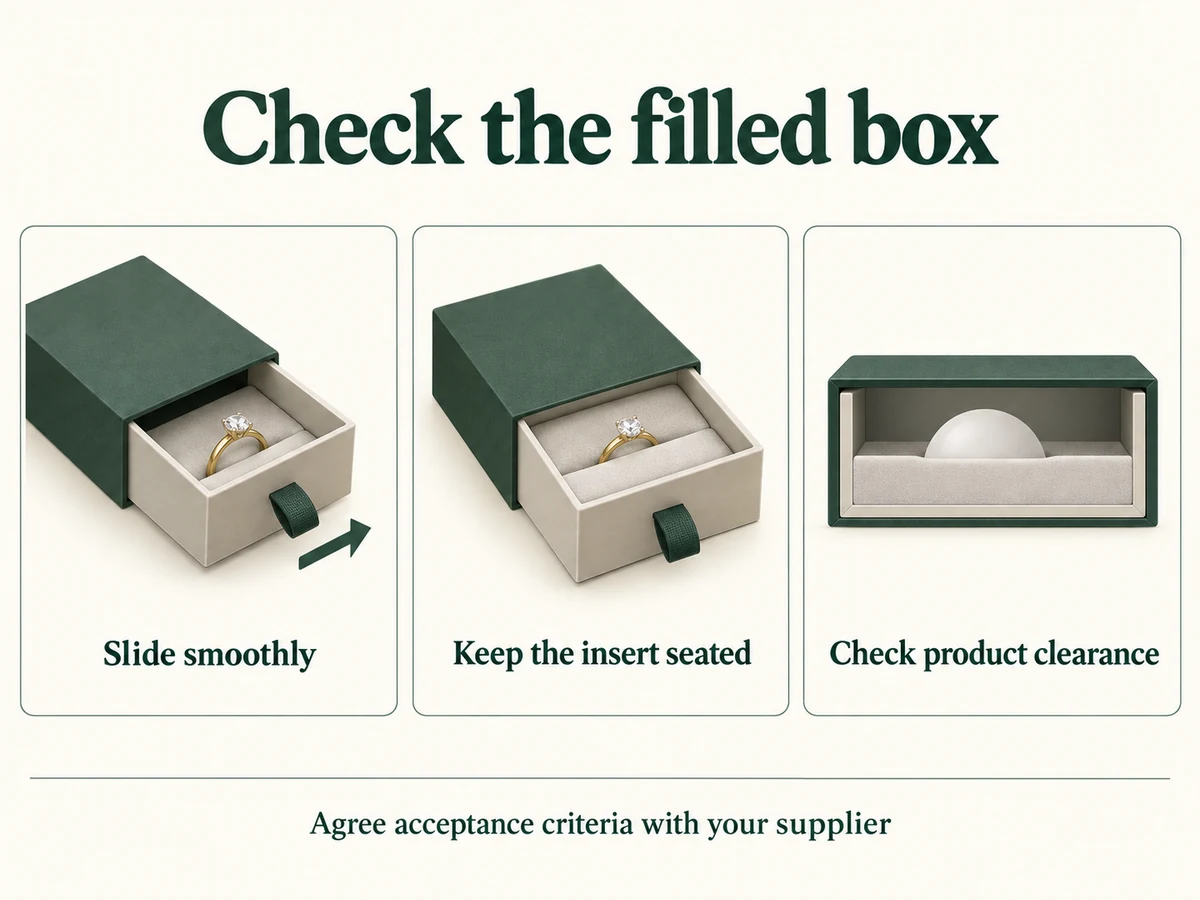
A child-resistant test result applies to the package configuration represented by the tested samples. Relevant features may include the container or box, opening mechanism, dimensões, materiais, closure components, and any insert that affects access to or operation of the mechanism. The buyer should confirm that the packaging placed on the market is adequately represented by the tested package.
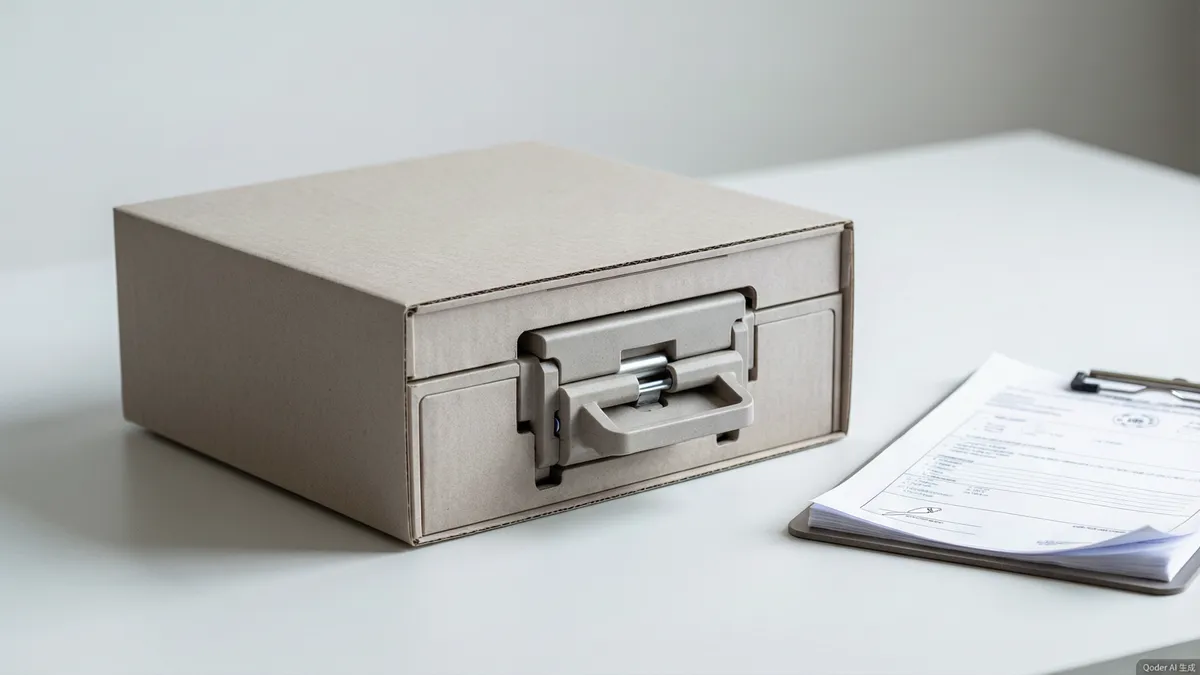
A common mistake is assuming that a result automatically transfers after a drawer box is resized, its lock is adjusted, or an insert is changed. A variation does not always require a completely new test, but it should be reviewed to determine whether it could change child resistance or adult usability. Ask the responsible compliance party or test organization to document whether the tested package adequately represents the proposed variation.
Adult usability belongs to the same picture. A package that is hard for a child to open must still open for the adults who use it, and standards weigh both sides. A closure stiff enough to defeat a child can also defeat an older user, so the configuration tested reflects a balance, not a maximum. Changing the mechanism to chase one side can shift the result on the other.
What Is the Difference Between ASTM D3475 and 16 CFR 1700.20?
These two standards appear in every child-resistant conversation, and they do different jobs. The table below separates them so you can ask for the right document. Read it as a plain-language summary, not as a substitute for the standards themselves.
| Item | ASTM D3475 | 16 CFR 1700.20 |
|---|---|---|
| What it is | Classification of child-resistant package types | Federal test protocols for special packaging |
| Main role | Classifies the motions, skills or tools used to open package types | Evaluates child resistance and adult usability |
| Does it prove a package passed? | Não | Protocol data may support the compliance determination |
The practical distinction is that ASTM D3475 classifies types of child-resistant packages, while the 16 CFR 1700.20 procedure sets out the US child and adult test protocols for special packaging. An ASTM classification does not show that a specific package passed the federal performance protocol. Ask which procedure was followed and review the actual protocol data supporting the package.
Name the standard and the version in your request. Suppliers answer faster and more precisely when a question cites the procedure rather than the phrase “child resistant.” It also surfaces disagreements early, because one party may mean a classification term while the other means a passed protocol run. Aligning on the document before testing starts avoids a report that satisfies a definition you did not choose.
Planning a Child-Resistant Packaging Project?
What Should Buyers Check in a Test Report?
Read a test report for scope before reading it for a pass. Check which package was tested, including the opening mechanism, relevant dimensions, materiais, closure components, and any insert that affects operation. Confirm the procedure followed, the entity that conducted the test, the test dates, the samples submitted, and the recorded child and adult results. Do not assume that CPSC has approved or endorsed the package.
Look for the specifics that tie the result to reality: the report or lot date, the tested components, and any stated limits on applicability. A report that names a generic family instead of your configuration tells you less than one that matches your exact box. Where the wording is vague, ask for the underlying data before you treat the package as covered.
Keep the report with your product records, and link it to the configuration it describes. When a distributor or a regulator later asks for evidence, the answer should be one document tied to one package, not a folder of near-matches.
A test result applies to the samples submitted for testing. Review how those samples were produced and whether they adequately represent the packages supplied with the finished product. The report does not by itself prove that every later production batch remains unchanged, so ask how materials, dimensões, closure function, and design revisions are controlled against the tested reference.
Which Packaging Changes May Affect the Report’s Applicability?
Some edits to a package leave the test result intact, and others quietly break it. Treat a change as a question to verify, not something to assume. The following tend to put a report’s applicability back on the table:
- Size change: scaling the package up or down alters grip and the forces a child can apply.
- Closure or mechanism change: a different lock, latch, or drawer fit changes how the package opens.
- Insert change: a new tray or liner can change how the mechanism is reached or held.
- Material change: a different board, filme, or component can shift stiffness and tolerance.
This list describes risk, not a verdict. A color or a graphics update to a panel may leave the closure untouched, while a small change to the drawer clearance may not. Before you apply an existing report to a revised package, confirm the revised configuration is genuinely the tested one; if it is not, the package needs its own evaluation. Reuse the change-control discipline described on the structure and sampling page.
How Is Production Quality Control Different from Compliance Testing?
Compliance testing and factory quality control answer different questions, and a supplier that conflates them has told you something worth noticing. Compliance testing establishes, through the defined protocol and a child panel, whether a configuration meets a performance requirement. Routine factory quality control checks that each unit built today matches the approved configuration: the right components, the right closure function, the tolerances held.
Routine production controls do not replace protocol testing, and protocol data does not by itself show that later batches remain unchanged. They serve different purposes: testing supports the performance determination, while documented production controls help keep manufactured packages consistent with the tested design. O quality and compliance overview separates these roles in more detail.
Ask for the checks in writing. A supplier can describe its line controls, but a buyer needs the record that shows they ran: what was inspected, against which approved configuration, and with what result. Consistency is proven by repeatable documentation across batches, not by a single confident statement. When that paperwork exists, a later question about one shipment has a baseline to compare against.
What Should Be Included in a Child-Resistant Packaging RFQ?
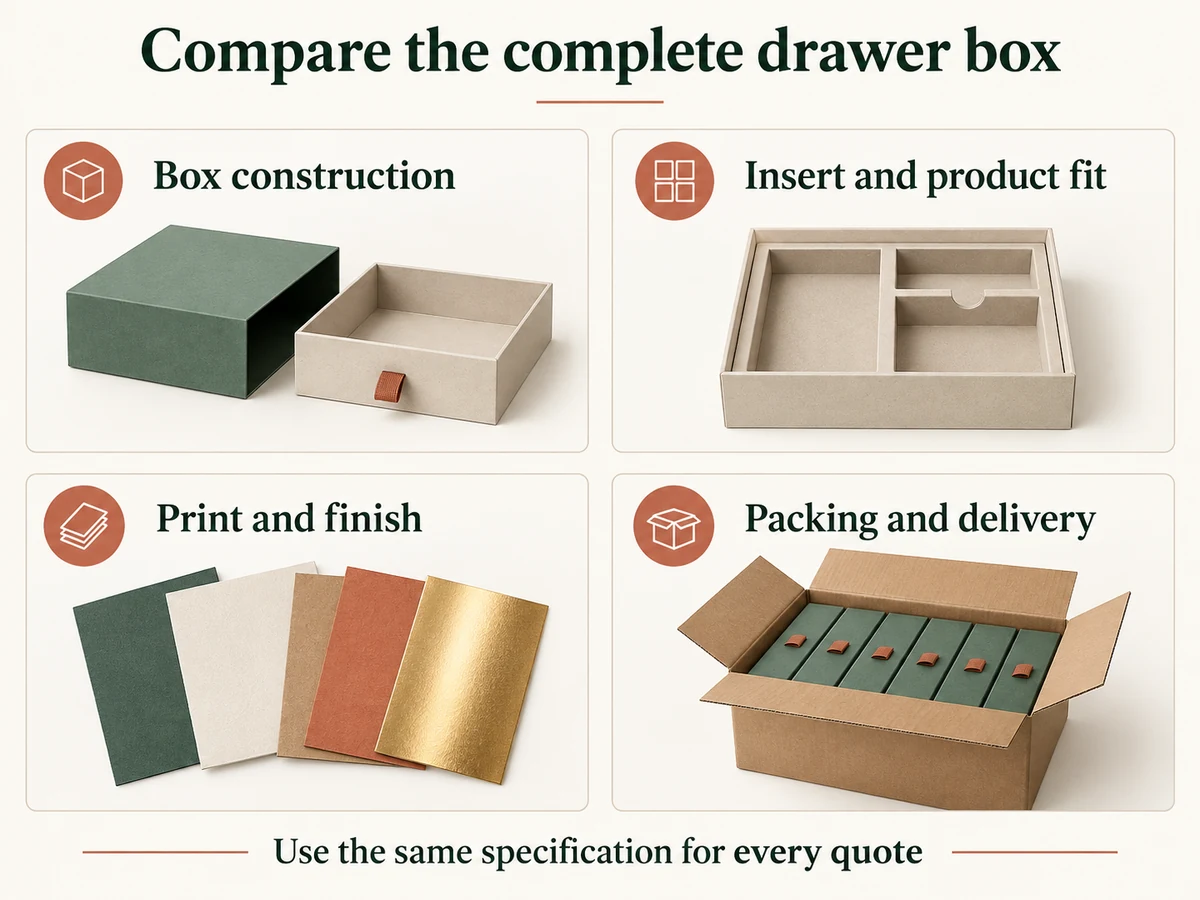
A clear request for quotation gets a matching answer. When you request child-resistant packaging, specify the product category and the market you intend to sell into. Then attach the configuration details: package type such as a CR drawer box or a CR cylinder, the size, the closure or mechanism, the insert, and the materials. Ask the supplier to state which procedure was run, for which configuration, and whether an existing report matches your exact package or whether a new evaluation is needed.
Add the questions that protect you later: how design changes are controlled, what documentation ships with the order, and how routine quality checks confirm each unit against the approved configuration. A supplier who answers these with specifics is far easier to audit than one who answers with a reassuring “sim, it is compliant.” To compare real structures, review the child resistant packaging range, then send your product type, mercado, and closure details so the supplier can quote against a defined configuration.
Perguntas frequentes
Is child-resistant the same as child-proof?
Não. Child-resistant packaging is designed to be difficult for young children to open within a tested time, not impossible for every child. Standards are written around measured resistance, so treat any claim of a fully child-proof package with caution.
Does every child-resistant package need testing?
A package described as child-resistant should have testing that supports the claim for its exact configuration. Whether testing is legally required depends on the product and the market, which is a regulatory question to confirm with a qualified compliance professional for your situation.
Is ASTM D3475 a performance test?
Não. ASTM D3475 is a terminology and classification standard that defines terms and types of child-resistant packaging. The performance testing protocol is set separately, such as the 16 CFR 1700.20 procedure, so a passed run and a classification reference are different documents.
What does 16 CFR 1700.20 cover?
16 CFR 1700.20 sets out the US child and adult test protocols for special packaging. It defines the procedure for testing both child resistance and adult usability. The current regulation text is the authority, so read the official section rather than a summary for any compliance decision.
Can one report cover different packaging sizes?
Possivelmente, but there is no universal size range that automatically applies to every child-resistant package. The responsible party should determine whether the tested package adequately represents each proposed size and whether the change affects grip, force, mechanism operation, or adult usability. If effectiveness may have changed, additional testing and certification may be needed.
Does changing the insert affect the evaluated configuration?
It can. An insert should be reviewed when it affects access to the opening mechanism, supports a locking component, changes the movement of a drawer, or influences how the contents are reached. A purely decorative insert may not affect performance, but the responsible compliance party should document that conclusion rather than assume it.
Does factory quality control replace compliance testing?
Não. Routine production controls do not replace protocol testing, and protocol data does not by itself show that later batches remain unchanged. Testing supports the performance determination, while documented production controls help keep manufactured packages consistent with the tested design.
Who confirms final compliance?
For products regulated under the US PPPA, the manufacturer of the end product is responsible for ensuring or certifying that the special-packaging requirements are met. The empty-package supplier may provide samples, specifications, and protocol data, but it does not replace the responsible end-product manufacturer, importador, or domestic packager. Confirm the responsible party and certification requirements for the product and market before sale.
The evidence from child-resistant packaging testing is only as useful as its fit to your exact configuration. Match the report to the mechanism, tamanho, e insira; control changes; and keep factory checks and compliance testing in their separate roles. When your configuration and market are defined, send them to PK Paper Box to scope the sampling and documentation. Then confirm the final call for your product and market with a qualified regulatory professional.