A subscription brand meets its packaging problem twice a month. The product mix keeps changing, and the packaging that holds it must be specified, stocked and reordered without breaking the shipping calendar. That is why subscription box packaging behaves less like a purchase and more like a recurring specification. A single campaign only has to survive its own launch. A subscription box repeats every month while the contents rotate, and every weak decision repeats with it.
This guide is written for subscription brand owners and DTC operators who need to plan packaging as a long-term system. We cover the structure choice, sizing for a changing product mix, and insert flexibility. We then cover shipping durability across monthly batches, reorder and version planning, and the cost levers that move across a subscription year. Generic mailer spec fields and the stock-level version-control mechanics already have their own guides on this blog; we reference them instead of repeating them.

Why Is Subscription Box Packaging a Recurring Specification?
The defining feature of a subscription program is repetition with variation. The box repeats monthly, but the contents do not: seasonal SKUs, rotating shades or flavors, welcome gifts, partner samples. For many programs the unboxing is the content—customers pay for an experience, and the packaging is a visible part of what arrives. If recurring delivery is your core business, nosso delivery industry solutions page shows how we support brands shipping on a fixed cadence.
Two consequences follow. Primeiro, every packaging decision is a commitment multiplied by twelve. A structure that slows the pack line, a size that forces filler, or an insert that locks the kit configuration will show up again in every ship month. Segundo, change has to be planned rather than reacted to. Before choosing any box, write down three constants for the program. Name the date every monthly shipment must hit, the realistic range of the product mix, and who may change the packaging specification and when.
Which Subscription Box Structure Fits Your Program?
Three approaches dominate subscription programs, and each behaves differently when it repeats monthly.
| Estrutura | How it behaves in a recurring program |
|---|---|
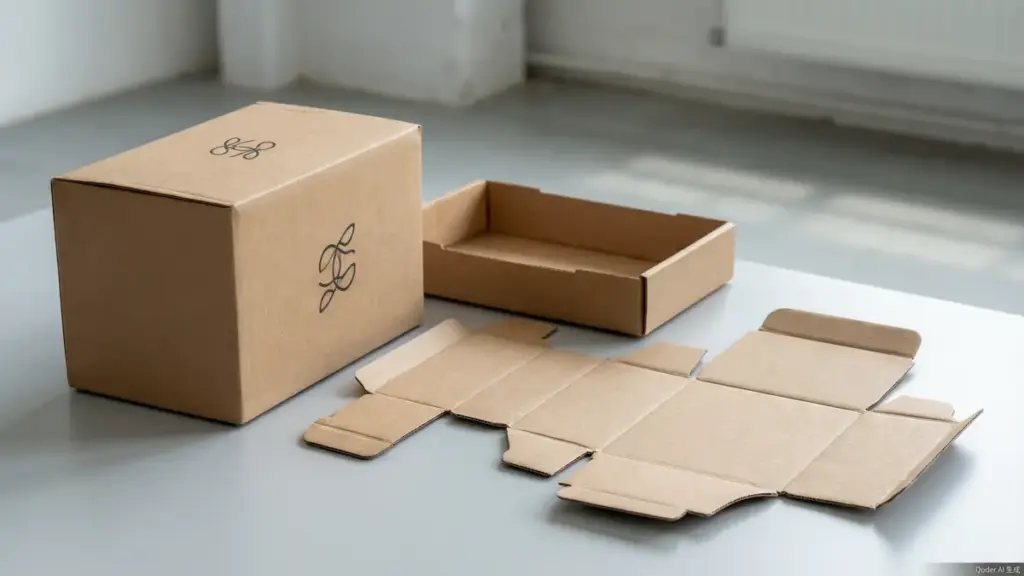
| Roll-end or tuck-front corrugated mailer. | Fastest to pack and easy to store flat until ship week, and its outside surface carries the brand print. UM tear-strip option changes how the box opens and survives a return. Nosso custom printed corrugated mailer boxes are the build most recurring programs start from. |
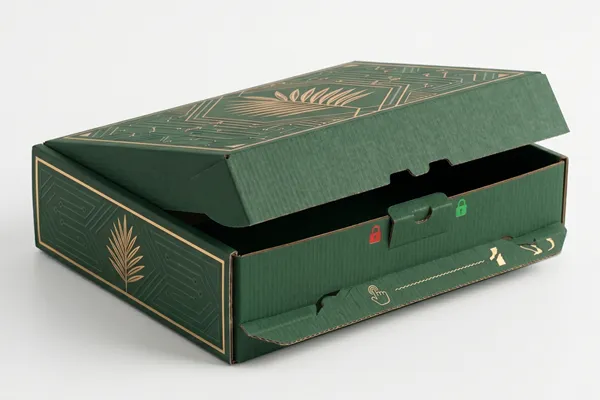
| Lid-and-base box. | The two-piece format gives a more formal unboxing and suits a premium tier, at the cost of longer assembly time during ship week, a bigger flat-pack footprint, and a lid that must be controlled against shifting in transit. |
| Tray or folder layout inside a plain outer box. | Products sit in a die-cut paperboard tray or folded folder while the outer box stays simple. This separates presentation from protection, so the customer-facing element can change without requalifying the shipping box. |
Weigh each option against four tests that only exist in a recurring program. They are pack-line speed during ship week, storage space at the fulfillment location, consistency between batches, and survival through the parcel network month after month. General mailer specification fields—board grade, flauta, structural details—are their own buying topic; the question here is which structure survives being reordered all year.

How Do You Size for a Changing Product Mix?
Once contents rotate monthly, a single internal size becomes a bet about the future. Two approaches exist. The first is one box sized to the largest realistic combination. Every kit then ships in the same carton, which simplifies forecasting and stocking, but in ordinary months the surplus space becomes product movement, filler and shipped air. The second is a pool of two or three sizes assigned by kit type. Each combination then ships closer to its own volume and looks better. But every size in the pool is another line to forecast, store, and train packers to pick correctly under ship-week pressure.
A practical method is to log the real combinations over a quarter. Record the largest item, the heaviest item and the most fragile item, then derive the size pool from combinations that actually ship together rather than a theoretical worst case. Revisit the pool whenever a new product line enters the rotation. For illustration, most monthly kits may measure roughly 10 × 8 × 4 inches while peak combinations reach 12 × 10 × 6. The decision is whether that peak recurs often enough to justify its own size, or should be handled with one larger shared box.
Sizing also reaches freight. Parcel pricing for small shipments is commonly driven by dimensional weight. That means the outside volume of the box can matter as much as its contents. A modest reduction that moves cartons into a lower size band can change the shipping economics of the whole program without changing protection. Carrier tier rules vary, so confirm the current bands with the carrier before locking a size; UPS, por exemplo, publishes how dimensional weight is calculated and applied to parcel services.
Should You Use Fixed Compartments or Flexible Fill?
In a one-time campaign, an insert can be designed around the launch product. In a subscription, the insert has to answer a monthly question: can the packing station handle next month’s combination without anything being reapproved?
A fixed die-cut paperboard compartment holds each product in place, presents consistently, ships flat and recycles with the box. Its price is rigidity. Every compartment layout locks a kit configuration, so when the monthly SKU list changes, the insert becomes a new version with its own approval and stock position. Flexible fill—crinkle kraft, wrapped padding, tissue—adapts to any month and behaves like a consumable rather than a component. Presentation then depends on packing discipline, and loose fill tends to slow the line during ship week.
Many programs land in between: a fixed lower tray sized for the core items plus a flexible zone for rotating ones, or compartments with removable dividers. The material comparison—paperboard against molded pulp or foam—is a separate article’s decision. For a recurring program, choose the insert for change tolerance first and refine the material second.

How Do You Keep Durability Across Monthly Batches?
A first batch that arrives intact does not prove the sixth will. Each batch travels factory, freight leg, warehouse or fulfillment site, parcel network, and finally the customer’s door. A box spends most of its life stacked while it waits to be assembled or shipped. Compression that stays harmless in a dry spring can become a genuine risk in a humid storage month. Our guide to stacking strength explains how board grade, flauta, humidity and stack time interact; a subscription specification should be read against your worst storage window, not your average one.
Two habits protect the program:
| Habit | What it protects |
|---|---|
| Treat every incoming batch as a verifiable delivery. | Check a sample of cartons against the approved reference before mixing new stock into old, so a weak batch is caught at the dock rather than at doorsteps. |
| Review damage data by month instead of in aggregate. | Crush or lid-shift that appears seasonally points to a specification-condition mismatch; fixing it before the next peak month costs far less than replacing damaged kits during it. |
How Do You Plan Reorders, Versions, and Safety Stock?
A monthly ship date gives subscription brands an advantage one-off buyers rarely have: a fixed calendar to plan backwards from. Reorders should cover a defined consumption period plus a buffer chosen for your own demand variation and supply uncertainty—not a number of weeks copied from another brand’s policy. The underlying discipline is settled in our guide to custom packaging reorders, inventory, and version control. Its conclusion applies directly here: every repeat request must first be classified as an unchanged repeat or a revision before quantities or dates are discussed.
On top of that discipline, the subscription rhythm shapes the plan. The forecast starts from active subscribers, expected growth and expected churn, converted into monthly box consumption. Safety stock then covers demand spikes, damaged batches and a late shipment rather than a vague sense of caution. For illustration, a program shipping 4,000 boxes in a month has a supplier schedule of several weeks plus transit. Its reorder should trigger early enough to survive the whole replenishment window. The exact trigger depends on your consumption rate and confirmed schedule, not a universal lead-time figure.
Version changes deserve their own calendar line. A logo refresh, a seasonal graphic or a new insert layout is a revision rather than a repeat, and each carries its own approval and lead time. Schedule the changeover at a month boundary. Name the last batch that uses the old version and the first that uses the new, so the two designs do not end up sharing one ship month. How long the approval path runs depends on what moves: artwork-only changes and structural changes sit at opposite ends.

Which Cost Levers Move Over a Subscription Year?
In a subscription, cost is set less by the unit price of one batch than by how the year is planned. Four levers usually matter more than negotiating a single quote.
| Lever | Trade-off |
|---|---|
| Batch splitting. | Fewer, larger runs typically lower unit cost but lock in the current design and size. Split batches preserve flexibility for planned version changes and reduce obsolete-stock risk around a rebrand. Which is cheaper depends on how often your specification actually moves. |
| Size standardization. | Cutting the pool by one size reduces stocking lines and simplifies the forecast, but pushes void fill and dimensional cost back onto monthly operations. |
| Printing choices. | Fewer colors, shared plates across planned versions, or moving decoration onto an insert or sleeve instead of the outer box lets graphics refresh without requalifying the structure. |
| Insert complexity. | A printed fixed insert is a component with its own reorder cycle; flexible fill is a consumable with a different cost shape. |
How these levers turn into quoted numbers—quantity, quadro, método de impressão, structure—is explained in our corrugated packaging cost guide. This article stays at the planning layer and does not restate that calculation. At program level: decide the batching and version strategy first, then price the batches inside it.
Perguntas frequentes
How often should subscription box packaging be redesigned?
A full structural redesign typically becomes necessary only when the product mix, damage rate or freight economics shift materially. Graphic versions can rotate seasonally without touching the structure, so keep structural and graphic changes on separate schedules unless they genuinely belong together.
Should every box in a program be the same size?
Não necessariamente. One size simplifies stocking but charges filler and dimensional cost against every smaller kit; two or three sizes taken from real shipping combinations often cost less across a year. Re-derive the pool from shipping data periodically rather than keeping whatever you launched with.
How far in advance should reorders be placed?
Work backwards from the date each monthly shipment must hit: production window, trânsito, receiving, and a buffer for demand variation and supply uncertainty. The total depends on your supplier’s current schedule and route, and it should be reconfirmed each cycle rather than copied from another brand’s policy.
Do subscription mailer boxes need a tear strip?
It is not a requirement, but it is a common choice because it improves the opening moment and gives the box a better chance of being resealed for returns. Ask the supplier to price it as an option against the plain closure rather than assuming it is standard.
Can inserts be changed without changing the outer box?
Geralmente sim, as long as the outer cavity stays approved and unchanged. Verify the fit with a physical sample before ship week, no entanto: insert wall thickness and tolerances consume internal space that the drawing does not always show.
How do you keep the unboxing consistent across monthly batches?
Keep an approved reference unit on file and check incoming batches against it at the dock. Fix a packing layout guide at the station so presentation does not depend on who happens to be packing that week.
What should we prepare before starting a subscription packaging program with a supplier?
Four inputs let the whole conversation happen at once. List your monthly box count, the dimensions and weights of the products in rotation, any planned version changes, and the shipping calendar you must hit. With those, estrutura, size pool and reorder cadence can be aligned in one pass instead of three.
Considerações Finais
Subscription packaging is judged at the twelfth shipment, not the first. Choose the structure against ship-week reality and size the pool from combinations that actually ship. Pick inserts for tolerance of change, and verify durability batch by batch instead of once at launch.
The planning side carries equal weight. A fixed calendar lets you order backwards, classify version changes early, and split batches where change is expected rather than stockpiling against it. Managed together, these decisions avoid the classic failure of recurring programs: running short of the current version at month-end, or discovering a new size requirement mid-season.
Tell us your monthly box count, product mix, planned version changes and shipping calendar so we can align structure, size pool and reorder cadence.
PK Paper Box will help you standardize the structure and plan reorders around your shipping calendar.