Pular para o conteúdo

Counter display boxes and shelf-ready packaging help brands present products directly in retail stores. Counter displays place products near checkout areas, while shelf-ready packaging allows store staff to move products from shipping cases to retail shelves with little handling.
Both formats must balance product visibility, resistência estrutural, and ease of use. A display that looks attractive but takes too long to open or does not fit the retailer’s space may be rejected. Brands should consider the product size, display location, material, and store requirements before confirming a design.
This guide explains the main types of retail display packaging, how to choose suitable materials, and what buyers should check before placing a custom order.
Key Takeaways
- Counter display boxes present products at checkout counters, while shelf-ready packaging is designed for retail shelves.
- PDQ trays and tear-away displays reduce the time needed to prepare products for sale.
- Material choice and structural design affect load capacity, product visibility, and display stability.
- Retailer specifications should determine display dimensions, case quantities, and barcode placement.
- Product samples and packaging tests help buyers confirm the design before mass production.
What Are Counter Display Boxes and Shelf-Ready Packaging?
Counter display boxes and shelf-ready packaging are retail packaging formats designed to present products and make store operations easier. Both can combine product protection, marca, and merchandising, but they serve different retail locations.
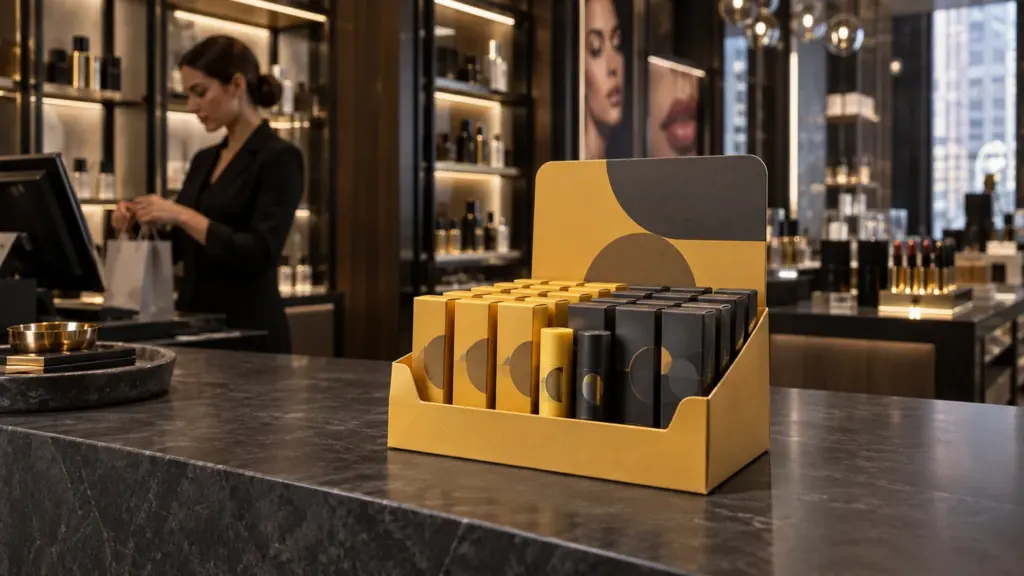
Counter display boxes are usually placed near checkout counters, service desks, or promotional areas. They hold several products in one unit and often include a printed header or tiered sections to improve visibility. Customers can reach the products without opening individual shipping cartons.
Embalagem pronta para prateleira (SRP), also called retail-ready packaging (RRP), is designed for store shelves. Products arrive in a shipping case that can be opened or converted into a display tray. Staff can then place the tray directly on the shelf instead of unpacking every item.
The main design challenge is balancing three requirements: enough strength for transport and storage, easy opening for store staff, and clear product presentation for shoppers.
What Types of Custom Retail Display Boxes Are Available?
The right display structure depends on where products will be placed, how customers access them, and how store staff handle replenishment. Four common formats serve different retail needs.
1. Countertop Display Boxes
Countertop displays are compact units designed for checkout counters and other limited spaces. They often include an open-front tray, a raised back panel, or a header card for brand messaging. Their dimensions should match the retailer’s available counter space.
2. PDQ Display Trays
PDQ display trays are designed for quick placement in retail stores. Staff open the shipping case or remove its outer panel, leaving the products arranged in a ready-to-use tray. This format reduces unpacking and setup work.
3. Shelf-Ready Trays
Shelf-ready trays hold products in an organized arrangement on retail shelves. Their footprint, front height, and product capacity should match the retailer’s shelf specifications. A stable front lip and easy product access help maintain a neat display as items are sold.
4. Retail Display Boxes with Tear-Away Panels
These boxes combine shipping and product display functions. Perforated sections allow staff to remove part of the outer packaging and expose the products inside. The tear line should open cleanly without damaging the display or leaving rough edges.
Brands can explore different custom folding boxes to understand the available paperboard structures and display options.
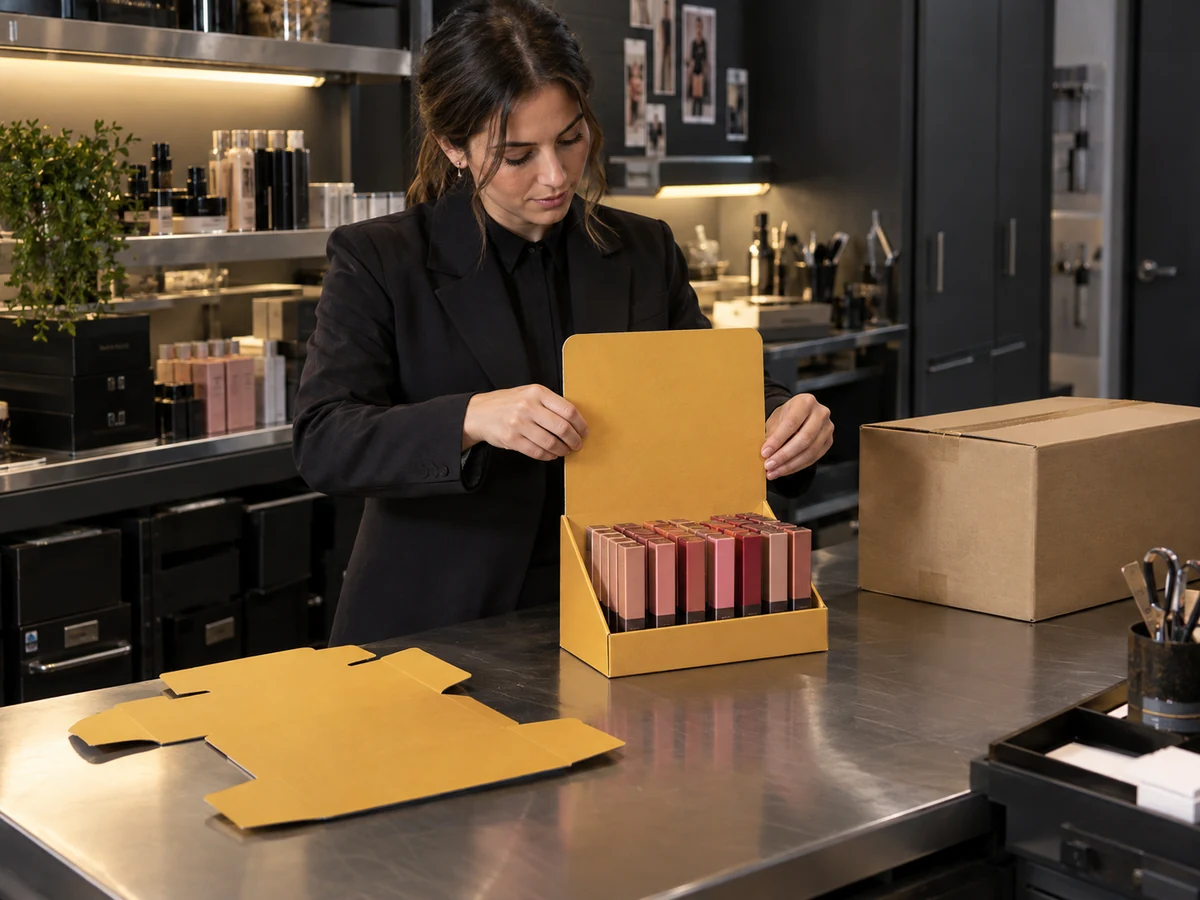
Counter Display Boxes vs Shelf-Ready Packaging: Principais diferenças
Although both formats support retail merchandising, their placement, estrutura, and opening methods are different. Choosing the right one starts with understanding how products will be displayed and replenished.
The following table highlights the main differences.
| Fator | Counter Display Box | Shelf-Ready Packaging |
|---|---|---|
| Placement | Checkout counters, service desks, and promotional tables | Assigned retail shelves and aisle displays |
| Typical Size | Compact, based on available counter space | Matched to the retailer’s shelf dimensions |
| Opening Method | Placed directly or assembled with a header card | Opened or converted into a display tray |
| Product Quantity | Based on counter space and expected sales | Based on shelf capacity and replenishment needs |
| Main Design Focus | Brand visibility, product access, and header design | Shelf fit, product stability, and quick opening |
For brands supplying multiple retail channels, the two formats can also be developed as part of the same packaging range.
How to Choose Materials for Retail Display Packaging?
Material selection affects the display’s strength, qualidade de impressão, peso, e custo total. The best option depends on product weight, display size, condições de transporte, and the required appearance.
As opções comuns incluem:
- SBS paperboard: Offers a smooth white surface for clear printing and premium brand graphics.
- Coated recycled board (CCNB): Provides an option for projects where recycled fiber content and cost are important considerations.
- Cartão Kraft: Offers a natural appearance for brands that prefer a simple, paper-based look.
- Corrugated board: Provides additional structural support for larger or heavier displays that need greater protection during transport.
For heavier products, the board should be selected according to the fully loaded display weight, not just the weight of an empty box. Inserções, divisórias, and reinforced sections may also be needed to prevent products from moving.
Finishes should match the intended use. Coatings and lamination can improve surface protection and appearance, but their effect on paper recycling should also be considered.
Brands planning custom paper packaging solutions can discuss material selection and structural requirements with Caixa de papel PK before finalizing the design.
How to Design Display Boxes for Visibility and Stability?
A good retail display should make products easy to see, reach, and remove. Ao mesmo tempo, its structure must remain stable during transport and throughout the selling period.
Product Arrangement and Box Dimensions
Start with the actual product dimensions, incluindo bonés, rótulos, and other parts that affect fit. Arrange products so that the front row is easy to reach and does not hide the items behind it.
Tiered risers can raise products in the back, while dividers keep different products or SKUs in place. The display footprint and total height should follow the retailer’s space requirements.
Display Openings and Perforations
Openings should allow customers to remove products without damaging the box. For tear-away designs, perforations need to follow a clear path and open without excessive force.
Die-cut openings should also leave enough space for products to be removed easily. Test the opening on a physical sample before approving the final structure.
Structural Stability and Load Capacity
The display should remain upright when fully loaded and when some products have been removed. Check the base, paredes laterais, front lip, header, and internal supports for bending or movement.
A practical test should include a fully loaded display and a partly empty one. This helps identify weak points before production.
For more information about folding carton structure, brands can review how material thickness and box construction affect packaging performance.
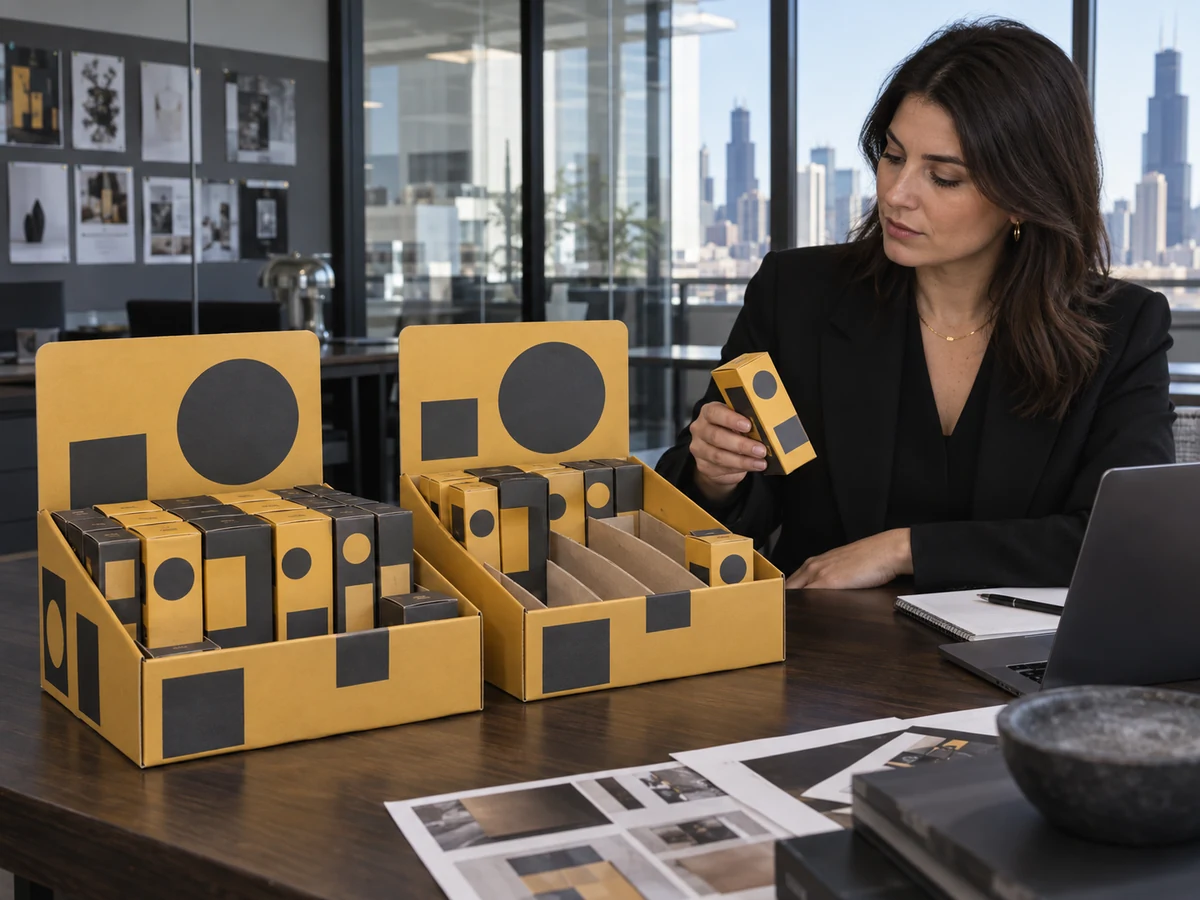
How to Prepare Display Packaging for Shipping and Retail Use?
A display box must work throughout the supply chain, from factory packing to store placement. Antes da produção, buyers should confirm the retailer’s packaging specifications and the shipping method.
Retailer Requirements
Ask the retailer for its latest packaging or logistics specifications. Important details may include:
- Maximum display width, profundidade, and height.
- Product quantity and arrangement per display.
- Barcode location and scanning requirements.
- Opening method and assembly instructions.
- Shelf or counter placement restrictions.
These details should be confirmed before the structural design is finalized. A display that does not fit the assigned space may require costly changes.
Shipping and Replenishment
Consider whether the display will travel flat, assembled, or with products already loaded. Each method affects packing space, proteção, and handling.
For shipping-ready displays, check how the products are held in place and whether the outer packaging protects the display during transport. For store use, the opening process should be simple enough for staff to follow without additional tools.
Barcodes should be placed where receiving staff can scan them without unnecessary unpacking. The display should also allow easy replenishment and remain presentable as products sell.
What Buyers Should Confirm Before Ordering
Antes de solicitar um orçamento, prepare the following information:
- Product dimensions and unit weight.
- Number of products or SKUs per display.
- Retailer specifications and display location.
- Material, impressão, e requisitos de acabamento.
- Quantidade do pedido, destino, and target delivery date.
Buyers can also refer to our custom countertop display boxes buying guide for more details about structure selection and sample approval.
Planning a Retail Display Unit?
Why Choose PK Packaging for Custom Display Boxes?
Custom retail display packaging requires coordination between structural design, seleção de materiais, impressão, e produção. A supplier should be able to review these requirements before mass production rather than simply quote a box based on its dimensions.
PK Packaging provides custom paper packaging solutions for brands through OEM and ODM services. Its capabilities include structural design, seleção de materiais, impressão, and customized packaging production. The company also provides free structural design support and sampling services, with samples available in 3–5 days according to its published service information.
Its BRC/IFS-certified production system and quality management capabilities support brands that need consistent packaging supply. Material and certification requirements can be reviewed according to the product and destination market.
For brands developing new retail packaging or expanding existing product lines, OEM and ODM packaging solutions offer support across different packaging requirements.
To discuss a project, share your product dimensions, display quantity, retailer specifications, and target delivery date with Caixa de papel PK. The team can review the requirements and recommend a suitable packaging structure.
Perguntas frequentes
What does PDQ mean on a display box?
PDQ is retail shorthand for a ready-to-go display tray: the shipper opens, typically along a tear-away panel, and the tray with product in place goes straight onto the shelf or counter with no build steps.
How many products should a counter display hold?
Hold the stock depth the location can actually sell between replenishments, matched to the retailer’s counter module. A display packed far beyond its sell-through rate goes stale on the front row and wastes the slot.
Can shelf-ready trays be customized to retailer specs?
Sim, and they should be. Chains publish tray footprints, height limits, front-lip rules, and barcode placement, and the tray dieline should be built from that sheet. We design SRP directly from the retailer’s logistics specification.
Are display boxes recyclable?
Paperboard displays with aqueous coating recycle in standard paper streams, and FSC-certified fiber supports the sourcing claim that usually sits behind them. Confirm any on-pack recycling statement against the board, revestimentos, and mixed materials actually used.