Pular para o conteúdo


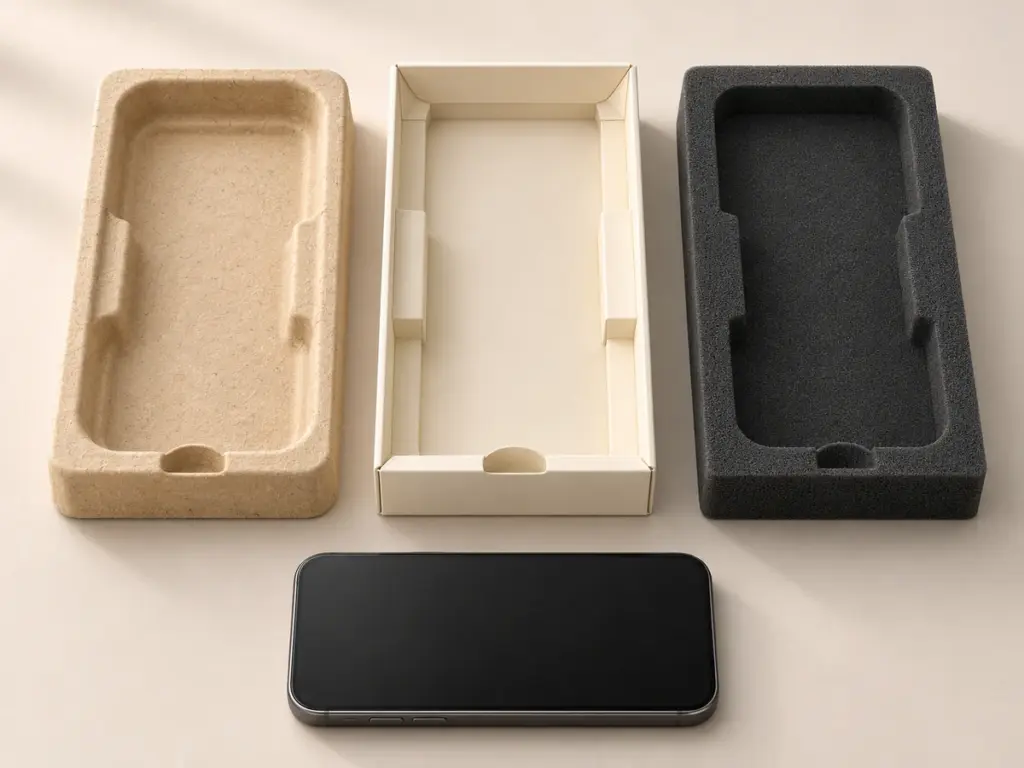
Phone packaging inserts locate the handset, define its contact points and organize the space around it. Polpa moldada, folded paperboard and foam offer different ways to build that support. Choose between them using the actual device, accessory arrangement, packing process and complete delivery configuration.
Use molded pulp when a formed fiber tray matches your material brief; paperboard when folded supports and compartments fit the layout and packing process; and foam when a specified grade and recess construction meet the support requirements. Compare each proposed design with the same handset and accessory set, then confirm it with a loaded sample.
For the complete box, accessory and purchasing brief, start with our mobile phone packaging guide.
What Should a Phone Packaging Insert Do?
Begin with the support and access requirements. The insert should position the handset in the approved orientation, keep accessories in their assigned spaces and allow the customer to remove the phone without forcing the device or tearing the tray.
Give the supplier a device drawing that identifies maximum dimensions, camera projection and any protective film or sleeve used during packing. Mark surfaces that need clearance, including buttons and exposed camera areas. Then agree where the device will be supported and where a finger opening or pull feature should sit.
Review four relationships before selecting a material:
- Phone to insert: cavity size, support points, profundidade e acesso de remoção.
- Insert to box: how the tray sits, stays located and clears the lid or cover.
- Accessories to handset: separation, compartment depth and the order of access.
- Retail pack to shipping pack: how the loaded retail box works with its proposed outer protection.
Molded Pulp vs Paperboard vs Foam: What Changes?
Compare the proposed cavity, contact surfaces, assembly and quotation scope for the same device. Use the following decision points to request equivalent specifications.
| Decision point | Polpa moldada | Folded paperboard | Espuma |
|---|---|---|---|
| How the support is formed | A formed fiber tray with cavities and support surfaces | Cut and creased panels assembled into supports and compartments | A specified foam construction with a cut or otherwise formed recess |
| Specification to request | Fiber formulation, acabamento superficial, cavity geometry and tray thickness | Nota do conselho, grossura, cut pattern, folds and any adhesives or coatings | Foam type, densidade, grossura, cavity method and any liners or bonded layers |
| Setup and tooling question | Which forming tools and sample stages are included? | Which cutting tools and structural samples are included? | Which cutting method, tools and assembly steps are included? |
| Packing-line question | How are trays separated, inserted and located? | How many folds, tabs or assembly operations are needed? | Is the insert supplied complete or installed in separate layers? |
| Surface-contact check | Check the actual formed surface and contact points | Check cut edges, folds and any exposed joints | Check the selected grade, cut surface and any facing material |
| Change to another phone model | Review whether the formed geometry or tooling must change | Review the cut pattern, supports and compartment positions | Review the cavity, support depth and layer arrangement |
Ask each supplier to quote against the same quantities and contents. Include sample charges, preparation, conjunto, empty-pack delivery format and any accessory packaging. A difference in one tray price may reflect a different scope.
Inserções de polpa moldada: Forma, Surface and Tooling
A molded pulp phone tray uses a formed fiber structure to create the handset recess and surrounding support areas. Ask for a proposal showing the cavity, side walls, underside and any accessory spaces. The top view alone leaves important support details unseen.
Discuss the finish of the surfaces that touch the handset or protective sleeve. Review a representative material sample, then check the formed production proposal with the device loaded. Specify the required appearance rather than assuming every fiber tray has the same texture or color.
The questions to resolve include:
- Where does the tray support the handset, and where is clearance provided?
- How are the camera projection and rounded corners accommodated?
- Can the phone be lifted out without pushing against a delicate feature?
- What tools, sample stages and geometry changes are included in the quotation?
- How will trays be supplied and handled at the packing station?
Shortlist molded pulp when a formed fiber tray matches the material brief and the required layout. Confirm the whole assembly, including any liner or coating, before describing the finished insert.
Inserções de papelão: Folded Supports and Compartments
A paperboard phone insert can use folded platforms, side supports, tabs and dividers to locate the device. Separate folded sections can also create accessory compartments or support a handset above a lower layer.
Ask to see both the assembled tray and its cut-and-fold drawing. Follow the packing sequence from flat components to a loaded box. Count the folds and insertion steps, and check whether a worker can recognize the correct orientation easily.
Pay particular attention to the edges that face the phone. Cut edges, tab ends and adhesive positions belong on the sample review. Specify where the board should contact the device and where the construction needs relief or a protective interface.
For a multi-model range, compare whether one outer box can accept several insert patterns. A shared box can simplify one part of the packaging range, while each insert still needs a clear model identifier and a confirmed fit.
Shortlist paperboard when the folded construction can deliver the required layout and the packing team can manage the assembly. Establish that through the sample and packing trial rather than a blanket assumption about paper strength.
Foam Inserts: Specify the Grade and Recess Construction
A foam phone insert needs a material specification as well as a cavity drawing. Ask which foam is proposed, its density and thickness, how the recess is made and whether the insert includes separate layers, adhesive or a facing material. Those details affect what the quotation and sample represent.
Inspect the handset cavity with the actual product. The support should follow the approved layout without loading buttons or the camera projection. Check the base beneath the phone as well as the side walls. Where a lining or decorative surface is added, review the finished combination.
Also examine how the insert attaches to or sits within the box. A tray that lifts out with the handset changes the customer’s removal experience. Multiple pieces should have an agreed installation sequence and a consistent final position.
Shortlist foam when the proposed grade and construction suit the support and presentation requirements. A dark color or a neat recess is an appearance detail; it does not establish a material grade or a tested delivery result.
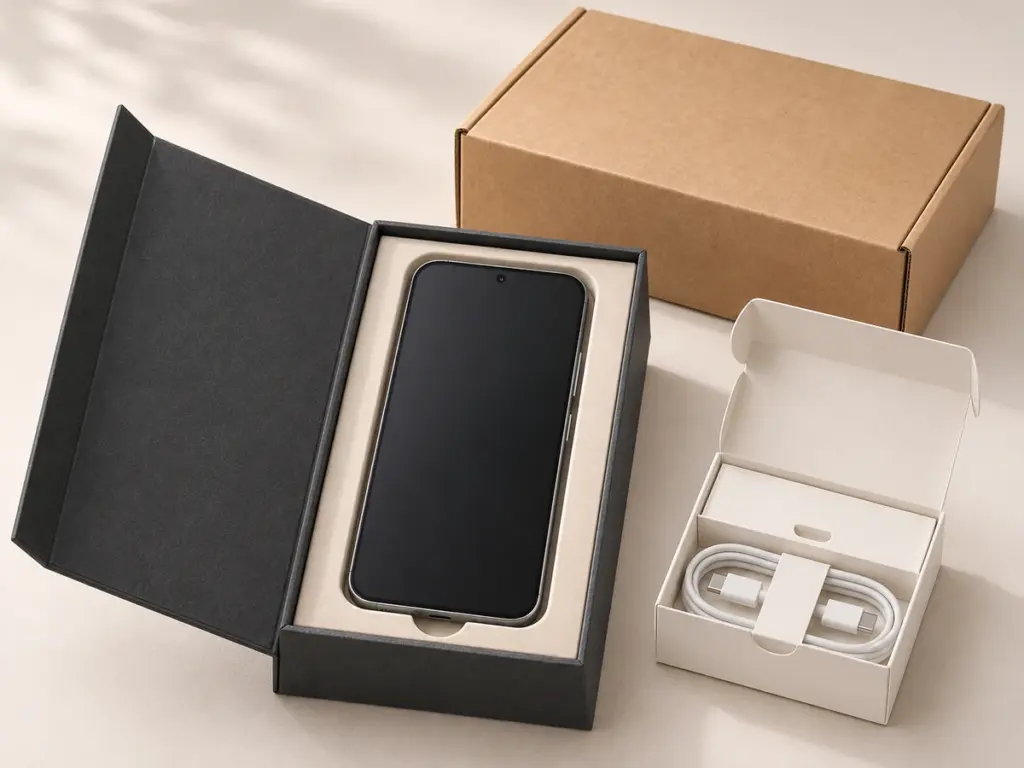
Product Example: A Recessed Insert in a Magnetic Phone Box
Pack Packaging’s magnetic phone box with a fitted handset recess shows how an insert can organize the presentation beneath a hinged cover. The product page leaves the final insert material and construction to the project quotation and sample.
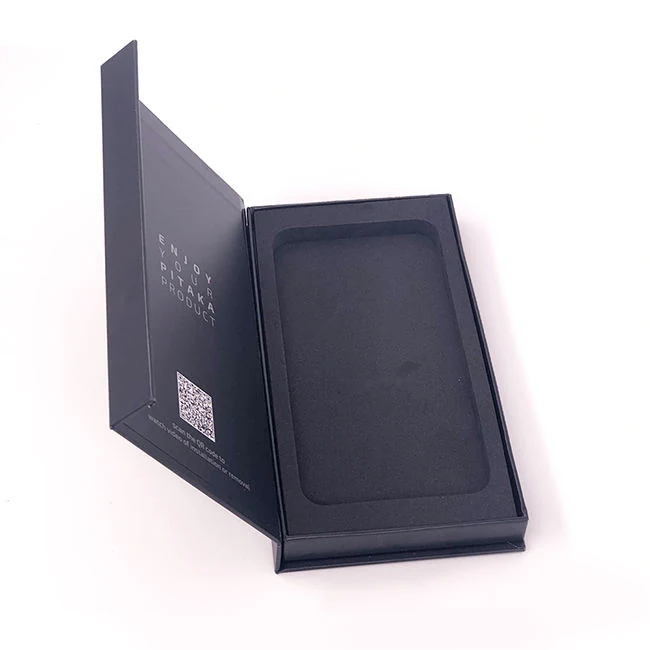
Use the example to discuss the layout, then specify your own cavity dimensions, camera clearance and removal method. If the pack also holds a charger or cable, develop the accessory spaces and overall box depth together.
Compare Inserts with the Same Loaded-Sample Checks
Review each material option with the same handset, protective film, accessories and box. Agree the acceptance criteria before approval so that observations can be recorded consistently.
| Verificar | O que observar | O que gravar |
|---|---|---|
| Loading | How the phone reaches its intended position | Any forced insertion, interference or unclear orientation |
| Contact and clearance | Support around the device, buttons and camera area | Contact locations and changes required in the drawing |
| Removal and replacement | Use of a finger opening or pull feature | Whether the insert stays seated and can be used again as intended |
| Accessories and closure | Compartment separation and the closed box | Any contact, bulging, cover misalignment or displaced contents |
| Packing operation | Insert installation, product loading and label placement | Etapas de montagem, orientation cues and packing instructions |
| Delivery configuration | The product and insert inside the proposed retail and shipping pack | Test configuration, agreed evaluation and resulting observations |
ISTA explains that its procedures evaluate a specific packaged product, rather than certifying an isolated packaging material. Apply that distinction when comparing inserts: the selected tray is one part of the complete loaded configuration.
If a material or cavity changes after approval, identify the affected drawings and checks. Retain the sample version and material specification so the next order can be compared with the same reference.
What to Send for a Phone Packaging Insert Quotation
A detailed insert brief helps the supplier propose a construction instead of guessing from a photograph. Incluir:
- Device information: dimensões máximas, peso, camera and button locations, photos and an available physical sample.
- Packed condition: protective film, sleeve or other component that remains on the phone.
- Box details: internal dimensions or a confirmed drawing, opening style and required presentation depth.
- Acessórios: a measured contents list and the intended compartment layout.
- Material requirements: materials to compare, appearance references and any documented sourcing or composition requirement.
- Order scope: quantities per model, packing location, sample requirements and destination.
Ask the quotation to identify tooling, escopo da amostra, grau de material, supply format and installation work. Pack Packaging’s packaging inserts and accessories page can be used to begin a component discussion.
Perguntas frequentes
Can a paperboard insert hold a phone securely?
It can be developed with folded supports and locating features for that purpose. Confirm the actual support geometry, board specification and loaded fit in the proposed box.
Does a new phone model require new tooling?
That depends on the dimensions, camera position and chosen manufacturing method. Ask the supplier which parts of the cavity or cut pattern change and how those changes affect preparation and sampling.
Which insert material is cheapest?
There is no useful universal ranking without a specification. Compare the same layout and quantity, including preparation, conjunto, delivery format and any liners or accessory parts.
Can foam be replaced with molded pulp or paperboard?
The layout can be reviewed for a replacement design. Rework the support geometry and repeat the affected fit and delivery checks with the proposed material rather than swapping materials into an unchanged specification.
Is a paper-based insert automatically plastic-free?
The label alone does not establish the composition of the finished assembly. Check any coatings, forros, adhesive and additional components against the agreed material requirement.
Develop the Insert and Phone Box Together
Comece com o custom magnetic mobile phone packaging box as a layout reference, then share your phone measurements, accessory list and material preferences. Confirm the box depth and insert as one assembly.
Use um structural sample review to check support points, removal access and the complete packed arrangement before approving the production specification.