Pular para o conteúdo

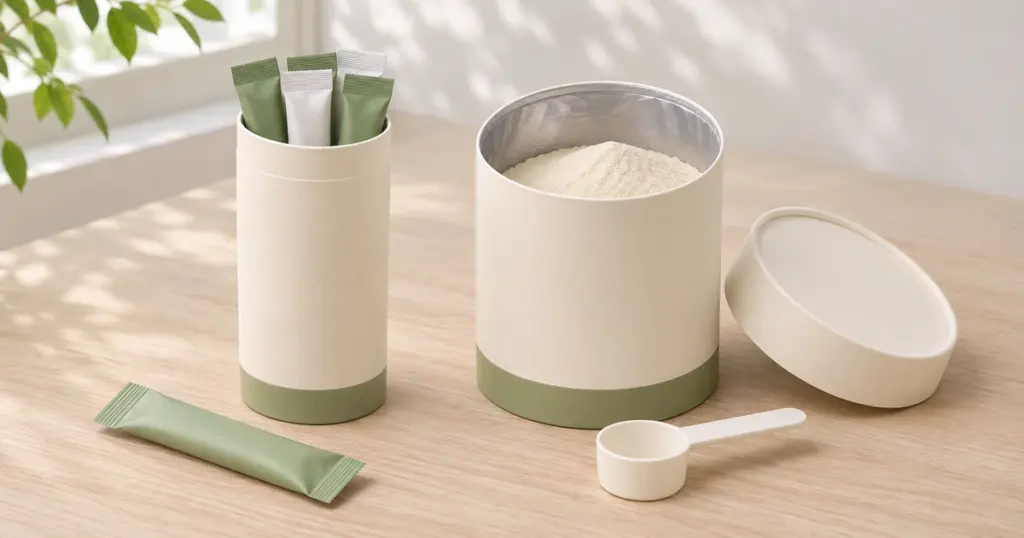
Paper tubes for powdered supplements can hold sealed single-serve sachets or serve as the primary container for loose powder. Choose the filling route before approving the tube. It determines which materials touch the powder, how the pack is sealed and what you need to validate before production.
Resposta rápida
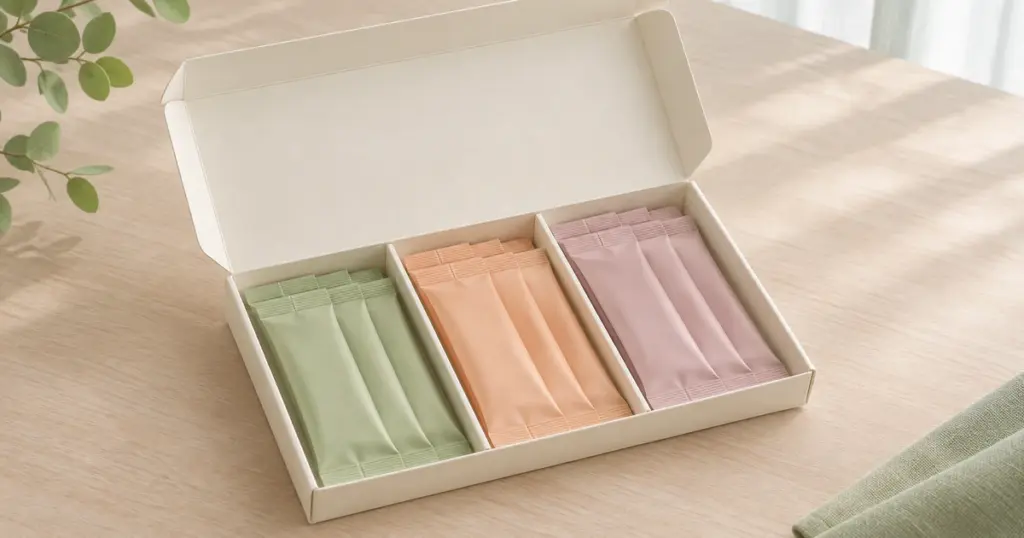
- Sealed sachets. The sachet holds the powder. Sample the outer tube with the full count of filled sachets and check loading, lid fit and first-sachet removal.
- Direct-fill powder. Especifique o forro, side seam, base and initial seal as a complete package. Trial it with the actual powder on the intended filling line and agree on the shelf-life validation plan.
- If both formats are possible. Compare the complete filled pack, including primary materials, filling labor, tooling and shipping, for the same serving count.
Sealed sachets and direct-fill tubes compared
| Decision | Sealed sachets inside a paper tube | Powder filled directly into a lined tube |
|---|---|---|
| Product contact | The sachet and its seals form the primary pack. Confirm the sachet specification with the filling partner. | Identify the liner, base, initial seal and any other surfaces that can contact the powder. Request documentation for the intended use and market. |
| Size input | Use the dimensions and thickness of the filled sachets, plus the quantity and loading arrangement. | Use target net weight, the powder’s bulk density under relevant filling conditions, filling equipment limits and any scoop or headspace requirement. |
| Encerramento | Check that the lid stays on during distribution. After opening, remova uma saqueta sem prender as bordas seladas. | Especifique o selo inicial para distribuição e a tampa para uso repetido. Verifique se o parceiro de enchimento pode aplicar o selo escolhido. |
| Aprovação de amostra | Carregar a contagem planejada, assentar a tampa, e retire a primeira e a última saquetas. Inspecione quanto a fricção e danos após o manuseio. | Execute um teste de preenchimento e vedação. Verifique se há pó na superfície de vedação, integridade da vedação e abertura repetida. Concordar em testar o pacote preenchido completo. |
Exemplo prático para um lançamento em pó de 30 porções
Considere uma marca comparando 30 selado 10 g sachês com um 300 g tubo de enchimento direto. Ambos os formatos têm o mesmo peso nominal de pó. Os resumos de amostra são diferentes.
A opção A usa 30 saquetas seladas
Enviar 30 sachês cheios de produção e confirme se o operador os carrega em pacotes ou um de cada vez. Peça a abertura clara, diâmetro interno utilizável e altura útil fechada. Fechar a amostra na contagem completa e retirar uma única saqueta sem levantar o pacote. Se a tampa parar antes de sua posição assentada, verifique se os sachês cheios ou as vedações das extremidades empilhadas entram em contato com ele. Veja o dimensionamento da contagem completa e as verificações de acesso em nosso guia para tubos de papel para embalagens de suplementos.
A opção B usa um tubo de enchimento direto
Se a equipe de enchimento medir uma densidade aparente de enchimento de 0.55 g/mL para este exemplo, 300 g ocupa aproximadamente 545 mL do volume de pó (300 ÷ 0.55). Use isso como uma estimativa inicial. Meça a altura de enchimento no equipamento pretendido e confirme o espaço necessário para variação de enchimento, a vedação inicial e qualquer furo antes de especificar a capacidade utilizável do tubo.
Nas primeiras amostras preenchidas, procure pó na superfície de vedação e verifique se a vedação permanece intacta durante o manuseio planejado. Concordar com as verificações de armazenamento e uso da fórmula real, incluindo quais alterações no pó ou na embalagem seriam consideradas uma falha.
Escolha qual formato desenvolver com base em como o produto será utilizado e o que a equipe de envase pode executar. Doses seladas individuais cabem em um briefing portátil de uso diário. Um tubo de enchimento direto é adequado para um briefing que exige a distribuição de um recipiente, desde que a equipe possa validar o preenchimento, vedação e abertura repetida. Compare os custos por unidade de varejo de 30 porções, uma vez que cada design atenda aos seus próprios requisitos.
Especifique o revestimento e sele juntos
Peça ao fornecedor para identificar o revestimento e fornecer quaisquer dados relevantes da barreira com suas condições de teste. Use film data to assess the liner and use filled-pack testing to assess the seams, base and applied closure together. For U.S. projetos, review the food-contact documentation against the actual material and its intended conditions of use. Veja o FDA guide to determining the status of food-contact materials.

A foil-lined construction is one option to discuss for a moisture-sensitive product. Ask for the liner and closure construction for your formula and distribution conditions. Veja nosso foil-lined paper tube options.
What to send for a powder packaging quote
Enviar the fill format, serving count or net fill weight, quantity per SKU and delivery destination. Para saquetas, include filled dimensions and count per tube. Para preenchimento direto, include bulk-density or fill-trial data, the intended sealing equipment, the target storage conditions and any scoop requirement.
If you are also considering a folding carton for sealed sachets, revisar o supplement packaging guide for tubes and cartons. When your fill format is set, send your powder packaging specifications for a quote.