
Buyers orderparede dupla ondulada far more often than their products actually need it, and that habit costs real money — a material premium on every unit, plus fewer boxes per container on every single shipment afterwards.
So let’s work through when each construction genuinely earns its cost. Because the honest answer, for a lot of loads, is that single wall handles it perfectly well.
Obtenha orçamento de embalagem personalizada →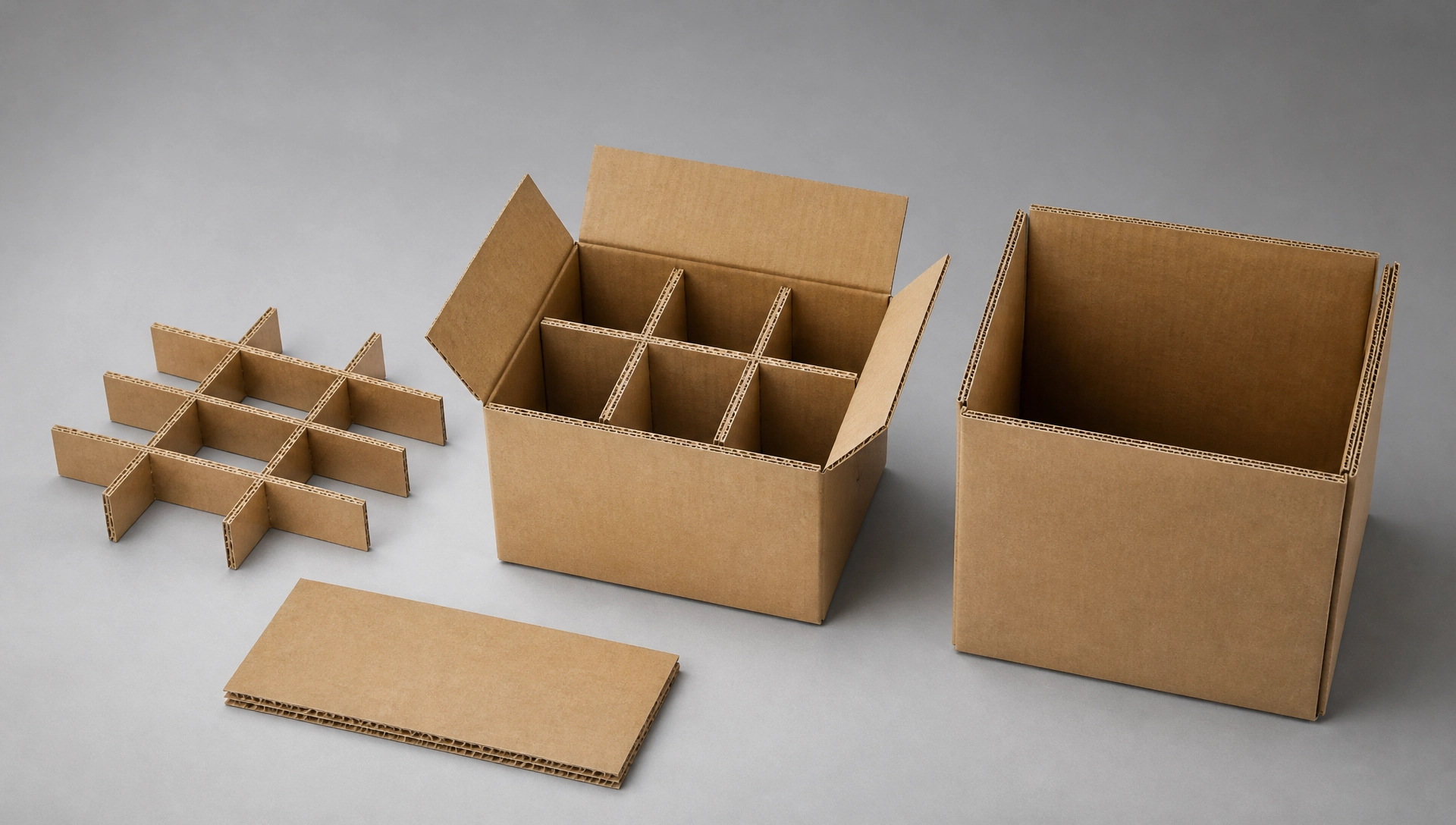
What Is Double Wall Corrugated Board?
The Three Constructions
Single wall uses one fluted medium between two liners, whereas double wall corrugated builds on that.Double wall corrugated adds a second flute and a middle liner, giving five papers total. Triple wall stacks three flutes with four liners, and it exists for genuinely heavy industrial work.
What the Extra Layer Actually Does
The second flute adds compression resistance and puncture protection. Consequently boxes stack higher and survive rougher handling. However — and this matters — it does not automatically make a weak specification strong.
Thickness Is the Hidden Cost
Every added layer increases board thickness. Therefore fewer flat blanks fit on a pallet, and fewer assembled boxes fit in a container. That penalty repeats on every shipment for the life of the programme.
Why the Decision Feels Risky
Nobody gets fired for over-specifying. Francamente, that’s the whole problem: buyers default upward because failure feels more visible than waste, even though waste costs more over time.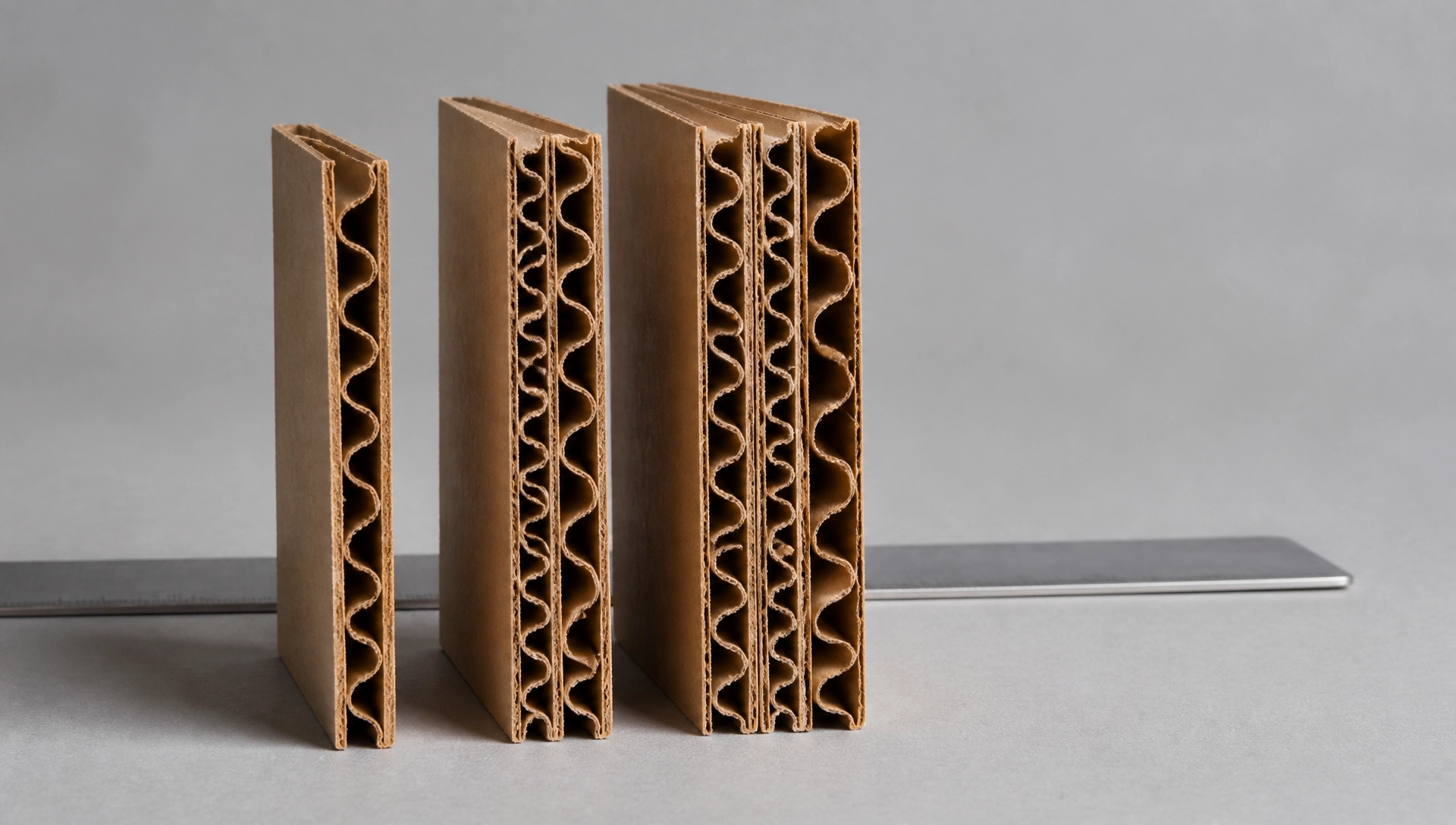
Common Applications for Double Wall Corrugated and Alternatives
Different loads genuinely need different constructions:
- Single wall — E-commerce parcels, vestuário, exteriores de cosméticos, food cases, and most single-trip distribution.
- Double wall — Export cases, heavier unit weights, tall pallet stacks, and multi-leg journeys with repeated handling.
- Triple wall — Machinery parts, industrial components, bulk agricultural produce, and anything approaching crate territory.
Notably, plenty of buyers runningparede dupla ondulada across their whole range could drop half those SKUs to single wall without any performance change. That audit is usually worth doing.
Material Options for Double Wall Corrugated Board
Liner Choices
Kraftliner delivers higher tensile strength and holds up better in humidity, whereas testliner uses recycled fibre and costs less. Nossoclasses de papelão ondulado guide compares both in detail.
The Fibre Trade
Here’s something counterintuitive: upgrading liner fibre on single wall sometimes outperforms staying with cheaper fibre onparede dupla ondulada. Additionally it keeps the board thinner, which protects your container fill.
Meio Canelado
Semi-chemical medium gives better compression recovery, while recycled medium costs less and suits lighter loads. In double wall the two mediums need not match, so you can specify each layer for its job.
Moisture Sensitivity
Board moisture sits between roughly 6.5% e 9.5%. Above that range compression strength drops away — and importantly, parede dupla ondulada loses strength in humidity too. Extra layers do not make a box waterproof.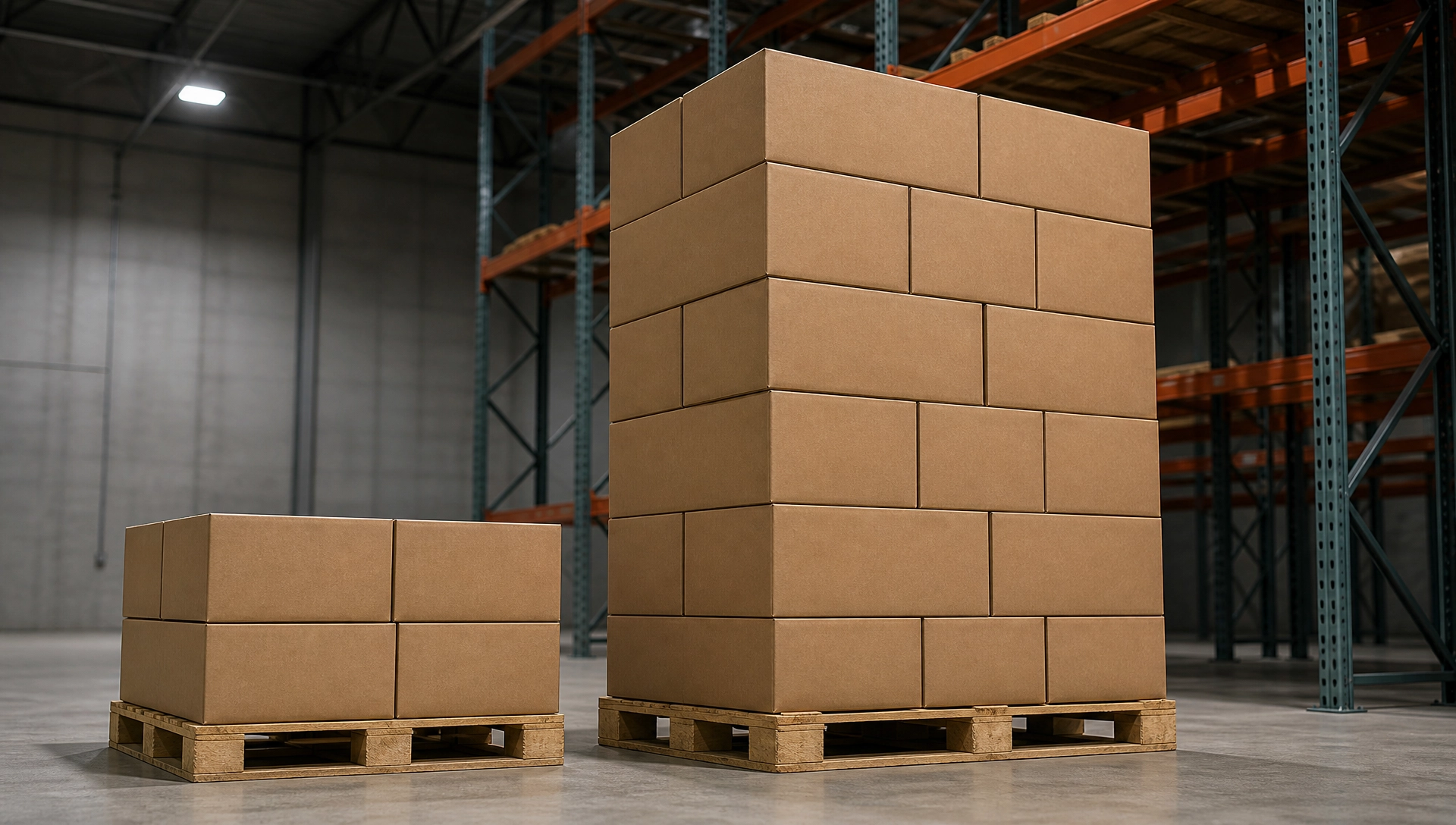
Opções de estrutura: How Double Wall Corrugated Combines
Common Double Wall Pairings
- AC — The workhorse. B’s flat crush resistance with C’s cushioning; padrão para caixas de transporte mais pesadas.
- BE — Fine outer for print quality, B abaixo para força; popular on retail-ready shippers.
- AC — Maximum cushioning and stack height for tall bulky loads.
- EE — Two micro layers giving rigidity without much bulk.
Nossotipos de flauta ondulada guide explains each profile with real dimensions.
Triple Wall Combinations
Where double wall corrugated stops, triple wall begins: it typically pairs three different profiles, often something like AAC or BAA depending on whether cushioning or stiffness dominates. It behaves closer to a wooden crate than a carton.
Box Style Interactions
Full overlap flaps double panel thickness at top and bottom, which sometimes delivers what buyers hoped to get from an extra wall. De forma similar, a well-designed insert transfers load away from the walls entirely.
Produtos Relacionados: Caixas de transporte onduladas / Caixas dobráveis / Inserções & Partições
The Cheaper Alternative Nobody Suggests
Before moving toparede dupla ondulada, try partitions or a heavier single wall grade. Both often solve the problem for less, and neither costs you container volume the way an extra flute does.
Printing and Finishing on Double Wall Corrugated
Surface Behaviour
Print quality depends on the outer liner and outer flute, not on how many walls sit underneath. Entãoparede dupla ondulada prints roughly as well as single wall using the same outer combination.
Lavagem
Flute lines telegraph through under heavy ink. Using a fine outer profile like E in an EB construction reduces it noticeably, though nobody eliminates it entirely.
Métodos de impressão
Flexographic printing suits every construction and stays economical at volume. A laminação litográfica oferece qualidade fotográfica. Digital removes plate costs for short runs and versioned artwork.
Creasing and Folding
Thicker board needs deeper creases and wider fold allowances. Consequently a dieline drawn for single wall will not simply transfer to double wall — the tooling genuinely differs.
Conformidade e Sustentabilidade
Material Weight
Wall count directly affects material weight, which matters for EPR reporting. Veja nossoConformidade de embalagens EPR guide for component reporting requirements.
Fibra Certificada
FSC chain of custody applies to every layer. NossoEmbalagem de papel certificada FSC guide explains how documentation flows through.
Contato Alimentar
Where board contacts food directly, Regulamento da UE (CE) Não 1935/2004 aplica-se juntamente com as BPF ao abrigo do Regulamento (CE) Não 2023/2006. FEFCO publishesGMP standards for corrugated food packaging specifically.
O 2026 Calendário
O PPWR se aplica a partir de 12 Agosto 2026 em toda a UE. Entretanto, as obrigações do EUDR recaem sobre 30 dezembro 2026 para grandes e médias operadoras, então 30 Junho 2027 para micro e pequenas operadoras.
Right-Sizing Is the Real Win
Dropping unnecessary layers reduces material genuinely. Nossoembalagem de papel reciclável guia cobre redação de reivindicação defensável.
How to Choose Double Wall Corrugated: Etapas 1–3
Etapa 1: Send the Load Data
Primeiro, compartilhar dimensões internas, peso do produto, and units per case. Internal measurements matter most, since external dimensions cause fit failures more than anything else.
Etapa 2: Describe the Stack
Próximo, tell us pallet stack height, duração do armazenamento, umidade, e porto de destino. Stacking is where single wall versusparede dupla ondulada actually gets decided.
Etapa 3: Test Before Committing
Then let us sample both constructions. Handling two physical boxes settles the argument faster than any specification discussion — and it occasionally saves buyers a great deal.
Amostragem, Quantidade mínima e prazos de entrega
Etapa 4: Compare Physically
We produce unprinted structural samples in each construction so you can load them and compare. Nossofluxo de trabalho do projeto de embalagem personalizada cobre todas as oito etapas com tempos realistas.
Etapa 5: Verificação
Verificações documentadas são executadas desde a entrada do conselho até a inspeção final. Veja nossoprocesso de controle de qualidade sobre como os registros são compilados.
Termos Comerciais
MOQ typically starts around 1,000–3,000 units depending on construction and print method. Os prazos de entrega geralmente são de 15 a 30 dias após a aprovação da amostra, além de ferramentas onde o corte e vinco se aplica.
Requisitos de arte
Enviar IA, EPS, ou PDF de alta resolução em nossa linha com referências Pantone e sangramento de 3 mm. Remember that double wall dielines differ from single wall, so use the correct one.
Por que escolher a embalagem Pack
Escala de Fabricação
- 20,000㎡ fábrica - Impressão, corte e vinco, laminação, e montagem sob o mesmo teto.
- 2,000㎡ oficina de qualidade alimentar — Área limpa separada para produção em contato com alimentos.
- 10,000,000+ capacidade mensal — Piloto executa programas de contêineres sem mudar de fornecedor.
Suporte de Engenharia
- 20+ designers internos — Projeto estrutural e linhas de dielines, nunca terceirizado.
- Projeto estrutural gratuito — Dielines e protótipos 3D antes de você se comprometer.
- Gerenciamento de cores mestre G7 — Consistência mensurável em todas as execuções de produção.
- ISO 9001 e certificado FSC — Documentação fornecida com cada pedido.
Uma nota honesta
We lose margin every time we talk a buyer down from parede dupla ondulada to single wall. We do it anyway, because a customer who trusts our recommendations orders for years — whereas one who discovers they overpaid for a decade does not.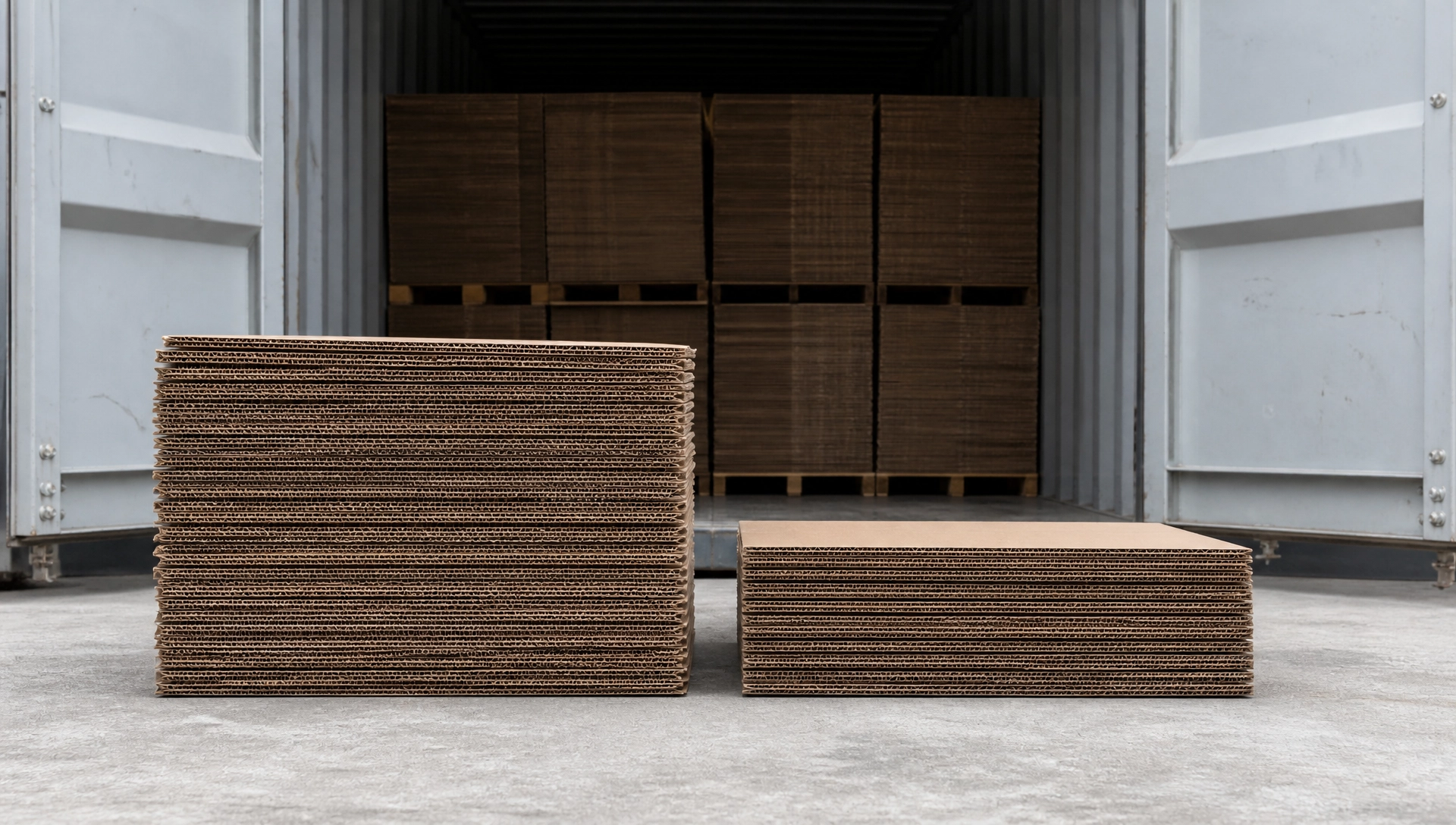
Perguntas frequentes: Choosing Double Wall Corrugated
1º trimestre: Is double wall twice as strong as single wall?
Não. The relationship is not linear, and actual performance depends on flute pairing, liner grades, and box dimensions. Send your load data and we will model it properly.
2º trimestre: When do I genuinely need double wall corrugated?
Typically for heavier unit weights, tall pallet stacks, long humid storage, or multi-leg export journeys with repeated handling. Single-trip parcel shipping rarely justifies it.
3º trimestre: Can heavier single wall replace double wall?
Muitas vezes, sim. A stronger liner combination on single wall sometimes matches lighter double wall while staying thinner — which protects your container fill.
4º trimestre: Does triple wall replace a wooden crate?
Sometimes. It handles heavy static loads well and avoids ISPM 15 timber treatment requirements entirely, though it dislikes repeated impact.
Perguntas frequentes: Custo e Logística
Q5: How much more does double wall cost?
More material, slower corrugator speeds, and thicker board reducing container fill. The unit price difference understates the total cost — ask for a landed comparison instead.
Q6: Will switching to single wall increase my damage rate?
Not if the specification suits the load. That is precisely why we sample both constructions before you commit to volume.
Q7: Can you audit my existing specifications?
Sim. Send current samples and volumes, and we will identify which SKUs are over-specified. Buyers frequently find several.
P8: O que você precisa para uma cotação precisa?
Dimensões internas, peso do produto, volume mensal, porta de destino, e obras de arte. That combination lets us specify properly rather than quoting a placeholder.
Guias Relacionados
- Caixas de papelão ondulado: Guia de especificações B2B — O tabuleiro completo, estilo, e estrutura de conformidade.
- Tipos de flauta corrugada explicados - Um, B, C, E, F e perfis combinados com dimensões.
- Classes de papelão ondulado — Liner, medium, and grade combinations explained.
- Conformidade de embalagens EPR — Relatório de peso dos componentes por material.
- Processo de Controle de Qualidade — Inspeção desde a entrada da placa até o AQL final.
Explore nossa linha de embalagens
- Caixas de papelão ondulado — Casos de envio, mailers, e embalagens de exportação.
- Caixas dobráveis — Caixas leves para varejo.
- Caixas Rígidas — Caixas premium para presentes e apresentações.
- Inserções e Acessórios — Partições, almofadas, e acessórios personalizados.
- Tubos de papel — Embalagem cilíndrica para beleza, comida, e presentear.
Ready to Right-Size Your Board?
Here’s the pattern we see constantly: a buyer inherits aparede dupla ondulada specification nobody has questioned in years, then keeps reordering it out of caution. Meanwhile single wall would perform identically for their actual load.
Diga-nos o tamanho do seu produto, uso do produto, quantidade, e arquivo de logotipo. Our team will then recommend the right construction — and we will say plainly when a lighter one serves you just as well.
Envie-nos suas especificações → Faça um orçamento 24 Horas
Incluir: dimensões internas · peso do produto · volume mensal · porto de destino · arquivo de arte
Embalagem de pacote | 20,000㎡ Fábrica | 2,000㎡ Workshop de qualidade alimentar | ISO 9001 | Certificado FSC | Cor Mestre G7 | 60+ Mercados de exportação
Isenção de responsabilidade: Performance characteristics described are general and depend on specific board grades, flute pairings, dimensões da caixa, and handling conditions. Os números MOQ e os prazos de entrega representam valores típicos em vez de garantias. As informações regulatórias refletem fontes publicamente disponíveis em agosto 2026 e não constitui aconselhamento jurídico, então confirme suas obrigações específicas com um consultor qualificado.