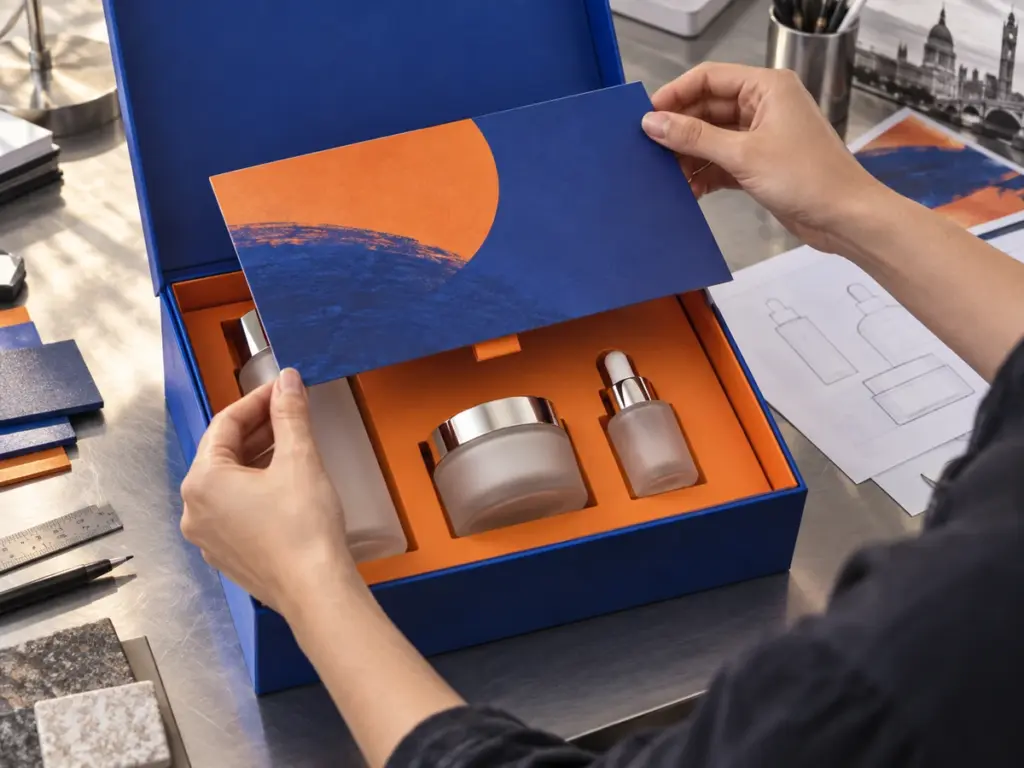
Trend articles usually waste your time, honestly. So we’ve filtered these custom packaging trends by one question: does it change what a buyer actually specifies, or is it just something that looked good on a mood board? Only the first kind made the list.
What follows splits by category, because a skincare brand and a snack brand face genuinely different pressures — one worries about shelf presence, the other about oil migration. Both, though, now face the same compliance calendar.
🔘 [Get Custom Packaging Quote →]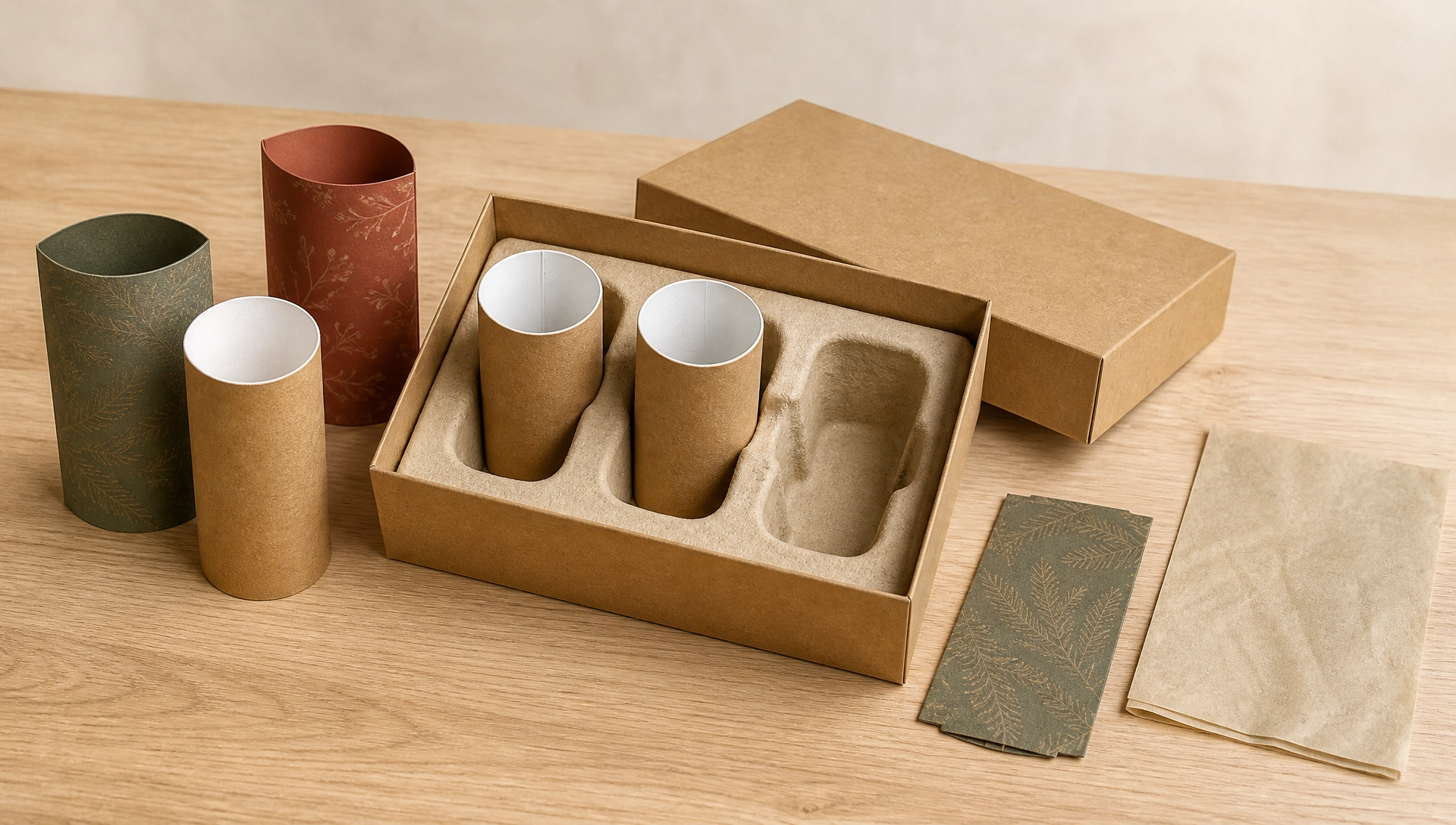
What Counts as Real Custom Packaging Trends
The Filter We Applied
A direction earns a place here if it changes a specification, a cost line, or an audit answer. Consequently, several visually interesting ideas didn’t survive — they looked distinctive yet altered nothing structural.
Three Forces Driving 2026
Regulation, plastic reduction, and shelf differentiation. Most custom packaging trends this cycle trace back to one of those three, and often to a combination.
What Isn’t Changing
Wall weight still determines perceived quality. Lid tolerance still decides whether something feels premium. Frankly, no trend replaces getting those two right first.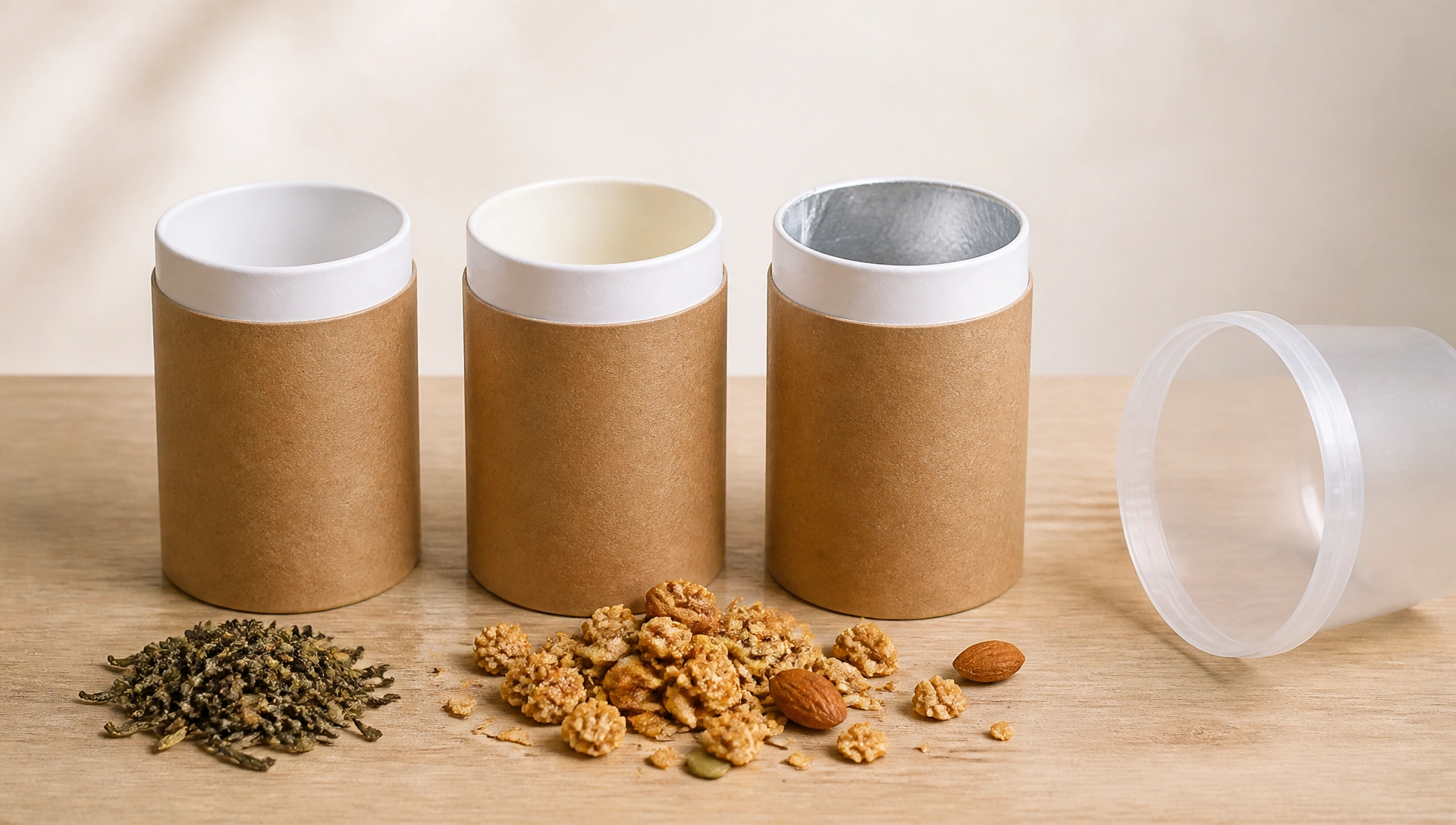
Where These Custom Packaging Trends Apply
Category shapes which direction matters, so find yours here:
- Skincare and beauty — Shelf presence and plastic removal. See our luxury paper tubes skincare case study.
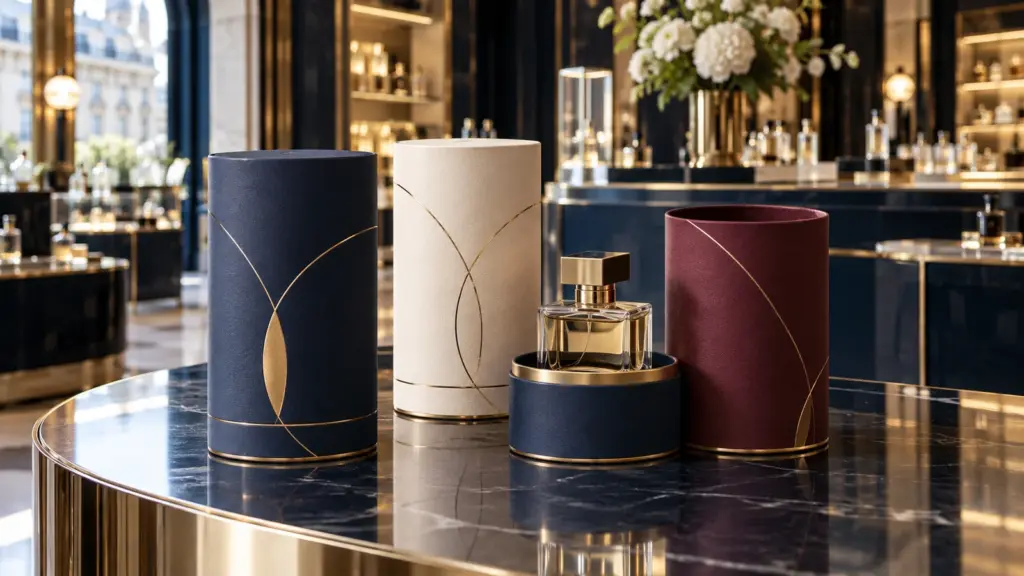
- Fragrance — Protection engineering and gifting presentation. Read the perfume paper tube packaging case study.
- Snacks and dry food — Barrier matching and compliance documentation. See the food grade paper tube case study.
- Tea and coffee — Aroma retention alongside a credible recycling story.
- Candles and home fragrance — Gifting formats and base strength.
- Gift and multi-product sets — Insert engineering and unboxing sequence.
Custom Packaging Trends in Cosmetics and Beauty
Removing Plastic Without Losing Premium
The pressure to drop plastic trays and film windows keeps rising. Moulded pulp cradles and open die-cut windows solve both, and interestingly, they often read as more considered than the plastic they replace. Our Plastic-Free Packaging guide covers a full range switch.
Texture Beating Gloss
Uncoated linen and felt stocks keep winning handling tests against soft-touch lamination. Nevertheless, they scuff more easily, so a matte aqueous coating usually comes along too.
Refill Formats Entering Mainstream
Outer keeper plus paper refill sleeve. It’s genuinely harder to engineer than it sounds, because the refill has to seat precisely every time — but among cosmetic custom packaging trends, this one has real staying power.
Cylinders Breaking the Shelf Grid
Rectangular cartons all blur together. A cylinder interrupts that rhythm, which is precisely why tube formats keep gaining share in premium skincare.
Custom Packaging Trends in Food and Beverage
Barrier Matched Rather Than Maximised
Brands are finally specifying the barrier their product needs instead of defaulting to foil everywhere. Dry biscuits don’t need it; oily nuts absolutely do. Among food custom packaging trends, this shift saves cost and simplifies recycling simultaneously.
📦 Related Products: Custom Paper Tubes / Food Packaging / Cosmetic Packaging
Paper Replacing Rigid Plastic Tubs
Snack and supplement brands keep moving from PET tubs to lined paper tubes. However, it only works when base seams and liners get engineered properly — our snack project failed its first oil test at exactly that point.
Documentation Requested Earlier
Retail buyers now ask for BRCGS and food contact declarations at quotation stage rather than pre-shipment. That’s a procedural shift, though it genuinely reshapes how projects run.
Where This Work Happens
Food-contact production needs a separated environment. See our food grade packaging workshop walkthrough for what that actually involves.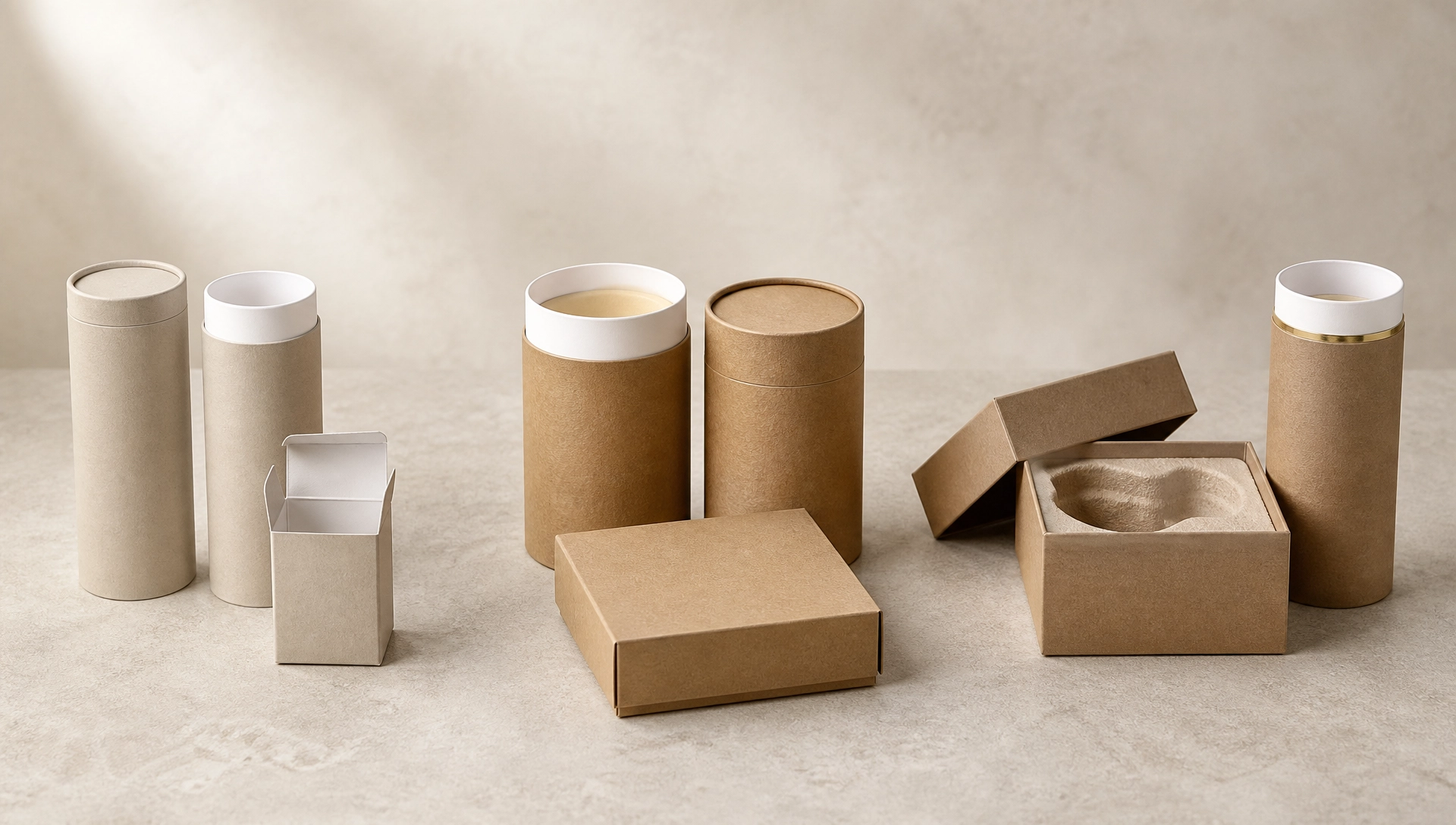
Custom Packaging Trends in Gift and Premium Sets
Unboxing as Sequence, Not Spectacle
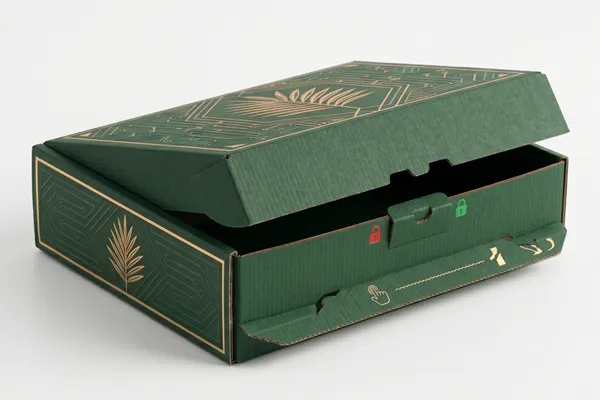
The theatrical unboxing era has cooled. Instead, brands now design a calm two-stage reveal — sleeve, then lid — that photographs well without generating waste.
Structural Inserts Over Filler
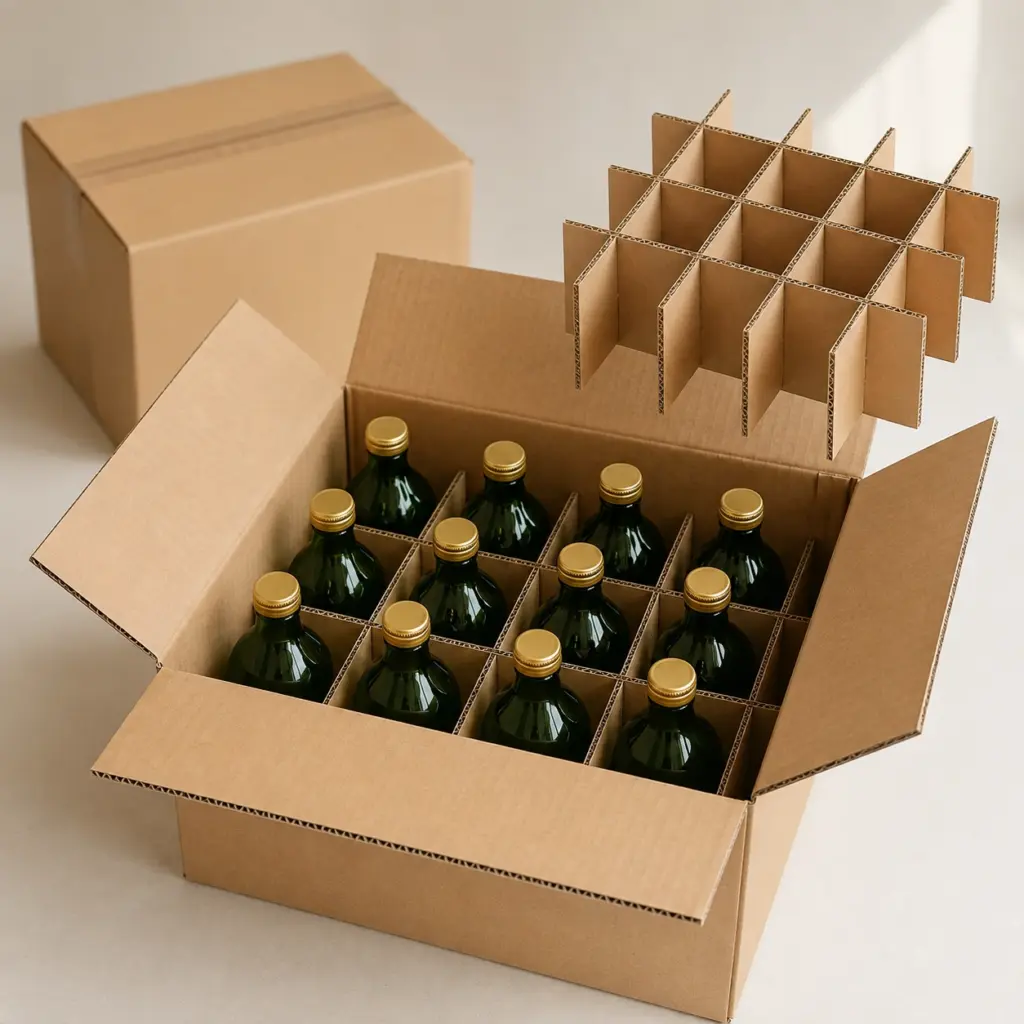
Die-cut board and moulded pulp inserts replace shredded filler and foam. They hold contents properly, and they photograph far better in a gift context.
Reusability as a Design Brief
Rigid boxes and sturdy tubes designed to be kept. Among gifting custom packaging trends, “will they keep it?” has quietly replaced “will it look expensive?” as the brief.
Modular Sleeves Across SKUs
One base structure, multiple printed sleeves. Consequently, seasonal and gift variants launch without new tooling every time.
Material Trends Across All Three Categories
What Brands Are Specifying
- Kraft paper — Still dominant for natural and artisan positioning.
- Uncoated specialty stock — Linen, felt, and textured finishes gaining fast.
- Art and coated board — Where photographic artwork carries the brand.
- Food-grade and greaseproof liners — Matched to contents rather than maximised.
- Foil liners — Retained only where aroma or fat genuinely demands it.
- Moulded pulp — Replacing vac-form and foam across all three categories.
Certified Fibre as Baseline
FSC has moved from differentiator to expectation, particularly with EU retailers. Our FSC Certified Paper Packaging guide explains chain of custody, while Biodegradable Paper Tube Packaging covers fibre construction.
Structure and Finishing Trends
Structures Gaining Ground
Telescopic lid and base, shoulder-neck reveals, sleeve over shared base, all-paper push-up, and open die-cut windows replacing film. Meanwhile, plastic-window cartons keep declining.
Finishing Moving Toward Subtraction
Two Pantone spot colours, one small foil mark, one blind deboss. That’s the direction. Gloss lamination and habitual spot UV are fading, partly for recycling reasons and partly because restraint simply reads as more confident.
Detail You Can’t Photograph
A deboss around the lower body. A slightly heavier lid disc. These never appear in renders, yet they decide whether someone thinks your product feels expensive.
More Directions
Our paper tube packaging ideas guide sets out ten specific approaches with their cost and lead-time trade-offs attached.
Compliance Driving Custom Packaging Trends
The 2026 Calendar
PPWR applies from 12 August 2026 across the EU. Meanwhile, EUDR obligations fall on 30 December 2026 for large and medium operators, and 30 June 2027 for micro and small operators. These dates drive more custom packaging trends this cycle than any design movement.
Standards Buyers Name Directly
- BRCGS Packaging Materials — Currently Issue 7.
- IFS PACsecure — Recognised across European retail.
- EU food contact — Regulation (EC) No 1935/2004, plus GMP under Regulation (EC) No 2023/2006.
- FSC chain of custody — Increasingly a baseline requirement.
- EPR — Component weights by material. See EPR Packaging Compliance.
Claims Language Tightening
Vague eco claims are getting riskier. Therefore, describe construction accurately instead — our Recyclable Paper Packaging guide covers defensible wording.
Single-Material Construction
Board, paper wrap, paper liner, paper base. It simplifies EPR filings considerably and gives you a claim you can actually defend.
Acting on These Custom Packaging Trends: Steps 1–3
Step 1: Pick the Pressure That’s Real
First, identify which force actually applies to you — an audit gap, a plastic component, or shelf invisibility. Chasing all the custom packaging trends at once produces a compromised specification.
Step 2: Send Product Context
Next, share dimensions, weight, fill type, target market, and competitive set. Context shapes the recommendation as much as the product does.
Step 3: Structure and Material Proposal
Then we recommend diameter, wall weight, liner, insert, and finish — and we’ll tell you where your budget does the most work.
Sampling Through to Production
Step 4: White Sample
An unprinted structural sample validates fit and rigidity before printing commits you. Our custom packaging project workflow guide covers all eight stages with realistic timings.
Step 5: Pre-Production Sample
Real print, real foil, real liner. Test with your actual filled product, since empty samples reveal almost nothing about migration or weight behaviour.
Step 6: Inspection and Production
Documented checks run throughout. See our paper tube quality control process for the full checkpoint list.
MOQ, Lead Time and Artwork
MOQ typically starts at 500–1,000 units. Lead time usually runs 20–35 days after sample approval, plus tooling where pulp inserts apply. Send artwork as AI, EPS, or high-res PDF on our dieline with Pantone references.
Why Choose Pack Packaging for Custom Packaging Trends
Manufacturing
- 20,000㎡ factory — Winding, printing, foiling, die-cutting, and assembly in house.
- 2,000㎡ food-grade workshop — Separated clean area with airlock and dedicated equipment.
- 10,000,000+ monthly capacity — Scaling from 5,000 units to millions without changing supplier.
Design and Support
- 20+ in-house designers — Structural engineering and dieline creation, never outsourced.
- Handling samples — Competing finishes sent to hold, because screens mislead on texture.
- Documentation — FSC records, specifications, and component weights as standard.
- 60+ export markets — Incoterms and customs handled daily.
An Honest Note
Most brands chasing custom packaging trends would get a better return from heavier board and tighter lid tolerance than from any direction on this page. Trends matter, sure. Nevertheless, a beautifully specified trend executed on a flimsy tube still feels cheap in the hand — and shoppers notice that before they notice your finish.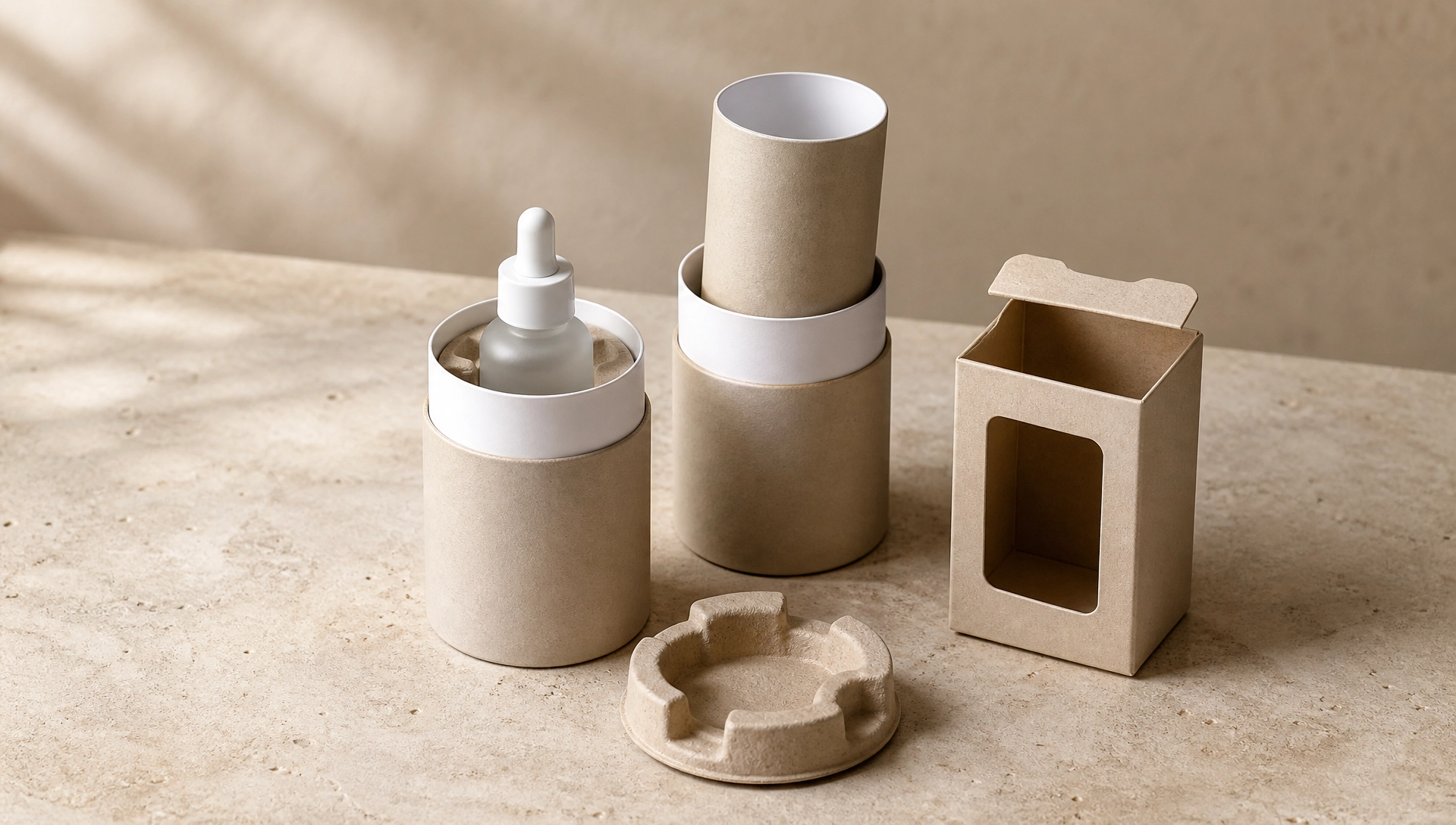
FAQ: Choosing What to Follow
Q1: Which of these custom packaging trends should we prioritise? Whichever solves a problem you already have. If a retailer audit is coming, start with documentation and certified fibre. If nobody notices you on shelf, start with structure.
Q2: Are these trends more expensive than standard packaging? Not uniformly. Barrier matching and finish restraint often reduce cost, while moulded pulp and new structures add tooling. It genuinely depends which direction you pick.
Q3: Is plastic-free realistic for food products? For dry goods, frequently yes. For high-fat or aroma-sensitive products, a barrier may still be necessary — and we’d rather protect your product than protect a marketing claim.
Q4: Do refillable formats actually work commercially? In beauty, increasingly. They need precise engineering so the refill seats reliably, though, and that adds a sampling round.
FAQ: Timing, Compliance and Sourcing
Q5: How urgent are the 2026 regulatory dates? PPWR applies from 12 August 2026, so if you sell into the EU, this affects specifications now rather than later. Compliance timing drives more decisions this year than aesthetics.
Q6: Can we apply several trends in one project? Two or three, comfortably. Beyond that, each additional variable adds a sampling round — and sampling rounds are where launch dates quietly slip.
Q7: How long does a trend-led redesign take? Allow eight to fourteen weeks from brief to delivery depending on structure, plus tooling and freight. Therefore, start earlier than feels necessary.
Q8: What do you need to start a quotation? Send your product dimensions, product use, quantity, target market, and logo file. Then we’ll advise which custom packaging trends are worth your budget and which ones we’d skip in your situation.
Related Guides
Each direction here connects to something we’ve covered in depth:
- 10 Custom Paper Tube Packaging Ideas for 2026 — Ten specific approaches with trade-offs.
- How We Control Quality for Custom Paper Tube Packaging — Inspection from incoming board to final AQL.
- Inside Our Food Grade Dust-Free Packaging Workshop — Where food-contact production runs.
- From Sample to Mass Production: Custom Packaging Project Workflow — The full eight-stage sequence.
- Luxury Paper Tubes Skincare Case Study — Shelf presence solved structurally.
- Food Grade Paper Tube Case Study — Barrier matching in practice.
- Perfume Paper Tube Packaging Case Study — Protection engineering for glass.
- Plastic-Free Packaging Ideas for Cosmetics and Skincare — Removing plastic across a range.
- Sustainable Food Packaging for Tea, Coffee and Snacks — Barrier decisions by category.
- How Paper Packaging Helps Brands Build a Greener Image — Why the switch shifts perception.
Explore More Custom Packaging Solutions
- Paper Tubes — Our dedicated collection for beauty, fragrance, food, and gifting.
- Rigid Boxes — Premium gift boxes for prestige ranges.
- Folding Boxes — Lightweight, fully customisable retail cartons.
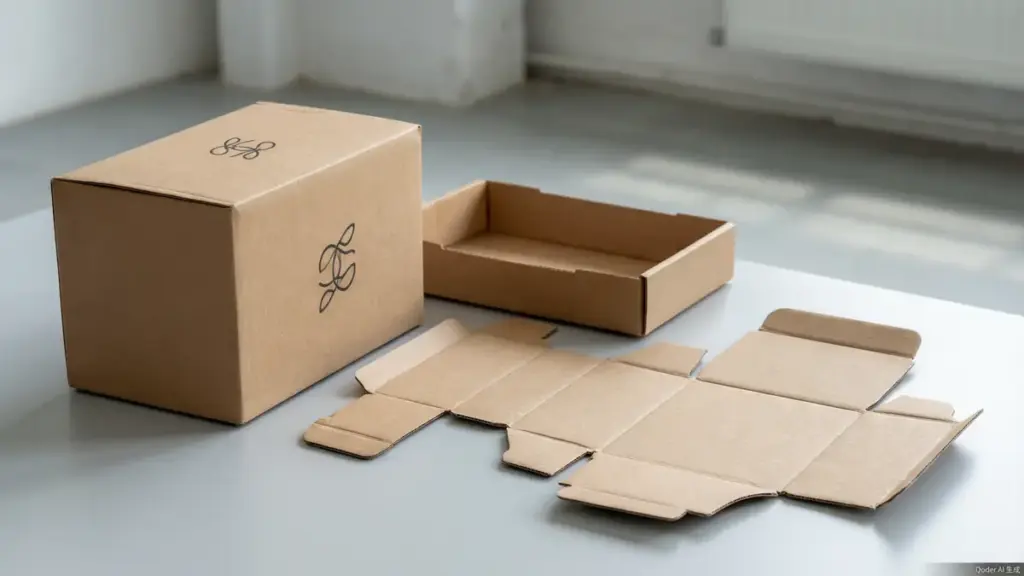
- Corrugated Boxes — Durable e-commerce and shipping packaging.
- Child Resistant Boxes — Secure packaging for regulated products.
- Accessories — Custom inserts, tissue paper, ribbons, and labels.
Ready to Choose a Direction?
Here’s the pattern we notice: brands that follow every trend end up with packaging that reflects no particular decision, while brands that pick one pressure and solve it properly end up with something distinctive. Fewer directions, executed properly, beat a catalogue of half-applied ideas every time.
Tell us your product size, quantity, logo file, and target market. Our team will then recommend the right structure, material, and finish — and we’ll be straight about which custom packaging trends aren’t worth your money.
✉️ [Send Us Your Brief → Get a Custom Quote in 24 Hours] Include: product dimensions · quantity · target market · logo file
Pack Packaging | 20,000㎡ Factory | 2,000㎡ Food-Grade Workshop | BRCGS Certified | FSC Certified Materials | 60+ Export Markets
Disclaimer: Trend observations reflect our own project experience and customer briefs rather than published market research. MOQ ranges and lead times represent typical values, not guarantees. Regulatory information reflects publicly available sources as of August 2026 and does not constitute legal advice, so confirm your specific obligations with a qualified advisor.