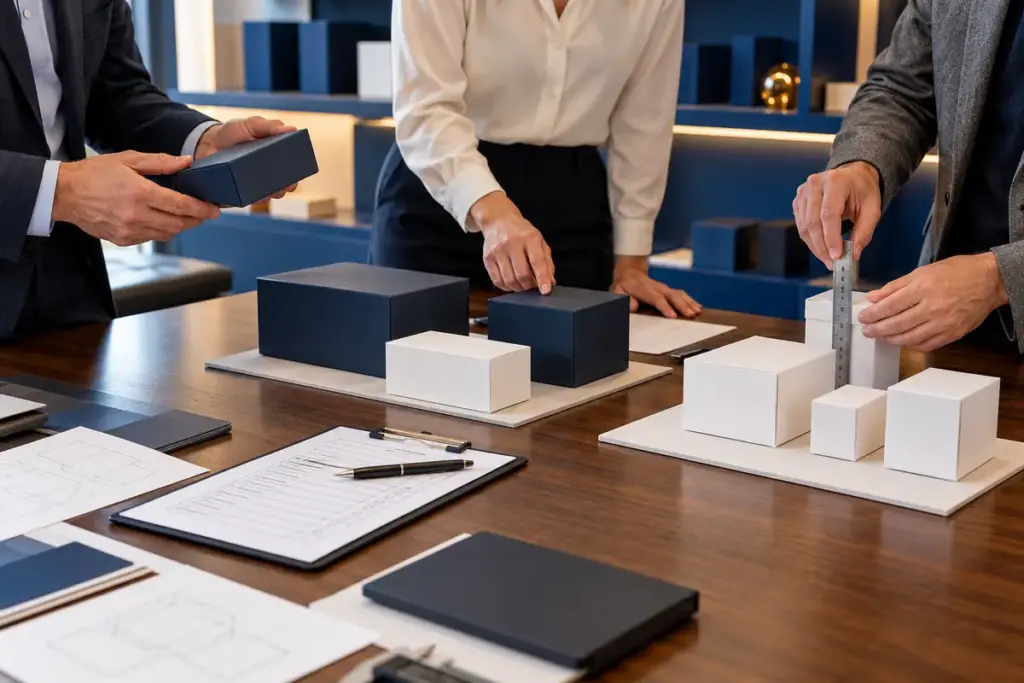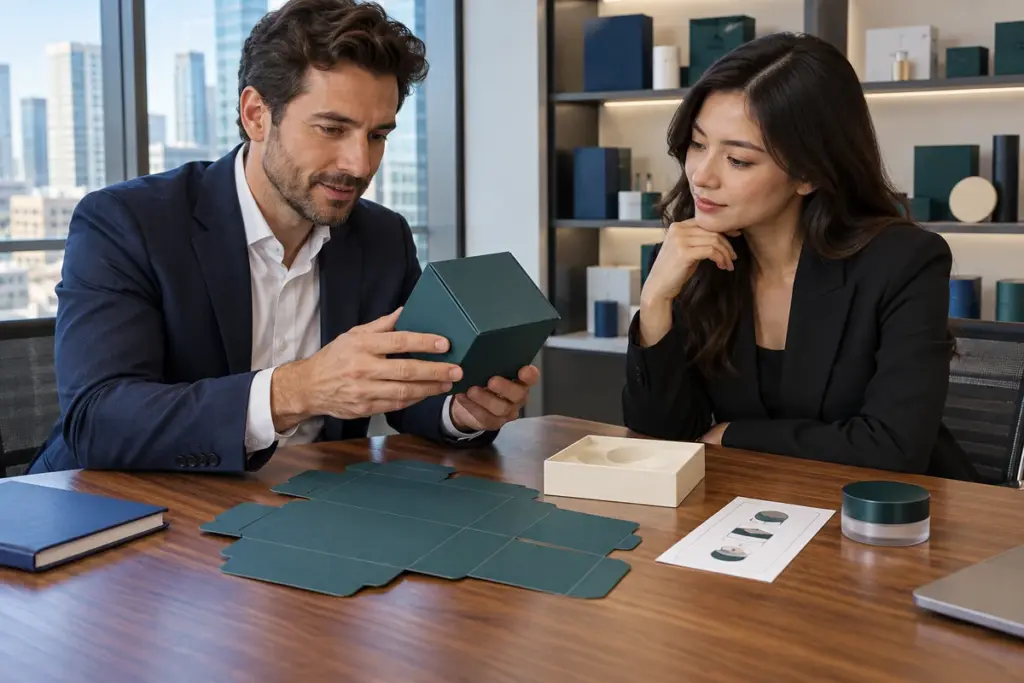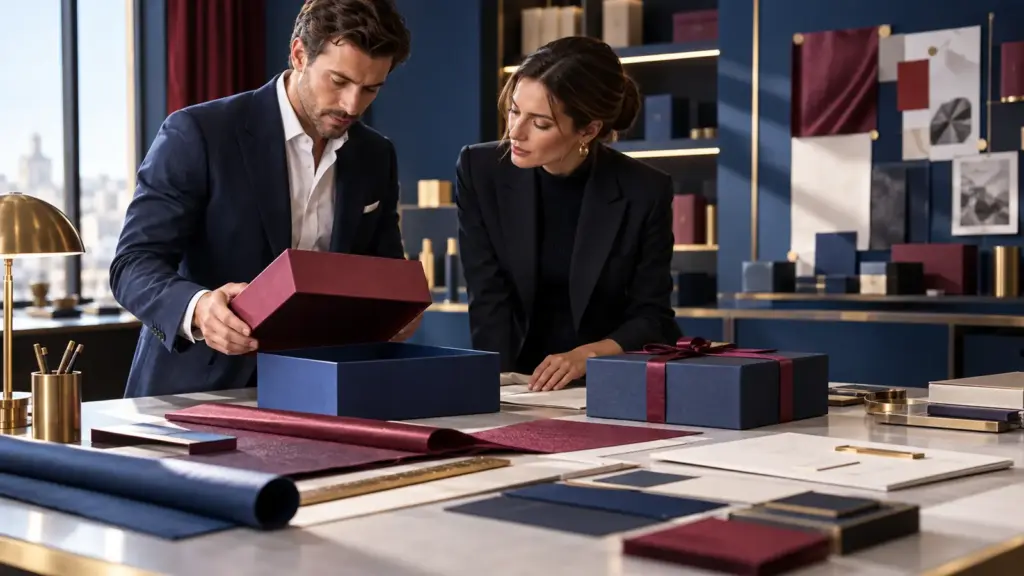
Fragrance packaging carries a peculiar kind of pressure. The bottle is glass, the liquid is expensive, and the unboxing moment genuinely shapes how customers remember the scent. So when a European fragrance brand approached us wanting to drop their plastic vac-form tray without risking broken bottles in transit, we knew the interesting work would sit in the insert — not the outer shell.
This walkthrough covers how thatembalaje de tubo de papel personalizado project actually ran: el breve, the structural decisions, the drop tests we failed, and the fixes that got it to production.
🔘 [Obtenga una cotización de embalaje personalizado →]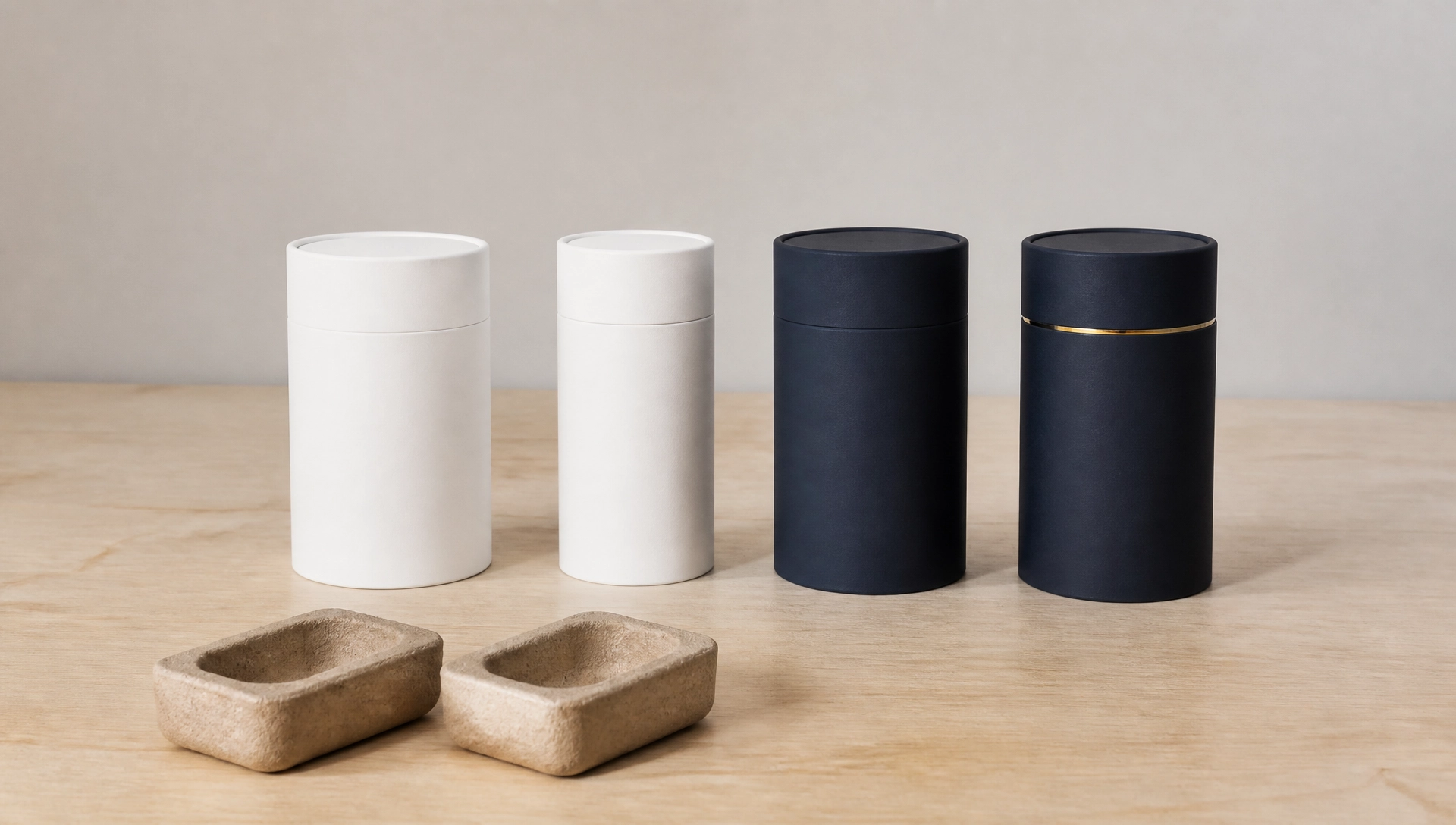
El escrito y sus limitaciones
Lo que quería la marca
A 50ml glass fragrance bottle in a cylindrical presentation. No plastic in the secondary packaging. A premium reveal on opening. And crucially, it had to survive e-commerce shipping without a protective outer carton.
La tensión en esa solicitud
Here’s the thing though. Glass plus no foam plus direct e-commerce shipping is a genuinely demanding combination. Removing the vac-form tray was straightforward on paper; keeping the bottle intact after a 1.2-metre drop was not.
Por qué eligieron un tubo
Cylindrical formats stand out in fragrance, where rectangular rigid boxes dominate shelf and unboxing photography. Además, embalaje de tubo de papel personalizado suited the brand’s existing minimalist visual language better than another folding carton would have. nuestra guía sobreCómo los envases de papel ayudan a las marcas a crear una imagen más ecológica covers that positioning work.
What Custom Paper Tube Packaging Actually Is
The Basic Construction
A piece ofembalaje de tubo de papel personalizado consists of a wound or seamed paperboard body, envuelto en papel impreso, con disco base y tapa. Sounds simple. Sin embargo, the wall thickness, wrap material, and lid tolerance all change how premium it feels in the hand.
Spiral Wound Versus Straight Seam
Spiral wound tubes show a diagonal seam line under the wrap, which suits rustic and artisan positioning. Mientras tanto, straight seam construction gives a cleaner surface for luxury applications — so we specified straight seam here.
Why It Suits Fragrance Specifically
The cylindrical shape cradles a bottle naturally, the depth allows a slow reveal, and the rigid wall protects better than a folding carton of equivalent weight. Como consecuencia, embalaje de tubo de papel personalizado has become a serious option for prestige fragrance rather than a novelty.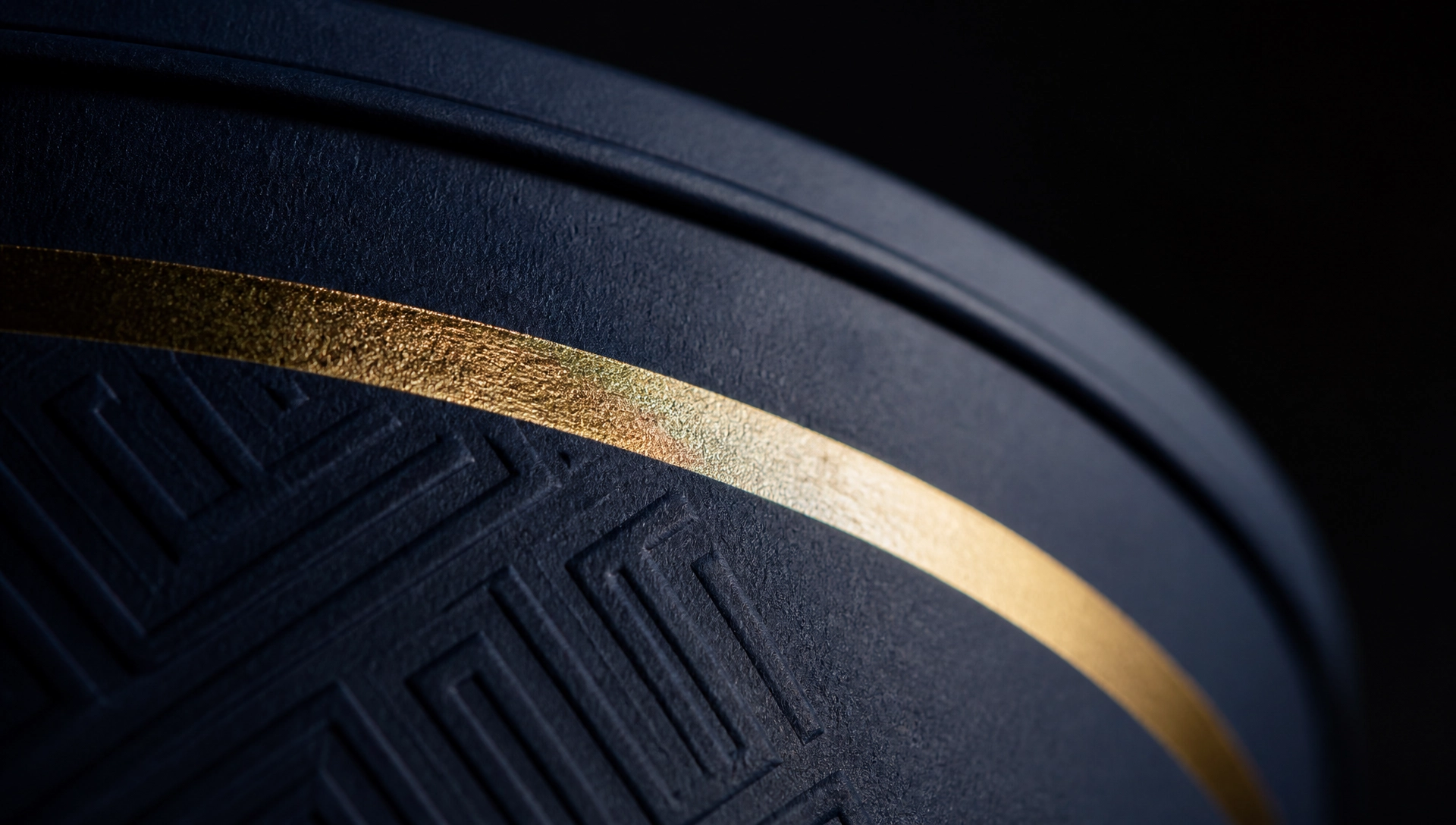
Common Applications Beyond Perfume
Custom paper tube packaging works across far more categories than fragrance alone.
Fragrance and Prestige Beauty
Eau de parfum, perfume sólido, and oil-based fragrance. Tubes handle glass beautifully when paired with a correct insert.
Skincare and Serums
Dropper bottles and glass jars in short telescopic tubes. VerIdeas de envases sin plástico para cosméticos y cuidado de la piel for the wider category view.
Velas y fragancias para el hogar
Glass vessels in kraft tubes with pulp cradles. Además, the tube doubles as gift presentation with no extra wrap needed.
Té, Coffee and Speciality Food
Kraft tubes around sealed inner pouches. Barrier requirements complicate this, so our guide onEnvases de alimentos sostenibles para té, Café y snacks covers it properly.
Spirits and Premium Beverage
Bottle tubes for whisky, gin, and liqueur gifting. These need substantially heavier wall specifications.
Solid Cosmetics and Balms
Push-up tubes with an all-paper mechanism. A completely different construction, though the same family.
Material Decisions on This Project
Material choice drives howembalaje de tubo de papel personalizado feels long before anyone reads the label.
The Tube Body
We specified a heavier greyboard wall than the brand’s original reference sample. Honestamente, their first reference felt slightly flimsy when handled — and for fragrance, that first squeeze in the hand matters enormously.
The Wrap Paper
The brand shortlisted three options. Uncoated art paper gave clean colour but scuffed in handling tests. Textured specialty paper felt premium but muted the brand’s deep colour. So we landed on a lightly textured uncoated stock that held both.
The Insert Material
Here’s where the real work happened. Moulded pulp replaced the EVA foam entirely. It cradles glass through compression rather than rigidity, and its rough organic texture contrasts nicely against polished glass.
Why Not Corrugated Insert
We prototyped a layered corrugated cradle too. It performed adequately, but it read as “envío” rather than “luxury” on opening. Por lo tanto, pulp won on brand grounds even though both passed structurally.
Fibra certificada
The brand needed FSC-certified material for their retailer requirements. nuestra guía sobreEmbalaje de papel certificado FSC explains how chain of custody works through the converter. Además, Embalaje de tubos de papel biodegradables covers material options in more depth.
Structure Options We Tested
We prototyped threeembalaje de tubo de papel personalizado structures before committing.
Tapa y base telescópicas
A deep lid sliding over a deep base. It offers strong protection and a slow, controlled reveal. Esta se convirtió en la elección final..
📦Productos relacionados: Tubos de papel personalizados / Envasado de alimentos / Envases Cosméticos
Shoulder-Neck Construction
An inner neck creates a stepped reveal, which feels distinctly premium. Sin embargo, it added tooling cost and a tighter tolerance requirement, so the brand deferred it to a future range.
Short Lid With Deep Base
Cheaper and faster. Yet the reveal felt abrupt, and the shallow lid offered less top protection during drops.
The Insert Iterations
Version one cradled the bottle but let it rotate. Version two added shaped shoulders that locked rotation. Then version three deepened the cavity by a few millimetres after the first drop test failure.
Alternativas consideradas
The brand initially asked aboutcajas rígidas ycajas plegables. Both would have worked commercially. Sin embargo, neither delivered the cylindrical shelf differentiation they wanted.
Printing and Finishing Decisions
The Print Approach
We specified Pantone spot colour on thisembalaje de tubo de papel personalizado rather than a CMYK build. Fragrance brands typically run tight colour discipline across bottle, tube, and outer, so spot matching removed variation between runs.
Estampado en caliente
Gold foil on the logo and a thin band near the lid edge. Small coverage, disproportionate impact. Además, foil reads especially well against uncoated stock because the contrast in surface reflection is stronger.
Realce
A blind deboss on the base, invisible in photography but noticeable in the hand. Francamente, these unphotographable details are what separate genuinely premiumembalaje de tubo de papel personalizado from packaging that only looks premium online.
Lo que eliminamos
The original artwork specified soft-touch lamination. We proposed textured uncoated stock instead, which achieved a comparable hand-feel while keeping the fibre story intact. The brand agreed after handling the sample.
Finish Trade-Offs
Dropping lamination did reduce scuff resistance. So we compensated with a slightly heavier wrap paper and adjusted the transit packaging accordingly.
Pruebas: Where the Project Nearly Failed
First Drop Test
The initialembalaje de tubo de papel personalizado prototype failed a 1.2-metre corner drop. The bottle shifted upward inside the pulp cradle and struck the lid interior. No breakage — but a visible dent in the lid, which would have arrived looking damaged.
El Diagnóstico
The cavity depth left too much headroom. Además, the lid interior had no cushioning at the contact point.
La solución
We deepened the pulp cavity, added a shallow pulp cap disc inside the lid, and increased lid overlap slightly. Como consecuencia, the bottle sat lower and contacted fibre rather than board.
Segunda Ronda
The revised build passed repeated corner, borde, and flat drops. También realizamos pruebas de compresión., since these ship in stacked master cartons.
La capa de tránsito
For e-commerce, the tube ships inside aacanalado sobre con relleno de papel vacío. So the tube handles presentation and primary protection, while the mailer handles distribution abuse.
Compliance Requirements on This Project
Retail buyers auditembalaje de tubo de papel personalizado the same way they audit any other component.
Certified Sourcing
FSC-certified board and wrap paper, with chain of custody documentation supplied for the brand’s retailer audit.
Manufacturing Standards
Production ran under BRCGS Packaging Materials conditions, currently Issue 7. Their retail partners requested evidence before listing.
EU Market Obligations
The brand sells across several EU markets, so they register and pay EPR fees per country. We supplied component weights by material for their filings — seeCumplimiento del embalaje EPR.
PPWR y EUDR
PPWR se aplica desde 12 Agosto 2026 en toda la UE. Mientras tanto, Las obligaciones del EUDR recaen en 30 Diciembre 2026 para grandes y medianos operadores, y 30 Junio 2027 para micro y pequeños operadores.
Redacción de reclamaciones
We advised describing it as “plastic-free outer packaging with FSC-certified fibre” rather than a blanket eco claim. NuestroEmbalaje de papel reciclable guide covers claim wording in detail.
Cómo personalizar: Pasos 1 a 3
Paso 1: Send Dimensions and Product Details
Primero, we need bottle dimensions, peso, fragilidad, y como se envía. Paraembalaje de tubo de papel personalizado, the bottle’s shoulder profile matters as much as its height.
Paso 2: Structure Selection
Próximo, we recommend theembalaje de tubo de papel personalizado construction, espesor de pared, tipo de tapa, and insert approach based on your protection requirement and reveal intention.
Paso 3: Dieline and Artwork
Then we supply a dieline. You return artwork in AI, EPS, or high-res PDF with Pantone references and clear foil and emboss layers marked separately.
Cómo personalizar: Pasos 4 a 6
Paso 4: Muestra blanca
Everyembalaje de tubo de papel personalizado project starts with an unprinted structural sample. This validates fit, tolerancia, and insert function before anyone commits to print. Honestamente, skipping this step causes more project delays than any other decision.
Paso 5: Muestras y pruebas de preproducción
Then a fully finished sample with real print, frustrar, and emboss. Run your drop and transit testing here with the actual filled bottle — not an empty one, since weight distribution changes everything.
Paso 6: Cantidad mínima de pedido, Lead Time and Production
MOQ forembalaje de tubo de papel personalizado typically starts at 500–1,000 units depending on diameter and finish. El plazo de entrega suele ser de 25 a 35 días después de la aprobación de la muestra.. Moulded pulp inserts need tooling, so build that into your launch schedule early.
¿Por qué elegir el embalaje en paquete?
Capacidad de fabricación
- 20,000㎡ fábrica — Bobinado de tubo, envase, troquelado, frustrar, y montaje todo en casa, so we control tolerance at every stage.
- 2,000㎡ taller de calidad alimentaria — Un entorno seguro para los alimentos separado para productos comestibles y sensibles al contacto..
- 10,000,000+ capacidad mensual — Escalamos desde un lanzamiento de 5.000 unidades a millones sin cambiar de proveedor.
Design and Engineering
- 20+ diseñadores internos — Nunca subcontratado. ingeniería estructural, insertar desarrollo, creación dieline, y obras de arte listas para imprimir.
- Iterative sampling — This project ran three insert versions before passing. We’d rather iterate than ship something that fails in transit.
- Documentación — FSC chain of custody, especificaciones de materiales, y pesos de componentes para presentaciones EPR.
- 60+ mercados de exportación — Incoterms y aduanas tratados diariamente..
Una nota honesta
Not every fragrance project suits embalaje de tubo de papel personalizado. Very tall bottles, heavy 100ml+ glass, and irregular shoulder profiles sometimes protect better in a rigid box with a fitted cradle. We’ll tell you when that’s the case rather than pushing a format that photographs well but performs poorly.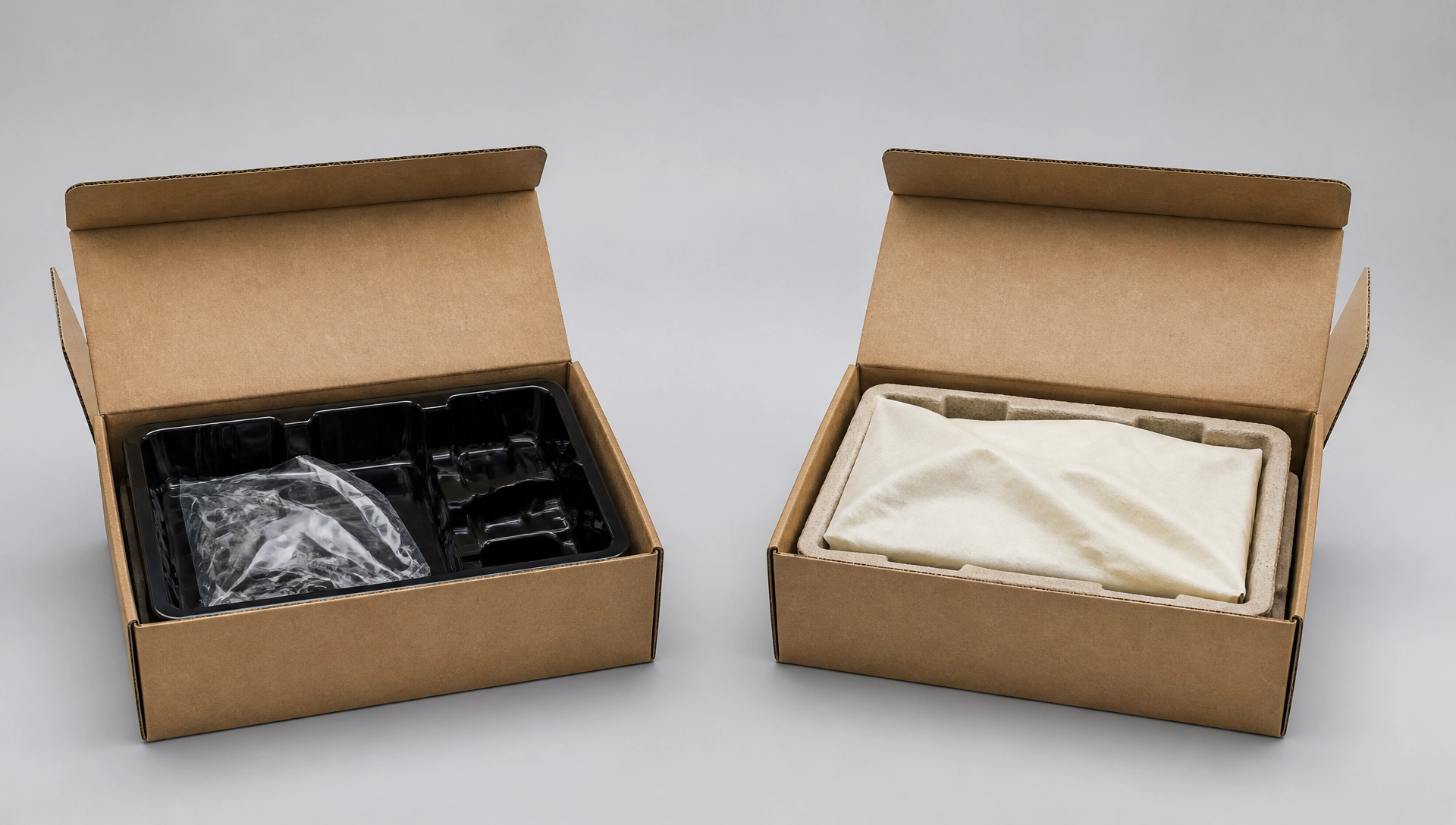
Preguntas frecuentes: Structure and Protection
Q1: Can a paper tube really protect a glass perfume bottle? Sí, with the correct insert and wall specification. The tube alone won’t do it — the pulp cradle does most of the protective work. Sin embargo, always validate with drop testing using your actual filled bottle.
Q2: How many sample rounds should we expect? Typically two to three for a project involving a custom insert. A white structural sample first, luego una muestra de preproducción terminada. Además, expect one more round if drop testing reveals a fit issue, as it did here.
Q3: Telescopic or shoulder-neck construction? Telescopic costs less and protects well. Shoulder-neck feels more premium on opening but adds tooling and tighter tolerance requirements. So it depends on whether the reveal justifies the cost at your volume.
Q4: Will the tube scuff without lamination? Puede, particularly on dark colours. Sin embargo, a heavier wrap paper, aqueous coating, or a textured stock all reduce visible scuffing considerably.
Preguntas frecuentes: Costo, Timeline and Sourcing
Q5: What drives cost most in a paper tube project? Diámetro, espesor de pared, finishing complexity, and insert tooling. Curiosamente, El número de colores de impresión importa menos de lo que la mayoría de las marcas suponen.. Mientras tanto, removing lamination actually reduces cost.
Q6: What is the realistic timeline from brief to delivery? Allow roughly two to three weeks for structural sampling, another one to two for pre-production samples, then 25–35 days production. So a comfortable planning window is about ten to twelve weeks total.
P7: Can you match our existing bottle and outer carton colours? Sí, using Pantone spot colour. Send physical references where possible, because screen values and printed results differ across substrates, particularly on uncoated stock.
P8: ¿Qué necesitas para iniciar una cotización?? Envía las dimensiones de tu producto., uso del producto, cantidad, mercado objetivo, y archivo de logotipo. Entonces te recomendaremos el correcto.embalaje de tubo de papel personalizado estructura, material, and finish for your launch.
Guías relacionadas
Este proyecto tocó varios temas que hemos cubierto por separado.:
- Cómo los envases de papel ayudan a las marcas a crear una imagen más ecológica — Por qué el cambio cambia la percepción de la marca.
- Ideas de envases sin plástico para cosméticos y cuidado de la piel — Removing plastic across a beauty range.
- Envases de alimentos sostenibles para té, Café y snacks — Barrier requirements for edible products.
- Embalajes de papel con certificación FSC para marcas ecológicas — Demostrar el origen de la fibra..
- Envases de tubos de papel biodegradables para belleza & Alimento — Construcción del tubo y detalle del material..
- Cumplimiento del embalaje EPR para marcas que venden en la UE — Registro y tarifas por mercado.
Explore más soluciones de embalaje personalizadas
- Tubos de papel — Our dedicated collection for fragrance, belleza, velas, té, y cafe.
- Cajas Rígidas — Cajas de regalo premium para gamas de prestigio.
- Cajas plegables — Ligero, cajas de venta al por menor totalmente personalizables.
- Cajas Corrugadas — Embalaje duradero para envíos y comercio electrónico.
- Cajas a prueba de niños — Embalaje seguro para productos regulados.
- Accesorios — Inserciones personalizadas, papel de seda, cintas, y etiquetas.
Ready to Start Your Own Project?
What made this project work wasn’t clever design, really. It was testing early, failing on a prototype rather than on a shipment, and being willing to run a third insert version when the second nearly passed. That’s usually the difference betweenembalaje de tubo de papel personalizado that survives real distribution and packaging that only performs in a photograph.
Díganos el tamaño de su producto, cantidad, archivo de logotipo, y mercado objetivo. Nuestro equipo le recomendará la estructura adecuada., material, and finish — and we’ll tell you honestly if a tube isn’t the best answer for your bottle.
✉️ [Envíenos su resumen → Obtenga una cotización personalizada en 24 Horas] Incluir: bottle dimensions · quantity · target market · logo file
Embalaje del paquete | 20,000㎡ Fábrica | 2,000㎡ Taller de calidad alimentaria | Materiales certificados FSC | 60+ Mercados de exportación
Nota sobre este estudio de caso: Este tutorial describe un proyecto representativo.. Hemos anonimizado la identidad del cliente y los detalles comercialmente sensibles., y consolidamos ciertos detalles para mayor claridad.. Procesos técnicos, secuencias de prueba, Rangos MOQ, y los plazos de entrega reflejan nuestra práctica estándar. Las cifras citadas son rangos típicos en lugar de garantías., y las especificaciones de su proyecto pueden diferir.
Descargo de responsabilidad: La información regulatoria refleja fuentes disponibles públicamente a partir de agosto. 2026 y no constituye asesoramiento legal. Requirements vary by product and market, Así que confirme sus obligaciones específicas con un asesor calificado..