Skip to content
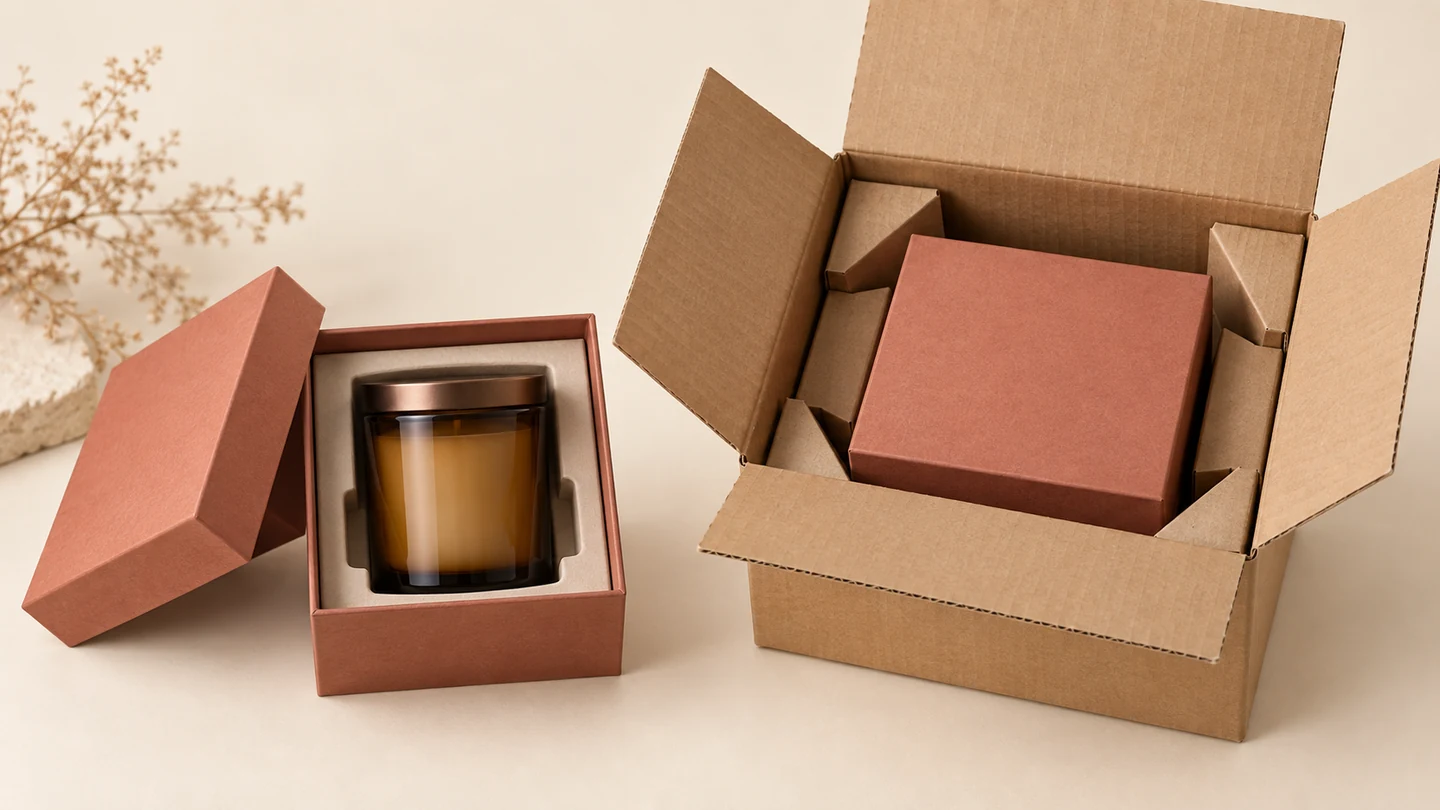
Custom candle boxes need to satisfy two different buyers: the customer who expects a presentable gift, and the operations team that needs the candle to arrive in saleable condition. A beautiful box can still create expensive problems if the jar moves inside it or the fulfillment team has to improvise the shipping pack.
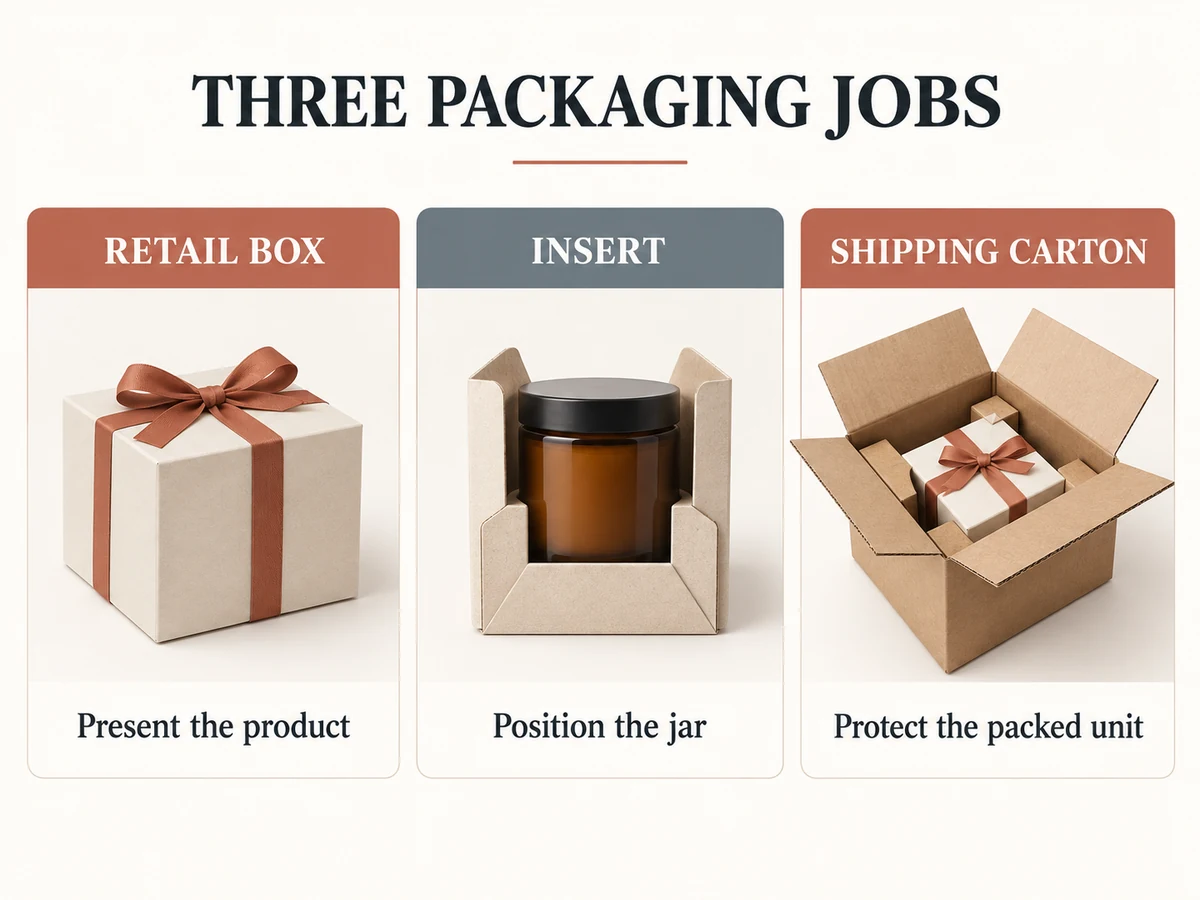
Before comparing quotations, separate retail presentation from transport protection. Then specify how the jar, insert, gift box and shipping carton will work together. This guide helps candle brands and packaging buyers make that decision without assuming that a premium finish proves protective performance.
What Are Custom Candle Boxes?
Custom candle boxes are paper-based packs developed around a candle product and its branding. For jar candles, the retail package may be a folding carton, an assembled rigid box or a collapsible rigid gift box. An insert can locate the jar within that structure.
The shipping package is a separate design decision. It may hold one retail pack for a direct customer order or several units for a wholesale shipment. A box selected for display should not automatically be treated as ready for individual parcel delivery.
Define the scope on the quotation: retail box only, retail box with insert, or the complete packed unit including its outer carton and protective components.
Start with the Sales Channel
Map what happens after packing. A boutique replenishment order, a distributor case and a single candle sent to a consumer can involve different handling and unpacking steps. Tell your packaging supplier which route the proposed design needs to support.
For a retail-focused project, specify how the customer sees and opens the product. For direct-to-consumer orders, also identify who selects the outer carton, adds protection, seals the pack and applies the shipping label.
If the same candle serves several channels, consider one retail design with channel-specific shipping arrangements. Compare that option with separate retail formats before approving tooling. Neither approach is universally cheaper; the answer depends on order mix, packing work and the performance required from each arrangement.
Record the Filled Jar, Lid and Accessories
Supply the actual filled jar and its production lid when possible. Record the largest outside dimensions, total weight, lid profile and any label or decorative feature that must remain unmarked. An empty glass sample does not represent the complete product you will ship.
List accessories separately. A gift set may include a care card, matches or another item; each changes the available space and packing sequence. Keep hard components from becoming uncontrolled loose items in the proposed layout.
For candle-and-diffuser sets, share both container samples and their closure details. Our home fragrance gift boxes provide a collapsible rigid format to discuss for these sets. The internal layout still needs development around your specific products.
Select the Retail Structure and Materials
A folding carton starts from a cut and creased paperboard blank. A conventional rigid box uses a formed board structure covered with paper. A collapsible rigid design introduces an assembly step that buyers should review at the location where products will be packed.
Compare these constructions through samples, not only material names. For rigid gift packaging formats, check the lid, corners, wrapped edges and the usable space after adding an insert. For folding cartons, review the bottom closure and the packing method with the supplier.
Specify the structural board separately from the decorative surface paper. Request proposed grades and thicknesses in writing, then validate the combination. Avoid selecting a heavier board merely because it sounds stronger; the finished structure and internal support matter to the purchasing decision.
Give the Insert a Defined Function
An insert should do more than make the open box look tidy. Ask the supplier to show where the jar sits, how it is restrained and how the customer removes it. Review contact around the base, body and lid rather than assuming that a round cutout solves every issue.
Possible constructions include folded paperboard, corrugated supports, molded fiber or foam. Compare the proposed geometry and material together. A sample should demonstrate jar positioning, packing access and removal without unwanted rubbing or pressure on decorative features.
Explore custom inserts and packaging accessories with the complete product set available. Also ask whether one insert can accommodate your planned jar variants. Require a separate fit check for each variant instead of relying on a shared nominal diameter.
Develop the Shipping Pack Around the Retail Unit
Once the retail package is defined, give its finished external dimensions and weight to the team designing the shipper. Include any ribbon, sleeve or protruding decoration in the measurement and packing trial.
Ask for a proposal covering the outer box, internal supports, closure and packing orientation. A single-unit shipper and a wholesale case need separate specifications. If fulfillment staff add different materials or substitute another carton, the resulting pack is no longer the same configuration that you approved.
Our corrugated packaging range offers structures to evaluate for the outer pack. Select the board and construction against the actual distribution requirements, rather than assuming a particular flute or wall count guarantees protection.
Printing and Finishes: Inspect the Handled Pack
Choose printing and finishing around the brand’s presentation priorities. A restrained foil detail, embossed mark or printed interior may create the desired effect without decorating every surface. Confirm available options and inspect them on the intended paper.
Then handle the finished sample through the proposed packing sequence. Check visible rubbing, fingerprints, marks from inserts and contact between the retail box and its outer protection. Include the assembled pack in the appearance approval, not just a flat printed sheet.
Keep product identification readable after packing. Reserve locations for the brand’s approved labels and variable information, and ask the responsible product team to confirm the final content for each destination market.
Compare Cost and MOQ as a Complete Order
Request itemized quotations for the retail box, insert, outer carton, protective components, tooling, sampling and assembly. State which components arrive flat and which arrive assembled. This makes packing labor and storage needs easier to compare.
Ask suppliers to identify minimum quantities by box size, artwork version and insert design. There is no reliable universal MOQ for all custom candle packaging. Shared dimensions may simplify a project, but they do not automatically remove separate printing or tooling requirements.
Use your expected order mix to compare cost per finished shipment. A lower retail-box price may lose its advantage if it needs additional packing work or an unsuitable outer pack. Include replacement handling and observed damage costs where you have real operating data; do not invent a savings percentage.
Approve Samples and Agree the Test Plan
Separate the appearance approval from the distribution assessment. First check product fit, presentation and packing practicality. Then agree how to evaluate the complete packaged product for its intended route.
ISTA’s design and testing guidance emphasizes understanding the distribution environment when selecting tests, using representative product and package samples, and defining damage criteria before testing. Ask a qualified laboratory to identify the appropriate procedure and document the configuration it evaluates.
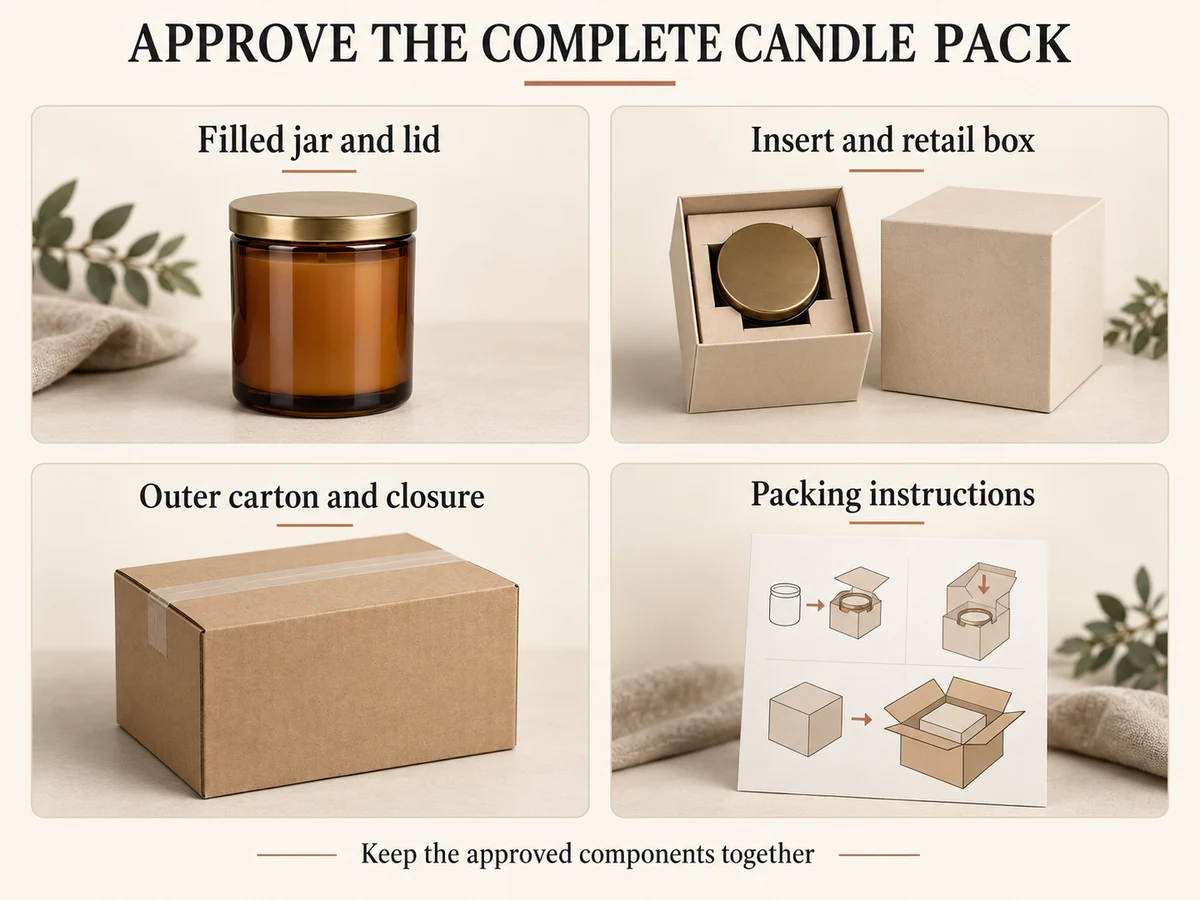
For your own approval record, list both product damage and unacceptable presentation defects, such as a marked jar label or visibly damaged gift box. Keep the agreed criteria, sample references and test documentation together. A supplier’s photograph or a generic test claim is not evidence that your exact candle pack has passed.
Sustainability and Supplier Selection
Review the whole bill of materials before making environmental claims. Record the papers, coatings, adhesives, magnets, foam and other components actually included. Ask how customers can separate the materials, and verify disposal statements for the intended market.
Choose a manufacturer that can explain the proposed construction and coordinate with the team responsible for transit validation. Confirm who owns each specification and who approves substitutions. Ask for a revised sample review when the jar, insert or box construction changes.
Our packaging structure and sampling service is a starting point for turning your product and distribution brief into a reviewable proposal. Keep the final approval tied to identified materials, artwork and components.
FAQ
Can custom candle boxes ship without an outer carton?
Only consider that arrangement after evaluating the complete packaged product for the intended channel. A retail gift box should not be assumed suitable for parcel shipment because it feels substantial.
What is the best insert for a glass candle jar?
The choice depends on the jar, lid, weight, box and distribution needs. Compare physical samples of the proposed constructions and validate the finished system before committing to a material.
Can one box hold several candle sizes?
Possibly, with appropriate internal arrangements. Check every filled jar and lid combination. Compare the inventory benefit with extra material, insert variants and packing complexity.
What should I send for a quotation?
Send product samples or drawings, filled weight, quantities by variant, sales channels, artwork requirements and the requested packaging scope. Include any retailer or laboratory requirements already defined for the project.
Request a Complete Candle Packaging Proposal
Start with the filled candle and the route it will travel. Then choose the retail box, insert and shipping arrangement as one coordinated project. Send us your product details and order mix so we can discuss the construction, prepare an itemized quotation and agree the next sampling steps.