Skip to content
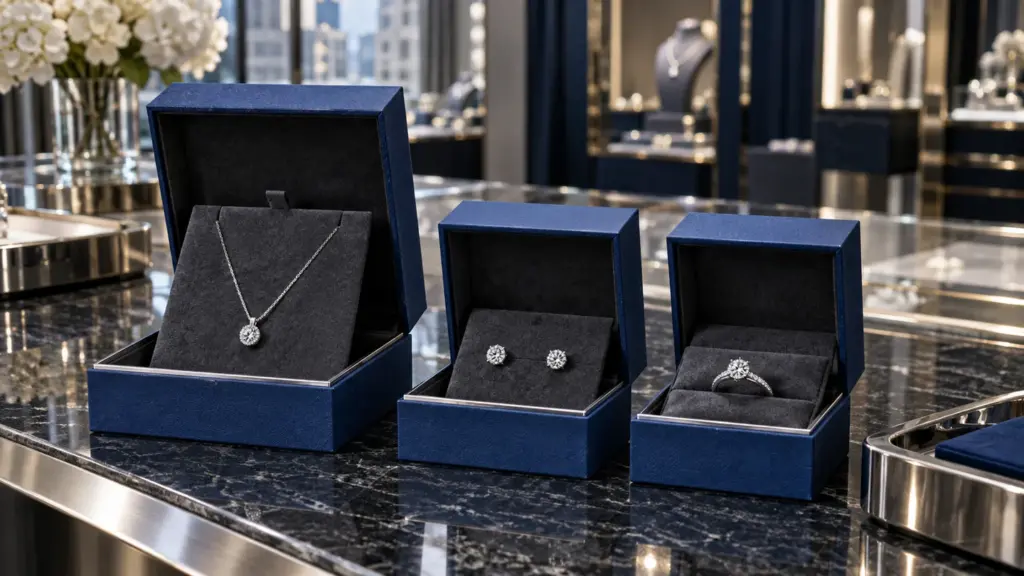
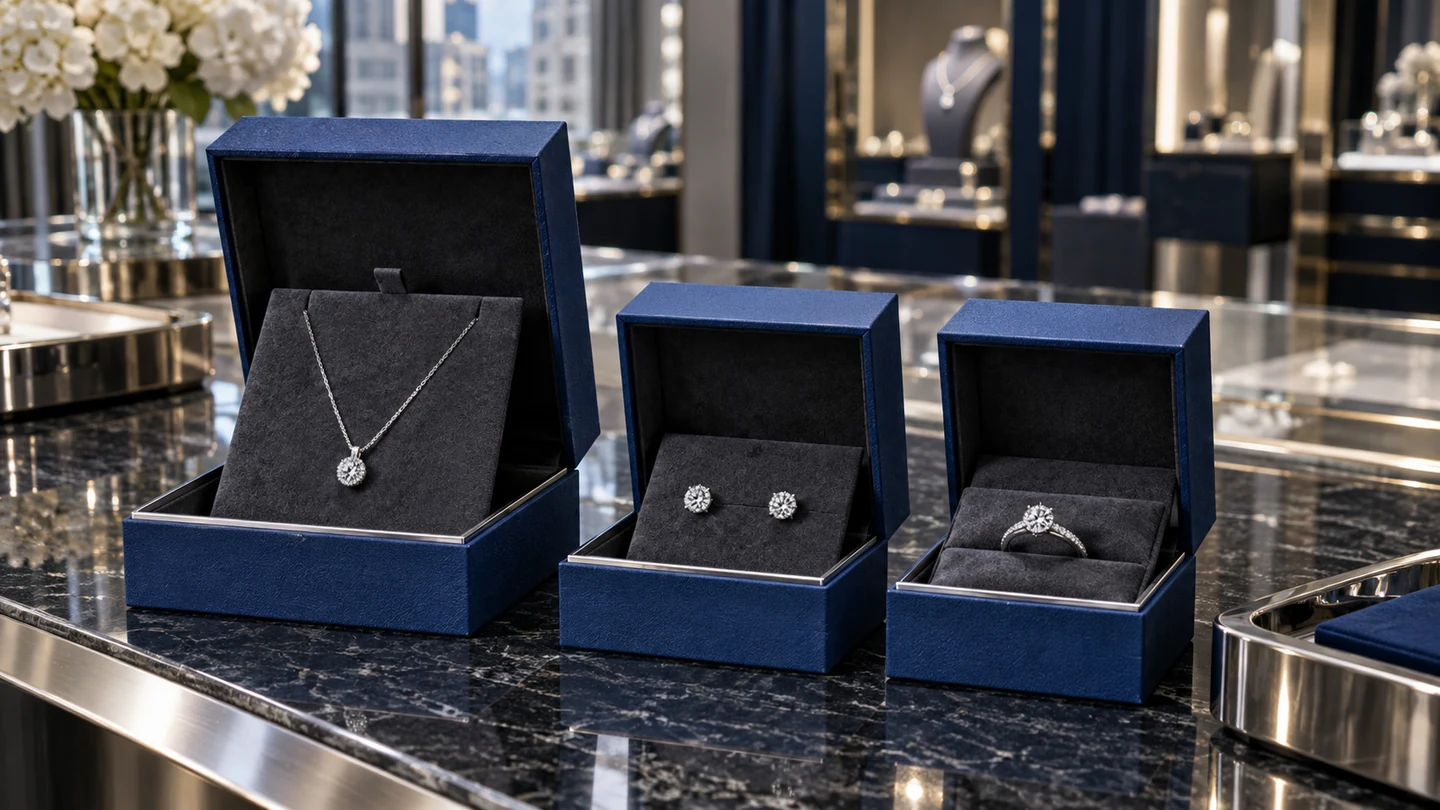
Custom jewelry boxes need to present a collection clearly while keeping each piece easy to pack, identify and remove. For a brand with rings, earrings and necklaces, choosing the outer box is only part of the purchasing decision. The insert determines how the product sits, how staff handle it and whether different SKUs can share packaging without compromising presentation.
Start your sourcing brief with the jewelry assortment and the intended sales channel. Then evaluate the box, insert, product card and shipping pack as a coordinated specification. This guide focuses on product-specific support and practical assortment planning for wholesale buyers and jewelry brands.
What Are Custom Jewelry Boxes?
Custom jewelry boxes are branded packages designed around particular jewelry pieces or collections. They can use rigid paperboard cases, folding cartons or other structures, with a separate insert or product card that establishes the display position.
A paper-wrapped rigid box and a fabric-covered insert are different components. Specify both rather than describing the entire package simply as a velvet box. Buyers should know what supports the product, what touches its surface and which parts the customer can remove.
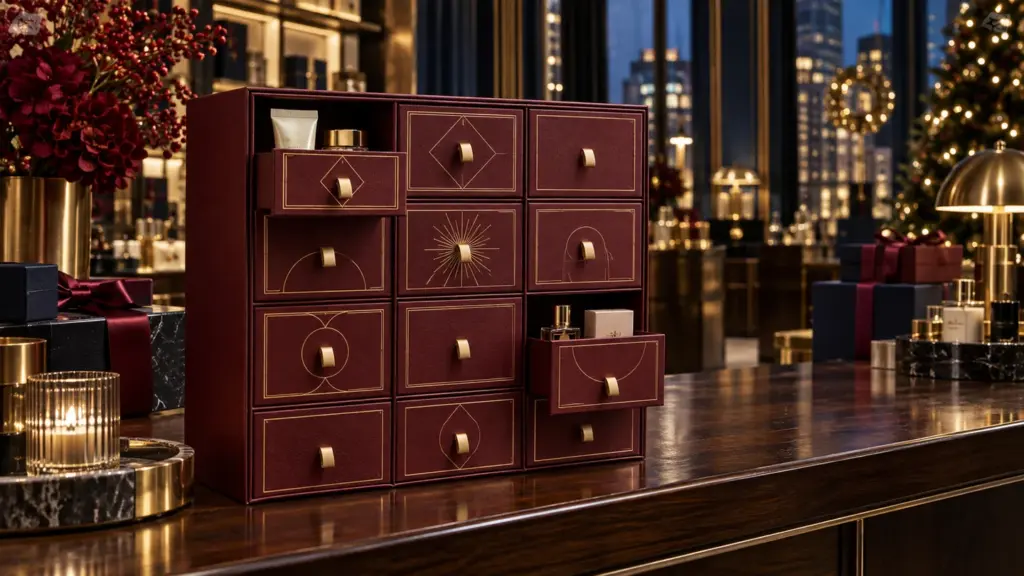
For a sleeve-and-tray format, these rigid drawer boxes for jewelry offer a starting point for discussing the structure. Choose the final format only after reviewing your product assortment.
Why Insert Planning Matters for Jewelry Brands
A beautiful outer case does not solve a necklace that falls behind its card or earrings that are difficult to remove. These details affect both the first impression and daily fulfillment work. An insert should support the intended display without making staff force delicate parts into position.
Separate three requirements in the brief: presentation, retention and access. Presentation describes how the item should look when opened. Retention describes the position it should maintain during agreed handling conditions. Access describes how the packer and customer load and remove it.
Agree on these requirements with the people who sell and pack the products. A display approved by a designer may still need changes after a packing trial.
Build an Assortment Matrix Before Choosing Sizes
List each SKU with its product type, dimensions, weight, closure or fastening details and intended orientation. Include the clasp, earring back, ring setting and any accompanying card or pouch. Photograph the item in its proposed packed position.
Group products by actual support needs rather than appearance alone. Two pendants may use the same outer box but require different card slots. Two rings may need different clearance above the setting even when their bands look similar.
Identify proposed shared boxes and separate insert variants in the matrix. This gives suppliers a clear basis for quoting common components without assuming that one insert fits every product.
Choose Inserts for Each Jewelry Type
Rings
Check the ring slot with representative band widths and setting heights. Review the position of the ring, removal effort and clearance when the lid closes. Avoid approving a sample using only the smallest item in the collection.
Earrings
Confirm the hole or slit arrangement against the actual posts, hooks and backs. Staff need access to the fastening area during packing. For hanging styles, check that the presentation allows space for the full shape without folding or trapping the piece.
Necklaces and bracelets
Specify where the pendant sits and where excess chain or the clasp is stored. A front-facing sample can conceal an awkward arrangement behind the card. Ask to inspect both sides and repeat the loading process with the intended chain lengths.
Discuss custom inserts and packaging accessories as separate specification items so changes remain traceable.
Materials and Box Structures
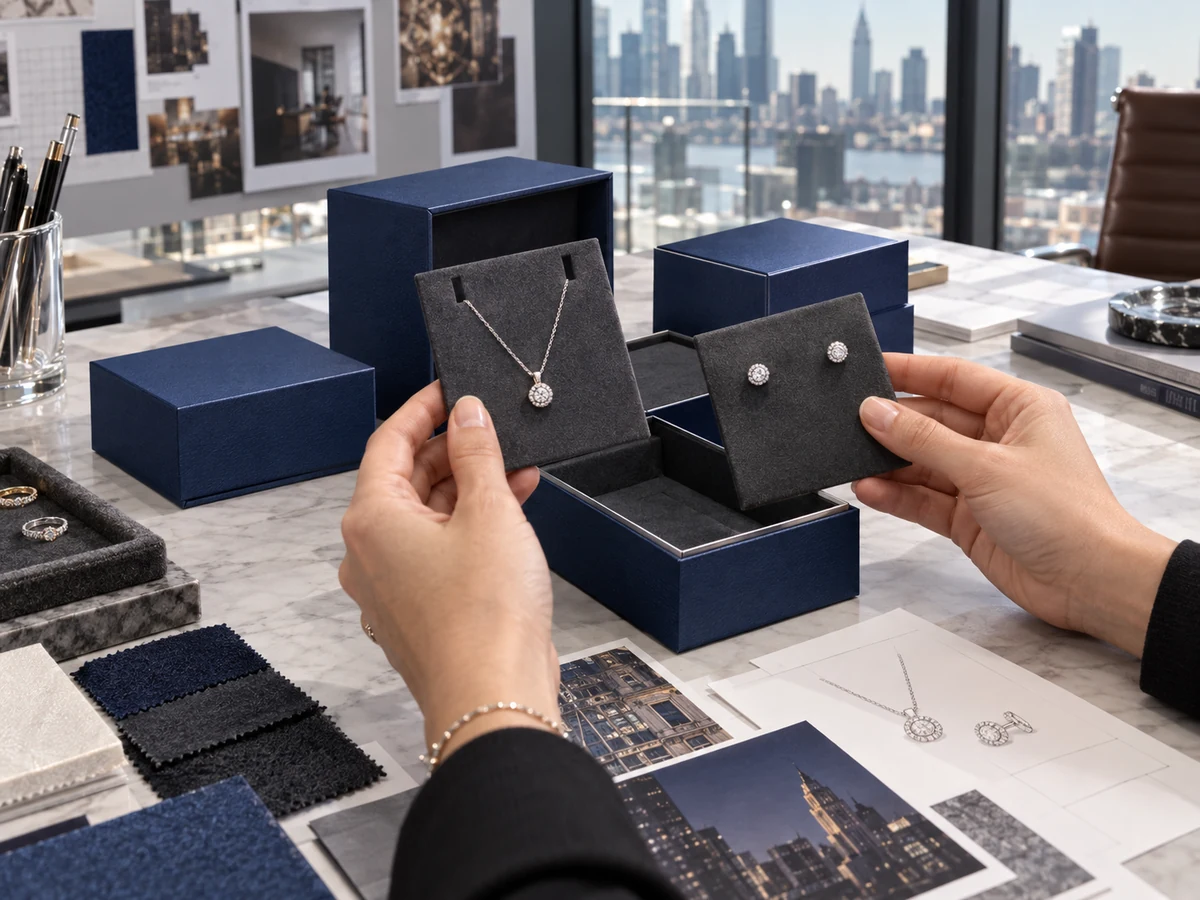
Compare paperboard cards, folded supports and covered cushioning according to the jewelry and desired presentation. Ask for the complete insert construction, including its core, covering and attachment method. A soft-looking surface does not establish compatibility with every metal, coating or stone.
If discoloration, surface marking or long storage is a concern, state that requirement explicitly and agree on suitable material evaluation with qualified product specialists. Do not accept an unsupported anti-tarnish claim based on color or texture.
Within the broader rigid packaging range, compare lid-off, hinged and drawer formats against your opening experience and packing workflow. Ask the supplier to demonstrate the proposed construction with the loaded insert, rather than judging an empty box alone.
Printing and Finishing Options
Decide which surfaces carry the logo, product identification and customer information. A restrained exterior can still need careful positioning when a logo sits close to an edge or continues across separate components. Supply artwork for the actual approved structure.
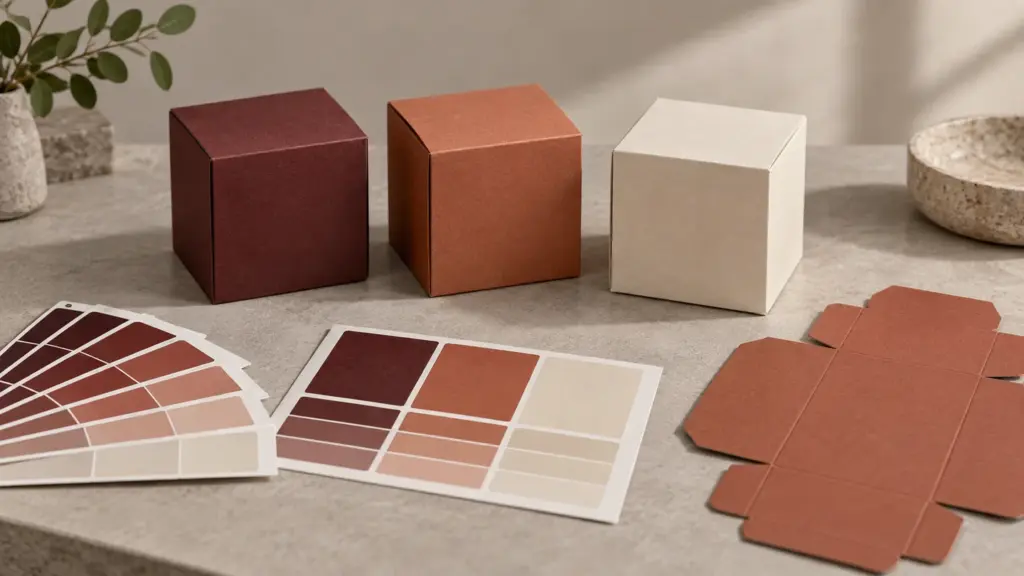
Evaluate foil, embossing, printed color and wrap texture on a physical decorated sample. Review small lettering at its intended size. A large screen mockup can hide details that become difficult to read on a small ring box.
Check the complete collection together under the lighting relevant to your sales environment. Agree on the approved reference and revision number so later reorders have a clear comparison point.
Cost Factors and MOQ Across a Collection
Request separate quantities and pricing for shared outer boxes and each insert variant. Also identify decoration, product cards, assembly, protective packing and one-time tooling or development charges. Compare the same order scope across suppliers.
There is no universal MOQ for custom jewelry packaging. Ask whether the minimum applies to the box size, printed design, covering material or insert version. A collection-wide order total may not satisfy the minimum for every individual component.
Consider a common outer box with interchangeable inserts where the assortment supports it. However, compare unused space, presentation and handling before standardizing. A lower component count is useful only when the resulting package still meets the product requirements.
Retail Presentation and E-commerce Packing
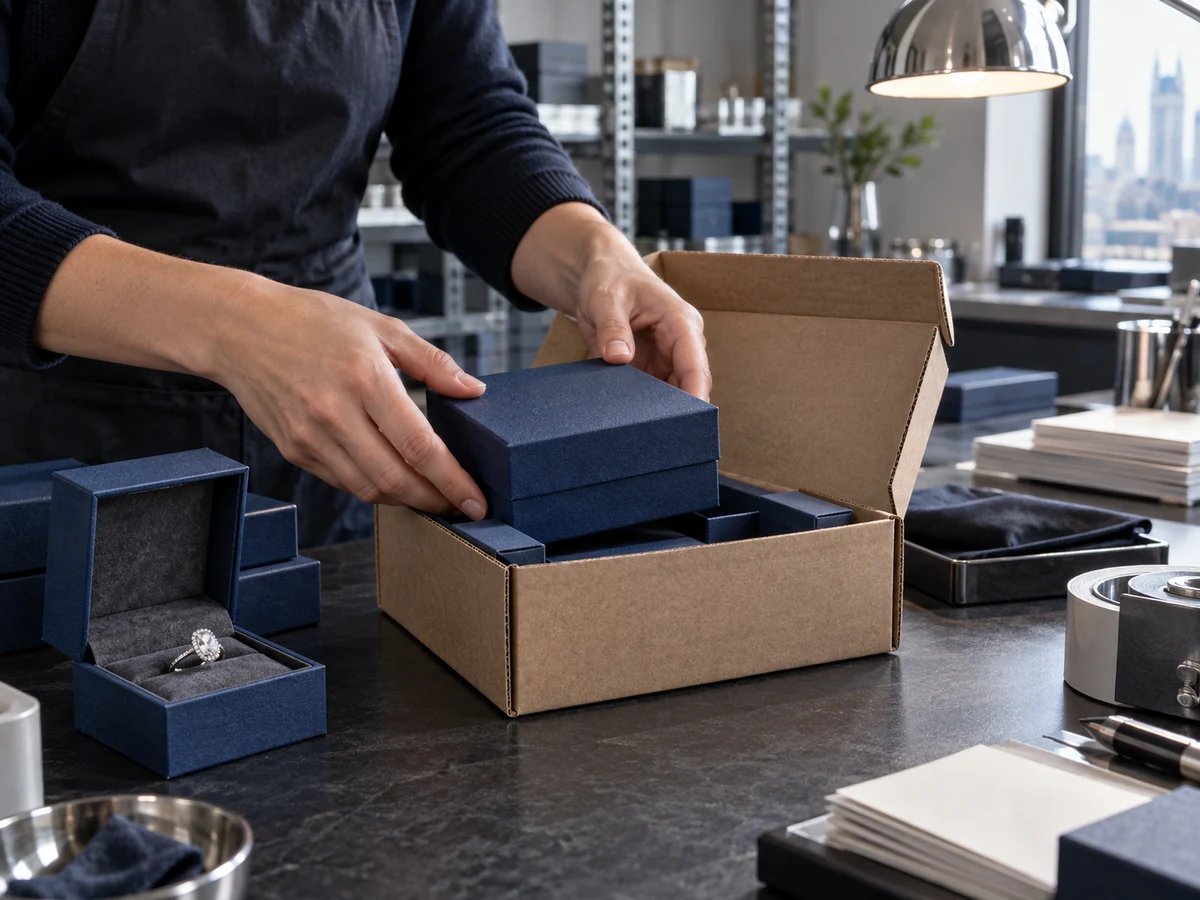
A boutique may display an open box repeatedly, while an online order needs a complete transport pack. Specify these uses separately. Decide whether the retail box should arrive assembled with its insert, and where the jewelry itself will be packed.
For direct delivery, evaluate the gift box inside its intended outer carton or mailer. Include product cards, wrapping and any accessories in the trial. Agree on checks appropriate to the actual delivery route, and avoid treating a decorative rigid box as proof of shipping protection.
Document the packing sequence with a reference photograph. This helps different staff reproduce the same product position and notice when a component is missing.
Sustainability and Reorder Planning
Ask for a component-level material list before making disposal or environmental claims. Consider coverings, adhesives, ribbons and inserts alongside the paper outer case. Confirm whether parts can be separated and what guidance is appropriate for the destination market.
For reorders, retain the approved sample and component references. Record any product changes that could affect fit, such as a larger earring back or taller ring setting. Notify the packaging supplier before repeating an old order automatically.
Discuss spare inserts and replacement components where useful. Confirm availability and order conditions rather than assuming these parts will remain unchanged indefinitely.
How to Choose a Jewelry Packaging Manufacturer
Choose a supplier that asks about the actual jewelry, packing method and component variants. Request a quotation that identifies materials, dimensions, decoration, included assembly and approval responsibilities. Ask who will control changes between the structural sample and the final decorated version.
Use a structured packaging sampling review to check loading, removal, lid clearance and overall presentation. Keep a written record of accepted details and unresolved changes. A clear sample record makes the purchasing decision easier to explain internally.
FAQ
Can custom jewelry boxes use one insert for an entire collection?
Only if the intended products have been checked against that insert. A shared outer box with several insert variants may be more practical than forcing rings, earrings and necklaces into one layout.
What samples should a buyer provide?
Provide representative products, including variations in size, fastening and setting height. Include the actual cards or pouches that will accompany the jewelry, and identify any surface-contact concerns.
Does a fabric insert guarantee anti-tarnish protection?
No. Treat anti-tarnish performance as a separate requirement that needs appropriate supporting evidence. A fabric description or attractive finish alone does not establish that performance.
How should I compare quotations?
Compare complete packaging sets with the same materials, decoration, insert variants, quantities and assembly scope. Identify excluded accessories and one-time charges before comparing unit prices.
Request a Jewelry Packaging Proposal
Share your assortment matrix, product samples, quantity by variant and intended sales channels with PK. Request a coordinated proposal for the outer boxes, product-specific inserts, decoration and packing scope. Approving these details together gives your team a clearer route from collection planning to a repeatable packaging order.