Ask any food brand what worries them most about sourcing packaging overseas, and it rarely comes down to price. It’s whether the supplier actually has aWerkstatt für Lebensmittelverpackungen, or simply prints food cartons on the same line that ran solvent-based work yesterday. Auditors ask that question too, and a certificate alone doesn’t answer it.
So instead of describing our facility in vague terms, we’ll walk you through it properly — the airlock, the pressure gradient, the inspection points, and the paperwork that comes out the other end.
🔘 [Holen Sie sich ein individuelles Verpackungsangebot →]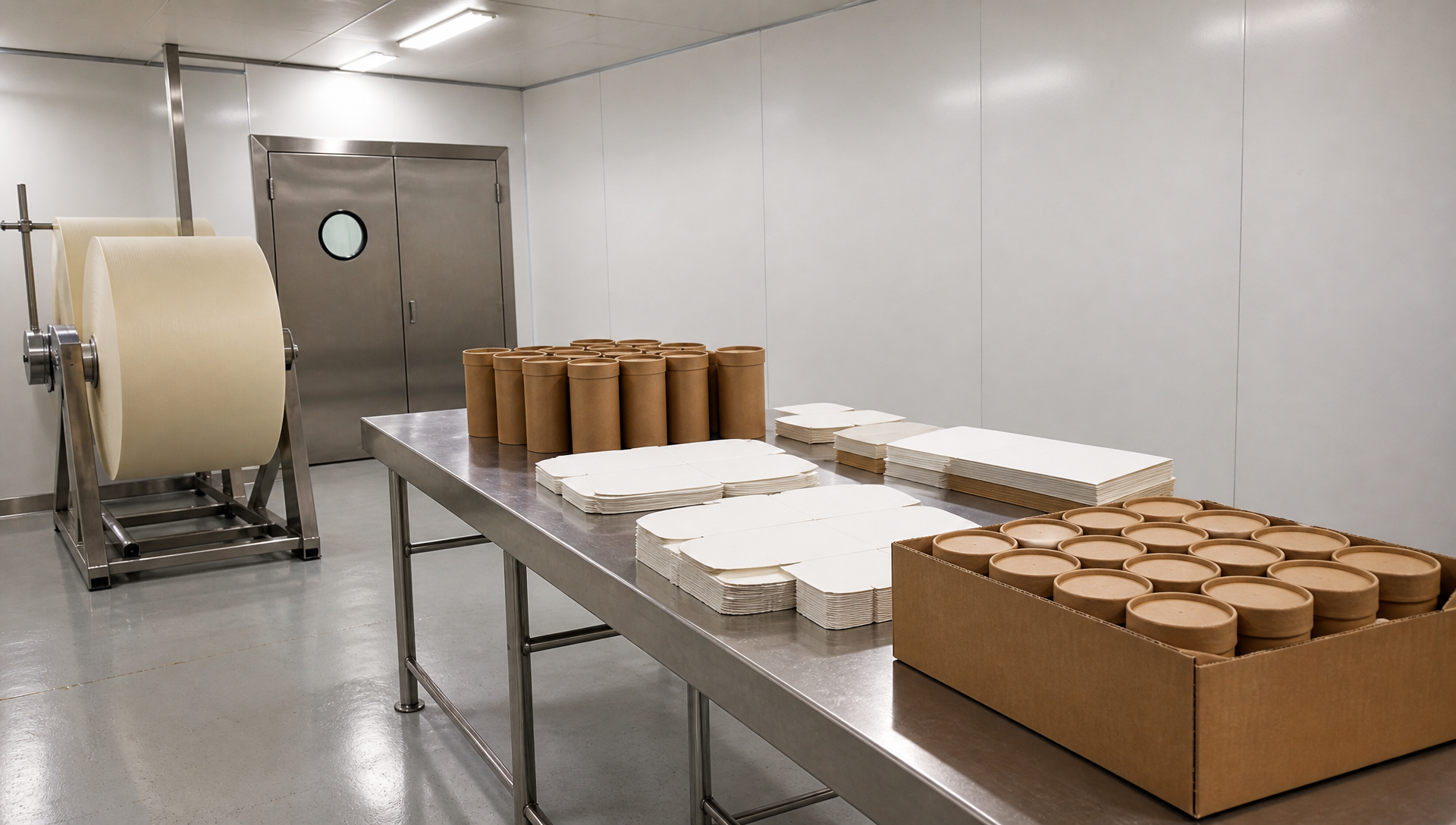
What a Food Grade Packaging Workshop Actually Is
Die kurze Definition
It’s a physically separated production environment with filtered air, controlled positive pressure, restricted personnel access, dedicated equipment, and documented hygiene procedures. UnserWerkstatt für Lebensmittelverpackungen occupies 2,000㎡ within a 20,000㎡ factory, behind its own airlock.
What It Is Not
Ehrlich, this matters more. It isn’t a curtained-off corner of a general print hall. It isn’t a normal room that gets swept twice a day. And it certainly isn’t a certificate hanging in reception while production runs wherever there’s capacity.
Why Separation Matters
A food grade packaging workshop exists because paper is porous and absorbent. Folglich, airborne dust, ink solvent vapour, and fibre debris from adjacent operations migrate into stock and stay there. Once contamination reaches the board, no downstream inspection removes it.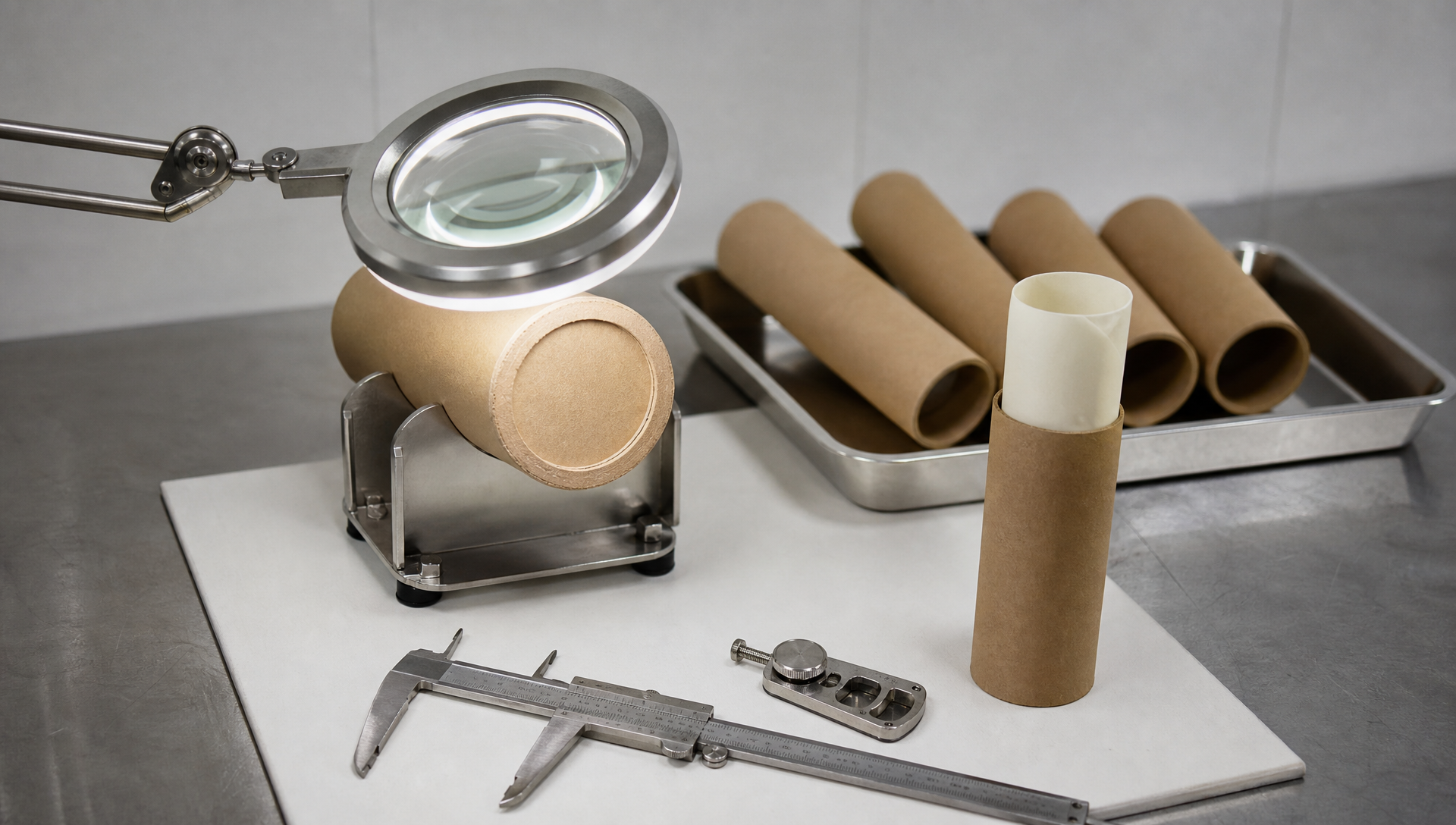
Who Needs a Food Grade Packaging Workshop
Direct food contact isn’t the only trigger. These categories usually require it:
- Snacks and dry goods — Anything filled straight into the pack. Sehen Sie sich unsere an Fallstudie zu Papiertuben in Lebensmittelqualität.
- Tee und Kaffee — Aroma-sensitive products where solvent taint ruins the cup. Lesen Nachhaltige Lebensmittelverpackung für Tee, Kaffee und Snacks.
- Confectionery and bakery — High fat content, so migration behaviour matters enormously.
- Nahrungsergänzungsmittel und Pulver — Regulated, frequently audited, and usually retailer-mandated.
- Baby and infant products — The strictest documentation expectations of all.
- Hautpflege und Kosmetik — Not food, though many brands request the same standard anyway.
Inside the Food Grade Packaging Workshop: Air and Access
The Airlock
Nobody walks straight in. Entry runs through a two-door airlock where the outer door must close before the inner opens. In der Zwischenzeit, an air shower removes loose particles from clothing before anyone reaches the production floor.
Positive Pressure
The workshop runs at higher pressure than surrounding areas. daher, air flows outward whenever a door opens, rather than pulling dust inward. It’s a simple principle, yet it does most of the heavy lifting.
Filtration
Supply air passes through multi-stage filtration before entering the space. We log filter changes rather than replacing them when someone remembers.
Personnel Protocol
Dedicated gowning, hair covering, and hand hygiene apply to everyone — including visitors and management. No exceptions, because exceptions are exactly what auditors look for.
Materials Handled in Our Food Grade Packaging Workshop
Board and Paper
- Food-grade virgin fibre board — Unrecycled, since recycled content carries mineral oil migration risk.
- Kraftpapier — Natural and unbleached for artisan positioning.
- Kunst und beschichteter Karton — Smooth surfaces for photographic artwork.
- Spezialstrukturierter Vorrat — Premium tactile finishes for gifting ranges.
Liners and Barriers
- Greaseproof liners — For fats and oils in direct contact.
- Food-grade paper liners — Standard barrier for dry goods.
- Folieneinlagen — Maximum aroma and moisture barrier, though they complicate recycling.
- Sealed inner bags — Where shelf life demands full isolation.
Inks and Adhesives
We use low-migration inks and food-safe adhesives inside theWerkstatt für Lebensmittelverpackungen. Zusätzlich, we keep these materials in separate storage so nobody grabs the wrong drum under time pressure.
Zertifizierte Faser
FSC-certified stock runs here too. UnserFSC-zertifizierte Papierverpackung guide explains chain of custody documentation.
Structures Produced in the Food Grade Packaging Workshop
Formats We Run
- Papierröhren — Telescopic lid and base, with liner applied inside the clean area.
- Faltschachteln — Straight tuck, crash lock, and sleeve formats.
- Starre Boxen — Premium gift structures for confectionery and tea.
- Window cartons — Die-cut open windows, or film applied under controlled conditions.
- Inserts and dividers — Die-cut board and moulded pulp for multi-pack presentation.
📦Verwandte Produkte: Kundenspezifische Papierröhren / Lebensmittelverpackung / Kosmetikverpackungen
Where Assembly Happens
Liner application, base sealing, and final assembly all happen inside the food grade packaging workshop. Printing occurs on dedicated equipment, and finished goods pass through a separate exit — never back through the entry airlock.
Structural Detail That Matters
Base seams get particular attention on tube formats. Our snack brand project failed its first oil migration test at exactly that point, which is why we now inspect every base seam individually.
Printing and Finishing for Food Grade Packaging Workshop Output
Print Options
- CMYK offset and digital — Full-colour photographic artwork with low-migration inks.
- Pantone-Sonderfarbe — Consistent brand colour across production runs.
- Heißprägen — Metallic accents applied outside the food-contact face.
- Prägen und Tiefprägen — Mechanical texture, no added material.
- Spot-UV — Selective gloss, kept to external surfaces only.
- Matte Laminierung — Durable, although it complicates the recycling story.
- Wässrige Beschichtung — Water-based protection without plastic film.
The Migration Rule
Here’s the constraint people underestimate. Decorative finishes stay on external surfaces. Außerdem, we assess set-off risk — ink transferring from the printed face to the inner face when sheets stack — because that’s a genuine migration pathway auditors check.
Colour Approval
Uncoated food-grade board absorbs ink differently from coated stock. So ask for a printed draw-down rather than approving colour from a screen.
Compliance Documented in Our Food Grade Packaging Workshop
Certifications and Frameworks
- BRCGS-Verpackungsmaterialien – Aktuelle Ausgabe 7, and the standard most retailers ask for by name.
- IFS PACsecure — Anerkannt in allen europäischen Einzelhandelslieferketten.
- EU-Rahmen für den Lebensmittelkontakt — Verordnung (EC) NEIN 1935/2004, mit GMP gemäß der Verordnung (EC) NEIN 2023/2006.
- FSC-Produktkette — For certified fibre claims.
- Gewichte der EPR-Komponenten — Split by material for filing. Sehen EPR-Verpackungskonformität.
Vorschriften zum Tagebuch
PPWR gilt ab 12 August 2026 in der gesamten EU. In der Zwischenzeit, EUDR-Verpflichtungen fallen weiter 30 Dezember 2026 für große und mittlere Betreiber, Und 30 Juni 2027 für Kleinst- und Kleinbetreiber.
Sustainability Without Overclaiming
Describe construction accurately rather than making blanket eco claims. UnserVerpackung aus recycelbarem Papier UndPlastikfreie Verpackung Leitfäden behandeln vertretbare Formulierungen.
Rückverfolgbarkeit
Every batch carries records linking material lot, Produktionsdatum, Linie, und Betreiber. Folglich, if a question arises twelve months later, we can reconstruct exactly what happened.
Quality Control Inside the Food Grade Packaging Workshop
In-Process Checks
Inside the food grade packaging workshop we inspect during production rather than only at the end. Operators verify dimensions, print registration, liner adhesion, and base seam integrity while the run is still correctable.
Environmental Monitoring
We log pressure differential, Temperatur, and humidity continuously. Zusätzlich, we run scheduled surface hygiene checks and keep the records available for audit.
Testing We Run
- Migrationstests — Verifying nothing transfers from packaging into product.
- Fettbeständigkeit — Essential for nuts, Bäckerei, und frittierte Snacks.
- Integrität des Siegels — Auf linierten und versiegelten Formaten.
- Drop and compression — Since goods still have to survive transit.
Shelf-Life Trials
For food, we strongly recommend running a trial with your actual filled product. Empty samples reveal almost nothing about how fats and aromatics behave over six months.
How to Start a Food Grade Packaging Workshop Project
Schritt 1: Tell Us the Contact Situation
Erste, we need to know whether your product touches the packaging directly, sits in a sealed inner bag, or arrives pre-wrapped. This single answer determines the entire specification.
Schritt 2: Product Characteristics
Nächste, share fat content, Feuchtigkeit, aroma intensity, and target shelf life. Oily and aromatic products need substantially more barrier than dry biscuits.
Schritt 3: Struktur, Probenahme und Produktion
Then we recommend structure, Liner, und fertig, followed by a white structural sample and a finished pre-production sample. UnserBenutzerdefinierter Verpackungsprojekt-Workflow guide covers the full eight-stage sequence with realistic timings.
MOQ und Vorlaufzeit
Die Mindestbestellmenge beginnt je nach Struktur typischerweise bei 500–1.000 Einheiten. Lead time usually runs 20–35 days after sample approval, and shelf-life trials extend that when required.
Artwork Files
Senden Sie KI, EPS, or high-res PDF built on our dieline, with Pantone references and separate layers for foil, prägen, und Spot-UV.
Why Choose Pack Packaging’s Food Grade Packaging Workshop
Einrichtung
- 20,000㎡ Fabrik — Drucken, Stanzen, Folierung, tube winding, und Montage alles im Haus.
- 2,000㎡ food grade packaging workshop — Physically separated with its own airlock, Filtration, and dedicated equipment.
- 10,000,000+ monatliche Kapazität — Scaling from a 5,000-unit launch to millions without changing supplier.
Team and Documentation
- 20+ interne Designer — Structural engineering, Dieline-Erstellung, und druckfertige Kunstwerke, niemals ausgelagert.
- Audit-ready records — Certification, environmental logs, Rückverfolgbarkeit, and material specifications supplied on request.
- 60+ Exportmärkte — Incoterms und Zollabwicklung täglich.
Eine ehrliche Anmerkung
Not every product needs this environment, and we’ll tell you when it doesn’t. If your item arrives pre-wrapped in a sealed film pouch, a standard line may serve you perfectly well at lower cost. Trotzdem, if your retailer’s audit checklist asks the question, you’ll want the honest answer to be yes.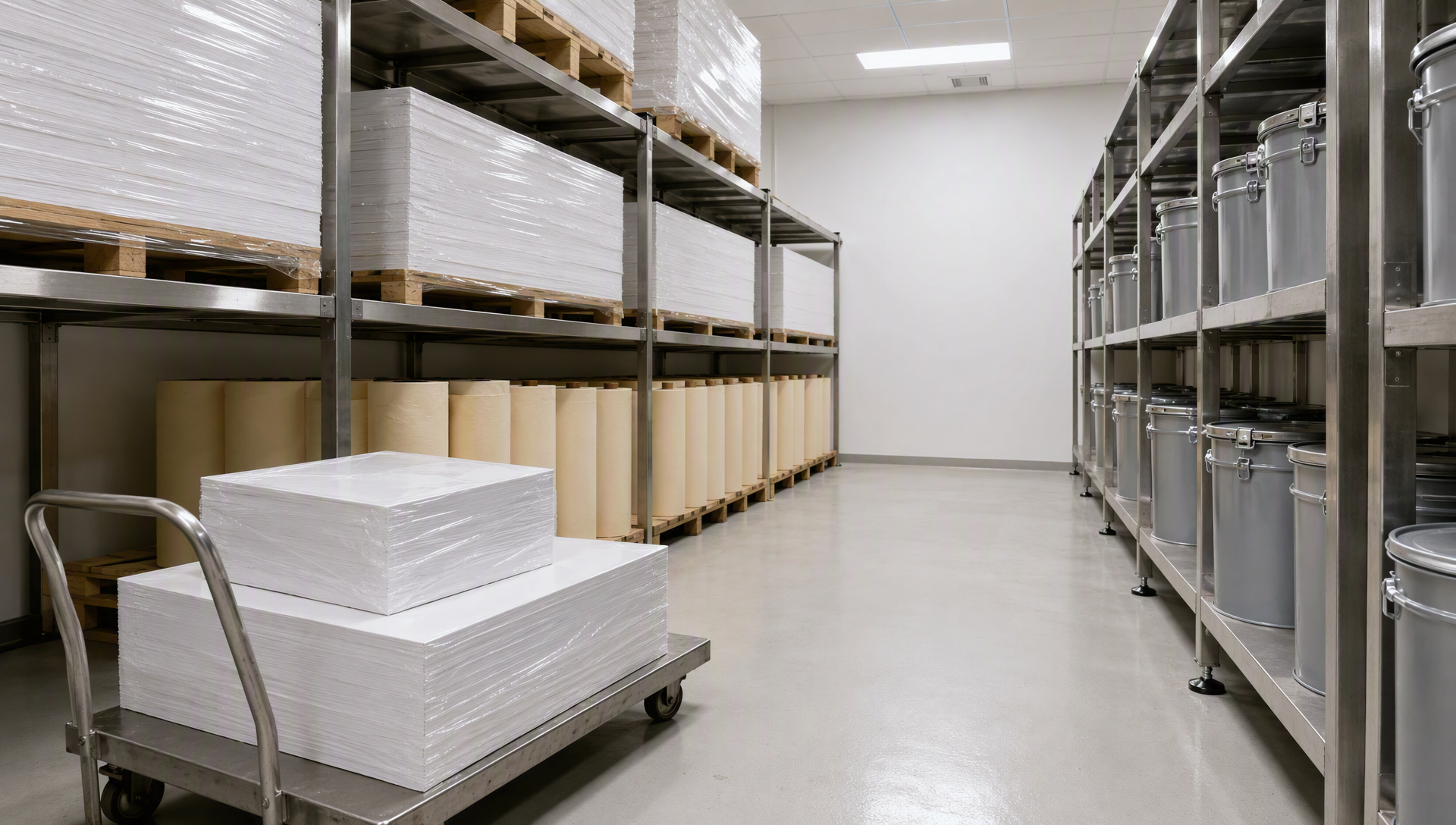
FAQ: Standards and Audits
Q1: Do we actually need a food grade packaging workshop for our product? If your product touches the packaging directly, Ja. For pre-wrapped items in sealed pouches, often not — although retailer audit requirements sometimes mandate it regardless of contact.
Q2: Can we visit or audit the facility? Ja. We host customer audits and third-party audits, and we’ll provide environmental logs, traceability records, and certification documentation in advance.
Q3: Which certifications do you hold? BRCGS-Verpackungsmaterialien, aktuelle Ausgabe 7, alongside IFS PACsecure. We also supply FSC chain of custody records and food contact declarations under Regulation (EC) NEIN 1935/2004.
Q4: Is recycled board acceptable for food contact? Generally not for direct contact, since recycled fibre carries mineral oil migration risk. We therefore use virgin food-grade board, or specify a functional barrier where recycled content is a priority.
FAQ: Kosten, Testing and Timelines
F5: Does production in this environment cost more? Somewhat, Ja. Dedicated equipment, Filtration, gowning, and documentation carry real overhead. Jedoch, the difference is usually smaller than brands expect — and considerably cheaper than a failed audit.
F6: How long do shelf-life trials take? Das hängt von Ihrer angestrebten Haltbarkeitsdauer ab. Accelerated testing compresses the timeline, though we’d still recommend real-time confirmation for high-fat products.
F7: What causes most food packaging failures? Oil migration through base seams and aroma loss through inadequate barriers. Both are predictable, and both get caught by testing with your real filled product rather than an empty sample.
F8: Was benötigen Sie, um ein Angebot zu erstellen?? Senden Sie Ihre Produktabmessungen, Produktverwendung, Menge, Zielmarkt, und Logo-Datei. Then we’ll confirm whether your project needs ourWerkstatt für Lebensmittelverpackungen and recommend the right structure, Material, und fertig.
Verwandte Leitfäden
Each area of this facility connects to a topic we’ve covered separately:
- Vom Muster zur Massenproduktion: Benutzerdefinierter Verpackungsprojekt-Workflow — The full eight-stage process behind every project.
- Fallstudie zu Papiertuben in Lebensmittelqualität für eine Snackmarke — Oil migration, base seams, and liner selection in practice.
- Nachhaltige Lebensmittelverpackung für Tee, Kaffee und Snacks – Barriereentscheidungen in allen essbaren Kategorien.
- Wie eine Hautpflegemarke mit luxuriösen Papiertuben die Regalattraktivität steigerte — Premium structure and buyer approval.
- Fallstudie zur Verpackung von Parfümpapiertuben — Drop testing and insert engineering.
- FSC-zertifizierte Papierverpackung — Zertifizierte Faser und Produktkette.
- EPR-Verpackungskonformität für Marken, die in die EU verkaufen — Registrierung und Komponentengewichte.
- Biologisch abbaubare Papierröhrenverpackung — Fibre options and construction detail.
- Wie Papierverpackungen Marken dabei helfen, ein umweltfreundlicheres Image aufzubauen — Warum der Wechsel die Markenwahrnehmung verändert.
Entdecken Sie weitere maßgeschneiderte Verpackungslösungen
- Faltschachteln — Leicht, vollständig anpassbare Einzelhandelskartons.
- Starre Boxen — Premium-Geschenkboxen für Prestige-Sortimente.
- Wellpappkartons — Langlebige E-Commerce- und Versandverpackung.
- Kindersichere Boxen — Sichere Verpackung für regulierte Produkte.
- Zubehör — Benutzerdefinierte Einsätze, Seidenpapier, Bänder, und Etiketten.
- Papierröhren — Our dedicated collection for food, Schönheit, Tee, und Kaffee.
Ready to Discuss Your Food Project?
A certificate proves a supplier passed an audit on one particular day. What actually protects your product is whether the airlock gets used properly on an ordinary Tuesday afternoon when a run is behind schedule — and honestly, that’s culture rather than paperwork. We’d rather show you the room than describe it.
Teilen Sie uns Ihre Produktgröße mit, Menge, Logo-Datei, und Zielmarkt. Unser Team wird Ihnen dann die richtige Struktur empfehlen, Material, und fertig, and confirm exactly which parts of your project run inside ourWerkstatt für Lebensmittelverpackungen.
✉️ [Senden Sie uns Ihr Briefing → Holen Sie sich ein individuelles Angebot ein 24 Std] Enthalten: product dimensions · contact type · quantity · target market · logo file
Verpackung verpacken | 20,000㎡ Fabrik | 2,000㎡ Lebensmittel-Workshop | BRCGS-zertifiziert | FSC-zertifizierte Materialien | 60+ Exportmärkte
Haftungsausschluss: Certification status, MOQ-Bereiche, und Lieferzeiten spiegeln unsere Standardpraxis ab August wider 2026 und stellen eher typische Bereiche als Garantien dar. Die regulatorischen Informationen stammen aus öffentlich zugänglichen Quellen und stellen keine Rechtsberatung dar. Food contact requirements vary by product, Markt, and contact type, Lassen Sie sich daher Ihre konkreten Verpflichtungen von einem qualifizierten Berater bestätigen.