食品ブランドに海外でパッケージを調達する際に最も心配していることを尋ねてください。, そしてそれが価格に影響することはほとんどありません. サプライヤーが実際に食品グレードの包装ワークショップ, または、昨日溶剤ベースの作業を実行したのと同じラインで食品カートンを印刷するだけです. 監査人もその質問をする, 証明書だけでは答えは得られません.
したがって、私たちの施設を曖昧な言葉で説明するのではなく、, エアロックについて詳しく説明します, 圧力勾配, 検査ポイント, そして反対側から出てくる書類.
食品グレードの包装ワークショップとは実際には何ですか
簡単な定義
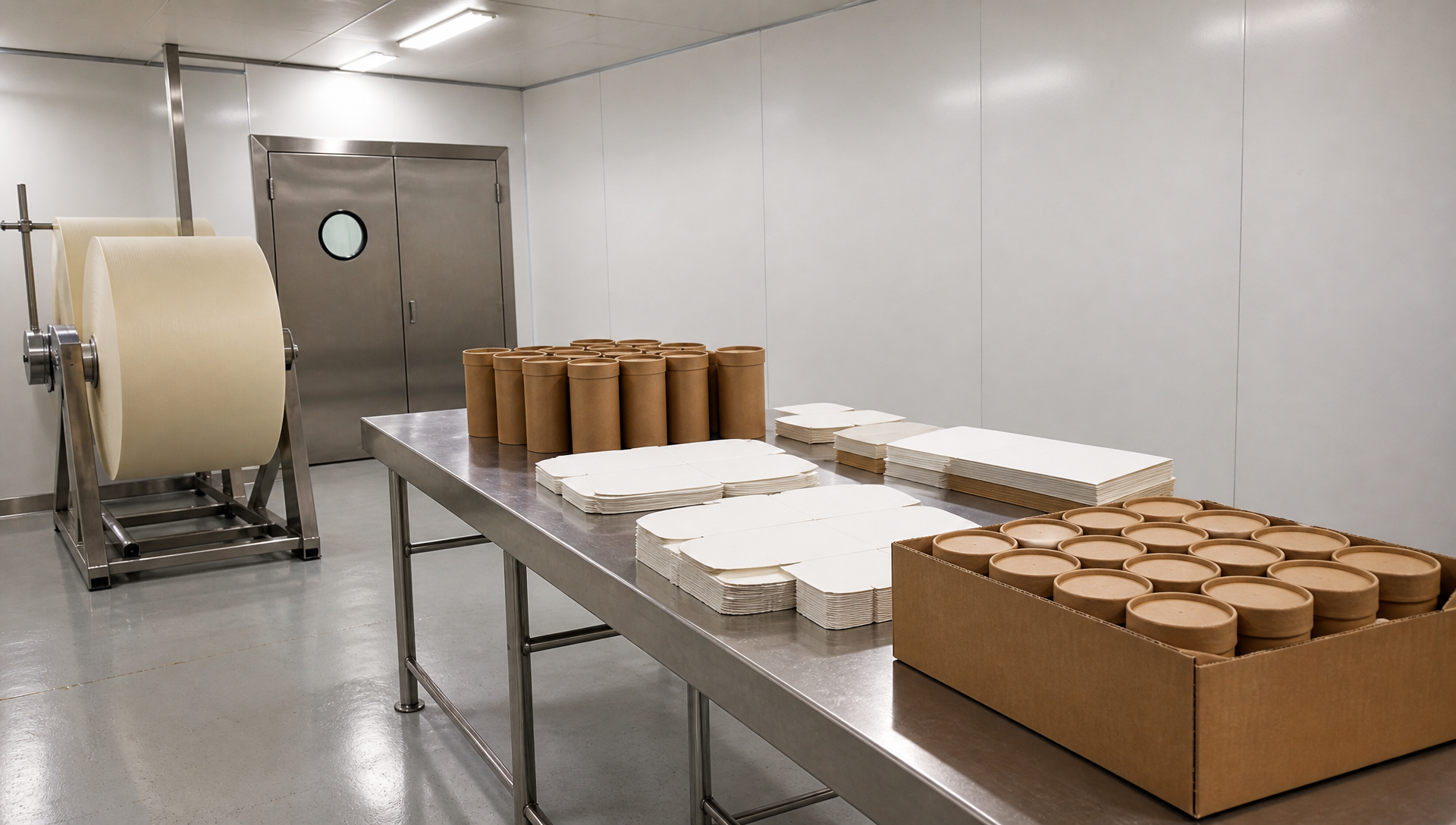
濾過された空気を備えた物理的に分離された生産環境です, controlled positive pressure, restricted personnel access, dedicated equipment, and documented hygiene procedures. 私たちの食品グレードの包装ワークショップ occupies 2,000㎡ within a 20,000㎡ factory, behind its own airlock.
What It Is Not
正直に, this matters more. It isn’t a curtained-off corner of a general print hall. It isn’t a normal room that gets swept twice a day. And it certainly isn’t a certificate hanging in reception while production runs wherever there’s capacity.
Why Separation Matters
A food grade packaging workshop exists because paper is porous and absorbent. その結果, airborne dust, ink solvent vapour, and fibre debris from adjacent operations migrate into stock and stay there. Once contamination reaches the board, no downstream inspection removes it.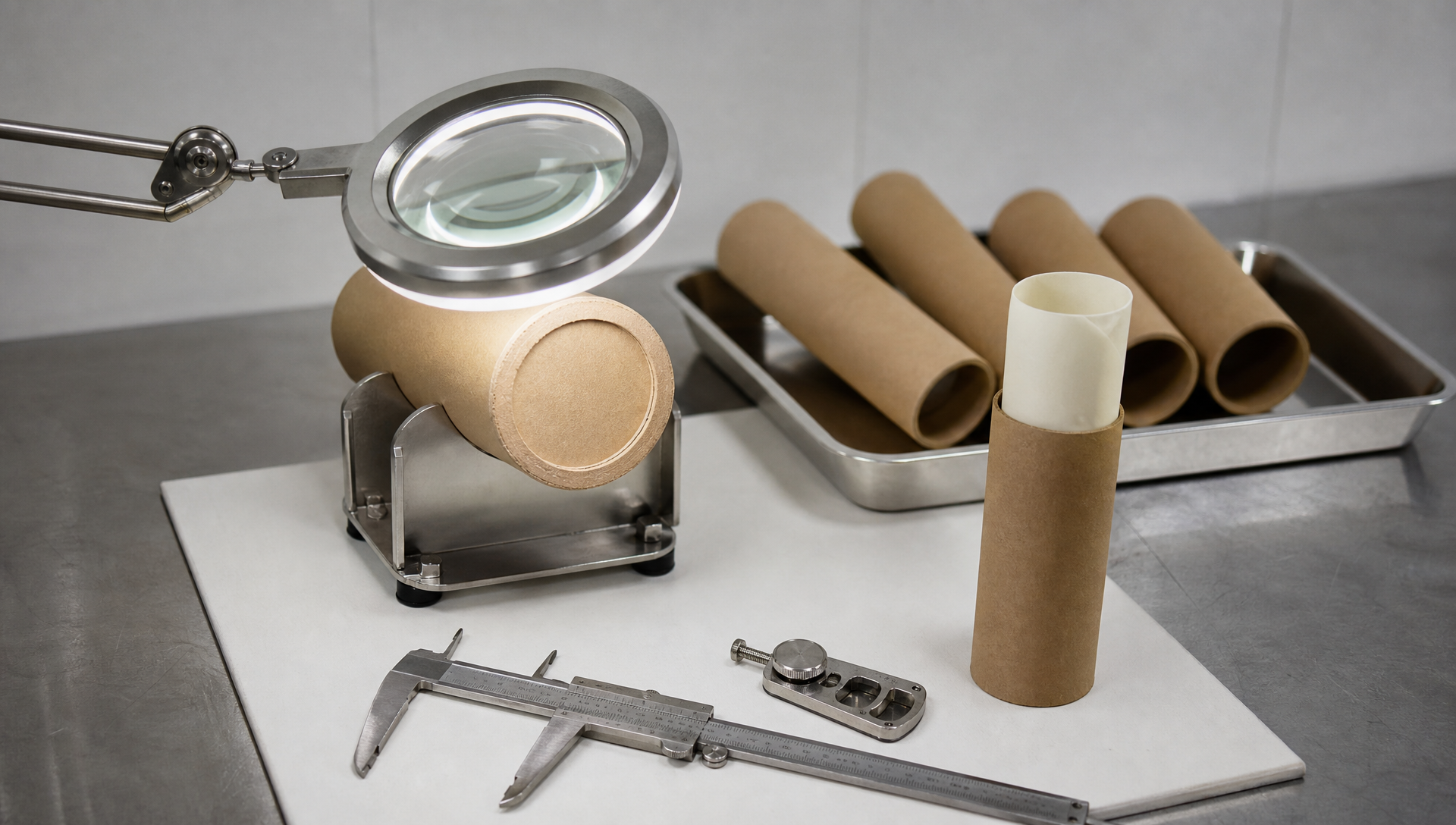
Who Needs a Food Grade Packaging Workshop
Direct food contact isn’t the only trigger. These categories usually require it:
- Snacks and dry goods — Anything filled straight into the pack. 私たちのを参照してください 食品グレードの紙管のケーススタディ.
- 紅茶とコーヒー — Aroma-sensitive products where solvent taint ruins the cup. Read 持続可能なお茶の食品包装, コーヒーと軽食.
- Confectionery and bakery — High fat content, so migration behaviour matters enormously.
- サプリメントと粉末 — Regulated, frequently audited, and usually retailer-mandated.
- Baby and infant products — The strictest documentation expectations of all.
- スキンケアと化粧品 — Not food, though many brands request the same standard anyway.
Inside the Food Grade Packaging Workshop: Air and Access
The Airlock
Nobody walks straight in. Entry runs through a two-door airlock where the outer door must close before the inner opens. その間, 誰かが生産フロアに到着する前に、エアシャワーが衣服から浮遊粒子を除去します。.
陽圧
作業場は周囲よりも高い圧力で稼働します. したがって, ドアが開くたびに空気が外側に流れます, 埃を内部に引き込むのではなく. 単純な原理です, それでも、面倒な作業はほとんどやってくれます.
濾過
供給空気は多段階の濾過を経て空間に入ります. フィルターの変更を誰かが思い出したときに置き換えるのではなく、ログに記録します。.
人事プロトコル
専用ガウン, 髪を覆う, 手指衛生は訪問者と管理者を含む全員に適用されます. 例外はありません, 例外こそが監査人が探しているものだからです.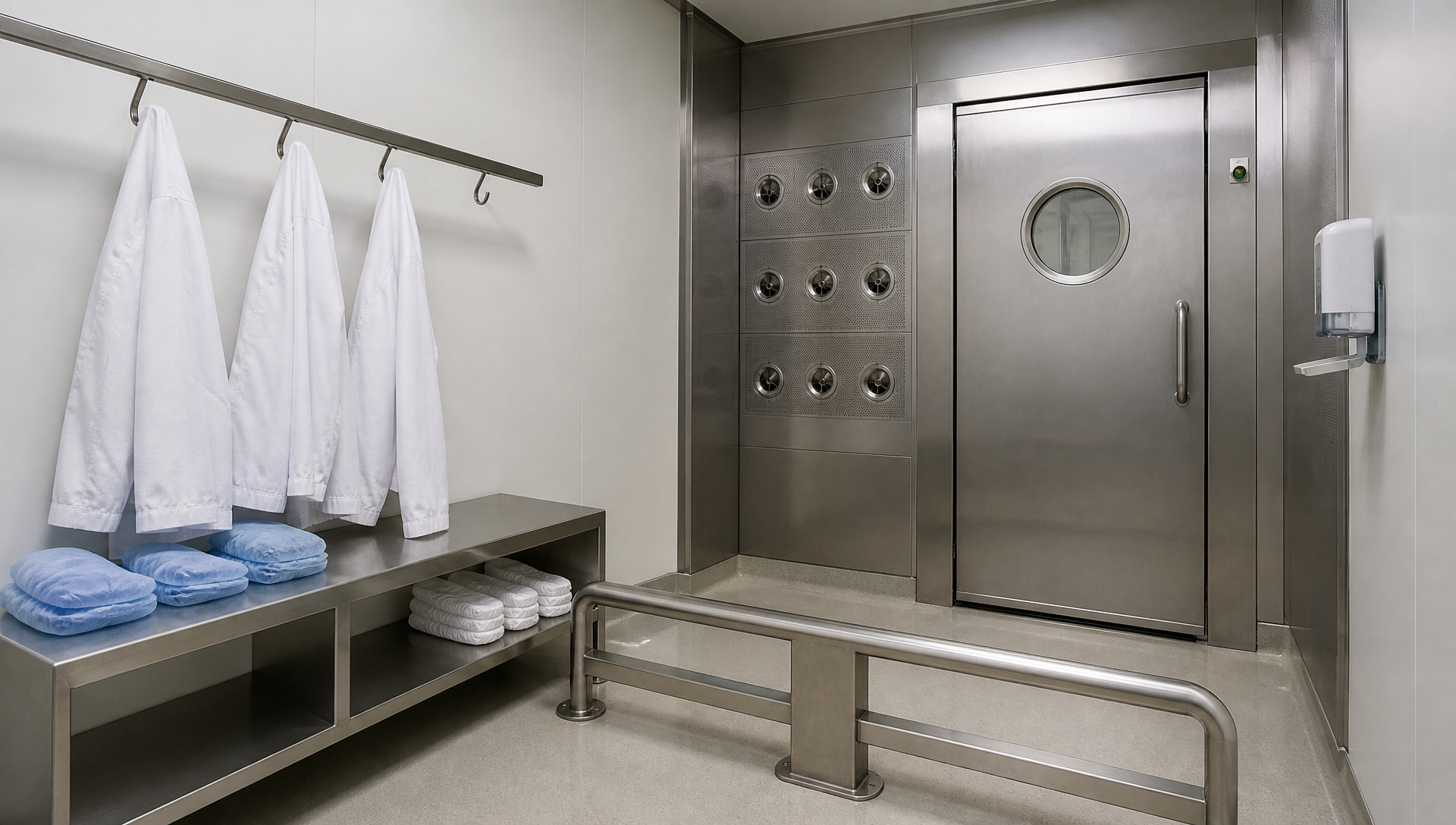
当社の食品グレードの包装ワークショップで扱われる材料
板紙と紙
- 食品グレードのバージンファイバーボード — 未リサイクル, リサイクルされた内容物には鉱物油の移行リスクがあるため.
- クラフト紙 — 職人のポジショニングに適したナチュラルで無漂白.
- アートボードとコートボード — 写真アートワーク用の滑らかな表面.
- 特殊なテクスチャードストック — ギフト用のプレミアムな触感仕上げ.
ライナーとバリア
- 耐油ライナー — 油脂が直接接触する場合.
- 食品グレードの紙ライナー — 乾物用の標準バリア.
- ホイルライナー — 最大限の香りと湿気のバリア, リサイクルは複雑になりますが.
- 密閉内袋 — 保存期間のために完全な隔離が必要な場合.
インクと接着剤
内部には低移行インクと食品に安全な接着剤を使用しています。食品グレードの包装ワークショップ. さらに, これらの資料は別の保管場所に保管されているため、時間のプレッシャーで間違ったドラム缶を手に入れる人がいません。.
認定ファイバー
FSC認証を受けた在庫もここで生産されています. 私たちのFSC認証紙パッケージ ガイドでは加工管理文書について説明しています.
食品グレードの包装ワークショップで製造される構造
私たちが実行するフォーマット
- 紙管 — 伸縮式の蓋とベース, クリーンエリア内にライナーを塗布した状態.
- 紙器 — ストレートタック, クラッシュロック, スリーブのフォーマット.
- 剛性ボックス — 菓子とお茶のプレミアムギフト構造.
- 窓付きカートン — 開いた窓を型抜きする, または制御された条件下で適用されるフィルム.
- インサートとディバイダー — マルチパックプレゼンテーション用のダイカットボードと成形パルプ.
組み立てが行われる場所
ライナー塗布, ベースシーリング, 最終的な組み立てはすべて食品グレードの包装ワークショップ内で行われます。. 印刷は専用の機器で行われます, 完成品は別の出口を通過します。入口のエアロックを決して通過しません。.
重要な構造の詳細
Base seams get particular attention on tube formats. Our snack brand project failed its first oil migration test at exactly that point, which is why we now inspect every base seam individually.
Printing and Finishing for Food Grade Packaging Workshop Output
Print Options
- CMYK offset and digital — Full-colour photographic artwork with low-migration inks.
- Pantone spot colour — Consistent brand colour across production runs.
- ホットスタンピング — Metallic accents applied outside the food-contact face.
- エンボス加工とデボス加工 — Mechanical texture, 追加の材料はありません.
- スポットUV — Selective gloss, kept to external surfaces only.
- マットラミネート — 耐久性, although it complicates the recycling story.
- 水性コーティング — プラスチックフィルムを使用しない水ベースの保護.
The Migration Rule
Here’s the constraint people underestimate. Decorative finishes stay on external surfaces. さらに, we assess set-off risk — ink transferring from the printed face to the inner face when sheets stack — because that’s a genuine migration pathway auditors check.
Colour Approval
Uncoated food-grade board absorbs ink differently from coated stock. So ask for a printed draw-down rather than approving colour from a screen.
Compliance Documented in Our Food Grade Packaging Workshop
Certifications and Frameworks
- BRCGSの梱包材 — 現在発行中 7, and the standard most retailers ask for by name.
- IFS PACsecure — Recognised across European retail supply chains.
- EU food contact framework — Regulation (EC) いいえ 1935/2004, with GMP under Regulation (EC) いいえ 2023/2006.
- FSC の加工流通過程 — 認定繊維のクレームの場合.
- EPR component weights — Split by material for filing. 見る EPR 包装コンプライアンス.
日記の規定
PPWR は次から適用されます 12 8月 2026 EU全域で. その間, EUDR 義務が適用される 30 12月 2026 大規模および中規模の事業者向け, そして 30 6月 2027 零細および小規模のオペレータ向け.
Sustainability Without Overclaiming
一律にエコを主張するのではなく、構造を正確に説明する. 私たちのリサイクル可能な紙製パッケージ そしてプラスチックフリーのパッケージ guides cover defensible wording.
Traceability
Every batch carries records linking material lot, production date, line, and operator. その結果, if a question arises twelve months later, we can reconstruct exactly what happened.
Quality Control Inside the Food Grade Packaging Workshop
In-Process Checks
Inside the food grade packaging workshop we inspect during production rather than only at the end. Operators verify dimensions, プリント登録, liner adhesion, and base seam integrity while the run is still correctable.
Environmental Monitoring
We log pressure differential, 温度, and humidity continuously. さらに, we run scheduled surface hygiene checks and keep the records available for audit.
Testing We Run
- 移行テスト — Verifying nothing transfers from packaging into product.
- Grease resistance — Essential for nuts, ベーカリー, and fried snacks.
- Seal integrity — On lined and sealed formats.
- Drop and compression — Since goods still have to survive transit.
Shelf-Life Trials
For food, we strongly recommend running a trial with your actual filled product. Empty samples reveal almost nothing about how fats and aromatics behave over six months.
How to Start a Food Grade Packaging Workshop Project
ステップ 1: Tell Us the Contact Situation
初め, we need to know whether your product touches the packaging directly, sits in a sealed inner bag, or arrives pre-wrapped. This single answer determines the entire specification.
ステップ 2: Product Characteristics
次, share fat content, 水分, aroma intensity, and target shelf life. Oily and aromatic products need substantially more barrier than dry biscuits.
ステップ 3: 構造, Sampling and Production
Then we recommend structure, ライナー, そして終わります, followed by a white structural sample and a finished pre-production sample. 私たちのカスタムパッケージングプロジェクトのワークフロー guide covers the full eight-stage sequence with realistic timings.
MOQとリードタイム
MOQ typically starts at 500–1,000 units depending on structure. Lead time usually runs 20–35 days after sample approval, and shelf-life trials extend that when required.
Artwork Files
AIを送信, EPS, または当社の Dieline 上に構築された高解像度 PDF, Pantone リファレンスとフォイル用の別個のレイヤーを使用, エンボス, そしてスポットUV.
Why Choose Pack Packaging’s Food Grade Packaging Workshop
施設
- 20,000㎡工場 — 印刷, 型抜き, 箔押し, チューブ巻き, 組み立てもすべて社内で.
- 2,000㎡ food grade packaging workshop — Physically separated with its own airlock, filtration, and dedicated equipment.
- 10,000,000+ 月間容量 — Scaling from a 5,000-unit launch to millions without changing supplier.
Team and Documentation
- 20+ 社内デザイナー — Structural engineering, ダイラインの作成, 印刷可能なアートワーク, 決して外注化していない.
- Audit-ready records — Certification, environmental logs, traceability, and material specifications supplied on request.
- 60+ 輸出市場 — インコタームズと税関は毎日処理されます.
正直なメモ
Not every product needs this environment, and we’ll tell you when it doesn’t. If your item arrives pre-wrapped in a sealed film pouch, a standard line may serve you perfectly well at lower cost. それにもかかわらず, if your retailer’s audit checklist asks the question, you’ll want the honest answer to be yes.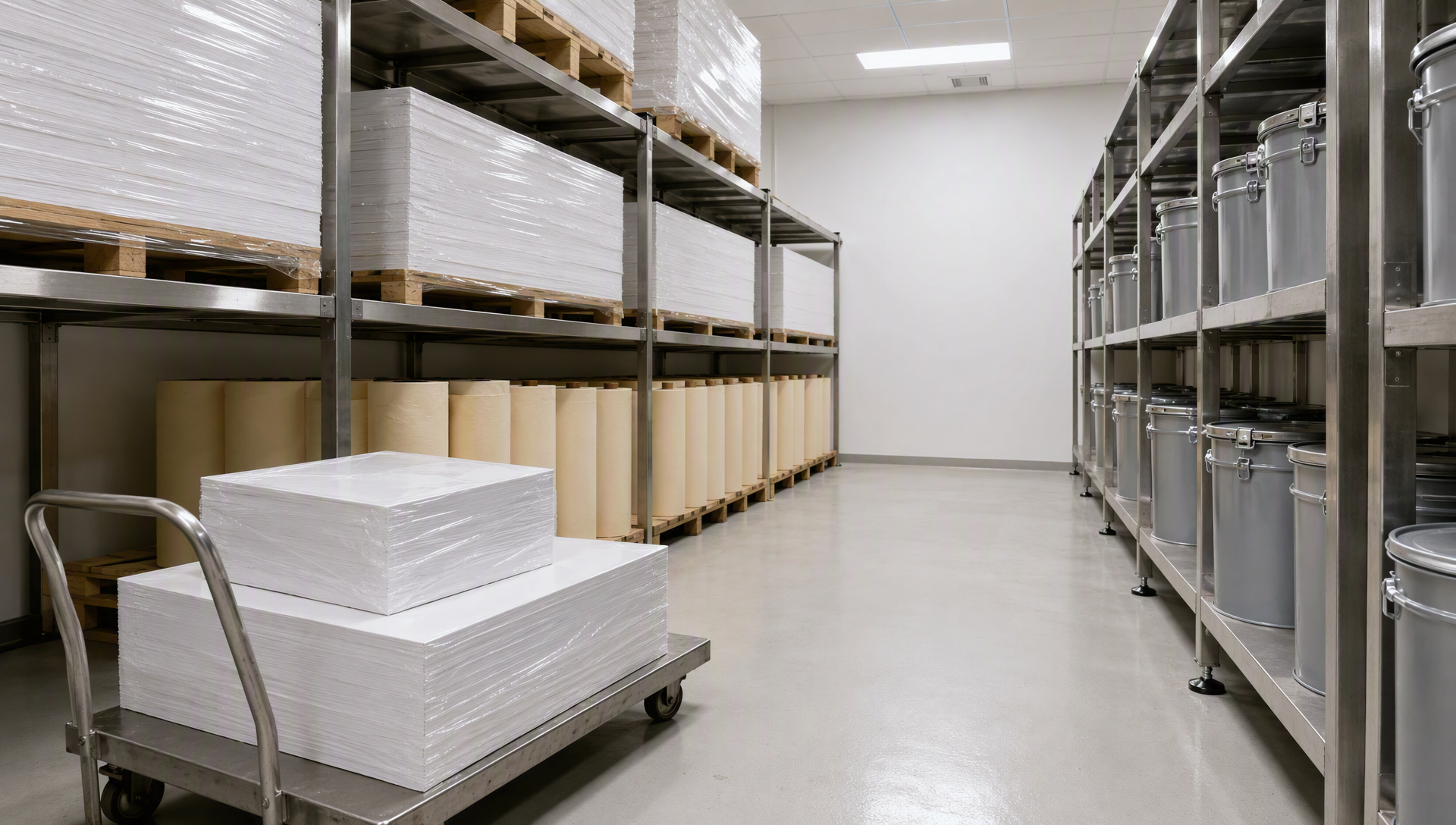
よくある質問: Standards and Audits
Q1: Do we actually need a food grade packaging workshop for our product? If your product touches the packaging directly, yes. For pre-wrapped items in sealed pouches, often not — although retailer audit requirements sometimes mandate it regardless of contact.
第2四半期: Can we visit or audit the facility? はい. We host customer audits and third-party audits, and we’ll provide environmental logs, traceability records, and certification documentation in advance.
Q3: Which certifications do you hold? BRCGSの梱包材, currently Issue 7, alongside IFS PACsecure. We also supply FSC chain of custody records and food contact declarations under Regulation (EC) いいえ 1935/2004.
Q4: Is recycled board acceptable for food contact? Generally not for direct contact, since recycled fibre carries mineral oil migration risk. We therefore use virgin food-grade board, または、リサイクルされたコンテンツが優先される機能的なバリアを指定します.
よくある質問: 料金, テストとスケジュール
Q5: この環境での生産コストは高くなりますか?? 幾分, yes. 専用設備, filtration, ガウン, ドキュメントには実際のオーバーヘッドが伴います. しかし, その差は通常、ブランドが期待するよりも小さく、監査に失敗するよりもかなり安価です.
Q6: 賞味期限の試験にはどのくらいの時間がかかりますか? それは目標の保存期間によって異なります. 高速テストによりタイムラインが短縮されます, ただし、高脂肪製品についてはリアルタイムで確認することをお勧めします.
Q7: 食品包装の失敗のほとんどの原因は何ですか? ベースの継ぎ目からの油の移行と不十分なバリアによる香りの損失. どちらも予想通り, どちらも、空のサンプルではなく、実際に充填された製品でテストすることで検出されます。.
Q8: 見積もりを開始するには何が必要ですか? 製品の寸法を送信してください, 製品の使用, 量, ターゲット市場, とロゴファイル. Then we’ll confirm whether your project needs our食品グレードの包装ワークショップ and recommend the right structure, 材料, そして終わります.
関連ガイド
Each area of this facility connects to a topic we’ve covered separately:
- サンプルから量産まで: カスタムパッケージングプロジェクトのワークフロー — The full eight-stage process behind every project.
- Food Grade Paper Tube Case Study for a Snack Brand — Oil migration, base seams, and liner selection in practice.
- 持続可能なお茶の食品包装, コーヒーと軽食 — Barrier decisions across edible categories.
- スキンケア ブランドが高級紙管で棚の訴求力を向上させた方法 — Premium structure and buyer approval.
- 香水紙管包装ケーススタディ — Drop testing and insert engineering.
- FSC認証紙パッケージ — 認定済みの繊維と流通過程管理.
- EU に販売するブランドの EPR 包装コンプライアンス — レジストレーションとコンポーネントの重み付け.
- 生分解性紙管包装 — Fibre options and construction detail.
- 紙パッケージがブランドの環境に優しいイメージの構築にどのように役立つか — なぜスイッチがブランド認識を変えるのか.
カスタム パッケージング ソリューションをさらに詳しく見る
- 折りたたみボックス — 軽量, 完全にカスタマイズ可能な小売用カートン.
- リジッドボックス — プレステージシリーズ向けのプレミアムギフトボックス.
- 段ボール箱 — 耐久性のある電子商取引および配送用の梱包.
- 小児用安全ボックス — 規制対象製品の安全な梱包.
- 付属品 — カスタムインサート, ティッシュペーパー, リボン, とラベル.
- 紙管 — Our dedicated collection for food, 美しさ, お茶, そしてコーヒー.
Ready to Discuss Your Food Project?
A certificate proves a supplier passed an audit on one particular day. What actually protects your product is whether the airlock gets used properly on an ordinary Tuesday afternoon when a run is behind schedule — and honestly, that’s culture rather than paperwork. 説明するよりも部屋を見せていただきたいと思います.
製品のサイズを教えてください, 量, ロゴファイル, そしてターゲット市場. 私たちのチームが適切な構造を推奨します, 材料, そして終わります, プロジェクトのどの部分が内部で実行されるかを正確に確認します。食品グレードの包装ワークショップ.
✉️ [概要をお送りください → カスタム見積もりを入手してください 24 営業時間] 含む: 製品寸法 · コンタクトタイプ · 数量 · 対象市場 · ロゴファイル
パック包装 | 20,000㎡工場 | 2,000㎡ 食品グレードのワークショップ | BRCGS認定 | FSC認証素材 | 60+ 輸出市場
免責事項: 認証ステータス, MOQ範囲, リードタイムは 8 月時点の当社の標準慣行を反映しています。 2026 保証ではなく一般的な範囲を示しています. 規制情報は公的に入手可能な情報源を反映しており、法的アドバイスを構成するものではありません。. 食品との接触要件は製品によって異なります, 市場, および接点の種類, したがって、資格のあるアドバイザーに具体的な義務を確認してください.