Ask any food brand what worries them most about sourcing packaging overseas, and it rarely comes down to price. It’s whether the supplier actually has afood grade packaging workshop, or simply prints food cartons on the same line that ran solvent-based work yesterday. Auditors ask that question too, and a certificate alone doesn’t answer it.
So instead of describing our facility in vague terms, we’ll walk you through it properly — the airlock, the pressure gradient, the inspection points, and the paperwork that comes out the other end.
🔘 [Obtenha orçamento de embalagem personalizada →]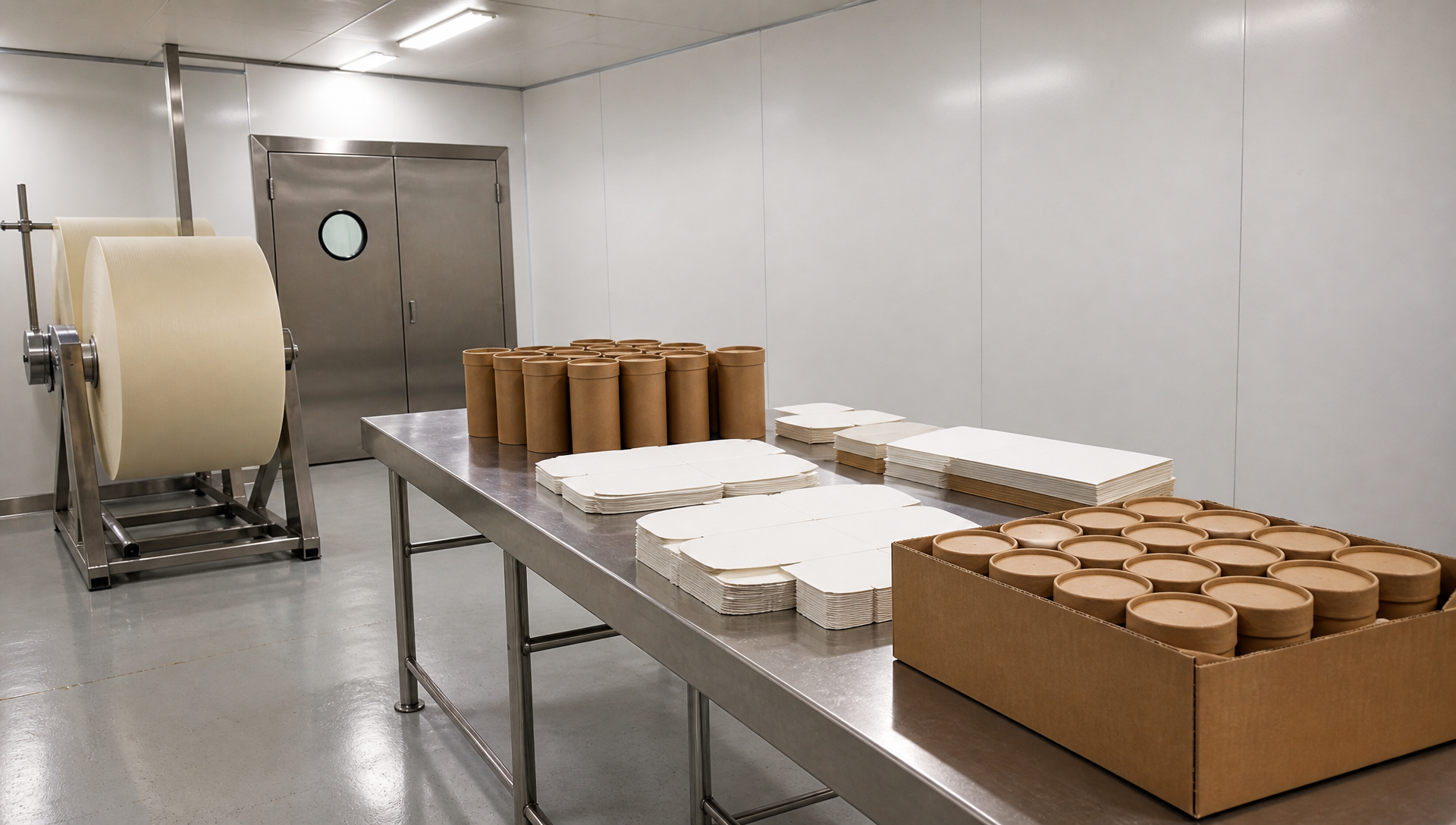
What a Food Grade Packaging Workshop Actually Is
The Short Definition
It’s a physically separated production environment with filtered air, controlled positive pressure, restricted personnel access, dedicated equipment, and documented hygiene procedures. Nossofood grade packaging workshop occupies 2,000㎡ within a 20,000㎡ factory, behind its own airlock.
What It Is Not
Honestamente, this matters more. It isn’t a curtained-off corner of a general print hall. It isn’t a normal room that gets swept twice a day. And it certainly isn’t a certificate hanging in reception while production runs wherever there’s capacity.
Why Separation Matters
A food grade packaging workshop exists because paper is porous and absorbent. Consequentemente, airborne dust, ink solvent vapour, and fibre debris from adjacent operations migrate into stock and stay there. Once contamination reaches the board, no downstream inspection removes it.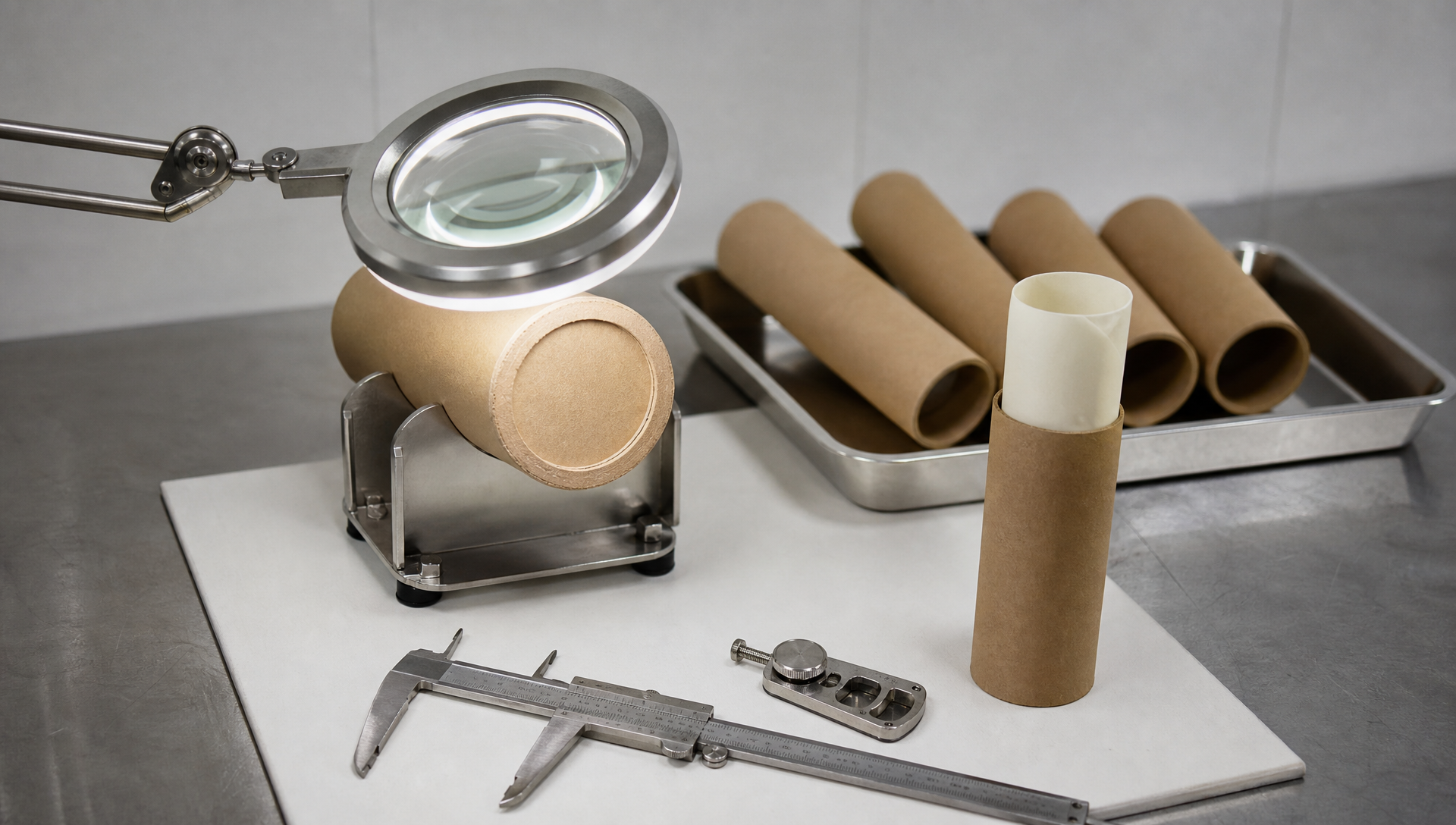
Who Needs a Food Grade Packaging Workshop
Direct food contact isn’t the only trigger. These categories usually require it:
- Snacks and dry goods — Anything filled straight into the pack. Veja nosso estudo de caso de tubo de papel de qualidade alimentar.
- Chá e café — Aroma-sensitive products where solvent taint ruins the cup. Read Embalagens de alimentos sustentáveis para chá, Café e Lanches.
- Confectionery and bakery — High fat content, so migration behaviour matters enormously.
- Suplementos e pós — Regulated, frequently audited, and usually retailer-mandated.
- Baby and infant products — The strictest documentation expectations of all.
- Cuidados com a pele e cosméticos — Not food, though many brands request the same standard anyway.
Inside the Food Grade Packaging Workshop: Air and Access
The Airlock
Nobody walks straight in. Entry runs through a two-door airlock where the outer door must close before the inner opens. Enquanto isso, an air shower removes loose particles from clothing before anyone reaches the production floor.
Positive Pressure
The workshop runs at higher pressure than surrounding areas. Portanto, air flows outward whenever a door opens, rather than pulling dust inward. It’s a simple principle, yet it does most of the heavy lifting.
Filtration
Supply air passes through multi-stage filtration before entering the space. We log filter changes rather than replacing them when someone remembers.
Personnel Protocol
Dedicated gowning, hair covering, and hand hygiene apply to everyone — including visitors and management. No exceptions, because exceptions are exactly what auditors look for.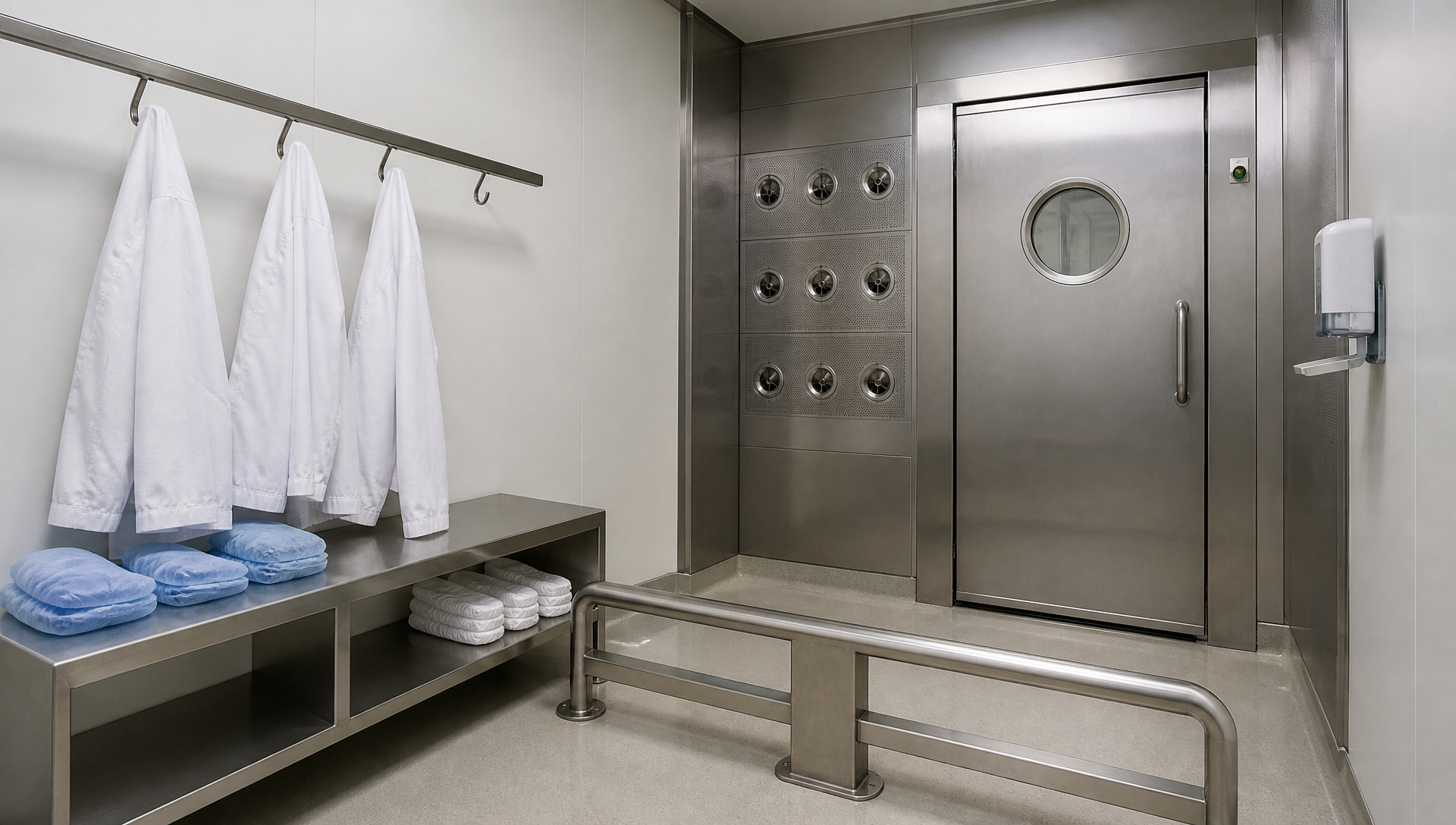
Materials Handled in Our Food Grade Packaging Workshop
Board and Paper
- Food-grade virgin fibre board — Unrecycled, since recycled content carries mineral oil migration risk.
- Papel kraft — Natural and unbleached for artisan positioning.
- Art and coated board — Smooth surfaces for photographic artwork.
- Specialty textured stock — Premium tactile finishes for gifting ranges.
Liners and Barriers
- Greaseproof liners — For fats and oils in direct contact.
- Food-grade paper liners — Standard barrier for dry goods.
- Forros de folha — Maximum aroma and moisture barrier, though they complicate recycling.
- Sealed inner bags — Where shelf life demands full isolation.
Inks and Adhesives
We use low-migration inks and food-safe adhesives inside thefood grade packaging workshop. Adicionalmente, we keep these materials in separate storage so nobody grabs the wrong drum under time pressure.
Fibra Certificada
FSC-certified stock runs here too. NossoEmbalagem de papel certificada FSC guide explains chain of custody documentation.
Structures Produced in the Food Grade Packaging Workshop
Formats We Run
- Tubos de papel — Telescopic lid and base, with liner applied inside the clean area.
- Caixas dobráveis — Straight tuck, crash lock, and sleeve formats.
- Caixas rígidas — Premium gift structures for confectionery and tea.
- Window cartons — Die-cut open windows, or film applied under controlled conditions.
- Inserts and dividers — Die-cut board and moulded pulp for multi-pack presentation.
📦Produtos Relacionados: Tubos de papel personalizados / Embalagem de alimentos / Embalagens Cosméticas
Where Assembly Happens
Liner application, base sealing, and final assembly all happen inside the food grade packaging workshop. Printing occurs on dedicated equipment, and finished goods pass through a separate exit — never back through the entry airlock.
Structural Detail That Matters
Base seams get particular attention on tube formats. Our snack brand project failed its first oil migration test at exactly that point, which is why we now inspect every base seam individually.
Printing and Finishing for Food Grade Packaging Workshop Output
Print Options
- CMYK offset and digital — Full-colour photographic artwork with low-migration inks.
- Cor especial Pantone — Consistent brand colour across production runs.
- Estampagem a quente — Metallic accents applied outside the food-contact face.
- Gravação e gravação em relevo — Mechanical texture, nenhum material adicionado.
- UV localizado — Selective gloss, kept to external surfaces only.
- Laminação fosca - Durável, although it complicates the recycling story.
- Revestimento aquoso — Proteção à base de água sem filme plástico.
The Migration Rule
Here’s the constraint people underestimate. Decorative finishes stay on external surfaces. Além disso, we assess set-off risk — ink transferring from the printed face to the inner face when sheets stack — because that’s a genuine migration pathway auditors check.
Colour Approval
Uncoated food-grade board absorbs ink differently from coated stock. So ask for a printed draw-down rather than approving colour from a screen.
Compliance Documented in Our Food Grade Packaging Workshop
Certifications and Frameworks
- Materiais de embalagem BRCGS - Edição atual 7, and the standard most retailers ask for by name.
- IFS PAC seguro — Recognised across European retail supply chains.
- EU food contact framework — Regulation (CE) Não 1935/2004, with GMP under Regulation (CE) Não 2023/2006.
- Cadeia de custódia FSC — Para reivindicações de fibra certificada.
- EPR component weights — Split by material for filing. Ver Conformidade de embalagens EPR.
Regulamentos para Diário
O PPWR se aplica a partir de 12 Agosto 2026 em toda a UE. Enquanto isso, As obrigações do EUDR recaem sobre 30 dezembro 2026 para grandes e médias operadoras, e 30 Junho 2027 para micro e pequenas operadoras.
Sustainability Without Overclaiming
Descrever a construção com precisão, em vez de fazer afirmações ecológicas gerais. NossoEmbalagem de papel reciclável eEmbalagem sem plástico guides cover defensible wording.
Rastreabilidade
Every batch carries records linking material lot, production date, line, and operator. Consequentemente, if a question arises twelve months later, we can reconstruct exactly what happened.
Quality Control Inside the Food Grade Packaging Workshop
In-Process Checks
Inside the food grade packaging workshop we inspect during production rather than only at the end. Operators verify dimensions, print registration, liner adhesion, and base seam integrity while the run is still correctable.
Environmental Monitoring
We log pressure differential, temperatura, and humidity continuously. Adicionalmente, we run scheduled surface hygiene checks and keep the records available for audit.
Testing We Run
- Teste de migração — Verifying nothing transfers from packaging into product.
- Resistência à graxa — Essential for nuts, padaria, and fried snacks.
- Seal integrity — On lined and sealed formats.
- Drop and compression — Since goods still have to survive transit.
Shelf-Life Trials
Para comida, we strongly recommend running a trial with your actual filled product. Empty samples reveal almost nothing about how fats and aromatics behave over six months.
How to Start a Food Grade Packaging Workshop Project
Etapa 1: Tell Us the Contact Situation
Primeiro, we need to know whether your product touches the packaging directly, sits in a sealed inner bag, or arrives pre-wrapped. This single answer determines the entire specification.
Etapa 2: Product Characteristics
Próximo, share fat content, umidade, aroma intensity, and target shelf life. Oily and aromatic products need substantially more barrier than dry biscuits.
Etapa 3: Estrutura, Sampling and Production
Then we recommend structure, forro, e terminar, followed by a white structural sample and a finished pre-production sample. Nossofluxo de trabalho do projeto de embalagem personalizada guide covers the full eight-stage sequence with realistic timings.
Quantidade mínima e prazo de entrega
MOQ typically starts at 500–1,000 units depending on structure. Lead time usually runs 20–35 days after sample approval, and shelf-life trials extend that when required.
Artwork Files
Enviar IA, EPS, ou PDF de alta resolução criado em nossa linha, com referências Pantone e camadas separadas para foil, gravar em relevo, e mancha UV.
Why Choose Pack Packaging’s Food Grade Packaging Workshop
Instalação
- 20,000㎡ fábrica - Impressão, corte e vinco, frustrar, enrolamento de tubo, e montagem tudo em casa.
- 2,000㎡ food grade packaging workshop — Physically separated with its own airlock, filtration, and dedicated equipment.
- 10,000,000+ capacidade mensal — Scaling from a 5,000-unit launch to millions without changing supplier.
Team and Documentation
- 20+ designers internos — Structural engineering, criação dieline, e obras de arte prontas para impressão, nunca terceirizado.
- Audit-ready records — Certification, environmental logs, traceability, and material specifications supplied on request.
- 60+ mercados de exportação — Incoterms e alfândegas tratados diariamente.
Uma nota honesta
Not every product needs this environment, and we’ll tell you when it doesn’t. If your item arrives pre-wrapped in a sealed film pouch, a standard line may serve you perfectly well at lower cost. No entanto, if your retailer’s audit checklist asks the question, you’ll want the honest answer to be yes.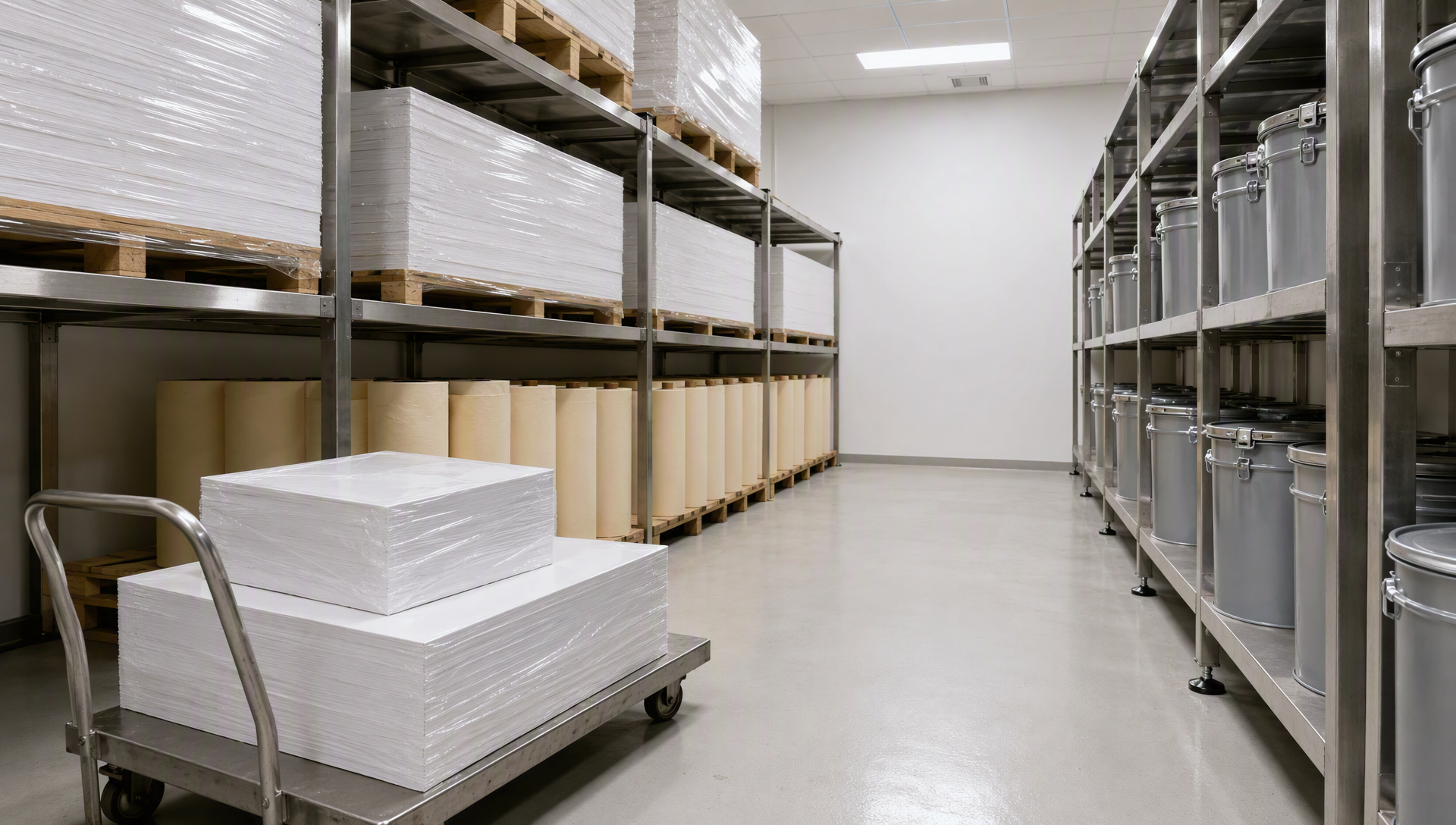
Perguntas frequentes: Standards and Audits
1º trimestre: Do we actually need a food grade packaging workshop for our product? If your product touches the packaging directly, sim. For pre-wrapped items in sealed pouches, often not — although retailer audit requirements sometimes mandate it regardless of contact.
2º trimestre: Can we visit or audit the facility? Sim. We host customer audits and third-party audits, and we’ll provide environmental logs, traceability records, and certification documentation in advance.
3º trimestre: Which certifications do you hold? Materiais de embalagem BRCGS, currently Issue 7, alongside IFS PACsecure. We also supply FSC chain of custody records and food contact declarations under Regulation (CE) Não 1935/2004.
4º trimestre: Is recycled board acceptable for food contact? Generally not for direct contact, since recycled fibre carries mineral oil migration risk. We therefore use virgin food-grade board, or specify a functional barrier where recycled content is a priority.
Perguntas frequentes: Custo, Testing and Timelines
Q5: Does production in this environment cost more? Somewhat, sim. Dedicated equipment, filtration, gowning, and documentation carry real overhead. No entanto, the difference is usually smaller than brands expect — and considerably cheaper than a failed audit.
Q6: How long do shelf-life trials take? That depends on your target shelf life. Accelerated testing compresses the timeline, though we’d still recommend real-time confirmation for high-fat products.
Q7: What causes most food packaging failures? Oil migration through base seams and aroma loss through inadequate barriers. Both are predictable, and both get caught by testing with your real filled product rather than an empty sample.
P8: O que você precisa para iniciar uma cotação? Envie as dimensões do seu produto, uso do produto, quantidade, mercado-alvo, e arquivo de logotipo. Then we’ll confirm whether your project needs ourfood grade packaging workshop and recommend the right structure, material, e terminar.
Guias Relacionados
Each area of this facility connects to a topic we’ve covered separately:
- Da amostra à produção em massa: Fluxo de trabalho do projeto de embalagem personalizada — The full eight-stage process behind every project.
- Food Grade Paper Tube Case Study for a Snack Brand — Oil migration, base seams, and liner selection in practice.
- Embalagens de alimentos sustentáveis para chá, Café e Lanches — Barrier decisions across edible categories.
- Como uma marca de cuidados com a pele melhorou o apelo nas prateleiras com tubos de papel luxuosos — Premium structure and buyer approval.
- Estudo de caso de embalagem de tubo de papel para perfume — Drop testing and insert engineering.
- Embalagem de papel certificada FSC — Fibra certificada e cadeia de custódia.
- Conformidade de embalagens EPR para marcas que vendem para a UE — Registro e pesos dos componentes.
- Embalagem de tubo de papel biodegradável — Fibre options and construction detail.
- Como as embalagens de papel ajudam as marcas a construir uma imagem mais verde — Por que a mudança muda a percepção da marca.
Explore mais soluções de embalagens personalizadas
- Caixas dobráveis - Leve, caixas de varejo totalmente personalizáveis.
- Caixas Rígidas — Caixas de presente premium para faixas de prestígio.
- Caixas de papelão ondulado — Embalagem durável para comércio eletrônico e remessa.
- Caixas resistentes a crianças — Embalagem segura para produtos regulamentados.
- Acessórios – Inserções personalizadas, papel de seda, fitas, e rótulos.
- Tubos de papel — Our dedicated collection for food, beauty, chá, e café.
Ready to Discuss Your Food Project?
A certificate proves a supplier passed an audit on one particular day. What actually protects your product is whether the airlock gets used properly on an ordinary Tuesday afternoon when a run is behind schedule — and honestly, that’s culture rather than paperwork. We’d rather show you the room than describe it.
Diga-nos o tamanho do seu produto, quantidade, arquivo de logotipo, e mercado-alvo. Nossa equipe irá então recomendar a estrutura certa, material, e terminar, and confirm exactly which parts of your project run inside ourfood grade packaging workshop.
✉️ [Envie-nos seu briefing → Obtenha um orçamento personalizado em 24 Horas] Incluir: product dimensions · contact type · quantity · target market · logo file
Embalagem de pacote | 20,000㎡ Fábrica | 2,000㎡ Workshop de qualidade alimentar | BRCGS Certified | Materiais Certificados FSC | 60+ Mercados de exportação
Isenção de responsabilidade: Certification status, Intervalos de pedido, and lead times reflect our standard practice as of August 2026 and represent typical ranges rather than guarantees. Regulatory information reflects publicly available sources and does not constitute legal advice. Food contact requirements vary by product, mercado, and contact type, então confirme suas obrigações específicas com um consultor qualificado.