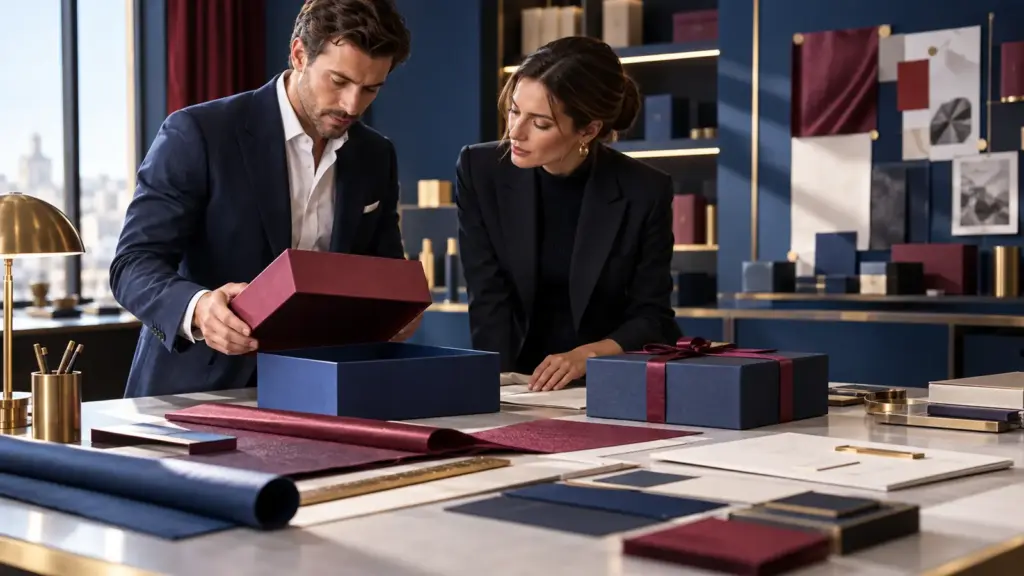
You may have already chosen the box structure, material and size. それから, just when the project seems ready for production, the packaging supplier replies: “Please send the editable AI or PDF artwork file.”
That is where many projects slow down.
Preparing custom packaging artwork files correctly can prevent missing fonts, blurry logos, unexpected color changes, misplaced foil, incorrect dielines and repeated artwork revisions. さらに重要なことは, a clean print-ready file helps the packaging factory move from design approval to sampling and mass production much faster.
それで, before you send your final artwork, it is worth spending a few minutes checking the details that actually matter in production.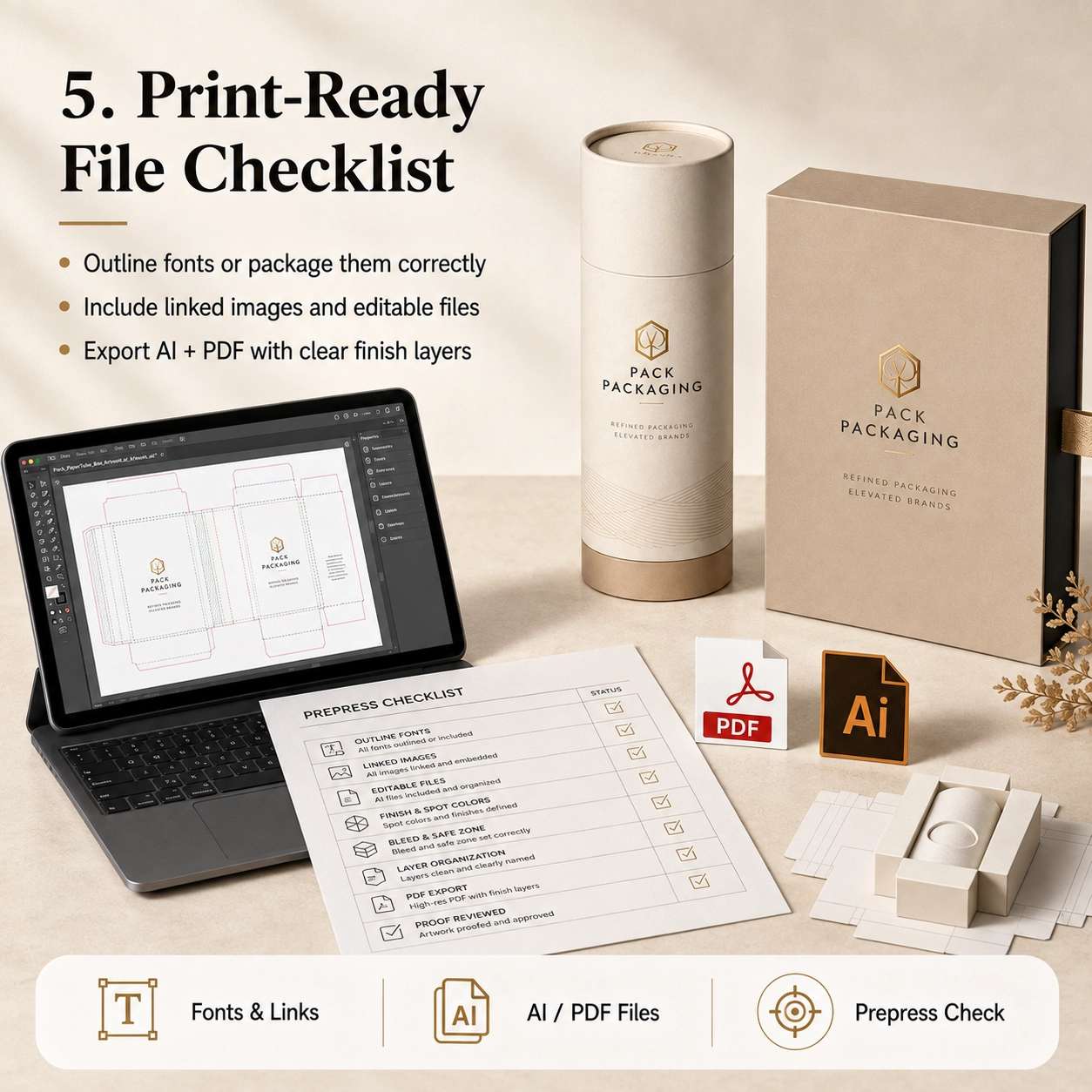
What Are Custom Packaging Artwork Files?
Custom packaging artwork files are the production-ready design files used to print and finish a custom paper box, 紙管, スリーブ, carton or other package.
They are different from a simple JPG mockup.
A mockup shows what the packaging should look like. しかし, a production artwork file tells the factory exactly where every element should be printed, cut, 折りたたまれた, stamped, embossed or coated.
A complete file may contain:
- Packaging dieline
- Cutting lines
- Creasing or folding lines
- Bleed area
- Safe area
- CMYKアートワーク
- パントンカラー
- ロゴ
- 製品名
- 材料
- バーコード
- Regulatory information
- Hot-stamping layer
- Embossing layer
- Debossing layer
- Spot UV layer
- Window position
- Glue area
- Insert artwork
そのため, packaging artwork should always be built on the final approved dieline rather than on an estimated rectangle.
Preferred File Formats
For most custom packaging projects, useful production formats include:
- Adobe Illustrator
.AI - Editable
.PDF .EPS
プロジェクトに応じて, PSD or high-resolution image files may also be supplied for photographic elements.
しかし, vector files are generally more suitable for logos, 文章, cutting paths and special-finishing areas because they can be scaled without losing edge quality.
Why JPG and PNG Files Are Usually Not Enough
A JPG or PNG can be useful as a visual reference. それにもかかわらず, it normally does not contain editable:
- Vector text
- パントンカラー
- Dielines
- Foil layers
- Embossing paths
- Cutting information
したがって, do not send only a screenshot and expect the factory to reproduce every detail accurately.
If editable artwork is unavailable, tell the supplier early. The design team can then confirm whether artwork reconstruction is required before sampling.
Why Artwork Preparation Matters
良い custom packaging artwork files do more than improve print quality.
They can also reduce:
- Artwork revisions
- Sample corrections
- Production delays
- Color misunderstandings
- Incorrect foil positions
- Missing information
- Reprinting risk
正直に, many packaging delays happen before the machine even starts.
A bottle may already be approved. The packaging dimensions may already be confirmed. Yet production still cannot begin because the logo is missing, fonts are unavailable or the foil layer has not been separated.
したがって, good artwork preparation is part of production planning, not merely graphic design.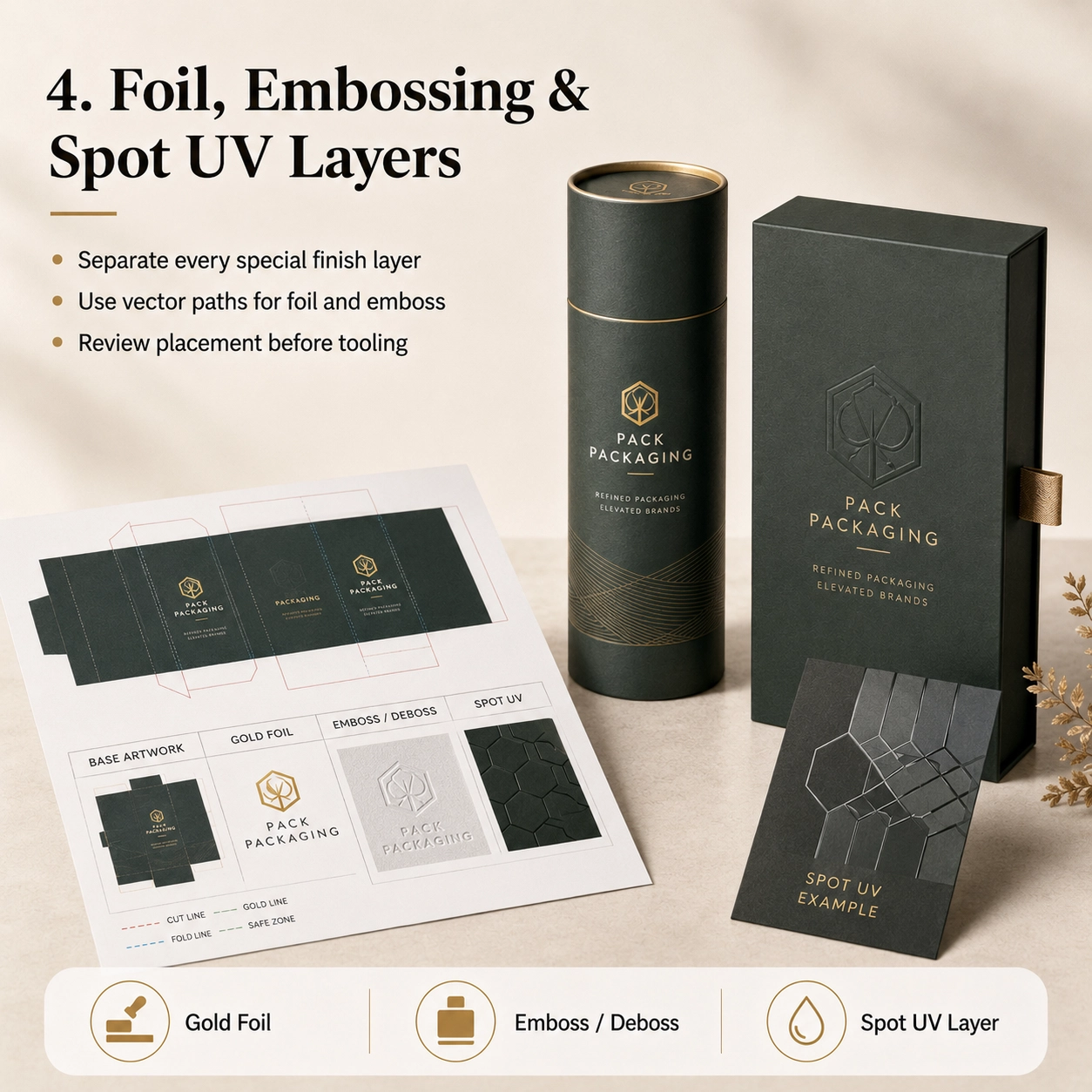
Start With the Correct Packaging Dieline
Before placing graphics, make sure you are working on the final dieline supplied or approved by the packaging manufacturer.
A dieline is the flat technical drawing of the package before it is folded or formed.
It may show:
- Cut lines
- Fold lines
- Glue areas
- Lid areas
- Bottom areas
- Seams
- 窓
- Insert positions
- Overlap sections
Never assume that two boxes of the same outer size use the same dieline.
例えば, a straight tuck-end carton, magnetic rigid box and drawer box may all measure 100 × 100 × 50 mm externally, yet their artwork layouts are completely different.
The same principle applies to cylindrical packaging.
A paper tube requires the designer to consider:
- Circumference
- Vertical seam
- Lid overlap
- Bottom section
- Inner neck
- Visible front area
したがって, structural approval should happen before final artwork approval.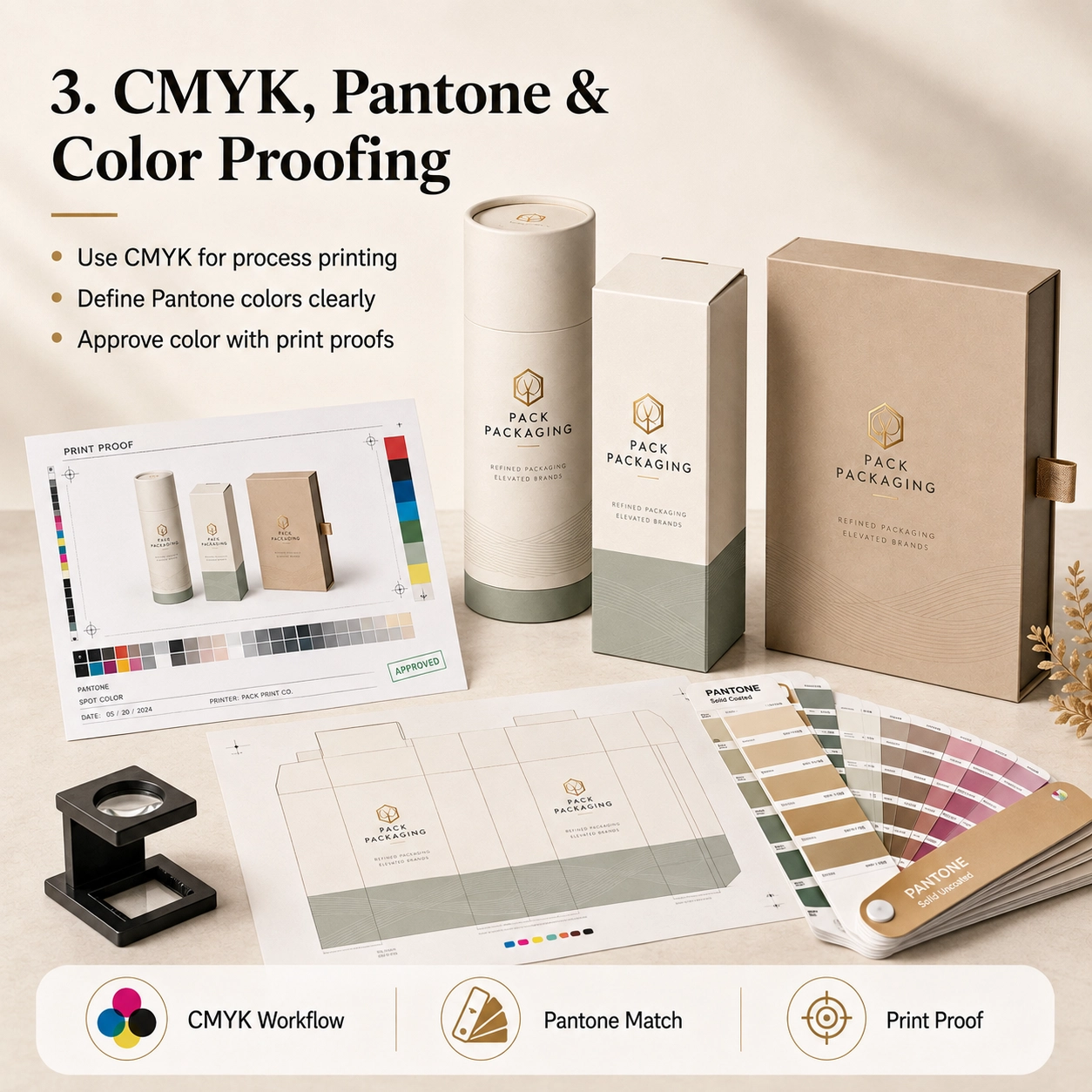
Understand Cut Lines, Fold Lines and Safe Areas
A packaging dieline usually contains several technical lines.
These should remain separate from the printed artwork.
Cut Line
The cut line shows where the packaging will be trimmed.
Do not place important text directly on this line.
Fold or Crease Line
Fold lines indicate where cartons will bend or where rigid-box components meet.
Avoid placing critical text directly across a fold unless the design intentionally requires it.
Bleed Area
Artwork that reaches the edge of a package should extend beyond the trim line into the bleed area.
Adobe’s Illustrator workflow supports setting bleed areas and printer’s marks for print production.
あ 3 mm bleed is common in many printing workflows, but the final requirement should always follow the factory’s dieline.
言い換えると, do not assume every packaging project uses exactly the same bleed.
Safe Area
ロゴ, small text, barcodes and important information should remain safely inside the trim edge.
The exact safe distance depends on:
- 構造
- Cutting tolerance
- 折りたたみ
- Tube seam
- Window position
- 仕上げ
したがって, follow the safe zone shown on the production dieline whenever one is provided.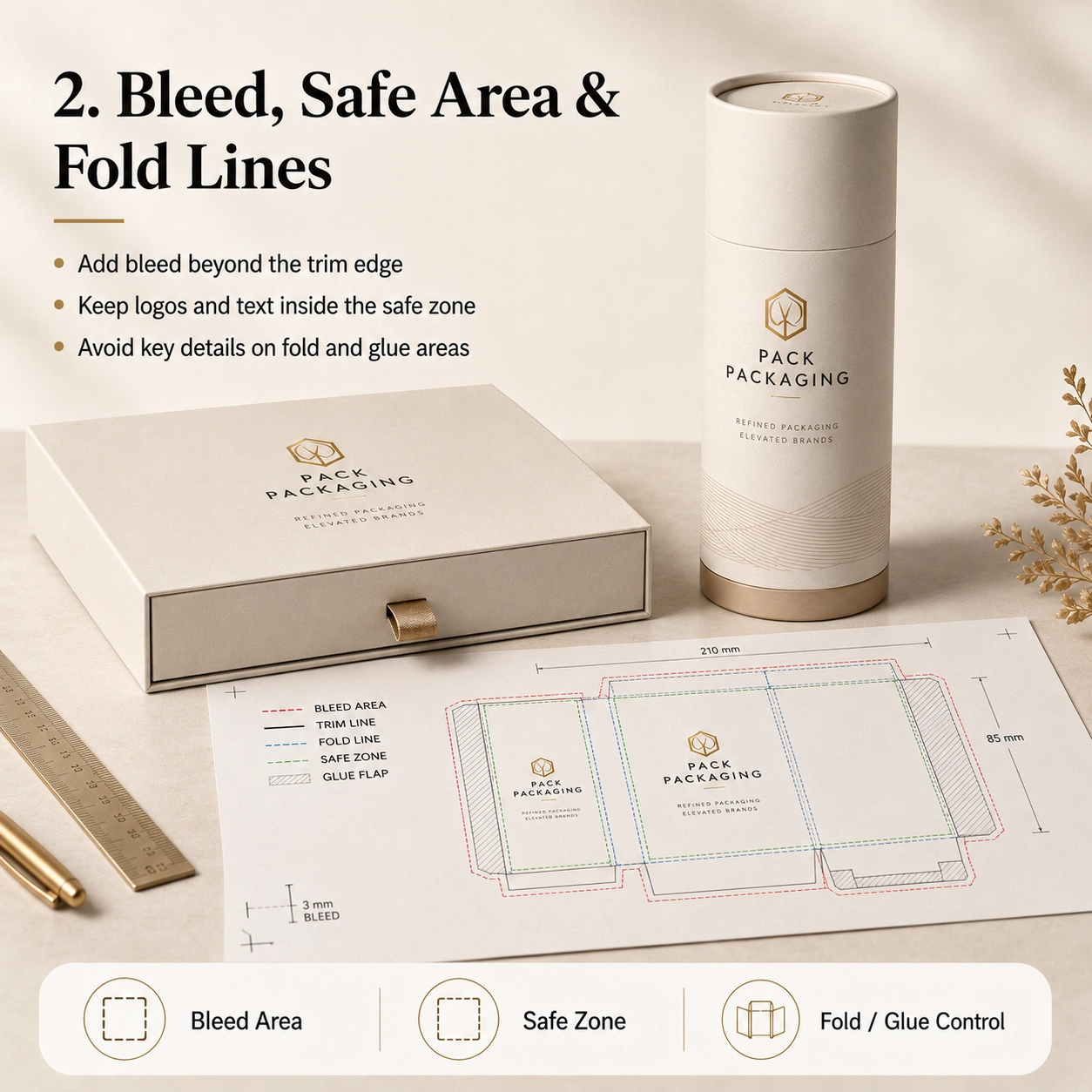
一般的なアプリケーション
The preparation of custom packaging artwork files changes slightly depending on what the packaging will hold.
Perfume Packaging
Perfume packaging often contains relatively simple front graphics but more complex finishing.
A premium fragrance package may require separate artwork layers for:
- Main CMYK or Pantone print
- 金箔
- Embossed logo
- スポットUV
- Inner neck color
- Insert branding
例えば, if the gold logo also needs to be embossed, the factory must understand whether the embossing follows the exact foil shape or covers a larger area.
したがって, clearly label each layer.
Useful layer names include:
- GOLD FOIL
- EMBOSS
- CUT LINE
- CREASE LINE
- INSERT
That may sound basic, but it can prevent a surprising number of misunderstandings.
スキンケアと化粧品
Skincare packaging usually contains more text.
これには以下が含まれる場合があります:
- 製品名
- 材料
- 方向
- Net contents
- Warnings
- Manufacturer information
- Batch area
- バーコード
結果として, text size and spacing become especially important.
Before sending the file, zoom in and check whether any important information sits too close to a fold, glue flap or edge.
紅茶とコーヒー
Tea and coffee packaging often combines branding with:
- Product origin
- 材料
- 醸造手順
- Flavor notes
- 重さ
- バーコード
- Food information
If the product uses kraft paper, remember that the natural brown paper will influence the appearance of printed colors.
したがって, the same CMYK artwork can look different on white art paper and natural kraft.
Chocolate and Candy
Chocolate and confectionery packaging may use colorful illustrations, photographs and metallic finishing.
さらに, food packaging can contain considerable mandatory text.
When a window is included, the artwork must also account for the exact visible opening.
Do not place important text too close to the window die line.
キャンドル
Candle packaging often uses restrained artwork.
例えば:
- Brand logo
- Scent name
- Botanical illustration
- 製品重量
- Safety information
A dark matte background with a small foil logo can look sophisticated.
しかし, dark areas also make scratches, registration errors and uneven edges more noticeable.
したがって, physical sampling becomes particularly valuable.
Gift Products
Gift packaging allows more design freedom.
それにもかかわらず, the structure may be more complicated.
マグネットボックス, 引き出しボックス, sleeves and telescopic packaging all have multiple visible surfaces.
したがって, the artwork should consider the customer’s opening sequence rather than only the closed front view.
材質のオプション
Paper selection affects how custom packaging artwork files should be prepared and how the printed design will finally appear.
クラフト紙
Natural kraft has its own brown base color.
その結果, printed colors can appear darker and less saturated than they do on a white computer screen.
For a clean kraft design, 考慮する:
- 黒印刷
- Dark green
- Brown
- Simple Pantone colors
- White ink where supported
- 金箔または銅箔
The natural paper itself can become part of the design.
アート紙
Coated art paper provides a smoother, whiter printing surface.
したがって, it works well for:
- CMYK
- 写真
- グラデーション
- 細かいタイポグラフィー
- 詳細なイラスト
- パントンカラー
印刷後, it can also receive matte, 光沢, soft-touch or anti-scratch lamination.
特殊紙
Specialty papers may include:
- リネンの質感
- Leather texture
- Pearl finish
- Metallic surface
- Dyed-through color
- エンボス加工されたテクスチャー
しかし, deep texture can affect small typography and fine foil details.
したがって, the artwork may need to be simplified.
A logo with extremely thin lines may look beautiful on screen but reproduce poorly on a strongly textured paper.
食品グレードの紙
Food-related packaging may use specific internal papers, coatings or liners.
The decorative artwork normally remains on the outside. その間, the food-contact materials are selected according to the application.
したがって, do not assume that the printed decorative layer itself provides food-contact protection.
Foil-Lined Structures
Paper tubes for tea, コーヒー, snacks or other food products may use an aluminum foil or multilayer inner liner.
いつもの, the artwork file controls the exterior design, while the liner is defined in the material specification.
しかし, if the package includes a printed inner surface, confirm whether a separate inner artwork file is required.
構造オプション
Different packaging structures need different artwork logic.
Standard Paper Tube
A paper tube artwork normally includes:
- Main body
- Vertical seam allowance
- 蓋
- Bottom section
The designer should identify the primary viewing area and avoid placing the main logo directly on the seam.
ショルダーネックチューブ
Shoulder-neck tubes include an inner neck visible after opening.
This creates another branding opportunity.
例えば, the outside may be dark green while the inner neck uses gold or cream.
しかし, this visible inner component should be included in the approved material or artwork specification.
伸縮チューブ
A telescopic tube contains a longer upper section and shorter base.
The artwork may need to align visually when the package is closed.
したがって, carefully confirm:
- Lid height
- Base height
- Overlap
- Front orientation
Never design these areas using estimated dimensions.
ウィンドウチューブ
Window artwork requires an exact die-cut position.
The design should consider:
- Window shape
- Window size
- ウィンドウフィルム
- Product position
- Text clearance
さらに, the product or inner pouch should remain aligned behind the opening.
Paper Tube With Insert
An insert may be:
- エヴァ
- EPE
- 板紙
- パルプモールド
- Plastic tray
If the insert contains printed paper or a branded card, provide separate artwork for that component.
プッシュアップチューブ
Push-up packaging has functional moving areas.
したがって, avoid placing critical text where the mechanism, seams or bottom movement may interfere with visibility.
ツイストアップチューブ
Twist-up structures require even more precise structural dimensions.
結果として, the dieline should be approved before any final branding artwork is completed.
Sleeve Packaging
A sleeve may be one of the easiest ways to differentiate multiple SKUs.
例えば, five products can share the same inner structure while each uses a different printed sleeve.
This can simplify both production and inventory.
印刷 & 仕上げオプション
This is where custom packaging artwork files often become more complicated.
Every special printing or finishing process should be clearly separated.
CMYK印刷
CMYK is the standard process-color approach for many printed packaging applications.
Adobe recommends CMYK color mode for documents prepared for process-ink printing.
CMYKが適しているのは、:
- 写真
- グラデーション
- イラスト
- Multi-color graphics
If the design was originally created in RGB, colors may change when converted for print.
したがって, do not approve critical packaging colors based only on a phone or monitor.
パントン / Spot Colors
Pantone or other spot colors may be useful when a brand needs a specific signature color.
例えば:
- Brand green
- Luxury burgundy
- Specific navy
- Corporate orange
Clearly identify the required spot color rather than supplying only an approximate RGB reference.
それにもかかわらず, paper type and surface finishing can still affect the final visual result.
したがって, physical color samples may be appropriate for strict brand requirements.
ホットスタンピング
Hot-stamping artwork should normally be provided as a separate vector layer.
Avoid sending a rasterized gold gradient and expecting it to become metallic foil.
その代わり, create a clearly labeled vector area such as:
GOLD FOIL
The foil artwork should generally use clean shapes and paths.
同じく, ask the supplier to review extremely fine details before tooling.
エンボス加工
Embossing raises the paper surface.
したがって, provide a separate layer showing exactly which areas should be raised.
例えば:
EMBOSS
If foil and embossing need to align, make that requirement explicit.
デボス加工
Debossing presses the design inward.
Like embossing, it requires clear vector artwork and separate identification.
スポットUV
スポット UV は、選択した領域に光沢のあるコントラストを作成します.
Provide a dedicated layer, のような:
SPOT UV
Do not merge it into the main CMYK image.
さもないと, the printer may not know which graphic element needs the coating.
マットラミネート加工
Matte lamination usually covers the full printed surface.
したがって, it may not require a separate artwork layer.
その代わり, specify it in the order or finishing instructions.
グロスラミネート
Gloss lamination works in a similar way.
しかし, if only selected areas should be glossy, the project may actually require spot UV rather than full gloss lamination.
ソフトタッチラミネート加工
Soft-touch film also normally covers the entire surface.
Because the film changes the appearance and tactile feel of printed colors, physical samples are valuable for premium packaging.
How to Prepare Print-Ready Custom Packaging Artwork Files
Before sending custom packaging artwork files to the factory, go through the following checklist.
1. Use the Final Approved Dieline
Do not build production artwork on an old sample or early structural version.
If the box dimensions change, request the updated dieline.
2. Do Not Resize the Dieline
Packaging dielines are normally supplied at actual production scale.
したがって, do not stretch, crop or proportionally resize them unless the supplier specifically instructs you to do so.
3. Add the Required Bleed
Background colors, photographs and graphics that reach the trim edge should extend into the bleed area.
Again, use the bleed specified by the packaging supplier.
4. Keep Important Elements Inside the Safe Zone
Keep:
- ロゴ
- Small text
- バーコード
- 製品名
- Regulatory information
away from cutting and folding tolerances.
5. Use CMYK for Process Printing
If the project will use four-color process printing, prepare the artwork for the correct print color workflow.
Adobe specifically identifies CMYK as the appropriate color mode for process-ink printing.
6. Identify Pantone Colors Clearly
Do not write only:
“Please match this green.”
その代わり, provide the correct color reference when one is required.
7. Convert Fonts to Outlines or Package Them Correctly
Missing fonts can change the entire layout.
Adobe Illustrator supports converting type to outlines through Type > Create Outlines. Once converted, the type becomes paths and is no longer editable as normal text.
したがって, keep an editable backup before outlining.
Another option is to package the file with the required fonts, subject to font licensing and supplier workflow.
8. Check Linked Images
A very common problem occurs when the AI file opens correctly on the designer’s computer but images disappear when the supplier opens it.
Why?
The images were linked but not included.
Adobe’s Illustrator Package function can collect the Illustrator document, linked graphics and supported fonts for file handoff.
したがって, either:
- Package the complete job correctly, または
- Embed appropriate linked artwork
before delivery.
9. Use Suitable Image Quality
Do not enlarge a small web image until it looks blurry.
その代わり, provide production-quality original artwork at the size required for print.
For photographs, check the effective resolution at final placed size.
10. Keep Logos as Vector Artwork
可能な限り, logos should remain vector.
This provides cleaner:
- 印刷
- Foil edges
- エンボス加工
- Small text
- Scaling
11. Separate Special Finishing Layers
Recommended layer structure might look like:
- DIELINE
- CMYK PRINT
- PANTONE
- GOLD FOIL
- EMBOSS
- DEBOSS
- SPOT UV
- WINDOW
This makes production intent much clearer.
12. Do Not Delete the Technical Dieline
Keep the dieline available for production review.
しかし, it should remain on its own layer and should not accidentally print as part of the customer-facing design.
13. Check Overprint Settings
Unexpected overprint settings can cause certain objects to disappear or print incorrectly.
したがって, overprint should be checked during prepress, particularly for complex spot-color or finishing files.
Adobe provides dedicated overprint and print-separation tools for reviewing this behavior.
14. Export a Print-Ready PDF
Along with the editable AI file, providing a PDF reference is extremely useful.
The PDF shows the intended final layout and gives the factory something to compare against.
15. Include a Visual Mockup
A 3D mockup is not a production file.
しかし, it is extremely helpful as a visual reference.
It tells the prepress team:
- Which side is the front
- How the package should close
- Which logo is most important
- How the finished structure should look
したがって, the strongest file handoff often includes both technical artwork and a visual reference.
Packaging Artwork Preflight Checklist
Before clicking “Send,” check:
- Correct dieline version
- Correct package dimensions
- Bleed included
- Safe area checked
- CMYK artwork prepared
- Pantone colors identified
- Fonts outlined or correctly supplied
- Linked images included or embedded
- Logos are vector where possible
- Image quality checked
- Barcode checked
- Product text proofread
- Foil layer separated
- Embossing layer separated
- Debossing layer separated
- Spot UV layer separated
- Window layer confirmed
- Dieline remains separate
- PDF reference exported
- 3D mockup included
- Final artwork approved internally
Adobe Acrobat’s Preflight tools can also analyze PDF files for print-production conditions before output.
How Artwork Files Affect Packaging Production Time
Poorly prepared artwork can directly delay sampling and production.
例えば, imagine the following sequence:
- The supplier receives a JPG.
- Editable artwork is requested.
- The designer sends AI.
- Several linked images are missing.
- The files are resent.
- The dieline is outdated.
- The artwork is rebuilt.
- The foil layer is not separated.
- Another revision is required.
Suddenly, several days have disappeared before printing even begins.
対照的に、, properly prepared custom packaging artwork files allow the prepress team to check the design, confirm manufacturing feasibility and move toward sampling more efficiently.
Planning a Product Launch?
Artwork preparation is only one part of the complete production schedule.
If you are also planning sampling, mass production and delivery, 私たちのを読んでください Custom Paper Tube Production Time: Complete Lead Time Guide.
That guide explains how:
- アートワークの承認
- サンプリング
- MOQ
- 材料の入手可能性
- インサート
- Special finishing
- Multiple SKUs
can affect the complete packaging timeline.
一緒に, these two guides answer two practical questions:
Is my artwork ready for printing?
そして
How long will my packaging take once the artwork is approved?
Common Artwork Mistakes That Delay Production
Sending Only a Screenshot
A screenshot cannot usually provide the editable layers required for production.
その代わり, provide editable artwork plus a PDF reference.
Using RGB Colors for Critical Print Matching
Colors that look bright on a monitor may not reproduce identically in process printing.
したがって, prepare the correct print workflow and approve important colors realistically.
Missing Fonts
If a supplier does not have the font used in the artwork, text may change or disappear.
Outline fonts or supply them through an appropriate packaged workflow.
Missing Linked Images
This is one of the easiest problems to avoid.
Check the Illustrator Links panel before delivery. Adobe’s Links panel tracks whether placed artwork is linked or embedded.
Using a Low-Resolution Logo
A small web logo may look acceptable on a screen but poor in print.
Ask the brand team for the original vector logo.
Putting All Finishes on One Layer
If foil, embossing and UV are merged into the main artwork, the production team may need to rebuild the file.
したがって, separate them from the start.
Changing the Dieline After Design Approval
Structure should come first.
If the dimensions change after artwork approval, the layout may need to be redesigned.
Designing Across Hidden Areas
Some parts of packaging disappear beneath:
- Lid overlap
- Glue areas
- Tube seams
- Inner folds
したがって, always study the assembled structure before positioning important branding.
コンプライアンス & 持続可能性
Artwork is not only about aesthetics.
Depending on the product and destination market, the final packaging may need to display specific information.
食べ物, cosmetics and other regulated products may require items such as:
- 製品名
- Net contents
- 材料
- Warnings
- Manufacturer details
- Lot or batch areas
- Recycling information
- バーコード
- Market-specific symbols
The brand or importer should confirm exactly which regulatory statements are required for the final market.
その間, the packaging manufacturer can help ensure the provided text fits the approved structure.
FSC
If FSC claims or marks are intended for packaging, their use should match the applicable certified material, chain-of-custody status and approval requirements.
したがって, do not simply copy an FSC logo from the internet into the artwork.
食品との接触の安全性
Food-contact safety comes from the approved material construction rather than from the graphics alone.
プロジェクトに応じて, relevant support may include:
- 食品との接触に関するレポート
- 材料の宣言
- 移行レポート
- インク情報
- 接着剤情報
BRCとIFS
BRCGS or IFS-related supplier documentation may support packaging quality or food-industry procurement requirements.
しかし, these should not be presented as decorative product logos unless their use is appropriate and permitted.
EUDR と EPR
For applicable European projects, brands may also need to consider relevant material due diligence, packaging EPR requirements and market-specific packaging information.
その結果, the artwork approval process should include the brand’s regulatory or compliance team when necessary.
Sustainable Design
Artwork itself can also influence material use.
例えば, a premium design does not always require:
- Full plastic lamination
- Large metallic foil areas
- Multiple decorative layers
- Oversized boxes
その代わり, strong typography, thoughtful color and paper texture can create a premium presentation with fewer decorative processes.
カスタマイズ方法
Preparing custom packaging artwork files becomes much easier when the packaging project follows the correct order.
ステップ 1: Send the Product Information
提供する:
- 製品タイプ
- 製品寸法
- 製品重量
- Product photos
- Physical sample when possible
ステップ 2: Confirm the Packaging Structure
選ぶ:
- Paper tube
- Rigid box
- Folding carton
- Drawer box
- スリーブ
- Magnetic box
- Window structure
- 伸縮構造
ステップ 3: Confirm the Final Size
Do not finalize artwork before dimensions are approved.
ステップ 4: Choose the Materials
Select:
- クラフト紙
- アート紙
- 特殊紙
- Food-grade material
- ホイルライナー
ステップ 5: Confirm the Insert
選ぶ:
- インサートなし
- 板紙
- エヴァ
- EPE
- パルプモールド
- Plastic tray
ステップ 6: Confirm Printing
Specify:
- CMYK
- パントン
- One-color printing
- Mixed printing
ステップ 7: Confirm Finishing
Select:
- ホットスタンピング
- エンボス加工
- デボス加工
- スポットUV
- マットラミネート
- グロスラミネート
- ソフトタッチラミネート加工
- 傷防止ラミネート加工
ステップ 8: Request the Final Dieline
Only after the structure and dimensions are confirmed should the final artwork be placed.
ステップ 9: アートワークを準備する
Use editable AI, PDF または EPS ファイル.
加えて, clearly separate special finishes.
ステップ 10: MOQの確認
Tell the supplier your realistic order quantity.
例えば:
- 500 個
- 1,000 個
- 3,000 個
- 5,000 個
- 10,000 個
ステップ 11: リードタイムの確認
共有:
- Launch date
- Required factory completion date
- Delivery destination
ステップ 12: Approve the Sample
Check:
- 構造
- サイズ
- アートワーク
- 色
- ホイル
- エンボス加工
- Insert fit
- Product positioning
Only after approval should mass production begin.
関連製品: カスタム紙管 / 食品包装 / 化粧品包装
パック包装を選ぶ理由?
Pack Packaging supports custom paper tubes and paper boxes from structural development through printing and mass production.
当社の製造施設は以下をカバーします 20,000㎡, を含む 2,000㎡の食品グレードのワークショップ. 加えて, 毎月の紙管容量を超えています 10,000,000 個.
私たちの 20+ メンバーデザインチーム を助けることができます:
- Structural dielines
- 製品のフィッティング
- アートワークのレイアウト
- File checking
- 材料の選択
- インサート開発
- 印刷
- ホットスタンピング
- エンボス加工
- スポットUV
- サンプリング
- Production optimization
When buyers send custom packaging artwork files, our team reviews the file against the actual packaging structure instead of checking the graphic design in isolation.
OEM および ODM 機能には次のものがあります。:
- Custom dimensions
- 紙管
- 剛性ボックス
- 紙器
- 引き出しボックス
- スリーブボックス
- クラフト紙
- アート紙
- 特殊紙
- 食品グレードの材料
- 板紙インサート
- EVAインサート
- EPE inserts
- パルプモールドインサート
- CMYK印刷
- パントン印刷
- ホットスタンピング
- エンボス加工
- デボス加工
- スポットUV
- マットラミネート
- グロスラミネート
- ソフトタッチラミネート加工
- 傷防止ラミネート加工
- 構造サンプル
- 印刷サンプル
- 品質検査
- 輸出梱包
Depending on the selected materials and application, supporting documentation may include FSC, 食品との接触に関する報告, BRC 関連のドキュメント, IFS関連のドキュメント, RoHS 2.0, REACH-SVHC および EPR のサポート情報.
The exact documentation should always be confirmed against the approved specification and target market.
よくある質問
1. Which artwork file format should I send for custom packaging?
編集可能なAI, PDF or EPS files are generally preferred. A PDF reference or 3D mockup can also help communicate how the finished package should look.
2. Should packaging artwork be CMYK or RGB?
For process printing, artwork should be prepared using an appropriate CMYK print workflow. Adobe also recommends CMYK for documents intended for process-ink printing.
3. Should I convert fonts to outlines?
Converting fonts to outlines can prevent missing-font problems. しかし, keep a separate editable backup because outlined text can no longer be edited as normal type.
4. How much bleed should packaging artwork have?
Many print workflows use approximately 3 mm, but the correct bleed depends on the factory’s dieline and production process. したがって, always follow the bleed specified by your packaging supplier.
5. Do foil stamping and embossing need separate artwork?
はい. ホットスタンピング, エンボス加工, debossing and spot UV should normally be clearly identified as separate production layers or vector areas.
6. Can I send a Canva, JPG or PNG design?
These can be useful references, but a manufacturer may still need editable production artwork. Ask the prepress team what file format is required before sampling.
7. Why does my printed packaging color look different from my monitor?
Screens and printing use different color systems, while paper, インク, lamination and lighting also influence the final result. したがって, physical color approval is important when exact color matching matters.
8. Can your design team help prepare my artwork?
はい. If you provide the logo, 文章, product information and design direction, the artwork can be reviewed or adjusted to fit the approved structure before sampling.
カスタム パッケージング ソリューションをさらに詳しく見る
より多くの梱包オプションを探しています? さまざまな業界や用途向けに設計された当社のカスタムパッケージ製品の全範囲をご覧ください。.
折りたたみボックス – 小売包装用の軽量で完全にカスタマイズ可能なカートン.
リジッドボックス – 高級ブランド向けのプレミアム硬質ギフトボックス.
段ボール箱 – 耐久性のある配送および電子商取引梱包ソリューション.
小児用安全ボックス – 規制対象製品の安全な梱包.
付属品 – カスタムインサート, ティッシュペーパー, リボン, ラベル, などなど.
紙管 – お茶用のカスタム紙管パッケージの専用コレクションをご覧ください, コーヒー, 化粧品, キャンドル, 精霊, および当社の専門ウェブサイトのその他のプレミアム製品.
カスタムパッケージが必要? 無料の見積もりと専門家による相談については、今すぐ当社のチームにお問い合わせください.